
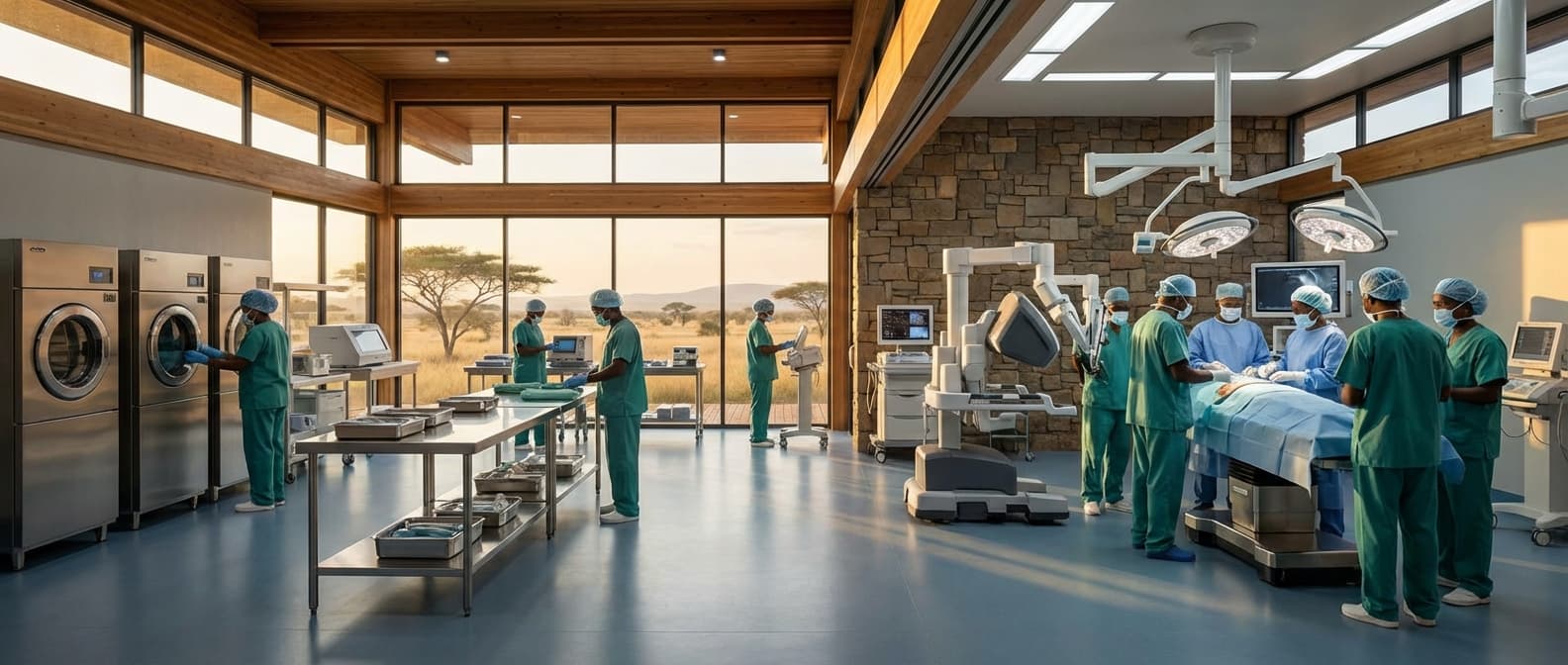
Operating Theatre Turnkey Build in Ethiopia
Engineering Excellence & Technical Support
Complete OR design, equipment integration and commissioning High-standard technical execution following OEM protocols and local regulatory frameworks.
State-of-the-Art Operating Theatre Construction
Delivering fully equipped, turnkey operating theatres in Ethiopia, adhering to international standards for sterile environments, advanced medical gas systems, and integrated lighting solutions for optimal surgical outcomes.
Advanced Medical Equipment Integration
Expert installation and seamless integration of cutting-edge surgical equipment, including anesthesia machines, surgical lights, tables, and imaging systems, ensuring immediate operational readiness for Ethiopian healthcare facilities.
Rapid Deployment & Localized Expertise
Leveraging local supply chains and a skilled Ethiopian workforce for accelerated project timelines, while ensuring compliance with national health regulations and providing sustainable, long-term operational support.
What Is Operating Theatre Turnkey Build In Ethiopia?
An Operating Theatre Turnkey Build in Ethiopia refers to the comprehensive, end-to-end service of designing, constructing, equipping, and commissioning a fully functional operating theatre suite. This service encompasses all aspects of the project, from initial conceptualization and architectural design to the final installation of medical equipment and systems, ensuring the facility is ready for immediate use upon handover. The objective is to provide a specialized healthcare environment that adheres to international standards of safety, sterility, and efficiency, tailored to the specific needs and regulatory framework of Ethiopia.
| Who Needs It? | Typical Use Cases |
|---|---|
| New Hospitals and Clinics: Greenfield projects requiring fully equipped surgical facilities from inception. | Establishment of new surgical departments or expansion of existing capacity in governmental, private, or non-governmental hospitals. |
| Existing Healthcare Facilities: Institutions looking to upgrade, expand, or replace outdated operating theatre infrastructure. | Modernization of existing operating rooms to meet current international standards for infection control, safety, and technological advancement. |
| Specialized Medical Centers: Facilities focusing on specific surgical disciplines. | Development of dedicated surgical suites for cardiac surgery, neurosurgery, orthopedics, obstetrics and gynecology, or trauma care. |
| International Aid and Development Projects: Organizations and governments aiming to improve healthcare infrastructure in Ethiopia. | Setting up state-of-the-art operating theatres as part of broader healthcare development initiatives, disaster relief, or public health programs. |
| Military and Defense Healthcare: Providing advanced surgical capabilities for military personnel. | Construction of mobile or fixed operating theatres for forward surgical units or military hospitals. |
Key Components of an Operating Theatre Turnkey Build:
- Architectural Design and Planning: Detailed blueprints incorporating optimal workflow, spatial requirements, patient and staff circulation, and infection control principles.
- Civil Construction and Infrastructure: Building shell construction, interior finishing (e.g., anti-bacterial wall cladding, seamless flooring), structural reinforcement, and utility connections (water, power, medical gases).
- HVAC Systems (Heating, Ventilation, and Air Conditioning): Specialized systems for precise temperature and humidity control, positive pressure differentials to maintain sterile environments, and advanced filtration (HEPA filters) for air purification.
- Medical Gas Systems: Installation of piped medical gases (oxygen, medical air, vacuum, nitrous oxide) with appropriate regulators, alarms, and outlets.
- Electrical Systems: Robust power distribution, emergency power backup (UPS, generators), surge protection, and dedicated circuits for critical medical equipment.
- Lighting Systems: General and surgical lighting solutions, including adjustable intensity and color temperature, often incorporating glare-free and shadow-reducing technologies.
- Sterilization and Waste Management: Integration of sterile processing areas (CSSD), appropriate waste disposal systems, and potentially incinerators or autoclaves.
- Medical Equipment Procurement and Installation: Sourcing, installation, and calibration of essential surgical equipment such as operating tables, surgical lights, anesthesia machines, patient monitors, electrosurgical units, and imaging systems.
- IT and Communication Systems: Network infrastructure for patient record management, PACS (Picture Archiving and Communication System), and communication systems.
- Commissioning and Validation: Rigorous testing of all systems and equipment to ensure compliance with design specifications and operational readiness.
- Training: Provision of training for healthcare personnel on the operation and maintenance of installed equipment and facility management.
Who Needs Operating Theatre Turnkey Build In Ethiopia?
Operating theatre turnkey builds in Ethiopia are a crucial investment for healthcare institutions seeking to establish or upgrade their surgical facilities to international standards. These comprehensive solutions encompass the entire process, from design and construction to the installation of advanced medical equipment and specialized systems. This ensures a fully functional, safe, and efficient surgical environment.
| Customer Type | Primary Need | Typical Department Focus |
|---|---|---|
| Government Hospitals | Capacity expansion, modernization, standardization of care | General Surgery, Orthopedics, OB/GYN, Trauma |
| Private Hospitals & Clinics | Service differentiation, specialty offerings, patient attraction | All surgical specialties, especially niche or high-demand areas |
| Teaching Hospitals | Training facilities, advanced procedure capabilities, research support | All surgical specialties, with emphasis on complex procedures |
| NGOs & Humanitarian Organizations | Rapid deployment, essential surgical care in underserved areas | General Surgery, OB/GYN, Trauma |
| Military Facilities | Robust infrastructure, readiness for emergencies, specialized care | Trauma Surgery, General Surgery, Orthopedics |
Target Customers and Departments for Operating Theatre Turnkey Builds in Ethiopia
- {"items":["Government Hospitals: Ministry of Health-owned hospitals across various regions requiring modernization or expansion of their surgical capacities to serve a larger patient population and improve healthcare outcomes.","Private Hospitals & Clinics: New or existing private healthcare providers aiming to offer specialized surgical services, attract international patients, or differentiate themselves with state-of-the-art facilities.","Teaching Hospitals & Medical Universities: Institutions focused on surgical training and research, needing advanced operating rooms equipped for complex procedures and educational purposes.","Non-Governmental Organizations (NGOs) & Humanitarian Organizations: Groups operating medical missions or providing specialized surgical care in underserved areas, requiring ready-to-use surgical suites.","Military & Defense Healthcare Facilities: Facilities needing robust and highly functional operating theatres for personnel and national security needs."],"title":"Target Customers"}
- {"items":["General Surgery: The core department for a wide range of abdominal, soft tissue, and endocrine surgeries.","Orthopedic Surgery: Requiring specialized tables, imaging integration, and sterile environments for bone and joint procedures.","Cardiovascular Surgery (if applicable): Demanding highly specialized infrastructure for open-heart procedures, including advanced monitoring and life support.","Neurosurgery: Needing precise instrumentation, advanced imaging capabilities (e.g., intraoperative MRI/CT), and highly controlled environments.","Ophthalmology: Often requires dedicated, smaller theatres with specialized lighting and magnification systems for delicate eye surgeries.","Obstetrics & Gynecology (including Emergency Obstetric Care): Essential for safe deliveries, Cesarean sections, and gynecological procedures, often with an emphasis on rapid response.","Urology: For procedures related to the urinary tract and male reproductive system.","Ear, Nose, and Throat (ENT) Surgery: Requiring specialized instruments and lighting for intricate procedures in the head and neck region.","Pediatric Surgery: Demanding specialized equipment and environments tailored to the unique needs of infant and child patients.","Trauma Surgery: Necessitating flexible and rapidly deployable operating theatre setups to handle emergency injuries."],"title":"Key Departments Benefiting from Turnkey Operating Theatre Builds"}
Operating Theatre Turnkey Build Process In Ethiopia
The operating theatre (OT) turnkey build process in Ethiopia involves a comprehensive workflow from initial client inquiry to the final handover of a fully functional surgical suite. This process requires meticulous planning, adherence to local regulations and international standards, and effective project management. A turnkey solution means the contractor takes full responsibility for the design, construction, equipping, and commissioning of the OT, delivering it ready for immediate use. The workflow can be broadly categorized into several key phases, each with distinct steps.
| Phase | Key Activities | Deliverables/Outcomes | Ethiopian Context Considerations |
|---|---|---|---|
| Phase 1: Inquiry and Feasibility | Initial client inquiry, needs assessment, preliminary site visit, budget discussion, scope definition, feasibility study, initial proposal. | Client brief, initial project scope, preliminary budget, feasibility report, confirmed client interest. | Understanding local healthcare infrastructure needs, availability of suitable sites, initial discussions with Ministry of Health or relevant regulatory bodies for preliminary approvals. |
| Phase 2: Design and Planning | Detailed architectural and MEP (Mechanical, Electrical, Plumbing) design, medical equipment planning, infection control strategy, space allocation, 3D modeling/renderings, development of detailed Bills of Quantities (BoQ), submission for regulatory approvals. | Approved architectural and engineering drawings, detailed equipment list, comprehensive BoQ, safety and infection control plans, submitted permit applications. | Compliance with Ethiopian building codes and standards, incorporation of local climate considerations (ventilation, temperature control), sourcing of locally available materials where feasible, obtaining construction permits from local authorities and potentially Ministry of Health approval for OT design. |
| Phase 3: Procurement and Mobilization | Contract finalization, procurement of materials and specialized equipment (local and international), contractor and subcontractor selection, site mobilization, setting up site facilities and logistics. | Signed contract, secured supply chain for materials and equipment, mobilized construction team and resources, established site infrastructure. | Navigating import duties and customs regulations for specialized medical equipment, engaging local skilled labor, establishing reliable local suppliers, ensuring compliance with labor laws. |
| Phase 4: Construction and Installation | Site preparation, civil works, structural construction, installation of MEP systems (HVAC, electrical, medical gases), finishing works (walls, floors, ceilings), installation of specialized OT features (e.g., surgical lights, booms), integration of medical equipment. | Completed building shell, functional MEP systems, finished interior spaces, installed major OT equipment, sealed and sterile environments. | Adherence to strict hygiene and infection control during construction, managing potential delays due to logistics or local holidays, ensuring quality control and adherence to design specifications by local workforce. |
| Phase 5: Testing, Commissioning, and Training | Testing of all systems (MEP, medical gases, electrical), validation of environmental conditions (air changes, pressure differentials), sterilization of the OT, performance testing of all equipment, training of hospital staff on equipment operation and OT protocols. | Commissioning reports, validation certificates, operational medical equipment, trained hospital staff, documented testing procedures. | Ensuring availability of qualified technicians for testing and calibration, developing training materials in relevant local languages, incorporating specific Ethiopian healthcare protocols. |
| Phase 6: Handover and Post-Handover Support | Final inspection and walkthrough with the client, handover of all documentation (manuals, warranties, as-built drawings), official project handover, initiation of warranty period, provision of ongoing maintenance and support services. | Signed handover certificate, complete project documentation package, operational OT, agreed-upon maintenance plan. | Establishing local service and maintenance networks, ensuring availability of spare parts, providing ongoing technical support and training to minimize downtime, building long-term relationships with healthcare providers. |
Operating Theatre Turnkey Build Process in Ethiopia: Workflow from Inquiry to Execution
- Phase 1: Inquiry and Feasibility
- Phase 2: Design and Planning
- Phase 3: Procurement and Mobilization
- Phase 4: Construction and Installation
- Phase 5: Testing, Commissioning, and Training
- Phase 6: Handover and Post-Handover Support
Operating Theatre Turnkey Build Cost In Ethiopia
The cost of a turnkey operating theatre build in Ethiopia is highly variable, influenced by a multitude of factors. These range from the size and complexity of the theatre, the quality and origin of equipment, the chosen location within Ethiopia (urban vs. rural, accessibility), the specific hospital's requirements, and the contractor's expertise and overhead. A "turnkey" solution implies a complete, ready-to-use facility, encompassing design, construction, equipment installation, and commissioning. Estimating a precise cost requires a detailed project scope, but understanding the pricing drivers is crucial for budgeting and planning.
| Category | Estimated Cost Range (ETB) | Notes |
|---|---|---|
| Small to Medium-Sized General Operating Theatre (Basic Equipment) | 15,000,000 - 40,000,000 | Assumes standard construction, moderate quality imported equipment, and essential supporting facilities. |
| Medium to Large-Sized General Operating Theatre (Advanced Equipment) | 40,000,000 - 80,000,000 | Includes higher-grade imported equipment, more sophisticated HVAC, and better finishes. |
| Specialized Operating Theatre (e.g., Cardiac, Neurosurgery) - Turnkey | 80,000,000 - 200,000,000+ | Requires highly specialized and expensive equipment, advanced infrastructure, and stringent compliance. Costs can escalate significantly based on specific needs. |
| Basic Construction & Fit-out (per sq meter) | 75,000 - 150,000 | This is a very rough estimate for the construction and finishing of the space before major medical equipment is installed. |
| Medical Equipment (per theatre - estimated) | 10,000,000 - 50,000,000+ | Highly dependent on the type and brand of equipment. This is a broad range and can easily exceed this for specialized units. |
| HVAC and Ventilation Systems (per theatre - estimated) | 5,000,000 - 20,000,000+ | Crucial for infection control and patient safety. Costs increase with complexity and air change rates. |
Key Pricing Factors for Operating Theatre Turnkey Builds in Ethiopia
- Scope and Size of the Operating Theatre: The number of operating rooms, their dimensions, and the number of supporting spaces (e.g., scrub rooms, sterile corridors, recovery areas, staff lounges) directly impact material and labor costs.
- Level of Specialization and Technology: Highly specialized theatres (e.g., cardiac surgery, neurosurgery) require more advanced equipment, specialized ventilation systems (laminar flow), and sophisticated monitoring, significantly increasing costs.
- Quality and Origin of Medical Equipment: Imported high-end medical equipment from Europe, North America, or Japan will be substantially more expensive than locally sourced or refurbished options. This includes surgical lights, tables, anesthesia machines, patient monitors, electrosurgical units, sterilizers, and imaging equipment.
- Construction Materials and Finishes: The choice of building materials, wall finishes (anti-bacterial, seamless), flooring (anti-static, durable), ceiling types, and door specifications (hermetically sealed) all contribute to the overall cost. Durability, ease of cleaning, and infection control properties are paramount.
- HVAC and Ventilation Systems: Operating theatres require stringent climate control and air purification. Sophisticated HVAC systems with HEPA filtration, humidity control, and positive pressure differentials are critical and represent a significant investment.
- Electrical and Plumbing Infrastructure: Robust and redundant electrical systems, including backup generators, medical gas pipelines (oxygen, medical air, vacuum), and specialized lighting, are essential and add to the cost.
- Architectural and Engineering Design Fees: Professional design services are necessary to ensure compliance with medical standards and efficient workflow. These fees vary based on the complexity of the design and the firm's reputation.
- Contractor's Overhead and Profit Margin: The chosen contractor's experience, reputation, and business model will influence their pricing. Turnkey solutions generally command a higher price due to the comprehensive service offered.
- Location and Accessibility: Construction costs can vary between urban centers like Addis Ababa and more remote regions due to differences in labor availability, material transportation, and logistical challenges.
- Regulatory Approvals and Compliance: Obtaining necessary permits and ensuring compliance with Ethiopian healthcare regulations can incur fees and add to project timelines, indirectly affecting cost.
- Contingency and unforeseen expenses: It is standard practice to include a contingency fund (typically 10-20%) to cover unforeseen issues during construction.
Affordable Operating Theatre Turnkey Build Options
Establishing a new operating theatre is a significant investment. This guide explores affordable operating theatre turnkey build options, focusing on value bundles and cost-saving strategies to make your project more economically viable without compromising essential functionality and safety. Turnkey solutions offer a comprehensive approach, encompassing design, construction, equipment installation, and commissioning, providing a streamlined process that can inherently offer cost efficiencies through integrated planning and procurement.
| Value Bundle Component | Description | Cost-Saving Strategy |
|---|---|---|
| Standardized Design Packages | Pre-designed, modular theatre layouts optimized for common surgical procedures. These packages reduce design time and complexity. | Opting for a standardized design avoids bespoke architectural fees and accelerates the design phase. These packages are often refined based on multiple projects, ensuring proven efficiency. |
| Bundled Equipment Procurement | Negotiating with suppliers for a package deal on core surgical equipment (lights, tables, anesthesia machines, basic monitors). | Bulk purchasing often leads to significant discounts compared to individual acquisitions. Centralized procurement also streamlines logistics and installation. |
| Phased Construction & Equipment Installation | Breaking down the project into manageable phases, allowing for staggered payments and potentially utilizing existing infrastructure where possible. | This can improve cash flow management and allows for opportunities to re-evaluate and optimize later stages as the project progresses. |
| Focus on Essential Equipment | Prioritizing high-quality, reliable core equipment and considering refurbished or certified pre-owned options for non-critical ancillary items. | New, top-of-the-line equipment for every single component can be cost-prohibitive. Carefully selecting essential items and exploring cost-effective alternatives for less critical areas can yield substantial savings. |
| Integrated HVAC & Airflow Solutions | Designing a highly efficient HVAC system from the outset that meets stringent air purity standards, potentially integrating with the building's main system. | Early integration of HVAC design can prevent costly retrofits and ensure optimal sterile environment performance, reducing the need for more expensive, standalone air purification units. |
| Modular & Prefabricated Components | Utilizing prefabricated wall panels, ceiling systems, and utility modules that are manufactured off-site and assembled on-site. | This can reduce on-site labor time, improve quality control, and minimize disruption, leading to faster project completion and potentially lower labor costs. |
| Energy-Efficient Lighting & Systems | Specifying LED surgical lighting and other energy-efficient systems. | While initial costs might be slightly higher, long-term savings on electricity bills can be substantial. Consider the total cost of ownership. |
| Partnership with Experienced Turnkey Providers | Engaging with reputable turnkey providers who have a track record of delivering affordable and efficient operating theatre solutions. | Experienced providers often have established relationships with suppliers and subcontractors, enabling them to negotiate better prices and manage projects more efficiently, ultimately translating to cost savings for the client. |
Key Components of Turnkey Operating Theatre Builds
- Initial Consultation & Needs Assessment
- Architectural & Engineering Design (including sterile environments, HVAC, lighting)
- Construction & Civil Works
- Medical Gas Installation
- Specialized Electrical Systems (e.g., UPS, generator integration)
- Laminar Flow Systems & Air Purification
- Surgical Lighting Systems
- Operating Tables & Anesthesia Machines
- Monitoring Equipment & Integrated Displays
- Sterilization Equipment Integration
- Workflow Optimization & Staff Training
- Commissioning & Regulatory Approvals
Verified Providers In Ethiopia
Ensuring access to quality healthcare is paramount. In Ethiopia, identifying verified healthcare providers is crucial for making informed decisions about your well-being. This guide highlights the importance of verified providers and specifically delves into Franance Health's credentials, explaining why they stand out as an excellent choice for healthcare needs in Ethiopia.
| Credential/Aspect | Franance Health's Commitment | Why This Matters to You |
|---|---|---|
| Regulatory Compliance and Licensing | Franance Health rigorously adheres to all Ethiopian Ministry of Health regulations and maintains all necessary operating licenses. They proactively engage with regulatory bodies to stay updated on the latest standards. | Ensures that all services are legally recognized and meet national healthcare benchmarks. You are assured of care delivered by a legitimate and compliant entity. |
| Professional Qualifications of Staff | All medical practitioners, nurses, and support staff at Franance Health undergo thorough vetting to confirm their degrees, certifications, and licenses from accredited institutions. Continuous professional development is mandatory. | Guarantees that you will be treated by highly skilled and qualified professionals who are up-to-date with current medical practices and technologies. |
| Quality Assurance and Patient Care Protocols | Franance Health has implemented robust internal quality assurance systems, including patient feedback mechanisms, regular clinical audits, and adherence to evidence-based treatment protocols. | Ensures a consistent and high standard of care. Your experience is prioritized, and treatment plans are designed for optimal outcomes and patient comfort. |
| Infrastructure and Equipment Standards | Their facilities are maintained to high hygiene and safety standards, and they invest in modern medical equipment, ensuring regular maintenance and calibration. | Provides a safe and comfortable environment for treatment and access to accurate diagnostics and effective therapies, leading to better health outcomes. |
| Ethical Practices and Patient Confidentiality | Franance Health is committed to the highest ethical standards in healthcare, upholding patient confidentiality, informed consent, and respectful treatment for all. | Your personal health information is protected, and you can expect to be treated with dignity and respect throughout your healthcare journey. |
| Community Engagement and Public Health Initiatives | Franance Health actively participates in community health programs and public health awareness campaigns, demonstrating a commitment beyond individual patient care. | Shows a dedication to the overall well-being of the Ethiopian population and a proactive approach to improving public health. |
Why Verified Providers Matter in Ethiopia:
- Patient Safety: Verified providers adhere to strict medical standards and regulations, minimizing risks and ensuring safe practices.
- Quality of Care: Verification often involves assessments of facilities, equipment, and the qualifications of medical professionals, guaranteeing a higher standard of treatment.
- Trust and Reliability: Choosing verified providers builds confidence, knowing you are receiving care from legitimate and reputable institutions.
- Access to Specialized Services: Verified providers are more likely to offer a comprehensive range of services, including specialized treatments and advanced diagnostics.
- Accountability: Verified organizations are typically subject to oversight and accountability mechanisms, providing recourse in case of any issues.
Scope Of Work For Operating Theatre Turnkey Build
This document outlines the Scope of Work (SOW) for a turnkey operating theatre (OT) build project. It details the technical deliverables and standard specifications required to successfully construct and commission a fully functional operating theatre suite. The objective is to provide a safe, sterile, and efficient environment for surgical procedures.
| Category | Technical Deliverable | Standard Specification/Requirement |
|---|---|---|
| Architectural Design | Detailed Architectural Drawings | Compliance with healthcare building codes (e.g., ASHRAE, HTM), room layout for optimal workflow, wall, floor, and ceiling finishes (seamless, anti-microbial, durable), door specifications (interlocking, lead-lined if required). |
| Structural Integrity | Structural Engineering Reports | Foundation and load-bearing capacity calculations, seismic considerations, vibration isolation requirements. |
| Medical Gas Systems | Medical Gas Pipeline System (MGPS) | Compliance with ISO 7396 series, medical air, oxygen, vacuum, nitrous oxide, CO2 supply, alarm systems, outlets, flowmeters. |
| HVAC Systems | Operating Theatre HVAC Design and Installation | Positive pressure maintenance, HEPA filtration (ISO 14644 Class 5 or better), temperature and humidity control (e.g., 20-24°C, 40-60% RH), air changes per hour (minimum 20, with 50% fresh air), laminar flow (if specified). |
| Electrical Systems | Medical Electrical Installation | Redundant power supply (UPS, generator backup), isolated power systems, grounding and bonding, emergency lighting, patient connection points, compliance with IEC 60364-7-710. |
| Lighting | Surgical Lighting Systems | High-intensity, adjustable surgical lights (LED preferred), shadowless illumination, color temperature control, integrated video capabilities (if specified). |
| Audiovisual | Integrated Audiovisual System | Surgical camera systems, monitors, recording devices, communication systems (intercom, PTT), PACS integration capabilities. |
| Sterilization | Autoclave/Sterilization Unit Installation | Appropriate capacity and cycle types based on surgical volume, validation and certification of sterilization cycles. |
| Waste Management | Infection Control and Waste Disposal Systems | Segregated waste streams, dedicated waste collection points, biohazard containment measures, negative pressure zones for contaminated areas. |
| Flooring | Conductive or Anti-Static Flooring | Seamless, durable, chemical-resistant, easy to clean, compliance with anti-static requirements for sensitive equipment. |
| Wall and Ceiling Finishes | Seamless and Hygienic Wall/Ceiling Cladding | Non-porous, anti-microbial, impact-resistant materials, coved skirting for ease of cleaning. |
| Infection Control | Integrated Infection Control Features | Easy-to-clean surfaces, minimal horizontal ledges, hands-free fixtures, UV-C disinfection systems (if specified). |
| Safety Features | Emergency Stop Buttons, Gas Shut-off Valves | Clearly marked and easily accessible for immediate emergency response. |
| Commissioning | Full System Commissioning and Validation Reports | Testing of all MEP systems, medical gases, lighting, AV, HVAC, and safety features. Validation of sterilization processes and environmental parameters. |
| Documentation | As-Built Drawings and O&M Manuals | Comprehensive documentation of the final installation, including all systems, components, and operational procedures. Maintenance schedules and spare parts lists. |
Key Project Stages and Deliverables
- Project Planning and Design
- Procurement and Supply Chain Management
- Construction and Civil Works
- MEP (Mechanical, Electrical, and Plumbing) Systems Installation
- Specialized OT Equipment Installation and Integration
- Sterilization and Air Filtration Systems
- Lighting and Audiovisual Systems
- Commissioning and Validation
- Training and Handover
- Post-Construction Support and Maintenance
Service Level Agreement For Operating Theatre Turnkey Build
This Service Level Agreement (SLA) outlines the response times and uptime guarantees for the Operating Theatre Turnkey Build project. This document is intended to ensure clarity and mutual understanding regarding the performance expectations and support services provided by [Your Company Name] (hereinafter referred to as 'Provider') to [Client Name] (hereinafter referred to as 'Client') during the construction and handover phases of the operating theatre.
| Service Category | Uptime Guarantee | Response Time (Business Hours) | Response Time (24/7) |
|---|---|---|---|
| Critical Systems (HVAC, Medical Gas, Power, Lighting) | 99.9% Uptime | 1 Hour | 30 Minutes |
| Major Systems (e.g., Imaging integration, communication systems) | 99.5% Uptime | 2 Hours | 1 Hour |
| Minor Systems/Cosmetic Defects | N/A (Handled during scheduled maintenance) | 4 Business Hours | N/A |
Key Definitions
- Operating Theatre Turnkey Build: The complete construction and equipping of a fully functional operating theatre, from initial design to final handover.
- Critical System Failure: A failure of any essential operating theatre system (e.g., HVAC, medical gas, power supply, lighting) that renders the theatre unusable for its intended surgical purpose.
- Major System Issue: A significant malfunction in a non-critical operating theatre system that impedes workflow or requires immediate attention, but does not prevent surgical procedures entirely.
- Minor System Issue: A cosmetic or minor functional defect that does not impact the operational capability of the operating theatre.
- Downtime: The period during which the operating theatre or its critical systems are unavailable for use due to a system failure or required maintenance.
- Response Time: The maximum time allowed for the Provider to acknowledge a reported issue and initiate troubleshooting or repair efforts.
- Resolution Time: The maximum time allowed for the Provider to resolve a reported issue to the Client's satisfaction.
- Uptime Guarantee: The percentage of time the operating theatre and its critical systems are expected to be operational and available for use.
Frequently Asked Questions

Ready when you are
Let's scope your Operating Theatre Turnkey Build in Ethiopia project in Ethiopia.

Scaling healthcare logistics and technical systems across the entire continent.