
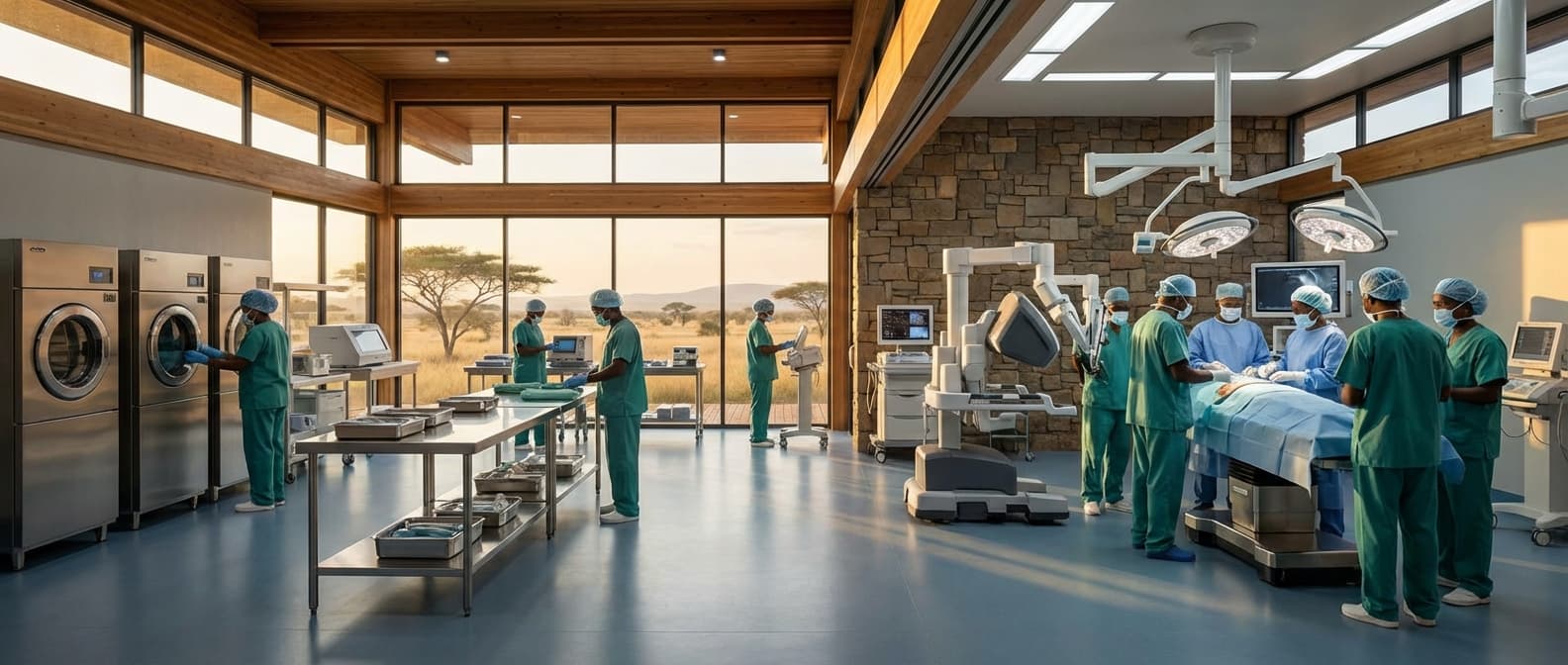
Medical Gas System Design & Installation in Ethiopia
Engineering Excellence & Technical Support
Medical gas pipeline systems: O2, N2O, air, vacuum High-standard technical execution following OEM protocols and local regulatory frameworks.
Advanced Medical Gas Distribution Networks
Implementing state-of-the-art manifold systems and piping networks for reliable and safe delivery of medical gases (oxygen, medical air, nitrous oxide, vacuum) to critical care areas, ensuring patient safety and operational efficiency in Ethiopian healthcare facilities.
Compliance with Ethiopian Standards & International Best Practices
Adhering strictly to Ethiopian Ministry of Health regulations and international codes (e.g., NFPA 99, HTM 02-01) for medical gas system design and installation, guaranteeing the highest safety, quality, and performance standards for all projects in Ethiopia.
Expert Installation & Commissioning Services
Providing comprehensive installation, rigorous testing, and meticulous commissioning of medical gas systems, ensuring seamless integration with existing infrastructure and complete operational readiness for healthcare providers across Ethiopia.
What Is Medical Gas System Design & Installation In Ethiopia?
Medical gas system design and installation in Ethiopia refers to the comprehensive process of planning, engineering, and physically implementing piped medical gas systems within healthcare facilities. These systems are critical infrastructure designed to deliver essential medical gases safely and reliably to patient care areas, operating rooms, and other clinical spaces. The scope encompasses the initial assessment of facility requirements, detailed system design adhering to international and Ethiopian standards, procurement of materials, precise installation of piping, valves, alarms, and outlets, and rigorous testing and commissioning to ensure compliance, safety, and operational integrity.
| Who Needs Medical Gas System Design & Installation in Ethiopia? | Typical Use Cases and Applications |
|---|---|
| Hospitals (public and private) | Operating Rooms: Anesthesia (Nitrous Oxide, Oxygen), Ventilation (Oxygen, Medical Air), Suction (Medical Vacuum) |
| Specialty Clinics (e.g., surgical, critical care) | Intensive Care Units (ICUs) & High Dependency Units (HDUs): Respiratory support (Oxygen, Medical Air), Patient monitoring (Medical Vacuum) |
| Diagnostic Centers | Emergency Departments: Resuscitation (Oxygen), Patient stabilization (Oxygen, Medical Air, Medical Vacuum) |
| Rehabilitation Centers with medical gas requirements | Wards & Patient Rooms: General oxygen therapy (Oxygen), Post-operative care, Non-invasive ventilation |
| New Healthcare Facility Developments | Laboratories: Gas chromatography, Mass spectrometry (depending on specific laboratory needs, e.g., Nitrogen, Helium) |
| Existing Facilities Undergoing Renovation or Expansion | Outpatient Clinics (if equipped for minor procedures or respiratory support) |
| Medical Training Institutions with clinical simulation facilities | Ambulances & Mobile Medical Units (for specialized applications requiring piped gases) |
Key Components and Stages of Medical Gas System Design & Installation:
- Needs Assessment: Evaluating current and future gas requirements based on facility size, specialty services, patient load, and anticipated technological advancements.
- System Design & Engineering: Developing detailed schematics, specifications, and layout drawings for the entire medical gas pipeline system, including gas sources (central supply, manifolds, compressors, vacuum pumps), distribution piping, pressure regulation, alarm systems, and user interfaces.
- Compliance & Standards: Ensuring adherence to relevant international (e.g., NFPA 99, ISO 7396) and Ethiopian healthcare infrastructure guidelines and building codes.
- Material Specification & Procurement: Selecting appropriate medical-grade piping materials (e.g., copper alloys), fittings, valves, pressure regulators, flow meters, and monitoring equipment with proper certifications.
- Installation & Fabrication: Executing the physical installation of the pipeline network, including brazing/welding of pipes, mounting of equipment, and integration with existing building systems, often requiring specialized tools and techniques.
- Testing & Commissioning: Conducting comprehensive pressure, leak, and purity tests, as well as functional validation of the entire system, alarm parameters, and flow rates to verify performance and safety prior to handover.
- Documentation & Training: Providing detailed as-built drawings, operation and maintenance manuals, and training for facility biomedical engineers and maintenance staff on system operation and emergency procedures.
Who Needs Medical Gas System Design & Installation In Ethiopia?
Ensuring access to reliable and safe medical gas systems is paramount for delivering quality healthcare. These systems are critical for patient care, diagnostic procedures, and surgical interventions. In Ethiopia, several institutions and departments rely heavily on well-designed and expertly installed medical gas systems to function effectively and meet the evolving healthcare needs of the population.
| Customer Type | Key Departments & Their Reliance | Specific Needs Addressed |
|---|---|---|
| Hospitals (Government, Private, Teaching, Specialized) | Operating Rooms (anesthesia gases like nitrous oxide, oxygen; scavenging gases) Intensive Care Units (ICU) & High Dependency Units (HDU) (continuous oxygen supply, medical air for ventilators) Emergency Departments (rapid oxygen delivery for trauma and acute conditions) Neonatal Intensive Care Units (NICU) (blended medical air and oxygen for premature infants) Pulmonary/Respiratory Departments (oxygen therapy, medical air for spirometry) Anesthesiology Departments (precise delivery of anesthetic gases and oxygen) Surgical Wards (post-operative oxygen support) Diagnostic Imaging (medical air for CT scanners) Pathology Laboratories (specialized gases for equipment) | Life support during surgery and critical care Oxygen therapy for respiratory distress Ventilation support Accurate administration of anesthetic agents Sterile environments in operating theaters Diagnostic capabilities |
| Clinics and Health Centers (with surgical capabilities) | Minor Operating Theaters (oxygen for resuscitation and anesthesia) Consultation Rooms (oxygen for patients with breathing difficulties) | Basic life support On-site oxygen provision for minor procedures |
| Emergency Medical Services (Ambulances) | Patient transport units (portable oxygen cylinders and regulators) | Immediate oxygen administration during transport to medical facilities |
| Research and Development Facilities | Laboratories (specialized gases for experiments and equipment operation) | Controlled gas environments for research |
| Veterinary Hospitals and Clinics | Surgical suites (anesthesia gases and oxygen for animals) Recovery areas (oxygen therapy) | Anesthesia and supportive care for animal patients |
Target Customers & Departments for Medical Gas System Design & Installation in Ethiopia
- Hospitals (Government, Private, Teaching, Specialized)
- Clinics and Health Centers (particularly those with surgical capabilities or requiring oxygen therapy)
- Emergency Medical Services
- Research and Development Facilities
- Veterinary Hospitals and Clinics
Medical Gas System Design & Installation Process In Ethiopia
The design and installation of medical gas systems in Ethiopia is a multi-stage process requiring meticulous planning, adherence to international standards, and local regulations. This workflow guides a project from the initial client inquiry to the final operational system.
| Phase | Key Activities | Deliverables/Outcomes | Responsible Parties |
|---|---|---|---|
| Inquiry & Consultation | Initial meetings, site visits, requirement gathering. | Project scope definition, preliminary understanding of needs. | Client, System Designer/Installer |
| Needs Assessment & Feasibility | Gas demand analysis, technical & economic viability study. | Detailed needs assessment report, feasibility study report. | System Designer/Installer |
| Conceptual Design & Proposal | System layout planning, proposal generation. | Conceptual design drawings, comprehensive project proposal. | System Designer/Installer |
| Detailed Design & Engineering | Engineering drawings, P&IDs, material specification. | Detailed design package (drawings, specs), bill of materials. | System Designer/Installer |
| Procurement & Manufacturing | Sourcing components, manufacturing specialized parts. | Procured equipment and materials. | System Designer/Installer, Suppliers |
| Installation & Construction | Pipeline laying, equipment installation, system assembly. | Installed medical gas network and associated equipment. | Installation Team (Engineers, Technicians) |
| Testing & Commissioning | Pressure tests, leak tests, system performance verification. | Test reports, commissioning certificate, validated system performance. | Commissioning Engineers, Quality Control Team |
| Training & Handover | Staff training, documentation delivery. | Trained personnel, complete project documentation. | Training Team, Project Manager |
| As-Built Documentation | Finalizing drawings with on-site modifications. | As-built drawings. | Design Team, Installation Team |
| Post-Installation Support | Maintenance, troubleshooting, repairs. | Ongoing system reliability and performance. | Maintenance Team, Client |
Medical Gas System Design & Installation Workflow in Ethiopia
- {"title":"1. Inquiry & Initial Consultation","description":"The process begins with a client (hospital, clinic, etc.) expressing interest in a medical gas system. This involves initial meetings to understand the project scope, requirements (types of gases, number of outlets, facility size), budget, and timeline. Site visits are crucial at this stage to assess existing infrastructure and spatial constraints."}
- {"title":"2. Needs Assessment & Feasibility Study","description":"A detailed assessment of the facility's medical gas needs is conducted. This includes determining the required flow rates, pressures, and purity standards for each gas (e.g., oxygen, medical air, vacuum, nitrous oxide). A feasibility study evaluates the technical and economic viability of the proposed system, considering factors like utility availability, structural integrity, and potential challenges."}
- {"title":"3. Conceptual Design & Proposal Development","description":"Based on the needs assessment, a conceptual design is developed. This outlines the general layout of the piping, location of main supply units (e.g., medical air compressors, oxygen concentrators, bulk storage), and control systems. A comprehensive proposal is then prepared, detailing the scope of work, technical specifications, equipment to be used, project timeline, and cost estimates."}
- {"title":"4. Detailed Design & Engineering","description":"Upon acceptance of the proposal, detailed design and engineering commence. This involves creating precise engineering drawings, including P&ID (Piping and Instrumentation Diagrams), layout plans, section views, and schematics. Calculations for pipe sizing, pressure drops, and flow rates are finalized. Material selection, adherence to relevant Ethiopian Standards (ES) and international standards (e.g., ISO, NFPA) are paramount."}
- {"title":"5. Procurement & Manufacturing","description":"All necessary components, including pipes, fittings, valves, medical gas outlets, alarms, pressure regulators, and central supply equipment, are sourced from reputable suppliers. Procurement processes must comply with Ethiopian public procurement laws if applicable or established company policies. Manufacturing of custom components, if any, is initiated."}
- {"title":"6. Installation & Construction","description":"The physical installation of the medical gas system begins. This includes laying of pipelines, welding of joints, installation of central supply units, valves, alarms, and medical gas outlets. Rigorous adherence to safety protocols and design specifications is maintained throughout this phase. Qualified technicians and engineers oversee the installation."}
- {"title":"7. Testing & Commissioning","description":"This is a critical phase. Once installation is complete, extensive testing is performed. This includes pressure testing, leak detection, and flushing of pipelines to remove any debris. Commissioning involves verifying that the system operates according to design specifications, including flow rates, pressures, and alarm functions. Purity testing of medical gases is also conducted."}
- {"title":"8. Training & Handover","description":"The client's technical staff are provided with comprehensive training on the operation, maintenance, and troubleshooting of the medical gas system. All relevant documentation, including as-built drawings, test reports, operation and maintenance manuals, and warranty certificates, are handed over to the client."}
- {"title":"9. As-Built Documentation","description":"Finalized 'as-built' drawings are created, reflecting any modifications made during the installation process. These documents are crucial for future maintenance and system upgrades."}
- {"title":"10. Post-Installation Support & Maintenance","description":"Ongoing support, including scheduled maintenance, repairs, and emergency services, is often offered as part of a service agreement to ensure the continued safe and efficient operation of the medical gas system."}
Medical Gas System Design & Installation Cost In Ethiopia
Designing and installing a medical gas system in Ethiopia involves a complex interplay of factors that influence the overall cost. These systems are critical for healthcare facilities, providing essential gases like oxygen, medical air, nitrous oxide, and vacuum. The pricing is highly variable and depends on the scale of the project, the complexity of the design, the quality of materials used, the contractor's expertise, and prevailing economic conditions in Ethiopia. This discussion aims to provide an overview of the key pricing factors and offer estimated cost ranges in Ethiopian Birr (ETB).
| System Component/Scope | Estimated Cost Range (ETB) | Notes |
|---|---|---|
| Basic Design & Engineering for a small clinic (e.g., 20-30 beds) | 300,000 - 800,000 ETB | Covers essential gases like Oxygen, Medical Air, Vacuum; simpler piping. |
| Full Design & Engineering for a medium-sized hospital (e.g., 100-150 beds) | 1,000,000 - 3,000,000 ETB | Includes multiple gases, more complex distribution, and specialized areas. |
| Full Design & Engineering for a large hospital or specialized center | 3,000,000+ ETB | Extensive infrastructure, multiple wings, advanced systems. |
| Installation of central supply equipment (compressors, vacuum pumps, manifolds, bulk storage preparation) | 500,000 - 2,000,000 ETB per component set | Varies based on capacity, number of gases, and brand of equipment. |
| Piping installation (per linear meter, including materials and labor) | 1,000 - 5,000 ETB/meter | Depends on pipe material (copper typically), diameter, and installation complexity. |
| Medical gas outlets and service panels (per outlet) | 5,000 - 20,000 ETB/outlet | Includes the outlet, wall box, and installation labor. Prices vary by type (e.g., standard, medical air, oxygen). |
| Testing and commissioning (per system) | 200,000 - 1,000,000 ETB | Ensures system integrity, flow rates, purity, and pressure. Crucial for safety and compliance. |
| Project Management & Supervision (percentage of total project cost) | 5% - 15% | Essential for coordinating all aspects of the installation. |
Key Pricing Factors for Medical Gas System Design & Installation in Ethiopia:
- Scope and Size of the Facility: The number of beds, operating rooms, ICUs, and specialized units directly impacts the amount of piping, outlets, and the complexity of the central plant required. Larger hospitals will naturally incur higher costs.
- Type and Quantity of Gases: The specific medical gases required (e.g., oxygen, medical air, nitrous oxide, carbon dioxide, vacuum) and their planned usage volumes determine the size and configuration of the central supply equipment and the piping network.
- Piping Network Complexity: The length of the pipe runs, the number of floors, the need for risers, and the integration with existing building infrastructure all contribute to installation labor and material costs.
- Central Supply Equipment: This includes the bulk storage systems (e.g., cryogenic tanks for oxygen, air compressors, vacuum pumps), manifolds, regulators, alarms, and control panels. The type and capacity of this equipment are significant cost drivers.
- Medical Gas Outlets and Service Panels: The number and type of outlets required in patient rooms, operating theaters, and other clinical areas, along with specialized service panels, add to the material and installation expenses.
- Material Quality and Standards: Adherence to international medical gas standards (e.g., NFPA 99, ISO 7396) often necessitates the use of high-grade, specialized materials and components, which can be more expensive.
- Labor Costs: Skilled labor for design, project management, pipe fitting, welding, and testing is essential. The availability of experienced medical gas system installers in Ethiopia can influence rates.
- Regulatory Compliance and Certification: Costs associated with obtaining necessary permits, inspections, and certifications from Ethiopian health and building authorities need to be factored in.
- Project Management and Engineering Design: Professional design services, including detailed drawings, specifications, and project management, are crucial for a safe and compliant system and represent a significant upfront cost.
- Testing and Commissioning: Thorough testing of the entire system to ensure it meets performance and safety standards is a mandatory and often costly phase.
- Ancillary Equipment: This can include gas purification systems, backup power for compressors and pumps, and specialized monitoring equipment.
- Geographical Location and Accessibility: The remoteness of a healthcare facility within Ethiopia can affect transportation costs for materials and equipment, as well as labor mobilization.
- Contractor's Overhead and Profit: Like any construction project, the contractor's operational costs and desired profit margin will be built into the final price.
- Market Fluctuations and Currency Exchange Rates: The cost of imported materials and equipment can be significantly impacted by global market prices and the prevailing Ethiopian Birr exchange rate.
Affordable Medical Gas System Design & Installation Options
Designing and installing a medical gas system can be a significant investment for healthcare facilities. This guide outlines affordable options, focusing on value bundles and cost-saving strategies to ensure your facility has a safe and compliant system without breaking the bank. We'll explore how smart planning, modular components, and competitive bidding can lead to substantial savings while maintaining the highest standards of quality and reliability.
| Cost-Saving Strategy | Description | Potential Savings Benefit |
|---|---|---|
| Value Bundles | Purchasing design, installation, and essential equipment (e.g., manifolds, regulators, outlets) as a package from a single provider. These bundles often come with pre-negotiated pricing and streamlined project management. | Reduced administrative overhead, potentially lower overall package price, predictable budgeting. |
| Phased Installation | Installing core medical gas systems initially and adding specialized or less-used gases and outlets in subsequent phases as the facility's needs evolve or budget allows. | Lower upfront capital expenditure, deferred costs, allows for gradual investment. |
| Competitive Bidding | Obtaining quotes from multiple reputable medical gas system designers and installers to ensure you're getting the best market price. | Typically results in 10-20% savings compared to accepting the first quote, fosters competition among vendors. |
| Standardized Component Selection | Opting for widely available and standardized medical gas equipment and fittings rather than highly customized or proprietary solutions. | Lower material costs, easier sourcing for maintenance and repairs, wider vendor options. |
| Modular System Design | Utilizing prefabricated or modular medical gas panels and distribution systems that can be efficiently installed and easily expanded or reconfigured. | Faster installation times, reduced on-site labor, flexibility for future modifications. |
| Energy-Efficient Equipment | Selecting medical air compressors and vacuum pumps with higher energy efficiency ratings to reduce long-term operational costs. | Significant reduction in electricity bills over the system's lifespan, often offset by a small initial premium. |
| Preventive Maintenance Contracts | Negotiating a comprehensive preventive maintenance contract as part of the initial installation package. | Avoids costly emergency repairs, extends equipment lifespan, ensures system reliability and compliance. |
Key Considerations for Affordable Medical Gas Systems
- Understanding your facility's specific medical gas needs (types of gases, flow rates, pressure requirements).
- Prioritizing essential medical gas services over non-critical ones during initial installation.
- Exploring modular and scalable system designs that can be expanded later as needs grow.
- Investigating different installation methodologies and their associated costs.
- Leveraging existing infrastructure where possible to reduce new construction requirements.
- Considering the long-term operational and maintenance costs in addition to upfront expenses.
- Ensuring compliance with all relevant codes and standards (e.g., NFPA 99, HTM 02-01) to avoid costly future retrofits.
Verified Providers In Ethiopia
In Ethiopia's growing healthcare landscape, identifying reliable and qualified healthcare providers is paramount. Franance Health stands out as a leading organization dedicated to ensuring access to verified and high-quality medical services. This commitment to excellence, coupled with their robust credentialing process, makes them the optimal choice for individuals and organizations seeking trusted healthcare solutions in Ethiopia. Their rigorous vetting ensures that all affiliated providers meet stringent standards of expertise, ethical practice, and patient care, offering peace of mind and superior health outcomes.
| Provider Type | Franance Health Vetting Criteria | Benefits of Choosing Franance Health Affiliated Providers |
|---|---|---|
| General Practitioners | Valid medical license, proven experience, clean disciplinary record, patient satisfaction scores. | Accessible primary care, early diagnosis, personalized health management, trusted referrals. |
| Specialists (e.g., Cardiologists, Pediatricians, Surgeons) | Board certification, specialized training, extensive clinical experience in their field, adherence to best practices. | Expert diagnosis and treatment for complex conditions, advanced medical interventions, access to cutting-edge care. |
| Hospitals and Clinics | Accreditation, state-of-the-art facilities, qualified medical staff, robust infection control protocols, patient safety measures. | Comprehensive medical services, advanced diagnostic equipment, safe and sterile environments, efficient healthcare delivery. |
| Diagnostic Laboratories and Imaging Centers | Licensed technicians, certified equipment, adherence to quality control standards, timely and accurate results. | Reliable diagnostic information, precise imaging for treatment planning, quick turnaround times for critical results. |
Why Franance Health is the Best Choice for Verified Providers in Ethiopia:
- Unwavering Commitment to Quality: Franance Health prioritizes patient well-being above all else, implementing a meticulous selection process for all its healthcare partners.
- Rigorous Credentialing Process: Providers undergo thorough background checks, verification of licenses, qualifications, and a deep dive into their clinical experience and ethical standing.
- Comprehensive Network: Access a diverse range of specialists and general practitioners across various medical disciplines, ensuring all your healthcare needs are met.
- Focus on Patient-Centric Care: Franance Health partners with providers who demonstrate a strong commitment to compassionate, respectful, and individualized patient care.
- Trust and Reliability: By choosing Franance Health, you are assured of engaging with healthcare professionals who have been thoroughly vetted and meet the highest standards of practice.
- Continuous Monitoring and Improvement: Franance Health actively monitors the performance and patient feedback of its affiliated providers, ensuring ongoing quality assurance.
Scope Of Work For Medical Gas System Design & Installation
This Scope of Work (SOW) outlines the design and installation requirements for a medical gas system. It details the technical deliverables expected from the contractor and the standard specifications to be adhered to throughout the project. The objective is to ensure a safe, compliant, and fully functional medical gas system that meets all relevant codes and standards.
| Item | Description | Applicable Standards/Specifications |
|---|---|---|
| Piping Materials | Seamless copper tubing for oxygen, nitrous oxide, medical air, and vacuum. Specific alloys and wall thicknesses to be detailed. | ASTM B819 (Standard Specification for Seamless Copper Tube for Medical Gas Systems) |
| Welding/Brazing | All joints to be brazed using brazing alloys suitable for medical gas service. Specific brazing procedures and certification requirements. | NFPA 99 (Health Care Facilities Code), ASHRAE 15, ASSE 6040 (Medical Gas Systems Installer Certification) |
| Fittings and Connectors | Medical-grade fittings and connectors designed specifically for medical gas applications. | Indexed gas-specific connectors (e.g., DISS, NIST) for outlets. |
| Valves | Shut-off valves, check valves, and pressure-regulating valves for medical gas service. Valve materials and pressure ratings to be specified. | NFPA 99, MSS SP-94 (Standard Practice for Inspection and Testing of Non-Ferrous Metal Valves) |
| Outlets | Gas-specific outlets with quick-connect features for patient connection. Color-coding and labeling according to standards. | NFPA 99, CSA Z305.1 (Medical Gas Pipeline Systems - Design, Installation, and Testing) |
| Alarms and Monitoring | Audible and visual alarms for pressure deviations, master/secondary alarm panels, and system monitoring. Specification of sensor types and accuracy. | NFPA 99, NFPA 72 (National Fire Alarm and Signaling Code) |
| Pressure Regulators | Primary and secondary pressure regulators to maintain specified gas pressures. Regulator materials and capacity to be defined. | NFPA 99, CGA (Compressed Gas Association) standards |
| Purging and Cleaning | Procedures for purging and cleaning the pipeline system to remove contaminants before system activation. | NFPA 99, internal company quality control procedures |
| Pressure Testing | All segments of the pipeline system to be pressure tested to verify integrity and prevent leaks. | NFPA 99, ASSE 6030 (Medical Gas Systems Inspector Certification) |
| Leak Testing | Comprehensive leak testing of the entire system using appropriate methods and equipment. | NFPA 99 |
| Gas Purity Testing | Testing of the delivered gases to ensure they meet the purity standards for medical use. | NFPA 99, USP (United States Pharmacopeia) standards for medical gases |
Key Technical Deliverables
- Detailed design drawings (schematic, isometric, and layout plans) for all medical gas piping, outlets, alarms, and control panels.
- Bill of Materials (BOM) including all components, materials, and equipment with specifications.
- System pressure and flow calculations.
- Alarm and monitoring system design with functional descriptions.
- Validation and testing plan, including pressure testing, leak testing, purity testing, and flow rate verification.
- As-built drawings reflecting the final installed system.
- Operation and Maintenance (O&M) manuals.
- Training materials and session plan for facility staff.
- Project schedule with key milestones and dependencies.
- Quality control and assurance plan.
- Permit applications and submissions as required.
Service Level Agreement For Medical Gas System Design & Installation
This Service Level Agreement (SLA) outlines the performance standards and response times for the design and installation of medical gas systems. It ensures timely and reliable execution of projects, minimizing disruptions and guaranteeing the operational availability of critical medical gas infrastructure.
| Service Component | Response Time (Design) | Response Time (Installation) | Uptime Guarantee (Post-Commissioning) |
|---|---|---|---|
| Initial Consultation & Proposal | Within 2 business days | N/A | N/A |
| Design Submittal for Review | Within 10 business days of receiving all required information | N/A | N/A |
| Design Revisions (based on feedback) | Within 5 business days | N/A | N/A |
| Material Procurement Initiation | N/A | Within 3 business days of design approval | N/A |
| On-site Installation Commencement (scheduled) | N/A | As per agreed project schedule | N/A |
| Troubleshooting & Defect Rectification (critical system failure) | N/A | Within 4 business hours (emergency) | 99.9% (for specified critical medical gas lines, e.g., oxygen, medical air) |
| Troubleshooting & Defect Rectification (non-critical system issue) | N/A | Within 1 business day | 99.5% (for other medical gas lines) |
| System Commissioning & Handover | N/A | Within 2 business days of installation completion | N/A |
Key Service Components
- Design Services: Includes initial consultation, system design, schematic development, and compliance with relevant codes and standards.
- Installation Services: Encompasses material procurement, system fabrication, on-site installation, testing, and commissioning.
- Project Management: Dedicated project managers to oversee all phases, ensuring clear communication and adherence to timelines.
- Post-Installation Support: Initial training and documentation handover.
Frequently Asked Questions

Ready when you are
Let's scope your Medical Gas System Design & Installation in Ethiopia project in Ethiopia.

Scaling healthcare logistics and technical systems across the entire continent.