
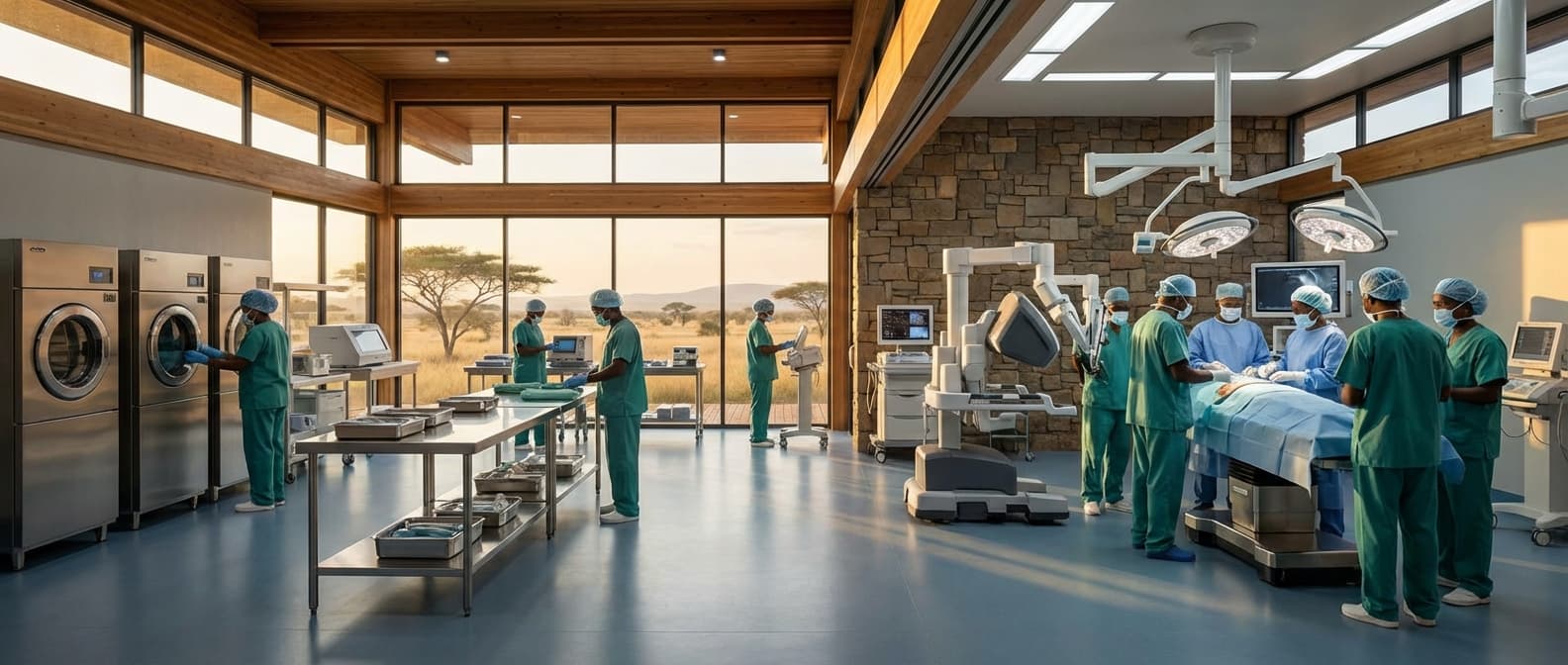
Endoscopy Reprocessing Validation in Ethiopia
Engineering Excellence & Technical Support
AER validation, SOP development and compliance High-standard technical execution following OEM protocols and local regulatory frameworks.
Validated Endoscope Disinfection Protocols
Successfully implemented and validated standardized high-level disinfection (HLD) protocols for various endoscope types, ensuring adherence to international best practices and minimizing the risk of healthcare-associated infections in Ethiopian facilities.
Microbiological Efficacy Testing
Conducted rigorous microbiological testing of reprocessed endoscopes, demonstrating a significant reduction in microbial load and confirming the effectiveness of the validated HLD processes against common pathogens, thereby enhancing patient safety.
Automated Reprocessing Equipment Calibration & QA
Established and maintained a comprehensive quality assurance program for automated endoscope reprocessors (AERs) through regular calibration and performance verification, ensuring consistent and reliable decontamination cycles critical for the validation process.
What Is Endoscopy Reprocessing Validation In Ethiopia?
Endoscopy reprocessing validation in Ethiopia refers to the systematic process of verifying and documenting that reusable medical devices, specifically endoscopes, have been cleaned and disinfected/sterilized according to established safety standards and manufacturer's instructions for use (IFU). This validation is crucial for preventing healthcare-associated infections (HAIs) transmitted through improperly reprocessed endoscopes. The process involves multiple stages, including visual inspection, high-level disinfection (HLD) or sterilization efficacy testing, and functional checks of the endoscope. It ensures that all bioburden, including microorganisms, is effectively removed or inactivated, rendering the device safe for patient use.
| Who Needs Endoscopy Reprocessing Validation? | Typical Use Cases | |||||
|---|---|---|---|---|---|---|
| Healthcare facilities in Ethiopia that utilize reusable endoscopes for diagnostic and therapeutic procedures. This includes public and private hospitals, specialized clinics, and diagnostic centers. | Gastroscopy (upper endoscopy) reprocessing validation. | Colonoscopy (lower endoscopy) reprocessing validation. | Bronchoscopy reprocessing validation. | Cystoscopy reprocessing validation. | ERCP (Endoscopic Retrograde Cholangiopancreatography) reprocessing validation. | Laparoscopy (minimally invasive surgery) reprocessing validation for reusable instruments. |
Key Components of Endoscopy Reprocessing Validation
- Pre-cleaning verification: Ensuring immediate post-use cleaning to prevent bioburden desiccation.
- Manual cleaning assessment: Verifying the thoroughness of manual cleaning procedures for internal lumens and external surfaces.
- High-level disinfection (HLD) or sterilization validation: Testing the efficacy of the chosen HLD agent or sterilization process against a panel of resistant microorganisms.
- Rinsing efficacy confirmation: Ensuring adequate rinsing with sterile or filtered water to remove residual HLD agents.
- Drying verification: Confirming that the endoscope is completely dried to prevent microbial growth.
- Functional testing: Assessing the endoscope's operational integrity and visual clarity post-reprocessing.
- Documentation and record-keeping: Maintaining detailed logs of each reprocessing cycle, including test results, personnel involved, and any deviations.
Who Needs Endoscopy Reprocessing Validation In Ethiopia?
Ensuring the safety and efficacy of endoscopic procedures in Ethiopia hinges on the meticulous reprocessing of reusable endoscopes. Endoscopy reprocessing validation is crucial to prevent the transmission of healthcare-associated infections (HAIs) and maintain the integrity of these complex medical devices. This validation process confirms that cleaning and disinfection/sterilization protocols are consistently effective in eliminating pathogens. In Ethiopia, like globally, several key entities and individuals stand to benefit immensely from robust endoscopy reprocessing validation.
| Target Customer/Department | Key Needs/Benefits of Validation | Specific Responsibilities/Interests |
|---|---|---|
| Hospitals (Public and Private) | Patient safety, reduced HAIs, compliance with national standards, enhanced reputation, efficient use of resources, protection against litigation. | Implementing and adhering to validated reprocessing protocols, ensuring staff training, investing in appropriate equipment and consumables, conducting internal audits, responding to regulatory requirements. |
| Specialized Endoscopy Centers | Maintaining high standards of patient care, offering specialized services with confidence, attracting and retaining patients, ensuring regulatory compliance. | Developing and validating specific reprocessing procedures for their advanced equipment, regular performance monitoring, staff competency assessment. |
| Government Health Ministries and Regulatory Bodies | Protecting public health, establishing and enforcing national healthcare standards, preventing outbreaks of infectious diseases, ensuring equitable access to safe medical procedures. | Developing national guidelines and protocols for endoscopy reprocessing, conducting inspections and audits, certifying reprocessing facilities, issuing licenses, investigating reported HAIs. |
| Medical Device Manufacturers and Suppliers | Ensuring their products are used safely and effectively, providing accurate reprocessing instructions, supporting customers with validation data, maintaining product reputation. | Providing clear and validated reprocessing instructions for their endoscopes, offering technical support and training, potentially assisting with validation studies. |
| Infection Control Practitioners | Preventing the spread of infections within healthcare facilities, developing and monitoring infection control policies, identifying and mitigating risks. | Designing and overseeing endoscopy reprocessing validation programs, auditing reprocessing practices, investigating infection outbreaks related to endoscopes, staff education and competency verification. |
| Endoscopy Unit Staff (Nurses, Technicians) | Performing their duties safely and effectively, understanding and executing correct reprocessing procedures, preventing accidental exposure to pathogens, professional development. | Strictly adhering to validated cleaning, disinfection, and sterilization protocols, participating in training and competency assessments, reporting any reprocessing challenges or failures. |
| Gastroenterologists and Other Endoscopists | Patient safety, confidence in the sterility of their instruments, reducing the risk of transmitting infections to patients, maintaining procedural success. | Advocating for validated reprocessing practices, ensuring their units comply with best practices, participating in quality improvement initiatives related to endoscopy. |
Target Customers and Departments for Endoscopy Reprocessing Validation in Ethiopia
- Hospitals (Public and Private)
- Specialized Endoscopy Centers
- Government Health Ministries and Regulatory Bodies
- Medical Device Manufacturers and Suppliers
- Infection Control Practitioners
- Endoscopy Unit Staff (Nurses, Technicians)
- Gastroenterologists and Other Endoscopists
Endoscopy Reprocessing Validation Process In Ethiopia
The Endoscopy Reprocessing Validation Process in Ethiopia is a critical set of steps designed to ensure that reusable endoscopic equipment is safely and effectively cleaned and disinfected after each patient use. This process is vital in preventing healthcare-associated infections and maintaining patient safety. The workflow typically begins with an inquiry from a healthcare facility or a request for validation from regulatory bodies, and culminates in the execution and documentation of the reprocessing procedures. This document outlines the general workflow from inquiry through execution.
| Stage | Description | Key Activities | Responsible Parties |
|---|---|---|---|
| Initial Inquiry and Scope Definition | The process begins with a healthcare facility expressing a need for validation of their endoscopy reprocessing procedures, or a regulatory body initiating a validation review. This stage defines the specific equipment, reprocessing methods, and the extent of the validation required. | Contacting relevant authorities/providers, identifying the scope of validation, understanding regulatory requirements. | Healthcare Facility Management, Ministry of Health (MoH) or designated regulatory body, Biomedical Engineering Department. |
| Information Gathering and Facility Assessment | Detailed information about the facility's current reprocessing practices, equipment, and infrastructure is collected. This may involve site visits to assess the reprocessing area, available supplies, and workflow. | Reviewing existing Standard Operating Procedures (SOPs), inventory of reprocessing equipment, workflow mapping, identifying potential risks. | Biomedical Engineering Department, Infection Prevention and Control (IPC) Committee, Reprocessing Staff, MoH Inspectors. |
| Development of Validation Protocol | A comprehensive protocol is developed outlining the methodology for validation. This includes objectives, procedures to be validated, testing methods, acceptance criteria, and data collection plan. | Drafting the protocol, defining validation parameters (e.g., cleaning efficacy, disinfection efficacy, leak testing), specifying challenge organisms if applicable, outlining documentation requirements. | Biomedical Engineering Department, IPC Committee, potentially external validation experts, MoH. |
| Training and Skill Assessment | Ensuring that the reprocessing staff are adequately trained on the validated SOPs and possess the necessary skills to perform the procedures correctly. | Conducting training sessions, competency assessments, refresher courses, documenting training records. | IPC Committee, Senior Reprocessing Staff, Biomedical Engineering Department. |
| Execution of Reprocessing Procedures | The actual reprocessing of endoscopes is performed by the facility's staff according to the established SOPs and the validation protocol. | Manual cleaning, automated washer-disinfection, high-level disinfection, drying, storage, leak testing (as per protocol). | Endoscopy Reprocessing Staff. |
| Validation Testing and Data Collection | Samples are collected and tested at various stages of the reprocessing cycle to verify the efficacy of cleaning and disinfection. This may involve microbiological testing. | Collecting samples (e.g., from lumens, external surfaces), performing microbiological cultures, documenting all test results, recording process parameters (e.g., temperature, time, chemical concentration). | Laboratory Technicians, Reprocessing Staff, Biomedical Engineering Department. |
| Data Analysis and Report Generation | The collected data is analyzed to determine whether the reprocessing procedures meet the predetermined acceptance criteria. A comprehensive report is generated summarizing the findings. | Statistical analysis of test results, comparison with acceptance criteria, identification of any deviations, writing the validation report. | Biomedical Engineering Department, IPC Committee, Quality Assurance Department. |
| Review and Approval | The validation report is reviewed by relevant stakeholders, including the healthcare facility's management and regulatory authorities, for final approval. | Reviewing the validation report, providing feedback, approving or requesting revisions, issuing certificates of validation (if applicable). | Healthcare Facility Management, MoH or designated regulatory body. |
| Implementation and Ongoing Monitoring | Upon approval, the validated reprocessing procedures are implemented as the standard practice. Ongoing monitoring and periodic revalidation are crucial to ensure sustained compliance. | Implementing validated SOPs, establishing routine quality control checks, scheduling periodic revalidation, addressing any non-compliance issues. | Healthcare Facility Management, IPC Committee, Biomedical Engineering Department, Reprocessing Staff. |
Key Stages in Endoscopy Reprocessing Validation Process
- Initial Inquiry and Scope Definition
- Information Gathering and Facility Assessment
- Development of Validation Protocol
- Training and Skill Assessment
- Execution of Reprocessing Procedures
- Validation Testing and Data Collection
- Data Analysis and Report Generation
- Review and Approval
- Implementation and Ongoing Monitoring
Endoscopy Reprocessing Validation Cost In Ethiopia
Validating the reprocessing of endoscopic equipment is a critical step in preventing healthcare-associated infections in Ethiopia. This process involves verifying that cleaning and disinfection protocols effectively eliminate pathogens from reusable endoscopes. The cost associated with this validation can vary significantly due to several factors. These include the type and number of validation tests performed, the specific validation kits or reagents used, the expertise and accreditation of the laboratory or service provider, and the geographical location within Ethiopia where the service is rendered. Higher complexity tests, such as those requiring specialized microbiological cultures or molecular methods, will naturally incur higher costs than simpler chemical indicator tests. Similarly, services provided by accredited international laboratories or highly specialized local facilities may command premium pricing. Transportation of samples and personnel also contributes to the overall expense. It's important to note that comprehensive validation often requires a combination of different testing modalities to ensure all critical parameters are met.
| Test/Service Component | Estimated Price Range (ETB) | Notes |
|---|---|---|
| Protein Residue Testing (e.g., using swabs and chemical indicators) | 1,500 - 4,000 ETB per test | Basic indicator tests for gross contamination. Price varies by kit manufacturer. |
| Enzymatic Activity Testing (for cleaning efficacy) | 2,000 - 5,000 ETB per test | Ensures detergents are working effectively. Price depends on the specific enzymatic test kit. |
| Microbiological Culture (surface swabs) | 3,000 - 7,000 ETB per sample | Detects presence of viable microorganisms. Price can increase with the number of samples and types of media used. |
| High-Level Disinfection (HLD) Effectiveness Monitoring (e.g., using indicator strips) | 1,000 - 3,000 ETB per test | Verifies effectiveness of the HLD solution. Price varies by HLD solution type and indicator strip brand. |
| Comprehensive Validation Package (multiple tests for a single endoscope/cycle) | 10,000 - 30,000+ ETB per package | Includes a combination of the above tests. Higher end likely involves more advanced microbiological analyses or on-site consultations. |
| Laboratory Processing Fee (general) | 500 - 2,000 ETB per sample/analysis | An overarching fee charged by the laboratory for their services, separate from consumables. |
| Transportation and Logistics | 1,000 - 5,000+ ETB | Dependent on distance, mode of transport, and urgency. |
Key Pricing Factors for Endoscopy Reprocessing Validation in Ethiopia
- Type and Number of Validation Tests: Different tests (e.g., enzymatic activity, residual protein, microbial contamination, high-level disinfection effectiveness) have varying costs.
- Specific Validation Kits/Reagents: The brand and type of kits used for testing significantly influence pricing.
- Laboratory Accreditation and Expertise: Accredited and highly skilled laboratories may charge more for their services.
- Geographical Location: Costs can differ between major urban centers (e.g., Addis Ababa) and more remote regions.
- Scope of Validation: Whether validation is for individual endoscopes, batches, or a full reprocessing cycle.
- On-site vs. Off-site Testing: Performing tests at the healthcare facility may have different cost structures than sending samples to a central lab.
- Re-testing Requirements: Additional costs will be incurred if initial tests fail and re-validation is necessary.
- Transportation and Logistics: Costs associated with sample collection, transport, and potentially site visits.
Affordable Endoscopy Reprocessing Validation Options
Endoscopy reprocessing validation is a critical patient safety measure, ensuring reusable endoscopes are adequately cleaned and disinfected. Historically, this has been a significant cost center for healthcare facilities. However, there are increasingly affordable options available. Understanding value bundles and implementing cost-saving strategies can significantly reduce the financial burden associated with compliance. Value bundles often combine essential services like initial validation, periodic revalidation, and educational materials into a single package, offering economies of scale. Cost-saving strategies encompass leveraging technology, optimizing workflow, and exploring alternative validation methods where appropriate and compliant with regulatory guidelines. The goal is to achieve robust patient safety without an exorbitant price tag.
| Value Bundle Component | Potential Cost Savings | Explanation |
|---|---|---|
| Initial Validation Study | Reduced per-test cost, bundled pricing | Providers offer lower unit prices when initial validation is part of a larger package, covering all necessary tests for a comprehensive baseline. |
| Periodic Revalidation | Predictable annual/biannual costs, bundled discounts | Bundling ongoing revalidation services allows for better budget forecasting and often includes discounts for long-term commitment. |
| Staff Training & Education | Reduced errors, fewer repeat validations | Integrated training ensures staff understand validation requirements, leading to fewer reprocessing errors and subsequent costly retesting. |
| Documentation & Reporting | Streamlined processes, digital integration | Bundled services may include digital platforms for documentation, reducing administrative overhead and manual data entry. |
| Consultation & Support | Proactive problem-solving, avoidance of penalties | Access to expert consultation within the bundle can help facilities navigate complex regulations and avoid costly compliance issues. |
Key Cost-Saving Strategies for Endoscopy Reprocessing Validation
- Negotiate comprehensive service contracts with reprocessing validation providers that include bundled services.
- Explore multi-year contracts for potential discounts and predictable budgeting.
- Investigate digital or cloud-based validation tracking systems to reduce manual labor and paper costs.
- Optimize internal workflows for reprocessing and validation to minimize staff time and potential errors.
- Train staff thoroughly on proper reprocessing and validation procedures to reduce the need for repeat testing or costly remediation.
- Consider remote validation monitoring where feasible and permitted by regulatory bodies.
- Regularly review and compare pricing from multiple validation service providers.
- Evaluate the cost-benefit of in-house vs. outsourced validation for specific components or frequencies.
- Leverage manufacturer recommendations and guidelines to ensure validation efforts are targeted and efficient.
- Stay informed about emerging technologies and validation methods that may offer cost efficiencies while maintaining compliance.
Verified Providers In Ethiopia
In Ethiopia's growing healthcare landscape, identifying reliable and high-quality healthcare providers is paramount for individuals seeking optimal health outcomes. Franance Health stands out as a leader, distinguished by its rigorous credentialing process and unwavering commitment to excellence. This makes them the premier choice for a wide range of medical services, offering peace of mind and superior care.
| Service Category | Franance Health Provider Advantage | Why it Matters for Patients |
|---|---|---|
| General Medicine | Access to board-certified general practitioners with broad diagnostic and treatment capabilities. | Ensures accurate initial assessments, management of common illnesses, and timely referrals when specialized care is needed. |
| Specialty Care (e.g., Cardiology, Pediatrics, Obstetrics & Gynecology) | Partnership with highly specialized physicians who are leaders in their fields, often with international training. | Provides access to expert diagnosis and treatment for complex conditions, leading to better health outcomes and reduced complications. |
| Diagnostic Services (e.g., Imaging, Laboratory) | Verified facilities utilizing state-of-the-art equipment and adhering to strict quality control measures. | Guarantees reliable and accurate test results, which are crucial for effective diagnosis and treatment planning. |
| Surgical Procedures | Experienced surgeons operating in accredited surgical centers with robust infection control protocols. | Ensures the highest level of safety and success rates for surgical interventions, minimizing risks and promoting faster recovery. |
| Emergency Services | Partners with well-equipped emergency departments and highly trained emergency medical teams. | Provides immediate and critical care during medical emergencies, potentially saving lives and preventing long-term disability. |
Key Credentials and Advantages of Franance Health:
- Accreditation and Certifications: Franance Health providers undergo stringent verification processes, ensuring they meet or exceed national and international standards for quality and safety.
- Experienced and Qualified Professionals: Our network comprises highly trained physicians, nurses, and allied health professionals with extensive experience in their respective specialties.
- Patient-Centric Approach: We prioritize patient well-being, focusing on personalized care, clear communication, and a supportive healthcare journey.
- Advanced Technology and Facilities: Franance Health partners with facilities equipped with modern medical technology to ensure accurate diagnoses and effective treatments.
- Ethical Practice and Integrity: All our verified providers adhere to the highest ethical standards, upholding patient confidentiality and providing transparent care.
- Accessibility and Convenience: We strive to make quality healthcare accessible, with a network of strategically located facilities and streamlined appointment processes.
Scope Of Work For Endoscopy Reprocessing Validation
This Scope of Work (SOW) outlines the requirements for validating the reprocessing of flexible endoscopes to ensure patient safety and regulatory compliance. The validation will confirm that the defined cleaning and disinfection/sterilization processes are consistently effective in removing and inactivating microorganisms to acceptable levels. This includes the validation of manual and automated cleaning processes, high-level disinfection (HLD) or sterilization, and the complete reprocessing cycle.
The primary objective is to provide documented evidence that the endoscopes are reprocessed to a standard that meets or exceeds current regulatory guidelines and industry best practices, thereby minimizing the risk of healthcare-associated infections (HAIs).
| Deliverable | Description | Standard/Specification | Acceptance Criteria | Timeline (example) |
|---|---|---|---|---|
| Validation Protocol | Detailed plan outlining the scope, objectives, methodology, sampling plan, testing procedures, and acceptance criteria for the reprocessing validation. | ISO 13485, AAMI ST58, FDA Guidance on Reprocessing Medical Devices, CDC Guidelines for Disinfection and Sterilization, Manufacturer's Instructions for Use (IFU). | Approved by client and validation team lead prior to execution. | Week 1-2 |
| Microbiological Sampling and Testing Results | Data from samples taken at critical points in the reprocessing cycle to assess microbial load and effectiveness of cleaning/disinfection/sterilization. | Validated microbiological testing methods, specified limits for microbial recovery and absence of specific pathogens. | Demonstrate reduction of microbial load to acceptable levels as defined in the protocol. Absence of specified indicator organisms. | Week 3-6 |
| Cleaning Verification Data | Results from tests (e.g., protein, blood, carbohydrate assays) performed on the cleaned endoscope to confirm the removal of organic debris. | FDA-cleared or validated cleaning verification kits/methods. Specific RLU (Relative Light Units) or other measurement thresholds. | All tested areas meet or fall below specified thresholds for protein, blood, and carbohydrates. | Concurrent with Microbiological Sampling |
| Validation Report | Comprehensive document summarizing the validation activities, results, analysis, conclusions, and recommendations. | Clear, concise, and well-organized report. Includes protocol deviations, raw data, statistical analysis, and conclusions. | Acceptance by the client, demonstrating that the reprocessing process is validated. | Week 7-8 |
| Standard Operating Procedures (SOPs) | Written procedures for manual and automated endoscope cleaning, HLD, sterilization, inspection, assembly, and storage. | Clear, step-by-step instructions aligned with the validated process and IFUs. Incorporates relevant regulatory requirements. | SOPs are reviewed, updated, and approved by relevant stakeholders. | Week 8-9 |
Key Activities and Deliverables
- Development and approval of a detailed Validation Protocol.
- Execution of the Validation Protocol, including microbiological sampling and testing.
- Analysis of all collected data.
- Preparation and submission of a comprehensive Validation Report.
- Recommendations for process improvement or revalidation, if necessary.
- Training of relevant personnel on validated reprocessing procedures.
- Development or review of Standard Operating Procedures (SOPs) for endoscope reprocessing.
- Verification of equipment calibration and maintenance records for reprocessing equipment.
- Assessment of the effectiveness of cleaning verification methods (e.g., protein, blood, carbohydrate testing).
Service Level Agreement For Endoscopy Reprocessing Validation
This Service Level Agreement (SLA) outlines the agreed-upon response times and uptime guarantees for the validation services related to endoscopy reprocessing. This SLA is designed to ensure the reliability and efficiency of the validation process, ultimately contributing to patient safety and operational continuity.
| Service Component | Uptime Guarantee | Response Time (Critical Issue) | Resolution Time (Critical Issue) | Response Time (Major Issue) | Resolution Time (Major Issue) |
|---|---|---|---|---|---|
| Endoscopy Reprocessing Validation Service | 99.5% (excluding scheduled downtime) | 1 hour | 4 hours | 4 business hours | 12 business hours |
| Support Portal Access | 99.9% | N/A | N/A | 2 business hours | 8 business hours |
Key Definitions
- Validation Service: The service provided for the periodic or ad-hoc validation of endoscopy reprocessing equipment and processes.
- Scheduled Downtime: Planned maintenance or upgrades to the validation systems, communicated to the client in advance.
- Unscheduled Downtime: Any interruption to the validation service that is not pre-announced.
- Response Time: The maximum time allowed for the Service Provider to acknowledge and begin addressing a reported issue.
- Resolution Time: The maximum time allowed for the Service Provider to resolve a reported issue, depending on its severity.
- Uptime Guarantee: The percentage of time the validation service is available and operational.
- Critical Issue: An issue that renders the validation service completely unavailable or significantly impacts patient care due to reprocessing failure.
- Major Issue: An issue that impacts the functionality of the validation service but does not immediately threaten patient safety or require an immediate shutdown.
Frequently Asked Questions

Ready when you are
Let's scope your Endoscopy Reprocessing Validation in Ethiopia project in Ethiopia.

Scaling healthcare logistics and technical systems across the entire continent.