
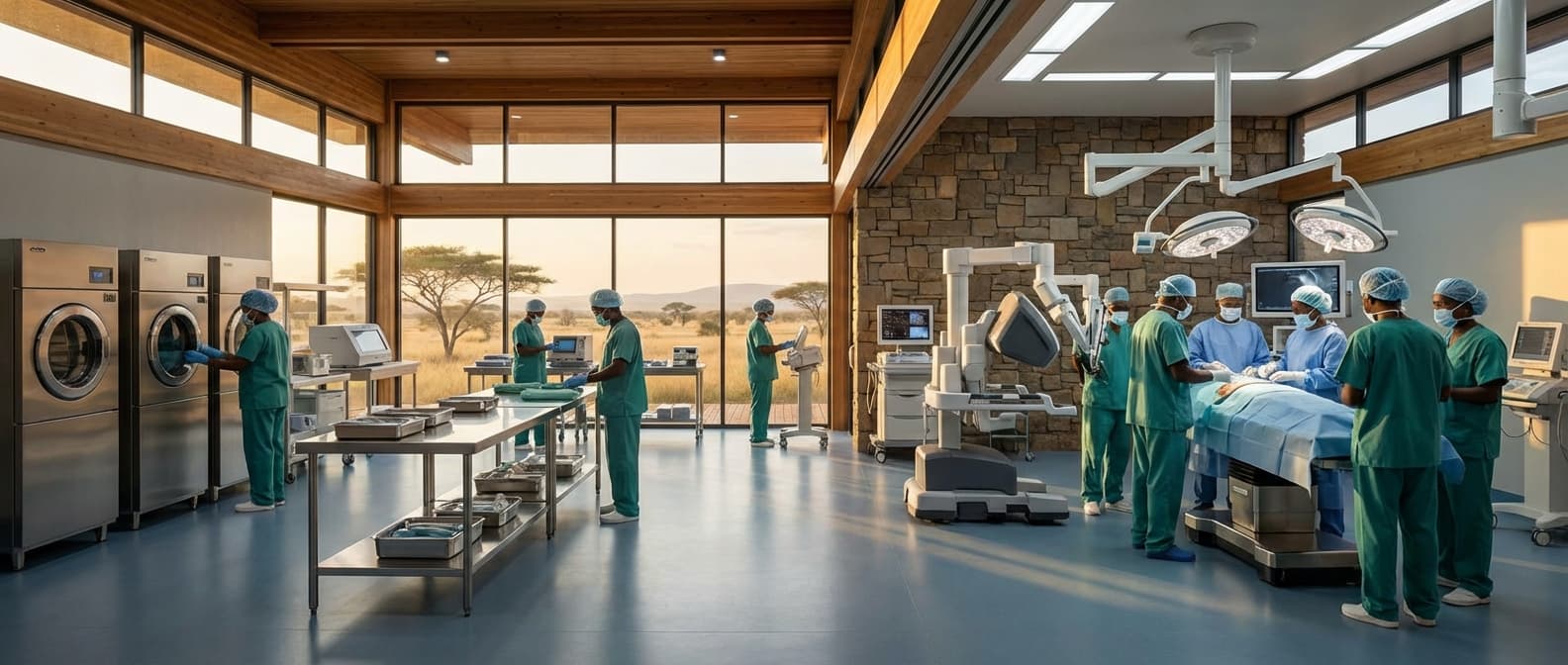
CSSD Design & Validation in Ethiopia
Engineering Excellence & Technical Support
CSSD workflow design, validation and process development High-standard technical execution following OEM protocols and local regulatory frameworks.
Sterilization Process Validation & Optimization
Ensuring robust validation protocols for all CSSD sterilization cycles (autoclave, low-temperature, etc.) to meet international standards (e.g., ISO 17665) and optimize cycle parameters for maximum efficacy and efficiency, reducing reprocessing times and ensuring instrument sterility.
Digital Workflow Integration & Tracking
Implementing and validating digital tracking systems for instruments from decontamination to sterilization and distribution. This ensures full traceability, facilitates inventory management, and provides auditable records for quality assurance and regulatory compliance within Ethiopian healthcare facilities.
CSSD Equipment Qualification & Maintenance Strategy
Developing and executing comprehensive Equipment Qualification (IQ/OQ/PQ) plans for all CSSD machinery. Establishing a proactive and validated preventative maintenance schedule to minimize downtime, ensure consistent performance, and extend the lifespan of critical sterilization equipment in Ethiopia.
What Is Cssd Design & Validation In Ethiopia?
CSSD (Central Sterile Supply Department) design and validation in Ethiopia refers to the systematic process of planning, configuring, and verifying the functionality, safety, and efficacy of a sterile processing facility. This encompasses the physical layout, equipment selection and placement, workflow optimization, environmental controls, and the validation of all processes and equipment to ensure the delivery of safe and sterile medical devices to healthcare providers. The objective is to meet international standards for infection prevention and control within a specific healthcare setting, considering local regulatory requirements and resource availability.
| Who Needs CSSD Design & Validation? | Typical Use Cases & Scenarios | ||||||
|---|---|---|---|---|---|---|---|
| Hospitals and Healthcare Facilities: All sizes of hospitals, including public, private, and specialized facilities (e.g., surgical centers, dental clinics, diagnostic imaging centers) that perform procedures requiring sterile instruments and equipment. | New Hospital Construction/Renovation: Designing a CSSD from inception or reconfiguring an existing one to meet current standards and increased capacity needs. | Introduction of New Sterilization Technologies: Validating new equipment or processes before implementation to ensure efficacy and safety. | Expansion of Surgical Services: Increasing the demand for sterile supplies necessitates an appropriately scaled and validated CSSD. | Addressing Infection Control Deficiencies: A validated CSSD is crucial for minimizing healthcare-associated infections (HAIs) and improving patient safety. | Compliance with National/International Standards: Meeting regulatory requirements for sterile processing and quality management systems. | Outsourced Sterilization Services: Facilities providing contract sterilization services require robust design and validation to ensure client compliance and product safety. | Tertiary Care Centers: Facilities with complex surgical procedures and a high volume of instrumentation require advanced CSSD capabilities. |
| Diagnostic Laboratories: Facilities performing invasive procedures or handling critical biological samples that require sterilized equipment. | Research Institutions: Laboratories conducting experiments involving sterile techniques or requiring sterilized consumables. | Veterinary Clinics/Hospitals: Ensuring sterility of surgical instruments and equipment for animal care. | Dental Practices: Sterilization of dental instruments is paramount for preventing disease transmission. | Medical Device Manufacturers (for reprocessing): Ensuring the sterility of devices intended for single or multi-use reprocessing. |
Key Components of CSSD Design & Validation in Ethiopia
- Needs Assessment and Program Development: Defining the scope of services, anticipated workload, types of instrumentation, and required throughput to inform the design.
- Facility Layout and Design: Optimizing space allocation for distinct workflow areas (decontamination, preparation & packaging, sterilization, sterile storage), ensuring unidirectional flow to prevent cross-contamination, and incorporating adequate ventilation, lighting, and utility access.
- Equipment Selection and Integration: Identifying and specifying appropriate sterilization technologies (e.g., steam autoclaves, low-temperature sterilizers), washing/disinfection equipment, material handling systems, and monitoring devices, ensuring compatibility and compliance with relevant standards.
- Workflow and Process Engineering: Developing Standard Operating Procedures (SOPs) for all aspects of sterile processing, including receiving, cleaning, inspection, assembly, packaging, sterilization, storage, and distribution. Emphasis on efficient and safe material movement.
- Environmental Monitoring and Control: Designing and implementing systems for temperature, humidity, air pressure differentials, and air changes per hour to maintain optimal sterile conditions and prevent microbial contamination.
- Quality Management System (QMS) Integration: Establishing a robust QMS framework that includes documentation, training, competency assessment, incident reporting, and continuous improvement mechanisms.
- Validation and Verification: A critical phase involving documented evidence that the CSSD design, equipment, and processes consistently produce sterile products meeting predefined specifications. This includes:** * Installation Qualification (IQ): Verifying that equipment is installed correctly according to manufacturer's specifications and facility requirements. * Operational Qualification (OQ): Testing equipment and systems to ensure they operate within defined parameters and at the specified performance levels. * Performance Qualification (PQ): Challenging the entire process, including equipment, personnel, and procedures, under simulated normal operating conditions to demonstrate consistent delivery of sterile products.
- Regulatory Compliance: Adhering to national and international guidelines and standards (e.g., ISO 13485, relevant Ministry of Health guidelines, WHO recommendations) relevant to sterile processing and medical device reprocessing.
Who Needs Cssd Design & Validation In Ethiopia?
CSSD (Central Sterile Supply Department) design and validation are crucial for ensuring the safety and efficiency of healthcare facilities. In Ethiopia, where the healthcare sector is rapidly developing and striving for international standards, the need for expertly designed and validated CSSDs is paramount. This is particularly important for facilities aiming to provide high-quality patient care, reduce healthcare-associated infections (HAIs), and optimize resource utilization. Proper CSSD design minimizes the risk of contamination, streamlines workflows, and ensures that surgical instruments and medical devices are sterilized effectively, ultimately protecting both patients and healthcare professionals.
| Customer Type | Primary Departments Involved/Benefiting | Key Needs/Reasons |
|---|---|---|
| Hospitals (Public & Private) | Operating Theatres, Intensive Care Units (ICUs), Emergency Rooms, Inpatient Wards, Outpatient Clinics, Infection Control Department | Ensuring sterility of surgical instruments and reusable medical devices for all procedures; preventing HAIs; complying with national and international sterilization standards; optimizing instrument turnaround time; reducing equipment downtime. |
| Specialty Clinics (e.g., Surgical Centers, Dental Clinics, Ophthalmology Clinics) | Procedure Rooms, Consultation Rooms,Sterilization Areas | Meeting specific sterilization requirements for specialized instruments; maintaining high standards of patient safety in focused treatment areas; efficient workflow for high-volume procedures. |
| Diagnostic Centers | Endoscopy Units, Biopsy Procedure Areas | Sterilization of complex endoscopic equipment; ensuring patient safety during invasive diagnostic procedures; compliance with specific disinfection and sterilization protocols. |
| Research Institutions with Clinical Facilities | Clinical Trial Units, Research Laboratories requiring sterile equipment | Maintaining sterile conditions for research involving patient samples or procedures; ensuring the integrity and reliability of research outcomes through properly sterilized equipment. |
| Government Health Bureaus & Ministries | Planning & Infrastructure Departments, Quality Assurance & Standards Departments, Public Health Institutes | Developing and enforcing national CSSD standards; guiding the design and upgrades of public healthcare facilities; promoting best practices in infection prevention and control across the country; capacity building for healthcare professionals. |
Target Customers and Departments for CSSD Design & Validation in Ethiopia
- Hospitals (Public & Private)
- Specialty Clinics (e.g., Surgical Centers, Dental Clinics, Ophthalmology Clinics)
- Diagnostic Centers
- Research Institutions with clinical facilities
- Government Health Bureaus & Ministries
Cssd Design & Validation Process In Ethiopia
The design and validation process for Central Sterile Services Departments (CSSDs) in Ethiopia, like in many other regions, follows a structured workflow to ensure optimal functionality, infection control, and compliance with relevant standards. This process typically begins with an initial inquiry and culminates in the fully operational and validated department. The key stages involve understanding client needs, developing conceptual and detailed designs, procuring equipment, constructing or renovating the facility, installing and commissioning equipment, and finally, validating all systems to confirm they meet intended performance and safety requirements.
| Phase | Key Activities | Deliverables/Outcomes | Responsible Parties | Typical Timeline (Ethiopian Context) |
|---|---|---|---|---|
| Client expresses interest, defines project scope and requirements (e.g., hospital size, service volume, budget). Site visit and initial assessment of existing infrastructure. | Project brief, preliminary budget, site assessment report. | Hospital/Client, Healthcare Consultant. | 1-4 Weeks |
| Develop initial layout, space allocation, workflow diagrams, and preliminary equipment list. Assess technical and financial feasibility. Identify potential challenges and risks. | Conceptual design drawings, preliminary equipment list, feasibility report, indicative budget. | Healthcare Consultant, Architects, Engineers. | 4-8 Weeks |
| Develop detailed architectural, mechanical, electrical, and plumbing (MEP) drawings. Specify all equipment, materials, and finishes. Obtain necessary approvals from regulatory bodies. | Complete architectural, MEP, and structural drawings. Detailed specifications for all components. Bill of Quantities (BoQ). Regulatory approval documentation. | Architects, MEP Engineers, Structural Engineers, Procurement Specialists, Regulatory Bodies (e.g., Ministry of Health, relevant local authorities). | 8-16 Weeks |
| Tender process for equipment and materials based on detailed specifications. Vendor selection and contract negotiation. Ordering and delivery of items. | Procured equipment and materials, signed contracts with suppliers. | Procurement Department, Project Management Team, Suppliers. | 12-24 Weeks (can overlap with construction) |
| Site preparation, construction of new areas, or renovation of existing spaces. Installation of walls, flooring, ceiling, MEP systems, and finishes according to design specifications. | Completed physical facility, ready for equipment installation. Inspection and quality control reports. | Contractor, Site Engineers, Quality Control Inspectors. | 16-40 Weeks (highly variable based on scope) |
| Installation of all CSSD equipment (e.g., washers, disinfectors, sterilizers, packaging machines). Testing of individual equipment to ensure proper function and calibration. Basic operational checks. | Installed and tested equipment. Preliminary operational reports. Manufacturer's certifications. | Equipment Suppliers/Installers, Technical Team, Project Manager. | 4-12 Weeks |
| Comprehensive testing and documentation to confirm that the CSSD meets all design specifications, operational requirements, and infection control standards. Includes IQ (Installation Qualification), OQ (Operational Qualification), and PQ (Performance Qualification). | Validation Master Plan (VMP), IQ, OQ, and PQ protocols and reports. Validation certificates. Compliance documentation. | Validation Specialists/Engineers, Biomedical Engineers, Infection Control Team, Client representatives. | 6-12 Weeks |
| Training of CSSD staff on equipment operation, maintenance, infection control protocols, and workflow procedures. Formal handover of the completed and validated CSSD to the client. | Trained staff, training records, operational manuals, maintenance schedules, handover documentation. | Equipment Suppliers, Training Specialists, CSSD Manager, Hospital Administration. | 2-4 Weeks |
| Regular performance monitoring, preventative maintenance of equipment, ongoing staff training, and quality assurance activities to ensure sustained optimal operation. | Performance logs, maintenance records, quality assurance reports, updated protocols. | CSSD Staff, Biomedical Engineering Department, Maintenance Technicians. | Continuous |
CSSD Design & Validation Workflow in Ethiopia
- Initial Inquiry & Needs Assessment
- Conceptual Design & Feasibility Study
- Detailed Design & Engineering
- Procurement of Equipment & Materials
- Facility Construction/Renovation
- Equipment Installation & Commissioning
- Validation & Verification
- Training & Handover
- Ongoing Monitoring & Maintenance
Cssd Design & Validation Cost In Ethiopia
Designing and validating a Central Sterile Services Department (CSSD) in Ethiopia involves a range of costs influenced by several critical factors. These costs can vary significantly depending on the scale of the facility, the complexity of the required services, the chosen technology, and the specific regulatory requirements of the Ethiopian Ministry of Health and other relevant bodies. Understanding these pricing factors is crucial for accurate budgeting and planning for healthcare institutions.
| Cost Component | Estimated Range (ETB) - Small to Medium Facility | Estimated Range (ETB) - Large Facility | Notes |
|---|---|---|---|
| Design & Consultancy Fees | 200,000 - 750,000 | 750,000 - 2,500,000+ | Varies based on consultant's experience and project complexity. |
| Basic Equipment (Washer-disinfectors, Autoclaves, etc.) | 5,000,000 - 15,000,000 | 15,000,000 - 50,000,000+ | Depends heavily on capacity, automation, and brand. |
| Ancillary Equipment (Ultrasonic cleaners, Sealers, Storage) | 500,000 - 2,000,000 | 2,000,000 - 7,000,000+ | Adds to efficiency and workflow. |
| Infrastructure & Renovation | 3,000,000 - 10,000,000 | 10,000,000 - 30,000,000+ | Includes HVAC, plumbing, electrical, finishes. New builds are more expensive. |
| Validation & Commissioning | 800,000 - 3,000,000 | 3,000,000 - 10,000,000+ | Includes testing, certification, and documentation. |
| Training | 300,000 - 1,000,000 | 1,000,000 - 3,500,000+ | For operational and technical staff. |
| Contingency (10-15%) | 1,000,000 - 3,500,000 | 3,500,000 - 15,000,000+ | Essential for unexpected costs. |
| Total Estimated Range | **10,800,000 - 35,750,000 | 35,250,000 - 118,000,000+ | These are indicative ranges and can vary significantly. |
Key Pricing Factors for CSSD Design & Validation in Ethiopia
- Facility Size and Scope: The total area allocated for the CSSD, the number of operating rooms it will serve, and the volume of instruments requiring sterilization directly impact design complexity and equipment needs.
- Equipment Selection: The type and brand of sterilization equipment (e.g., autoclaves, washer-disinfectors, ultrasonic cleaners, drying cabinets) are major cost drivers. High-end, automated, or specialized equipment will naturally be more expensive.
- Technology Integration: The level of automation, data management systems (e.g., tracking software), and integration with hospital information systems will add to the design and implementation costs.
- Infrastructure Requirements: This includes modifications to existing buildings or new construction, plumbing, electrical, ventilation (HVAC) systems, and specialized flooring and wall finishes to meet infection control standards.
- Consultancy and Design Fees: Engaging experienced architects, engineers, and CSSD specialists for the design and planning phases incurs professional fees.
- Validation and Commissioning Services: This is a critical step to ensure the CSSD meets all regulatory and performance standards. It involves testing, documentation, and certification by accredited bodies.
- Training: Comprehensive training for CSSD staff on equipment operation, maintenance, and infection control protocols is an essential part of the overall cost.
- Regulatory Compliance: Adhering to Ethiopian Ministry of Health guidelines, international standards (e.g., ISO, AAMI), and local building codes can influence material choices and design specifications.
- Project Management: Effective project management ensures timely completion and cost control, and this service has its own associated costs.
- Contingency: It is prudent to include a contingency fund for unforeseen expenses that may arise during the design and validation process.
Affordable Cssd Design & Validation Options
Designing and validating a Central Sterile Supply Department (CSSD) is crucial for patient safety and operational efficiency. However, the associated costs can be a significant barrier for many healthcare facilities. This document outlines affordable CSSD design and validation options, emphasizing value bundles and cost-saving strategies to help facilities achieve compliance and optimal performance without breaking the bank.
| Value Bundle Type | Description | Cost-Saving Strategy | Potential Benefits |
|---|---|---|---|
| Basic Compliance Bundle | Focuses on meeting minimum regulatory requirements for decontamination, sterilization, and sterile storage. Includes essential equipment and basic validation services. | Prioritizes essential equipment over premium features. Streamlined validation protocols. Potentially utilizes pre-fabricated modular components. | Ensures fundamental patient safety and regulatory compliance at the lowest initial investment. Easier to implement for facilities with very limited budgets. |
| Efficiency Enhancement Bundle | Builds upon the basic bundle by incorporating elements that improve workflow, reduce cycle times, and enhance staff productivity. May include integrated tracking systems. | Bulk purchasing of compatible equipment. Standardization of consumables. Training on optimized workflows. Negotiated service contracts for validation. | Reduces labor costs through improved efficiency. Minimizes instrument turnaround time. Provides better data for process monitoring and improvement. Lower risk of reprocessing errors. |
| Integrated Solutions Bundle | A comprehensive package that includes design consultation, equipment procurement, validation services, and ongoing support, often with a focus on smart technology integration. | Partnership with a single vendor for multiple services, leading to potential discounts. Economies of scale in procurement and validation. Remote monitoring and diagnostics. | Simplified project management. Seamless integration of equipment and systems. Proactive maintenance and issue resolution. Enhanced data analytics for continuous improvement. Potentially lower long-term operational costs. |
| Phased Validation Package | Instead of validating the entire CSSD at once, this package breaks down validation into stages as new equipment or areas are implemented or upgraded. | Spreads validation costs over time. Allows for focused validation efforts. Can be tied to specific equipment or process upgrades. | Reduces the upfront financial burden of validation. Ensures compliance for each implemented phase. More manageable for facilities with limited validation budgets. |
Key Considerations for Affordable CSSD Design & Validation
- Phased Implementation: Break down the project into manageable phases, allowing for budget allocation over time. Start with essential upgrades and expand as resources permit.
- Modular Design: Opt for modular CSSD layouts that can be adapted and expanded easily, reducing the need for major renovations in the future.
- Standardization: Utilize standardized equipment and workflows to streamline purchasing, maintenance, and training, leading to long-term cost savings.
- Prioritization: Focus on critical areas like decontamination and sterilization first, ensuring compliance with core patient safety requirements.
- Leveraging Existing Infrastructure: Assess opportunities to reconfigure and repurpose existing spaces and equipment where feasible, minimizing new construction costs.
- Technology Integration: Explore cost-effective technology solutions for tracking, monitoring, and data management that can improve efficiency and reduce manual labor.
- Consensus-Based Design: Involve key stakeholders, including CSSD staff, infection control, and facilities management, early in the design process to prevent costly revisions later.
- Regulatory Compliance Focus: Prioritize design elements and validation processes that directly address current regulatory requirements, avoiding unnecessary embellishments.
- Long-Term Operational Efficiency: Consider the total cost of ownership, including energy consumption, water usage, and maintenance, when selecting equipment and designing workflows.
Verified Providers In Ethiopia
Ensuring access to reliable and high-quality healthcare is a paramount concern for individuals and organizations operating in or supporting Ethiopia. In this context, identifying 'Verified Providers' is crucial. These are healthcare entities that have undergone rigorous vetting processes to confirm their adherence to established standards of practice, ethical conduct, and operational integrity. Franance Health stands out as a leading example of such a verified provider, demonstrating a deep commitment to excellence across its operations. Their credentials go beyond mere certification, reflecting a holistic approach to healthcare delivery that prioritizes patient safety, clinical efficacy, and accessibility. Choosing a verified provider like Franance Health offers significant advantages, including increased trust, predictable outcomes, and a reduced risk of encountering substandard care.
| Provider Type | Verification Status | Franance Health's Standing | Why it Matters for You |
|---|---|---|---|
| Hospitals | Verified | Fully Accredited and Certified | Ensures adherence to high medical standards, patient safety protocols, and advanced treatment capabilities. |
| Clinics | Verified | Certified for Primary and Specialized Care | Guarantees competent and accessible frontline healthcare services, with clear referral pathways. |
| Diagnostic Centers | Verified | Equipped with Certified Technology and Personnel | Assures accuracy and reliability of diagnostic tests, leading to correct diagnoses. |
| Pharmaceuticals | Verified | Licensed and Compliant with Quality Standards | Ensures the authenticity, safety, and efficacy of medications, preventing counterfeit or substandard drugs. |
| Emergency Medical Services | Verified | Certified Response Teams and Equipment | Provides rapid and effective emergency care, crucial for life-saving interventions. |
Key Credentials of Franance Health:
- Accreditation from recognized national and international healthcare regulatory bodies.
- Demonstrated commitment to continuous quality improvement initiatives and patient feedback mechanisms.
- Adherence to stringent ethical guidelines and patient rights protocols.
- A robust network of qualified and licensed healthcare professionals.
- Investment in modern medical infrastructure and technology.
- Transparent pricing and billing practices.
- Proven track record of positive patient outcomes and satisfaction.
- Strong partnerships with government health ministries and NGOs.
Scope Of Work For Cssd Design & Validation
This Scope of Work (SOW) outlines the requirements for the design and validation of a Central Sterile Supply Department (CSSD). It details the technical deliverables and standard specifications necessary to ensure a safe, efficient, and compliant CSSD operation. The objective is to create a functional design that meets all relevant national and international standards for sterilization, disinfection, and sterile processing of medical devices.
| Category | Standard/Specification | Description | Applicability |
|---|---|---|---|
| Design & Layout | ISO 13485 | Quality Management Systems for Medical Devices | Ensures design supports quality processes for sterile devices. |
| Design & Layout | HTM 01-01 | Decontamination of reusable medical devices | Provides guidance on facility design, workflow, and ventilation. |
| Equipment | IEC 61010 Series | Safety requirements for electrical equipment for measurement, control, and laboratory use | Ensures safety of electrical sterilization and cleaning equipment. |
| Equipment | EN 285 | Steam sterilizers – Large | Specifies requirements for large steam sterilizers. |
| Equipment | ISO 11135 | Sterilization of health care products – Ethylene oxide | Specifies requirements for ethylene oxide sterilization. |
| Equipment | ISO 11137 Series | Sterilization of health care products – Radiation | Specifies requirements for radiation sterilization. |
| Equipment | ISO 17665 Series | Sterilization of health care products – Moist heat | Specifies requirements for moist heat sterilization (autoclaving). |
| Validation | ISPE Guidelines (e.g., Baseline Pharmaceutical Engineering Guides) | Guidance on validation of pharmaceutical manufacturing processes | Applicable to sterilization and cleaning processes as a benchmark. |
| Validation | FDA 21 CFR Part 820 | Quality System Regulation | Ensures validation processes meet regulatory requirements for medical device manufacturing. |
| Materials & Finishes | Relevant building codes and standards | Ensures use of durable, easy-to-clean, and non-porous materials. | Maintains hygiene and prevents microbial contamination. |
| Ventilation | ASHRAE standards | Standards for HVAC systems | Ensures appropriate air changes, pressure differentials, and filtration for infection control. |
Key Technical Deliverables
- Detailed architectural and layout drawings of the CSSD, including workflow analysis and zoning.
- Equipment specifications and selection reports for all CSSD machinery (e.g., washers, sterilizers, ultrasonic cleaners, packaging machines).
- Utilities and services schematics (e.g., steam, water, electricity, ventilation, data).
- Validation protocols for all equipment and processes (IQ, OQ, PQ).
- Standard Operating Procedures (SOPs) for all CSSD functions.
- Training materials and plans for CSSD personnel.
- Waste management and hazardous material handling plan.
- Infection control risk assessment specific to the CSSD environment.
- Material and finishes specifications for CSSD areas.
Service Level Agreement For Cssd Design & Validation
This Service Level Agreement (SLA) outlines the guaranteed response times and uptime for the CSSD (Central Sterile Services Department) Design & Validation services provided by [Your Company Name]. This SLA ensures timely support and reliable service delivery to our clients, minimizing disruptions to their operations.
| Service Component | Priority Level | Response Time Target | Uptime Guarantee |
|---|---|---|---|
Key Service Level Objectives
- Response Time: The maximum time allowed for [Your Company Name] to acknowledge and begin addressing a reported issue or request.
- Uptime Guarantee: The minimum percentage of time the CSSD design and validation platform/services are available and operational.
- Scope: This SLA applies to all active CSSD Design & Validation projects and associated services delivered to the client.
- Exclusions: This SLA does not cover issues arising from client-side network problems, force majeure events, or unauthorized modifications to the provided systems.
Frequently Asked Questions

Ready when you are
Let's scope your CSSD Design & Validation in Ethiopia project in Ethiopia.

Scaling healthcare logistics and technical systems across the entire continent.