
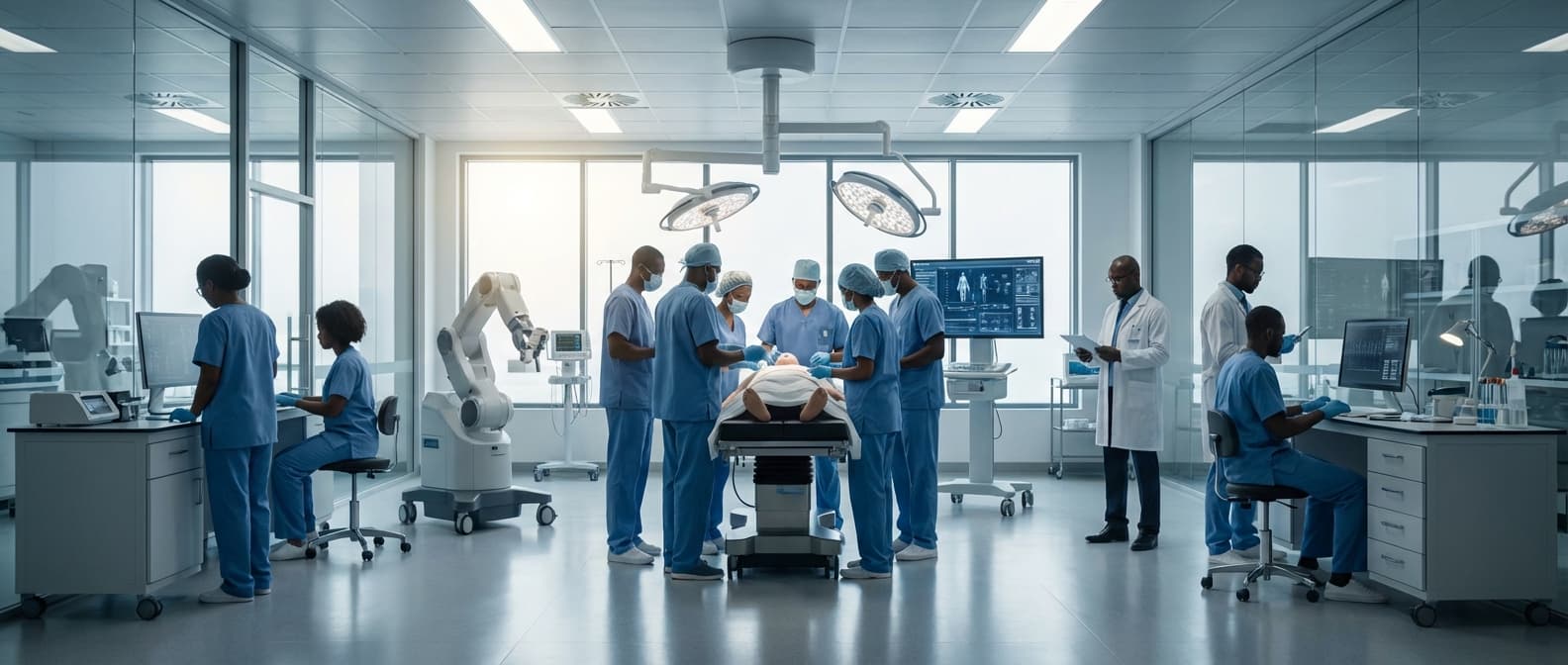
Calibration & Electrical Safety Testing in Ethiopia
Engineering Excellence & Technical Support
Equipment calibration and IEC safety testing High-standard technical execution following OEM protocols and local regulatory frameworks.
Nationwide Calibration Network Expansion
In partnership with the Ethiopian Metrology Agency (EMA), we're establishing a robust, decentralized network of accredited calibration laboratories across key industrial and urban centers. This initiative ensures rapid, on-site calibration services for critical measuring instruments, minimizing downtime and enhancing data integrity for businesses nationwide.
Advanced Electrical Safety Testing for Critical Infrastructure
We are deploying state-of-the-art electrical safety testing equipment and certified personnel to ensure the reliability and safety of Ethiopia's vital infrastructure, including healthcare facilities, power generation plants, and telecommunications hubs. Our comprehensive testing protocols mitigate risks of electrical hazards and ensure compliance with international safety standards.
Specialized Metrology Training & Capacity Building
Through intensive training programs, we are building a highly skilled local workforce in metrology and electrical safety testing. This program focuses on advanced calibration techniques, troubleshooting complex instrumentation, and implementing rigorous safety procedures, empowering Ethiopian professionals to independently maintain high standards of measurement and safety across diverse industries.
What Is Calibration & Electrical Safety Testing In Ethiopia?
Calibration and electrical safety testing are critical services ensuring the accuracy, reliability, and safe operation of electrical equipment. Calibration involves comparing the measurements of a device against a known standard and adjusting it to maintain accuracy within specified tolerances. Electrical safety testing, conversely, verifies that equipment is designed and functioning in a manner that minimizes the risk of electric shock, fire, or other electrical hazards to users and the environment. These services are essential across various sectors in Ethiopia to comply with national and international standards, prevent failures, and protect human life and property.
| Service | Involves | Who Needs It | Typical Use Cases | |||
|---|---|---|---|---|---|---|
| Calibration | Comparing instrument readings to a certified reference standard (e.g., voltage, current, resistance, temperature). Adjustment of the instrument to bring it within acceptable error limits. Issuance of a calibration certificate detailing the results and traceability. | Manufacturing facilities, research and development laboratories, healthcare institutions (medical devices), energy sector (power generation and distribution), telecommunications, food processing plants, construction, and any organization relying on precise measurements for operations or quality control. | Ensuring accuracy of process control instruments (thermocouples, pressure sensors), validating laboratory equipment (balances, pH meters), verifying measurement tools (multimeters, oscilloscopes), maintaining quality control in production lines, and meeting regulatory requirements for accredited testing laboratories. | Ground continuity testing, insulation resistance testing, earth resistance testing, dielectric strength testing (hi-pot), leakage current testing, cord and plug integrity checks, visual inspection for damage or defects. Verification of protective earth connections and fault protection mechanisms. | Manufacturers of electrical appliances and industrial equipment, importers and distributors of electrical goods, facilities management for commercial and industrial buildings, healthcare providers (medical equipment), educational institutions, electrical contractors, and regulatory bodies. Any entity utilizing electrical equipment in a professional or public setting. | Ensuring the safety of medical equipment (defibrillators, X-ray machines), testing consumer electronics before market release, periodic safety checks on industrial machinery, verifying the safety of portable electrical appliances in workplaces, compliance testing for electrical installations, and preventing electrical fires in commercial and residential buildings. |
Key Aspects of Calibration and Electrical Safety Testing
- Calibration: The process of verifying and adjusting measuring instruments against a traceable standard.
- Electrical Safety Testing: A series of tests to ensure electrical equipment meets safety regulations and standards.
- Traceability: Calibration ensures that measurements can be related to national or international standards through an unbroken chain of comparisons.
- Compliance: Adherence to relevant Ethiopian and international standards (e.g., IEC, ISO) for electrical equipment.
- Risk Mitigation: Identifying and rectifying potential electrical hazards, thereby reducing the likelihood of accidents.
- Equipment Performance: Ensuring instruments provide accurate data for process control, quality assurance, and research.
- Preventive Maintenance: Identifying minor issues before they lead to catastrophic failures or safety breaches.
Who Needs Calibration & Electrical Safety Testing In Ethiopia?
In Ethiopia, a robust framework for quality control, patient safety, and regulatory compliance necessitates regular calibration and electrical safety testing for a wide range of equipment. This ensures accuracy, prevents hazards, and maintains operational efficiency. Several sectors and specific departments within those sectors are key stakeholders who require these essential services.
| Sector | Target Customers | Key Departments Requiring Testing |
|---|---|---|
| Healthcare Facilities | Hospitals (Public & Private), Clinics, Diagnostic Laboratories, Health Centers, Pharmacies | Biomedical Engineering, Radiology, Pathology, Operating Theatres, Intensive Care Units (ICUs), Emergency Departments, Pharmacy Labs, Sterilization Units |
| Manufacturing and Industrial Operations | Textile Factories, Leather Tanneries, Food Processing Plants, Chemical Industries, Metal Fabrication, Pharmaceutical Manufacturers | Quality Control (QC) Department, Production/Assembly Lines, Maintenance Department, R&D Labs, Environmental Monitoring |
| Research and Development Institutions | Universities (Research Wings), Government Research Institutes, Private R&D Centers | Specific Research Labs (e.g., Chemistry, Physics, Biology, Engineering), Equipment Management, Central Workshop |
| Educational Institutions | Universities, Technical and Vocational Education and Training (TVET) Colleges, Secondary Schools with Science Labs | Science Departments (Physics, Chemistry, Biology), Engineering Departments, Technical Workshops, IT Labs |
| Food and Beverage Processing | Breweries, Dairy Plants, Bakery Operations, Bottling Plants | Quality Assurance (QA) Department, Production Lines, Sanitation Departments, Laboratory Services |
| Telecommunications | Mobile Network Operators, Internet Service Providers, Equipment Manufacturers and Installers | Network Operations Centers (NOCs), Field Maintenance Teams, Quality Assurance for Equipment |
| Government Regulatory Bodies | Ethiopian Food and Drug Authority (EFDA), Ethiopian Standards Agency (ESA), Occupational Safety and Health Administration (OSHA) | Inspection and Enforcement Departments, Compliance Monitoring Teams, National Metrology Institutes |
Target Customers and Departments Requiring Calibration & Electrical Safety Testing in Ethiopia
- Healthcare Facilities
- Manufacturing and Industrial Operations
- Research and Development Institutions
- Educational Institutions
- Food and Beverage Processing
- Telecommunications
- Government Regulatory Bodies
Calibration & Electrical Safety Testing Process In Ethiopia
This document outlines the typical workflow for Calibration and Electrical Safety Testing services in Ethiopia, from the initial inquiry to the final execution and reporting. The process is designed to ensure the accuracy and safety of medical devices and equipment in healthcare facilities.
| Stage | Key Activities | Responsible Parties | Deliverables | Notes/Considerations |
|---|---|---|---|---|
| Client (healthcare facility) expresses interest in calibration and/or electrical safety testing services. Client provides details about the equipment (make, model, quantity, type), desired services, and urgency. | Client, Service Provider (Calibration/Testing Company) | Initial equipment list, service requirements | Clear and detailed information is crucial for accurate quoting. Availability of manuals and previous calibration records can be helpful. |
| Service provider analyzes the information, prepares a detailed quotation including scope of work, pricing, estimated timeline, and terms and conditions. Client reviews the quotation and requests clarification if needed. Upon agreement, a formal contract or service agreement is signed. | Service Provider, Client | Formal quotation, Service agreement/contract | Ensure the quotation clearly outlines all included tests and any exclusions. Payment terms should be agreed upon at this stage. |
| Service provider and client agree on a suitable date and time for the testing. Client prepares the equipment and the testing environment as per the service provider's guidelines (e.g., access to power, adequate lighting, safe working space). | Service Provider, Client | Agreed testing schedule, Prepared testing environment | Flexibility is important, especially for hospitals with critical patient care schedules. Clear communication about any specific preparation needs is essential. |
| Qualified technicians from the service provider arrive at the client's facility. They conduct electrical safety tests (e.g., earth continuity, insulation resistance, leakage current) and calibration procedures using certified test equipment. Any deviations from standards are identified and documented. | Service Provider (Technicians) | Test results, Calibration data, Identified issues | Adherence to national and international standards (e.g., IEC 60601 series) is critical. Technicians should be properly trained and equipped. |
| Service provider compiles comprehensive test reports detailing the equipment tested, the tests performed, the results obtained, and any findings or recommendations. For successful calibrations, certificates of calibration are issued. For electrical safety, compliance reports are provided. | Service Provider | Calibration certificates, Electrical safety test reports, Recommendations (if any) | Reports should be clear, concise, and easy to understand. Certificates are typically valid for a specified period. |
| Client reviews the reports and certificates. Any recommended corrective actions are discussed and potentially planned. Service provider maintains thorough records of all testing activities for future reference and audits. Follow-up for re-testing or re-calibration is scheduled based on the equipment's usage and regulatory requirements. | Client, Service Provider | Resolved issues, Maintenance of records, Scheduled future testing | Good record-keeping is vital for regulatory compliance and asset management. Proactive scheduling of future services can prevent equipment downtime. |
Calibration & Electrical Safety Testing Workflow in Ethiopia
- Inquiry & Information Gathering
- Quotation & Agreement
- Scheduling & Site Preparation
- On-site Testing & Calibration
- Reporting & Certification
- Follow-up & Record Keeping
Calibration & Electrical Safety Testing Cost In Ethiopia
The cost of calibration and electrical safety testing in Ethiopia can vary significantly depending on several factors. These include the type and complexity of the equipment being tested, the volume of tests required, the reputation and specialization of the service provider, and the location within Ethiopia. Generally, specialized calibration and testing services might be more prevalent in major urban centers like Addis Ababa, potentially influencing pricing due to higher operating costs. For smaller businesses or individual items, the cost might be negotiated or follow a per-item pricing structure. Larger organizations with a significant inventory of equipment will likely benefit from bulk discounts or service contracts. The currency used for these services is the Ethiopian Birr (ETB).
| Equipment Category / Service Type | Estimated Price Range (ETB) | Notes |
|---|---|---|
| Basic Electrical Safety Test (e.g., for medical devices, office equipment) | 1,000 - 3,000 ETB per item | Covers essential safety checks like earth continuity, insulation resistance. |
| General Purpose Instrument Calibration (e.g., Multimeter, Power Supply) | 1,500 - 4,000 ETB per item | Includes verification against traceable standards. Price increases with accuracy requirements. |
| Specialized Industrial Equipment Calibration (e.g., Pressure Gauges, Temperature Sensors) | 3,000 - 10,000+ ETB per item | Depends heavily on the instrument's sophistication and required accuracy. Higher-end instruments will be at the upper end or exceed this range. |
| Medical Equipment Calibration & Safety Testing | 2,000 - 7,000+ ETB per item | Often requires specialized knowledge and accredited labs. Critical for patient safety. |
| On-site Testing (Mobilization Fee) | 5,000 - 15,000+ ETB (one-time) | This is an additional cost on top of per-item testing, covering travel and setup. |
| Annual Service Contracts / Bulk Testing | Negotiable (often discounted) | For businesses with a large volume of equipment requiring regular testing. Custom quotes are typical. |
Key Pricing Factors for Calibration & Electrical Safety Testing in Ethiopia:
- Type and complexity of equipment (e.g., simple multimeter vs. complex industrial sensor)
- Number of instruments or items to be tested (volume discounts)
- Accreditation and expertise of the testing laboratory/provider
- Turnaround time required (expedited services may cost more)
- Geographic location within Ethiopia (urban vs. rural)
- Need for on-site testing versus laboratory-based testing
- Scope of the calibration/testing (e.g., basic functional test vs. full traceable calibration)
- Whether the service provider is a local Ethiopian company or an international one operating in Ethiopia
Affordable Calibration & Electrical Safety Testing Options
Securing regular calibration and electrical safety testing for your equipment is crucial for maintaining operational integrity, ensuring compliance, and protecting personnel. Finding cost-effective solutions doesn't mean compromising on quality. This guide explores affordable calibration and electrical safety testing options, focusing on value bundles and smart cost-saving strategies to help you get the most out of your testing budget.
| Service Type | Standard Cost (Estimated) | Value Bundle Savings (Estimated) | Cost-Saving Strategy Highlight |
|---|---|---|---|
| Calibration (Single Instrument) | $150 - $300 | N/A | Basic individual service. |
| Electrical Safety Test (Single Unit) | $75 - $150 | N/A | Basic individual service. |
| Calibration & Electrical Safety Test Bundle (5 Instruments) | $800 - $1,500 | $600 - $1,200 (15-25% savings) | Bundled discount for multiple services from one provider. |
| Annual Calibration & Safety Testing Contract (20 Instruments) | $4,000 - $8,000 | $3,200 - $6,400 (20-30% savings) | Long-term commitment with scheduled services and potential for priority access. |
| On-Site Calibration & Testing (Mobile Unit Charge) | $200 - $400 (per visit) | Reduced per-unit cost when multiple items are tested | Optimized logistics and reduced travel overhead for the provider. |
Key Cost-Saving Strategies
- Value Bundling: Consolidate your testing needs with a single provider to leverage discounts on multiple services.
- Scheduled Maintenance Programs: Enroll in ongoing service contracts for predictable costs and to avoid emergency service fees.
- Off-Peak Scheduling: Inquire about reduced rates for testing during less busy periods or for larger batches of equipment.
- In-House Training & Basic Checks: Empower your team with basic troubleshooting and pre-calibration checks to reduce the need for professional intervention on minor issues.
- Strategic Location & Logistics: For on-site testing, optimize routes and scheduling for technicians to minimize travel time and costs.
- Prioritization & Risk Assessment: Focus testing on critical equipment or those with higher risk profiles first, allowing for phased budgeting.
- Negotiate Service Level Agreements (SLAs): Clearly define turnaround times and service expectations in your contract to ensure efficiency and prevent delays that can incur further costs.
Verified Providers In Ethiopia
In Ethiopia's rapidly evolving healthcare landscape, identifying trusted and credentialed providers is paramount for individuals seeking quality medical care. Franance Health stands out as a beacon of reliability, offering a network of verified healthcare professionals and facilities that meet stringent international standards. Their rigorous credentialing process ensures that all listed providers possess the necessary qualifications, expertise, and ethical standing, making them the superior choice for your health needs.
| Provider Type | Franance Health Verification Criteria | Benefits for Patients |
|---|---|---|
| Medical Doctors | Valid medical license, verifiable degrees/certifications, peer review history, malpractice insurance. | Access to highly qualified physicians with proven expertise and ethical practice. |
| Specialists | Board certifications in their specialty, extensive training and experience, fellowship completion. | Precise diagnosis and treatment for complex medical conditions by top-tier specialists. |
| Hospitals & Clinics | Accreditation (if applicable), adherence to safety protocols, modern equipment, qualified medical staff. | Safe and effective treatment environments with access to advanced medical technology. |
| Diagnostic Centers | Certified technicians, calibrated equipment, quality control measures, accurate reporting. | Reliable and precise diagnostic results for informed medical decisions. |
| Pharmacies | Valid operating license, dispensing accuracy, qualified pharmacists, drug authenticity verification. | Safe and reliable access to prescribed medications from trusted sources. |
Why Franance Health Providers are the Best Choice:
- Rigorous Verification Process: Franance Health employs a multi-faceted verification system that scrutinizes the qualifications, licenses, and professional histories of every provider.
- Commitment to Quality Care: The network exclusively features healthcare professionals and facilities dedicated to upholding the highest standards of patient care and safety.
- Access to Specialized Expertise: Franance Health connects you with a diverse range of specialists, ensuring you receive appropriate care for any medical condition.
- Patient-Centric Approach: Providers within the Franance Health network are known for their compassionate and patient-focused approach to healthcare.
- Transparency and Trust: The verification process fosters transparency, building trust between patients and healthcare providers.
- Compliance with International Standards: Franance Health aligns its credentialing with recognized global healthcare benchmarks, offering peace of mind.
- Streamlined Healthcare Navigation: Franance Health simplifies the process of finding reliable healthcare, saving you time and stress.
Scope Of Work For Calibration & Electrical Safety Testing
This Scope of Work (SOW) outlines the requirements for performing calibration and electrical safety testing on a defined set of equipment. The objective is to ensure that the equipment is functioning within specified tolerances and meets relevant electrical safety standards. This SOW details the technical deliverables, standard specifications, testing procedures, and reporting requirements.
| Activity | Description | Standard Specification | Deliverable |
|---|---|---|---|
| Calibration | Verification and adjustment of instrument readings to ensure accuracy and performance within manufacturer's specifications. | Manufacturer's Service Manual; ISO 17025 (for accredited labs) | Calibration Certificate for each device detailing pre- and post-calibration readings, adjustments made, and compliance status. |
| Electrical Safety Testing | Comprehensive testing to ensure patient and operator safety, including ground resistance, leakage current (earth, enclosure, patient), insulation resistance, and dielectric strength. | IEC 60601-1; UL 60601-1; Local Regulatory Standards | Electrical Safety Test Report for each device confirming compliance with applicable standards. |
| Performance Verification | Functional checks of all primary operating modes and features of the equipment. | Manufacturer's User Manual; Performance Specifications | Summary report of functional checks performed. |
| Traceability | Ensuring all calibration measurements are traceable to national or international standards (e.g., NIST, NPL). | ISO 17025 requirements | Statement of traceability on Calibration Certificates. |
| Reporting | Provision of comprehensive documentation for all services performed. | As per this SOW and agreed-upon format | Consolidated report including all Calibration Certificates and Electrical Safety Test Reports. |
Key Equipment for Calibration & Electrical Safety Testing
- Patient Monitors (Model X, Quantity: 5)
- Infusion Pumps (Model Y, Quantity: 10)
- ECG Machines (Model Z, Quantity: 3)
- Defibrillators (Model A, Quantity: 2)
- Ventilators (Model B, Quantity: 4)
Service Level Agreement For Calibration & Electrical Safety Testing
This Service Level Agreement (SLA) outlines the response times and uptime guarantees for Calibration & Electrical Safety Testing services provided by [Your Company Name] to [Client Name]. This agreement is effective as of [Start Date] and will remain in effect until [End Date], unless terminated earlier in accordance with the Master Service Agreement.
| Service Type | Response Time (Business Hours) | Response Time (24/7 Support) | Uptime Guarantee Consideration |
|---|---|---|---|
| Scheduled Calibration & EST | As per agreed schedule | N/A | Client to schedule downtime to minimize operational impact. [Your Company Name] will adhere to agreed-upon schedules. |
| Unscheduled: Critical Equipment Failure (Requires immediate attention) | 2 Business Hours | 4 Business Hours | Temporary downtime is unavoidable for resolution. [Your Company Name] will work to minimize duration. |
| Unscheduled: Urgent Regulatory Compliance | 4 Business Hours | 8 Business Hours | Temporary downtime is unavoidable for resolution. [Your Company Name] will work to minimize duration. |
| Unscheduled: Non-Critical Equipment Failure (e.g., preventative maintenance overdue) | 8 Business Hours | 16 Business Hours | Temporary downtime is unavoidable for resolution. [Your Company Name] will work to minimize duration. |
Definitions
- Calibration: The process of comparing a measuring instrument to a known standard to detect and correct any deviation. This SLA covers both in-house and on-site calibration services.
- Electrical Safety Testing (EST): The process of verifying that electrical equipment meets safety standards and is free from hazards. This SLA covers routine and preventative EST.
- Scheduled Service: Calibration or EST services requested by the Client and agreed upon by both parties in advance, with a mutually agreed-upon date and time.
- Unscheduled Service Request: A request for Calibration or EST services initiated by the Client due to unexpected equipment failure, critical maintenance needs, or regulatory compliance deadlines that fall outside of scheduled maintenance.
- Downtime: The period during which the Client's critical equipment or systems are non-operational due to the necessity of Calibration or EST services, as confirmed by the Client and [Your Company Name].
- Response Time: The maximum allowable time from the initial notification of a service request by the Client to the commencement of work by [Your Company Name]'s technical personnel.
- Uptime Guarantee: The commitment by [Your Company Name] to ensure that Client-owned equipment or systems are operational, with the understanding that scheduled or necessary unscheduled Calibration and EST will require temporary downtime.
- Critical Equipment: Equipment or systems identified by the Client as essential for their core operations and requiring immediate attention in case of failure or scheduled maintenance.
Frequently Asked Questions

Ready when you are
Let's scope your Calibration & Electrical Safety Testing in Ethiopia project in Ethiopia.

Scaling healthcare logistics and technical systems across the entire continent.