
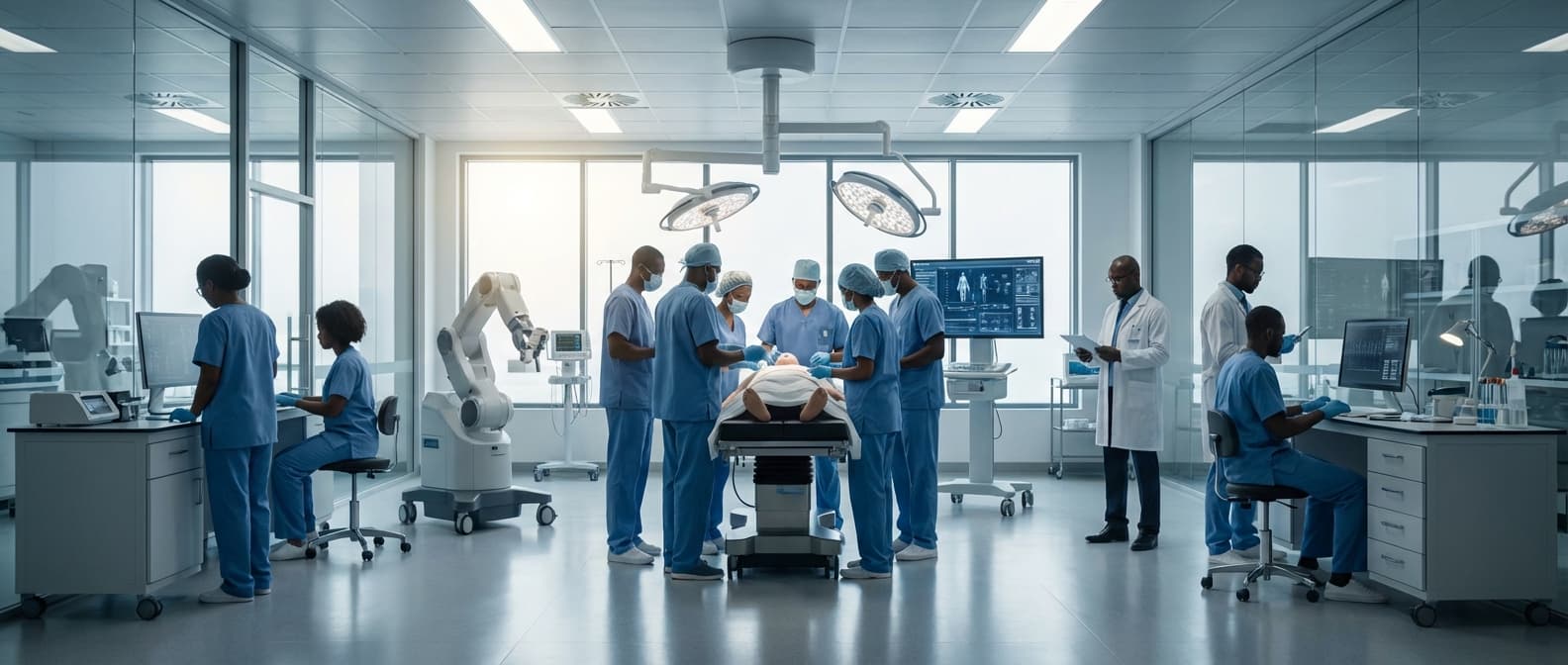
Biomedical Staffing Augmentation in Ethiopia
Engineering Excellence & Technical Support
Onsite biomedical engineers and PACS administrators High-standard technical execution following OEM protocols and local regulatory frameworks.
Rapid Deployment of Specialized Medical Professionals
Leverage our agile staffing model to quickly onboard highly skilled biomedical engineers, technicians, and clinical specialists, filling critical skill gaps in Ethiopian healthcare facilities. This ensures uninterrupted service delivery and access to specialized care for patients.
Enhanced Equipment Maintenance & Operational Efficiency
Augment your in-house biomedical teams with certified experts for proactive and reactive maintenance of medical equipment. Improve uptime, reduce repair costs, and ensure optimal performance of vital diagnostic and therapeutic devices across your network.
Bridging Knowledge Gaps with Training & Mentorship
Our augmented staff are not just deployable resources; they are also trainers and mentors. Facilitate knowledge transfer and skill development for your local biomedical workforce, fostering long-term capacity building and self-sufficiency within Ethiopian healthcare institutions.
What Is Biomedical Staffing Augmentation In Ethiopia?
Biomedical Staffing Augmentation in Ethiopia refers to the strategic provision of specialized, qualified, and vetted biomedical personnel to healthcare facilities and organizations experiencing temporary or persistent deficits in their in-house technical workforce. This service addresses critical gaps in the availability of skilled professionals required for the installation, maintenance, repair, calibration, and operational support of medical equipment. It involves sourcing, onboarding, and deploying individuals with expertise in areas such as biomedical engineering technology, medical equipment servicing, laboratory technician roles, and clinical engineering support. The objective is to ensure the uninterrupted and optimal functioning of medical infrastructure, thereby enhancing the quality of patient care and operational efficiency within the Ethiopian healthcare ecosystem.
| Who Needs Biomedical Staffing Augmentation? | Typical Use Cases | |||||||||
|---|---|---|---|---|---|---|---|---|---|---|
| Public Hospitals and Tertiary Care Centers: Facilities often face budget constraints and high patient volumes, leading to strained biomedical departments. | Equipment Installation and Commissioning: Deploying technicians to ensure proper setup and initial testing of newly acquired medical devices. | Emergency Response and Outbreak Management: Rapidly augmenting staff to support increased demand for specific equipment during public health crises. | Rural and Underserved Healthcare Facilities: Providing access to specialized technical support that may not be locally available. | Preventive Maintenance Programs: Augmenting teams to conduct scheduled checks and servicing to minimize equipment downtime. | Private Hospitals and Specialized Clinics: Organizations seeking to enhance their technical capacity without permanent hiring, particularly for niche equipment. | Equipment Repair and Troubleshooting: Offering specialized expertise to diagnose and resolve complex equipment malfunctions. | Medical Equipment Manufacturers and Distributors: Supporting their clients with installation, training, and after-sales service by providing certified technicians. | Calibration and Quality Assurance: Ensuring medical devices are functioning within specified tolerances for accurate diagnosis and treatment. | Government Health Ministries and Agencies: Seeking to improve the overall technical infrastructure and support systems across the national healthcare network. | Training and Capacity Building Initiatives: Supplementing existing staff to facilitate knowledge transfer and on-the-job training for local personnel. |
Key Components of Biomedical Staffing Augmentation:
- Expertise Sourcing and Vetting: Identifying and rigorously assessing candidates with the requisite technical skills, certifications, and experience specific to various medical device modalities.
- Temporary and Project-Based Deployment: Providing personnel for defined periods to cover staff leave, manage new equipment installations, or address specific project requirements.
- Long-Term Contractual Support: Offering sustained staffing solutions for ongoing maintenance, calibration, and operational support needs.
- Training and Skill Development Integration: Potentially including provisions for upskilling or cross-skilling augmented staff to meet evolving technological demands.
- Compliance and Regulatory Adherence: Ensuring all deployed personnel meet relevant Ethiopian healthcare and technical regulations.
- Logistical Management: Handling recruitment, payroll, benefits administration, and on-site integration of augmented staff.
Who Needs Biomedical Staffing Augmentation In Ethiopia?
Biomedical staffing augmentation in Ethiopia offers a strategic solution for healthcare facilities facing challenges in maintaining a skilled and sufficient biomedical workforce. This service is designed to bridge gaps, enhance capabilities, and ensure the optimal functioning of medical equipment, ultimately improving patient care. The demand for such services arises from a variety of factors, including rapid technological advancements in healthcare, an aging biomedical workforce, difficulty in attracting and retaining specialized talent, and the need for flexible staffing to manage project-based work or unexpected surges in demand. By augmenting their existing biomedical teams, Ethiopian healthcare providers can gain access to a wider pool of expertise, ensure continuous operational efficiency, and stay at the forefront of medical technology.
| Customer Type | Key Departments Benefiting from Augmentation |
|---|---|
| Public Hospitals | Biomedical Engineering Department, Anesthesia, Radiology/Imaging, Intensive Care Units (ICUs), Operating Rooms (ORs), Central Sterile Supply Department (CSSD), Laboratories (Pathology, Hematology, Microbiology) |
| Private Hospitals and Clinics | Same as Public Hospitals, with a focus on departments driving high-revenue services like advanced imaging, surgical suites, and specialized clinics |
| Specialized Medical Centers | Specific departments related to their specialization, e.g., Oncology (radiation therapy equipment maintenance), Cardiology (ECG, echo machines, pacemakers), Neurology (EEG, EMG, neuroimaging) |
| Diagnostic Laboratories and Imaging Centers | Laboratory Equipment Maintenance, Imaging Equipment Maintenance (X-ray, CT, MRI, Ultrasound), Quality Assurance |
| Medical Equipment Manufacturers and Distributors | Field Service Engineering, Technical Support, Installation and Commissioning Teams, Training Departments |
| NGOs and International Aid Organizations | Project-specific equipment deployment and maintenance teams, remote healthcare facility support |
| Tertiary and Referral Hospitals | All departments requiring complex and high-throughput medical equipment maintenance and support, including emergency services and advanced surgical units |
| University Teaching Hospitals | Biomedical Engineering Departments involved in research and development, training of future biomedical engineers and technicians, and maintenance of cutting-edge research equipment |
Target Customers for Biomedical Staffing Augmentation in Ethiopia
- Public Hospitals (Federal, Regional, Zonal, and Woreda levels)
- Private Hospitals and Clinics
- Specialized Medical Centers (e.g., cancer centers, cardiac units)
- Diagnostic Laboratories and Imaging Centers
- Medical Equipment Manufacturers and Distributors (for installation, maintenance, and training services)
- Non-Governmental Organizations (NGOs) and International Aid Organizations involved in healthcare delivery
- Tertiary and Referral Hospitals
- University Teaching Hospitals
Biomedical Staffing Augmentation Process In Ethiopia
The Biomedical Staffing Augmentation Process in Ethiopia is a structured workflow designed to address temporary or specialized needs for biomedical professionals within healthcare facilities. It involves a collaborative effort between the requesting facility and a staffing agency or government body responsible for providing augmented staff. The process ensures that qualified personnel are deployed efficiently and effectively to support healthcare delivery. The workflow typically begins with a clear identification of staffing needs, followed by a formal request, rigorous selection and vetting, successful deployment, and ongoing support and evaluation.
| Stage | Description | Key Activities | Responsible Parties |
|---|---|---|---|
| Inquiry & Needs Assessment | The healthcare facility identifies a temporary or specialized need for biomedical staff due to increased patient load, new equipment, or staff shortages. | Documenting specific roles required, skill sets, duration of need, and qualifications. Initial contact with staffing provider. | Requesting Healthcare Facility, Staffing Agency/Government Body |
| Formal Request Submission | The facility submits a formal request outlining the staffing requirements to the designated staffing provider. | Completing standardized request forms, providing detailed job descriptions, specifying contract terms and budget. | Requesting Healthcare Facility |
| Candidate Sourcing & Vetting | The staffing provider searches for suitable candidates from their database or through active recruitment. | Advertising positions, screening resumes, conducting interviews (technical and behavioral), background checks, verification of credentials. | Staffing Agency/Government Body |
| Selection & Offer | The staffing provider presents qualified candidates to the requesting facility for final selection. An offer is extended upon agreement. | Shortlisting candidates, facilitating interviews between facility and candidates, negotiating terms and conditions, issuing formal offer letters. | Staffing Agency/Government Body, Requesting Healthcare Facility |
| Onboarding & Deployment | The selected candidate undergoes orientation and is deployed to the facility. | Issuing employment contracts, initial training on facility protocols and systems, logistical arrangements for deployment, introduction to the team. | Staffing Agency/Government Body, Requesting Healthcare Facility |
| Performance Monitoring & Evaluation | The performance of the augmented staff is regularly monitored and evaluated. | Regular check-ins, performance reviews by facility supervisors, feedback sessions, addressing any issues or concerns promptly. | Requesting Healthcare Facility, Staffing Agency/Government Body |
| Contract Closure & Feedback | Upon completion of the assignment, the contract is formally closed, and feedback is collected. | Final performance assessment, settlement of payments, debriefing sessions with both facility and staff, capturing lessons learned for future engagements. | Requesting Healthcare Facility, Staffing Agency/Government Body |
Key Stages of the Biomedical Staffing Augmentation Process in Ethiopia
- Inquiry & Needs Assessment
- Formal Request Submission
- Candidate Sourcing & Vetting
- Selection & Offer
- Onboarding & Deployment
- Performance Monitoring & Evaluation
- Contract Closure & Feedback
Biomedical Staffing Augmentation Cost In Ethiopia
Biomedical staffing augmentation in Ethiopia, while still a developing sector, offers a crucial solution for healthcare facilities seeking to bridge critical skill gaps, manage fluctuating patient loads, or implement new technologies. The cost of such augmentation is influenced by a dynamic interplay of factors. These include the specific specialization and seniority of the biomedical professional required, the duration of the contract (short-term projects vs. long-term placements), the geographic location within Ethiopia (major cities like Addis Ababa often have higher rates due to living costs and demand), and the experience and reputation of the staffing agency providing the service. Furthermore, the complexity of the medical equipment or services involved can impact the required skill level and, consequently, the cost. Regulatory compliance, training needs, and any specialized certifications also contribute to the overall pricing.
| Staffing Role (Example) | Estimated Daily Rate (ETB) | Estimated Monthly Rate (ETB) | Notes |
|---|---|---|---|
| Biomedical Technician (Entry-Level/Junior) | 2,000 - 3,500 | 40,000 - 70,000 | Focus on routine maintenance, basic repairs. Rates may vary by agency. |
| Biomedical Engineer (Mid-Level/Experienced) | 3,500 - 6,000 | 70,000 - 120,000 | Involves complex diagnostics, installations, and preventative maintenance planning. |
| Specialized Biomedical Professional (e.g., Imaging, ICU Equipment) | 5,000 - 8,000+ | 100,000 - 160,000+ | Requires specific expertise, often with advanced certifications. Rates can be significantly higher for niche skills. |
| Biomedical Service Manager/Consultant | 6,000 - 10,000+ | 120,000 - 200,000+ | Strategic planning, team management, budget oversight. Typically project-based or long-term engagement. |
Key Pricing Factors for Biomedical Staffing Augmentation in Ethiopia
- Specialization and Seniority of Staff
- Contract Duration and Engagement Model
- Geographic Location of Placement
- Agency Fees and Overhead
- Complexity of Equipment/Services
- Training and Certification Requirements
- Market Demand and Availability
Affordable Biomedical Staffing Augmentation Options
Hospitals and healthcare organizations are increasingly turning to biomedical staffing augmentation to address workforce shortages, manage specialized skill gaps, and optimize operational efficiency. This approach offers a flexible and cost-effective way to supplement existing biomedical engineering departments without the long-term commitment of permanent hires. Key to maximizing the value and minimizing costs is understanding the strategic deployment of 'value bundles' and implementing smart cost-saving strategies.
| Cost-Saving Strategy | Description | Benefit |
|---|---|---|
| Flexible Staffing Models | Utilizing contract, temporary, or part-time augmented staff instead of permanent hires. This can significantly reduce recruitment costs, benefits, and overhead associated with full-time employees. | Reduced labor costs, adaptability to fluctuating workloads, and avoidance of long-term commitments. |
| Leveraging Provider Expertise | Partnering with staffing firms that have a pre-vetted pool of qualified professionals. This saves internal resources on recruitment, screening, and onboarding. | Faster access to talent, reduced administrative burden, and higher quality of candidates. |
| Predictable Budgeting with Fixed-Term Contracts | Engaging augmented staff for specific project durations or defined periods with clear deliverables and pricing. This allows for better financial planning and prevents unexpected cost escalations. | Improved budget control, clear ROI on projects, and elimination of unforeseen expenses. |
| Focus on Core Competencies | Allowing internal biomedical teams to concentrate on strategic initiatives and core responsibilities by offloading routine tasks or specialized projects to augmented staff. | Increased efficiency of permanent staff, enhanced focus on strategic goals, and improved overall department productivity. |
| Performance-Based Agreements | Structuring contracts where payment or extensions are tied to achieving specific performance metrics or project milestones. This ensures accountability and value delivery. | Guaranteed outcomes, alignment of provider incentives with organizational goals, and mitigation of risk. |
| Bundled Service Discounts | Negotiating discounts when multiple services or value bundles are procured from a single provider. This can lead to significant cost savings compared to individual service procurements. | Economies of scale, streamlined vendor management, and reduced overall service costs. |
Key Value Bundles in Biomedical Staffing Augmentation
- {"title":"On-Demand Technical Support","description":"Access to qualified biomedical technicians for immediate equipment troubleshooting, repair, and preventative maintenance, reducing downtime and ensuring patient safety. This bundle is ideal for reactive needs and critical equipment management."}
- {"title":"Project-Based Implementation Teams","description":"Skilled professionals for specific projects like new equipment installations, technology upgrades, or department relocations. This bundle provides specialized expertise for defined periods, ensuring project success without overburdening permanent staff."}
- {"title":"Comprehensive Compliance & Safety Audits","description":"Services focused on ensuring adherence to regulatory standards (e.g., Joint Commission, FDA) and internal safety protocols. This bundle includes risk assessments, documentation review, and remediation support, crucial for accreditation and minimizing liability."}
- {"title":"Specialized Skill Augmentation","description":"Access to experts in niche areas like medical imaging, laboratory equipment, or advanced life support systems, filling critical skill gaps within the existing team. This allows for access to cutting-edge technology expertise."}
- {"title":"Managed Services Packages","description":"Outsourcing specific functions or entire departments to a staffing augmentation provider, including planning, execution, and ongoing management. This offers a holistic approach for organizations seeking to offload complex operational burdens."}
Verified Providers In Ethiopia
In Ethiopia's evolving healthcare landscape, discerning verifiable and reliable healthcare providers is paramount. Franance Health stands out as a beacon of excellence, distinguished by its rigorous credentialing processes and unwavering commitment to quality care. This dedication ensures that patients receive services from highly qualified and ethical professionals, making Franance Health a trusted name for all healthcare needs.
| Credential Verified | Verification Process | Importance for Patients |
|---|---|---|
| Medical Licenses & Certifications | Cross-checked with relevant Ethiopian regulatory bodies and international equivalents. | Ensures providers are legally qualified and authorized to practice medicine. |
| Educational Background | Verification of degrees and diplomas from accredited institutions. | Confirms a strong foundation of medical knowledge and training. |
| Specialty Training & Board Certification | Confirmation of completion of specialized residency programs and successful board exams. | Guarantees expertise in specific medical areas and advanced competency. |
| Professional History & References | Review of past employment, disciplinary records, and peer references. | Assesses a provider's professional conduct and reputation. |
| Ethical Standards & Patient Feedback | Evaluation of ethical guidelines adherence and consideration of patient satisfaction metrics. | Upholds a commitment to patient rights, privacy, and positive care experiences. |
Why Franance Health is the Best Choice:
- Comprehensive Credentialing: Franance Health employs a multi-faceted vetting process for all its associated healthcare providers. This includes verifying medical licenses, educational qualifications, board certifications, and any necessary regulatory approvals.
- Experience and Expertise: Beyond basic credentials, Franance Health assesses the practical experience and specialized expertise of its providers, ensuring they are at the forefront of their respective fields.
- Patient-Centric Approach: A crucial aspect of Franance Health's verification involves evaluating providers' commitment to patient well-being, ethical conduct, and effective communication.
- Commitment to Standards: Franance Health partners with institutions and individuals who adhere to international best practices and quality standards in healthcare delivery.
- Trust and Reliability: By meticulously verifying every provider, Franance Health offers a level of trust and reliability that is indispensable in healthcare, giving patients peace of mind.
Scope Of Work For Biomedical Staffing Augmentation
This Scope of Work (SOW) outlines the requirements for augmenting the biomedical staffing at [Client Organization Name]. The objective is to enhance the capacity and expertise of the biomedical engineering department to support [specific project/initiative or general operations]. This augmentation will focus on providing skilled and experienced biomedical professionals to address [specific needs, e.g., equipment maintenance, new technology integration, compliance audits, research support]. The deliverables will include the provision of qualified personnel, their successful integration into existing workflows, and adherence to established technical standards and client-specific protocols. The standard specifications will ensure the quality, reliability, and safety of all biomedical operations performed under this augmentation.
| Technical Deliverable | Description | Standard Specification / Compliance Requirement | Acceptance Criteria |
|---|---|---|---|
| Provision of Qualified Biomedical Personnel | Supply of trained, certified, and experienced biomedical engineers, technicians, or specialists as per defined roles. | Minimum qualifications (education, certifications like CBET, experience), background checks, drug screening. | CV/Resume review and approval, on-site assessment of skills by client supervisor. |
| Equipment Preventative Maintenance (PM) | Execution of scheduled PM tasks on specified medical devices. | Adherence to manufacturer recommendations, client PM protocols, and established checklists. Use of calibrated test equipment. | Completion of PM forms/records for 100% of scheduled tasks, with a deviation rate of less than 5% for non-critical tasks. |
| Equipment Repair & Troubleshooting | Diagnosis and repair of faulty medical equipment. | Utilizing approved diagnostic tools, following manufacturer service manuals and client troubleshooting guides. Documenting root cause analysis. | Successful repair rate of >= 90% for first-time fixes. Mean Time To Repair (MTTR) within agreed-upon service level agreements (SLAs). |
| New Equipment Installation & Validation | Installation, configuration, and initial testing of new biomedical equipment. | Compliance with installation guidelines, vendor specifications, and client IT security policies. Performing performance verification and calibration. | Successful completion of installation, configuration, and performance verification checklists. Sign-off by end-user and client supervisor. |
| Compliance Documentation | Accurate and timely documentation of all biomedical activities. | Adherence to client's Electronic Health Record (EHR) system requirements, regulatory standards (e.g., Joint Commission, HIPAA), and internal quality management system (QMS). | 100% compliance with documentation requirements, zero findings during internal or external audits related to documented activities. |
| Reporting & Communication | Regular reporting on work performed, equipment status, and identified issues. | Utilizing client-approved reporting templates and software. Maintaining clear and concise communication with client stakeholders. | Weekly status reports submitted on time, prompt response to urgent requests within defined SLAs (e.g., < 2 hours for critical equipment). |
Key Areas of Augmentation
- Equipment Maintenance & Repair: Augmenting the existing team to handle routine preventative maintenance, unscheduled repairs, and calibration of a wide range of medical devices.
- New Technology Integration: Providing expertise for the installation, configuration, and testing of new biomedical equipment and systems.
- Compliance & Regulatory Support: Assisting with adherence to relevant industry regulations, standards (e.g., FDA, ISO), and internal policies.
- Technical Training & Support: Providing specialized training to end-users and other biomedical staff on new or complex equipment.
- Asset Management & Inventory: Contributing to the efficient management and tracking of the biomedical asset inventory.
Service Level Agreement For Biomedical Staffing Augmentation
This Service Level Agreement (SLA) outlines the response times and uptime guarantees for biomedical staffing augmentation services provided by [Your Company Name] to [Client Company Name]. This agreement is intended to ensure the efficient and reliable support of critical biomedical equipment and services at [Client Company Name]'s facilities.
| Service Level | Response Time Target (from notification) | Uptime Guarantee | |
|---|---|---|---|
| Critical Equipment Failure (Life-Support/Patient-Facing) | 1 hour (Remote/Phone) | 99.9% uptime for supported equipment (excluding scheduled downtime for maintenance or upgrades) | 2 hours (On-site Dispatch) |
| Urgent Equipment Issue (Non-Life-Support/Operational Impact) | 4 hours (Remote/Phone) | 99.5% uptime for supported equipment (excluding scheduled downtime for maintenance or upgrades) | 8 business hours (On-site Dispatch) |
| Routine Maintenance/Calibration Request | Next business day (Remote/Phone) | N/A (Scheduled service) | As per scheduled appointment |
| Inquiry/Information Request | 4 business hours (Remote/Phone) | N/A | N/A |
Scope of Service
- Provision of qualified and credentialed biomedical technicians, engineers, and specialists for on-demand or scheduled support.
- Support for a defined list of biomedical equipment categories and specific models (as detailed in Appendix A).
- Remote troubleshooting and diagnostic assistance.
- On-site repair, maintenance, calibration, and installation services.
- Preventive maintenance scheduling and execution.
- Emergency response for critical equipment failures.
Frequently Asked Questions

Ready when you are
Let's scope your Biomedical Staffing Augmentation in Ethiopia project in Ethiopia.

Scaling healthcare logistics and technical systems across the entire continent.