
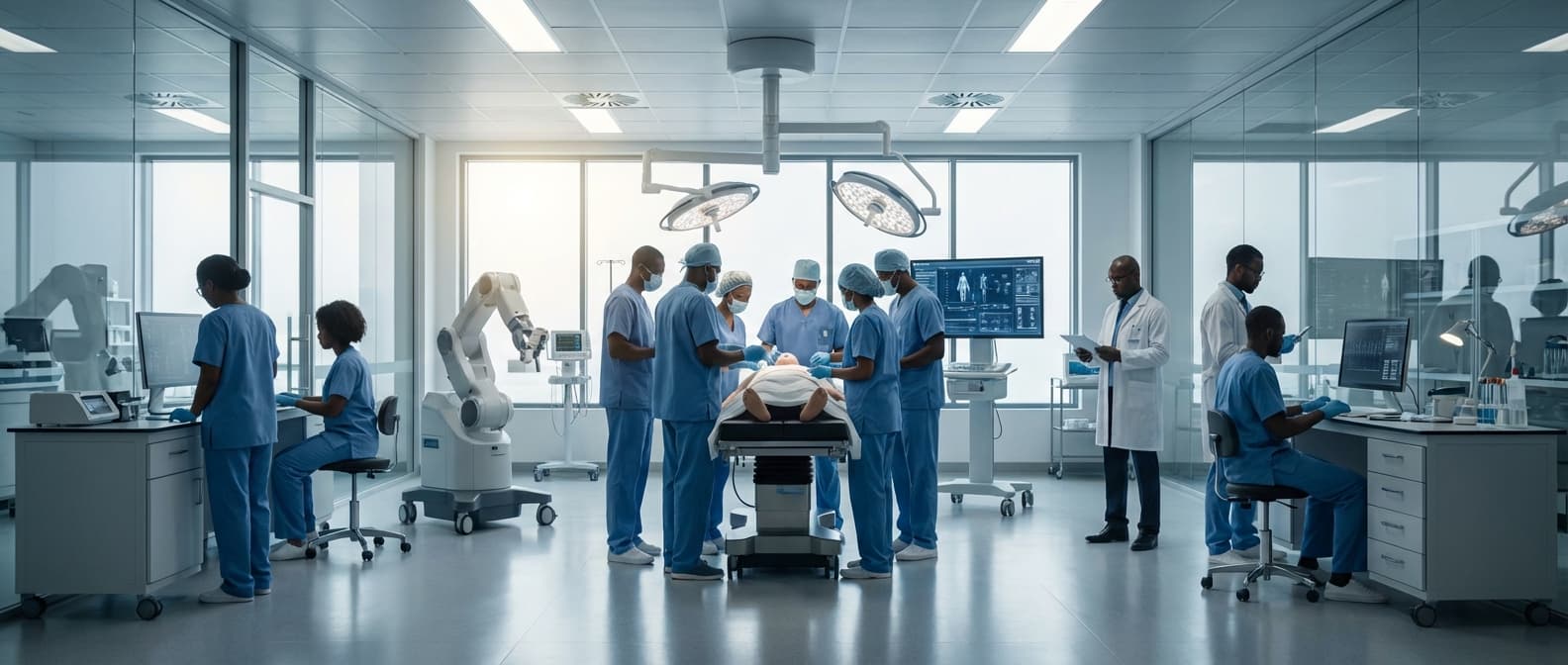
Biomedical Engineering Consulting in Ethiopia
Engineering Excellence & Technical Support
Equipment selection, procurement and implementation consulting High-standard technical execution following OEM protocols and local regulatory frameworks.
Bridging the Gap: Advanced Medical Device Implementation & Training
We specialize in the selection, procurement, and seamless integration of cutting-edge medical technologies for Ethiopian healthcare facilities. Our expertise ensures optimal device performance through comprehensive user training and robust maintenance strategies, enhancing diagnostic accuracy and patient care outcomes.
Ensuring Safety and Efficacy: Biocompatibility & Material Science Consulting
Leveraging our deep understanding of biomedical materials and international standards, we provide expert consultation on biocompatibility testing, material selection, and risk assessment for medical products and devices intended for the Ethiopian market, guaranteeing patient safety and regulatory compliance.
Optimizing Healthcare Delivery: Workflow Analysis & Facility Design
Our biomedical engineering consultants conduct thorough analyses of existing healthcare workflows within Ethiopian hospitals and clinics. We then provide data-driven recommendations for process improvement and design new or renovated facilities to enhance operational efficiency, patient flow, and the effective utilization of medical infrastructure.
What Is Biomedical Engineering Consulting In Ethiopia?
Biomedical Engineering Consulting in Ethiopia refers to the provision of specialized technical expertise and advisory services related to the design, implementation, maintenance, and optimization of medical devices, healthcare technologies, and clinical engineering systems within the Ethiopian context. This service bridges the gap between technological advancements and the practical application of healthcare solutions, addressing the unique challenges and opportunities present in the Ethiopian healthcare landscape. It encompasses a broad spectrum of activities aimed at enhancing the efficacy, safety, and accessibility of medical equipment and infrastructure, thereby improving patient care outcomes and supporting the growth of the healthcare sector.
| Who Needs Biomedical Engineering Consulting? | Typical Use Cases |
|---|---|
| Government Health Ministries and Agencies: For policy development, national healthcare infrastructure planning, and regulatory oversight of medical technology. | Developing national medical equipment procurement strategies, establishing centralized maintenance units, and creating regulatory frameworks for medical devices. |
| Public and Private Hospitals and Clinics: To ensure the efficient and safe operation of their medical equipment, optimize resource allocation, and enhance patient care. | Conducting equipment audits, developing preventive maintenance schedules, troubleshooting complex device failures, and planning for the upgrade or replacement of aging equipment. |
| Medical Device Manufacturers and Distributors: To navigate the Ethiopian regulatory landscape, establish service and support networks, and ensure successful product deployment. | Assisting with product registration, establishing local service centers, providing technical training to local partners, and conducting market entry feasibility studies. |
| International Aid Organizations and NGOs: For the procurement, deployment, and sustainable management of medical equipment in development projects and humanitarian efforts. | Supporting the donation of medical equipment by ensuring appropriate selection, installation, and maintenance plans are in place for long-term viability. |
| Academic and Research Institutions: For the acquisition and maintenance of specialized research equipment and the development of biomedical engineering curricula. | Advising on the procurement of laboratory equipment, establishing equipment management protocols, and developing training modules for students. |
| New Healthcare Facility Developers: To ensure that medical technology is integrated effectively into the design and operational plans of new hospitals and clinics. | Contributing to architectural designs for specialized medical units, specifying essential medical equipment for new facilities, and planning for future technology adoption. |
Key Aspects of Biomedical Engineering Consulting in Ethiopia
- Needs Assessment and Planning: Evaluating existing healthcare infrastructure, identifying technology gaps, and developing strategic plans for medical equipment acquisition, deployment, and lifecycle management.
- Procurement and Acquisition Support: Providing expert guidance on the selection, specification, and procurement of medical devices, ensuring compliance with national regulations and international standards.
- Installation, Commissioning, and Validation: Overseeing the proper installation, testing, and validation of new medical equipment to ensure optimal performance and safety.
- Maintenance and Repair Strategy: Developing and implementing robust preventive maintenance programs, troubleshooting complex equipment failures, and managing third-party service providers.
- Regulatory Compliance and Quality Assurance: Advising on adherence to Ethiopian medical device regulations, quality management systems (e.g., ISO 13485), and patient safety protocols.
- Technology Integration and Interoperability: Facilitating the seamless integration of new technologies with existing systems and ensuring data interoperability within healthcare facilities.
- Training and Capacity Building: Developing and delivering training programs for healthcare professionals and technical staff on the operation, maintenance, and safe use of medical equipment.
- Infrastructure Development and Facility Design: Contributing to the design and planning of healthcare facilities, including medical gas systems, electrical infrastructure, and specialized clinical areas.
- Risk Management and Patient Safety: Identifying potential hazards associated with medical equipment and developing strategies to mitigate risks and enhance patient safety.
- Feasibility Studies and Market Analysis: Conducting assessments for the introduction of new medical technologies or services within the Ethiopian market.
- Decommissioning and Disposal: Planning and executing the safe and environmentally responsible decommissioning and disposal of obsolete or end-of-life medical equipment.
Who Needs Biomedical Engineering Consulting In Ethiopia?
Biomedical Engineering Consulting in Ethiopia is crucial for a wide array of organizations and departments seeking to optimize their healthcare infrastructure, improve patient care, and ensure the safe and effective use of medical technology. As the healthcare landscape in Ethiopia continues to evolve, with increasing investment in medical facilities and a growing demand for advanced medical services, the expertise of biomedical engineering consultants becomes indispensable.
| Customer Type | Key Departments/Needs | Examples of Services |
|---|---|---|
| Hospitals & Healthcare Facilities | Procurement, Biomedical Engineering Dept., IT Dept., Clinical Depts. (Radiology, Surgery, ICU), Maintenance & Repair | Equipment selection and justification, strategic asset management, clinical engineering services, risk assessment, technology adoption planning, training on new equipment. |
| Medical Equipment Manufacturers/Distributors | Sales & Marketing, Technical Support, Regulatory Affairs | Market analysis, product adaptation, installation and commissioning support, training for local technicians, compliance with Ethiopian regulations. |
| Government Ministries (e.g., MOH) | Planning & Policy, Procurement & Logistics, Quality Assurance | Development of national health technology strategies, creation of procurement guidelines, regulatory framework development, capacity building for public health institutions. |
| Academic & Research Institutions | Departments of Biomedical Engineering, Medical Faculties, Research Labs | Laboratory design and setup, equipment selection for teaching and research, maintenance of specialized equipment, safety protocols, curriculum development support. |
| NGOs & Aid Agencies | Project Management, Procurement Teams, Logistics | Needs assessment for equipment donation, selection of appropriate technology for specific contexts, project implementation support, training for end-users, sustainability planning. |
Target Customers and Departments in Ethiopia Requiring Biomedical Engineering Consulting
- {"title":"Hospitals and Healthcare Facilities","sub_items":["Government Hospitals (Federal and Regional)","Private Hospitals","Teaching Hospitals affiliated with medical universities","Specialty Clinics (e.g., cardiology, oncology, diagnostic imaging)","Rural Health Centers and Health Posts (for basic equipment needs and training)"],"description":"This is the primary sector benefiting from biomedical engineering consulting. Their needs span from initial setup and equipment procurement to ongoing maintenance, calibration, and upgrades."}
- {"title":"Medical Equipment Manufacturers and Distributors","sub_items":["Local distributors of imported medical equipment","Companies involved in the assembly or manufacturing of basic medical devices"],"description":"Companies involved in the sale, distribution, and sometimes manufacturing of medical devices require specialized knowledge for product integration, regulatory compliance, and after-sales support."}
- {"title":"Government Ministries and Regulatory Bodies","sub_items":["Ministry of Health (MOH)","Ethiopian Food and Drug Administration (EFDA) (for medical device registration and quality control)","Regional Health Bureaus"],"description":"These entities are responsible for setting standards, ensuring quality, and overseeing the healthcare sector. They benefit from expert advice on policy development, procurement guidelines, and regulatory frameworks."}
- {"title":"Academic and Research Institutions","sub_items":["Medical Schools and Faculties of Health Sciences","Biomedical Engineering Departments","Medical Research Institutes"],"description":"Universities and research centers involved in medical education, training, and scientific inquiry need support in setting up and maintaining specialized laboratories and research facilities."}
- {"title":"Non-Governmental Organizations (NGOs) and International Aid Agencies","sub_items":["International health organizations (e.g., WHO, UNICEF)","Local and international NGOs focused on healthcare delivery and infrastructure"],"description":"Organizations working on health development projects, often involving the donation or procurement of medical equipment, require expertise to ensure the appropriate selection, installation, and sustainability of these technologies."}
- {"title":"Insurance Companies","sub_items":["Private health insurance providers"],"description":"As health insurance becomes more prevalent, insurance providers may need expertise to assess the value and necessity of medical equipment for reimbursement purposes or to advise on coverage for specific technologies."}
Biomedical Engineering Consulting Process In Ethiopia
The biomedical engineering consulting process in Ethiopia follows a structured workflow, ensuring efficient and effective project delivery. This process typically begins with an initial inquiry from a client and culminates in the successful execution and handover of the consulting services. The steps are designed to provide clarity, manage expectations, and ensure all project requirements are met within ethical and regulatory frameworks applicable in Ethiopia.
| Stage | Description | Key Activities | Deliverables | Ethiopian Contextual Considerations |
|---|---|---|---|---|
| Initial Inquiry and Needs Assessment | The client contacts the consulting firm with a specific need or problem. | Understanding client requirements, initial discussions, clarifying objectives. | Summary of understanding, preliminary scope definition. | Understanding local healthcare infrastructure, existing equipment, and regulatory environment (e.g., Ministry of Health regulations). |
| Proposal Development and Submission | Based on the initial assessment, the consultant develops a comprehensive proposal. | Defining scope of work, methodology, timelines, resource allocation, pricing, and terms. | Formal proposal document. | Alignment with Ethiopian procurement processes and potential government tender requirements. |
| Contract Negotiation and Agreement | Formalizing the engagement between the client and the consultant. | Discussing and agreeing on proposal terms, finalizing contract, signing the agreement. | Signed consulting contract/agreement. | Adherence to Ethiopian contract law and standard consulting agreements. |
| Project Planning and Scoping | Detailed breakdown of project phases, tasks, and responsibilities. | Developing a detailed project plan, work breakdown structure (WBS), defining key performance indicators (KPIs), risk assessment. | Detailed project plan, Gantt chart, risk register. | Consideration of local holidays, potential logistical challenges, and availability of skilled local personnel. |
| Information Gathering and Site Visits | Collecting all necessary data and understanding the physical environment. | On-site visits, interviews with stakeholders, data collection, equipment assessment, document review. | Site visit reports, collected data, stakeholder feedback. | Navigating local bureaucracy for site access, understanding specific hospital/clinic operational procedures. |
| Analysis and Solution Design | Analyzing collected data to identify root causes and develop appropriate solutions. | Data analysis, problem identification, feasibility studies, solution brainstorming, developing recommendations, technical design. | Analysis reports, technical specifications, proposed solutions. | Considering the availability and affordability of medical equipment and spare parts in Ethiopia, and local maintenance capabilities. |
| Reporting and Presentation | Communicating findings, analyses, and recommendations to the client. | Preparing detailed reports, executive summaries, presentations, visual aids. | Final report, presentation slides, recommendations document. | Ensuring reports are in an accessible language and format for local stakeholders, potentially including local government officials. |
| Implementation Support and Training | Assisting the client in putting the recommendations into practice. | Guidance during procurement, installation support, user training, change management. | Training materials, implementation progress reports, certificates of completion. | Tailoring training to the skill levels of local biomedical technicians and healthcare professionals; understanding local language nuances for effective training. |
| Project Completion and Handover | Formal closure of the consulting engagement. | Final project review, sign-off, knowledge transfer, documentation archiving. | Project completion report, final handover documentation, lessons learned. | Ensuring all documentation is compliant with Ethiopian record-keeping requirements and accessible to the client. |
| Post-Consultation Follow-up | Providing ongoing support and evaluating the long-term impact of the consulting services. | Follow-up meetings, performance monitoring, impact assessment, addressing any residual issues. | Follow-up reports, impact evaluation summaries. | Maintaining relationships with clients and regulatory bodies for future engagements and to ensure sustained positive impact on the healthcare sector. |
Biomedical Engineering Consulting Workflow in Ethiopia
- Initial Inquiry and Needs Assessment
- Proposal Development and Submission
- Contract Negotiation and Agreement
- Project Planning and Scoping
- Information Gathering and Site Visits
- Analysis and Solution Design
- Reporting and Presentation
- Implementation Support and Training
- Project Completion and Handover
- Post-Consultation Follow-up
Biomedical Engineering Consulting Cost In Ethiopia
Biomedical Engineering Consulting in Ethiopia encompasses a range of services, from hospital infrastructure planning and equipment selection to regulatory compliance and technology implementation. The cost of these services is influenced by several key factors, leading to a broad pricing spectrum in Ethiopian Birr (ETB). Understanding these factors is crucial for organizations seeking expert biomedical engineering advice within the Ethiopian context.
| Service Type / Project Scope | Estimated Cost Range (ETB) | Notes |
|---|---|---|
| Initial Needs Assessment & Feasibility Study (e.g., for a new clinic) | 15,000 - 50,000 ETB | Covers basic assessment of needs, initial equipment lists, and preliminary budget. Varies with facility size. |
| Equipment Planning & Selection (per department or facility) | 25,000 - 100,000+ ETB | Includes defining specifications, vendor research, technical evaluation, and comparative analysis. Higher for complex departments (e.g., ICU, Radiology). |
| Hospital Infrastructure Design & Planning (e.g., new ward/wing) | 75,000 - 300,000+ ETB | Involves space planning, utility requirements, and integration of medical equipment. Scale of project is the primary driver. |
| Regulatory Compliance & Accreditation Assistance (e.g., for Ministry of Health permits) | 20,000 - 80,000 ETB | Focuses on documentation, process review, and preparation for inspections. Complexity of regulations is a factor. |
| Technology Implementation & Project Management (e.g., PACS, EMR) | 50,000 - 250,000+ ETB (plus potential % of project value) | Covers planning, vendor liaison, installation oversight, and initial training. Cost can be tied to the total project investment. |
| Equipment Maintenance & Service Strategy Development | 10,000 - 40,000 ETB | Focuses on optimizing maintenance programs, vendor service contracts, and in-house capabilities. |
| Specialized Technical Audits (e.g., for imaging equipment) | 15,000 - 60,000 ETB | Involves detailed assessment of specific, high-value equipment for performance and compliance. |
| Hourly/Daily Rate for Senior Consultant | 5,000 - 15,000+ ETB per day | Applicable for ad-hoc advice, problem-solving, or short-term engagements. Varies significantly with specialization and reputation. |
| Hourly/Daily Rate for Junior Consultant/Analyst | 2,000 - 6,000 ETB per day | For support roles, data collection, or less complex tasks. |
Key Factors Influencing Biomedical Engineering Consulting Costs in Ethiopia
- Scope and Complexity of the Project: Larger, more intricate projects such as designing a new hospital wing or overhauling a medical facility's entire equipment inventory will naturally command higher fees than smaller, focused consultations like equipment maintenance audits or specific technology assessments.
- Consultant's Expertise and Experience: Highly specialized consultants with extensive experience in the Ethiopian healthcare sector, proven track records, and advanced certifications will typically charge premium rates. Junior consultants or those with less specific local experience may offer more competitive pricing.
- Duration of the Engagement: The longer the consulting project, the higher the overall cost. This is often billed on an hourly, daily, or project-basis, with longer commitments potentially allowing for some negotiation on daily rates.
- Deliverables Required: The complexity and quantity of the expected outputs significantly impact cost. Detailed reports, comprehensive training manuals, complex financial projections, or the development of intricate operational plans will increase the overall project fee.
- Travel and Logistics: If the consultant is required to travel extensively within Ethiopia (e.g., to different regional hospitals) or internationally, associated travel, accommodation, and per diem expenses will be added to the total cost.
- Urgency of the Request: Projects with tight deadlines or that require immediate attention may incur rush fees, increasing the overall consulting cost.
- Type of Consulting Firm/Individual: Large, established consulting firms with extensive overhead tend to have higher pricing structures than smaller, specialized boutique firms or independent freelance consultants.
- Regulatory and Compliance Requirements: Consultations involving navigating complex Ethiopian medical device regulations, quality management systems, or specific certification processes often require specialized knowledge and can therefore be more expensive.
- Technology Involved: Consulting on cutting-edge or highly specialized medical technologies (e.g., advanced imaging systems, robotic surgery, complex laboratory automation) may command higher fees due to the need for specialized expertise and the potential investment involved for the client.
- Client's Budgetary Constraints: While not a direct cost driver for the consultant, clients often communicate their budgetary limitations upfront, which can influence the scope of services offered or lead to phased approaches to consulting projects.
Affordable Biomedical Engineering Consulting Options
Biomedical engineering consulting can be a critical resource for startups and established companies alike, offering expertise in areas like product development, regulatory affairs, quality systems, and market analysis. However, the cost can sometimes be a barrier. This guide outlines affordable biomedical engineering consulting options, focusing on value bundles and cost-saving strategies to make expert guidance accessible.
| Cost-Saving Strategy | Description | When to Use |
|---|---|---|
| Define Scope Precisely | Clearly outline project objectives, deliverables, and timelines before engaging consultants. This prevents scope creep and unnecessary expenses. | Always, at the beginning of any engagement. |
| Phased Approach | Break down large projects into smaller, manageable phases with distinct deliverables. This allows for budget control and evaluation of progress at each stage. | For complex or long-term projects. |
| Leverage Junior Consultants or Specialists | For less complex tasks, consider engaging consultants with less experience or specialized, niche expertise at a lower hourly rate. | For routine tasks or highly specific, non-critical areas. |
| Remote/Virtual Consulting | Utilize virtual communication tools to reduce travel and accommodation costs associated with on-site consultations. | For most knowledge-based tasks and regular check-ins. |
| Group Purchasing/Consortiums | If multiple companies have similar needs, explore forming a consortium to negotiate bulk discounts with consulting firms. | For companies with recurring needs or in the same industry. |
| Invest in Internal Training | While not a direct consulting cost-saving, investing in training your internal team can reduce the reliance on external consultants for certain recurring tasks. | For building long-term internal capabilities. |
| Seek Referrals and Competitive Bids | Obtain quotes from multiple consulting firms to compare pricing and service offerings. Referrals can often lead to trusted and reasonably priced options. | Before selecting a consulting partner. |
| Equity-Based Compensation (for Startups) | In some cases, startups may offer a small equity stake in exchange for consulting services, particularly for early-stage strategic advice. | For early-stage startups with limited cash flow. |
Understanding Value Bundles in Consulting
- Core Service Packages: These bundles offer a set of standard services at a fixed price, providing predictable costs for common needs such as initial product feasibility studies or basic regulatory pathway assessments.
- Project-Specific Bundles: Tailored to a particular project's scope, these bundles consolidate all necessary consulting hours and deliverables for a defined outcome. This offers a comprehensive solution and can be more cost-effective than ad-hoc engagements.
- Retainer-Based Bundles: Clients can secure ongoing access to a consultant's expertise for a fixed monthly fee. This is ideal for startups requiring continuous guidance without the need for extensive, upfront projects. It often includes a set number of hours or priority access.
- Hybrid Bundles: Combining elements of the above, these bundles might include a core package with add-on services or a retainer with a discounted rate for larger, defined projects undertaken during the retainer period.
Verified Providers In Ethiopia
In the burgeoning healthcare landscape of Ethiopia, identifying trusted and competent healthcare providers is paramount for individuals seeking quality medical services. Franance Health stands out as a beacon of excellence, offering a comprehensive suite of services backed by rigorously verified credentials. This dedication to quality assurance ensures that patients receive care from highly qualified professionals, adhering to the highest ethical and medical standards. Understanding the importance of trust and expertise, Franance Health meticulously vets its providers, making them a distinguished choice for healthcare needs in Ethiopia.
| Provider Type | Franance Health Verification Process | Key Benefits for Patients |
|---|---|---|
| General Practitioners | Verification of medical license, educational qualifications, and professional references. Background checks for ethical conduct. | Accurate initial diagnosis, personalized primary care, and effective management of common health issues. |
| Specialists (e.g., Cardiologists, Pediatricians, Surgeons) | Rigorous assessment of board certifications, specialized training, years of experience in their field, and peer reviews. | Expert diagnosis and treatment for complex medical conditions, access to advanced procedures, and specialized care. |
| Nurses and Allied Health Professionals | Confirmation of nursing board registration, specialized certifications, and practical skills assessment. | Compassionate and skilled nursing care, vital support services, and an integral part of the patient's treatment team. |
| Mental Health Professionals (Psychologists, Psychiatrists) | Verification of licensure, advanced degrees, specific training in mental health therapies, and adherence to ethical guidelines. | Confidential and evidence-based mental health support, effective treatment for a range of psychological conditions. |
Why Franance Health Providers are the Best Choice in Ethiopia
- Unwavering commitment to patient well-being and safety.
- Access to a network of highly qualified and experienced medical professionals.
- Adherence to stringent credentialing and verification processes.
- A holistic approach to healthcare, encompassing a wide range of specialties.
- Integration of modern medical technologies and practices.
- Transparent and ethical patient care practices.
- Focus on continuous professional development for all providers.
- Building lasting relationships with patients based on trust and reliability.
Scope Of Work For Biomedical Engineering Consulting
This Scope of Work (SOW) outlines the services provided by [Consulting Firm Name] (the "Consultant") to [Client Name] (the "Client") for Biomedical Engineering consulting. The objective of this engagement is to [briefly state the overarching goal, e.g., "assist in the development of a novel medical device," "optimize existing manufacturing processes for a biomedical product," "conduct a feasibility study for a new diagnostic technology"]. The Consultant will leverage its expertise in biomedical engineering principles, regulatory affairs, and product development to deliver high-quality technical solutions and actionable insights. The engagement will be structured around specific project phases, each with defined objectives, tasks, and deliverables.
| Deliverable Type | Description | Standard Specification / Format | Associated Phase(s) |
|---|---|---|---|
| Technical Report | Comprehensive analysis of findings, methodologies, results, and recommendations. Includes literature review, experimental data, simulation results, and risk assessments. | PDF format. Clearly structured with executive summary, introduction, methodology, results, discussion, conclusion, and appendices. Professional formatting with relevant figures, tables, and citations. | 1, 2, 3, 4, 5, 6 |
| Requirements Document | Detailed and verifiable documentation of user needs, functional requirements, performance specifications, and regulatory constraints for the biomedical product or system. | Microsoft Word or PDF format. Utilizes a traceable requirements management system (e.g., traceability matrix). Includes unique identifiers for each requirement. | 1, 2 |
| Conceptual Design Package | Initial design concepts, including sketches, block diagrams, system architecture, and preliminary material/component selection. Includes a summary of alternative solutions considered and justification for the chosen concept. | PDF presentation or document. May include CAD models (e.g., STEP, IGES) for initial visualization. | 2, 3 |
| Detailed Design Specifications | Comprehensive documentation of the finalized design, including CAD drawings (e.g., 2D manufacturing drawings, 3D models), Bill of Materials (BOM), component specifications, and assembly instructions. | PDF for drawings and BOM. CAD files (e.g., SOLIDWORKS, AutoCAD) provided as agreed. BOM in Excel or CSV format with part numbers, descriptions, quantities, and suppliers. | 3, 4 |
| Prototype Report | Documentation of the build and initial testing of a prototype. Includes fabrication details, testing procedures, observed performance, and deviations from design specifications. | PDF format. Details the prototype build process, materials used, and any challenges encountered. Includes photographs and relevant test data. | 3, 4 |
| Test Protocol | Detailed plan for conducting verification and validation testing. Includes test objectives, scope, methodology, sampling plan, acceptance criteria, and required equipment. | Microsoft Word or PDF format. Adheres to relevant ISO or FDA guidelines for protocol structure. | 4 |
| Test Report | Summary of the execution of test protocols. Includes raw data, analysis, statistical interpretation, and a clear statement of whether acceptance criteria were met. | PDF format. Includes signed-off test records and evidence of compliance. May reference specific test equipment calibration records. | 4 |
| Regulatory Strategy Document | Outline of the proposed regulatory pathway, including classification, target markets, relevant standards, and required documentation for submission (e.g., FDA, CE marking). | Microsoft Word or PDF format. Based on current regulatory landscape and product classification. | 5 |
| Design History File (DHF) Components | Contribution to the DHF, including relevant design inputs, design outputs, design reviews, and verification/validation activities as per regulatory requirements. | Organized digital files within a structured folder system, consistent with Client's DHF structure or industry best practices. Formats as specified for individual documents (e.g., PDF, Word). | 3, 4, 5 |
| Manufacturing Process Description | Detailed documentation of the manufacturing process, including flowcharts, equipment specifications, work instructions, quality control points, and potential areas for optimization. | Microsoft Word or PDF format. Includes process parameters, material handling procedures, and inspection methods. | 6 |
| Risk Management File (RMF) Components | Contribution to the RMF, including hazard identification, risk analysis, risk evaluation, and risk control measures throughout the product lifecycle. | Microsoft Word or PDF format. Follows ISO 14971 principles. Includes FMEAs, FTA, and other relevant risk assessment tools. | 1, 2, 3, 4, 5, 6 |
| Presentation Slides | Visual aids for presenting findings, concepts, and progress to stakeholders. | Microsoft PowerPoint or PDF format. Professional design with clear visuals, concise text, and consistent branding. | All Phases |
Project Phases and Key Activities
- Phase 1: Needs Assessment and Requirements Definition
- Phase 2: Conceptual Design and Feasibility Analysis
- Phase 3: Detailed Design and Prototyping
- Phase 4: Verification, Validation, and Testing
- Phase 5: Regulatory Strategy and Documentation Support
- Phase 6: Manufacturing Process Optimization and Scale-up
Service Level Agreement For Biomedical Engineering Consulting
This Service Level Agreement (SLA) outlines the guaranteed response times and uptime for biomedical engineering consulting services provided by [Your Company Name] to [Client Name]. This SLA is incorporated into the Master Services Agreement (MSA) between both parties, effective as of [Effective Date].
| Service Level | Definition | Response Time Guarantee (Business Hours) | Uptime Guarantee |
|---|---|---|---|
Scope of Services
- Biomedical device design and development support
- Regulatory compliance consulting (FDA, CE Mark, etc.)
- Risk management and FMEA analysis
- Quality system implementation and auditing
- Post-market surveillance and complaint handling
- Technical documentation review and creation
Frequently Asked Questions

Ready when you are
Let's scope your Biomedical Engineering Consulting in Ethiopia project in Ethiopia.

Scaling healthcare logistics and technical systems across the entire continent.