
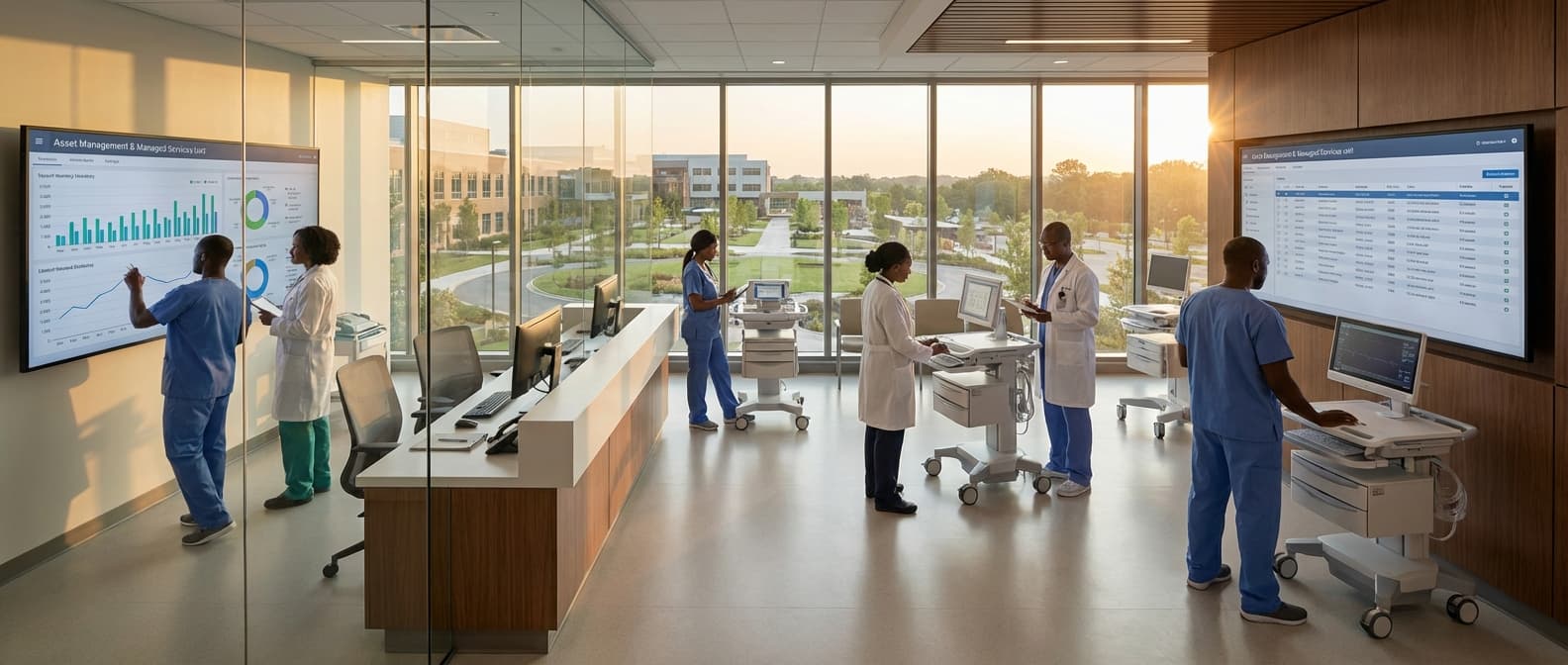
Maintenance KPI Reporting Service (Uptime/MTBF/MTTR) in Ethiopia
Engineering Excellence & Technical Support
Maintenance KPI Reporting Service (Uptime/MTBF/MTTR) High-standard technical execution following OEM protocols and local regulatory frameworks.
Enhanced Uptime Maximization
Leverage real-time data analytics to proactively identify and address potential equipment failures, significantly boosting asset uptime and ensuring operational continuity for Ethiopian businesses.
Optimized Mean Time Between Failures (MTBF)
Gain deep insights into failure patterns and root causes through advanced reporting, enabling data-driven maintenance strategies to extend equipment lifespan and reduce unscheduled downtime across Ethiopia's industrial sectors.
Accelerated Mean Time To Repair (MTTR)
Streamline maintenance workflows with intelligent diagnostics and rapid response protocols, reducing repair times and minimizing the financial impact of unexpected breakdowns for organizations operating in Ethiopia.
What Is Maintenance Kpi Reporting Service (Uptime/mtbf/mttr) In Ethiopia?
Maintenance KPI Reporting Service (Uptime/MTBF/MTTR) in Ethiopia refers to a specialized offering that focuses on the measurement, analysis, and reporting of critical performance indicators related to the operational availability and reliability of physical assets and systems within Ethiopian organizations. This service leverages data collected from various sources (e.g., sensors, maintenance logs, CMMS/EAM systems) to generate actionable insights that support informed decision-making for maintenance strategies, operational efficiency improvements, and cost optimization. The core KPIs tracked include:
- Uptime: The percentage of time a system or asset is available and operational during its intended service period. This is a direct measure of operational readiness and revenue-generating capacity.
- Mean Time Between Failures (MTBF): The average time that elapses between one failure of a repairable system and the commencement of the next failure. A higher MTBF indicates greater reliability.
- Mean Time To Repair (MTTR): The average time required to repair a failed system or asset and return it to operational status. A lower MTTR signifies efficient maintenance and reduced downtime.
These KPIs are essential for understanding asset health, identifying recurring issues, evaluating the effectiveness of maintenance practices, and predicting future maintenance needs. The service typically involves data aggregation, cleansing, analysis, visualization (dashboards, reports), and advisory services.
| Industry/Sector | Typical Use Cases for Uptime/MTBF/MTTR Reporting | ||
|---|---|---|---|
| Manufacturing | Optimizing production line uptime; identifying root causes of equipment failures to improve MTBF; streamlining repair processes to reduce MTTR for critical machinery (e.g., CNC machines, assembly robots). | Assessing overall equipment effectiveness (OEE) through uptime calculations; performance benchmarking of different production lines or asset types. | Forecasting spare parts inventory based on failure rates (MTBF) and repair times (MTTR). |
| Telecommunications | Monitoring network availability (uptime) for critical infrastructure like cellular towers and data centers; analyzing failure patterns to improve MTBF of network components; reducing service restoration time (MTTR) after outages. | Ensuring adherence to Service Level Agreements (SLAs) through uptime metrics. | Proactive identification of aging equipment with decreasing MTBF. |
| Energy (Power Generation/Distribution) | Maximizing power plant availability (uptime) to meet demand; improving the reliability of turbines, generators, and transformers (MTBF); minimizing downtime during grid maintenance or repair (MTTR). | Ensuring grid stability and preventing blackouts. | Planning for scheduled maintenance based on predicted asset health derived from MTBF trends. |
| Transportation & Logistics | Ensuring fleet availability (uptime) for delivery services or public transport; reducing the mean time between breakdowns for vehicles (MTBF); minimizing repair turnaround time for vehicle maintenance (MTTR). | Optimizing fleet utilization and route planning. | Assessing the cost-effectiveness of different maintenance schedules based on MTBF and MTTR. |
| Oil & Gas | Maximizing uptime of extraction, refining, and processing equipment; enhancing the reliability of pumps, pipelines, and drilling rigs (MTBF); minimizing downtime for critical repairs in hazardous environments (MTTR). | Ensuring operational safety and compliance with industry regulations. | Managing the lifecycle costs of high-value assets through performance monitoring. |
| Facility Management | Ensuring consistent operational uptime of HVAC, elevators, and critical building systems; identifying equipment prone to frequent failures (MTBF); reducing the time to restore services after system malfunctions (MTTR). | Maintaining tenant satisfaction and operational continuity. | Prioritizing maintenance budgets based on the impact of asset downtime. |
Who Needs Maintenance KPI Reporting Service (Uptime/MTBF/MTTR) in Ethiopia?
- Manufacturing Sector: Factories and industrial plants reliant on machinery and production lines to ensure continuous output and minimize costly unplanned stoppages.
- Telecommunications Providers: Companies managing vast networks of base stations, switching centers, and transmission equipment where service continuity is paramount.
- Power Generation and Distribution Utilities: Organizations responsible for maintaining the grid and ensuring a stable and uninterrupted electricity supply.
- Transportation and Logistics Companies: Businesses operating fleets of vehicles (e.g., trucks, buses, aircraft) or managing complex logistical infrastructure requiring high availability.
- Oil and Gas Industry: Upstream, midstream, and downstream operations that depend on the reliable functioning of complex and often hazardous equipment.
- Mining Operations: Companies utilizing heavy machinery and automated systems in demanding environments where downtime can be exceptionally expensive.
- Commercial Real Estate and Facility Management: Owners and operators of large buildings, data centers, and commercial complexes requiring consistent operation of HVAC, electrical, and security systems.
- Public Sector Infrastructure: Government agencies responsible for maintaining critical public infrastructure such as water treatment plants, public transportation systems, and government buildings.
Who Needs Maintenance Kpi Reporting Service (Uptime/mtbf/mttr) In Ethiopia?
In Ethiopia's rapidly developing industrial and commercial landscape, reliable asset performance is paramount. Businesses across various sectors are increasingly recognizing the critical need to monitor, analyze, and improve their maintenance operations. A dedicated Maintenance KPI Reporting Service, focusing on metrics like Uptime, Mean Time Between Failures (MTBF), and Mean Time To Repair (MTTR), offers invaluable insights for optimizing asset availability, reducing operational costs, and enhancing overall productivity. This service is essential for any organization that relies on the consistent performance of its physical assets.
| Target Customer | Typical Departments Involved |
|---|---|
Who Needs Maintenance KPI Reporting Service (Uptime/MTBF/MTTR) in Ethiopia?
- Organizations with significant investments in physical assets and machinery.
- Businesses where equipment downtime directly impacts revenue or service delivery.
- Companies aiming to improve operational efficiency and reduce maintenance expenses.
- Sectors with stringent safety or regulatory compliance requirements tied to asset performance.
- Businesses seeking to adopt data-driven decision-making for maintenance strategies.
- Companies looking to benchmark their maintenance performance against industry standards.
Maintenance Kpi Reporting Service (Uptime/mtbf/mttr) Process In Ethiopia
This document outlines the workflow for the Maintenance KPI Reporting Service (Uptime/MTBF/MTTR) in Ethiopia, detailing the process from initial client inquiry to the final execution and delivery of reports. This service aims to provide businesses with critical insights into their maintenance operations, enabling them to optimize asset performance, reduce downtime, and improve overall efficiency.
| Step | Description | Responsible Party | Key Activities | Deliverables/Outputs |
|---|---|---|---|---|
| The client expresses interest in the Maintenance KPI Reporting Service. A preliminary discussion is held to understand their needs, current maintenance practices, and the specific assets or systems they wish to monitor. | Service Provider (Sales/Account Manager) | Receive and acknowledge inquiry, schedule consultation, understand client requirements, define scope of service. | Initial understanding of client needs, potential service package proposal. |
| A detailed understanding of the client's operational environment, existing data collection methods, and specific KPI targets is established. For on-site services, a physical assessment of the relevant assets may be conducted. | Service Provider (Technical Consultant/Analyst) | Conduct detailed interviews, review existing documentation (maintenance logs, asset registers), potentially visit client site, identify data sources and collection points. | Detailed scope of work, data source identification, confirmation of reporting requirements. |
| Based on the gathered requirements, a formal proposal is presented, outlining the services, KPIs to be tracked, data collection methodology, reporting frequency, timelines, and associated costs. Upon agreement, a service contract is signed. | Service Provider (Sales/Legal) | Develop and present proposal, negotiate terms, finalize contract, secure client signature. | Formal Service Proposal, Signed Service Agreement/Contract. |
| This phase involves establishing the mechanisms for collecting relevant data. This might include integrating with existing client systems (CMMS, SCADA), deploying new sensors, or setting up manual data entry protocols. Training may be provided to client personnel. | Service Provider (Technical Team/IT) | Configure data integration tools, install sensors (if required), establish data transfer protocols, train client personnel on data submission (if manual). | Operational data collection system, trained personnel (if applicable). |
| Raw data related to equipment operation, downtime events, and repair times is collected continuously or at agreed intervals. This data is then validated for accuracy and completeness. | Service Provider (Data Engineers) & Client Personnel | Monitor data feeds, perform data quality checks, identify and rectify missing or erroneous data, ensure data integrity. | Validated raw data sets. |
| The validated data is processed using predefined algorithms and formulas to calculate Uptime, MTBF, and MTTR. In-depth analysis is performed to identify trends, root causes of failures, and areas for improvement. | Service Provider (Data Analysts/Maintenance Experts) | Apply KPI calculation formulas, perform trend analysis, identify outliers, conduct root cause analysis (RCA) for significant deviations. | Calculated KPI values, initial analysis findings. |
| Comprehensive reports are generated, presenting the calculated KPIs, analysis findings, trends, and actionable recommendations. Reports are tailored to the client's specified format and frequency (e.g., weekly, monthly, quarterly). | Service Provider (Reporting Specialists) | Compile KPI data, incorporate analysis insights, design and generate visual representations (charts, graphs), write executive summaries and recommendations. | Draft Maintenance KPI Reports. |
| The generated reports are reviewed internally for accuracy and clarity. A formal presentation of the reports to the client is then conducted, allowing for discussion, clarification, and feedback. | Service Provider (Account Manager/Analysts) & Client Management | Internal report review, schedule and conduct client presentation, address client queries, gather feedback. | Finalized Maintenance KPI Reports, client feedback. |
| Client feedback is incorporated into the service. The process is continuously monitored and refined to ensure ongoing effectiveness and to adapt to evolving client needs and industry best practices. | Service Provider (Management/Operations Team) | Document client feedback, identify areas for service improvement, update processes and methodologies as needed. | Updated service protocols, enhanced reporting features. |
Key Maintenance KPIs Covered
- Uptime: The percentage of time a piece of equipment or a system is operational and available for use. High uptime indicates reliable performance and minimal disruptions.
- Mean Time Between Failures (MTBF): The average time that elapses between one failure of a repairable component or system and the next. A higher MTBF signifies greater reliability and fewer unexpected breakdowns.
- Mean Time To Repair (MTTR): The average time it takes to repair a failed component or system and return it to operational status. A lower MTTR indicates efficient maintenance processes and quick problem resolution.
Maintenance Kpi Reporting Service (Uptime/mtbf/mttr) Cost In Ethiopia
The cost of a Maintenance KPI Reporting Service in Ethiopia, focusing on Uptime, Mean Time Between Failures (MTBF), and Mean Time To Repair (MTTR), is influenced by several factors. These services are crucial for optimizing maintenance operations, minimizing downtime, and improving overall equipment effectiveness. The pricing is not standardized and can vary significantly based on the provider, the complexity of the reporting, the volume of data, and the level of customization required.
Key Pricing Factors:
- Scope of Services: Whether the service includes only basic data aggregation and reporting, or advanced analytics, predictive maintenance insights, root cause analysis, and recommendations for improvement.
- Data Volume and Complexity: The number of assets being monitored, the frequency of data collection, and the types of data points collected (e.g., sensor data, manual logs, work order details) will impact cost.
- Technology and Software Used: Providers utilizing sophisticated CMMS (Computerized Maintenance Management System) or EAM (Enterprise Asset Management) software, along with advanced analytics platforms, may charge more due to the investment in these technologies.
- Customization and Integration: The need for custom dashboards, specific KPI definitions, or integration with existing IT infrastructure (e.g., ERP systems) will add to the cost.
- Reporting Frequency and Format: Daily, weekly, monthly, or quarterly reports, and whether they are delivered electronically, in print, or via a dedicated online portal, can influence pricing.
- Level of Support and Training: The availability of dedicated account managers, technical support, and user training can be bundled into the service cost.
- Provider's Reputation and Experience: Established and reputable service providers with a proven track record may command higher prices.
- Geographic Reach and Site Visits: If the service requires on-site data collection or assessments, travel and logistical costs within Ethiopia will be factored in.
- Contract Duration: Longer-term contracts often come with discounted rates compared to short-term engagements.
- Industry Specificity: Certain industries (e.g., manufacturing, mining, energy) might have more complex reporting requirements, potentially leading to higher costs.
| Service Level | Typical Monthly Cost Range (ETB) | Key Features |
|---|---|---|
| Basic Reporting | 15,000 - 40,000 | Data aggregation, standard Uptime, MTBF, MTTR calculations, basic report formats. |
| Intermediate Reporting | 35,000 - 80,000 | Customizable dashboards, detailed KPI analysis, trend identification, basic historical data review. |
| Advanced Reporting | 70,000 - 200,000+ | Predictive analytics, root cause analysis, prescriptive recommendations, integration capabilities, dedicated support, continuous improvement focus. |
Typical Cost Ranges (Ethiopian Birr - ETB)
- Basic Reporting (Data Aggregation & Standard KPIs): ETB 15,000 - 40,000 per month. This typically involves collecting data from existing systems and presenting Uptime, MTBF, and MTTR in standard formats.
- Intermediate Reporting (Customization & Basic Analytics): ETB 35,000 - 80,000 per month. Includes customized dashboards, more detailed KPI breakdowns, and initial trend analysis.
- Advanced Reporting (Predictive Analytics & Full Service): ETB 70,000 - 200,000+ per month. This level often incorporates predictive maintenance capabilities, root cause analysis, prescriptive recommendations, and dedicated ongoing support. For very large and complex operations, costs can exceed this range significantly.
Affordable Maintenance Kpi Reporting Service (Uptime/mtbf/mttr) Options
Our Affordable Maintenance KPI Reporting Service provides essential insights into your asset performance, focusing on critical metrics like Uptime, Mean Time Between Failures (MTBF), and Mean Time To Repair (MTTR). By understanding these KPIs, you can proactively identify inefficiencies, reduce downtime, optimize maintenance schedules, and ultimately lower operational costs. We offer flexible value bundles and strategic cost-saving approaches to make advanced performance monitoring accessible to businesses of all sizes.
| Cost-Saving Strategy | Description | Potential Benefit |
|---|---|---|
| Tiered Service Plans | Choose a bundle that matches your current needs and budget. Scale up as your requirements grow. | Avoids paying for features you don't need initially. |
| Automated Data Entry | Leverage integrations and smart tools to reduce manual data input time and associated labor costs. | Frees up maintenance staff for proactive work instead of administrative tasks. |
| Focus on Proactive Maintenance | Our KPI reporting helps identify trends that signal potential failures, allowing for preventative maintenance and avoiding costly emergency repairs. | Significantly reduces unplanned downtime and associated lost production. |
| Optimized Spare Parts Inventory | By understanding MTBF and failure patterns, you can better forecast spare parts needs, reducing excess inventory and carrying costs. | Lowers capital tied up in inventory and reduces obsolescence. |
| Reduced Labor Costs for Reporting | Automates the process of data aggregation and report generation, minimizing the need for dedicated internal resources. | Reallocates skilled personnel to higher-value activities. |
| Scalable Pricing Models | Our pricing adapts to the number of assets you are monitoring and the complexity of your reporting needs. | Ensures you pay a fair price based on your actual usage. |
Value Bundles & Features
- {"title":"Essential Insights Bundle","description":"Our foundational package for businesses starting with KPI reporting. Focuses on core metrics and provides actionable data for basic performance tracking."}
- {"title":"Performance Optimizer Bundle","description":"Builds upon the Essential Insights Bundle with more in-depth analysis, trend identification, and predictive insights to proactively address potential issues and improve reliability."}
- {"title":"Total Asset Performance Bundle","description":"Our most comprehensive offering, including advanced analytics, root cause analysis tools, custom reporting, and integration with existing CMMS/EAM systems for a holistic view of asset health and maintenance operations."}
- {"title":"Customizable Reporting Dashboard","description":"Tailor your dashboard to display the KPIs most relevant to your business, allowing for quick and easy access to critical information."}
- {"title":"Automated Data Collection & Integration","description":"Streamline data input by integrating with your existing systems or utilizing our intelligent data capture methods, reducing manual effort and errors."}
- {"title":"Regular Performance Reports & Analysis","description":"Receive scheduled reports with expert analysis and recommendations to guide your maintenance strategy."}
- {"title":"User Training & Support","description":"Ensure your team can effectively utilize the reporting tools and understand the KPI insights."}
Verified Providers In Ethiopia
In Ethiopia's burgeoning healthcare landscape, identifying trustworthy and competent providers is paramount for individuals seeking quality medical services. Franance Health stands out as a beacon of reliability, distinguished by its rigorous credentialing process and unwavering commitment to patient well-being. This JSON object details why Franance Health's verified providers represent the best choice for healthcare needs in Ethiopia.
| Provider Type | Key Credentials Verified | Franance Health Advantage |
|---|---|---|
| Physicians (General Practitioners & Specialists) | Medical Degree (MD/MBBS), Specialty Board Certification, Valid Medical License, Clean Disciplinary Record | Access to a network of board-certified specialists across all major fields, ensuring accurate diagnosis and advanced treatment options. |
| Nurses (RNs, ENs) | Nursing Diploma/Degree, Professional Nursing License, Relevant Certifications (e.g., BLS, ACLS) | Ensures compassionate and skilled nursing care, from routine checks to complex patient management. |
| Dentists | Dental Degree (DDS/DMD), Dental License, Specialization Certifications (if applicable) | Reliable access to dental professionals for preventive, restorative, and cosmetic dentistry. |
| Pharmacists | Pharmacy Degree, Pharmacy License, Good Standing with Pharmacy Board | Guarantees accurate prescription dispensing and professional advice on medication management. |
| Therapists (Physical, Occupational, Mental Health) | Relevant Degree/Certification, Professional License, Specialization Training | Provides access to specialized rehabilitation and mental health support from licensed professionals. |
Why Franance Health Providers are the Best Choice:
- Rigorous Verification Process: Franance Health employs a multi-stage credentialing system that scrutinizes educational backgrounds, professional licenses, board certifications, and peer reviews of all affiliated healthcare professionals. This ensures that only highly qualified and ethical practitioners are part of their network.
- Commitment to Excellence: Verified Franance Health providers adhere to strict standards of care, continuously engaging in professional development and staying abreast of the latest medical advancements. This dedication translates into superior diagnostic accuracy and treatment outcomes.
- Patient-Centered Approach: Beyond clinical expertise, Franance Health emphasizes providers who demonstrate empathy, clear communication, and a genuine commitment to understanding and addressing individual patient needs and concerns.
- Accessibility and Affordability: Franance Health actively works to ensure that its network includes providers across various specializations and geographical locations, aiming to make quality healthcare accessible and, where possible, more affordable through negotiated rates and efficient practices.
- Ethical Practices and Transparency: All verified providers on the Franance Health platform are committed to upholding the highest ethical standards, ensuring transparency in treatment plans, costs, and patient rights.
Scope Of Work For Maintenance Kpi Reporting Service (Uptime/mtbf/mttr)
This Scope of Work (SOW) outlines the services to be provided for the Maintenance KPI Reporting Service, focusing on Uptime, Mean Time Between Failures (MTBF), and Mean Time To Repair (MTTR). The objective is to deliver accurate, timely, and actionable reports that enable proactive maintenance strategies and continuous improvement of asset reliability and performance.
| Deliverable | Description | Standard Specifications / Format |
|---|---|---|
| Initial KPI Baseline Report | A comprehensive report establishing the initial state of Uptime, MTBF, and MTTR for defined critical assets/systems. This includes data collection methodology, assumptions, and initial calculated values. | PDF and Excel formats. Includes executive summary, detailed calculations, and data sources. Data to be presented graphically and in tabular form. |
| Monthly KPI Performance Reports | Regular (monthly) reports detailing the performance of Uptime, MTBF, and MTTR against established baselines and targets. Includes trend analysis and identification of significant changes. | PDF and Excel formats. Standard template to be agreed upon. Must include YoY, MoM, and against target comparisons. Visualizations (line graphs, bar charts) are essential. |
| Root Cause Analysis (RCA) Summary Reports (for significant deviations) | Brief reports summarizing the findings of root cause analyses conducted for assets exhibiting significantly poor KPI performance (e.g., major drops in Uptime, consistently low MTBF, or high MTTR). | PDF format. Concise summaries (1-2 pages) highlighting the identified root causes, corrective actions taken/recommended, and impact assessment. |
| Data Validation and Audit Trail | Documentation of the data validation processes used to ensure accuracy of KPI calculations. This includes a clear audit trail of data sources and transformations. | Included within monthly reports as an appendix or a separate linked document. Data lineage to be clearly traceable. |
| KPI Calculation Methodology Documentation | Detailed documentation of the formulas and logic used to calculate each KPI, including any specific business rules or exclusions. | Word or PDF document. Accessible to relevant stakeholders. Subject to review and approval. |
| Ad-hoc KPI Query/Analysis | Ability to provide ad-hoc reports or analyses based on specific requests from stakeholders, related to KPI data. | Delivered in requested format (e.g., Excel, PDF, CSV) within agreed-upon SLAs (e.g., 2-3 business days). |
| Data Model and Definitions Document | A document defining the data elements, their sources, and the relationships within the maintenance database relevant to KPI calculation. | Word or PDF document. Including data dictionaries and entity-relationship diagrams (ERDs) where applicable. |
Key Performance Indicators (KPIs)
- Uptime: Percentage of time a critical asset or system is available and operational.
- Mean Time Between Failures (MTBF): Average time elapsed between inherent failures of a repairable system, during normal system operation.
- Mean Time To Repair (MTTR): Average time taken to repair a failed component or system and restore it to operational status.
Service Level Agreement For Maintenance Kpi Reporting Service (Uptime/mtbf/mttr)
This Service Level Agreement (SLA) outlines the performance standards for the Maintenance KPI Reporting Service, focusing on Uptime, Mean Time Between Failures (MTBF), and Mean Time To Repair (MTTR). It defines response times for reported issues and guarantees a minimum uptime for the reporting service itself.
| Service Component | Uptime Guarantee | MTBF Target | MTTR Target (Critical) | MTTR Target (Major) | MTTR Target (Minor) |
|---|---|---|---|---|---|
| Maintenance KPI Reporting Service (Core Functionality) | 99.9% | 30 days | 4 Business Hours | 8 Business Hours | 2 Business Days |
| Data Ingestion & Processing (for KPIs) | 99.5% | 20 days | 6 Business Hours | 12 Business Hours | 3 Business Days |
| Report Generation & Access | 99.7% | 25 days | 5 Business Hours | 10 Business Hours | 2.5 Business Days |
Key Definitions
- Uptime: The percentage of time the Maintenance KPI Reporting Service is operational and accessible to users.
- Mean Time Between Failures (MTBF): The average time between instances of the Reporting Service failing and requiring repair. Calculated as total operational time divided by the number of failures.
- Mean Time To Repair (MTTR): The average time it takes to resolve a reported issue or outage with the Reporting Service. Calculated as total downtime divided by the number of incidents.
- Critical Incident: A service-impacting issue that prevents users from accessing or utilizing the Maintenance KPI Reporting Service, or significantly degrades its functionality, affecting a large number of users or critical reporting functions.
- Major Incident: A significant issue that degrades the performance of the Reporting Service or affects a limited number of users/functions, but does not completely prevent access.
- Minor Incident: A non-impacting issue, such as a cosmetic defect or a question about functionality, that does not affect the core operation of the Reporting Service.
Frequently Asked Questions

Ready when you are
Let's scope your Maintenance KPI Reporting Service (Uptime/MTBF/MTTR) in Ethiopia project in Ethiopia.

Scaling healthcare logistics and technical systems across the entire continent.