
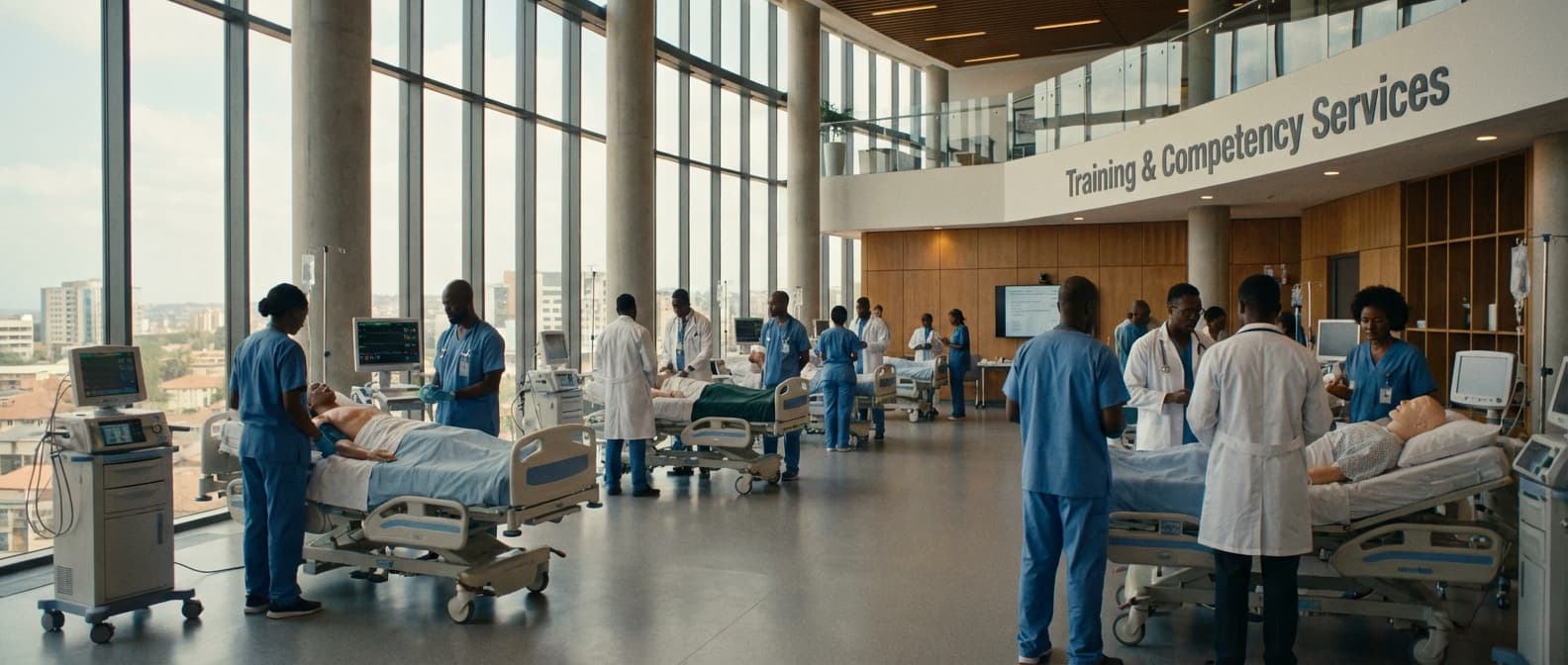
Ventilator User Training Service (Nurses) in Eswatini
Engineering Excellence & Technical Support
Ventilator User Training Service (Nurses) High-standard technical execution following OEM protocols and local regulatory frameworks.
Mastering Ventilator Setup & Initial Settings
Gain hands-on proficiency in the rapid and accurate setup of critical care ventilators. This module covers essential pre-use checks, circuit connections, and the proper configuration of initial ventilation modes and parameters based on patient acuity and clinical guidelines specific to Eswatini's healthcare context. Learn to confidently initiate ventilation, ensuring patient safety from the first breath.
Advanced Ventilation Monitoring & Waveform Analysis
Develop expertise in interpreting real-time ventilator data and graphical waveforms (pressure, flow, volume). This training focuses on identifying subtle changes in patient response, detecting potential complications early, and making timely, evidence-based adjustments to ventilator settings. Emphasis will be placed on understanding common alarm triggers and implementing effective troubleshooting strategies within the Eswatini resource environment.
Facilitating Safe & Effective Ventilator Weaning
Understand the principles and protocols for successful ventilator weaning tailored for Eswatini's clinical settings. This module will equip nurses with the skills to assess patient readiness for weaning, implement appropriate weaning modes (e.g., SIMV, CPAP), monitor patient tolerance, and manage the transition to spontaneous breathing. Learn best practices for minimizing ventilator-associated complications during the weaning process.
What Is Ventilator User Training Service (Nurses) In Eswatini?
Ventilator User Training Service (Nurses) in Eswatini refers to a specialized educational program designed to equip registered nurses with the essential knowledge and practical skills required for the safe and effective operation of mechanical ventilators. This service is critical for enhancing patient care in critical care settings and ensuring optimal respiratory support for individuals experiencing respiratory failure. The training focuses on understanding ventilator principles, patient assessment, setting selection, monitoring, troubleshooting, and weaning protocols, all within the context of Eswatini's healthcare infrastructure and available resources. The primary objective is to empower nurses to confidently manage patients requiring ventilatory support, thereby improving patient outcomes and reducing the risk of ventilator-associated complications.
| Who Needs Ventilator User Training? | Typical Use Cases | ||||||||
|---|---|---|---|---|---|---|---|---|---|
| Registered Nurses (RNs) working in critical care units (ICUs, High Dependency Units). | Management of patients with acute respiratory failure (e.g., due to Pneumonia, COPD exacerbations, ARDS). | Nurses in emergency departments who may initiate mechanical ventilation. | Post-operative patients requiring respiratory support. | Nurses in settings with limited access to intensivists or respiratory therapists who need to manage ventilated patients. | Patients undergoing surgical procedures that may compromise respiratory function. | Nurses involved in patient transport of ventilated individuals. | Management of patients with severe neurological conditions affecting respiratory drive. | Healthcare professionals in rural or remote areas of Eswatini where specialized respiratory care may be limited. | Patients with drug overdose or poisoning affecting respiratory function. |
Components of Ventilator User Training Service (Nurses)
- Theoretical instruction on respiratory physiology and pathophysiology.
- Detailed understanding of various ventilator modes (e.g., Volume Control, Pressure Control, SIMV, CPAP, BiPAP).
- Practical training on ventilator setup, calibration, and interface connection (e.g., endotracheal tubes, tracheostomy tubes, non-invasive masks).
- Patient assessment and selection criteria for mechanical ventilation.
- Setting appropriate initial ventilator parameters based on patient condition and diagnosis.
- Continuous monitoring of patient's respiratory status and ventilator parameters.
- Recognition and management of ventilator-associated complications (e.g., ventilator-associated pneumonia, barotrauma, volutrauma).
- Troubleshooting common ventilator alarms and malfunctions.
- Principles and protocols for ventilator weaning.
- Infection control measures related to ventilator use and circuit management.
- Ethical considerations and legal aspects of mechanical ventilation.
- Documentation requirements for ventilator management.
Who Needs Ventilator User Training Service (Nurses) In Eswatini?
This training service is designed to equip nurses in Eswatini with the essential knowledge and practical skills required to effectively operate and manage mechanical ventilators. This is crucial for providing optimal patient care, especially in critical care settings, and ensuring the safe and efficient use of these life-sustaining devices.
| Department | Specific Needs/Rationale |
|---|---|
| Intensive Care Units (ICUs) | Primary recipients; constant need for ventilator management of critically ill patients. |
| High Dependency Units (HDUs) / Step-down ICUs | Increasingly utilize mechanical ventilation for patients transitioning from ICU. |
| Surgical Wards (Post-operative care) | Nurses managing patients requiring temporary ventilation post-surgery. |
| Emergency Departments (EDs) | Essential for stabilizing patients requiring immediate ventilatory support before transfer to ICU. |
| Paediatric ICUs (PICUs) | Specific training for paediatric ventilation modes and challenges. |
| Maternal and Neonatal Units (including NICU) | Training for neonatal and maternal ventilation needs. |
| District Hospitals with Critical Care Capacity | Nurses in these facilities often manage a wider range of patient acuity and may be the only trained staff available. |
| National Referral Hospitals | Ensuring a high standard of ventilator competency across specialized critical care teams. |
Target Customers
- Registered Nurses (RNs)
- Enrolled Nurses (ENs)
- Midwives with critical care responsibilities
- Nurse Educators involved in critical care training
- Nursing Supervisors and Charge Nurses in critical care units
Ventilator User Training Service (Nurses) Process In Eswatini
This document outlines the workflow for the Ventilator User Training Service for Nurses in Eswatini, covering the process from initial inquiry to the successful execution of the training.
| Stage | Activity | Responsibility | Key Deliverables |
|---|---|---|---|
| Inquiry | Formal request for training | Healthcare Facility/Regional Health Authority | Training Request Document |
| Assessment | Feasibility check, needs assessment | Training Coordinator | Needs Assessment Report, Feasibility Confirmation |
| Proposal Development | Curriculum design, resource planning, cost estimation | Training Coordinator | Training Proposal |
| Approval | Review and sign-off of proposal | Requesting Entity (e.g., Ministry of Health) | Approved Training Proposal |
| Scheduling | Setting dates, times, and venue | Training Coordinator | Training Schedule |
| Preparation | Material development/procurement, trainer assignment | Training Coordinator/Training Institution | Training Materials, Assigned Trainers |
| Communication | Informing participants and supervisors | Training Coordinator | Pre-training Information Pack |
| Execution | Conducting theoretical and practical sessions | Trainers | Delivered Training Sessions |
| Assessment | Evaluating participant understanding and skills | Trainers | Competency Assessments, Evaluation Forms |
| Certification | Issuing certificates | Training Coordinator/Training Institution | Certificates of Attendance/Competency |
| Reporting | Documenting training outcomes | Training Coordinator | Post-training Report |
| Follow-up | Providing ongoing support | Designated Support Team | Support Plan, Refresher Course Schedule (if applicable) |
Ventilator User Training Service (Nurses) Workflow in Eswatini
- The process begins with an official inquiry from a healthcare facility (hospital, clinic) or a regional health authority in Eswatini requesting ventilator user training for their nursing staff.
- Upon receiving the inquiry, the Training Coordinator (or designated focal point within the relevant Ministry of Health department or training institution) assesses the request's feasibility, including the number of nurses to be trained, the specific ventilator models requiring training, and the desired timeline.
- A pre-training needs assessment may be conducted to gauge the existing knowledge base of the nurses and tailor the training content accordingly. This could involve questionnaires or preliminary discussions.
- Based on the needs assessment and request details, a comprehensive training proposal is developed. This proposal includes the training objectives, curriculum, duration, venue, required resources (ventilator simulators, actual ventilators, training materials), trainer qualifications, and estimated costs.
- The proposal is submitted to the requesting entity for review and approval. This may involve budgetary allocations and formal sign-off.
- Once approved, a formal training schedule is established. This includes setting the dates, times, and location(s) for the training sessions.
- The necessary training materials (manuals, presentations, case studies, practical guides) are prepared or procured. This also includes ensuring the availability of functional ventilators or high-fidelity simulators for hands-on practice.
- Qualified trainers with expertise in ventilator management and user training are identified and assigned to the sessions.
- Pre-training communication is sent to the participants (nurses) and their supervisors, providing details about the training schedule, venue, and any prerequisites.
- The training sessions are conducted as per the schedule. These typically involve a blend of theoretical knowledge delivery (lectures, discussions) and practical, hands-on sessions using ventilators or simulators.
- Throughout the training, participants are encouraged to ask questions and engage in problem-solving scenarios. Practical competency assessments (e.g., performing specific ventilation modes, troubleshooting common issues) are conducted.
- Post-training evaluation is carried out. This usually involves assessing the participants' understanding and retention of the material through tests or observed practical skills. Feedback on the training itself is also collected from participants and trainers.
- Upon successful completion of the training and evaluation, certificates of attendance or competency are issued to the participating nurses.
- A post-training report is compiled, summarizing the training activities, attendance, assessment results, and any recommendations for further training or support. This report is shared with the requesting entity and relevant stakeholders.
- Follow-up support mechanisms may be established, such as refresher courses, access to online resources, or troubleshooting hotlines, to ensure continued competency and address any emergent challenges in ventilator use.
Ventilator User Training Service (Nurses) Cost In Eswatini
Providing comprehensive ventilator user training for nurses in Eswatini is crucial for ensuring patient safety and optimal device utilization. The cost of such services can vary significantly based on several key factors, making it challenging to provide a single, definitive price. Local currency considerations and the availability of qualified trainers within Eswatini also play a role.
| Cost Factor | Potential Impact on Cost | Estimated Range (Emaswati Lilangeni - SZL) |
|---|---|---|
| Basic User Training (Half-day) | Lower | SZL 800 - SZL 2,500 per participant |
| Comprehensive User Training (Full-day) | Medium | SZL 1,500 - SZL 5,000 per participant |
| Advanced/Specialized Training (Multi-day) | Higher | SZL 3,000 - SZL 10,000+ per participant (depending on complexity and duration) |
| On-site Training (including trainer travel) | Higher (depending on distance and group size) | SZL 5,000 - SZL 20,000+ per session (group rate) |
| Customized Training Program | Variable | Will be quoted based on specific requirements |
| Training with Simulation Equipment | Higher | Potentially SZL 1,000 - SZL 3,000+ per participant on top of standard training |
Factors Influencing Ventilator User Training Costs for Nurses in Eswatini:
- Trainer Expertise and Experience: Highly qualified and experienced respiratory therapists or critical care nurses with specialized ventilator training command higher fees.
- Training Duration and Intensity: The length of the training program (e.g., half-day, full-day, multi-day) and the depth of coverage (basic to advanced settings) directly impact the overall cost.
- Number of Participants: Training larger groups might lead to a lower per-participant cost due to economies of scale for the provider.
- Location of Training: Whether the training is conducted at the healthcare facility (requiring travel by trainers) or at a dedicated training center influences costs. Travel and accommodation for trainers, if applicable, will be factored in.
- Training Content and Materials: The complexity of the curriculum, the need for specialized simulation equipment, and the provision of training manuals or digital resources can affect pricing.
- Accreditation and Certification: Training that leads to recognized certifications may incur additional costs associated with accreditation bodies.
- Provider Type: Costs can differ between in-house training departments of medical device companies, specialized training organizations, or independent consultants.
- Customization: Tailoring the training program to specific hospital protocols, ventilator models, or patient populations might increase the cost.
- Equipment Availability: If the training requires the use of specific, high-end ventilators or simulation mannequins that the facility does not possess, the provider may need to supply these, impacting the price.
Affordable Ventilator User Training Service (Nurses) Options
This document outlines affordable ventilator user training service options specifically designed for nurses. We understand the critical need for comprehensive and cost-effective training to ensure competent ventilator management. This guide explores value bundles and cost-saving strategies to make high-quality training accessible.
| Training Model | Description | Cost-Saving Strategies | Value Proposition |
|---|---|---|---|
Key Training Components & Their Value
- {"title":"Foundational Ventilator Principles","description":"Covers basic respiratory anatomy, physiology, gas exchange, and common respiratory pathologies requiring mechanical ventilation. Value: Builds a strong theoretical base for understanding ventilator modes and settings."}
- {"title":"Ventilator Modes & Settings","description":"Detailed explanation of common modes (e.g., AC, SIMV, PSV, BiPAP) and how to set and adjust parameters (e.g., tidal volume, respiratory rate, PEEP, FiO2). Value: Empowers nurses to select and optimize appropriate ventilation strategies."}
- {"title":"Troubleshooting & Alarm Management","description":"Practical guidance on identifying and resolving common ventilator alarms, equipment malfunctions, and patient-related issues. Value: Enhances patient safety and reduces downtime by enabling prompt intervention."}
- {"title":"Patient Monitoring & Assessment","description":"Focuses on interpreting ventilator graphics, ABGs, vital signs, and patient response to ventilation to guide adjustments. Value: Promotes evidence-based practice and personalized patient care."}
- {"title":"Weaning Protocols & Strategies","description":"Training on assessing readiness for weaning, implementing weaning protocols, and managing the weaning process. Value: Facilitates timely liberation from mechanical ventilation, reducing length of stay and associated costs."}
- {"title":"Hands-on Simulation & Case Studies","description":"Practical application of learned concepts through simulated scenarios and real-world case studies. Value: Develops critical thinking and decision-making skills in a safe, controlled environment."}
Verified Providers In Eswatini
Finding reliable and trustworthy healthcare providers in Eswatini is paramount for ensuring quality medical care. Franance Health stands out as a leading platform dedicated to verifying and showcasing credentialed healthcare professionals, making the selection process for patients straightforward and secure. Their rigorous vetting process ensures that all listed providers meet high standards of medical expertise, ethical practice, and professional integrity. Choosing a Franance Health verified provider means opting for a healthcare experience where safety, competence, and patient well-being are the top priorities.
| Provider Type | Key Benefits of Franance Health Verification | What to Expect |
|---|---|---|
| General Practitioners | Ensures foundational medical knowledge and adherence to ethical guidelines. | Reliable primary care, diagnosis, and treatment for common ailments. |
| Specialists (e.g., Cardiologists, Dermatologists, Pediatricians) | Confirms advanced training, expertise, and ongoing professional development in their field. | Specialized care for complex health conditions with advanced diagnostic and treatment capabilities. |
| Hospitals and Clinics | Verifies the qualifications of medical staff and the operational standards of the facility. | Access to a range of medical services, advanced equipment, and coordinated care teams. |
| Dentists | Ensures proper dental education, licensing, and adherence to oral healthcare best practices. | Comprehensive dental examinations, treatments, and preventative care. |
| Therapists and Counselors | Confirms relevant psychological or therapeutic qualifications and ethical practice in mental health. | Support for mental and emotional well-being through evidence-based therapeutic approaches. |
Why Franance Health Verified Providers are the Best Choice in Eswatini:
- Rigorous Credentialing: Franance Health employs a thorough verification process that includes checking medical licenses, certifications, educational backgrounds, and professional references.
- Commitment to Quality: All verified providers adhere to established medical standards and best practices, ensuring you receive up-to-date and effective treatments.
- Enhanced Patient Safety: The verification process minimizes risks by confirming the qualifications and good standing of healthcare professionals.
- Trust and Transparency: Franance Health fosters trust through clear and accessible information about each provider's credentials and experience.
- Convenient Access: Easily find and connect with highly qualified doctors, specialists, and healthcare facilities across Eswatini.
- Ethical Practice: Verified providers are committed to ethical medical conduct and patient-centered care.
Scope Of Work For Ventilator User Training Service (Nurses)
This Scope of Work (SOW) outlines the requirements for providing comprehensive ventilator user training services specifically tailored for registered nurses. The objective is to equip nurses with the necessary knowledge and skills to safely and effectively operate, monitor, and manage patients requiring mechanical ventilation. This includes understanding ventilator modes, settings, alarms, troubleshooting common issues, and recognizing signs of patient distress or deterioration related to ventilation. The training will emphasize hands-on practice and clinical application to ensure competence in real-world scenarios.
| Technical Deliverable | Standard Specifications | Target Audience | Delivery Method | Evaluation Method |
|---|---|---|---|---|
| Ventilator Operation Manual (Digital & Printed) | Comprehensive guide covering all aspects of ventilator operation, maintenance, and troubleshooting. Must be up-to-date with the specific ventilator models used. Includes clear diagrams and step-by-step instructions. | All trained nurses | Provided as a reference material | N/A |
| Core Curriculum Modules (Online & In-person) | Structured modules covering theoretical concepts, practical application, and case studies. Modules should be based on current evidence-based guidelines and manufacturer recommendations. | All trained nurses | Blended learning: E-learning modules for foundational knowledge, followed by in-person practical sessions. | Pre- and post-training quizzes, scenario-based assessments. |
| Hands-on Simulation Sessions | Practical training using actual or high-fidelity simulation ventilators. Focus on setting up, adjusting settings, responding to alarms, and troubleshooting common scenarios. | All trained nurses | In-person, instructor-led sessions in a simulation lab or designated training area. | Direct observation by certified instructors, performance checklists. |
| Clinical Case Studies & Scenarios | Realistic patient scenarios designed to challenge nurses' decision-making skills in managing ventilated patients. Includes a range of complexities from routine to critical. | All trained nurses | Integrated into simulation sessions and post-training review. | Debriefing and analysis of decisions made during case study discussions. |
| Competency Assessment Tool | A standardized tool to objectively evaluate a nurse's proficiency in performing key ventilator management tasks. Includes a scoring rubric. | All trained nurses | Administered post-simulation and at agreed-upon intervals. | Pass/Fail based on achieving a minimum score, with opportunities for remediation. |
| Certificate of Completion | Document certifying that the nurse has successfully completed the ventilator user training program. Includes training dates, hours, and topics covered. | All successfully trained nurses | Issued upon successful completion of all training and assessment requirements. | N/A |
| Post-Training Support & Refresher Program | Access to a dedicated support channel (e.g., email, phone) for questions, and scheduled refresher training sessions (e.g., annually or bi-annually) to reinforce knowledge and address new developments. | All trained nurses | Ongoing support and scheduled refresher sessions. | Feedback surveys on support effectiveness and refresher training needs. |
Training Objectives for Nurses
- Understand the principles of mechanical ventilation and its physiological impact on patients.
- Identify and interpret various ventilator modes, indications for use, and appropriate patient populations.
- Proficiently set up, initiate, and manage ventilator settings based on physician orders and patient assessment.
- Recognize and respond to common ventilator alarms, differentiating between true and false alarms.
- Perform routine checks and maintenance of the ventilator and associated equipment.
- Understand the importance of patient-ventilator synchrony and strategies to achieve it.
- Identify potential complications associated with mechanical ventilation and implement preventive measures.
- Safely manage patient transport with a ventilator.
- Understand weaning parameters and the process of liberating patients from mechanical ventilation.
- Document ventilator settings, patient response, and interventions accurately in the medical record.
- Adhere to infection control protocols when managing ventilated patients.
Service Level Agreement For Ventilator User Training Service (Nurses)
This Service Level Agreement (SLA) outlines the guaranteed response times and uptime for the Ventilator User Training Service (Nurses). It defines the standards of service that the training provider will deliver and the metrics by which performance will be measured. This SLA applies to all nurses registered for and actively participating in the Ventilator User Training Service.
| Service Metric | Service Level Objective (SLO) | Measurement Frequency | Remedy for Non-Compliance |
|---|---|---|---|
| Technical Support Response Time (Critical Issue - e.g., inability to access platform) | Within 1 business hour | Monthly | 5% discount on next training module subscription for each critical incident exceeding the SLO. |
| Technical Support Response Time (Non-Critical Issue - e.g., query about content) | Within 4 business hours | Monthly | 2% discount on next training module subscription for each non-critical incident exceeding the SLO. |
| Platform Uptime (Scheduled Maintenance Excluded) | 99.5% | Monthly | For every 30 minutes of downtime exceeding the guaranteed uptime, a credit equivalent to 1 hour of training value will be provided. |
| Training Material Availability (Scheduled Maintenance Excluded) | 99.8% | Monthly | For every 15 minutes of unavailability exceeding the guaranteed availability, a credit equivalent to 30 minutes of training value will be provided. |
Key Service Metrics
- Response Time: The time taken for the training provider to acknowledge and begin addressing a reported issue or request.
- Uptime: The percentage of time the Ventilator User Training Service is available and accessible to registered users.
- Training Material Availability: The percentage of time all required training modules and resources are accessible.
Frequently Asked Questions

Ready when you are
Let's scope your Ventilator User Training Service (Nurses) in Eswatini project in Eswatini.

Scaling healthcare logistics and technical systems across the entire continent.