
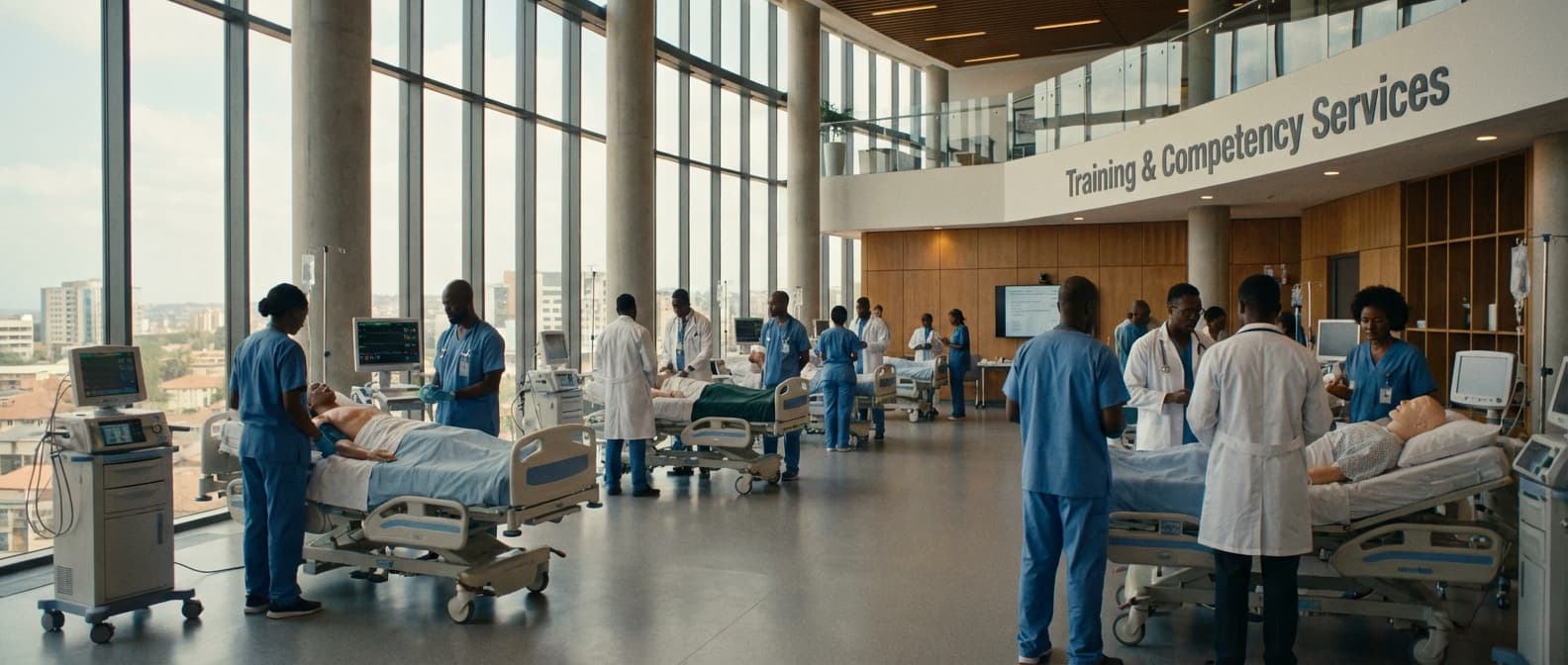
Ultrasound Application Training Service (Protocol-Based) in Eswatini
Engineering Excellence & Technical Support
Ultrasound Application Training Service (Protocol-Based) High-standard technical execution following OEM protocols and local regulatory frameworks.
Standardized Protocol Mastery
Our training emphasizes adherence to universally recognized ultrasound protocols, ensuring consistent and accurate image acquisition. Learn to perform scans with confidence, leading to improved diagnostic quality and patient care across Eswatini.
Expert-Led Hands-On Sessions
Benefit from immersive, practical training sessions led by experienced sonographers. Gain proficiency in diverse ultrasound applications, from basic to advanced, tailored to the specific needs of healthcare professionals in Eswatini.
Equipment & Workflow Optimization
Understand the intricacies of ultrasound equipment and optimize your scanning workflow for efficiency and diagnostic yield. Our training focuses on practical tips and troubleshooting to enhance your skills and resource utilization in local clinical settings.
What Is Ultrasound Application Training Service (Protocol-based) In Eswatini?
Ultrasound Application Training Service (Protocol-Based) in Eswatini refers to specialized educational programs designed to equip healthcare professionals with the knowledge and practical skills required to perform diagnostic ultrasound examinations according to established, standardized protocols. This service focuses on delivering high-quality, reproducible ultrasound imaging across various clinical applications by adhering to a structured, step-by-step approach. The training emphasizes not only the technical operation of ultrasound equipment but also the critical interpretation of sonographic findings within the context of specific medical conditions and anatomical regions.
| Who Needs It? | Typical Use Cases |
|---|---|
| Radiologists and Radiographers | Primary imaging modality for diagnosis and monitoring of a wide range of conditions. |
| Obstetricians and Gynecologists | Prenatal screening, fetal anomaly detection, assessment of pelvic organs, diagnosis of gynecological pathologies. |
| General Practitioners (with advanced training) | Point-of-care ultrasound (POCUS) for initial assessment in emergency settings, rural areas, or resource-limited environments. |
| Surgeons (e.g., General Surgery, Urology) | Intraoperative guidance, assessment of post-operative complications, evaluation of specific organ systems. |
| Cardiologists | Echocardiography for cardiac function assessment, valvular disease diagnosis, and congenital heart defect evaluation. |
| Emergency Medicine Physicians | Rapid bedside assessment of trauma (FAST scan), evaluation of abdominal pain, pleural effusions, and deep vein thrombosis (DVT). |
| Physiotherapists and Sports Medicine Specialists | Musculoskeletal ultrasound for diagnosis and management of soft tissue injuries, joint abnormalities, and tendinopathies. |
| New Graduates in Imaging Sciences | Foundation training to enter the workforce and perform standardized diagnostic ultrasound examinations. |
| Healthcare Facilities in Eswatini | To ensure consistent, high-quality diagnostic imaging services, improve diagnostic accuracy, and reduce the need for referral to specialized centers. |
| Government Health Ministries and NGOs | To enhance the capacity of the national healthcare workforce, improve patient outcomes, and address specific public health challenges. |
Key Components of Ultrasound Application Training Service (Protocol-Based)
- Protocol Development and Standardization: Establishing or adopting universally recognized ultrasound examination protocols for specific organ systems or clinical scenarios (e.g., abdominal, obstetric, gynecological, vascular, musculoskeletal).
- Theoretical Instruction: Comprehensive lectures covering ultrasound physics, instrumentation, image optimization, anatomy, physiology, and the pathophysiology of common diseases relevant to the specific application.
- Hands-on Practical Sessions: Supervised scanning sessions utilizing phantoms and/or simulated patients to practice image acquisition techniques, probe manipulation, and adherence to protocol steps.
- Image Interpretation and Reporting: Training in the systematic analysis of acquired ultrasound images, identification of normal and abnormal findings, and the generation of accurate, concise diagnostic reports.
- Quality Assurance and Control: Emphasis on maintaining high image quality, artifact recognition and reduction, and understanding of compliance with established imaging standards.
- Case Study Analysis: Review and discussion of real-world clinical cases to reinforce learning and develop diagnostic reasoning skills.
- Competency Assessment: Evaluation of trainees' practical skills and theoretical knowledge through written examinations, practical scanning assessments, and case review evaluations.
- Continuing Professional Development (CPD): Often structured to meet CPD requirements for medical professionals, ensuring ongoing skill enhancement and knowledge update.
Who Needs Ultrasound Application Training Service (Protocol-based) In Eswatini?
This training service is designed to equip healthcare professionals in Eswatini with the essential skills and knowledge to effectively perform ultrasound examinations based on standardized protocols. By adopting a protocol-driven approach, practitioners can ensure consistency, accuracy, and comprehensiveness in their diagnostic imaging, leading to improved patient care and outcomes. The service is particularly beneficial for facilities seeking to enhance their ultrasound capabilities, standardize reporting, and meet international best practices.
| Customer Type | Department/Area of Focus | Specific Needs Addressed | Benefits of Protocol-Based Training |
|---|---|---|---|
| Public Hospitals (District/Regional/Tertiary) | Radiology | Standardized scanning techniques for common pathologies, protocol adherence, reporting consistency. | Improved diagnostic accuracy, reduced variability in image quality, enhanced inter-departmental communication. |
| Public Hospitals (District/Regional/Tertiary) | Obstetrics & Gynecology | Fetal anomaly scans, maternal monitoring, gynecological assessments using standardized protocols. | Early detection of complications, improved maternal and fetal health outcomes, standardized reporting for prenatal care. |
| Public Hospitals (District/Regional/Tertiary) | Emergency Departments | FAST (Focused Assessment with Sonography for Trauma) scans, detection of critical conditions (e.g., pleural effusion, pneumothorax). | Rapid assessment and diagnosis in time-sensitive situations, improved patient management in emergencies. |
| Public Hospitals (District/Regional/Tertiary) | Internal Medicine | Abdominal and pelvic imaging, assessment of organ function, evaluation of fluid collections. | Enhanced diagnostic capabilities for a wide range of medical conditions, more informed treatment decisions. |
| Public Hospitals (District/Regional/Tertiary) | Pediatric Departments | Neonatal and pediatric ultrasound examinations following age-specific protocols. | Accurate diagnosis and monitoring of pediatric conditions, minimizing radiation exposure. |
| Public Hospitals (District/Regional/Tertiary) | Surgical Departments | Guidance for intraoperative or bedside ultrasound procedures (e.g., guiding biopsies, line placements). | Increased procedural success rates, reduced complications during interventions. |
| Rural Health Centers | General Practitioners/Clinical Officers | Basic point-of-care ultrasound (POCUS) protocols for screening and initial assessment. | Extended diagnostic capabilities in resource-limited settings, improved patient management and referral decisions. |
| Private Diagnostic Imaging Centers | Radiologists/Sonographers | Optimization of scanning efficiency, adoption of advanced imaging protocols, quality assurance. | Competitive edge, enhanced service quality, consistent reporting for private patients. |
| Training Institutions | Medical Imaging Programs | Curriculum development, practical training modules, skill enhancement for future sonographers and radiologists. | Producing highly competent and protocol-adherent imaging professionals for Eswatini's healthcare system. |
| Ministry of Health | Healthcare Policy & Planning | National standardization of ultrasound services, capacity building for healthcare workforce, quality improvement initiatives. | Strengthened national ultrasound infrastructure, improved public health outcomes, effective resource allocation. |
Target Customers and Departments in Eswatini
- Radiology Departments
- Obstetrics & Gynecology Departments
- Emergency Departments
- Internal Medicine Departments
- Pediatric Departments
- Surgical Departments (for specific procedural guidance)
- District and Regional Hospitals
- Tertiary/Referral Hospitals
- Rural Health Centers with Ultrasound Capabilities
- Private Diagnostic Imaging Centers
- Training Institutions (for medical imaging programs)
- Ministry of Health (for national capacity building initiatives)
Ultrasound Application Training Service (Protocol-based) Process In Eswatini
This document outlines the workflow for the Ultrasound Application Training Service (Protocol-Based) offered in Eswatini. The process is designed to be comprehensive, guiding clients from initial inquiry to successful completion and post-training support.
| Phase | Key Activities | Responsible Party |
|---|---|---|
| Inquiry & Needs Assessment | Initial consultation, understanding needs, identifying applications, discussing protocols, scheduling preferences. | Client, Training Provider |
| Proposal & Quotation | Developing proposal, outlining curriculum, methodology, duration, venue, and providing quotation. | Training Provider |
| Agreement & Scheduling | Review and acceptance of proposal, formalizing agreement, confirming schedule and logistics. | Client, Training Provider |
| Pre-Training Preparation | Finalizing curriculum, participant registration, material distribution, confirming equipment and venue. | Client, Training Provider |
| Training Execution | Onboarding, theoretical sessions, demonstrations, hands-on practice, case studies, Q&A, assessments. | Training Provider, Participants |
| Post-Training Evaluation | Summative assessments, participant feedback, facilitator debrief. | Training Provider, Participants |
| Certification & Reporting | Issuing certificates, submitting training report. | Training Provider |
| Post-Training Support & Follow-up | Ongoing support, refresher courses, outcome monitoring. | Training Provider |
Ultrasound Application Training Service (Protocol-Based) Workflow in Eswatini
- 1. Inquiry & Needs Assessment:
- Client expresses interest in ultrasound application training.
- Initial consultation to understand specific training needs, target audience (e.g., doctors, nurses, radiographers), current skill levels, and desired ultrasound applications (e.g., general radiology, obstetrics, cardiology, point-of-care ultrasound).
- Discussion of available protocols and the need for protocol customization.
- Identification of preferred training dates and duration.
- 2. Proposal & Quotation:
- Development of a tailored training proposal outlining the proposed curriculum, learning objectives, training methodology (lectures, hands-on scanning, case studies, simulations), duration, venue requirements (if on-site), and facilitator profiles.
- Provision of a detailed quotation based on the scope of training, number of participants, and any customized elements.
- 3. Agreement & Scheduling:
- Review and acceptance of the proposal and quotation by the client.
- Formalization of the training agreement, including payment terms and cancellation policy.
- Confirmation of the training schedule and logistics.
- 4. Pre-Training Preparation:
- Curriculum Finalization: Collaborative finalization of specific protocols and case material to be covered.
- Participant Registration: Client provides a list of registered participants with relevant background information.
- Material Distribution: Provision of pre-reading materials, case studies, or access to online resources to participants.
- Equipment & Venue Confirmation: Verification of ultrasound equipment availability (if provided by the training service) and suitability of the training venue (e.g., classroom, scanning bays, simulation lab).
- 5. Training Execution:
- Onboarding & Introduction: Welcome and introduction to the training team and course objectives.
- Theoretical Sessions: Lectures and presentations covering ultrasound physics, instrumentation, image optimization, and specific application protocols.
- Demonstrations: Live demonstrations of scanning techniques by experienced facilitators.
- Hands-on Scanning Practice: Supervised practical sessions where participants practice scanning on phantoms, models, or consenting patients (under strict ethical and clinical supervision).
- Case Study Analysis: Review and discussion of relevant clinical cases to reinforce learning.
- Protocol Application: Focused training on applying standardized ultrasound protocols for diagnostic accuracy and consistency.
- Q&A and Discussion: Ample opportunities for participants to ask questions and engage in discussions.
- Formative Assessments: Ongoing informal assessments to gauge understanding and provide feedback.
- 6. Post-Training Evaluation:
- Summative Assessment: Formal evaluation of participant learning through written tests, practical scanning assessments, or case-based examinations.
- Participant Feedback: Collection of feedback from participants through evaluation forms to assess training effectiveness and identify areas for improvement.
- Facilitator Debrief: Internal debriefing session for facilitators to review training performance and lessons learned.
- 7. Certification & Reporting:
- Issuance of Certificates: Provision of certificates of completion to participants who meet the required standards.
- Training Report: Submission of a comprehensive training report to the client, including attendance records, assessment results, and overall training outcomes.
- 8. Post-Training Support & Follow-up:
- Ongoing Support: Offer of continued support through email, phone, or online forums for addressing queries.
- Refresher Courses: Potential for offering advanced or refresher courses based on identified needs or technological advancements.
- Outcome Monitoring: Optional follow-up to assess the impact of the training on clinical practice and patient care.
Ultrasound Application Training Service (Protocol-based) Cost In Eswatini
In Eswatini, the cost of Ultrasound Application Training Services, particularly those that are protocol-based, can vary significantly. Several key factors influence the pricing, making it essential for institutions and individuals seeking training to understand these drivers. The primary goal of protocol-based training is to ensure standardized and accurate ultrasound examinations, which often requires specialized instructors, structured curricula, and practical, hands-on experience. The cost is generally presented in Eswatini Lilangeni (SZL).
| Training Type/Scope | Estimated Cost Range (SZL) | Notes |
|---|---|---|
| Basic Ultrasound Application Training (e.g., General Abdominal, OB/GYN Introduction) | 3,000 - 7,000 SZL | Typically 3-5 days, introductory level, common protocols. May include theoretical and basic practical sessions. |
| Intermediate Ultrasound Application Training (e.g., Advanced Abdominal, Vascular, Echocardiography Introduction) | 6,000 - 12,000 SZL | Typically 5-10 days, deeper dives into specific protocols, more hands-on practice with supervision. Requires more specialized instructors. |
| Advanced/Specialized Ultrasound Application Training (e.g., Interventional, Pediatric, Advanced Cardiac, Specific Disease Protocols) | 10,000 - 25,000+ SZL | Can range from 1-2 weeks or more, highly specialized instructors, access to advanced equipment, in-depth protocol adherence and critical analysis. Cost can increase significantly based on rarity of specialization. |
| On-Site / Customized Institutional Training | Variable (negotiated per contract) | Costs will be calculated based on all factors listed above, often with a daily rate for the trainer and a fee for curriculum adaptation and delivery. This can range from 5,000 SZL per day for a trainer to significantly more for comprehensive programs. |
| Refresher/Update Courses (Protocol-Based) | 2,000 - 5,000 SZL | Shorter duration (1-2 days), focusing on updates to protocols or specific skill enhancement. |
Key Pricing Factors for Ultrasound Application Training Services (Protocol-Based) in Eswatini:
- Duration and Intensity of Training: Longer and more intensive courses, involving more hours of instruction and practice, will naturally be more expensive. This includes theoretical lectures, simulation sessions, and supervised clinical practice.
- Level of Specialization: Training for highly specialized ultrasound applications (e.g., advanced echocardiography, interventional ultrasound) will command higher fees than general ultrasound introductory courses.
- Instructor Expertise and Qualifications: Highly experienced and certified sonographers or radiologists with extensive teaching experience will charge more for their services. The instructor-to-trainee ratio also impacts cost, with lower ratios generally leading to higher per-person fees.
- Training Venue and Resources: Whether the training is conducted at a dedicated training facility, a hospital department, or virtually will affect costs. Access to state-of-the-art ultrasound machines, phantoms, and simulation equipment also contributes to the overall price.
- Curriculum Development and Materials: The comprehensiveness of the protocol-based curriculum, including detailed handouts, reference materials, and assessment tools, will influence the training cost.
- Accreditation and Certification: Training programs that lead to recognized professional accreditation or certification often have higher costs due to the rigorous standards they adhere to and the administrative overhead involved.
- Number of Participants: Group training sessions may offer a lower per-participant cost compared to individual or small-group training.
- Customization of Protocols: If specific organizational protocols need to be integrated or customized for a particular institution, this can add to the training development cost.
- Travel and Accommodation (if applicable): For trainers traveling to a specific location in Eswatini or for trainees traveling to a training center, these expenses can be factored into the overall cost, though often they are billed separately.
Affordable Ultrasound Application Training Service (Protocol-based) Options
Our Affordable Ultrasound Application Training Service offers comprehensive, protocol-based learning designed to equip sonographers with the practical skills needed for accurate and efficient examinations. We understand the importance of cost-effectiveness in professional development. Therefore, we've structured our offerings to maximize value through flexible training options and strategic cost-saving measures. Our protocol-driven approach ensures trainees learn standardized, evidence-based scanning techniques, promoting consistency and reducing error rates.
| Service Component | Standard Cost | Value Bundle Discount | Cost-Saving Strategy |
|---|---|---|---|
| Online Protocol Modules (per module) | $150 | Included in Bundles | Subscription/Bulk purchase |
| Simulated Case Studies (per module) | $75 | Included in Bundles | Subscription/Bulk purchase |
| Virtual Expert Q&A Session | $100 | Included in Bundles | On-demand recordings |
| Advanced Technique Workshop (virtual) | $250 | Discounted in Deep Dive Bundle | On-site package option |
| On-Site Training (per day, per trainer) | $1500 | N/A | Group enrollment savings |
| Customized Curriculum Development | $500 (one-time) | Discounted for large teams | Leverage existing protocols |
| Subscription Access (per user, per month) | $99 | N/A | Predictable budgeting, continuous learning |
Value Bundles and Cost-Saving Strategies
- Core Protocol Mastery Bundle: This foundational bundle covers essential ultrasound protocols across major specialties (e.g., Abdomen, OB/GYN, Cardiology). It includes online modules, simulated case studies, and access to expert Q&A sessions. Ideal for new sonographers or those seeking to solidify core competencies.
- Advanced Specialty Deep Dive Bundle: For experienced professionals looking to specialize, this bundle focuses on advanced protocols within a chosen area (e.g., Vascular, Musculoskeletal, Breast). It incorporates more complex case studies, advanced technique workshops (live or virtual), and performance feedback.
- On-Site Team Training Package: Bring our expert trainers directly to your facility. This package is customized to your team's specific needs and equipment. It offers significant cost savings through reduced travel expenses for your staff and the ability to train multiple individuals concurrently. We tailor the curriculum to your common patient demographics and procedural requirements.
- Blended Learning Solution: Combine the flexibility of our online modules with targeted in-person or virtual mentorship sessions. This hybrid approach optimizes learning efficiency and allows for personalized feedback on hands-on skills, offering a cost-effective alternative to fully on-site training.
- Subscription-Based Access: Gain ongoing access to our complete library of protocol-based training modules and updates for a predictable monthly or annual fee. This allows your organization to provide continuous learning opportunities and stay current with evolving ultrasound techniques without per-module costs.
- Early Bird Registration Discounts: Secure your training spot well in advance and benefit from significant price reductions. This strategy encourages proactive professional development and helps us manage our training schedules efficiently, passing savings on to you.
- Group Enrollment Savings: Organizations enrolling multiple staff members receive tiered discounts. The more individuals trained, the greater the per-person cost savings.
- Referral Program: Existing clients who refer new trainees will receive a discount on their next training module or bundle. This fosters community and rewards loyalty.
- Customizable Module Selection: Instead of purchasing broad bundles, select only the specific protocol modules your team requires. This ensures you only pay for the training you truly need.
Verified Providers In Eswatini
In Eswatini, ensuring access to quality healthcare is paramount. When seeking medical services, it's crucial to partner with verified providers who adhere to stringent standards of care and professionalism. Franance Health stands out as a leading organization in Eswatini, distinguished by its commitment to excellence and comprehensive approach to healthcare. Their credentials highlight a deep understanding of local health needs, coupled with a dedication to international best practices, making them the optimal choice for individuals and families seeking reliable and effective medical solutions.
| Service Area | Franance Health Approach | Why it's the Best Choice |
|---|---|---|
| Primary Healthcare | Comprehensive check-ups, preventative screenings, and management of common illnesses. | Early detection and management of health issues, promoting long-term well-being and reducing the burden of chronic diseases. |
| Specialized Medical Services | Access to a network of specialists for conditions requiring advanced expertise (e.g., cardiology, oncology, pediatrics). | Ensures patients receive targeted and effective treatment from leading experts, minimizing the need for overseas referrals. |
| Emergency Care | Facilitation of prompt access to emergency services and critical care. | Minimizes response times during critical health events, potentially saving lives and improving recovery rates. |
| Health Education & Prevention | Proactive programs on disease prevention, healthy lifestyle choices, and managing chronic conditions. | Empowers individuals with knowledge to make informed health decisions and adopt healthier habits, leading to a healthier population. |
| Medical Tourism Facilitation | Assistance with coordinating medical treatments and travel for complex procedures. | Provides a trusted and efficient pathway for complex medical needs, offering peace of mind and reliable support. |
Key Credentials of Franance Health in Eswatini
- Accreditation by recognized national and international health bodies, signifying adherence to quality and safety standards.
- Partnerships with reputable local hospitals and clinics, ensuring seamless referral and treatment pathways.
- A team of highly qualified and experienced healthcare professionals, including specialists, general practitioners, and allied health workers.
- Investment in advanced medical technology and equipment to provide state-of-the-art diagnostics and treatments.
- Commitment to patient-centered care, focusing on empathy, respect, and individualized treatment plans.
- Robust data security and privacy protocols, safeguarding patient information.
- Active participation in community health initiatives and public health awareness programs.
- A proven track record of positive patient outcomes and satisfaction.
Scope Of Work For Ultrasound Application Training Service (Protocol-based)
This document outlines the Scope of Work for Ultrasound Application Training Services, specifically focusing on protocol-based training. It details the technical deliverables expected from the training provider and the standard specifications for these deliverables. The training will equip participants with the knowledge and practical skills necessary to perform ultrasound examinations according to established protocols, ensuring consistency, accuracy, and efficiency.
| Deliverable Category | Technical Deliverable Description | Standard Specifications | Format / Medium |
|---|---|---|---|
| Training Curriculum & Materials | Detailed training modules covering ultrasound physics, machine operation, specific application protocols (e.g., Abdominal, OB/GYN, Cardiac, Vascular), image acquisition, interpretation, and reporting. | Curriculum must be evidence-based, aligned with current best practices and professional guidelines. Materials should be clear, concise, and visually engaging. | Digital (PDF, PPT, Online Modules) and/or Printed |
| Hands-on Simulation/Practical Sessions | Supervised practical sessions utilizing phantoms and/or simulated patient scenarios to practice scanning techniques according to defined protocols. | Adequate equipment for all trainees, with a trainer-to-trainee ratio that allows for personalized feedback. Real-time guidance and correction on image acquisition and protocol adherence. | In-person sessions with simulation equipment; potentially remote proctoring for specific modules. |
| Case Studies & Image Libraries | A curated collection of normal and abnormal ultrasound cases relevant to the trained applications, demonstrating adherence to protocols and common findings. | High-quality, anonymized ultrasound images and cine loops. Clear annotation of key findings and correlation with clinical information where applicable. Case studies should reflect typical scenarios. | Digital (PACS viewer compatible, DICOM, JPG, MP4) and/or Multimedia Presentations |
| Assessment Tools | Quizzes, practical competency assessments (observed scanning), and/or written examinations to evaluate knowledge retention and skill proficiency. | Assessments should directly measure understanding of protocols, image optimization, and diagnostic interpretation. Practical assessments must be conducted under standardized conditions. | Digital (Online Forms, Learning Management System) and/or Paper-based |
| Training Report & Certificate | A comprehensive report detailing the training conducted, participant performance, and completion of the program. Certificates of completion. | Reports should include attendance records, assessment scores, and summary of skills acquired. Certificates must clearly state the training program title and duration. | Digital (PDF) and/or Printed |
| Protocol Manual/Guidebook | A user-friendly, detailed guidebook outlining each ultrasound examination protocol step-by-step, including transducer selection, patient positioning, scanning planes, and image documentation requirements. | Protocols must be clearly written, logically sequenced, and include visual aids (diagrams, example images) to support understanding. Must be updated to reflect current standards. | Digital (PDF, Online Portal) and/or Printed |
| Troubleshooting Guide | A resource document addressing common technical challenges encountered during ultrasound examinations and providing solutions for image optimization and artifact reduction. | Categorized by common artifacts and equipment issues. Solutions should be practical and actionable for sonographers in a clinical setting. | Digital (PDF, Online Portal) and/or Printed |
Key Objectives of Ultrasound Application Training Service (Protocol-Based)
- To impart comprehensive theoretical knowledge of ultrasound physics, instrumentation, and safety principles relevant to the specific applications.
- To train participants on the correct identification of anatomical structures and relevant pathologies through systematic scanning techniques guided by established protocols.
- To develop proficiency in operating ultrasound equipment, including image optimization, parameter adjustments, and artifact recognition and mitigation.
- To ensure participants can accurately document ultrasound findings, generate comprehensive reports, and understand quality assurance measures.
- To foster critical thinking and problem-solving skills for interpreting ultrasound images and making informed diagnostic decisions within the scope of their practice.
Service Level Agreement For Ultrasound Application Training Service (Protocol-based)
This Service Level Agreement (SLA) outlines the service standards for the Protocol-Based Ultrasound Application Training Service provided by [Your Company Name] to [Client Name]. It defines response times for support requests and uptime guarantees for the training platform.
| Service Component | Severity Level | Response Time Target | Resolution Time Target | Uptime Guarantee |
|---|---|---|---|---|
| Ultrasound Application Training Platform Access | Critical (Platform Unreachable, Core Functionality Unavailable) | 1 Hour | 4 Business Hours | 99.9% |
| Ultrasound Application Training Platform Access | High (Key Features Malfunctioning, Affecting Training Delivery) | 2 Business Hours | 8 Business Hours | 99.9% |
| Ultrasound Application Training Platform Access | Medium (Minor Functionality Issues, Workaround Available) | 4 Business Hours | 2 Business Days | 99.9% |
| Ultrasound Application Training Platform Access | Low (Cosmetic Issues, General Inquiries) | 8 Business Hours | 5 Business Days | 99.9% |
| Protocol-Based Training Content Support | Critical (Inaccurate core protocol information impacting patient safety) | 2 Business Hours | 8 Business Hours | N/A (Content accuracy is paramount, immediate review) |
| Protocol-Based Training Content Support | High (Significant inaccuracies or omissions in protocol steps) | 4 Business Hours | 1 Business Day | N/A (Content accuracy is paramount, immediate review) |
| Protocol-Based Training Content Support | Medium (Minor inaccuracies or suggestions for improvement) | 1 Business Day | 3 Business Days | N/A (Content accuracy is paramount, immediate review) |
| General Technical Support (Login issues, navigation) | All | 4 Business Hours | 8 Business Hours | 99.9% |
Key Performance Indicators (KPIs)
- Response Time: The maximum time it takes for [Your Company Name] to acknowledge and begin addressing a support request.
- Resolution Time: The maximum time it takes to resolve a reported issue. This will be categorized by severity.
- Platform Uptime: The percentage of time the Ultrasound Application Training Platform is available and accessible to users.
Frequently Asked Questions

Ready when you are
Let's scope your Ultrasound Application Training Service (Protocol-Based) in Eswatini project in Eswatini.

Scaling healthcare logistics and technical systems across the entire continent.