
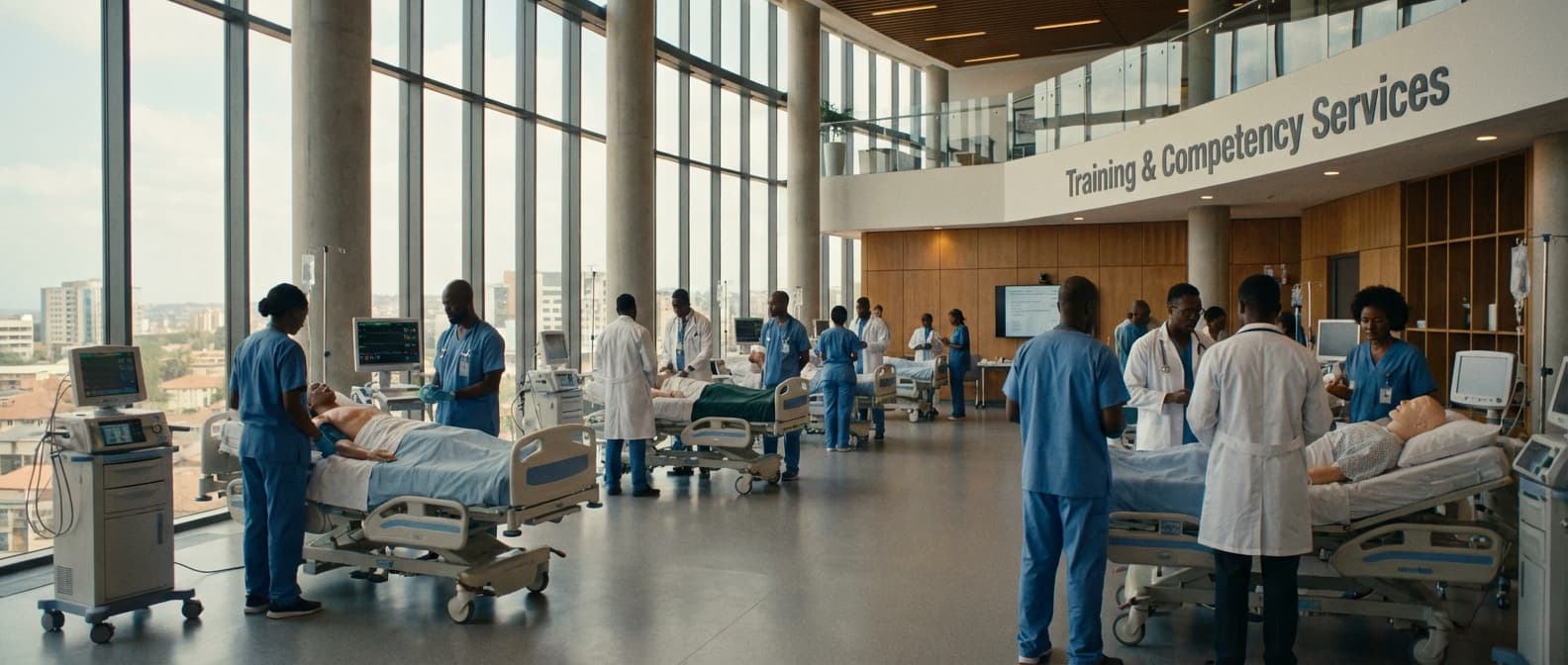
MRI Operator Training Service (Radiographers) in Eswatini
Engineering Excellence & Technical Support
MRI Operator Training Service (Radiographers) High-standard technical execution following OEM protocols and local regulatory frameworks.
Advanced MRI Protocols for Eswatini's Healthcare Needs
Master specialized MRI protocols tailored to common and emerging pathologies prevalent in Eswatini, ensuring accurate diagnosis and optimal patient outcomes.
Safety and Compliance in MRI Environments
Gain comprehensive training on MRI safety standards, radiation protection, and patient screening protocols, ensuring a secure and compliant practice within Eswatini's regulatory framework.
Image Optimization and Artifact Reduction Techniques
Develop expert skills in optimizing MRI image quality, identifying and mitigating common artifacts, and troubleshooting technical issues to deliver diagnostic-grade scans in diverse clinical settings across Eswatini.
What Is Mri Operator Training Service (Radiographers) In Eswatini?
MRI Operator Training Service (Radiographers) in Eswatini refers to specialized educational programs designed to equip radiographers and other qualified healthcare professionals with the knowledge and practical skills necessary to safely and effectively operate Magnetic Resonance Imaging (MRI) scanners. This training is crucial for ensuring diagnostic image quality, patient safety, and compliance with regulatory standards within healthcare facilities in Eswatini that utilize MRI technology.
| Who Needs MRI Operator Training? | Typical Use Cases | ||||||||||
|---|---|---|---|---|---|---|---|---|---|---|---|
| Registered Radiographers seeking to specialize in MRI. | Performing diagnostic MRI examinations for neurological conditions (e.g., stroke, tumors, multiple sclerosis). | Acquiring MRI scans for musculoskeletal imaging (e.g., joint injuries, ligament tears, bone tumors). | Conducting abdominal and pelvic MRI scans (e.g., liver lesions, gynecological pathology, prostate cancer screening). | Utilizing MRI for cardiac imaging and assessment. | Employing MRI in oncological imaging for staging and treatment monitoring. | Radiology Technicians with existing qualifications looking to expand their skill set to MRI operation. | Physicians or other healthcare professionals involved in the direct supervision or interpretation of MRI examinations, seeking a deeper understanding of the imaging process. | Biomedical Engineers or Technicians responsible for the maintenance and calibration of MRI equipment, requiring knowledge of operational parameters. | New MRI facilities establishing their radiology departments and requiring trained personnel. | Existing MRI facilities seeking to upskill their current staff or introduce new advanced imaging techniques. | Involvement in interventional MRI procedures (e.g., biopsies, ablations) requiring specialized operator training. |
Key Components of MRI Operator Training:
- Physics of MRI: Understanding the fundamental principles of nuclear magnetic resonance, radiofrequency pulses, gradient magnetic fields, and signal generation.
- MRI Safety Protocols: Comprehensive training on patient and staff safety, including screening for metallic implants, contraindications, ferromagnetic detection, and managing claustrophobia and contrast agent administration.
- Image Acquisition Techniques: Mastering various pulse sequences (e.g., spin echo, gradient echo, FLAIR, DWI) and their applications for different anatomical regions and pathologies.
- Image Optimization and Post-processing: Techniques for improving image quality, artifact reduction, and basic image manipulation for diagnostic interpretation.
- MRI Equipment Operation: Hands-on training with specific MRI scanner models, including system controls, patient positioning, coil selection, and workflow management.
- Quality Assurance and Quality Control (QA/QC): Understanding and implementing protocols for maintaining equipment performance and image consistency.
- Contrast Agent Administration: Safe and effective administration of intravenous MRI contrast agents, including knowledge of indications, contraindications, and potential adverse reactions.
- Pathology Recognition (Basic): Familiarization with common MRI appearances of various pathologies to ensure appropriate protocol selection and image acquisition.
Who Needs Mri Operator Training Service (Radiographers) In Eswatini?
MRI Operator Training Service (Radiographers) in Eswatini is crucial for enhancing the quality and accessibility of advanced diagnostic imaging services across the nation. This training is designed to equip radiographers with the specialized skills and knowledge required to safely and effectively operate Magnetic Resonance Imaging (MRI) equipment, interpret scans, and ensure optimal patient care. The growing demand for accurate and detailed medical imaging necessitates a well-trained workforce capable of utilizing these sophisticated technologies.
| Target Customer Type | Specific Departments Requiring Training |
|---|---|
| Public Hospitals | Radiology Department, Diagnostic Imaging Units |
| Private Hospitals and Clinics | Radiology Department, Imaging Services |
| Diagnostic Imaging Centers | MRI Unit, Radiology Section |
| University Teaching Hospitals | Radiology Department, Medical Imaging Units, Research Divisions |
| Referral Hospitals | Radiology Department, Advanced Imaging Services |
Target Customers and Departments for MRI Operator Training Service in Eswatini:
- Public Hospitals: Facilities managed by the Ministry of Health, which often serve a large portion of the population and are increasingly investing in advanced diagnostic equipment.
- Private Hospitals and Clinics: Healthcare institutions that cater to a diverse patient base and aim to provide comprehensive, high-quality medical services.
- Diagnostic Imaging Centers: Standalone facilities specializing in various imaging modalities, including MRI.
- University Teaching Hospitals: Institutions involved in medical education and research, requiring highly skilled professionals to train future radiographers and conduct advanced imaging studies.
- Referral Hospitals: Major healthcare facilities that receive patients from other hospitals and clinics, often equipped with advanced diagnostic tools like MRI.
Mri Operator Training Service (Radiographers) Process In Eswatini
The MRI Operator Training Service for Radiographers in Eswatini follows a structured workflow to ensure efficient and effective training delivery. This process begins with initial inquiries and culminates in the successful execution of the training program. The workflow is designed to accommodate various organizational needs and individual radiographer development.
| Stage | Description | Key Activities | Responsible Parties | Deliverables |
|---|---|---|---|---|
| Initial contact from potential clients (hospitals, clinics, government health departments) seeking MRI operator training for their radiographers. | Client contacts training provider via phone, email, or website form. Provider seeks to understand the client's specific training needs, number of participants, desired timeline, and current skill levels. | Client (HR, Radiology Department Head), Training Provider (Sales/Business Development) | Initial understanding of training requirements. |
| Based on the assessed needs, the training provider develops a tailored proposal and provides a cost estimate. | Provider designs a curriculum outline, defines training modules (theoretical, practical), identifies instructors, and estimates duration. A formal proposal with a detailed quotation is prepared. | Training Provider (Technical/Training Department, Finance) | Formal Training Proposal, Detailed Quotation. |
| Formal agreement is reached on the terms, scope, and cost of the training. | Client reviews the proposal and quotation. Negotiations may occur. A formal contract or service agreement is drafted and signed by both parties. | Client (Legal, Procurement), Training Provider (Legal, Management) | Signed Training Contract/Service Agreement. |
| Detailed planning of the training sessions, including dates, venue, and necessary resources. | Provider and client agree on specific training dates and times. Venue booking (on-site or off-site), equipment availability confirmation (MRI scanner access, simulation tools), and instructor allocation are finalized. | Training Provider (Operations/Logistics Manager), Client (Facility Manager, Radiology Coordinator) | Agreed Training Schedule, Confirmed Logistics. |
| Ensuring all participants and the training environment are ready for the program. | Participants are informed of the schedule, pre-reading materials may be distributed. Training materials (presentations, handouts, case studies) are prepared. Necessary software or simulation tools are set up. | Training Provider (Instructors, Administrative Staff), Client (Participants) | Ready Participants, Prepared Training Materials and Environment. |
| The core of the service, involving the actual training sessions. | Theoretical modules cover MRI physics, safety protocols, image acquisition techniques, and common pathologies. Practical sessions involve hands-on experience with MRI scanners (under supervision), image review, and protocol optimization. | Training Provider (Certified MRI Instructors) | Delivered Training Sessions (Lectures, Demonstrations, Practical Exercises). |
| Measuring the participants' understanding and skill acquisition. | Includes theoretical tests (quizzes, exams), practical assessments (performance on specific MRI tasks), and case study evaluations. Participants may also evaluate the training program. | Training Provider (Instructors, Assessment Team), Client (Participants) | Assessment Results, Training Evaluation Forms. |
| Formal recognition of training completion and gathering feedback for improvement. | Upon successful completion of assessments, participants receive training certificates. Comprehensive feedback from participants and the client is collected to identify strengths and areas for improvement in future training. | Training Provider (Certification Department, Training Management) | Training Certificates, Comprehensive Feedback Report. |
| Continued assistance or follow-up as agreed upon. | May include access to online resources, follow-up mentoring sessions, or specialized workshops. This is typically an add-on service. | Training Provider (Support Team) | Ongoing Support (if contracted). |
MRI Operator Training Service Workflow for Radiographers in Eswatini
- Inquiry and Needs Assessment
- Proposal Development and Quotation
- Agreement and Contract Finalization
- Training Schedule and Logistics Planning
- Pre-Training Preparations
- Training Delivery (Theory and Practical)
- Assessment and Evaluation
- Certification and Feedback
- Post-Training Support (Optional)
Mri Operator Training Service (Radiographers) Cost In Eswatini
The cost of MRI operator training for radiographers in Eswatini can vary significantly based on several factors. These include the duration and intensity of the training program, the qualifications and experience of the instructors, the specific modules covered, whether the training is conducted in-house at a facility or at an external training center, and the availability of specialized equipment for hands-on practice. Given that Eswatini is a developing economy, the cost will generally be lower than in more developed countries, but will still reflect the specialized nature of the skill and the investment required for quality education.
Factors influencing cost include:
- Training Provider: Government-funded institutions may offer subsidized rates, while private training organizations or specialized medical training companies will likely have higher fees. Some training might be part of a larger equipment purchase agreement.
- Course Duration and Level: Basic introductory courses will be less expensive than advanced or specialized MRI techniques training. Full certification programs will naturally be the most costly.
- Location of Training: Training conducted on-site at a hospital or clinic might incur additional costs for facility use and instructor travel, but could also offer the advantage of using existing equipment. Off-site training at a dedicated center might be more standardized but involve separate venue and accommodation costs for trainees if they are not local.
- Curriculum and Resources: Comprehensive training with access to advanced simulators, high-quality learning materials, and ongoing support will command higher prices.
- Certification and Accreditation: Training leading to internationally recognized certifications will likely be more expensive due to the rigor and external validation processes involved.
| Training Type/Duration | Estimated Cost Range (Eswatini Lilangeni - SZL) | Notes |
|---|---|---|
| Introductory MRI Physics & Safety (1-2 days) | SZL 3,000 - 6,000 | Covers fundamental principles and safety protocols. |
| Basic MRI Imaging Protocols & Acquisition (3-5 days) | SZL 7,000 - 15,000 | Focuses on common MRI sequences and image acquisition techniques. |
| Comprehensive MRI Operator Certification (2-4 weeks, intensive) | SZL 25,000 - 70,000+ | Includes theoretical and practical training, leading to a recognized certification. Costs can vary significantly based on provider and facility. |
| Specialized MRI Modality Training (e.g., Neuro, MSK, Cardiac - 3-7 days) | SZL 10,000 - 30,000 | For experienced operators looking to specialize. |
| On-site Training (per day, for a group) | SZL 4,000 - 10,000 | Excludes trainee accommodation and travel. Price is for the instructor and training delivery. |
| Online/Remote Training (per course) | SZL 2,000 - 10,000 | Primarily theoretical, may require separate practical sessions. |
Key Pricing Factors for MRI Operator Training in Eswatini:
- Training Provider (Government vs. Private)
- Course Duration and Depth (Introductory vs. Advanced/Certification)
- Location of Training (On-site vs. Off-site)
- Curriculum Content and Learning Resources
- Instructor Expertise and Qualifications
- Inclusion of Practical/Hands-on Sessions
- Certification and Accreditation of the Program
Affordable Mri Operator Training Service (Radiographers) Options
This service offers accessible and cost-effective Magnetic Resonance Imaging (MRI) operator training designed specifically for radiographers seeking to expand their skill sets. We understand the budgetary constraints faced by many healthcare facilities and individuals. Therefore, our program emphasizes value-driven training and provides practical cost-saving strategies to make advanced MRI certification achievable.
| Value Bundle Option | Description | Key Benefits | Estimated Cost Range (USD) |
|---|---|---|---|
| Foundation Accelerator | Covers core MRI principles, safety, and basic scanning protocols. Ideal for radiographers new to MRI. | Builds essential knowledge base, foundational safety training, introductory scanning techniques. | $800 - $1,500 |
| Advanced Skills Specialist | Includes the Foundation Accelerator plus specialized sequences, advanced protocols, and artifact reduction techniques. | Enhances scanning proficiency, ability to handle complex cases, improved image quality. | $1,200 - $2,200 |
| Comprehensive Certification Package | The most complete option, encompassing all aspects of MRI operation, including advanced techniques, patient care, and regulatory compliance. | Full certification readiness, broad skill set for diverse MRI environments, career advancement opportunities. | $1,800 - $3,000 |
Key Features of Our Affordable MRI Operator Training:
- Comprehensive curriculum covering MRI physics, safety, protocol optimization, and image interpretation.
- Flexible learning formats to accommodate busy schedules, including online modules and in-person practicum.
- Experienced instructors with extensive clinical MRI experience.
- Certification recognized within the industry upon successful completion.
- Focus on practical skills development for immediate application in a clinical setting.
Verified Providers In Eswatini
Ensuring access to quality healthcare is paramount, and in Eswatini, identifying verified providers is crucial for patient safety and optimal health outcomes. This document highlights Franance Health, a leading organization that sets a high standard for healthcare services in the nation. Understanding their credentials and the rigorous processes they employ reveals why they represent the best choice for individuals seeking reliable and effective medical care.
| Provider Type | Franance Health Offering | Why it Matters for Patients in Eswatini |
|---|---|---|
| General Practitioners | Comprehensive primary care services, preventative health screenings, and management of common illnesses. | Provides accessible first-line medical attention, crucial for early disease detection and management in communities across Eswatini. |
| Specialist Consultations | Access to a wide range of medical specialists including cardiologists, pediatricians, dermatologists, and more. | Reduces the need for patients to travel abroad for specialized medical needs, making advanced care readily available within Eswatini. |
| Diagnostic Services | Advanced laboratory testing, imaging services (X-ray, ultrasound), and other diagnostic procedures. | Ensures accurate and timely diagnoses, leading to more effective treatment plans and better patient outcomes. |
| Emergency Care | 24/7 emergency services staffed by trained professionals and equipped with essential life-saving equipment. | Provides critical immediate medical attention during emergencies, potentially saving lives and reducing complications. |
| Preventative Health Programs | Vaccination drives, health education workshops, and screening programs for chronic diseases. | Empowers individuals and communities to take proactive steps towards maintaining good health and preventing illness. |
Key Credentials of Franance Health
- Accreditation by the Eswatini Ministry of Health: Franance Health undergoes stringent evaluations and meets the national standards set by the Ministry of Health, ensuring compliance with all regulatory requirements for healthcare facilities and practitioners.
- Certified Medical Professionals: All healthcare providers affiliated with Franance Health possess valid professional licenses and certifications, verified by relevant professional bodies and the Ministry of Health. This includes doctors, nurses, specialists, and allied health professionals.
- Adherence to International Best Practices: Franance Health is committed to incorporating global standards in patient care, infection control, and medical ethics, ensuring that services provided are of a consistently high quality.
- Investments in Modern Infrastructure and Technology: The organization consistently invests in state-of-the-art medical equipment and maintains modern, well-equipped facilities, which is a testament to their commitment to providing advanced and accurate diagnoses and treatments.
- Robust Patient Feedback and Quality Assurance Systems: Franance Health actively solicits and analyzes patient feedback to continuously improve their services. They have established internal quality assurance protocols to monitor and enhance the patient experience and clinical outcomes.
- Partnerships with Reputable Medical Institutions: Collaborations with recognized national and international medical institutions further validate Franance Health's commitment to excellence and facilitate knowledge exchange and advanced training for their staff.
Scope Of Work For Mri Operator Training Service (Radiographers)
This Scope of Work (SOW) outlines the requirements for providing comprehensive MRI Operator Training Services specifically tailored for radiographers. The training aims to equip radiographers with the necessary theoretical knowledge and practical skills to safely and effectively operate Magnetic Resonance Imaging (MRI) scanners, ensuring high-quality diagnostic imaging and patient care. The training will cover fundamental MRI principles, advanced imaging techniques, patient preparation and safety protocols, image acquisition parameters, quality assurance, and troubleshooting. Technical deliverables will include training manuals, practical session guides, assessment tools, and certificates of completion. Standard specifications for the training will adhere to industry best practices and relevant regulatory guidelines.
| Specification Category | Standard Specification | Details/Notes |
|---|---|---|
| Training Modality | Hands-on and Theoretical | Combination of classroom-based learning and supervised practical sessions on live MRI scanners. |
| Target Audience | Registered Radiographers | Minimum qualification: Bachelor's degree in Radiography or equivalent. Prior experience with CT or X-ray preferred. |
| Training Duration | Customizable (e.g., 5-10 days) | Dependent on trainee experience and specific MRI system covered. Includes theory, practicals, and assessments. |
| Instructor Qualifications | Certified MRI Technologist/Radiographer | Minimum 5 years of experience in MRI operation and training. Certified by a recognized professional body. |
| Training Environment | Accredited Healthcare Facility/Training Center | Must be equipped with operational MRI scanners (manufacturer and model to be specified). Access to simulation software is beneficial. |
| Curriculum Content | Comprehensive and Modular | Covers physics, pulse sequences, patient care, safety, protocols, image optimization, QA, and basic troubleshooting. Modules can be adapted. |
| Practical Training Ratio | 1:3 (Trainee:Instructor) | Ensures adequate supervision and individual attention during practical scanning sessions. |
| Assessment Methodology | Theory Exam & Practical Competency | Written/online theoretical assessment and hands-on evaluation of scanning techniques and patient management. |
| Compliance | International Best Practices & Local Regulations | Adherence to ACR (American College of Radiology) guidelines, ICRP (International Commission on Radiological Protection) recommendations, and local radiation safety regulations. |
| Machine Specificity | Machine-Specific Modules | Training to be conducted on specific MRI scanner models (e.g., Siemens Magnetom, GE Signa, Philips Ingenia) as per client requirement. |
| Patient Safety | Stringent Protocols | Emphasis on MRI safety zones, screening procedures, ferromagnetic detection, and management of claustrophobia and contrast reactions. |
| Image Quality | Optimization Techniques | Training on achieving optimal signal-to-noise ratio (SNR), spatial resolution, and artifact reduction for diagnostic purposes. |
Technical Deliverables
- Comprehensive MRI Theory Training Manual (Digital and Print)
- Practical MRI Scanning Session Guides (Machine-Specific)
- Patient Safety and Contraindication Checklist/Protocols
- Image Quality Assessment and Optimization Guidelines
- Common Artifacts and Troubleshooting Guide
- MRI Physics and Pulse Sequence Fundamentals Handbook
- Patient Communication and Consent Form Templates
- Post-Training Assessment Questionnaires/Exams
- Practical Skills Competency Evaluation Forms
- Certificates of Completion (Digital and Print)
Service Level Agreement For Mri Operator Training Service (Radiographers)
This Service Level Agreement (SLA) outlines the service standards for the MRI Operator Training Service provided to Radiographers by [Your Company Name]. It defines the expected response times for support requests and the uptime guarantees for the training platform and related resources. This SLA is effective as of [Start Date] and will remain in effect until [End Date], unless terminated in accordance with the terms of the Master Service Agreement.
| Service Component | SLA Metric | Target | Measurement Period |
|---|---|---|---|
| Support Ticket Acknowledgment (Critical) | Response Time | 1 Hour | During Business Hours (Mon-Fri, 9 AM - 5 PM [Time Zone]) |
| Support Ticket Acknowledgment (High) | Response Time | 2 Business Hours | During Business Hours |
| Support Ticket Acknowledgment (Medium) | Response Time | 4 Business Hours | During Business Hours |
| Support Ticket Acknowledgment (Low) | Response Time | 1 Business Day | During Business Hours |
| MRI Operator Training Platform Availability | Uptime Guarantee | 99.5% | Monthly |
| Online Simulation Module Availability | Uptime Guarantee | 99.0% | Monthly |
| Access to Recorded Lectures/Webinars | Availability | 99.8% | Monthly |
| Scheduled Live Training Sessions | On-time Start | 98.0% | Per Session (Excluding unavoidable external factors) |
Key Service Metrics
- Response Time: The maximum time allowed for [Your Company Name] to acknowledge and begin addressing a reported issue or request.
- Uptime Guarantee: The minimum percentage of time the MRI Operator Training Service is available and operational for registered users.
- Resolution Time: The target time for resolving issues, though this may vary based on the complexity of the problem.
- Availability of Training Materials: The guaranteed accessibility of all course content, modules, and simulation tools.
Frequently Asked Questions

Ready when you are
Let's scope your MRI Operator Training Service (Radiographers) in Eswatini project in Eswatini.

Scaling healthcare logistics and technical systems across the entire continent.