
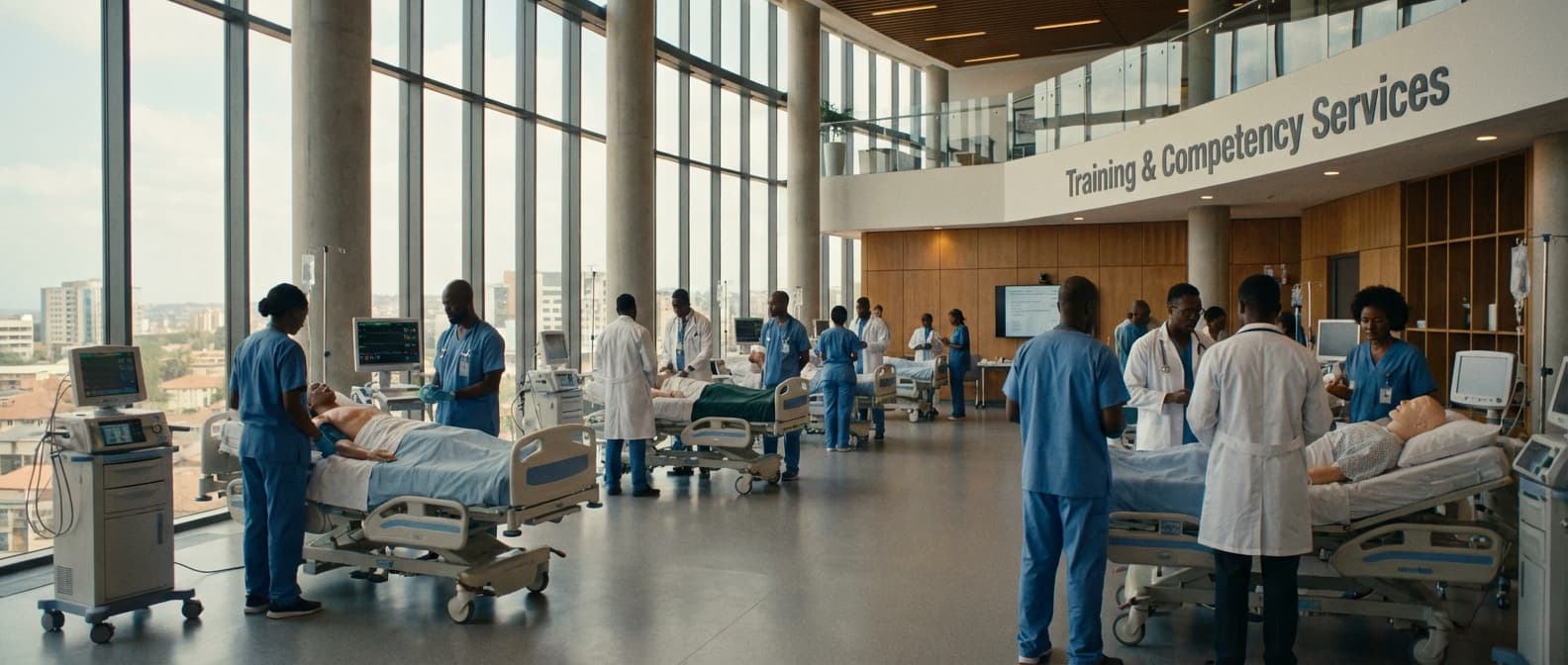
CT Operator Training Service (Radiographers) in Eswatini
Engineering Excellence & Technical Support
CT Operator Training Service (Radiographers) High-standard technical execution following OEM protocols and local regulatory frameworks.
Enhanced Image Quality & Diagnostic Accuracy
Master advanced CT imaging protocols and post-processing techniques to achieve superior image clarity and enable precise diagnosis for critical patient care in Eswatini.
Optimized Radiation Safety & Dose Management
Implement best practices in ALARA principles and utilize modern dose reduction strategies to ensure patient and staff safety while maintaining diagnostic efficacy.
Advanced Workflow Integration & Efficiency
Streamline CT examination workflows, from patient preparation to image archiving, leveraging modern technology to increase throughput and optimize resource utilization in Eswatini's healthcare settings.
What Is Ct Operator Training Service (Radiographers) In Eswatini?
CT Operator Training Service (Radiographers) in Eswatini refers to specialized educational programs designed to equip radiographers with the necessary theoretical knowledge and practical skills to competently and safely operate Computed Tomography (CT) imaging equipment. This service is crucial for ensuring high-quality diagnostic imaging, patient safety, and adherence to international radiation protection standards within healthcare facilities in the Kingdom of Eswatini. The training focuses on the principles of CT imaging, scanner operation, image acquisition protocols, image processing and manipulation, artifact identification and reduction, patient preparation, contrast media administration, radiation safety protocols, and basic equipment maintenance and troubleshooting.
| Who Needs CT Operator Training Service (Radiographers)? | Typical Use Cases | ||||
|---|---|---|---|---|---|
| Registered Radiographers: Individuals holding a recognized qualification in radiography seeking to specialize or update their skills in CT imaging. | New CT Installations: Healthcare facilities acquiring new CT scanners requiring initial training for their radiography staff. | Existing CT Users: Radiographers working with CT who need refresher courses, advanced training on new protocols, or are transitioning to different CT scanner models. | Healthcare Institutions: Public and private hospitals, diagnostic imaging centers, and specialized clinics in Eswatini. | New Graduates in Radiography: Individuals completing their radiography education who wish to enter the field of CT imaging. | |
| Diagnostic Imaging: Routine CT scans of the head, chest, abdomen, pelvis, and extremities for diagnosis of trauma, tumors, infections, and vascular abnormalities. | Interventional Procedures: Guidance for CT-guided biopsies, aspirations, drainages, and radiofrequency ablations. | Surgical Planning: Providing detailed anatomical information for pre-operative assessment and surgical planning. | Emergency Medicine: Rapid imaging for acute conditions such as stroke, pulmonary embolism, and gastrointestinal perforations. | Follow-up Imaging: Monitoring disease progression, treatment response, and post-operative status. | Screening Programs: Participation in specific CT screening protocols, where applicable and regulated. |
Key Components of CT Operator Training Service (Radiographers) in Eswatini:
- Theoretical Foundation: Understanding the physics of X-ray generation, CT scanner hardware (gantry, detector array, X-ray tube), image reconstruction algorithms, and the biological effects of ionizing radiation.
- Practical Scanner Operation: Hands-on training in initializing the scanner, patient positioning techniques, selecting appropriate scan parameters (kVp, mAs, slice thickness, pitch), and executing scan protocols for various anatomical regions.
- Image Acquisition and Optimization: Learning to acquire high-quality CT images with minimal artifacts, understanding the interplay between technical factors and image quality, and optimizing protocols for specific clinical indications.
- Image Post-Processing and Analysis: Familiarization with viewing workstations, windowing techniques, multi-planar reconstruction (MPR), 3D rendering, and preliminary image assessment for diagnostic interpretation.
- Patient Care and Safety: Training on patient preparation (fasting, medication, consent), safe administration of intravenous contrast media, monitoring for adverse reactions, and implementing infection control measures.
- Radiation Protection: Comprehensive instruction on ALARA (As Low As Reasonably Achievable) principles, dose monitoring, shielding techniques, and regulatory compliance with national radiation safety guidelines.
- Quality Assurance and Control: Understanding the importance of regular equipment performance checks, calibration, and routine quality control procedures to maintain diagnostic accuracy and safety.
Who Needs Ct Operator Training Service (Radiographers) In Eswatini?
CT Operator Training Service (Radiographers) in Eswatini is crucial for enhancing the quality and accessibility of diagnostic imaging services. This specialized training aims to equip radiographers with advanced skills in operating CT scanners, ensuring accurate image acquisition, patient safety, and optimal utilization of equipment. The demand for such services is driven by the need to improve healthcare outcomes, reduce diagnostic errors, and keep pace with technological advancements in medical imaging.
| Target Customer/Department | Rationale for Training Needs | Specific Training Focus Areas |
|---|---|---|
| Radiology Departments (Public & Private Hospitals) | To ensure radiographers are proficient in operating diverse CT scanner models, performing various protocols (e.g., contrast administration, low-dose CT), and adhering to radiation safety standards. | Advanced CT protocols, image optimization techniques, post-processing, patient preparation and care during CT scans, radiation dose management, troubleshooting common equipment issues. |
| Diagnostic Imaging Centers | To meet the growing demand for specialized CT services, improve turnaround times, and maintain high-quality diagnostic imaging for a wider patient population. | Specific imaging applications (e.g., cardiac CT, neuro-CT, abdominal CT), workflow optimization, interdisciplinary collaboration with radiologists. |
| Ministry of Health (Capacity Building Programs) | To standardize CT imaging quality across the nation, address workforce shortages in specialized areas, and ensure equitable access to advanced diagnostic tools. | Train-the-trainer programs, core competency development for newly qualified radiographers, competency assessment and re-certification frameworks. |
| Medical Training Institutions (Universities, Colleges) | To integrate up-to-date CT technology and best practices into their radiography curricula, producing graduates with relevant and sought-after skills. | Curriculum development support, provision of practical training modules, guest lectures by experienced CT specialists. |
| Radiographers seeking professional development | To enhance career progression, acquire new skills in emerging CT technologies, and stay competitive in the healthcare job market. | Specialized workshops on new CT applications, certification preparation courses, online learning modules for flexible skill enhancement. |
Target Customers and Departments for CT Operator Training Service (Radiographers) in Eswatini
- Public Hospitals and Clinics offering CT Scan services.
- Private Hospitals and Diagnostic Imaging Centers.
- Ministry of Health (for national capacity building initiatives).
- Academic and Training Institutions involved in medical radiography programs.
Ct Operator Training Service (Radiographers) Process In Eswatini
This document outlines the workflow for the CT Operator Training Service (Radiographers) in Eswatini, detailing the process from initial inquiry to the successful execution of the training program. The service aims to equip radiographers with the necessary skills and knowledge to operate CT scanners effectively and safely, adhering to Eswatini's healthcare standards.
| Stage | Description | Key Activities | Responsible Party | Deliverables/Outcomes |
|---|---|---|---|---|
| The process begins when a radiographer, a healthcare institution, or a relevant government body expresses interest in CT operator training. | Receive inquiry via email, phone, or designated portal. Provide initial information about the service. Schedule an introductory meeting. | Training Provider / Service Administrator | Confirmation of inquiry, basic service overview provided. |
| Understanding the specific training requirements of the inquirer to tailor the program effectively. | Conduct a detailed needs assessment (e.g., existing skill levels, specific CT equipment used, desired learning outcomes). Develop a customized training proposal outlining curriculum, duration, cost, and learning objectives. Submit proposal for review and approval. | Training Provider (Curriculum Developer & Sales) | Needs assessment report, detailed training proposal. |
| Formalizing the training engagement and setting the timeline for execution. | Review and negotiate the training proposal. Sign a service agreement or contract. Agree on training dates, venue (on-site or off-site), and participant numbers. Process any required upfront payments. | Training Provider & Client Institution | Signed service agreement, confirmed training schedule, payment confirmation. |
| Ensuring all necessary resources are ready for the training. | Develop or source training manuals, presentations, case studies, practical exercises, and assessment tools. Prepare any required specialized equipment or simulation tools. Ensure all materials are compliant with Eswatini healthcare regulations. | Training Provider (Instructors & Material Developers) | Comprehensive training materials (digital and/or print), assessment tools. |
| Preparing participants and stakeholders for the upcoming training. | Communicate detailed training agenda, pre-reading materials (if any), and logistical information (venue address, timings, what to bring) to participants and their supervisors. Confirm participant attendance. | Training Provider / Service Administrator | Participant briefing, confirmed attendance list. |
| The core phase where knowledge and skills are imparted. | Deliver theoretical sessions covering CT physics, anatomy, imaging protocols, radiation safety, patient care, and image interpretation. Conduct practical sessions on CT scanner operation, image acquisition, quality control, and troubleshooting. Facilitate hands-on experience with actual CT equipment (where feasible) or high-fidelity simulators. | Training Provider (Instructors) | Delivered training sessions, participant engagement, practical skills demonstration. |
| Measuring the effectiveness of the training and participant competency. | Conduct theoretical assessments (quizzes, exams) and practical skill assessments. Gather feedback from participants on the training content, delivery, and effectiveness through evaluation forms. Review participant performance against learning objectives. | Training Provider (Instructors & Assessors) | Assessment results, participant feedback reports, evaluation summary. |
| Formal recognition of successful completion and ongoing support. | Issue certificates of completion to participants who successfully meet the training criteria. Provide a summary report of the training to the client institution. Offer post-training support, such as troubleshooting assistance or further consultations, as agreed upon. Follow up with participants/institutions for long-term impact assessment. | Training Provider (Administration & Instructors) | Certificates of completion, final training report, post-training support, impact assessment data. |
CT Operator Training Service (Radiographers) Workflow in Eswatini
- Inquiry & Initial Contact
- Needs Assessment & Proposal Development
- Agreement & Scheduling
- Training Material Preparation
- Pre-Training Communication
- Training Execution (Theory & Practical)
- Assessment & Evaluation
- Certification & Follow-up
Ct Operator Training Service (Radiographers) Cost In Eswatini
The cost of CT Operator Training for Radiographers in Eswatini can vary significantly based on several key factors. These factors influence the overall price, making it important for institutions and individuals to understand them when seeking training services. The primary drivers of cost include the duration and intensity of the training program, the qualifications and experience of the instructors, the institution providing the training (whether a local college, a specialized training center, or an international provider), the specific modules covered within the curriculum (e.g., basic CT physics, advanced imaging techniques, cross-sectional anatomy, patient safety protocols), and whether the training includes practical, hands-on experience with CT scanners. Furthermore, the inclusion of assessment fees, certification upon completion, and the provision of training materials can all add to the final cost. The economic climate in Eswatini, including inflation rates and the prevailing market rates for specialized professional development, also plays a role in determining the price ranges. Access to advanced simulation equipment or on-site training at a healthcare facility might also incur additional charges.
| Training Type/Duration | Estimated Cost Range (Emalangeni - SZL) | Typical Inclusions |
|---|---|---|
| Basic CT Operator Certification (e.g., 1-2 weeks) | SZL 5,000 - SZL 12,000 | Theory lectures, basic CT physics, protocol overview, limited practical observation |
| Comprehensive CT Operator Training (e.g., 4-6 weeks) | SZL 15,000 - SZL 30,000 | In-depth theory, advanced techniques, cross-sectional anatomy, supervised practical sessions, assessments |
| Specialized CT Modules (e.g., CT Angiography, Cardiac CT - per module, 3-5 days) | SZL 3,000 - SZL 7,000 | Focused theoretical and practical training on specific advanced applications |
| Refresher/Advanced CT Training (e.g., 1-3 days) | SZL 1,500 - SZL 4,000 | Updates on new technologies, advanced protocols, case study reviews |
| On-site Institutional Training (customized quote) | Varies significantly based on number of participants and duration | Tailored curriculum, potentially including use of facility equipment |
Key Pricing Factors for CT Operator Training (Radiographers) in Eswatini:
- Training Program Duration and Intensity
- Instructor Qualifications and Experience
- Training Institution (Local vs. International, Public vs. Private)
- Curriculum Scope and Specialization (Basic CT, Advanced Techniques, Anatomy, Safety)
- Inclusion of Practical/Hands-on Experience
- Assessment and Certification Fees
- Provision of Training Materials
- Economic Conditions and Market Rates in Eswatini
- Use of Simulation Equipment
- On-site Training Requirements
Affordable Ct Operator Training Service (Radiographers) Options
Navigating the landscape of CT operator training for radiographers can feel complex, especially when budget is a concern. Fortunately, a range of affordable options exist, often enhanced by strategic bundling and smart cost-saving measures. This document outlines common training service models and provides actionable advice for maximizing value and minimizing expenditure.
| Value Bundle Component | Description | Cost-Saving Strategy |
|---|---|---|
| Core Curriculum Modules (Anatomy, Physics, Protocoling) | Fundamental knowledge required for all CT operators. | Opt for bundled packages that include all essential modules. Look for tiered pricing based on the number of users or modules. |
| Advanced/Specialty Modules (e.g., Cardiac CT, Interventional CT) | In-depth training on specific CT applications. | Negotiate discounts for adding specialty modules to a core training package. Consider phased implementation of advanced training. |
| Hands-on Simulation/Virtual Labs | Practical experience with CT scanners in a controlled environment. | Seek providers offering robust virtual simulation options to reduce the need for dedicated, expensive simulator time. Explore off-peak access to simulators if available. |
| Clinical Mentorship/Case Study Reviews | Guidance from experienced CT professionals and analysis of real-world cases. | Inquire about group mentorship sessions to reduce individual per-user costs. Leverage existing senior radiographers within your organization as mentors. |
| Certification/Accreditation Support | Assistance with preparing for and achieving recognized CT certifications. | Prioritize training providers that offer bundled certification exam fees or preparation materials at a discount. Compare certification costs across different governing bodies. |
| Ongoing Education/CE Credits | Continuing professional development opportunities to maintain skills and meet regulatory requirements. | Look for training packages that include a year or more of access to updated content and CE credits. Investigate consortiums or group purchasing for bulk CE credit acquisition. |
| Customization & On-site Delivery | Tailoring training content and delivering it at your facility. | While on-site can be convenient, remote or hybrid models are often more cost-effective. If on-site is necessary, negotiate for a single training session for multiple staff to optimize travel costs. |
Key CT Operator Training Service Models
- {"title":"Online/Blended Learning Platforms","description":"Leveraging virtual classrooms, on-demand modules, and interactive simulations. Offers flexibility and often lower overhead for providers, translating to more accessible pricing."}
- {"title":"In-House Training Programs","description":"Institutions develop and deliver their own training, often utilizing existing staff and equipment. Can be cost-effective if resources are readily available."}
- {"title":"Third-Party Training Providers (On-site & Remote)","description":"Specialized companies offering comprehensive training packages, delivered either at the client's facility or remotely. Pricing varies significantly based on scope and customization."}
- {"title":"Manufacturer-Specific Training","description":"Training provided by CT scanner manufacturers, often focused on their specific equipment. Can be essential for optimal equipment utilization and may be bundled with equipment purchases."}
Verified Providers In Eswatini
In Eswatini, the credibility and quality of healthcare providers are paramount. 'Verified Providers' signifies a stamp of assurance, indicating that these entities have met stringent standards and regulations. Franance Health stands out as a leading example of such verified providers, offering a comprehensive suite of health services backed by a commitment to excellence and patient well-being. Their credentials are not merely certifications; they represent a deep-seated dedication to ethical practices, advanced medical expertise, and accessible healthcare solutions for the people of Eswatini. Choosing a verified provider like Franance Health ensures you are receiving care that is both trustworthy and of the highest caliber.
| Service Area | Franance Health's Verified Strengths | Benefits to Patients |
|---|---|---|
| Diagnosis | Utilizes advanced diagnostic imaging and laboratory services, backed by experienced pathologists and radiologists. | Accurate and timely identification of conditions, leading to more effective treatment plans. |
| Treatment | Offers evidence-based treatment protocols and access to a wide range of medications and therapies, overseen by specialists. | Improved health outcomes and faster recovery rates. |
| Preventive Care | Provides comprehensive health screenings, vaccination programs, and health education to promote well-being. | Early detection of potential health issues and reduced risk of chronic diseases. |
| Specialized Care | Access to a network of specialists in various fields, ensuring expert management of complex health conditions. | Expert care tailored to specific medical needs, offering peace of mind and specialized support. |
| Emergency Services | Operates with well-equipped emergency departments and trained personnel ready to handle critical situations. | Swift and competent response to medical emergencies, potentially saving lives. |
Why Franance Health is the Best Choice for Verified Healthcare in Eswatini
- Accreditation and Regulatory Compliance: Franance Health adheres to all national health regulations and undergoes rigorous accreditation processes, ensuring their facilities and services meet international best practices.
- Qualified and Experienced Medical Professionals: Their team comprises highly skilled doctors, nurses, and specialists with extensive experience and continuous professional development.
- Patient-Centric Approach: Franance Health prioritizes patient comfort, privacy, and personalized care, fostering a supportive and healing environment.
- State-of-the-Art Facilities and Technology: Investment in modern medical equipment and technology enables accurate diagnosis and effective treatment options.
- Comprehensive Service Offering: From primary care to specialized treatments, Franance Health provides a broad spectrum of medical services to cater to diverse health needs.
- Commitment to Ethical Standards: Upholding the highest ethical principles in all aspects of their operations, including transparency, integrity, and patient rights.
- Community Engagement and Accessibility: Actively involved in community health initiatives and striving to make quality healthcare accessible to all segments of the population in Eswatini.
Scope Of Work For Ct Operator Training Service (Radiographers)
This document outlines the Scope of Work (SOW) for providing CT Operator Training Services specifically for Radiographers. It details the technical deliverables and standard specifications required to ensure high-quality, effective, and compliant training.
| Category | Technical Deliverable | Standard Specification / Requirement | Measurement / Verification |
|---|---|---|---|
| Curriculum Development | Comprehensive CT Operator Training Curriculum | Must cover theoretical principles (physics, anatomy, pathology relevant to CT), patient care, CT protocols (head, chest, abdomen, pelvis, etc.), image acquisition techniques, contrast media administration, image processing and display, quality assurance, radiation safety, and basic troubleshooting. Curriculum to be modular and adaptable. | Review and approval of the curriculum document by the client's medical physics and radiology departments. |
| Training Materials | Participant Training Manuals | High-quality, printed or digital (PDF) manuals with clear explanations, diagrams, and relevant images. Content aligned with the approved curriculum. Available in English and/or specified language. | Review and acceptance of sample training manuals. |
| Training Materials | Instructor Presentation Slides | Professionally designed slides (e.g., PowerPoint, Google Slides) with key concepts, visuals, and interactive elements. Content synchronized with the curriculum and manuals. | Review and acceptance of presentation slide decks. |
| Training Materials | Practical Simulation Exercises | Scenarios designed to mimic real-world CT operational challenges, including patient positioning, protocol selection, artifact identification, and troubleshooting. Can include phantom use or simulated patient data. | Demonstration and evaluation of simulation exercises by instructors. |
| Training Delivery | On-site or Remote Training Sessions | Delivered by certified and experienced CT radiographers or medical physicists. Training duration and schedule to be mutually agreed upon. Both theoretical lectures and practical hands-on sessions (on actual or simulator equipment). | Attendance records, post-training evaluations, and instructor feedback reports. |
| Training Delivery | Hands-on Practical Training | Supervised operation of CT scanners (or high-fidelity simulators) covering standard and advanced protocols. Emphasis on correct patient setup, scan parameter optimization, and image acquisition. | Observation and assessment of trainee performance by instructors during practical sessions. Practical competency checklists. |
| Assessment & Evaluation | Pre- and Post-Training Assessments | Written or online quizzes/exams to evaluate knowledge retention and skill improvement. Assessments to cover theoretical and practical aspects. | Comparison of pre- and post-training assessment scores. Target a minimum improvement percentage (e.g., 20%). |
| Assessment & Evaluation | Practical Skills Assessment | Direct observation and scoring of trainees performing specific CT operational tasks (e.g., patient positioning, protocol execution) based on defined criteria. | Completion of practical skills assessment forms with scores and feedback. |
| Assessment & Evaluation | Training Feedback Forms | Anonymous forms for trainees to provide feedback on the course content, instructors, materials, and overall training experience. | Collection and analysis of feedback forms to identify areas for improvement. |
| Certification | Certificate of Completion | Issued to trainees who successfully pass all assessments and meet attendance requirements. Certificates to include trainee name, course title, dates, and issuing organization. | Verification of issued certificates against trainee records. |
| Compliance & Quality Assurance | Adherence to Regulatory Standards | All training content and delivery methods must comply with relevant national and international radiation safety regulations (e.g., ICRP, ACR, local health authorities). | Review of training materials and methods by the client's Radiation Safety Officer or equivalent. |
| Compliance & Quality Assurance | Instructor Qualifications | Instructors must possess verifiable credentials, including advanced degrees in radiography or related fields, extensive experience in CT operation, and relevant teaching certifications. | Submission of instructor CVs and proof of qualifications. |
| Post-Training Support | Post-Training Consultation | Limited availability of instructors for post-training Q&A or clarification via email or scheduled calls (e.g., up to 4 hours per group trained). | Tracking of consultation requests and time utilized. |
| Reporting | Training Summary Report | A comprehensive report detailing training conducted, number of attendees, assessment results (aggregate), feedback summary, and any recommendations for future training or operational improvements. | Client acceptance of the training summary report. |
Key Training Objectives
- To equip radiographers with advanced theoretical knowledge and practical skills in Computed Tomography (CT) operation.
- To ensure proficiency in patient positioning, scan parameter selection, and image acquisition techniques for various CT protocols.
- To foster understanding of CT equipment maintenance, troubleshooting, and safety protocols.
- To promote adherence to radiation safety principles and regulatory requirements in CT imaging.
- To enhance diagnostic image quality and reduce the need for repeat scans.
- To introduce and train on new CT technologies and advancements.
Service Level Agreement For Ct Operator Training Service (Radiographers)
This Service Level Agreement (SLA) outlines the performance standards and commitments for the CT Operator Training Service provided to Radiographers by [Your Company Name]. This SLA defines response times for support requests and uptime guarantees for the training platform.
| Service Component | Metric | Target | Measurement Period | Definition of Resolution |
|---|---|---|---|---|
| CT Operator Training Platform Access | Uptime Guarantee | 99.5% | Monthly | Platform is accessible for users to log in and access training modules and resources. Maintenance windows excluded. |
| Technical Support (General Inquiries & Troubleshooting) | Initial Response Time | < 4 Business Hours | Per Incident | Acknowledgement of the support request and initiation of troubleshooting or provision of relevant information. This may include directing the user to existing FAQs or documentation. |
| Technical Support (Critical Issues - e.g., Platform Unavailability) | Initial Response Time | < 1 Business Hour | Per Incident | Immediate acknowledgement of the critical issue and assignment of a support engineer for investigation and resolution. |
| Training Content Access | Uptime Guarantee | 99.5% | Monthly | Training modules, videos, and interactive exercises are loadable and playable. Maintenance windows excluded. |
| Course Progress & Completion Tracking | Uptime Guarantee | 99.5% | Monthly | User progress within training modules and completion records are accurately saved and retrievable. Maintenance windows excluded. |
Key Performance Indicators
- Response Time: The time taken for [Your Company Name] to acknowledge and begin addressing a support request.
- Uptime Guarantee: The percentage of time the CT Operator Training Service platform is accessible and functional for users.
Frequently Asked Questions

Ready when you are
Let's scope your CT Operator Training Service (Radiographers) in Eswatini project in Eswatini.

Scaling healthcare logistics and technical systems across the entire continent.