
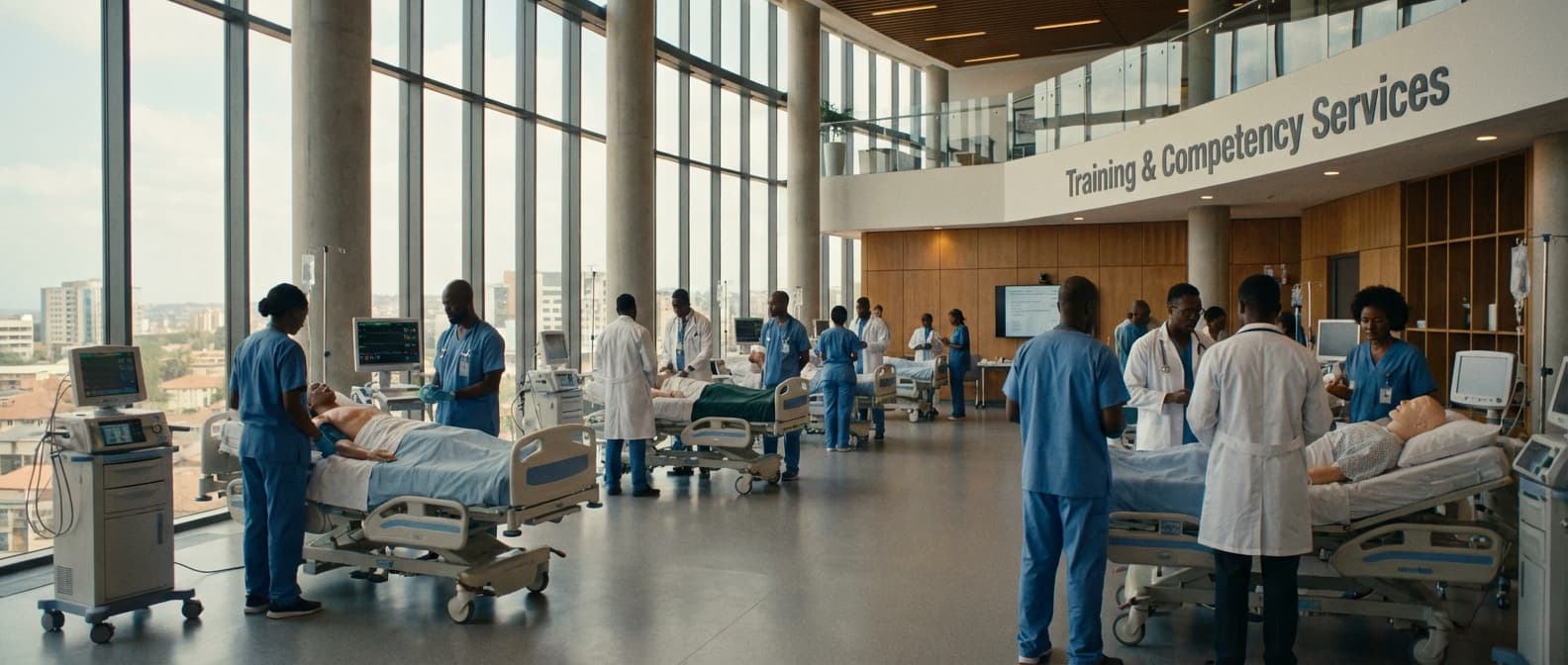
Biomedical Engineering First-Line Support Training Service in Eswatini
Engineering Excellence & Technical Support
Biomedical Engineering First-Line Support Training Service High-standard technical execution following OEM protocols and local regulatory frameworks.
Advanced Diagnostic Equipment Proficiency
Mastering the operation, calibration, and troubleshooting of critical diagnostic tools such as digital microscopes, ultrasound machines, and ECG monitors, essential for accurate patient assessment and timely intervention.
Life Support System Maintenance
Gaining hands-on expertise in the installation, preventive maintenance, and emergency repair of life-sustaining equipment including ventilators, defibrillators, and infusion pumps, directly impacting patient outcomes.
Laboratory Information System (LIS) Integration & Support
Developing skills in supporting and troubleshooting Laboratory Information Systems, ensuring seamless data flow between diagnostic devices and patient records, crucial for efficient laboratory operations and clinical decision-making.
What Is Biomedical Engineering First-line Support Training Service In Eswatini?
Biomedical Engineering First-Line Support Training Service in Eswatini refers to a foundational training program designed to equip individuals with the essential knowledge and practical skills to perform initial troubleshooting, basic maintenance, and user support for biomedical equipment within healthcare facilities. This service focuses on enabling local personnel to address common equipment malfunctions and user-related issues promptly, thereby minimizing downtime and ensuring continuity of patient care. The training emphasizes safety protocols, fundamental operational principles of medical devices, and the documentation of service activities.
| Who Needs the Service | Typical Use Cases | ||||||||
|---|---|---|---|---|---|---|---|---|---|
| Biomedical Engineering Technicians (entry-level) in Eswatini's healthcare sector. | Responding to alarms or error messages on vital signs monitors. | Ensuring basic functionality of infusion pumps before clinical use. | Performing routine cleaning and disinfection of medical devices. | Assisting clinical staff with fundamental operational queries regarding equipment. | Identifying and reporting non-functional or potentially unsafe equipment for further investigation. | Conducting pre-use checks on portable diagnostic equipment (e.g., stethoscopes, thermometers). | Replacing disposable consumables (e.g., printer paper, battery packs) for medical devices. | Basic troubleshooting of laboratory equipment such as centrifuges or water baths. | Escalating complex issues like internal component failures to specialized biomedical engineers. |
| Clinical staff (nurses, physicians) requiring a basic understanding of equipment interaction and troubleshooting. | Training administrative staff on the proper shutdown and startup procedures for specific equipment. | Maintenance personnel in remote clinics with limited access to specialized biomedical engineers. | Individuals involved in the procurement or inventory management of biomedical assets. |
Key Components of Biomedical Engineering First-Line Support Training:
- Basic principles of medical device operation and function.
- Identification and initial diagnosis of common equipment failures.
- Routine preventive maintenance procedures (e.g., cleaning, calibration checks).
- Safe operation and handling of biomedical equipment.
- User support and basic troubleshooting for clinical staff.
- Proper documentation of service requests and performed actions.
- Understanding of relevant regulatory requirements and safety standards.
- Introduction to essential tools and test equipment.
- Escalation procedures for complex technical issues to higher-tier support.
Who Needs Biomedical Engineering First-line Support Training Service In Eswatini?
In Eswatini, the need for first-line support training services in biomedical engineering is crucial for ensuring the continued operational effectiveness and safety of medical equipment across healthcare facilities. This training is designed for individuals who will be the first point of contact for technical issues with biomedical devices, bridging the gap between immediate equipment malfunctions and the availability of specialized engineers. The primary goal is to empower local healthcare personnel to perform basic troubleshooting, routine maintenance, and immediate problem identification, thereby minimizing downtime and improving patient care.
| Target Customer Group | Key Departments/Roles | Specific Needs Addressed | Benefits |
|---|---|---|---|
| Clinical Personnel | Nursing Stations, Wards, Operating Theatres, Outpatient Departments, Intensive Care Units (ICUs) | Understanding basic operational procedures, recognizing error codes/alarms, performing immediate equipment shutdown/restart, reporting faults clearly and promptly. | Reduced equipment downtime, improved patient safety, faster response to critical equipment failures, better communication with biomedical engineering teams. |
| Ancillary Technical Staff | Hospital Maintenance Departments, Biomedical Engineering Workshops (for entry-level roles) | Performing routine preventive maintenance (e.g., cleaning, calibration checks), basic troubleshooting of common issues (e.g., power, connections), identifying parts for replacement. | Increased efficiency of maintenance operations, extended lifespan of equipment, reduced burden on specialized biomedical engineers. |
| Specialized Department Technicians | Radiology/Imaging Departments, Laboratory Services, Renal Dialysis Units, Physiotherapy Departments | Specific first-line support for equipment unique to their departments (e.g., X-ray machine power issues, centrifuge balancing, dialysis machine error codes). | Quicker resolution of specialized equipment problems, enhanced diagnostic and treatment capabilities, reduced reliance on external support for routine issues. |
| Entry-Level Biomedical Professionals | Aspiring Biomedical Engineering Technicians and Technologists | Developing practical skills in equipment inspection, basic repair, documentation, and adherence to safety protocols. | Creating a skilled local workforce, fostering self-sufficiency in equipment maintenance, providing a pathway for career development within the healthcare sector. |
Target Customers and Departments for Biomedical Engineering First-Line Support Training in Eswatini
- Healthcare Professionals (Nurses, Clinical Officers, Doctors): To understand basic equipment functions, identify immediate issues, and report them accurately.
- Hospital Technicians/Maintenance Staff: To perform routine checks, basic cleaning, and minor repairs on biomedical equipment.
- Laboratory Technicians: To ensure the proper functioning of laboratory equipment critical for diagnostics.
- Pharmacy Technicians: To maintain and troubleshoot equipment used in pharmaceutical dispensing and preparation.
- New Biomedical Engineering Graduates/Trainees: To build foundational skills in first-line support before specializing.
Biomedical Engineering First-line Support Training Service Process In Eswatini
This document outlines the workflow for the Biomedical Engineering First-Line Support Training Service Process in Eswatini. It details the steps involved from the initial inquiry to the successful execution of the training, ensuring efficient and effective knowledge transfer for frontline biomedical engineering personnel.
| Step | Description | Key Activities | Responsible Party | Deliverables/Outcomes |
|---|---|---|---|---|
| The process begins when a facility or individual expresses interest in first-line biomedical engineering support training. | Receive inquiry, conduct initial discussion, identify training needs and specific equipment to be covered, assess existing skill levels, determine target audience. | Facility/Ministry of Health Representative, Training Service Provider (TSP) Representative | Documented training needs, list of target participants, preliminary scope of training. |
| Based on the needs assessment, a detailed training proposal is created and submitted for approval. | Develop training curriculum and modules, define learning objectives, outline training methodology, estimate duration and costs, prepare formal proposal document, submit proposal for review and approval. | Training Service Provider (TSP) | Approved training proposal, detailed curriculum, training schedule, budget. |
| Once the proposal is approved, all logistical arrangements for the training are finalized. | Confirm training dates and venue, arrange for trainers and necessary equipment, prepare training materials (handouts, presentations, manuals), coordinate participant travel and accommodation (if applicable), confirm communication channels. | Training Service Provider (TSP), Facility/Ministry of Health Representative | Confirmed training schedule, prepared training materials, confirmed venue and logistics, participant list. |
| The core of the process involves the actual delivery of the training program. | Conduct theoretical sessions, provide practical demonstrations, facilitate hands-on exercises with actual equipment, engage participants in Q&A and problem-solving, conduct assessments (quizzes, practical evaluations). | Certified Trainers (from TSP) | Trained personnel with enhanced first-line biomedical engineering support skills, completed assessments. |
| After the training, ongoing support and a thorough evaluation are provided to ensure sustained learning and identify areas for improvement. | Provide access to resources and support channels for post-training queries, conduct follow-up assessments (optional), gather feedback from participants and stakeholders, compile training evaluation report, identify recommendations for future training. | Training Service Provider (TSP), Facility/Ministry of Health Representative | Post-training support mechanism, training evaluation report, recommendations for improvement, certificate of completion (for participants). |
Biomedical Engineering First-Line Support Training Service Process
- Inquiry and Needs Assessment
- Proposal Development and Approval
- Training Schedule and Logistics
- Training Delivery
- Post-Training Support and Evaluation
Biomedical Engineering First-line Support Training Service Cost In Eswatini
Providing first-line support training for biomedical engineers in Eswatini involves several key considerations that influence cost. This training is crucial for ensuring the efficient and safe operation of medical equipment, directly impacting patient care. The pricing typically reflects the complexity of the material, the duration of the training, the expertise of the instructors, and logistical factors within Eswatini. Costs are generally presented in Eswatini Lilangeni (EWP).
| Training Package (Example) | Estimated Duration | Typical Cost Range (EWP) |
|---|---|---|
| Basic Biomedical Equipment Familiarization | 2-3 Days | 3,000 - 7,000 EWP per participant |
| Intermediate Troubleshooting & Maintenance | 5-7 Days | 8,000 - 15,000 EWP per participant |
| Specialized Equipment Training (e.g., ICU Monitors, Ventilators) | 7-10 Days | 15,000 - 30,000+ EWP per participant |
| Comprehensive Biomedical Engineering Support Program | 2-4 Weeks | 30,000 - 60,000+ EWP per participant |
| On-site Group Training (e.g., 10 participants) | Variable (based on scope) | Negotiable, often based on per-day rates for instructors and equipment access (e.g., 15,000 - 50,000+ EWP per day for the entire group) |
Key Pricing Factors for Biomedical Engineering First-Line Support Training in Eswatini
- {"title":"Training Scope and Depth","description":"The breadth of medical equipment covered (e.g., general diagnostics, imaging, life support) and the depth of technical knowledge imparted will significantly affect the cost. More specialized or comprehensive training requires more extensive curriculum development and longer training periods."}
- {"title":"Duration of Training","description":"The number of training days or hours is a direct determinant of cost. A basic introductory course might be a few days, while advanced troubleshooting and hands-on sessions could extend over weeks."}
- {"title":"Instructor Expertise and Qualifications","description":"Highly experienced biomedical engineers with proven training capabilities and relevant certifications will command higher fees. The number of instructors required also factors into the overall price."}
- {"title":"Training Delivery Method","description":"On-site training at a healthcare facility in Eswatini will incur travel, accommodation, and potentially venue costs. Remote or online training might reduce these logistical expenses but could require robust digital infrastructure and specific software licenses."}
- {"title":"Training Materials and Resources","description":"The cost of developing or acquiring high-quality training manuals, practical simulation tools, diagnostic equipment for hands-on practice, and any necessary software licenses needs to be factored in."}
- {"title":"Participant Numbers","description":"While some costs are fixed, others are per participant. Group discounts may be available for larger cohorts, influencing the per-person rate."}
- {"title":"Accreditation and Certification","description":"If the training leads to an accredited certification, this often adds to the overall cost due to examination fees and administrative overhead."}
- {"title":"Logistical Considerations in Eswatini","description":"Travel within Eswatini, especially to more remote areas, can be challenging and costly. Arranging training at specific hospitals might require permits, access agreements, and ensuring the availability of relevant equipment for demonstration."}
Affordable Biomedical Engineering First-line Support Training Service Options
Providing effective first-line support for biomedical engineering equipment is crucial for maintaining patient safety and operational efficiency. This document outlines affordable training service options, focusing on value bundles and cost-saving strategies to equip your support staff with the necessary skills without breaking the budget. Investing in well-trained first-line support can significantly reduce costly downtime, extend equipment lifespan, and improve overall patient care.
| Cost-Saving Strategy | Description | Benefits | Implementation Example |
|---|---|---|---|
| On-Demand & E-Learning Modules | Flexible access to online training materials, videos, and interactive modules that staff can complete at their own pace. | Reduced travel costs, increased flexibility for staff scheduling, scalable for large teams, lower per-person training cost. | Utilize a Learning Management System (LMS) to host a library of self-paced modules on common equipment types and troubleshooting scenarios. |
| Train-the-Trainer Programs | Empowering experienced in-house biomedical technicians or engineers to deliver training to newer or less experienced staff. | Leverages existing expertise, fosters internal knowledge sharing, significantly reduces external training expenses. | Identify senior technicians proficient in specific device categories and provide them with instructional design and delivery training. |
| Blended Learning Approaches | Combining online self-study with in-person workshops or hands-on lab sessions for practical skill development. | Optimizes learning by combining theoretical knowledge with practical application, cost-effective compared to fully in-person training. | Deliver core theoretical concepts via e-learning, followed by a one-day workshop for hands-on practice with key equipment and troubleshooting scenarios. |
| Group Purchasing & Partnerships | Collaborating with other healthcare facilities or organizations to negotiate bulk discounts on training services or software. | Access to lower pricing due to increased volume, shared resources, and potentially customized training content for a group. | Form a consortium with neighboring hospitals to contract with a training provider for a standardized first-line support curriculum. |
| Focus on Core Competencies | Prioritizing training on the most frequently encountered equipment and common issues, rather than attempting to cover every single device. | Maximizes the return on investment by addressing the most critical needs, reduces training time and cost. | Analyze service logs to identify the top 5-10 most problematic or frequently used equipment categories and focus training on those. |
| Simulation & Virtual Labs | Utilizing virtual reality (VR) or simulation software to replicate equipment malfunctions and troubleshooting scenarios without using actual devices. | Safe learning environment, reduced wear and tear on expensive equipment, repeatable practice opportunities, lower risk of damaging live equipment. | Invest in VR simulation software for common life-support devices, allowing staff to practice emergency troubleshooting without patient risk. |
Key Value Bundles for First-Line Biomedical Support Training
- Foundational Equipment Principles Bundle: Covers basic electrical safety, mechanical principles, common diagnostic procedures, and fundamental troubleshooting techniques applicable across a wide range of biomedical devices.
- Medical Device Category Focus Bundle: Tailored training for specific categories like patient monitoring, diagnostic imaging, life support, or surgical equipment, providing in-depth knowledge for common devices within that domain.
- Safety and Regulatory Compliance Bundle: Emphasizes essential safety standards (e.g., IEC 60601), risk management, infection control protocols, and documentation best practices relevant to first-line support.
- Troubleshooting and Diagnostic Tools Bundle: Focuses on the effective use of diagnostic tools, software-based troubleshooting, and logical problem-solving methodologies to identify and resolve issues efficiently.
- Customer Service and Communication Skills Bundle: Equips support staff with essential communication techniques, de-escalation strategies, and the ability to effectively interact with clinical end-users and escalate issues appropriately.
Verified Providers In Eswatini
In Eswatini, ensuring you receive healthcare from verified providers is paramount for your well-being. Franance Health stands out as a leading organization committed to excellence in healthcare delivery. This document outlines the credentials and benefits of choosing Franance Health, highlighting why they represent the best choice for your medical needs in Eswatini.
| Credential/Attribute | Description | Benefit to Patients |
|---|---|---|
| Accreditation and Licensing | All Franance Health partner facilities and practitioners hold valid accreditation and licenses from recognized national and international health authorities in Eswatini. | Guarantees that providers adhere to established medical regulations, ensuring a baseline of safe and competent care. |
| Professional Qualifications | Healthcare professionals within the Franance Health network possess recognized degrees, specialist certifications, and are registered with relevant professional bodies. | Ensures you are treated by highly skilled and knowledgeable doctors, nurses, and allied health professionals with expertise in their respective fields. |
| Continuing Medical Education (CME) | Franance Health mandates and supports ongoing professional development for its affiliated practitioners. | Keeps providers up-to-date with the latest medical advancements, treatment protocols, and best practices, leading to more effective patient outcomes. |
| Quality Assurance Programs | Our partners are engaged in robust internal quality assurance and improvement programs, including peer reviews and patient satisfaction monitoring. | Demonstrates a proactive approach to identifying and addressing areas for improvement, continuously enhancing the quality of care provided. |
| Ethical Practice and Compliance | Franance Health upholds strict ethical guidelines and ensures all partners comply with legal and regulatory frameworks concerning patient rights and data privacy. | Provides peace of mind that your treatment will be conducted with integrity, respect, and confidentiality. |
| Patient Testimonials and Feedback | Positive patient feedback and successful treatment outcomes are key indicators of our partners' commitment and effectiveness. | Real-world evidence of patient satisfaction and successful healthcare experiences with Franance Health providers. |
Why Franance Health is the Best Choice in Eswatini:
- Unwavering Commitment to Quality: Franance Health prioritizes patient safety and clinical excellence in all their operations.
- Rigorous Verification Process: We meticulously vet all our healthcare partners to ensure they meet the highest standards of care and ethical practice.
- Comprehensive Network: Access a wide array of specialized medical services and highly qualified healthcare professionals across Eswatini.
- Patient-Centric Approach: Our focus is on providing accessible, affordable, and compassionate healthcare tailored to individual patient needs.
- Technological Integration: Leveraging modern healthcare technologies to enhance diagnostic accuracy, treatment efficacy, and patient experience.
Scope Of Work For Biomedical Engineering First-line Support Training Service
This Scope of Work (SOW) outlines the requirements for providing comprehensive First-Line Support Training Services for Biomedical Engineering staff. The objective is to equip first-line support personnel with the necessary knowledge and skills to effectively diagnose, troubleshoot, and resolve common issues with biomedical equipment, ensuring patient safety and operational efficiency. The training will cover a range of fundamental biomedical engineering principles, common equipment types, safety protocols, troubleshooting methodologies, and escalation procedures. Technical deliverables will include training materials, assessments, and a final training report. Standard specifications will ensure the quality and effectiveness of the training program.
| Training Module | Key Topics Covered | Learning Objectives | Duration (Est.) |
|---|---|---|---|
| Introduction to Biomedical Engineering Support | Role of first-line support, importance of patient safety, ethical considerations, regulatory compliance (e.g., FDA, HIPAA) | Understand the critical role of first-line support in healthcare, recognize ethical responsibilities, and identify key regulatory frameworks. | 2 Hours |
| Fundamentals of Biomedical Equipment | Basic principles of electricity, electronics, mechanics, and fluidics as applied to medical devices; common interfaces and connections. | Grasp fundamental scientific principles relevant to biomedical equipment operation and interaction. | 3 Hours |
| Common Biomedical Equipment Types and Their Function | Overview of high-frequency use equipment (e.g., vital signs monitors, infusion pumps, ECG machines, ventilators - basic functions), typical components, and operational modes. | Identify common biomedical equipment, understand their basic functions, and recognize their core components. | 6 Hours |
| Standard Operating Procedures (SOPs) and Preventative Maintenance (PM) Basics | Understanding and following SOPs for equipment operation and basic checks, introduction to PM schedules and importance. | Adhere to established SOPs for equipment handling and recognize the significance of preventative maintenance. | 3 Hours |
| Troubleshooting Methodologies and Diagnostic Tools | Systematic troubleshooting approach (e.g., V-model, flowcharting), identifying common error codes and messages, basic diagnostic tools (multimeters, oscilloscopes - introduction). | Apply structured troubleshooting techniques to identify and isolate equipment malfunctions. | 8 Hours |
| Safety Protocols and Risk Management | Electrical safety, infection control during equipment handling, hazard identification, lockout/tagout procedures, reporting adverse events. | Implement essential safety practices to prevent harm to patients and staff, and report incidents effectively. | 4 Hours |
| Documentation and Reporting | Accurate and timely recording of support activities, incident reporting forms, escalation procedures, using CMMS (Computerized Maintenance Management System) - basic navigation. | Maintain accurate records of support interventions and understand the process for escalating complex issues. | 3 Hours |
| Practical Application and Scenario-Based Training | Hands-on practice with simulated equipment failures, role-playing troubleshooting scenarios, team-based problem-solving exercises. | Apply learned knowledge and skills to practical, real-world support situations. | 10 Hours |
Technical Deliverables
- Comprehensive Training Manual (digital and/or hard copy)
- Presentation Slides for each training module
- Practical Exercise Guides and Scenarios
- Pre- and Post-Training Assessment Quizzes
- Post-Training Evaluation Forms for participants
- Training Attendance Records
- Summary Training Report, including assessment results and participant feedback
- Certificate of Completion for each successful participant
Service Level Agreement For Biomedical Engineering First-line Support Training Service
This Service Level Agreement (SLA) outlines the response times and uptime guarantees for the Biomedical Engineering First-Line Support Training Service. This service is designed to provide rapid and effective support for trainees encountering issues with their initial biomedical engineering support tasks and equipment handling. The objective is to minimize disruption to learning and practice, ensuring a high-quality training experience.
| Service Component | Response Time Guarantee (Business Hours) | Uptime Guarantee |
|---|---|---|
| Biomedical Engineering First-Line Support Training Platform Access | 2 Hours | 99.5% |
| Technical Support for Training Materials & Software | 4 Business Hours | N/A (dependent on platform uptime) |
| Trainee Account & Access Issues | 1 Business Hour | N/A (dependent on platform uptime) |
| Escalation for Complex Issues (to Second-Line Support) | 8 Business Hours | N/A (dependent on second-line support SLAs) |
Key Performance Indicators and Guarantees
- {"item":"Response Time: Defined as the time from a support request being logged to the initial acknowledgement and engagement by a support representative."}
- {"item":"Resolution Time: Defined as the time from a support request being logged to the successful resolution of the issue. This will be tracked for common issues and categorized by complexity."}
- {"item":"Uptime Guarantee: The percentage of time the training platform and associated support systems are available for use."}
- {"item":"Proactive Monitoring: Continuous monitoring of the training environment to identify and address potential issues before they impact users."}
Frequently Asked Questions

Ready when you are
Let's scope your Biomedical Engineering First-Line Support Training Service in Eswatini project in Eswatini.

Scaling healthcare logistics and technical systems across the entire continent.