
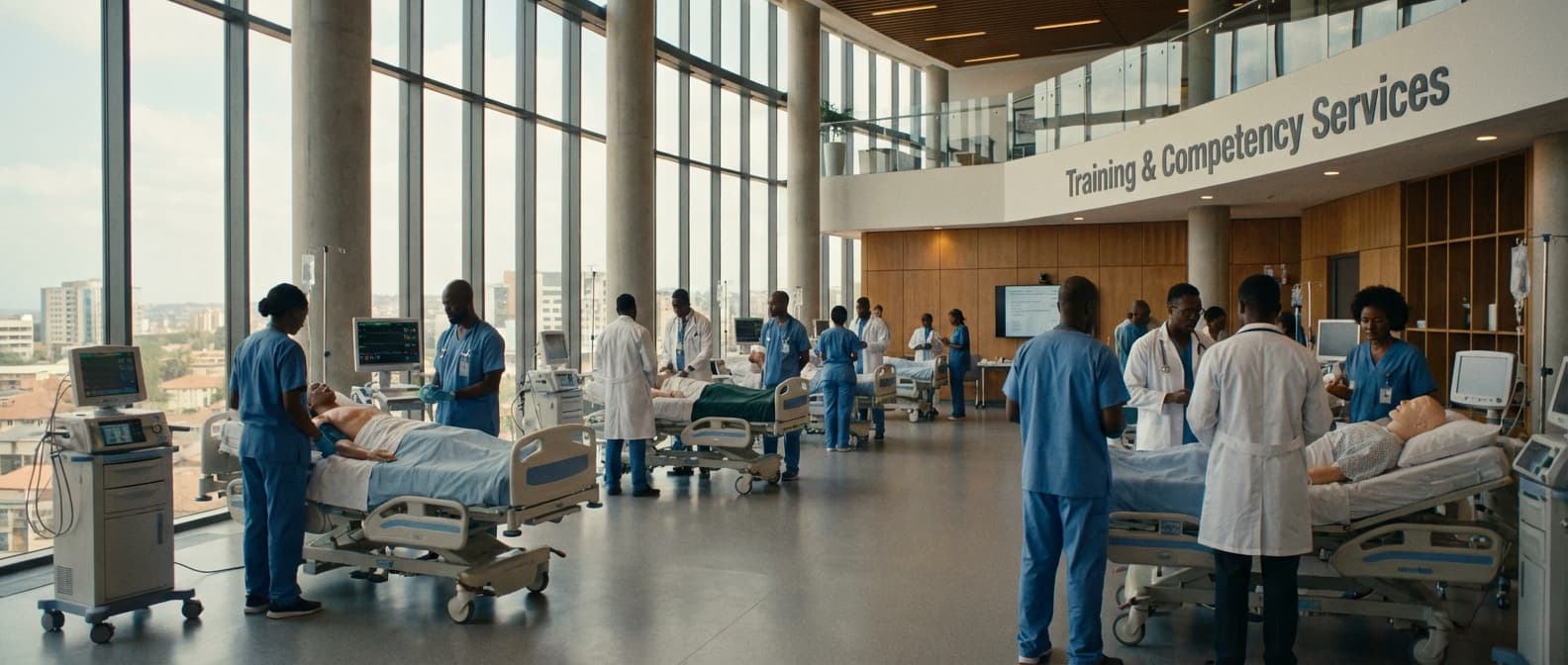
Anesthesia Workstation User Training Service in Eswatini
Engineering Excellence & Technical Support
Anesthesia Workstation User Training Service High-standard technical execution following OEM protocols and local regulatory frameworks.
Advanced Ventilation Modes Mastery
Gain in-depth understanding of sophisticated ventilation modes available on our anesthesia workstations. This module covers Pressure Control, Volume Control, PRVC, and SIMV, focusing on optimal patient ventilation strategies, parameter adjustments, and interpretation of real-time waveform data for improved patient outcomes in Eswatini's diverse clinical settings.
Hemodynamic Monitoring & Management
Empower your clinical team with comprehensive training on integrated hemodynamic monitoring features. Learn to effectively interpret invasive and non-invasive blood pressure, cardiac output, and other vital parameters to proactively manage patient hemodynamics, minimize complications, and ensure patient safety during anesthetic procedures.
Alarm Management & Troubleshooting Best Practices
Enhance your ability to respond swiftly and effectively to critical events. This module provides hands-on training in configuring, interpreting, and managing a wide array of workstation alarms. Learn systematic troubleshooting techniques to quickly identify and resolve potential issues, ensuring continuous patient care and operational efficiency.
What Is Anesthesia Workstation User Training Service In Eswatini?
Anesthesia Workstation User Training Service in Eswatini refers to a specialized educational program designed to equip healthcare professionals, primarily anesthesiologists, anesthetists, and certified registered nurse anesthetists (CRNAs), with the requisite knowledge and practical skills to operate modern anesthesia workstations safely and effectively within the Eswatini healthcare context. This service is crucial for ensuring optimal patient care, minimizing risks associated with anesthesia delivery, and maximizing the utilization of advanced medical technology. The training encompasses theoretical understanding of anesthesia machine principles, functional components, and integrated monitoring systems, alongside hands-on proficiency in setup, calibration, patient connection, ventilation modes, drug delivery systems, troubleshooting common alarms, and emergency procedures. It is tailored to address the specific models of anesthesia workstations deployed in Eswatini's healthcare facilities and adheres to local clinical protocols and regulatory requirements.
| Target Audience | Rationale for Training | Typical Use Cases |
|---|---|---|
| Anesthesiologists | To ensure comprehensive understanding of workstation functionality, advanced modes, and integration with patient monitoring for complex anesthetic cases. | Pre-operative patient assessment, intra-operative anesthetic management, post-operative care, critical care support. |
| Anesthetists/CRNAs | To provide essential skills for safe and independent operation of anesthesia workstations, including patient setup, monitoring, and emergency response. | Routine surgical procedures, day surgery cases, management of moderate to complex anesthetic scenarios. |
| Operating Room Nurses | To enable understanding of workstation setup, circuit checks, and basic troubleshooting, facilitating seamless collaboration with anesthesia providers. | Assisting in patient preparation, ensuring correct equipment configuration, and supporting the anesthesia team during procedures. |
| Biomedical Engineers/Technicians | To equip personnel with the knowledge for preventive maintenance, calibration, and repair of anesthesia workstations, ensuring equipment reliability. | Routine equipment servicing, fault diagnosis, performance verification, and post-repair validation. |
| Healthcare Facility Management | To ensure compliance with standards, optimize resource utilization, and mitigate risks associated with equipment operation. | Procurement planning, staff competency assessment, quality improvement initiatives, and incident investigation. |
Key Components of Anesthesia Workstation User Training:
- Theoretical Foundations: Principles of gas delivery, vaporizers, breathing circuits, and scavenging systems.
- Workstation Architecture: Detailed examination of components such as gas outlets, flowmeters, vaporizers, ventilator modules, and integrated monitors.
- Ventilator Management: Understanding various ventilation modes (e.g., volume-controlled, pressure-controlled, synchronized intermittent mandatory ventilation - SIMV, pressure support ventilation - PSV), patient-triggering mechanisms, and parameter optimization.
- Anesthetic Agent Delivery: Accurate setting and calibration of vaporizers for volatile anesthetics and understanding of fresh gas flow (FGF) management.
- Integrated Monitoring: Proficiency in utilizing and interpreting data from integrated physiological monitors (e.g., ECG, SpO2, EtCO2, NIBP, temperature).
- Alarm Management and Troubleshooting: Recognizing common alarms, identifying their causes, and implementing appropriate corrective actions.
- Patient Connection and Disconnection: Safe and efficient procedures for connecting and disconnecting patients from the anesthesia circuit.
- Maintenance and Cleaning Protocols: Adherence to recommended procedures for daily checks, functional tests, and routine cleaning to ensure equipment integrity and infection control.
- Emergency Procedures: Training on responding to critical equipment malfunctions and managing patient emergencies during anesthesia.
- Regulatory Compliance: Familiarization with local guidelines and manufacturer recommendations for safe anesthesia workstation operation.
Who Needs Anesthesia Workstation User Training Service In Eswatini?
In Eswatini, Anesthesia Workstation User Training Services are crucial for ensuring the safe, efficient, and effective use of advanced anesthesia equipment. This training is vital for healthcare professionals responsible for patient care during surgical procedures and in critical care settings. The service aims to equip users with the knowledge and practical skills to operate these sophisticated machines confidently, troubleshoot common issues, and understand the underlying principles of anesthesia delivery.
| Target Customers | Departments/Settings | Key Needs Addressed by Training |
|---|---|---|
| Anesthesiologists | Operating Theatres, Intensive Care Units (ICUs) | Advanced ventilation modes, troubleshooting, patient monitoring integration, safety protocols, new software updates. |
| Anesthesia Technicians | Operating Theatres, Central Sterile Supply Departments (CSSD) | Routine operation, preventative maintenance, disinfection procedures, basic troubleshooting, calibration. |
| Nurses (Peri-operative/ICU) | Operating Theatres, Intensive Care Units (ICUs), High Dependency Units (HDUs) | Basic operation, patient monitoring, alarm management, gas delivery, emergency procedures, integration with patient monitors. |
| Medical Doctors (Anesthesia Trainees) | Teaching Hospitals, Training Programs | Fundamental principles of anesthesia delivery, hands-on experience with various ventilators, understanding of machine components and safety checks. |
| Biomedical Engineers/Technicians | Hospital Maintenance Departments, Biomedical Engineering Services | In-depth technical understanding, fault diagnosis, repair, calibration, scheduled maintenance, software updates and troubleshooting. |
Who Needs Anesthesia Workstation User Training Service in Eswatini?
- Anesthesiologists
- Anesthesia Technicians
- Nurses (especially those in peri-operative and intensive care units)
- Medical Doctors undergoing anesthesia training
- Biomedical Engineers and Technicians responsible for equipment maintenance and support
Anesthesia Workstation User Training Service Process In Eswatini
This document outlines the Anesthesia Workstation User Training Service Process in Eswatini, detailing the workflow from initial inquiry to the successful execution of training. The service aims to ensure that healthcare professionals in Eswatini are proficient in operating anesthesia workstations, enhancing patient safety and care quality. The process is designed to be clear, efficient, and responsive to the needs of the healthcare facilities.
| Phase | Description | Key Activities | Responsible Parties | Deliverables/Outcomes |
|---|---|---|---|---|
| The process begins when a healthcare facility in Eswatini expresses interest in anesthesia workstation user training. | Initial contact (phone, email, inquiry form). Discussion of training needs, target audience, specific workstation models, and desired learning outcomes. Assessment of existing knowledge and skill levels of potential trainees. | Healthcare Facility Representative (e.g., Head of Anesthesiology, Procurement Officer), Training Service Provider Representative. | Clear understanding of training requirements. Identification of specific workstation models to be covered. Scope of training defined. |
| Based on the needs assessment, the training provider develops a tailored proposal and quotation. | Development of a comprehensive training proposal outlining objectives, curriculum, methodology, duration, trainer qualifications, and required resources. Preparation of a detailed quotation including training fees, travel expenses, and any material costs. | Training Service Provider Representative. | Formal Training Proposal. Detailed Quotation. Outline of training content and schedule. |
| Upon acceptance of the proposal and quotation, a formal agreement is established, and training dates are finalized. | Review and negotiation of the proposal and quotation. Signing of a Service Level Agreement (SLA) or contract. Joint scheduling of training dates, considering the facility's operational demands and trainer availability. | Healthcare Facility Representative, Training Service Provider Representative. | Signed Service Level Agreement/Contract. Confirmed Training Schedule (dates, times, location). |
| The training provider prepares all necessary materials and resources for the on-site training. | Curriculum finalization and development of training materials (presentations, manuals, handouts). Logistics arrangement (travel, accommodation for trainers if applicable). Confirmation of workstation availability and operational status at the training site. Pre-training communication with participants regarding schedule and expectations. | Training Service Provider Representative, Healthcare Facility Representative (for workstation access and confirmation). | Ready-to-use training materials. Confirmed logistics. Aware participants. |
| The actual training is delivered at the healthcare facility by qualified trainers. | Delivery of theoretical sessions covering anesthesia workstation principles, functions, and safety features. Hands-on practical sessions with actual anesthesia workstations. Simulation exercises and case studies. Q&A sessions and skill assessments. | Certified Training Provider Trainer(s), Trainees (Healthcare Professionals). | Knowledge transfer. Development of practical skills. Demonstrated competency in workstation operation. |
| Following the training, a period of follow-up and evaluation ensures sustained learning and identifies areas for improvement. | Collection of participant feedback via evaluation forms. Post-training assessment (e.g., online quiz, short practical assessment after a period of use). Analysis of training effectiveness. Troubleshooting any immediate issues encountered by users. | Training Service Provider Representative, Trainees, Healthcare Facility Representative. | Completed training evaluations. Assessment reports. Identification of areas for improvement in future training. |
| Upon successful completion of the training and evaluation, participants receive certification. | Issuance of certificates of completion to participants who meet the required standards. Provision of a comprehensive training report to the healthcare facility. Record-keeping of training conducted. | Training Service Provider Representative. | Certificates of Completion for trainees. Final Training Report for the facility. Training records maintained. |
Anesthesia Workstation User Training Service Process
- Inquiry & Needs Assessment
- Proposal & Quotation
- Agreement & Scheduling
- Training Preparation
- On-Site Training Execution
- Post-Training Follow-up & Evaluation
- Certification & Documentation
Anesthesia Workstation User Training Service Cost In Eswatini
Providing comprehensive user training services for anesthesia workstations in Eswatini is crucial for ensuring safe and effective patient care. The cost of these services can vary significantly based on several key factors. These factors include the complexity and specific model of the anesthesia workstation being trained on, the duration and depth of the training program, the qualifications and experience of the trainers, and the location and logistics involved in delivering the training within Eswatini. Furthermore, the number of participants attending the training will also influence the overall cost. Customization of training modules to meet specific hospital protocols or to address unique clinical scenarios can also add to the pricing.
| Training Scope | Estimated Cost Range (SZL) |
|---|---|
| Basic User Operation & Safety (1-2 days) | 2,000 - 5,000 |
| Comprehensive Operation & Troubleshooting (3-5 days) | 5,000 - 12,000 |
| Advanced Features & Maintenance Awareness (2-3 days) | 4,000 - 8,000 |
| Customized Modules (per module/day) | 1,500 - 3,000 |
| On-site Training (per day, excluding trainer travel) | 2,500 - 6,000 |
Factors Influencing Anesthesia Workstation User Training Costs in Eswatini
- Anesthesia Workstation Model Complexity (e.g., advanced features, integrated ventilation modes)
- Training Program Duration (e.g., half-day, full-day, multi-day)
- Depth of Training (e.g., basic operation, advanced troubleshooting, maintenance awareness)
- Trainer Expertise and Certification
- Number of Trainees
- Training Location (e.g., on-site at hospital, off-site facility)
- Travel and Accommodation Expenses for Trainers
- Customization of Training Content
- Provision of Training Materials (manuals, guides, simulated scenarios)
Affordable Anesthesia Workstation User Training Service Options
This document outlines valuable training service options for affordable anesthesia workstations, focusing on delivering comprehensive user education while implementing cost-saving strategies. We understand that effective training is crucial for safe and efficient operation, and this service aims to maximize your investment in affordable anesthesia technology. Our tiered approach to training ensures that you can select the level of support best suited to your team's needs and budget.
| Service Component | Description | Cost-Saving Benefit |
|---|---|---|
| Online Resource Library | Access to downloadable manuals, FAQs, and best practice guides. | Reduces printing costs and provides quick self-service solutions. |
| Webinar Series | Live and recorded webinars on specific workstation features and clinical applications. | Eliminates travel expenses and offers flexible learning opportunities. |
| Simulation Software Access | Virtual practice environment for hands-on learning without using actual equipment. | Minimizes wear and tear on physical workstations and allows for unlimited practice. |
| Post-Training Assessment Tools | Online quizzes and practical assessments to gauge comprehension and identify knowledge gaps. | Ensures effective learning and reduces the need for repeated remediation. |
| Manufacturer-Provided Updates | Regular updates on software enhancements and new features with accompanying training materials. | Keeps staff current with the latest functionalities and minimizes future retraining needs. |
Value Bundles & Cost-Saving Strategies
- Basic Certification Bundle: Covers essential operational procedures, safety checks, and basic troubleshooting. Ideal for institutions with existing experienced anesthesia providers who require a focused overview of the new workstation.
- Standard Competency Bundle: Includes all features of the Basic Bundle plus hands-on simulation exercises, advanced parameter interpretation, and emergency scenario management. This bundle is recommended for teams that may have varying levels of experience with the specific workstation.
- Comprehensive Proficiency Bundle: Encompasses all aspects of the Standard Bundle, with added modules on advanced ventilation modes, data management, and integration with electronic health records (EHRs). This bundle is perfect for teams seeking in-depth mastery and long-term support.
- Train-the-Trainer Program: Empowers designated individuals within your institution to become internal trainers, reducing the need for recurring external training sessions. This is a significant long-term cost-saving strategy.
- On-Demand Digital Learning Platform: Access to a library of pre-recorded video tutorials, interactive modules, and knowledge assessments accessible anytime, anywhere. This offers flexibility and reduces travel costs.
- Remote Expert Support Packages: Bundled hours of remote technical and clinical support, allowing for quick resolution of issues without the need for on-site visits.
- Group Discounts: Reduced per-participant costs for training multiple staff members from the same institution.
- Phased Training Rollouts: Spreading training over time to accommodate scheduling needs and manage immediate training expenditure.
- Customizable Training Modules: Ability to tailor training content to address specific clinical workflows and equipment configurations, ensuring relevance and efficiency.
Verified Providers In Eswatini
Finding reliable healthcare providers in Eswatini is crucial for your well-being. Franance Health stands out as a premier choice due to its rigorous credentialing process and unwavering commitment to quality care. This document outlines why Franance Health credentials represent the best choice for patients seeking trusted medical services in Eswatini.
| Credential Category | Franance Health Verification Standard | Benefit to Patient |
|---|---|---|
| Medical Licenses & Certifications | Mandatory verification with relevant national and international bodies. Ongoing monitoring for renewal and disciplinary actions. | Ensures providers are legally authorized and qualified to practice medicine. |
| Education & Training | Verification of degrees from accredited institutions and completion of recognized residency and fellowship programs. | Confirms foundational medical knowledge and specialized training. |
| Professional Experience | Thorough review of work history, including primary source verification of past employment and references. | Assesses practical application of skills and experience level. |
| Continuing Medical Education (CME) | Mandatory submission and verification of CME credits to ensure providers stay current with medical advancements. | Guarantees access to up-to-date medical knowledge and treatment protocols. |
| Background Checks | Comprehensive criminal and professional background checks. | Ensures patient safety and promotes a secure healthcare environment. |
| Professional References | Collection and verification of references from peers and supervisors. | Provides insights into a provider's professional conduct and collaborative abilities. |
Why Franance Health Credentials Matter:
- Uncompromising Quality Standards: Franance Health adheres to the highest international standards for healthcare provider vetting. This ensures that all accredited professionals possess the necessary qualifications, experience, and ethical standing.
- Rigorous Verification Process: Each provider undergoes a thorough background check, verification of medical licenses, certifications, and continuing education records. This meticulous approach guarantees that you are engaging with legitimate and competent healthcare professionals.
- Patient Safety First: The primary focus of Franance Health's credentialing is patient safety. By only endorsing thoroughly vetted providers, they significantly reduce the risk of substandard care and ensure a secure healthcare experience.
- Expertise and Specialization: Franance Health prioritizes identifying providers with proven expertise in their respective fields. This means you can be confident in finding specialists who are well-equipped to address your specific health needs.
- Commitment to Ethical Practice: Beyond technical qualifications, Franance Health assesses providers for their commitment to ethical conduct and patient-centered care. This fosters trust and promotes a positive doctor-patient relationship.
- Access to Trusted Networks: Partnering with Franance Health grants you access to a network of healthcare professionals who have already met their stringent criteria. This saves you time and effort in searching for reliable care.
Scope Of Work For Anesthesia Workstation User Training Service
This Scope of Work (SOW) outlines the requirements for providing comprehensive user training services for an Anesthesia Workstation. The objective is to ensure that all designated end-users are proficient in the safe, effective, and efficient operation of the Anesthesia Workstation. This includes understanding its features, functionalities, routine maintenance, troubleshooting, and emergency procedures.
| Phase | Activity | Description | Technical Deliverables | Standard Specifications / Acceptance Criteria |
|---|---|---|---|---|
| Phase 1: Planning & Development | Needs Assessment | Understand the specific user groups, their existing knowledge base, and the intended use of the Anesthesia Workstation. | Training needs analysis report, identified user profiles. | Report clearly defines target audience, skill gaps, and learning objectives. Approved by Client's Training Manager. |
| Curriculum Design | Develop a structured training curriculum covering all essential aspects of the Anesthesia Workstation. | Detailed training curriculum outline, module breakdown, learning objectives for each module. | Curriculum covers all workstation features, safety protocols, and troubleshooting. Approved by Client's Clinical Engineering and Anesthesiology Department. | |
| Content Creation | Develop high-quality, accurate, and engaging training materials in various formats. | Training manuals (digital and print), user guides, presentation slides (e.g., PowerPoint), interactive e-learning modules, video demonstrations. | Materials are user-friendly, visually appealing, and technically accurate. Content validated by Subject Matter Experts (SMEs) from both the vendor and the client. Minimum 85% score on internal quality review. | |
| Phase 2: Training Delivery | Instructor-Led Training (ILT) | Conduct practical, hands-on training sessions for identified user groups. | Delivered training sessions, participant attendance records. | Sessions are conducted by certified trainers with expert knowledge of the Anesthesia Workstation. Average participant satisfaction score of 8.0/10 or higher. Hands-on exercises completed successfully by at least 90% of participants. |
| Remote/Virtual Training | Provide online training sessions for users unable to attend in-person sessions. | Delivered virtual training sessions, attendance records. | Utilize robust online platforms. Same learning objectives and quality as ILT. Technical stability of platform confirmed. Average participant satisfaction score of 8.0/10 or higher. | |
| Simulation Training | Incorporate simulation exercises to replicate real-world clinical scenarios. | Facilitated simulation sessions, scenario documentation. | Scenarios are realistic and challenging. Participants demonstrate competency in responding to simulated critical events. Scenario success rate of 85% or higher for participants. | |
| Phase 3: Evaluation & Support | Competency Assessment | Evaluate user understanding and practical skills through written tests and practical demonstrations. | Assessment tools (quizzes, practical exams), assessment results, competency pass/fail reports. | Assessments cover all key learning objectives. Minimum passing score of 80% on both written and practical assessments. Reports generated for each participant. |
| Post-Training Support | Provide ongoing support to users after the initial training period. | Dedicated support channel (email/phone), FAQ documentation, refresher training sessions (as needed). | Support response time within 24 business hours. FAQ document is comprehensive and updated regularly. Refresher training availability confirmed. | |
| Final Reporting | Compile a comprehensive report detailing all training activities, outcomes, and recommendations. | Final training report, executive summary, lessons learned, recommendations for future training. | Report includes participant numbers, assessment results, feedback summaries, and a clear statement of overall training success. Report delivered within 10 business days of training completion and approved by Client. |
Key Deliverables
- Development and delivery of a comprehensive training program tailored to the Anesthesia Workstation.
- Creation of user-friendly training materials (manuals, guides, presentations, and e-learning modules).
- Delivery of hands-on training sessions for end-users.
- Assessment and evaluation of user competency.
- Post-training support and knowledge reinforcement.
- Final training report documenting all activities and outcomes.
Service Level Agreement For Anesthesia Workstation User Training Service
This Service Level Agreement (SLA) outlines the guaranteed response times and uptime for the Anesthesia Workstation User Training Service. It defines the expected levels of performance and availability, as well as the remedies available in the event of service degradation or failure. This SLA is intended to ensure that users receive timely and effective training to safely and proficiently operate the Anesthesia Workstation.
| Service Component | Uptime Guarantee | Response Time (Inquiries/Issues) | Escalation Time |
|---|---|---|---|
| Training Platform Availability | 99.5% during scheduled training hours | N/A (System monitoring) | 2 hours for critical platform outage |
| Instructor Availability for Scheduled Sessions | 100% for confirmed sessions | N/A (Pre-scheduled) | 4 hours if instructor cancellation is unavoidable |
| Technical Support for Training Platform | N/A (Support is on-demand) | 4 Business Hours (for non-critical issues) | 2 Business Hours (for critical issues impacting session delivery) |
| Post-Training Q&A Support | N/A (Support is on-demand) | 2 Business Days (for non-urgent queries) | 1 Business Day (for urgent clarification requests) |
Key Service Components
- Training Session Availability: The service guarantees that scheduled training sessions will be available as per the agreed-upon schedule.
- Training Platform Uptime: The online platform or physical training environment used for delivering the training will be available during designated training hours.
- Instructor Availability: Certified instructors will be available to conduct scheduled training sessions.
- Technical Support for Training Platform: Support will be provided for any technical issues encountered while accessing or using the training platform.
- Post-Training Support (Q&A): Access to a designated channel for post-training questions and clarifications.
Frequently Asked Questions

Ready when you are
Let's scope your Anesthesia Workstation User Training Service in Eswatini project in Eswatini.

Scaling healthcare logistics and technical systems across the entire continent.