
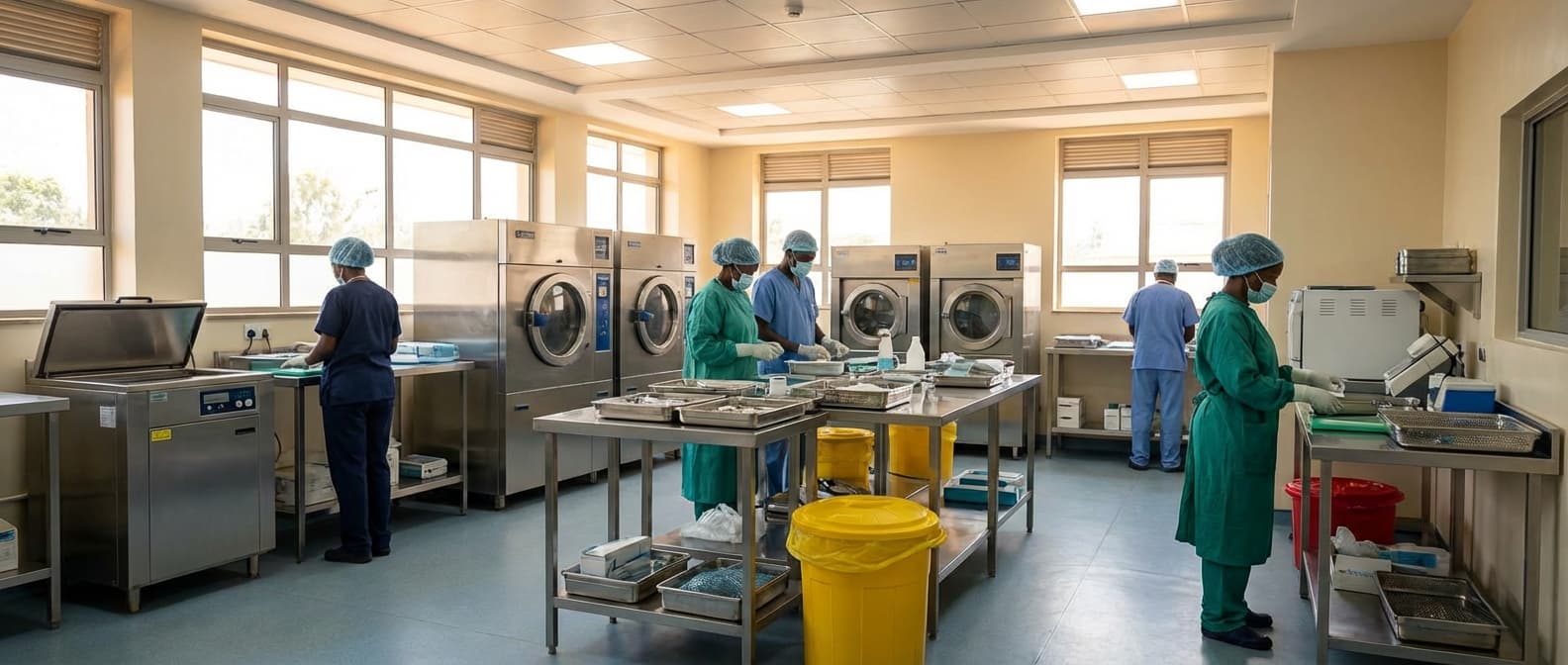
Medical Equipment Decontamination Service (Pre-Repair/Pre-Relocation) in Eswatini
Engineering Excellence & Technical Support
Medical Equipment Decontamination Service (Pre-Repair/Pre-Relocation) High-standard technical execution following OEM protocols and local regulatory frameworks.
Specialized Pre-Repair Decontamination
Our certified technicians in Eswatini employ advanced, EPA-approved disinfection and sterilization protocols specifically designed for medical equipment before repair. This ensures the safety of your biomedical staff and the integrity of the repair process by eliminating biohazardous contaminants.
Secure Pre-Relocation Sterilization
We provide comprehensive decontamination services for medical equipment slated for relocation within Eswatini or internationally. Our meticulous process mitigates the risk of cross-contamination and ensures compliance with all relevant health and safety regulations, safeguarding both the equipment and its future environment.
Regulatory Compliant Decontamination
Operating under strict adherence to Eswatini Ministry of Health guidelines and international best practices, our pre-repair and pre-relocation decontamination services offer peace of mind. We deliver certified documentation for each service, guaranteeing your equipment meets all necessary health and safety standards.
What Is Medical Equipment Decontamination Service (Pre-repair/pre-relocation) In Eswatini?
Medical Equipment Decontamination Service (Pre-Repair/Pre-Relocation) in Eswatini refers to the process of rendering medical devices safe for handling by unauthorized personnel, specifically prior to them being transported for repair or relocation. This service is crucial for mitigating biohazard risks associated with potentially contaminated medical equipment. The decontamination process involves a systematic application of validated cleaning, disinfection, and in some cases, sterilization protocols, tailored to the specific type of medical device and the nature of potential biological contaminants (e.g., blood, bodily fluids, pathogens). The objective is to neutralize or remove infectious agents to a level that poses no significant health risk to technicians, logistics personnel, and the receiving environment at the repair facility or new location. This service is a critical component of medical device lifecycle management, ensuring safety and compliance with health and environmental regulations.
| Who Needs the Service? | Typical Use Cases | ||||
|---|---|---|---|---|---|
| Healthcare Facilities in Eswatini: Hospitals (public and private), clinics, diagnostic laboratories, and specialized medical centers that utilize a wide range of medical equipment. | Equipment undergoing scheduled or unscheduled maintenance: Devices requiring repair by Original Equipment Manufacturers (OEMs) or authorized service providers, whether on-site or at an off-site facility. | Facilities undergoing renovation or relocation: When medical equipment needs to be moved to a new operational area or to a different healthcare institution. | Medical equipment being returned to suppliers: For refurbishment, decommissioning, or end-of-life disposal. | Any entity managing medical equipment with potential bioburden: Including research institutions and educational facilities involved in medical training. | |
| Surgical Instruments: Scalpels, forceps, retractors, endoscopes, and other reusable surgical tools that have been in contact with patient tissues and fluids. | Diagnostic Imaging Equipment: Ultrasound probes, MRI coils, and CT scanner components that may have contacted bodily fluids. | Laboratory Equipment: Centrifuges, incubators, and analytical instruments that process biological samples. | Patient Monitoring Devices: ECG electrodes, blood pressure cuffs, and pulse oximeters that are in direct patient contact. | Ventilators and Respiratory Equipment: Devices used for artificial respiration that can accumulate secretions and microbial contaminants. | Dental Equipment: Handpieces, mirrors, and other instruments used in oral procedures. |
Key Aspects of Medical Equipment Decontamination Service (Pre-Repair/Pre-Relocation)
- Process Definition: A multi-step procedure including initial assessment of contamination, manual or automated cleaning to remove gross soil and organic matter, application of validated high-level disinfectants or sterilization methods (as appropriate for the device and risk), and verification of decontamination effectiveness.
- Scope of Contaminants: Addresses biological hazards such as bacteria, viruses, fungi, and prions that may be present on the surface or within the internal channels of medical devices.
- Regulatory Compliance: Adherence to national and international standards for medical device reprocessing and biohazard management. In Eswatini, this would align with Ministry of Health guidelines and relevant occupational health and safety regulations.
- Documentation and Certification: Provision of a decontamination certificate confirming that the equipment has undergone the specified procedures and is safe for transit and further handling. This documentation is essential for liability and audit purposes.
- Specialized Personnel and Facilities: Requires trained technicians with expertise in infection control and biohazard handling, operating within dedicated decontamination facilities equipped with appropriate safety infrastructure (e.g., ventilation, containment).
Who Needs Medical Equipment Decontamination Service (Pre-repair/pre-relocation) In Eswatini?
Medical equipment decontamination is a critical, yet often overlooked, process in healthcare settings. Before medical equipment undergoes repair or relocation, it must be thoroughly decontaminated to eliminate biohazards, prevent cross-contamination, and ensure the safety of technicians, future users, and patients. This service is vital for a range of healthcare providers and departments within Eswatini, all facing the common challenge of maintaining a sterile and safe environment while managing their valuable medical assets.
| Target Customer/Department | Specific Needs for Decontamination | Examples of Equipment Requiring Decontamination |
|---|---|---|
| Hospitals (General) | Preventing spread of hospital-acquired infections (HAIs) during equipment servicing or movement. Protecting maintenance staff from biohazards. | Ventilators, patient monitors, infusion pumps, surgical instruments, diagnostic imaging equipment (e.g., ultrasound probes), beds, wheelchairs. |
| Surgical Departments | Ensuring absolute sterility of reusable surgical instruments and complex surgical equipment before sending them for specialized repairs or relocation between operating rooms. | Surgical trays, endoscopes, laparoscopic instruments, cautery devices, anesthesia machines. |
| Intensive Care Units (ICUs) | Managing the high-risk bioburden associated with critical care equipment. Maintaining a sterile environment for fragile patients. | Ventilators, dialysis machines, ECG machines, invasive monitoring devices, specialized ICU beds. |
| Diagnostic Imaging Departments (X-ray, CT, MRI, Ultrasound) | Decontaminating imaging probes, equipment surfaces, and associated hardware before transport for calibration, repair, or relocation to new facilities. | Ultrasound transducers, CT scanner components, MRI coils, X-ray tube housings. |
| Laboratories (Clinical & Research) | Preventing contamination of sensitive lab equipment and reagents. Ensuring safety of lab personnel and preventing cross-contamination of samples. | Centrifuges, incubators, microscopes, PCR machines, analytical instruments, biosafety cabinets. |
| Clinics and Health Centers | Maintaining basic hygiene standards for general medical equipment before repair or when consolidating resources. | Stethoscopes, blood pressure monitors, otoscopes, ophthalmoscopes, small diagnostic devices. |
| Emergency Medical Services (EMS) | Decontaminating equipment used in diverse and potentially highly contaminated environments before returning it to base for maintenance or transfer to new ambulances. | Defibrillators, portable ventilators, suction units, splints, stretchers. |
| Physiotherapy Departments | Ensuring hygiene of equipment used for patient rehabilitation, especially when requiring repair or relocation. | Treadmills, exercise bikes, ultrasound therapy units, electrical stimulation devices, treatment tables. |
| Dental Clinics | Sterilizing dental instruments and equipment before repair or relocation to prevent transmission of oral pathogens. | Dental chairs, handpieces, X-ray units, sterilizers (autoclaves), curing lights. |
Target Customers and Departments in Eswatini Requiring Medical Equipment Decontamination Service (Pre-Repair/Pre-Relocation)
- Hospitals (Government and Private)
- Clinics and Health Centers (Government and Private)
- Specialist Medical Centers (e.g., diagnostic imaging, physiotherapy, dental)
- Medical Laboratories
- Emergency Medical Services (EMS)
- Non-Governmental Organizations (NGOs) with healthcare outreach programs
- Research Institutions with medical equipment
- Educational Institutions with medical training facilities
Medical Equipment Decontamination Service (Pre-repair/pre-relocation) Process In Eswatini
This document outlines the standard workflow for Medical Equipment Decontamination Services, specifically for pre-repair and pre-relocation scenarios in Eswatini. The process is designed to ensure the safety of personnel and the integrity of equipment during handling and maintenance.
| Stage | Key Activities | Responsible Party | Documentation/Output |
|---|---|---|---|
| 1. Inquiry and Initial Assessment | Healthcare facility contacts the Decontamination Service Provider (DSP) to inquire about decontamination services for medical equipment requiring repair or relocation. The DSP gathers preliminary information: type of equipment, anticipated contamination risk (e.g., infectious agents, chemical spills), urgency, and location. | Healthcare Facility, Decontamination Service Provider (DSP) | Initial request, basic equipment details. |
| 2. Service Request and Quotation | Based on the initial assessment, the DSP provides a formal service request form. The healthcare facility completes and submits the form, detailing the specific equipment, identified risks, and desired service scope. The DSP then prepares and submits a detailed quotation, outlining costs, methodology, timelines, and required safety protocols. | Healthcare Facility, DSP | Completed Service Request Form, Quotation. |
| 3. Scheduling and Logistics Planning | Upon approval of the quotation, the DSP and healthcare facility agree on a mutually convenient date and time for the decontamination. The DSP plans logistics, including necessary personnel, specialized cleaning agents, personal protective equipment (PPE), containment measures, and transportation of equipment if required. | DSP, Healthcare Facility | Confirmed service schedule, logistics plan. |
| 4. On-site Decontamination Execution | A trained and certified DSP team arrives at the healthcare facility. They conduct a final risk assessment and implement appropriate decontamination procedures based on the equipment type and identified hazards. This may involve manual cleaning, disinfection, sterilization, or specialized chemical treatments. Containment protocols are strictly followed to prevent cross-contamination. | DSP Team | Decontamination procedure execution. |
| 5. Documentation and Certification | After successful decontamination, the DSP team completes a detailed service report, documenting the procedures performed, chemicals used, date, time, and personnel involved. A decontamination certificate is issued, confirming that the equipment has been treated according to approved standards and is safe for further handling. This certificate is crucial for the repair technician or relocation team. | DSP Team | Service Report, Decontamination Certificate. |
| 6. Handover for Repair/Relocation | The certified decontaminated equipment is formally handed over to the designated repair technician or relocation personnel. The decontamination certificate is provided as proof of the completed service. The healthcare facility is informed of the successful completion of the decontamination phase. | DSP Team, Healthcare Facility, Repair Technician/Relocation Team | Formal handover of equipment and certificate. |
Medical Equipment Decontamination Service Workflow (Pre-Repair/Pre-Relocation)
- Step 1: Inquiry and Initial Assessment
- Step 2: Service Request and Quotation
- Step 3: Scheduling and Logistics Planning
- Step 4: On-site Decontamination Execution
- Step 5: Documentation and Certification
- Step 6: Handover for Repair/Relocation
Medical Equipment Decontamination Service (Pre-repair/pre-relocation) Cost In Eswatini
The cost of medical equipment decontamination services in Eswatini, particularly for pre-repair or pre-relocation needs, is influenced by several key factors. These factors determine the overall price, and service providers will typically offer quotes based on a detailed assessment of the equipment and the scope of work. Understanding these elements is crucial for budgeting and selecting the right service provider.
| Equipment Category | Estimated Cost Range (EWP) | Notes |
|---|---|---|
| Small/Non-Complex Equipment (e.g., diagnostic tools, basic monitors) | EWP 300 - EWP 1,000 | Covers basic surface cleaning and disinfection. May vary based on specific contaminants. |
| Medium Complexity Equipment (e.g., ultrasound machines, ventilators) | EWP 800 - EWP 3,500 | Requires more thorough internal and external decontamination. Cost increases with the extent of contamination. |
| Large/High Complexity Equipment (e.g., imaging systems, surgical tables) | EWP 2,000 - EWP 7,000+ | Significant labor, specialized chemicals, and time. Often requires on-site assessment for accurate quoting. May involve multiple decontamination cycles. |
| Specialized/High-Risk Equipment (e.g., critical care units, bio-containment equipment) | EWP 5,000 - EWP 15,000+ | Involves stringent protocols, advanced techniques, and potentially specialized containment. Quotes are highly individualized. |
Factors Influencing Medical Equipment Decontamination Costs
- Type and Size of Equipment: Larger or more complex medical devices (e.g., MRI machines, surgical robots) will naturally require more time, specialized chemicals, and potentially more personnel, thus increasing costs compared to smaller items like stethoscopes or blood pressure monitors.
- Level of Contamination: The degree and type of contamination are paramount. Equipment with biohazards, chemical spills, or heavy particulate matter will necessitate more rigorous and potentially multiple decontamination cycles, leading to higher expenses. Standard cleaning is less intensive than deep decontamination for infectious agents.
- Decontamination Method: Different decontamination techniques have varying costs. High-level disinfection, sterilization (e.g., autoclaving if applicable and safe for the equipment), or the use of specific chemical agents will influence the price. The choice of method is dictated by the equipment's material, intended use, and the type of contaminants.
- Turnaround Time (Urgency): Expedited decontamination services, especially for critical equipment needed for immediate repair or relocation, often come with a premium price. Standard service times will be more cost-effective.
- Location and Accessibility: The geographical location of the equipment within Eswatini and the ease of access to it can impact costs. Remote areas or facilities with limited access might incur additional transportation or logistical charges.
- Regulatory Compliance and Certification: If the decontamination process needs to meet specific regulatory standards or requires certification for medical use, this can add to the cost due to the expertise and documentation involved.
- Service Provider Expertise and Equipment: Reputable decontamination service providers with specialized trained technicians, advanced equipment, and robust safety protocols may charge more for their proven expertise and reliability.
- Consumables and Waste Disposal: The cost of specialized disinfectants, cleaning agents, personal protective equipment (PPE), and the safe disposal of contaminated waste are all factored into the overall service fee.
Affordable Medical Equipment Decontamination Service (Pre-repair/pre-relocation) Options
Ensuring medical equipment is properly decontaminated before repair or relocation is crucial for patient safety, technician well-being, and regulatory compliance. Our affordable medical equipment decontamination service offers a range of options designed to fit various needs and budgets. We understand that proactive decontamination can prevent costly cross-contamination issues and streamline the repair or relocation process. This service focuses on providing a safe and sterile environment for your valuable medical assets.
We offer flexible value bundles and implement strategic cost-saving measures to make essential decontamination accessible. By choosing our pre-repair/pre-relocation decontamination, you invest in the longevity and reliability of your equipment while mitigating risks.
| Value Bundle Option | Description | Ideal For | Cost-Saving Strategy |
|---|---|---|---|
| Basic Decontamination | Surface-level cleaning and disinfection of external surfaces using EPA-approved disinfectants. | Low-complexity equipment, routine maintenance, minor repairs. | Standardized process, bulk purchasing of cleaning supplies. |
| Standard Decontamination | Includes basic decontamination plus targeted cleaning of accessible internal components (where applicable) and specialized disinfection for high-touch areas. | Medium-complexity equipment, moderate repairs, relocation of standard equipment. | Tiered pricing based on equipment complexity, scheduled service appointments. |
| Advanced Decontamination | Comprehensive cleaning and disinfection of internal and external components, including specialized treatments for bioburden reduction and sterile packaging options. | High-complexity equipment, critical care devices, sensitive diagnostic equipment, major repairs, relocation to new facilities. | Long-term service contracts, volume discounts, bundling with other facility services. |
| Rush/Emergency Decontamination | Expedited decontamination service for urgent repair or relocation needs. | Immediate repair needs, unexpected equipment transfers. | Slight premium for expedited service, optimized scheduling for efficiency. |
Key Benefits of Pre-Repair/Pre-Relocation Decontamination
- Enhanced Safety: Prevents cross-contamination between patients, technicians, and the equipment itself.
- Regulatory Compliance: Helps meet stringent healthcare facility and environmental regulations.
- Extended Equipment Lifespan: Reduces the risk of internal component damage caused by biological contaminants.
- Streamlined Repair/Relocation: Technicians can work more efficiently and safely on clean equipment.
- Reduced Liability: Minimizes the risk of infection transmission and associated legal repercussions.
- Improved Workflow: Avoids delays caused by un-decontaminated equipment or potential safety hazards.
Verified Providers In Eswatini
Finding verified healthcare providers in Eswatini is crucial for ensuring quality and trustworthy medical care. Franance Health stands out as a premier choice due to its rigorous credentialing process and commitment to excellence. This document outlines the key aspects of Franance Health's credentials and why they represent the best option for patients seeking reliable healthcare services in Eswatini.
| Credential Aspect | Franance Health's Approach | Benefit for Patients |
|---|---|---|
| Medical Licensing & Registration | Mandatory verification of current and valid medical licenses with Eswatini's regulatory bodies. | Ensures providers are legally authorized to practice medicine. |
| Educational Background | Verification of degrees and diplomas from recognized medical institutions. | Confirms academic qualifications and foundational medical knowledge. |
| Specialized Training & Certifications | Validation of any postgraduate qualifications, fellowships, or specialized certifications. | Guarantees expertise in specific medical fields for complex conditions. |
| Professional Experience | Review of past practice history and references where applicable. | Provides insight into a provider's practical experience and reliability. |
| Adherence to Ethical Standards | Assessment of providers who uphold ethical medical conduct and patient confidentiality. | Promotes a safe and respectful patient-provider relationship. |
Key Franance Health Credentials and Why They Matter
- {"title":"Rigorous Verification Process","description":"Franance Health employs a multi-stage verification process that goes beyond basic checks. This includes validating medical licenses, educational qualifications, professional certifications, and any specialized training. This thoroughness ensures that all listed providers meet high standards of competence and ethical practice."}
- {"title":"Specialist and General Practitioner Inclusion","description":"The platform includes a diverse range of medical professionals, from general practitioners who can address a broad spectrum of health concerns to highly specialized doctors in fields such as cardiology, pediatrics, dermatology, and surgery. This ensures that patients can find the right expertise for their specific needs."}
- {"title":"Commitment to Patient Safety and Quality","description":"Franance Health prioritizes patient safety by vetting providers for their adherence to established medical protocols and best practices. Their selection criteria often include feedback mechanisms and a focus on providers who demonstrate a commitment to delivering high-quality care and excellent patient outcomes."}
- {"title":"Accessibility and Ease of Finding Care","description":"By centralizing verified providers, Franance Health simplifies the often-challenging task of finding reliable healthcare in Eswatini. Patients can easily search for doctors by specialty, location, or even specific services offered, saving time and reducing stress."}
- {"title":"Promoting Trust and Transparency","description":"The 'verified' status on Franance Health offers a layer of trust and transparency. Patients can be confident that the providers they are considering have undergone a professional assessment, reducing the risk of encountering unqualified or uncredentialed practitioners."}
Scope Of Work For Medical Equipment Decontamination Service (Pre-repair/pre-relocation)
This Scope of Work (SOW) outlines the requirements for medical equipment decontamination services. The service is performed prior to equipment repair or relocation to ensure the safety of personnel and prevent the spread of biohazardous materials. This document details the technical deliverables and standard specifications for performing these decontamination procedures.
| Section | Description | Technical Deliverables | Standard Specifications |
|---|---|---|---|
| 1.0 Pre-Decontamination Assessment | Initial evaluation of the equipment to be decontaminated, including identification of potential contaminants and assessment of accessibility for cleaning. | Decontamination assessment report detailing equipment type, serial number, location, potential contaminants (e.g., blood, bodily fluids, chemicals), and recommended decontamination method. | Equipment inspection checklist completed for each item. Photos or videos of equipment before decontamination may be required. |
| 2.0 Decontamination Procedures | Application of approved cleaning and disinfection agents to remove biological and chemical contaminants from the equipment surface and accessible internal components. | Written procedure outlining the specific cleaning agents, disinfection protocols, contact times, and rinsing steps for each equipment category. | Use of EPA-registered or equivalent disinfectants approved for medical use. Minimum contact time for high-level disinfection must be met as per manufacturer's instructions and relevant guidelines (e.g., CDC, FDA). PPE (gloves, masks, gowns, eye protection) must be worn by personnel. |
| 3.0 Waste Management | Proper collection, containment, labeling, and disposal of all contaminated materials and waste generated during the decontamination process. | Manifest of biohazardous waste disposal, including quantity, type of waste, and disposal facility details. Documentation of compliance with local and federal hazardous waste regulations. | Waste to be stored in approved biohazard bags or containers. Disposal to be performed by a licensed medical waste disposal company. Chain of custody for waste disposal must be maintained. |
| 4.0 Post-Decontamination Verification | Visual inspection and, where applicable, testing to confirm the effectiveness of the decontamination process. | Decontamination certificate for each piece of equipment, signed by the authorized technician, confirming completion of decontamination. Post-decontamination visual inspection report. | Visual inspection for residual visible soil or fluid. For certain high-risk equipment, ATP (Adenosine Triphosphate) testing or equivalent verification methods may be required to assess cleanliness. Equipment surfaces must be visibly clean and free of debris. |
| 5.0 Documentation and Reporting | Comprehensive record-keeping of all decontamination activities, including personnel involved, dates, times, materials used, and any deviations from the standard procedure. | Final decontamination report summarizing all services performed, including assessment reports, waste manifests, decontamination certificates, and any other required documentation. Electronic or hard copy format as specified. | All documentation to be legible, accurate, and retained for a minimum of [Specify duration, e.g., 3 years] as per regulatory requirements. Reports should be submitted within [Specify timeframe, e.g., 5 business days] of service completion. |
| 6.0 Personnel Qualifications | Ensuring that all personnel performing decontamination services are adequately trained and qualified. | Proof of training certificates for all decontamination technicians, demonstrating competency in biohazard handling, chemical use, and equipment-specific decontamination protocols. | Technicians must have completed accredited training in medical equipment decontamination and possess current certifications in Basic Life Support (BLS) and Bloodborne Pathogens. |
Key Objectives
- To ensure the safe handling and transport of medical equipment by removing biological and chemical contaminants.
- To protect repair technicians, relocation personnel, and the general public from potential exposure to infectious agents.
- To comply with relevant health, safety, and environmental regulations.
- To minimize the risk of cross-contamination between different equipment or facilities.
Service Level Agreement For Medical Equipment Decontamination Service (Pre-repair/pre-relocation)
This Service Level Agreement (SLA) outlines the response times and uptime guarantees for the Medical Equipment Decontamination Service, specifically for pre-repair and pre-relocation decontamination procedures. This agreement is entered into between [Your Company Name] (hereinafter referred to as 'Provider') and [Client Organization Name] (hereinafter referred to as 'Client').
| Service Type | Response Time (Business Hours) | Service Commencement Time (Business Hours) | Uptime Guarantee |
|---|---|---|---|
| Routine Decontamination (Pre-Repair/Pre-Relocation) | Within 4 Business Hours of Acknowledgment | Within 24 Business Hours of Acknowledgment | 98% of scheduled appointments completed within the agreed-upon timeframe. |
| Urgent Decontamination (Pre-Repair/Pre-Relocation) | Within 1 Business Hour of Acknowledgment | Within 4 Business Hours of Acknowledgment | 99% of scheduled appointments completed within the agreed-upon timeframe. |
Key Definitions
- Decontamination Request: A formal request submitted by the Client to the Provider for the decontamination of medical equipment.
- Urgent Decontamination Request: A Decontamination Request identified as critical due to immediate patient care needs, regulatory compliance, or operational impact, as determined by the Client.
- Response Time: The maximum allowable time from when a Decontamination Request is acknowledged by the Provider to when the Provider initiates contact to schedule the service.
- Service Commencement Time: The maximum allowable time from when the Decontamination Request is acknowledged by the Provider to when decontamination personnel arrive at the Client's designated location.
- Uptime Guarantee: A measure of the reliability of the decontamination service in meeting scheduled appointments and completing decontamination within agreed-upon timeframes.
- Business Hours: Standard operating hours of the Provider, typically Monday to Friday, 9:00 AM to 5:00 PM, excluding public holidays.
- Scheduled Service: A decontamination appointment pre-arranged and confirmed by both the Client and the Provider.
Frequently Asked Questions

Ready when you are
Let's scope your Medical Equipment Decontamination Service (Pre-Repair/Pre-Relocation) in Eswatini project in Eswatini.

Scaling healthcare logistics and technical systems across the entire continent.