
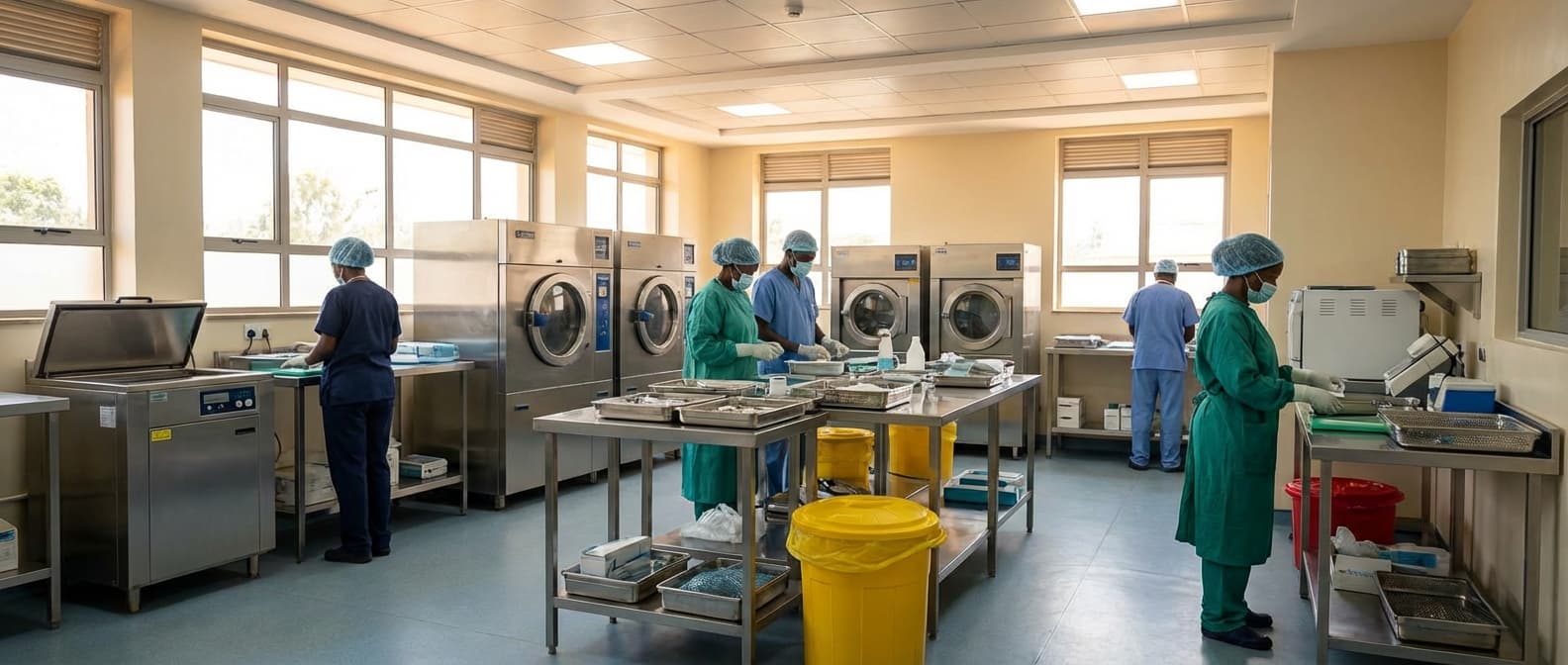
Endoscope Reprocessing Equipment Support Service in Eswatini
Engineering Excellence & Technical Support
Endoscope Reprocessing Equipment Support Service High-standard technical execution following OEM protocols and local regulatory frameworks.
Proactive Equipment Maintenance & Calibration
Ensuring optimal performance and longevity of your endoscope reprocessing equipment through scheduled preventative maintenance, meticulous calibration, and timely spare parts replacement, minimizing downtime and maximizing operational efficiency in Eswatini's healthcare facilities.
On-Site Technical Training & Support
Empowering your sterile processing teams in Eswatini with expert on-site training on equipment operation, troubleshooting, and best practices for endoscope reprocessing, fostering a culture of safety and compliance, and providing immediate expert assistance when needed.
Rapid Response & Specialized Repair Services
Providing swift and effective on-site troubleshooting and repair for all makes and models of endoscope reprocessing equipment across Eswatini, utilizing a team of highly skilled technicians and advanced diagnostic tools to restore critical functionality with minimal disruption.
What Is Endoscope Reprocessing Equipment Support Service In Eswatini?
Endoscope reprocessing equipment support service in Eswatini refers to the provision of specialized technical services aimed at ensuring the optimal functionality, maintenance, and compliance of equipment used for the cleaning, disinfection, and sterilization of flexible and rigid endoscopes. This service is critical for healthcare facilities to maintain infection control standards and patient safety.
| Who Needs the Service | Typical Use Cases | |||||
|---|---|---|---|---|---|---|
| Hospitals and Clinics in Eswatini: Particularly those with endoscopy suites and surgical departments performing procedures requiring reusable endoscopes. | Ensuring the safe and effective reprocessing of endoscopes used in gastroenterology, pulmonology, urology, gynecology, and surgery. | Maintaining compliance with infection prevention and control (IPC) protocols mandated by the Ministry of Health and international health organizations. | Reducing the risk of healthcare-associated infections (HAAS) transmitted via contaminated endoscopes. | Maximizing the lifespan and operational efficiency of expensive endoscope reprocessing equipment. | Minimizing equipment downtime, which can disrupt patient care and scheduling of procedures. | Providing a reliable service for facilities that may lack in-house specialized technical expertise for advanced reprocessing equipment. |
| Diagnostic and Treatment Centers: Facilities offering endoscopic procedures as a core service. | Government Health Facilities and Private Healthcare Providers: All entities utilizing reusable endoscopic instruments. | Biomedical Engineering Departments: Responsible for the maintenance and repair of medical equipment. | Procurement Departments: Seeking to ensure the long-term operational integrity of their capital investments in reprocessing technology. |
Service Components
- Preventive Maintenance: Scheduled inspections, lubrication, calibration, and replacement of worn parts to avert equipment failure.
- Corrective Maintenance: Troubleshooting and repair of malfunctioning endoscope reprocessing equipment, including washer-disinfectors, sterilizers (e.g., steam, low-temperature plasma), drying and storage cabinets, and associated accessories.
- Validation and Calibration: Ensuring equipment meets regulatory standards and manufacturer specifications through performance testing and calibration.
- Technical Consultation: Providing expert advice on equipment selection, installation, operation, and compliance with international and local guidelines (e.g., WHO, SADC protocols).
- Parts and Consumables Supply: Ensuring the availability of genuine spare parts, filters, cleaning agents, and disinfectants necessary for effective reprocessing.
- Training and Education: Offering training to biomedical engineers, technicians, and endoscope processing personnel on the proper use, maintenance, and troubleshooting of the equipment.
Who Needs Endoscope Reprocessing Equipment Support Service In Eswatini?
Endoscope reprocessing equipment support services are crucial for healthcare facilities in Eswatini that utilize endoscopes for diagnostic and therapeutic procedures. These services ensure the proper functioning, maintenance, and repair of complex equipment, guaranteeing patient safety and regulatory compliance.
| Customer Segment | Key Departments/Users | Specific Needs |
|---|---|---|
| Government Hospitals | Gastroenterology, Pulmonology, Urology, Gynecology, Surgery, Infection Control | Regular maintenance and calibration, emergency repairs, spare parts availability, technical training for staff, compliance with national health standards. |
| Private Hospitals & Specialist Clinics | Gastroenterology, Pulmonology, Urology, Gynecology, ENT, Surgery, Endoscopy Units | Preventive maintenance plans, rapid response to breakdowns, advanced diagnostic tools, upgrades to meet international standards, service contracts. |
| Diagnostic Centers | Endoscopy Suites, Radiology Departments (for interventional procedures) | Routine servicing to minimize downtime, accurate functional testing, calibration of automated reprocessors, troubleshooting of imaging components integrated with endoscopes. |
| Surgical Centers | General Surgery, Laparoscopic Surgery Units | On-demand repair services, replacement of worn-out parts, disinfection cycle validation support, training on new equipment features. |
| Medical Training Institutions | Simulation Labs, Clinical Teaching Hospitals | Ensuring functional simulation equipment for training, maintenance of real equipment used for practical sessions, access to up-to-date technical manuals and support for educational purposes. |
Target Customers and Departments in Eswatini Requiring Endoscope Reprocessing Equipment Support Service
- Hospitals (Government and Private)
- Specialist Clinics
- Diagnostic Centers
- Surgical Centers
- Medical Training Institutions with clinical attachments
Endoscope Reprocessing Equipment Support Service Process In Eswatini
This document outlines the Endoscope Reprocessing Equipment Support Service Process in Eswatini, detailing the workflow from initial inquiry to the successful execution of support services for vital medical equipment. The process is designed to ensure prompt, efficient, and effective maintenance, repair, and calibration of endoscope reprocessing equipment, thereby guaranteeing patient safety and operational continuity in healthcare facilities. It covers various aspects of service delivery, including initial contact, diagnosis, parts procurement, on-site intervention, and post-service follow-up. Emphasis is placed on clear communication, adherence to protocols, and qualified technical expertise.
| Stage | Description | Key Activities | Responsible Party | Expected Outcome |
|---|---|---|---|---|
| Inquiry & Initial Contact | The process begins when a healthcare facility identifies a need for support services for their endoscope reprocessing equipment. | Contacting the designated service provider (phone, email, online portal). Providing basic details about the equipment and the issue. | Healthcare Facility | Acknowledgement of inquiry, initial information gathering. |
| Service Request & Prioritization | Formalizing the support request and assessing its urgency based on established criteria. | Submitting a detailed service request form. Classifying the issue (e.g., critical, urgent, routine). Scheduling a technician visit. | Service Provider & Healthcare Facility | Official service request logged. Prioritization assigned. Service appointment scheduled. |
| Diagnosis & Assessment | The technician arrives on-site to thoroughly inspect and diagnose the problem with the endoscope reprocessing equipment. | Visual inspection. Functional testing. Diagnostic tool usage. Identifying the root cause of the malfunction. Estimating repair time and cost. | Service Technician | Accurate diagnosis. Identification of required parts and labor. |
| Parts & Materials Management | Ensuring the availability of necessary spare parts and consumables for the repair. | Checking inventory. Ordering parts if not in stock. Verifying part compatibility and quality. Arranging for timely delivery. | Service Provider (Logistics & Procurement) | Necessary parts secured for the repair. |
| On-site Service Execution | The technician performs the necessary repairs, maintenance, or calibration on the endoscope reprocessing equipment. | Replacing faulty components. Cleaning and lubricating parts. Performing routine maintenance. Implementing software updates (if applicable). | Service Technician | Equipment repaired or maintained to operational standards. |
| Testing & Calibration | Verifying that the equipment functions correctly and meets specified performance standards after service. | Conducting functional tests. Performing calibration procedures according to manufacturer specifications. Ensuring compliance with reprocessing guidelines. | Service Technician | Equipment fully functional and calibrated. Safety and efficacy confirmed. |
| Documentation & Reporting | Recording all service activities, findings, and recommendations in a comprehensive report. | Completing a service report detailing the problem, actions taken, parts used, and test results. Providing recommendations for future maintenance. | Service Technician | Detailed service record created. Information available for future reference. |
| Customer Acceptance & Feedback | The healthcare facility reviews the service report and confirms satisfaction with the completed work. | Reviewing the service report. Signing off on the completed work. Providing feedback on the service experience. | Healthcare Facility | Confirmation of service completion and satisfaction. |
| Invoicing & Payment | Issuing and settling the invoice for the services rendered and any parts used. | Generating an invoice based on the service report and agreed pricing. Processing payment according to contractual terms. | Service Provider (Finance) & Healthcare Facility | Financial transaction completed. |
| Post-Service Follow-up | Proactive engagement to ensure continued optimal performance and customer satisfaction. | Scheduling follow-up checks (if applicable). Addressing any lingering concerns. Offering preventative maintenance advice. | Service Provider | Continued customer satisfaction. Prevention of future issues. |
Workflow Stages: Endoscope Reprocessing Equipment Support Service Process
- Inquiry & Initial Contact
- Service Request & Prioritization
- Diagnosis & Assessment
- Parts & Materials Management
- On-site Service Execution
- Testing & Calibration
- Documentation & Reporting
- Customer Acceptance & Feedback
- Invoicing & Payment
- Post-Service Follow-up
Endoscope Reprocessing Equipment Support Service Cost In Eswatini
Providing support services for endoscope reprocessing equipment in Eswatini involves several cost factors that influence the overall pricing. These factors are crucial for healthcare facilities to budget effectively and ensure the continuous availability and optimal functioning of these critical sterilization devices. The pricing is typically presented in Eswatini Lilangeni (SZL).
| Service Type / Scope | Estimated Range (SZL - Eswatini Lilangeni) | Notes |
|---|---|---|
| Annual Preventative Maintenance (per unit) | 2,500 - 8,000 | Covers scheduled checks, cleaning, calibration, and basic adjustments. Pricing varies by equipment complexity. |
| Ad-hoc Repair Call (labor + parts) | 1,000 - 5,000+ | Per-incident charge. Excludes major part replacements. Hourly rates for technicians can range from 300-800 SZL. |
| Comprehensive Service Contract (annual, per unit) | 7,000 - 25,000+ | Includes preventative maintenance, priority response, and often covers a certain number of repair calls or parts. Tailored to specific equipment and needs. |
| Emergency/Out-of-Hours Call | Additional 500 - 1,500+ | Charged on top of standard repair costs for after-hours or urgent requests. |
| Major Component Replacement (e.g., pump, control board) | 3,000 - 15,000+ | Cost of the spare part plus labor. Highly dependent on the specific part and its availability. |
| Installation and Commissioning Support | 2,000 - 7,000 | For new equipment, includes setup, testing, and initial user training. Can be a one-time fee. |
Key Pricing Factors for Endoscope Reprocessing Equipment Support Service in Eswatini
- {"title":"Type and Complexity of Equipment","description":"The make, model, and technological sophistication of the endoscope reprocessing equipment significantly impact service costs. High-end, multi-chambered, or advanced automated systems generally command higher service fees due to the specialized knowledge and parts required for their maintenance and repair."}
- {"title":"Scope of Service Agreement","description":"Service contracts can vary from basic preventative maintenance to comprehensive, all-inclusive plans that cover emergency repairs, replacement parts, and even software updates. The broader the scope, the higher the annual or per-incident cost."}
- {"title":"Frequency and Type of Service","description":"Regular scheduled preventative maintenance is usually priced differently than unscheduled emergency repair calls. The number of planned service visits per year and the response time guaranteed in an agreement will influence the overall cost. Emergency calls outside of business hours or with a rapid response requirement will incur premium charges."}
- {"title":"Availability of Spare Parts","description":"The cost and availability of original equipment manufacturer (OEM) or compatible spare parts are a major determinant. If parts are imported or rare, this can increase both the cost of individual repairs and the pricing for ongoing service contracts. Local availability of parts can sometimes lead to more competitive pricing."}
- {"title":"Technician Expertise and Training","description":"Specialized training and certifications are required to service complex reprocessing equipment. The hourly rates or per-visit fees for highly skilled and certified technicians will be higher than for general equipment maintenance personnel. Local availability of qualified technicians can also affect pricing."}
- {"title":"Travel and Logistics","description":"For service calls outside of major urban centers in Eswatini, travel time, accommodation, and transportation costs for technicians will be factored into the service fee."}
- {"title":"Age and Condition of Equipment","description":"Older equipment may require more frequent repairs and the availability of parts might be diminishing, leading to higher service costs. The overall condition of the equipment upon signing a service agreement can also influence the initial pricing."}
- {"title":"Service Provider Reputation and Overhead","description":"Established service providers with a strong reputation and robust infrastructure may have higher pricing to cover their operational costs, quality assurance, and customer support services."}
Affordable Endoscope Reprocessing Equipment Support Service Options
Maintaining the highest standards of endoscope reprocessing is critical for patient safety and operational efficiency. However, the costs associated with equipment maintenance and service can be substantial for healthcare facilities. This document outlines affordable endoscope reprocessing equipment support service options, focusing on value bundles and effective cost-saving strategies to help you optimize your budget without compromising on quality or compliance.
| Service Option | Description | Value Proposition | Potential Cost-Saving Strategies |
|---|---|---|---|
| Basic Preventive Maintenance Package | Includes scheduled PM visits, basic cleaning, and functional checks. | Reduces risk of unexpected breakdowns, extends equipment life. | Annual contracts often offer a discount compared to per-visit pricing. Negotiate PM frequency based on actual usage and equipment manufacturer recommendations. |
| Comprehensive Service Agreement (CSA) | Combines PM, unlimited CM calls, parts & labor, and sometimes calibration. | Predictable budgeting, minimizes downtime, peace of mind. | Negotiate terms based on your facility's specific needs and equipment age. Consider bundling multiple pieces of equipment under one agreement. Look for tiered CSAs to match your risk tolerance and budget. |
| On-Demand Repair Services | Pay-per-incident repair services for when issues arise. | Flexibility for facilities with low repair frequency or specific budget constraints. | Compare hourly rates and travel fees from multiple reputable service providers. Maintain a stock of common, inexpensive replacement parts (e.g., filters, seals) for minor DIY fixes. Develop a strong internal troubleshooting guide for your staff. |
| Managed Services / Outsourced Reprocessing Support | A third-party provider manages all aspects of your reprocessing equipment support. | Reduces administrative burden, leverages expert knowledge, can be cost-effective for smaller facilities. | Thoroughly vet providers for their expertise and track record. Ensure contract clearly defines service level agreements (SLAs) and response times. Consider the total cost of ownership compared to in-house management. |
| Multi-Year Contracts with Volume Discounts | Longer-term service agreements often come with reduced rates. | Locks in pricing, provides long-term stability. | Aggressively negotiate terms for multi-year commitments. Bundle support for all your reprocessing equipment, including ancillary devices, to achieve greater discounts. |
| Refurbished Equipment Support | Service contracts specifically for pre-owned or refurbished reprocessing equipment. | Significantly lower upfront equipment costs. | Ensure the service provider has expertise with the specific refurbished models. Prioritize contracts that include robust warranties and clear terms for parts availability. |
Understanding Endoscope Reprocessing Support Services
- Preventive Maintenance (PM): Regular scheduled inspections and servicing to identify and address potential issues before they lead to equipment failure. This is crucial for maximizing uptime and extending the lifespan of your reprocessing equipment.
- Corrective Maintenance (CM): On-demand repair services to address breakdowns and malfunctions. Prompt and efficient CM is vital to minimize disruption to reprocessing workflows.
- Parts and Labor Coverage: Comprehensive agreements that cover the cost of replacement parts and the technicians' time for repairs.
- Calibration Services: Ensuring your reprocessing equipment (e.g., automated endoscope reprocessors, leak testers) is functioning accurately and meeting regulatory standards.
- Training and Education: Support for your reprocessing staff on proper equipment operation, maintenance, and troubleshooting.
- Compliance and Validation Support: Assistance with ensuring your reprocessing procedures and equipment meet current regulatory guidelines (e.g., FDA, CDC, AAMI).
- Software Updates and Upgrades: Keeping your reprocessing equipment's software current for optimal performance and security.
Verified Providers In Eswatini
Navigating the healthcare landscape in Eswatini can be challenging, and discerning reliable and accredited healthcare providers is paramount for ensuring quality care. Franance Health stands out as a beacon of trust, offering a network of verified providers who have undergone rigorous credentialing processes. This commitment to verification not only assures patients of the highest standards of medical expertise but also instills confidence in the safety and efficacy of the treatments received. Choosing Franance Health means partnering with a system that prioritizes patient well-being through meticulous provider selection.
| Credential Type | Verification Process | Benefit to Patients |
|---|---|---|
| Medical Licenses | Confirmed with Eswatini Ministry of Health and relevant professional bodies. | Ensures providers are legally authorized to practice. |
| Educational Qualifications | Verification of degrees, diplomas, and certifications from accredited institutions. | Guarantees a foundation of robust medical knowledge. |
| Professional Experience | Thorough review of past work history, including specializations and areas of expertise. | Confirms practical skills and hands-on experience. |
| Clinical Competency Assessments | May include peer reviews or performance evaluations where applicable. | Assesses the quality and effectiveness of patient care delivery. |
| Ethical Conduct and Reputation | Background checks and references to ensure adherence to professional ethics. | Provides confidence in the provider's integrity and trustworthiness. |
Why Franance Health Providers are the Best Choice in Eswatini:
- Rigorous Credentialing: All Franance Health providers undergo a comprehensive vetting process, verifying their qualifications, licenses, and experience.
- Commitment to Quality: We partner with healthcare professionals dedicated to upholding the highest standards of patient care and ethical practices.
- Patient-Centric Approach: Our network emphasizes a patient-first philosophy, ensuring compassionate and effective treatment.
- Access to Expertise: Franance Health connects you with a diverse range of specialists and general practitioners, catering to all your healthcare needs.
- Peace of Mind: Knowing you are receiving care from a verified and trusted provider offers unparalleled reassurance.
- Continuous Improvement: We regularly review and update our provider network to ensure they remain at the forefront of medical advancements.
Scope Of Work For Endoscope Reprocessing Equipment Support Service
This Scope of Work (SOW) outlines the requirements for Endoscope Reprocessing Equipment Support Services. The objective is to ensure the optimal performance, reliability, and compliance of all endoscope reprocessing equipment within the facility. This includes preventative maintenance, corrective maintenance, calibration, validation, and training.
| Technical Deliverable | Description | Standard Specifications / Requirements | Frequency / Trigger | Documentation |
|---|---|---|---|---|
| Preventative Maintenance (PM) | Scheduled maintenance to inspect, clean, lubricate, and replace worn parts to prevent failures. | Manufacturer's recommended PM procedures and schedules. Compliance with industry best practices (e.g., AAMI, ISO standards). | As per manufacturer recommendations (e.g., quarterly, semi-annually, annually) or usage hours. | PM Report detailing tasks performed, parts replaced, test results, and technician sign-off. |
| Corrective Maintenance (CM) | On-demand repair service for equipment malfunctions and breakdowns. | Response time: within X business hours for critical equipment. Diagnosis and repair by certified technicians. Use of genuine or approved replacement parts. | Upon equipment failure or reported malfunction. | CM Report detailing reported issue, diagnosis, parts used, repair actions taken, test results, and technician sign-off. |
| Calibration | Adjustment of equipment to ensure accuracy and precision of readings and operational parameters. | Calibration traceable to national or international standards (e.g., NIST). Defined acceptable tolerance limits for key parameters (e.g., temperature, pressure, flow rate, cycle times). | As per manufacturer recommendations, regulatory requirements, or after significant repairs/component replacements. | Calibration Certificate detailing the equipment, calibration date, standards used, measurement results before and after adjustment, and technician sign-off. |
| Performance Qualification (PQ) / Validation | Testing to ensure the equipment consistently performs within specified limits and meets user requirements under actual operating conditions. | Protocol based on manufacturer's IQ/OQ/PQ guidelines or facility-approved validation protocol. Use of calibrated challenge devices and biological indicators. Documented results demonstrating successful cycle completion. | Initial installation, after major repairs or modifications, and at defined intervals (e.g., annually or biannually) as per regulatory requirements and risk assessment. | PQ/Validation Report detailing protocol, executed steps, test results, deviations (if any), and final acceptance statement signed by authorized personnel. |
| Technical Training | Training for facility staff on the proper operation, troubleshooting, and basic maintenance of endoscope reprocessing equipment. | Training curriculum covering equipment features, operation, safety protocols, troubleshooting common issues, and reporting procedures. Competency assessment of trained personnel. | Initial onboarding of new staff, refresher training as needed, and after equipment upgrades or new equipment installation. | Training Attendance Records and Competency Assessment Forms. |
| Equipment Audits | Periodic review of equipment performance, maintenance records, and compliance status. | Assessment against manufacturer specifications, regulatory standards (e.g., FDA, local health authorities), and internal policies. Identification of potential risks or areas for improvement. | As per facility policy (e.g., quarterly, semi-annually). | Audit Report summarizing findings, recommendations, and action plans. |
| Spare Parts Management | Ensuring the availability of critical spare parts for timely repairs. | Identification of critical spare parts based on equipment criticality and failure rates. Maintaining adequate stock levels as agreed upon with the service provider. | Continuous, with regular review of inventory levels. | Spare Parts Inventory Report. |
| Emergency Support | 24/7 availability of technical support for critical equipment failures impacting patient safety. | Defined escalation procedures. On-site or remote support within agreed-upon response times. | Upon request for critical equipment failure outside of normal business hours. | Emergency Support Log detailing call time, issue, resolution, and technician involved. |
Key Objectives of Endoscope Reprocessing Equipment Support Service
- Minimize equipment downtime and ensure availability for patient care.
- Maintain equipment performance within manufacturer specifications and regulatory requirements.
- Ensure the safety and efficacy of endoscope reprocessing.
- Extend the lifespan of endoscope reprocessing equipment through proactive maintenance.
- Provide comprehensive documentation for all service activities.
Service Level Agreement For Endoscope Reprocessing Equipment Support Service
This Service Level Agreement (SLA) outlines the support services provided for Endoscope Reprocessing Equipment. It defines the response times and uptime guarantees to ensure optimal performance and availability of the equipment for clinical use.
| Incident Severity | Definition | Response Time (During Business Hours) | Response Time (Outside Business Hours - Emergency Support) | Target Uptime Guarantee |
|---|---|---|---|---|
| Critical Equipment Failure | Complete loss of functionality. | Within 2 hours | Within 4 hours | 98% |
| Major Equipment Malfunction | Significant degradation impacting safe reprocessing. | Within 4 business hours | Next Business Day (by 12:00 PM) | 98% |
| Minor Equipment Issue | Non-critical problem. | Within 8 business hours | Next Business Day | 99% |
Key Definitions
- Critical Equipment Failure: Complete loss of functionality of the endoscope reprocessor, rendering it unusable for reprocessing.
- Major Equipment Malfunction: Significant degradation in performance or functionality, impacting the ability to fully or safely reprocess endoscopes, but not a complete outage.
- Minor Equipment Issue: Non-critical problem that does not prevent the equipment from operating or reprocessing endoscopes, but requires attention or adjustment.
- Business Hours: Monday to Friday, 8:00 AM to 5:00 PM local time, excluding public holidays.
- Emergency Support: Support available outside of Business Hours for Critical Equipment Failures.
- Uptime: The percentage of time the equipment is available and operational for its intended purpose.
- Downtime: The percentage of time the equipment is unavailable for its intended purpose due to maintenance, failure, or repair.
- Response Time: The time elapsed from when a support request is logged to when a qualified technician begins active work on the issue.
Frequently Asked Questions

Ready when you are
Let's scope your Endoscope Reprocessing Equipment Support Service in Eswatini project in Eswatini.

Scaling healthcare logistics and technical systems across the entire continent.