
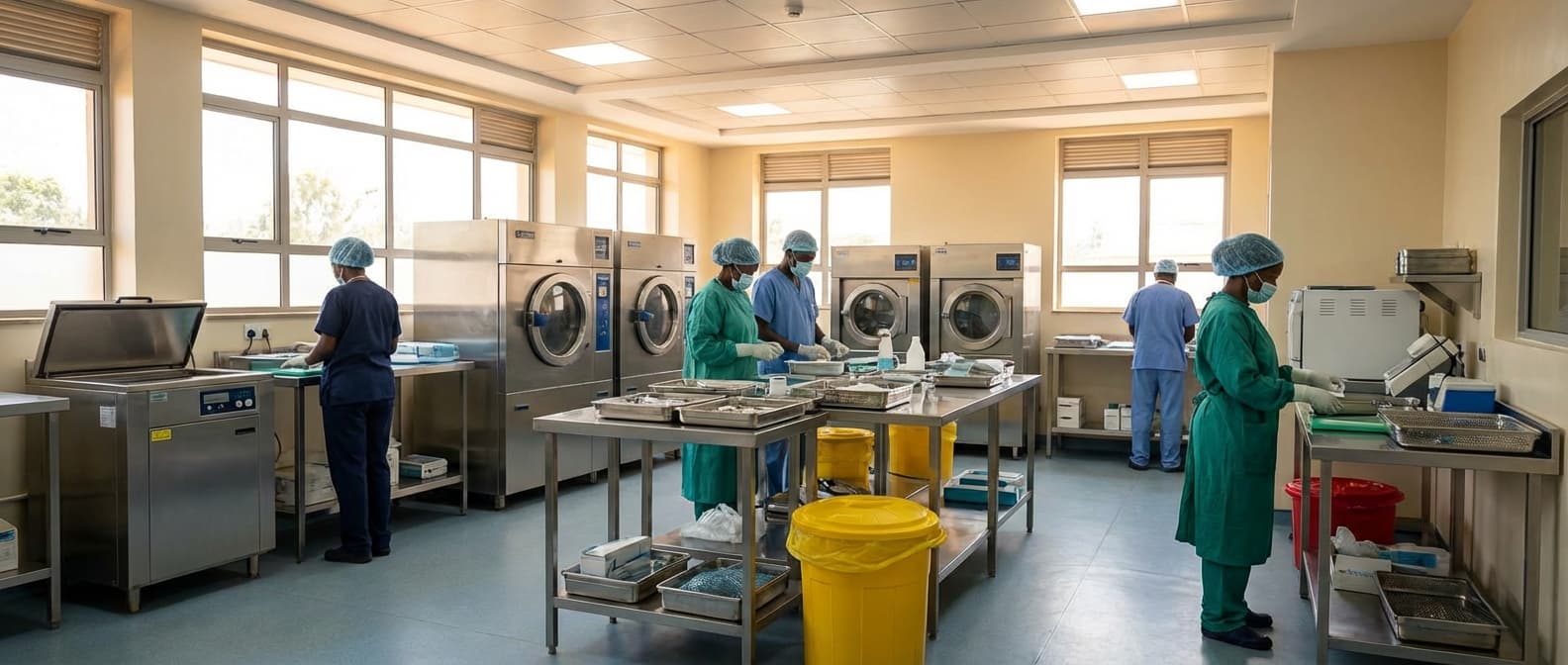
Autoclave Validation Support Service in Eswatini
Engineering Excellence & Technical Support
Autoclave Validation Support Service High-standard technical execution following OEM protocols and local regulatory frameworks.
Regulatory Compliance Assurance
Ensure your autoclaves meet stringent Eswatini healthcare and manufacturing regulations with our expert validation services, guaranteeing patient safety and product integrity.
Optimized Sterilization Performance
Maximize the efficacy of your sterilization cycles. Our validation services identify optimal temperature, pressure, and time parameters for complete microbial inactivation, reducing re-processing and waste.
Data-Driven Confidence & Traceability
Receive comprehensive, auditable validation reports with raw data, providing irrefutable proof of autoclave performance and ensuring full traceability for regulatory bodies and internal quality control in Eswatini.
What Is Autoclave Validation Support Service In Eswatini?
Autoclave validation support services in Eswatini are specialized technical services designed to ensure the consistent and effective performance of steam sterilizers (autoclaves) used in healthcare, laboratory, and pharmaceutical settings. This validation process is critical for verifying that an autoclave can reproducibly achieve and maintain the required parameters (temperature, pressure, and time) necessary to achieve sterility of medical devices, laboratory equipment, or pharmaceutical products. The service typically involves a comprehensive assessment of the autoclave's operational parameters, the efficacy of its sterilization cycles, and adherence to relevant international and national standards.
| Who Needs Autoclave Validation Support Service? | Typical Use Cases | |||
|---|---|---|---|---|
| Hospitals and Clinics: Sterilization of surgical instruments, medical devices, linens, and other patient-care items. | Dental Practices: Sterilization of dental instruments. | Laboratories (Research, Clinical, Industrial): Sterilization of glassware, media, culture dishes, equipment, and biohazardous waste. | Pharmaceutical Manufacturing: Sterilization of product contact parts, packaging materials, and facility components. | Veterinary Clinics: Sterilization of surgical instruments and animal care equipment. |
| Ensuring patient safety by preventing the transmission of infections from inadequately sterilized medical devices. | Maintaining the integrity of laboratory experiments by preventing contamination. | Meeting regulatory requirements from bodies such as the Ministry of Health, WHO, and relevant international standards (e.g., ISO 17665). | Validating the effectiveness of sterilization processes for quality assurance in pharmaceutical production. | Optimizing sterilization cycle efficiency and reducing waste. |
Key Components of Autoclave Validation Support Service
- Installation Qualification (IQ): Verifies that the autoclave is installed correctly according to the manufacturer's specifications and relevant regulatory requirements. This includes checking physical installation, utility connections (steam, water, power), and environmental conditions.
- Operational Qualification (OQ): Tests the autoclave's performance across its operational range to demonstrate that it functions as intended. This involves running empty and loaded cycles with calibrated sensors to monitor temperature, pressure, and time at critical locations within the chamber.
- Performance Qualification (PQ): Validates the autoclave's ability to consistently sterilize a specific load configuration under defined cycle parameters. This is typically achieved through biological and/or chemical indicator challenges to prove lethality.
- Cycle Development and Optimization: Assistance in designing and refining sterilization cycles to ensure they are effective for specific load types and materials, while minimizing cycle times and resource consumption.
- Calibration of Monitoring Devices: Ensures that all sensors, probes, and data loggers used for monitoring and validation are accurately calibrated against traceable standards.
- Documentation and Reporting: Comprehensive generation of validation protocols, reports, and certificates that provide auditable evidence of the autoclave's performance and compliance.
- Revalidation Services: Periodic revalidation to ensure continued compliance and performance after repairs, modifications, or at specified intervals (e.g., annually) as per regulatory guidelines.
Who Needs Autoclave Validation Support Service In Eswatini?
In Eswatini, ensuring the efficacy and safety of sterilization processes is paramount for numerous healthcare and research facilities. Autoclave validation support services are crucial for any organization that utilizes autoclaves to sterilize medical equipment, laboratory instruments, or other critical materials. These services confirm that the autoclaves are functioning within specified parameters, guaranteeing the destruction of microorganisms and preventing the spread of infections or contamination. Without proper validation, facilities risk compromised sterility, patient safety issues, and regulatory non-compliance.
| Customer Type | Primary Departments Requiring Support | Key Sterilization Needs |
|---|---|---|
| Hospitals (Public & Private) | Central Sterile Supply Department (CSSD), Operating Theatres, Intensive Care Units (ICUs), Emergency Departments, Dental Departments, Infection Control | Sterilization of surgical instruments, anesthetics, linens, and other reusable medical devices. |
| Clinics & Health Centers | Treatment Rooms, Minor Procedure Areas, Dental Clinics | Sterilization of examination instruments, wound care supplies, and minor surgical tools. |
| Dental Practices | Sterilization Area, Treatment Rooms | Sterilization of dental instruments, handpieces, and other reusable oral care equipment. |
| Diagnostic Laboratories | Microbiology, Pathology, Molecular Biology, Research Labs | Sterilization of glassware, media, culture plates, and laboratory instruments to prevent contamination and ensure accurate results. |
| Research Institutions/Universities | Biology Labs, Chemistry Labs, Medical Research Facilities | Sterilization of equipment and materials for scientific experiments and research protocols. |
| Pharmaceutical Manufacturing | Quality Control (QC) Labs, Production Areas | Sterilization of processing equipment, packaging materials, and laboratory instruments for quality assurance. |
| Food Processing/Beverage Industries | Quality Control Labs, Production Lines | Sterilization of certain equipment and containers to ensure product safety and shelf-life. |
Target Customers for Autoclave Validation Support Services in Eswatini:
- Hospitals (Public and Private)
- Clinics and Health Centers
- Dental Practices
- Diagnostic Laboratories (Medical and Veterinary)
- Research Institutions and Universities (with medical or biological research)
- Pharmaceutical Manufacturing Facilities
- Food Processing and Beverage Industries (where sterilization is required)
Autoclave Validation Support Service Process In Eswatini
This document outlines the Autoclave Validation Support Service Process in Eswatini, detailing the workflow from initial client inquiry to the successful execution of validation services. Our aim is to provide a clear, efficient, and compliant process for ensuring the optimal performance and reliability of autoclaves within healthcare and laboratory settings in Eswatini.
| Stage | Description | Key Activities | Deliverables/Outcomes | Timeline (Estimated) |
|---|---|---|---|---|
| The process begins with a client expressing interest in autoclave validation services. | Receive inquiry (phone, email, website). Discuss client needs, autoclave type, and regulatory requirements. Provide preliminary information on services. | Understanding of client requirements, preliminary advice provided. | 1-2 business days |
| Based on the initial consultation, a detailed scope of work is defined. | Gather specific details about the autoclave (make, model, capacity, usage). Identify applicable standards (e.g., ISO 17665, local regulations). Define validation parameters (temperature, pressure, time, steam penetration). Prepare a formal proposal outlining services, methodology, timeline, and cost. | Detailed Scope of Work, Formal Proposal with quotation. | 3-5 business days |
| Upon client acceptance of the proposal, formal agreements are made and scheduling commences. | Client review and acceptance of the proposal. Contract negotiation and signing. Joint scheduling of validation dates, considering client operational needs and technician availability. | Signed Service Agreement, Confirmed Validation Schedule. | 2-7 business days |
| This optional stage helps identify potential issues before the formal validation. | On-site inspection of the autoclave. Review of maintenance logs and operational procedures. Identification of any pre-existing issues or necessary preparations. | Pre-assessment report (if conducted), recommendations for preparation. | 1-2 business days (if applicable) |
| The core of the service involves conducting the validation studies according to the agreed scope. | Installation Qualification (IQ): Verify correct installation and configuration. Operational Qualification (OQ): Test the autoclave's operation within defined parameters. Performance Qualification (PQ): Demonstrate consistent and effective sterilization cycles under typical operating conditions. This involves using calibrated instruments and specific test loads (e.g., Bowie-Dick tests, biological indicators, temperature/pressure probes). | Raw validation data, test results, observations during testing. | 2-5 business days (depending on autoclave size and number of cycles) |
| Collected data is meticulously analyzed to draw conclusions. | Analysis of all collected temperature, pressure, and steam penetration data. Evaluation of biological indicator results. Interpretation of test results against acceptance criteria. Compilation of a comprehensive validation report detailing methodology, results, and conclusions. | Draft Validation Report. | 3-7 business days |
| The draft report is presented to the client for review and feedback. | Client internal review of the draft validation report. Discussion of any findings or questions. Incorporation of client feedback and necessary revisions. | Client feedback incorporated into the report. | 2-5 business days |
| The final validated report and all associated documentation are provided to the client. | Issuance of the final, approved Autoclave Validation Report. Provision of calibration certificates for instruments used. Final invoicing and project closure. | Final Autoclave Validation Report, Calibration Certificates, Project Closure. | 1-2 business days |
Autoclave Validation Support Service Process Workflow
- Client Inquiry & Initial Consultation
- Scope Definition & Proposal Development
- Agreement & Scheduling
- Pre-Validation Assessment (Optional)
- Execution of Validation Studies (IQ, OQ, PQ)
- Data Analysis & Report Generation
- Review & Approval
- Final Deliverables & Closeout
Autoclave Validation Support Service Cost In Eswatini
The cost of autoclave validation support services in Eswatini is influenced by several key factors, primarily related to the complexity of the validation process, the type and number of autoclaves to be validated, the service provider's expertise, and the required turnaround time. Local currency (Emalangeni, E) will be used for pricing. While specific price lists are not publicly available, an understanding of these factors can help anticipate the potential investment. It's crucial to obtain a detailed quote from service providers for an accurate assessment.
| Service Aspect | Estimated Cost Range (E) |
|---|---|
| Initial Consultation & Site Assessment | 500 - 2,000 |
| Installation Qualification (IQ) | 2,500 - 7,000 |
| Operational Qualification (OQ) | 4,000 - 12,000 |
| Performance Qualification (PQ) - Per Cycle/Test | 1,500 - 5,000 |
| Full Validation (IQ, OQ, PQ) for a Standard Autoclave | 8,000 - 25,000+ |
| Annual Revalidation/Calibration (Simplified) | 4,000 - 10,000 |
| Additional Autoclaves (Per Unit, depending on complexity) | 3,000 - 10,000+ |
| Report Generation and Documentation | Included in overall cost, or an additional 1,000 - 3,000 for complex reports |
| Emergency/Expedited Service Surcharge | 20% - 50% increase on standard rates |
Key Pricing Factors for Autoclave Validation Support in Eswatini
- Scope of Validation: This includes the specific tests performed (e.g., Installation Qualification (IQ), Operational Qualification (OQ), Performance Qualification (PQ)), the number of validation cycles, and the complexity of the autoclave's operational parameters.
- Type and Number of Autoclaves: Larger, more complex, or multiple autoclaves will naturally increase the cost due to longer service times and potentially more intricate calibration requirements.
- Service Provider Expertise and Reputation: Established providers with a proven track record and highly qualified technicians may command higher rates.
- Calibration and Equipment Used: The cost of using and calibrating specialized validation equipment by the service provider will be factored in.
- Geographic Location and Travel: If the service provider needs to travel to remote locations within Eswatini, travel and accommodation costs will be added.
- Urgency and Turnaround Time: Expedited services for urgent validations will typically incur a premium.
- Documentation and Reporting Requirements: The level of detail and format of the validation report can influence the cost.
- Frequency of Validation: While not a direct cost per validation, contracts for regular, scheduled validations might offer slight discounts.
Affordable Autoclave Validation Support Service Options
Ensuring the efficacy of your autoclave is paramount for maintaining sterile environments in healthcare, laboratories, and other critical settings. Autoclave validation is a regulatory requirement and a crucial quality control measure. However, the cost of professional validation services can be a significant concern for smaller organizations or those on a tight budget. This document outlines affordable autoclave validation support service options, focusing on value bundles and cost-saving strategies to make this essential service more accessible.
| Service Option | Description | Typical Value Proposition | Cost-Saving Strategies |
|---|---|---|---|
| Basic Validation Package | Includes essential validation tests (e.g., temperature, pressure, time monitoring) for a single cycle type. Often conducted on-site. | Meets minimum regulatory requirements for a single cycle, providing fundamental assurance. | Focus on essential tests only; opt for fewer validation runs if regulations permit; schedule during off-peak hours for potentially lower technician rates. |
| Bundled Validation & Maintenance | Combines annual validation services with routine autoclave maintenance (cleaning, calibration of minor components). | Holistic approach to autoclave care, potentially reducing breakdowns and ensuring consistent performance between validations. | Lower per-service cost when bundled; preventive maintenance can avoid costly emergency repairs that might necessitate re-validation. |
| Multi-Autoclave Discount | Pricing structure offering reduced rates for validating multiple autoclaves at the same facility or for organizations with several sites. | Economies of scale for organizations with a fleet of sterilizers, ensuring consistent validation across all equipment. | Group scheduling for efficiency; negotiate a multi-year contract for even deeper discounts. |
| Remote Support & Consultation | Guidance on performing some validation steps in-house, data analysis support, and remote troubleshooting. | Empowers internal staff, reduces on-site visit frequency, and provides expert advice without the full cost of on-site services. | Requires trained internal personnel; ideal for organizations with established internal QC teams; use for supplemental support rather than full outsourcing. |
| Annual Service Contracts | Pre-paid contracts covering regular validation services, sometimes including priority scheduling and discounts on repairs. | Predictable budgeting, guaranteed service availability, and often preferential rates. | Lock in current pricing for future services; choose contract levels that match your specific needs (e.g., number of validations per year). |
Understanding Autoclave Validation Needs
- Regulatory Compliance: Adherence to standards like ISO 17665, FDA guidelines, or local health regulations.
- Sterility Assurance: Guaranteeing that your autoclave effectively eliminates microorganisms.
- Equipment Performance: Verifying that the autoclave is functioning optimally and consistently.
- Process Consistency: Ensuring repeatable and reliable sterilization cycles.
- Risk Mitigation: Preventing costly reprocessing, product loss, or patient/staff safety incidents.
Verified Providers In Eswatini
Finding reliable and qualified healthcare providers is paramount for individuals in Eswatini. This document highlights the importance of verified providers and specifically delves into the credentials and advantages of choosing Franance Health, positioning them as a top-tier option for healthcare services in the region.
| Provider Name | Key Credentials/Certifications | Areas of Specialization | Why They Stand Out |
|---|---|---|---|
| Franance Health | Fully Licensed and Accredited by Eswatini Ministry of Health | Primary Care, Maternal & Child Health, Chronic Disease Management, Preventative Services | Committed to patient-centered care, extensive network of qualified professionals, utilizes modern diagnostic tools, strong emphasis on community health outreach and education. |
| Local Government Hospitals | Accredited by Eswatini Ministry of Health | General Medicine, Emergency Services, Surgery (limited) | Accessible, provide essential public health services, serve a broad population. |
| Private Clinics (General) | Varying levels of accreditation | General Practice, Minor Procedures | Offer quicker appointment times for routine care. |
| Specialist Medical Centers (if available) | Specific professional body certifications | Cardiology, Dermatology, Ophthalmology, etc. | Provide focused expertise for specific medical conditions. |
Why Verified Providers Matter in Eswatini
- Ensuring patient safety and quality of care.
- Building trust and confidence in the healthcare system.
- Accessing specialized medical expertise.
- Navigating complex health needs with assurance.
- Promoting ethical medical practices.
Scope Of Work For Autoclave Validation Support Service
This Scope of Work (SOW) outlines the services to be provided by the Vendor for Autoclave Validation Support. The objective is to ensure the reliable and effective sterilization performance of the autoclave through a comprehensive validation process, adhering to established industry standards and regulatory requirements. The services will encompass all phases of validation, from protocol development to final report generation.
| Deliverable | Description | Standard/Specification Reference |
|---|---|---|
| Validation Master Plan (VMP) | An overarching document detailing the company's overall approach to validation activities for all equipment, including autoclaves. This SOW focuses on the autoclave-specific execution within the VMP. | Company SOPs, Relevant Regulatory Guidelines (e.g., FDA 21 CFR Part 11, EU GMP) |
| Autoclave Validation Protocol (IQ/OQ/PQ) | A detailed plan outlining the specific tests, procedures, acceptance criteria, and responsibilities for each phase of the autoclave validation. Includes system description, references, personnel, documentation requirements, and change control. | Company SOPs, PDA Technical Report No. 40 (Sterilization of Health Care Products), ISO 13485, relevant pharmacopoeial methods (e.g., USP <1211>, EP) |
| Installation Qualification (IQ) Report | Documentation confirming that the autoclave has been installed in accordance with manufacturer specifications and relevant facility requirements. Includes verification of physical installation, utilities, and system components. | Manufacturer's Installation Checklist, Facility Drawings, Utility Specifications |
| Operational Qualification (OQ) Report | Documentation confirming that the autoclave operates within its specified operating ranges and performs as intended under normal and extreme conditions. Includes functional testing of critical parameters (temperature, pressure, time, vacuum). | Autoclave Manufacturer's Specifications, Process Control Ranges, Alarm/Interlock Functionality Tests |
| Performance Qualification (PQ) Report | Documentation confirming that the autoclave consistently produces sterile products meeting predefined quality attributes under normal operating conditions. Includes biological challenge studies (using biological indicators) and chemical indicator mapping. | Biological Indicator Manufacturer's Recommendations, Chemical Indicator Specifications, Load Configurations, Sterility Assurance Level (SAL) targets (e.g., 10-6) |
| Validation Summary Report | A comprehensive report summarizing the validation activities, results, deviations encountered, and a conclusion regarding the validated status of the autoclave. Includes all executed protocols and reports. | Company SOPs, Regulatory Agency Review Expectations |
| Calibration Certificates for Test Equipment | Traceable calibration certificates for all instruments used during the validation process (e.g., temperature probes, pressure gauges, timers). | NIST Traceability or equivalent, ISO 17025 Accredited Labs |
| Standard Operating Procedures (SOPs) Review/Development (if applicable) | Review of existing SOPs or development of new SOPs related to autoclave operation, maintenance, and calibration to ensure they align with validation requirements and best practices. | Company SOPs, Regulatory Guidelines |
| Re-validation Protocol & Report | Documentation for periodic or post-change validation activities, ensuring continued compliance and performance after maintenance, significant repairs, or process modifications. | Same as Protocol and Report, along with justification for re-validation |
Key Areas of Support
- Protocol Development & Review
- Installation Qualification (IQ)
- Operational Qualification (OQ)
- Performance Qualification (PQ)
- Validation Report Generation
- Re-validation Support
Service Level Agreement For Autoclave Validation Support Service
This Service Level Agreement (SLA) outlines the guaranteed response times and uptime for the Autoclave Validation Support Service. It defines the commitment of [Service Provider Name] to its clients regarding the availability and responsiveness of the provided support.
| Severity Level | Description | Impact | Response Time Target | Resolution Time Target (Best Effort) |
|---|---|---|---|---|
| Critical (Severity 1) | Total service outage affecting all users or critical validation processes. | System completely unavailable. Major disruption to validation schedules. | 15 minutes | 2 hours |
| High (Severity 2) | Significant degradation of service affecting a major portion of users or essential validation functions. | Key validation processes are severely impacted or unusable. Workarounds are difficult or impossible. | 30 minutes | 4 hours |
| Medium (Severity 3) | Minor degradation of service or issue affecting a limited number of users or non-critical validation functions. | Individual user issues or minor functional impairments. Validation can continue with workarounds. | 2 hours | 8 business hours |
| Low (Severity 4) | General questions, requests for information, or minor cosmetic issues. | No impact on validation functionality or availability. | 1 business day | 3 business days |
Key Metrics and Definitions
- {"title":"Response Time","description":"The maximum time allowed for [Service Provider Name] to acknowledge a reported incident or request for support. This is the initial contact to confirm receipt of the issue and begin diagnosis."}
- {"title":"Resolution Time","description":"The maximum time allowed to resolve a reported incident or fulfill a request for support, bringing the service back to its agreed-upon operating state. This timeframe may vary based on the severity of the issue."}
- {"title":"Uptime Guarantee","description":"The percentage of time the Autoclave Validation Support Service is available and operational during scheduled support hours. This excludes scheduled maintenance and planned downtime."}
- {"title":"Scheduled Maintenance","description":"Pre-planned periods during which the service may be temporarily unavailable for updates, upgrades, or essential maintenance. Clients will be notified in advance of any scheduled maintenance."}
- {"title":"Severity Levels","description":"A classification system used to prioritize support incidents based on their impact on critical operations. (See table below for definitions)."}
Frequently Asked Questions

Ready when you are
Let's scope your Autoclave Validation Support Service in Eswatini project in Eswatini.

Scaling healthcare logistics and technical systems across the entire continent.