
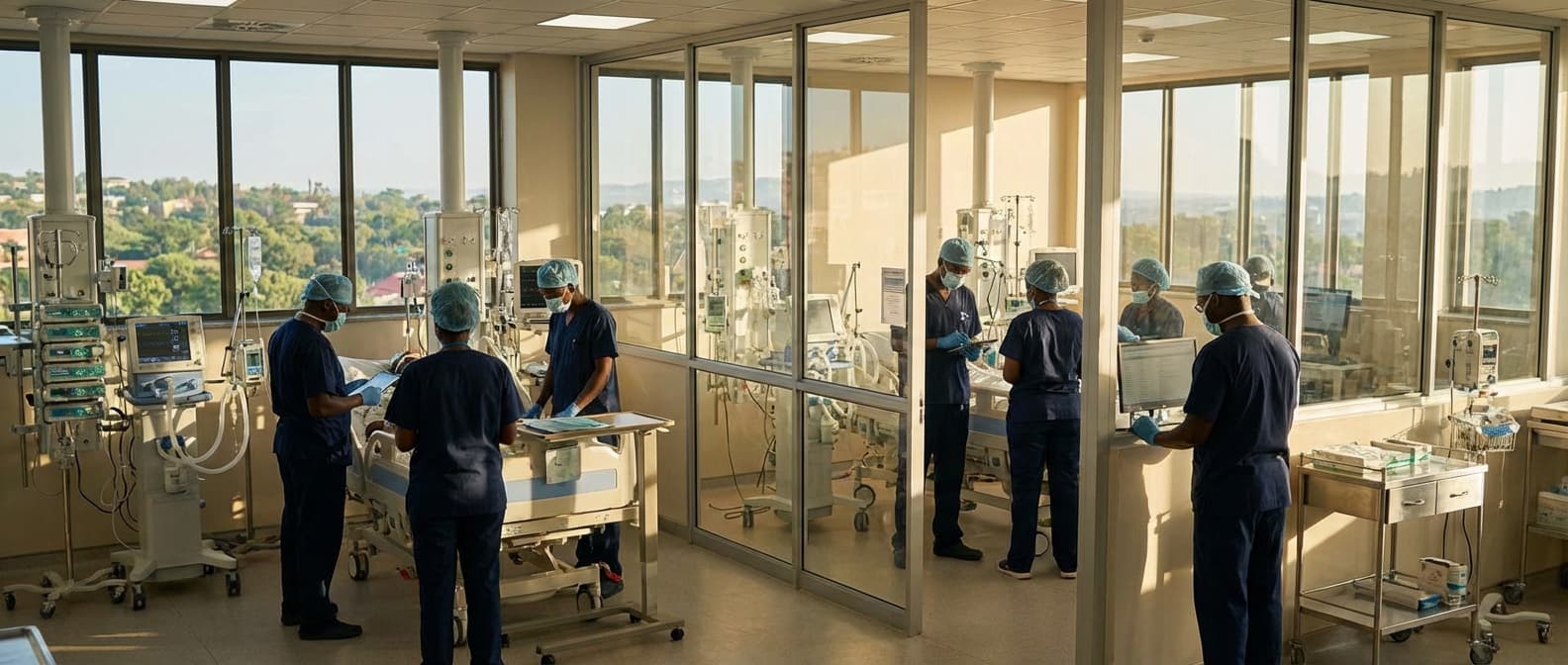
Ventilator Fleet Management & PM in Eswatini
Engineering Excellence & Technical Support
Preventive maintenance and fleet management for ICU ventilators High-standard technical execution following OEM protocols and local regulatory frameworks.
Proactive PM for Optimal Respiratory Care
Implementing a robust preventive maintenance program for Eswatini's ventilator fleet ensures 24/7 readiness, minimizing downtime and maximizing patient safety. This includes scheduled inspections, calibration, and component replacements, ensuring critical respiratory support is always available.
Centralized Fleet Monitoring & Analytics
Deploying a digital platform for real-time monitoring of ventilator performance, usage patterns, and maintenance status across all healthcare facilities in Eswatini. This data-driven approach allows for predictive maintenance, optimized resource allocation, and informed decision-making for fleet management.
Streamlined Maintenance & Repair Workflow
Establishing standardized, efficient workflows for ventilator maintenance and repair, from initial reporting to final validation. This includes training local biomedical technicians, ensuring access to spare parts, and implementing a traceable system for all service activities, enhancing operational efficiency and cost-effectiveness.
What Is Ventilator Fleet Management & Pm In Eswatini?
Ventilator Fleet Management (VFM) and Preventive Maintenance (PM) in Eswatini refers to the comprehensive organizational and technical strategy employed to ensure the operational readiness, reliability, and longevity of mechanical ventilators within the healthcare infrastructure. This encompasses the entire lifecycle of ventilator assets, from acquisition and deployment to routine servicing, calibration, repair, and eventual decommissioning. The objective is to guarantee that these critical life-support devices are consistently available and functioning optimally, particularly in emergency situations, during surgical procedures, and for patients requiring respiratory support in intensive care units (ICUs) and other critical care settings. VFM integrates logistical planning, inventory control, technical expertise, and data-driven decision-making to maximize resource utilization and minimize downtime.
| Who Needs VFM & PM in Eswatini? | Typical Use Cases | ||||||
|---|---|---|---|---|---|---|---|
| Public and Private Hospitals: Particularly those with Intensive Care Units (ICUs), High Dependency Units (HDUs), Operating Theatres (OTs), and Emergency Departments. | Management of Ventilators for Routine Patient Care: Supporting patients with respiratory failure due to conditions like COPD exacerbations, pneumonia, ARDS, and post-operative recovery. | Emergency Preparedness and Disaster Response: Ensuring sufficient and functional ventilators are available for mass casualty incidents, natural disasters, or public health emergencies (e.g., pandemics). | Regional and National Health Authorities: Responsible for oversight, resource allocation, and policy development related to medical equipment management. | Non-Governmental Organizations (NGOs) and International Aid Organizations: Involved in providing medical equipment and support to healthcare facilities in Eswatini. | Tertiary Referral Centers: Requiring advanced and specialized ventilator support for complex medical conditions. | Field Hospitals and Temporary Healthcare Facilities: In situations where existing infrastructure is overwhelmed or unavailable. | Transfer of Critically Ill Patients: Ensuring continuity of ventilatory support during inter-facility patient transfers. |
Key Components of Ventilator Fleet Management & PM in Eswatini
- Asset Registration and Inventory: Establishing a detailed registry of all owned and leased ventilators, including make, model, serial number, acquisition date, location, and current operational status.
- Deployment and Allocation: Strategically assigning ventilators to healthcare facilities based on patient demographics, service demand, and emergency preparedness plans. This includes managing the movement of ventilators between facilities when required.
- Preventive Maintenance (PM) Scheduling and Execution: Developing and adhering to a rigorous schedule for routine inspections, cleaning, functional tests, and calibration of ventilators according to manufacturer specifications and established clinical protocols. This often involves specialized trained biomedical technicians.
- Corrective Maintenance and Repair: Promptly addressing equipment malfunctions, breakdowns, and performance degradation. This includes diagnosis, component replacement, and post-repair verification and testing.
- Calibration and Performance Verification: Regularly verifying that ventilator parameters (e.g., tidal volume, respiratory rate, pressure limits, oxygen concentration) are accurate and within specified tolerances to ensure patient safety and therapeutic effectiveness.
- Training and Competency Assurance: Providing and maintaining training for clinical staff (doctors, nurses) on the proper operation, basic troubleshooting, and safe use of ventilators, as well as for biomedical technicians on advanced maintenance and repair procedures.
- Consumables and Spare Parts Management: Maintaining an adequate stock of essential consumables (e.g., filters, tubing, circuits) and critical spare parts to facilitate timely repairs and minimize service interruptions.
- Data Management and Reporting: Collecting, analyzing, and reporting on key performance indicators (KPIs) such as equipment uptime, mean time between failures (MTBF), mean time to repair (MTTR), PM compliance rates, and overall fleet utilization.
- Decommissioning and Disposal: Implementing standardized procedures for retiring obsolete or irreparable ventilators, ensuring compliance with environmental regulations for disposal.
Who Needs Ventilator Fleet Management & Pm In Eswatini?
Effective ventilator fleet management and preventative maintenance (PM) are critical for ensuring patient safety, optimizing resource allocation, and reducing operational costs. In Eswatini, a robust system for managing these essential medical devices is vital, particularly within the public healthcare sector and for any private facilities that provide critical care. This ensures that ventilators are always in optimal working condition, readily available, and properly utilized, ultimately contributing to better patient outcomes and a more resilient healthcare system.
| Target Customer/Department | Role and Importance for Ventilator Management | Key Needs/Benefits |
|---|---|---|
| Public Hospitals | Primary providers of critical care services; often face resource constraints. | Ensured availability of functioning ventilators for critical patients, reduced downtime, optimized lifespan of existing equipment, improved patient safety. |
| Private Hospitals & Clinics | Supplement public healthcare capacity; often have dedicated ICU units. | Reliable equipment performance, adherence to international standards, cost-effective maintenance, ability to manage growing fleets. |
| Ministry of Health (MoH) | Oversees national healthcare policy, procurement, and resource allocation. | Centralized data for decision-making, efficient national resource utilization, standardization of maintenance protocols, improved preparedness for health emergencies. |
| Biomedical Engineering/Technical Services | Responsible for the maintenance, repair, and calibration of medical equipment. | Streamlined PM schedules, accurate inventory tracking, efficient spare parts management, reduced emergency repair needs, extended equipment life. |
| ICU Departments | Direct users of ventilators; critical for patient survival. | High availability of ventilators, reliable performance, immediate access to functioning equipment, reduced risk of equipment failure during patient care. |
| Hospital Administration | Responsible for operational efficiency, budget management, and resource allocation. | Cost savings through preventative maintenance, improved asset management, data-driven budgeting for equipment replacement and servicing, enhanced operational continuity. |
Target Customers and Departments in Eswatini for Ventilator Fleet Management & PM
- Public Hospitals (Government-owned facilities)
- Referral Hospitals (e.g., Mbabane Government Hospital, Pigg's Peak Government Hospital)
- Regional Hospitals
- Health Centers with critical care capabilities
- Private Hospitals and Clinics offering Intensive Care Units (ICUs)
- Non-Governmental Organizations (NGOs) involved in healthcare provision
- Ministry of Health (MoH) - Central Procurement and Logistics
- Ministry of Health (MoH) - Biomedical Engineering Department
- Ministry of Health (MoH) - Department of Clinical Services
- Hospital Administration and Management
- ICU Departments
- Anesthesiology Departments
- Respiratory Therapy Departments
- Biomedical Engineering/Technical Services Departments (internal or contracted)
- Procurement and Logistics Departments
Ventilator Fleet Management & Pm Process In Eswatini
This document outlines the workflow for ventilator fleet management and preventive maintenance (PM) processes in Eswatini. It details the steps involved from initial inquiry or identification of a need through to the complete execution of maintenance and reporting. The aim is to ensure the optimal functioning and longevity of the national ventilator fleet, critical for patient care.
| Phase | Key Activities | Responsible Parties | Outputs/Deliverables |
|---|---|---|---|
| Receiving a request for PM, reporting a malfunction, or identifying a new ventilator for onboarding. This can originate from hospitals, clinics, or the Ministry of Health (MoH). | Healthcare Facilities, Biomedical Engineering Department (BED), MoH | Service Request Form, Malfunction Report, New Equipment Log |
| Reviewing the request, assessing the urgency (e.g., critical patient use, complete malfunction vs. routine PM), and determining the appropriate response. Prioritizing based on clinical need and equipment criticality. | BED, Clinical Leads, MoH (if necessary) | Prioritized Work Order, Estimated Urgency Level |
| Scheduling the PM or repair based on availability of technicians, parts, and the healthcare facility's operational demands. Allocating necessary tools, test equipment, and spare parts. | BED Dispatch/Coordination Team | Scheduled Maintenance Calendar, Assigned Technician(s), Allocated Parts & Tools |
| Gathering all necessary documentation (manuals, service history), ensuring transportation for technicians and equipment, and communicating the schedule to the facility. | BED Technicians, Logistics Support | Pre-service Checklist, Travel Arrangements, Facility Communication |
| Performing routine preventive maintenance checks, calibration, cleaning, lubrication, and addressing identified faults or malfunctions. Following manufacturer's guidelines and service protocols. | Certified Biomedical Technicians | Completed PM Checklist, Repaired Equipment, Detailed Service Notes |
| Conducting functional tests to ensure the ventilator operates within specified parameters. Verifying all safety features are operational and performance meets clinical requirements. | BED Technicians, Clinical Staff (for verification) | Pass/Fail Test Results, Performance Verification Report |
| Updating the equipment's service record with all performed work, parts used, test results, and technician observations. Submitting a comprehensive service report to the BED and facility. | BED Technicians, BED Administrator | Updated Equipment Service Log, Comprehensive Service Report, Invoice (if applicable) |
| Periodically reviewing service reports for trends, conducting quality assurance checks, and gathering feedback from healthcare facilities on the effectiveness of the PM process and technician performance. Addressing any lingering issues. | BED Management, MoH Quality Assurance | Service Quality Report, Process Improvement Recommendations, Training Needs Assessment |
Ventilator Fleet Management & PM Process Workflow
- Inquiry/Identification of Need
- Initial Assessment & Prioritization
- Scheduling & Resource Allocation
- Preparation & Logistics
- On-Site Execution (PM or Repair)
- Testing & Verification
- Documentation & Reporting
- Follow-up & Feedback
Ventilator Fleet Management & Pm Cost In Eswatini
This document discusses ventilator fleet management and preventative maintenance (PM) costs within Eswatini, focusing on pricing factors and ranges in the local currency (Emalangeni, E). Effective fleet management ensures the availability and optimal functioning of vital medical equipment, while robust PM schedules minimize the risk of breakdowns and extend the lifespan of ventilators. The cost of PM for ventilators in Eswatini is influenced by several key factors, including the type and complexity of the ventilator, the availability of spare parts locally, the expertise and cost of trained biomedical technicians, the frequency of PM as recommended by the manufacturer, and the geographical location of the healthcare facility within Eswatini (affecting travel costs for technicians). Due to the specialized nature of ventilator maintenance, costs can vary significantly. A standard PM service typically involves thorough cleaning, calibration, functional testing of all components (sensors, alarms, power systems, etc.), and replacement of wear-and-tear parts like filters and seals. The overall cost is a combination of labor charges, consumable parts, and potential travel expenses. It's crucial for healthcare institutions to budget for these ongoing maintenance costs to ensure the continuous operational readiness of their ventilator fleet, thereby guaranteeing patient care continuity.
| Service/Item | Estimated Cost Range (E) | Notes |
|---|---|---|
| Basic Preventative Maintenance (per ventilator, per service) | 800 - 2,500 | Covers routine checks, cleaning, filter replacement. Excludes major part replacements. |
| Comprehensive Preventative Maintenance (per ventilator, per service) | 2,000 - 5,000 | Includes in-depth calibration, functional testing, and minor part replacements (e.g., seals, diaphragms). |
| Major Component Replacement (e.g., sensor, circuit board) | 2,000 - 15,000+ | Highly variable depending on the specific part and ventilator model. Can significantly increase overall cost. |
| Biomedical Technician Labor (hourly rate) | 150 - 400 | Reflects expertise and demand. May be higher for specialized services. |
| Travel & Accommodation (per technician, per trip) | 300 - 1,000 | Dependent on distance and duration. More common for rural facilities. |
| Annual Service Contract (per ventilator, estimated) | 3,000 - 8,000 | Often includes scheduled PM and preferential rates for repairs. Varies by provider and contract scope. |
| Consumables (filters, tubing, etc. - per ventilator, per year) | 200 - 600 | Ongoing replacement needs for standard consumables. |
Key Pricing Factors for Ventilator Fleet Management & PM in Eswatini
- Ventilator Type & Complexity: High-end, complex ventilators with advanced features generally incur higher PM costs due to specialized parts and diagnostic requirements.
- Spare Parts Availability & Cost: Limited local availability of genuine parts can lead to higher procurement costs or extended downtime if parts need to be imported.
- Biomedical Technician Expertise & Labor Rates: The cost of skilled and certified biomedical technicians is a significant component. Rates are influenced by experience, qualifications, and demand.
- PM Frequency & Scope: Manufacturers' recommended PM schedules (e.g., annual, bi-annual) and the scope of work (basic vs. comprehensive) directly impact cost.
- Geographical Location & Travel: For facilities outside major urban centers, travel and accommodation costs for technicians can add to the overall PM expense.
- Contractual Agreements: Service contracts with manufacturers or third-party providers can offer standardized pricing and potentially bulk discounts.
- Age & Condition of Equipment: Older or poorly maintained ventilators may require more frequent or extensive repairs, increasing overall management costs.
Affordable Ventilator Fleet Management & Pm Options
Managing a ventilator fleet efficiently and ensuring timely preventive maintenance (PM) are crucial for healthcare facilities to maintain patient care continuity and comply with regulatory standards. This document outlines affordable options for fleet management and PM, focusing on value bundles and cost-saving strategies to optimize resources and extend the lifespan of vital medical equipment.
| Value Bundle/Strategy | Description | Cost-Saving Benefit | Key Features |
|---|---|---|---|
| Tiered PM Service Plans | Bundled service packages offering different levels of PM, calibration, and basic repair coverage. | Predictable budgeting, reduced ad-hoc repair costs, potential discounts for multi-year commitments. | Scheduled inspections, functional testing, software updates, calibration, labor included. |
| Managed Service Agreements (MSAs) | Outsourcing a portion or all of the ventilator PM and repair services to a specialized third-party provider. | Reduced in-house staffing/training costs, access to specialized expertise, improved compliance rates. | Dedicated technicians, inventory management, guaranteed response times, reporting. |
| Parts & Consumables Optimization Program | Centralized procurement and inventory management of ventilator parts and consumables, often with bulk purchasing discounts. | Lower per-unit cost of parts, reduced stockouts, minimized obsolescence, streamlined ordering process. | Vendor negotiation, consignment options, min/max inventory levels, usage analysis. |
| Extended Warranty & Service Packages | Purchasing extended warranties and service contracts beyond the manufacturer's initial offering, often bundled with PM. | Protection against unexpected major repair costs, predictable maintenance expenses, extended equipment lifecycle. | Coverage for parts and labor, priority service, access to manufacturer updates. |
| Refurbishment & Upgrades | Partnering with vendors to refurbish older ventilators or upgrade them with newer technologies instead of outright replacement. | Significant cost reduction compared to new equipment purchase, extended ROI on existing assets, reduced waste. | Certified refurbishment processes, performance testing, warranty on refurbished units. |
| Data-Driven Predictive Maintenance | Utilizing software and sensors to monitor ventilator performance and predict potential failures before they occur. | Minimized unplanned downtime, reduced emergency repair costs, extended equipment lifespan, optimized PM scheduling. | Real-time monitoring, anomaly detection, alert systems, performance trend analysis. |
| In-House Technician Training & Certification | Investing in training biomedical technicians to perform a wider range of PM and repair tasks for specific ventilator models. | Reduced reliance on external service providers, faster response times for routine issues, increased staff competency. | Manufacturer-specific training courses, specialized toolkits, knowledge sharing platforms. |
Key Components of Affordable Ventilator Fleet Management & PM
- Comprehensive PM Scheduling: Implementing a proactive PM program tailored to manufacturer recommendations and usage patterns.
- Real-time Asset Tracking: Utilizing technology to monitor ventilator location, status, and usage history.
- Inventory Management: Optimizing the stocking of spare parts and consumables to avoid unnecessary delays and overspending.
- Service Contract Optimization: Negotiating flexible service agreements that align with facility needs and budget.
- Staff Training & Empowerment: Equipping biomedical technicians with the skills and tools for routine maintenance and minor repairs.
- Data Analytics & Reporting: Leveraging data to identify trends, predict potential failures, and inform strategic decisions.
- Refurbishment & Remarketing Programs: Exploring options to extend the life of existing equipment or recoup value from retired units.
Verified Providers In Eswatini
In Eswatini, ensuring access to reliable and qualified healthcare is paramount. When seeking medical services, it's crucial to engage with Verified Providers who have undergone rigorous credentialing processes. Franance Health stands out as a leading example of such an organization, demonstrating a steadfast commitment to quality, patient safety, and ethical practices. Their rigorous credentialing ensures that all affiliated healthcare professionals and facilities meet the highest industry standards, offering peace of mind to individuals and families seeking medical care.
| Credentialing Aspect | Franance Health's Assurance |
|---|---|
| Medical Licensing | All providers possess current and valid medical licenses from recognized authorities. |
| Professional Certifications | Verification of specialized certifications and accreditations relevant to their field. |
| Educational Background | Thorough review of academic qualifications and degrees from reputable institutions. |
| Continuing Professional Development (CPD) | Ensuring providers actively participate in ongoing learning to stay updated with medical advancements. |
| Clinical Experience | Assessment of practical experience and demonstrated competence in their area of practice. |
| Peer Review and Reputation | Consideration of peer feedback and professional standing within the medical community. |
| Adherence to Standards | Confirmation of compliance with national and international healthcare quality standards. |
Why Franance Health Represents the Best Choice for Verified Providers in Eswatini:
- Rigorous Credentialing Process: Franance Health employs a comprehensive vetting system that goes beyond basic qualifications. This includes verifying medical licenses, professional certifications, educational backgrounds, and ongoing professional development of all their providers.
- Commitment to Patient Safety: A core tenet of Franance Health's verification is the prioritization of patient safety. This involves assessing providers' adherence to safety protocols, their track record, and their commitment to minimizing medical errors.
- Quality of Care Standards: Franance Health ensures that their verified providers consistently deliver high-quality medical care. This includes evaluating clinical outcomes, patient satisfaction rates, and the adoption of evidence-based medical practices.
- Ethical Practice and Integrity: The credentialing process also scrutinizes the ethical conduct and professional integrity of healthcare providers. Franance Health is dedicated to partnering with those who uphold the highest ethical standards in their practice.
- Continuity of Care: By partnering with a network of verified providers, Franance Health facilitates seamless continuity of care for patients, ensuring that their medical needs are met efficiently and effectively across various specialities.
- Accessibility and Network: Franance Health has established a robust network of verified healthcare professionals and facilities across Eswatini, making it easier for individuals to access trusted medical services when and where they need them.
Scope Of Work For Ventilator Fleet Management & Pm
This Scope of Work (SOW) outlines the requirements for a comprehensive Ventilator Fleet Management and Preventive Maintenance (PM) program. The objective is to ensure the optimal performance, reliability, and longevity of the hospital's ventilator fleet, minimizing downtime and associated risks to patient care. This SOW details the technical deliverables and standard specifications required for the successful execution of this program.
| Section | Description | Technical Deliverables | Standard Specifications / Requirements |
|---|---|---|---|
| Fleet Inventory Management | Establish and maintain a comprehensive inventory of all ventilators, including serial numbers, model numbers, acquisition dates, warranty information, and current location. | Up-to-date digital inventory database. Regular (e.g., quarterly) inventory reconciliation reports. | Database must be accessible to authorized personnel. Must include fields for all critical equipment data. Data entry standards and validation processes. |
| Preventive Maintenance (PM) Program | Develop and implement a robust PM schedule based on manufacturer recommendations, regulatory requirements, and usage patterns. Includes scheduled inspections, cleaning, calibration, and replacement of worn parts. | Detailed PM schedules for each ventilator model. Completed PM checklists with documented results. Report on PM compliance rates. Documentation of all parts replaced. | PM intervals must align with manufacturer guidelines and regulatory standards (e.g., AAMI, FDA). Use of approved parts and consumables. Calibration procedures must be traceable to national standards. Service records must be retained for a specified period (e.g., 7 years). |
| Corrective Maintenance (CM) | Provide prompt and effective repair services for ventilators experiencing malfunctions or failures. Includes troubleshooting, diagnosis, repair, and re-testing. | Response time metrics for CM requests. Completed repair reports detailing issues, actions taken, and parts used. Equipment downtime logs. | Defined service level agreements (SLAs) for response and repair times. Trained and certified technicians. Use of genuine or equivalent replacement parts. Post-repair performance verification. |
| Calibration and Performance Testing | Regular calibration and performance testing of ventilators to ensure accurate delivery of prescribed ventilation parameters. | Calibration certificates for all tested equipment. Performance test reports demonstrating adherence to specifications. | Calibration procedures must follow manufacturer guidelines and established biomedical engineering standards. Use of calibrated test equipment. Defined acceptable tolerance limits for all critical parameters. |
| Asset Lifecycle Management | Provide recommendations and support for the planning and execution of ventilator upgrades, replacements, and disposals. | Annual fleet assessment report. Recommendations for equipment replacement or upgrade cycles. Documentation of equipment disposal procedures. | Assessment should consider technological advancements, cost-effectiveness, and end-of-life of existing equipment. Disposal must comply with environmental regulations and data security policies. |
| Reporting and Documentation | Generate regular reports on fleet status, PM activities, CM effectiveness, and compliance. Maintain comprehensive service records. | Monthly/Quarterly performance reports. Annual fleet summary report. Audit-ready service documentation. | Reports should be clear, concise, and provide actionable insights. All documentation must be accurate, complete, and readily retrievable. Adherence to data privacy and security protocols. |
| Quality Assurance | Implement a quality assurance program to ensure the consistent delivery of high-quality maintenance services. | Internal quality audit reports. Customer satisfaction surveys. Corrective action plans for identified deficiencies. | Defined quality metrics. Regular review of service processes and outcomes. Continuous improvement initiatives. |
| Training and Competency | Ensure that all personnel involved in the management and maintenance of ventilators are adequately trained and competent. | Training records for all technicians. Competency assessments. Documentation of ongoing professional development. | Training must cover equipment operation, maintenance procedures, safety protocols, and relevant regulations. Certification requirements for specific tasks. |
Key Program Objectives
- Maximize ventilator availability and operational readiness.
- Minimize equipment downtime through proactive maintenance.
- Ensure compliance with all relevant regulatory standards and manufacturer recommendations.
- Extend the useful life of the ventilator fleet.
- Maintain accurate and up-to-date equipment records.
- Optimize resource allocation for maintenance activities.
- Enhance patient safety by ensuring equipment is functioning as intended.
Service Level Agreement For Ventilator Fleet Management & Pm
This Service Level Agreement (SLA) outlines the performance standards and guarantees for Ventilator Fleet Management and Preventive Maintenance (PM) services provided by [Service Provider Name] to [Client Name]. This agreement ensures optimal functionality and availability of the client's ventilator fleet through proactive maintenance and responsive support.
| Service Component | Response Time Target | Resolution Time Target | Uptime Guarantee |
|---|---|---|---|
| Emergency Equipment Failure (Critical) | 1 hour (within business hours) | 4 business hours | 98% (excluding scheduled downtime for PM) |
| Urgent Equipment Malfunction (Non-Critical) | 2 business hours | 8 business hours | 98% (excluding scheduled downtime for PM) |
| Routine Service Request (Information/Guidance) | 4 business hours | N/A | N/A |
| Scheduled Preventive Maintenance (PM) | N/A | As per scheduled appointment | N/A |
| Parts Replenishment (Critical Spare Parts) | 2 business hours (acknowledgement) | 24-48 business hours (delivery/installation) | N/A |
Key Performance Indicators (KPIs)
- Response Time: The time taken by the service provider to acknowledge and initiate action on a reported issue.
- Resolution Time: The time taken to fully resolve a reported issue, restoring the ventilator to operational status.
- Uptime Guarantee: The minimum percentage of time the ventilator fleet is expected to be operational and available for use.
- Preventive Maintenance Completion Rate: The percentage of scheduled PM tasks completed within the agreed-upon timeframe.
- Parts Availability: The percentage of critical spare parts maintained in stock to facilitate timely repairs.
Frequently Asked Questions

Ready when you are
Let's scope your Ventilator Fleet Management & PM in Eswatini project in Eswatini.

Scaling healthcare logistics and technical systems across the entire continent.