
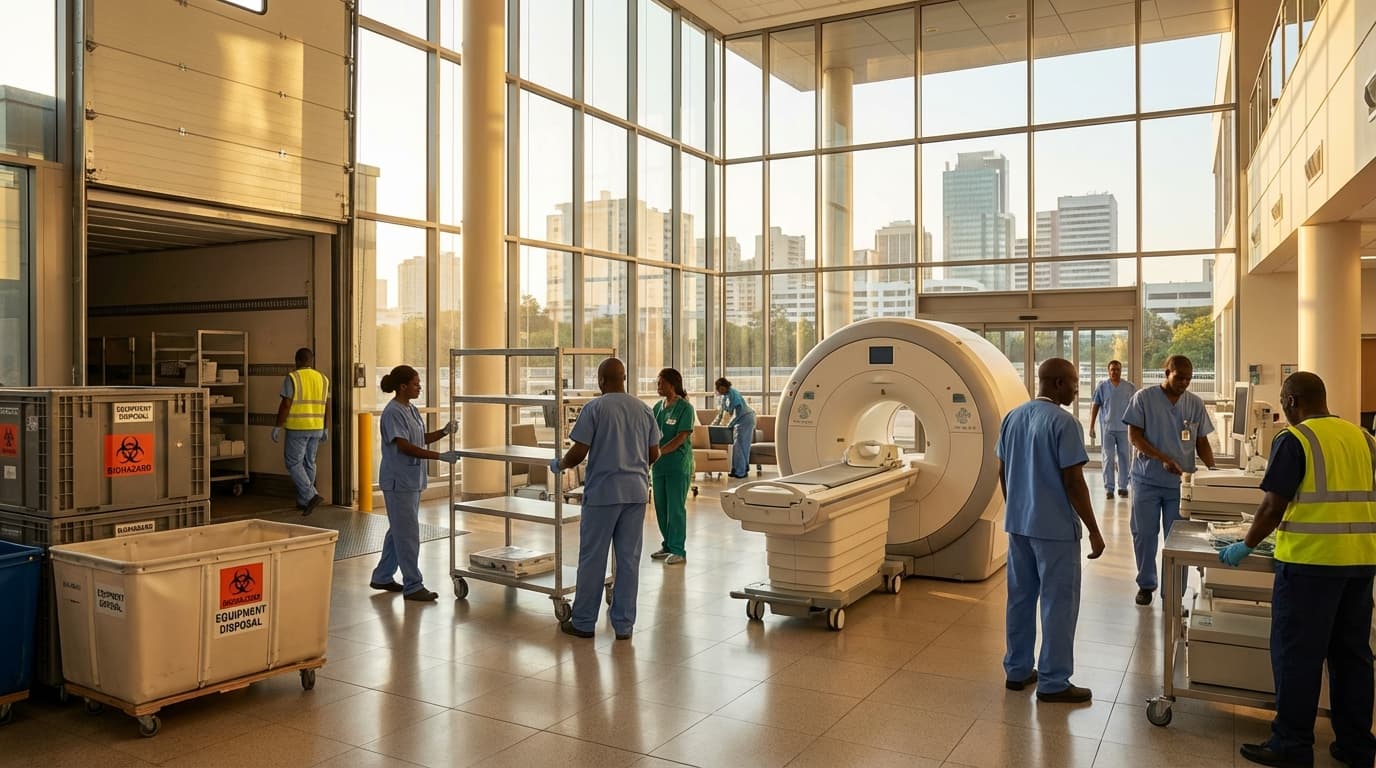
Site Restoration Service After Equipment Removal in Eswatini
Engineering Excellence & Technical Support
Site Restoration Service After Equipment Removal High-standard technical execution following OEM protocols and local regulatory frameworks.
Precision Site Assessment & Remediation
Our expert Eswatini-based teams conduct thorough post-equipment removal site assessments, identifying and quantifying any soil or groundwater contamination. We then implement tailored remediation strategies, utilizing cutting-edge techniques to ensure minimal environmental impact and compliance with local Eswatini environmental regulations.
Ecological Restoration & Biodiversity Support
Beyond basic cleanup, we prioritize the ecological health of Eswatini's landscapes. Our services include native vegetation re-establishment, soil stabilization, and habitat reconstruction, fostering biodiversity and returning the land to a sustainable and productive state post-equipment removal.
Regulatory Adherence & Documentation
Navigating Eswatini's environmental regulations for site restoration can be complex. We provide comprehensive documentation and ensure full compliance with all local, regional, and national environmental laws and guidelines throughout the equipment removal and restoration process, offering peace of mind to our clients.
What Is Site Restoration Service After Equipment Removal In Eswatini?
Site restoration following equipment removal in Eswatini refers to the comprehensive process of returning a land parcel to its pre-disturbance state, or to an agreed-upon post-operation condition, after heavy machinery or infrastructure has been decommissioned and extracted. This service is critical for environmental remediation, land reuse enablement, and compliance with regulatory requirements. It encompasses a multi-faceted approach to mitigate the environmental and physical impacts of industrial or construction activities. The primary objective is to re-establish ecological balance, ensure land stability, and facilitate safe and sustainable land utilization for future purposes.
| Who Needs Site Restoration Service? | Typical Use Cases |
|---|---|
| Industrial Facility Operators | Closure of manufacturing plants, processing facilities, and warehouses. |
| Mining and Extractive Industries | Rehabilitation of mine sites, quarries, and associated infrastructure after extraction ceases. |
| Construction Companies | Restoration of temporary construction sites, staging areas, and access roads. |
| Oil and Gas Companies | Decommissioning and remediation of well sites, pipelines, and storage facilities. |
| Government and Municipalities | Restoration of former military bases, public works depots, and infrastructure projects. |
| Agricultural and Agribusiness Operations | Removal of large-scale agricultural equipment and associated structures. |
| Land Developers | Preparing land for new development after the removal of temporary structures or previously utilized equipment. |
Key Components of Site Restoration After Equipment Removal
- Demolition and Decommissioning: Dismantling and removal of structures, foundations, and buried utilities associated with the equipment.
- Hazardous Material Abatement: Identification, containment, and safe disposal of any hazardous substances (e.g., fuels, oils, asbestos) that may have been present.
- Soil Remediation: Addressing soil contamination through techniques such as excavation, bioremediation, or phytoremediation to meet acceptable environmental standards.
- Grading and Earthwork: Reshaping the land surface to restore natural contours, drainage patterns, and stability, preventing erosion.
- Revegetation and Landscaping: Planting native or appropriate vegetation to stabilize soil, restore habitat, and improve aesthetic appeal.
- Waste Management: Proper disposal or recycling of all removed equipment, debris, and contaminated materials in accordance with Eswatini's environmental regulations.
- Monitoring and Validation: Post-restoration monitoring to assess the effectiveness of the remediation and revegetation efforts and ensure long-term success.
Who Needs Site Restoration Service After Equipment Removal In Eswatini?
Site restoration services are crucial after equipment removal in Eswatini, particularly for businesses and organizations that have invested in land and infrastructure. These services ensure that former operational sites are returned to their original condition or a safe, usable state, mitigating environmental impact and regulatory issues. This is essential for responsible land management, future development, and maintaining positive community relations.
| Customer Type | Key Departments/Roles Involved | Specific Needs Post-Equipment Removal |
|---|---|---|
| Industrial & Manufacturing Companies | Operations, Facilities Management, Environmental Health & Safety (EHS), Compliance, Procurement | Decommissioning of plant machinery, removal of foundations, soil remediation, landscaping, site grading, waste disposal. |
| Mining and Quarrying Companies | Mine Operations, Environmental Management, Land Reclamation, Health & Safety, Legal & Compliance | Rehabilitation of extraction sites, closure of shafts, removal of processing equipment and infrastructure, slope stabilization, revegetation, water management. |
| Agricultural and Agribusiness Estates | Farm Management, Operations, Environmental Compliance, Landowners | Removal of irrigation systems, storage facilities, processing equipment, soil remediation, land reshaping for agricultural reuse, fencing removal. |
| Construction and Infrastructure Projects | Project Management, Site Management, Environmental Officers, Contract Management | Demolition of temporary structures, removal of heavy equipment and associated infrastructure, site clearing, grading, and preparation for subsequent use. |
| Government and Public Sector | Public Works, Environmental Protection, Land Management, Municipalities | Restoration of decommissioned government facilities, former military sites, or infrastructure projects to ensure public safety and environmental standards. |
| Energy Sector (Utilities & Renewables) | Engineering, Operations, Environmental Compliance, Asset Management | Removal of turbines, generators, transformers, substations, pipelines, and associated concrete structures; site remediation and landscaping. |
| Telecommunications Providers | Network Operations, Engineering, Site Management, Real Estate | Decommissioning of tower bases, equipment shelters, underground cabling infrastructure; site cleanup and return to landowners. |
Target Customers & Departments for Site Restoration Services in Eswatini
- Industrial Facilities
- Mining Operations
- Agricultural Estates
- Construction Companies
- Government Agencies
- Energy Sector (Power Plants, Substations)
- Telecommunication Infrastructure Providers
- Logistics and Warehousing Hubs
- Educational and Research Institutions (with field operations)
Site Restoration Service After Equipment Removal Process In Eswatini
This document outlines the typical workflow for site restoration services following equipment removal in Eswatini. The process is designed to ensure efficient and effective return of the site to its pre-construction or agreed-upon state, adhering to environmental regulations and client specifications.
| Stage | Description | Key Activities | Deliverables/Outcomes | Responsible Party (Typical) |
|---|---|---|---|---|
| The client or their representative contacts the service provider to request site restoration after equipment removal. | Receive inquiry, gather preliminary information (site location, type of equipment removed, expected timeframe). | Acknowledgement of inquiry, preliminary understanding of scope. | Client, Restoration Service Provider |
| A professional assessment of the site is conducted to understand the full extent of restoration required. | On-site inspection, documentation of disturbed areas (soil compaction, vegetation damage, excavation areas, presence of debris), identification of potential hazards, discussion with client representatives. | Detailed site assessment report, photographic evidence, identification of restoration needs and challenges. | Restoration Service Provider |
| Based on the site evaluation, a comprehensive proposal is developed and presented to the client. | Development of a detailed restoration plan (methodologies, materials, timeline, cost), submission of proposal, negotiation, and finalization of contract. | Formal proposal document, signed service agreement/contract. | Restoration Service Provider, Client |
| Ensuring all necessary permits and environmental clearances are obtained before commencing work. | Identification of required permits (e.g., from the Ministry of Tourism and Environmental Affairs), application for permits, liaison with relevant authorities. | Approved permits and environmental clearances. | Restoration Service Provider (often with client support) |
| Mobilization of resources and preparation of the site for restoration activities. | Mobilization of equipment and personnel, site safety briefings, establishment of exclusion zones, procurement of materials (topsoil, seed, mulch, etc.), initial site clearing (removal of remaining debris). | Prepared work site, mobilized resources, safety protocols in place. | Restoration Service Provider |
| Implementation of the agreed-upon restoration plan. | Activities may include: soil decompaction, grading, topsoil replacement, revegetation (seeding, planting), erosion control measures, removal of any residual contamination, fencing repair/installation. | Restored site progressing towards its target state. | Restoration Service Provider |
| Ongoing monitoring and verification of restoration progress against the plan and standards. | Regular site inspections, progress checks, photographic documentation, verification of material usage and methodologies, client walk-throughs. | Assurance of adherence to the restoration plan, identification of any deviations or issues. | Restoration Service Provider, Client |
| Completion of all restoration activities and formal handover to the client. | Final site inspection, preparation of a comprehensive restoration completion report (including before/after photos, materials used, activities undertaken, any challenges encountered), client acceptance of the restored site. | Completed restored site, final restoration report, official handover documentation. | Restoration Service Provider, Client |
Site Restoration Workflow: Equipment Removal in Eswatini
- Inquiry & Initial Assessment
- Site Visit & Detailed Evaluation
- Proposal & Agreement
- Permitting & Approvals
- Pre-Restoration Preparation
- Site Restoration Execution
- Quality Control & Inspection
- Final Reporting & Handover
Site Restoration Service After Equipment Removal Cost In Eswatini
Restoring a site after equipment removal in Eswatini involves several factors that influence the overall cost. The scope of work, the type and extent of damage, the materials required for repairs, and the labor involved are all key determinants. The complexity of the site itself, such as accessibility and terrain, can also add to the expenses. Furthermore, the chosen service provider's experience, reputation, and overhead will play a role in their pricing structure. Costs are typically presented in Eswatini Lilangeni (SZL).
| Service Component | Estimated Cost Range (SZL) |
|---|---|
| Initial Site Assessment & Planning | 500 - 2,500 |
| Site Clearing & Debris Removal | 1,000 - 5,000 (per day/team) |
| Soil Remediation (minor) | 2,000 - 8,000 |
| Soil Remediation (major/contaminated) | 10,000 - 50,000+ (depending on severity) |
| Topsoil Replacement | 500 - 2,000 (per cubic meter) |
| Landscaping & Re-vegetation | 1,500 - 7,500 (depending on complexity) |
| Minor Structural Repairs (e.g., fencing, concrete pads) | 2,500 - 10,000 |
| Major Structural Repairs | 15,000 - 75,000+ |
| Waterway/Drainage Restoration | 3,000 - 12,000 |
| Waste Disposal Fees | 500 - 3,000 (per load) |
| Project Management Fee | 5-15% of total project cost |
Key Pricing Factors for Site Restoration:
- Scope of work: Minor landscaping vs. significant structural repairs.
- Extent of damage: Surface-level disturbance vs. deep soil contamination.
- Type of equipment removed: Size, weight, and potential for environmental impact.
- Site accessibility: Ease of access for machinery and personnel.
- Terrain and soil conditions: Rocky, sandy, or contaminated soil will require more effort and specialized techniques.
- Materials needed: Soil, vegetation, concrete, fencing, etc.
- Labor costs: Number of workers, their skill levels, and hourly rates.
- Disposal fees: For any debris or contaminated materials.
- Permits and certifications: If required by local authorities.
- Environmental remediation: If there was any spillage or contamination.
- Timeframe: Urgent restoration may incur premium charges.
Affordable Site Restoration Service After Equipment Removal Options
Removing heavy equipment from a site often leaves behind a mess: compacted soil, divots, debris, and potential environmental contaminants. Our affordable site restoration service focuses on returning your land to a safe, usable, and aesthetically pleasing state. We understand budget constraints are crucial, so we've developed value bundles and cost-saving strategies to make professional restoration accessible.
| Cost-Saving Strategy | Description | Benefit |
|---|---|---|
| Off-Peak Scheduling | Schedule restoration during less busy periods for our team. | Potential discounts on labor and equipment availability. |
| Material Reuse & Recycling | Salvaging and recycling materials like concrete, metal, or excess soil where feasible. | Reduces disposal fees and the cost of imported materials. |
| Phased Restoration | Breaking down the restoration project into smaller, manageable phases over time. | Spreads out the cost and allows for budgeting flexibility. |
| Client Involvement (Where Applicable) | Allowing your team to assist with non-specialized tasks like initial debris clearing (under our supervision). | Reduces labor costs. |
| Bundle Discounts | Purchasing our pre-defined value bundles offers a lower per-service cost than individual selections. | Overall project cost reduction. |
| Long-Term Maintenance Contracts | Pre-paying for ongoing maintenance like additional seeding or erosion control after initial restoration. | Discounted rates for long-term commitment. |
Value Bundles for Site Restoration
- {"title":"Basic Restoration Package","description":"Ideal for minor disruptions. Includes debris removal, basic grading to level the surface, and initial soil loosening."}
- {"title":"Standard Restoration Package","description":"For moderate impact. Encompasses debris removal, more detailed grading, soil aeration, and basic seeding for vegetative recovery."}
- {"title":"Comprehensive Restoration Package","description":"For significant disruption or environmental concerns. Includes all standard services plus soil testing, remediation of minor contaminants (if applicable), advanced grading, and premium seed/sod installation."}
- {"title":"Customizable Bundles","description":"We can tailor any package to your specific needs and budget. Add or remove services to create the perfect solution."}
Verified Providers In Eswatini
In Eswatini, ensuring access to high-quality healthcare is paramount. For individuals and organizations seeking reliable medical services, identifying verified providers is crucial. Franance Health stands out as a premier choice, offering a robust network of credentialed healthcare professionals and facilities that adhere to the highest standards of care. Their commitment to rigorous vetting processes guarantees that patients receive safe, effective, and patient-centered medical attention. By prioritizing Franance Health, you are investing in a healthcare experience marked by expertise, integrity, and accessibility.
| Provider Type | Franance Health Verification Focus | Why it Matters |
|---|---|---|
| Hospitals & Clinics | Accreditation, facility standards, equipment, infection control protocols. | Ensures a safe and well-equipped environment for diagnosis and treatment. |
| Doctors & Specialists | Medical licenses, board certifications, clinical experience, peer reviews. | Guarantees qualified professionals with proven expertise in their fields. |
| Nurses & Allied Health Professionals | Professional registration, training, ongoing professional development. | Confirms competence and adherence to best practices in patient care. |
| Laboratories & Diagnostic Centers | Laboratory accreditation, quality control measures, technological capabilities. | Ensures accurate and reliable diagnostic testing for effective treatment planning. |
| Pharmacies | Pharmacy licensing, drug sourcing protocols, dispensing accuracy. | Provides assurance of safe and authentic medication supply. |
Key Benefits of Choosing Franance Health Verified Providers in Eswatini:
- Rigorous credentialing and vetting process for all providers.
- Access to a diverse network of specialists and general practitioners.
- Commitment to upholding international quality and safety standards.
- Enhanced patient safety through verified medical expertise.
- Streamlined access to a range of medical services.
- Peace of mind knowing you are receiving care from trusted professionals.
Scope Of Work For Site Restoration Service After Equipment Removal
This Scope of Work (SOW) outlines the requirements for site restoration services following the complete removal of industrial equipment from a designated area. The objective is to return the site to a safe, clean, and environmentally sound condition as per industry standards and regulatory requirements. This SOW details the technical deliverables and standard specifications that will govern the restoration process.
| Activity | Technical Deliverable | Standard Specification/Reference |
|---|---|---|
| Site Assessment and Planning | Detailed site survey report including photographic documentation, identification of residual contaminants, and a proposed restoration plan. | ISO 14001: Environmental Management Systems. Local environmental regulations (e.g., EPA guidelines). |
| Decontamination and Cleaning | Certified reports confirming removal of all residual oils, greases, chemicals, and particulate matter. | OSHA standards for hazardous materials handling. Manufacturer's recommended cleaning agents and procedures for specific equipment residue. |
| Surface Repair and Preparation | Documentation of repaired concrete cracks, spalls, and other surface damage. Records of surface profiling (e.g., CSP ratings) for coating applications. | ACI (American Concrete Institute) standards for concrete repair. SSPC (The Society for Protective Coatings) standards for surface preparation. |
| Waste Management and Disposal | Manifests for hazardous and non-hazardous waste removal. Certificates of disposal from licensed waste management facilities. | RCRA (Resource Conservation and Recovery Act) regulations for hazardous waste. Local landfill and recycling facility requirements. |
| Final Inspection and Handover | Final site inspection report signed by client representative and contractor. As-built drawings or photographic documentation of the restored site. | Client-specific acceptance criteria. Good Engineering Practices. |
Key Stages of Site Restoration
- Site Assessment and Planning
- Decontamination and Cleaning
- Surface Repair and Preparation
- Waste Management and Disposal
- Final Inspection and Handover
Service Level Agreement For Site Restoration Service After Equipment Removal
This Service Level Agreement (SLA) outlines the response times and uptime guarantees for Site Restoration Services provided by [Your Company Name] after the removal of equipment from a client's site. This SLA is an addendum to the main service contract between [Your Company Name] and [Client Name].
| Service Metric | Target | Measurement Method | Remedy for Non-Compliance |
|---|---|---|---|
| Site Restoration Initiation Time | Within 24 business hours of notification | Timestamp of client notification vs. timestamp of first restoration activity logged | 10% discount on the next restoration invoice |
| Response Time for Critical Restoration Issues | Within 4 business hours | Timestamp of issue report vs. timestamp of response initiation | 15% discount on the next restoration invoice |
| Site Functional Uptime Guarantee (Post-Restoration) | 99.5% during the first 30 days post-restoration | Continuous monitoring of key site functionalities. Uptime is calculated as (Total Time - Downtime) / Total Time * 100% | Service Credits: 5% of the restoration service fee for every full 1% of uptime below the guaranteed target, capped at 25% of the restoration service fee. |
| Response Time for Non-Critical Restoration Issues | Within 8 business hours | Timestamp of issue report vs. timestamp of response initiation | No direct remedy, but issue will be prioritized accordingly. |
Service Level Objectives (SLOs)
- Site Restoration Initiation: The process of site restoration will commence within the agreed-upon timeframe following the official notification of equipment removal completion and the site being deemed ready for restoration.
- Response Time for Critical Issues: For issues that prevent the complete restoration or pose a safety/environmental hazard, a response will be initiated within the specified timeframe.
- Uptime Guarantee: The restored site will meet the agreed-upon functional uptime requirements post-restoration.
- Definition of 'Response': A 'response' is defined as the initiation of contact with the designated client representative and the commencement of troubleshooting or diagnostic activities related to the reported issue.
- Definition of 'Uptime': 'Uptime' refers to the period during which the restored site is available and functioning according to the agreed-upon specifications, excluding scheduled maintenance or events beyond our control.
Frequently Asked Questions

Ready when you are
Let's scope your Site Restoration Service After Equipment Removal in Eswatini project in Eswatini.

Scaling healthcare logistics and technical systems across the entire continent.