
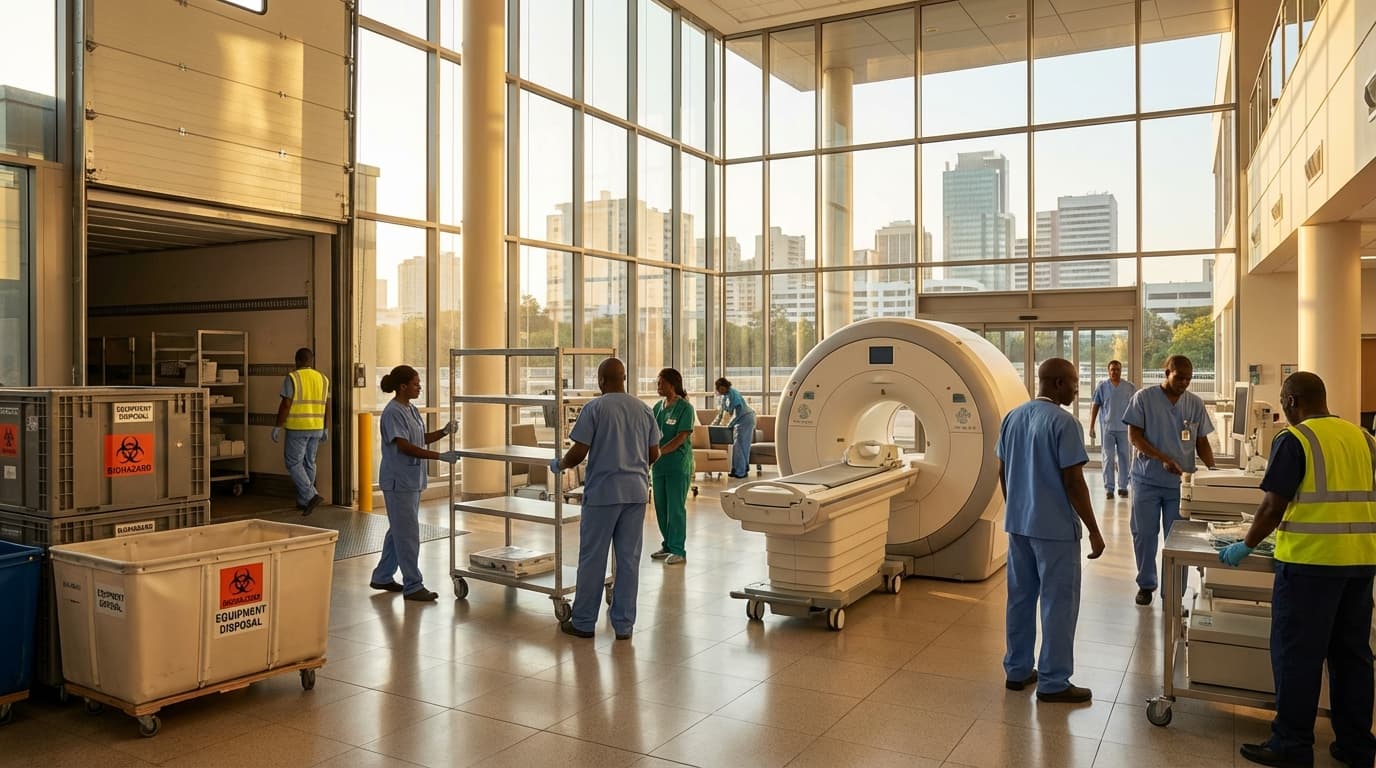
Medical E-Waste Handling & Recycling Coordination Service in Eswatini
Engineering Excellence & Technical Support
Medical E-Waste Handling & Recycling Coordination Service High-standard technical execution following OEM protocols and local regulatory frameworks.
Safe Disposal & Decontamination
Ensures secure and compliant handling of hazardous medical waste, including sharps, infectious materials, and pharmaceuticals, through specialized collection and certified decontamination processes, minimizing risks to public health and the environment in Eswatini.
Resource Recovery & Circularity
Facilitates the responsible recycling and material recovery from non-hazardous medical waste streams, diverting valuable resources from landfills and contributing to Eswatini's circular economy goals, while adhering to strict environmental standards.
Integrated Logistics & Tracking
Provides a streamlined, technology-driven coordination service for medical waste collection, transportation, and final disposal/recycling across Eswatini, offering real-time tracking and robust reporting for complete chain-of-custody management and regulatory compliance.
What Is Medical E-waste Handling & Recycling Coordination Service In Eswatini?
Medical e-waste handling and recycling coordination services in Eswatini are specialized logistical and management solutions designed to address the unique challenges posed by the disposal and processing of electronic and electrical equipment (EEE) that has reached its end-of-life within the healthcare sector. This service encompasses the planning, implementation, and oversight of the entire e-waste lifecycle, from collection at healthcare facilities to its environmentally sound treatment, recycling, or disposal. The primary objective is to ensure compliance with national and international environmental regulations, minimize health and environmental risks associated with hazardous materials found in medical EEE, and maximize the recovery of valuable resources. This involves the segregation of e-waste from general medical waste, secure transportation, dismantling, material recovery, and appropriate disposal of residual hazardous components.
| Service Area | Target Audience/Needs | Typical Use Cases |
|---|---|---|
| Healthcare Facilities (Hospitals, Clinics, Laboratories) | Need for compliant, safe, and efficient disposal of outdated or broken medical equipment such as diagnostic imaging devices (X-ray machines, CT scanners), laboratory analysers, patient monitoring systems, sterilizers, and other electronic medical devices. Requirement to reduce environmental liability and meet corporate social responsibility objectives. | Upgrading diagnostic imaging equipment, replacing end-of-life laboratory instrumentation, decommissioning old patient wards with electronic medical devices, managing waste from medical research facilities. |
| Government Health Ministries and Regulatory Bodies | Need for oversight and management of medical e-waste to ensure national environmental protection goals are met, public health is safeguarded, and resources are managed effectively. Requirement for data on e-waste generation and disposal trends. | Developing and implementing national medical e-waste management policies, monitoring compliance of healthcare facilities, facilitating public-private partnerships for e-waste recycling, tracking hazardous waste streams. |
| Medical Equipment Suppliers and Manufacturers | Need for responsible end-of-life management of their products, often mandated by Extended Producer Responsibility (EPR) schemes or corporate sustainability initiatives. Requirement to offer take-back programs or facilitate compliant disposal for their customers. | Managing the return and disposal of leased medical equipment, facilitating disposal of equipment sold to healthcare facilities, fulfilling EPR obligations, offering sustainable product lifecycle management. |
| E-Waste Processors and Recyclers | Need for a reliable supply of segregated and appropriately characterized medical e-waste streams to optimize their processing operations and maximize material recovery. Requirement for access to specialized waste streams and potential for contract development. | Securing specialized medical e-waste for processing, obtaining detailed information on hazardous constituents for safe treatment, establishing long-term processing agreements. |
Key Components of Medical E-Waste Handling & Recycling Coordination Service
- Waste Stream Analysis and Characterization: Identification and categorization of all types of medical EEE requiring disposal, including their potential hazardous constituents (e.g., mercury, lead, cadmium).
- Regulatory Compliance and Permitting: Ensuring adherence to Eswatini's environmental protection legislation and securing necessary permits for waste handling and transport.
- Collection Logistics and Management: Establishing efficient and secure collection protocols for medical EEE from diverse healthcare facilities across Eswatini, including hospitals, clinics, laboratories, and dental practices.
- Secure Transportation and Chain of Custody: Implementing protocols for the safe and documented transportation of medical e-waste to designated processing facilities, maintaining a clear chain of custody.
- Treatment and Recycling Process Oversight: Coordinating with licensed and accredited e-waste processing facilities for the environmentally sound dismantling, component recovery, and recycling of valuable materials.
- Hazardous Material Management and Disposal: Ensuring the proper handling and disposal of any residual hazardous components or fractions of the medical e-waste that cannot be recycled, in accordance with established guidelines.
- Data Management and Reporting: Maintaining detailed records of waste volumes, types, origins, destinations, and environmental compliance for reporting and auditing purposes.
- Stakeholder Engagement and Training: Facilitating communication and providing training to healthcare personnel on proper e-waste segregation and handling procedures.
Who Needs Medical E-waste Handling & Recycling Coordination Service In Eswatini?
The proper handling and recycling of medical e-waste in Eswatini is crucial for environmental protection, public health, and resource recovery. A coordinated service is essential to ensure that electronic equipment from healthcare facilities is managed responsibly throughout its lifecycle.
| Target Customer/Department | Specific Needs & Responsibilities | Key Concerns Addressed by Coordination Service |
|---|---|---|
| Public Hospitals & Government Clinics | Managing significant volumes of e-waste from medical equipment (imaging, diagnostic, monitoring). Compliance with national regulations. Cost-effective disposal solutions. | Environmental pollution from improper disposal, health risks to staff and communities, loss of valuable recyclable materials, non-compliance penalties. |
| Private Hospitals & Specialized Medical Centers | Similar to public facilities, often with higher technology adoption. Need for secure data destruction from retired equipment. Specialized waste streams. | Data security breaches, reputational damage from environmental incidents, high costs of ad-hoc disposal, ensuring ethical sourcing of replacements. |
| Ministry of Health | Policy development and enforcement. National waste management strategies. Public health oversight. Resource allocation for waste management. | Ensuring nationwide adherence to e-waste regulations, protecting public health from hazardous waste, promoting sustainable healthcare practices, tracking and reporting on e-waste generation. |
| Ministry of Tourism & Environment | Environmental protection mandates. Regulatory framework for waste management. Monitoring environmental impact. | Preventing soil and water contamination, safeguarding biodiversity, promoting environmentally sound practices in the healthcare sector, meeting international environmental commitments. |
| Medical Equipment Suppliers & Distributors | Product stewardship responsibilities. End-of-life management for sold equipment. Facilitating returns and recycling. | Brand reputation, customer satisfaction, compliance with Extended Producer Responsibility (EPR) schemes, avoiding landfilling of their products. |
| Private Diagnostic Laboratories & Imaging Centers | Specialized diagnostic equipment (e.g., CT scanners, MRI machines, X-ray machines) which are significant sources of e-waste. Need for trained personnel for handling. | Disposal of potentially hazardous components, secure handling of sensitive equipment, compliance with radiation safety regulations (where applicable for older equipment), cost of specialized disposal. |
| Local Councils/Municipalities | Enforcement of local environmental bylaws. Waste collection and disposal infrastructure. Public awareness campaigns. | Managing e-waste within their jurisdiction, preventing illegal dumping, ensuring proper segregation and collection of hazardous waste, community health and safety. |
Who Needs Medical E-Waste Handling & Recycling Coordination Service in Eswatini?
- Healthcare Facilities (Hospitals, Clinics, Health Centers)
- Government Health Departments
- Medical Equipment Suppliers & Distributors
- Private Diagnostic Laboratories
- Dental Clinics
- Veterinary Clinics
- Research Institutions
- Medical Training Institutions
Medical E-waste Handling & Recycling Coordination Service Process In Eswatini
This document outlines the comprehensive workflow for the Medical E-Waste Handling & Recycling Coordination Service Process in Eswatini, guiding clients from their initial inquiry to the successful and compliant disposal or recycling of medical electronic waste. The service aims to ensure safe, environmentally sound, and regulatory-adherent management of these specific waste streams.
| Stage | Description | Key Activities | Responsible Party | Deliverables/Outcomes |
|---|---|---|---|---|
| The initial contact point where a client expresses a need for medical e-waste handling and recycling services. | Client contacts the service provider via phone, email, or website. Service provider offers an introductory consultation to understand the client's needs, waste types, and potential volumes. Initial advice on regulations and best practices is provided. | Client, Service Provider | Understanding of client's needs, initial guidance, commitment to further assessment. |
| A detailed evaluation of the medical e-waste to determine its composition, quantity, and hazardous nature. | Site visit (if necessary) for physical inspection. Review of client documentation on waste generation. Identification of specific medical electronic devices (e.g., imaging equipment, diagnostic tools, patient monitoring systems). Categorization based on Eswatini's waste management regulations and international standards. | Service Provider (with client input) | Detailed inventory of medical e-waste, accurate categorization, identification of potential hazards, estimation of volumes. |
| Based on the assessment, a formal proposal and contract are presented to the client. | Development of a comprehensive quotation detailing service scope, collection methods, processing fees, timelines, and any applicable regulatory compliance costs. Negotiation and finalization of a service agreement/contract. | Service Provider, Client | Formal quotation, signed service agreement, clear understanding of costs and service commitment. |
| Strategic planning for the safe and efficient collection and transportation of the medical e-waste. | Development of a detailed collection schedule. Identification of appropriate, certified transportation vehicles equipped for hazardous waste. Planning of routes to minimize environmental impact and ensure security. Obtaining any necessary permits or transit documentation. | Service Provider | Collection schedule, optimized transportation plan, necessary documentation prepared. |
| The physical act of collecting and transporting the medical e-waste from the client's premises. | Deployment of trained personnel and specialized vehicles. Adherence to strict handling protocols to prevent spills or damage. Secure loading and transportation of waste to the designated processing facility. Real-time tracking of shipments (if applicable). | Service Provider | Safely collected and transported medical e-waste, maintained chain of custody. |
| Further breakdown and verification of waste at the collection point or initial processing stage. | Initial segregation of different types of medical e-waste to optimize processing. Verification of waste against the agreed-upon inventory. Removal of any non-compliant items. | Service Provider | Segregated waste streams, verified inventory, initial quality control. |
| The core stage where the medical e-waste is treated according to its category and regulatory requirements. | Disassembly of electronic components. Extraction of valuable materials for recycling (e.g., precious metals). Secure dismantling of components containing hazardous substances. Environmentally sound disposal of non-recyclable or hazardous fractions at licensed facilities. Data destruction for devices containing sensitive information. | Service Provider (or partner facilities) | Recycled materials, safely disposed hazardous waste, data destruction confirmation. |
| Providing clients with documentation verifying the compliant handling and disposal/recycling of their waste. | Issuance of a Certificate of Destruction/Recycling detailing the waste handled, dates, and methods. Provision of a detailed report summarizing the entire process, including environmental metrics. Compliance with Eswatini's environmental reporting requirements. | Service Provider | Official Certificates of Destruction/Recycling, comprehensive service reports, proof of compliance. |
| Ensuring client satisfaction and identifying opportunities for service enhancement. | Client feedback collection. Review of service performance against agreed-upon metrics. Identification of potential improvements in efficiency, safety, or environmental impact. Proactive communication regarding evolving regulations or best practices. | Service Provider | Improved service delivery, enhanced client relationships, proactive waste management solutions. |
Key Stages of the Medical E-Waste Handling & Recycling Coordination Service Process
- Inquiry & Consultation
- Waste Assessment & Categorization
- Quotation & Agreement
- Collection & Logistics Planning
- Secure Collection & Transportation
- On-site Segregation & Verification
- Processing & Recycling/Disposal
- Certification & Reporting
- Follow-up & Continuous Improvement
Medical E-waste Handling & Recycling Coordination Service Cost In Eswatini
The cost of medical e-waste handling and recycling coordination services in Eswatini is influenced by several key pricing factors. These factors determine the overall investment required for responsible and compliant disposal of electronic medical equipment. The local currency, the Swazi Lilangeni (SZL), is used for all transactions. Pricing is generally structured to cover the logistical complexities, specialized handling requirements, and regulatory compliance associated with medical e-waste. Factors impacting the cost include the volume and type of e-waste, the distance for collection and transport, the specific recycling or disposal methods employed, and the level of reporting and auditing required by the client. Specialized medical e-waste, such as that containing hazardous materials, will incur higher costs due to the need for more stringent handling and disposal protocols.
| Service Component | Description | Estimated Cost Range (SZL) |
|---|---|---|
| Consultation & Assessment | Initial site assessment, waste characterization, and planning. | 1,500 - 5,000 |
| Collection & Transportation (per collection) | Includes safe packaging, loading, and transport from healthcare facility to processing site. Varies by distance and volume. | 3,000 - 10,000+ |
| Sorting & Segregation | Categorizing e-waste based on material type and hazard level. | 500 - 2,000 (per batch) |
| Specialized Handling (e.g., CRT monitors, batteries) | Additional costs for processing items requiring specific safety measures. | 100 - 500 (per unit/kg, depending on item) |
| Recycling/Disposal Fees | Cost for environmentally sound processing, including material recovery or secure destruction. Varies significantly by waste type. | 10 - 100+ (per kg, depending on material) |
| Documentation & Reporting | Providing certificates of destruction, manifests, and compliance reports. | 1,000 - 5,000 (per project/report) |
| Emergency/On-Demand Services | Higher rates for urgent or unplanned collections and disposal. | +25% - 50% premium |
Key Pricing Factors for Medical E-Waste Handling & Recycling Coordination Services in Eswatini
- Volume and Type of E-Waste
- Collection and Transportation Logistics
- Disposal and Recycling Methods
- Regulatory Compliance and Documentation
- Hazardous Material Content
- Service Level Agreements (SLAs)
Affordable Medical E-waste Handling & Recycling Coordination Service Options
Navigating the complexities of medical e-waste handling and recycling can be a significant challenge for healthcare organizations. Ensuring compliance with stringent regulations, maintaining data security, and minimizing environmental impact requires specialized knowledge and resources. Our Affordable Medical E-Waste Handling & Recycling Coordination Service aims to streamline these processes, offering cost-effective solutions tailored to your unique needs. We act as your central point of contact, coordinating with certified recyclers and ensuring adherence to all relevant laws and best practices. By leveraging our expertise and established network, you can achieve both responsible disposal and substantial cost savings.
| Cost-Saving Strategy | Description | Benefit |
|---|---|---|
| Consolidated Pick-ups | Scheduling regular, consolidated pick-ups based on your facility's waste generation patterns rather than on-demand collections. | Reduces transportation costs and minimizes disruption to your operations. |
| Optimized Sorting & Segregation | Guidance and support in effectively sorting and segregating different types of e-waste at the source, maximizing recyclability and minimizing contamination. | Increases material recovery rates, potentially generating rebates or reducing disposal fees. |
| Volume-Based Pricing Agreements | Negotiating pricing tiers based on your projected annual e-waste volume, securing more favorable rates. | Leverages economies of scale for predictable and lower per-unit costs. |
| Partnerships with Certified Recyclers | Utilizing our network of pre-vetted, certified medical e-waste recyclers who adhere to strict environmental and data security standards. | Ensures compliant and ethical disposal, avoiding costly fines and reputational damage, while also potentially accessing specialized recycling processes. |
| Waste Audits & Reduction Planning | Conducting periodic waste audits to identify opportunities for reducing e-waste generation through better procurement and usage practices. | Proactive reduction minimizes future disposal volumes and associated costs. |
| Lease Return & Refurbishment Coordination | Facilitating the return of leased equipment and coordinating refurbishment or resale of functional devices where appropriate. | Recoups value from existing assets and avoids immediate disposal costs. |
Value Bundles for Comprehensive E-Waste Management
- {"title":"Essential Compliance Bundle","description":"Focuses on meeting core regulatory requirements for medical e-waste disposal. Includes certified collection, secure transportation, and documentation for compliance verification. Ideal for organizations with basic needs and a focus on legal adherence."}
- {"title":"Secure Data Destruction Bundle","description":"Prioritizes the secure and irreversible destruction of sensitive patient data stored on electronic devices. Features advanced data wiping techniques or physical shredding, along with certificates of destruction. Essential for all healthcare providers."}
- {"title":"Sustainability & Reporting Bundle","description":"Combines compliance and data security with an emphasis on environmental responsibility. Includes recycling of materials with high recovery rates, waste reduction reporting, and carbon footprint analysis. Suitable for organizations committed to corporate social responsibility."}
- {"title":"Full-Service Integrated Bundle","description":"A comprehensive solution encompassing all aspects of medical e-waste management. Includes scheduled pick-ups, inventory tracking, on-site consultation, data destruction, compliant recycling, and detailed sustainability reporting. Offers maximum convenience and peace of mind."}
Verified Providers In Eswatini
In Eswatini, accessing reliable and trustworthy healthcare services is paramount. Franance Health stands out as a leading provider, distinguished by its rigorous credentialing process and unwavering commitment to quality patient care. This document outlines the verification standards that Franance Health adheres to and explains why their credentialed providers represent the best choice for healthcare in Eswatini.
| Provider Type | Key Verification Criteria | Why They Are the Best Choice |
|---|---|---|
| Medical Doctors (General Practitioners & Specialists) | Valid medical license, specialty board certification (where applicable), proven clinical experience, clean disciplinary record, continuing medical education (CME) completion. | Franance Health credentialed doctors possess the up-to-date knowledge and skills to accurately diagnose and treat a wide range of conditions. Their commitment to CME ensures they are abreast of the latest medical advancements, offering patients the most effective treatments available. |
| Nurses (Registered Nurses, Enrolled Nurses, etc.) | Valid nursing registration, relevant educational qualifications, practical experience, adherence to nursing scope of practice, participation in professional development. | Our credentialed nurses are highly skilled and compassionate caregivers. They are vetted for their ability to provide excellent patient support, administer treatments safely, and advocate for patient needs, ensuring a high standard of holistic care. |
| Allied Health Professionals (e.g., Physiotherapists, Pharmacists, Lab Technicians) | Professional registration/licensure, accredited educational programs, demonstrated competency in their specific field, adherence to professional standards. | Franance Health credentialed allied health professionals are experts in their respective domains. Their specialized skills and adherence to rigorous standards guarantee accurate diagnostics, effective rehabilitation, and safe medication management, contributing to comprehensive patient recovery and well-being. |
| Healthcare Facilities (Clinics & Hospitals) | Accreditation from recognized bodies, compliance with health and safety regulations, availability of essential medical equipment, qualified staff, robust infection control protocols. | Our affiliated facilities are verified for their commitment to providing a safe, well-equipped, and professionally managed healthcare environment. This ensures that patients receive care in settings that meet the highest standards of quality and patient safety. |
Franance Health Credentialing: A Mark of Excellence
- Rigorous Verification Process: Franance Health employs a multi-faceted credentialing system that goes beyond standard licensing. This includes verifying educational qualifications, professional certifications, practice history, and ongoing professional development.
- Commitment to Competency: We ensure that all credentialed providers demonstrate a high level of clinical competency through peer review and continuous performance evaluation.
- Adherence to Ethical Standards: Franance Health mandates strict adherence to ethical guidelines and professional codes of conduct for all its affiliated healthcare professionals.
- Patient-Centric Approach: Our credentialing process prioritizes providers who demonstrate a commitment to patient safety, effective communication, and compassionate care.
- Transparency and Accountability: Franance Health maintains a transparent system where patients can be assured of the qualifications and standards of their healthcare providers.
Scope Of Work For Medical E-waste Handling & Recycling Coordination Service
This Scope of Work (SOW) outlines the requirements for a Medical E-Waste Handling & Recycling Coordination Service. The service provider will be responsible for the safe, compliant, and efficient collection, transportation, and recycling of medical electronic waste (e-waste) generated by healthcare facilities. This includes ensuring all activities adhere to relevant environmental regulations, data security protocols, and ethical recycling standards. The service aims to minimize environmental impact, protect public health, and facilitate the responsible management of medical e-waste throughout its lifecycle.
| Standard Specification Category | Requirement Description | Applicable Standards & Regulations |
|---|---|---|
| Waste Segregation & Labeling | Medical e-waste must be segregated from general waste and identified with clear, compliant labeling. Specific categories may include: intact medical devices, damaged medical devices, devices with data storage capabilities, batteries, etc. | EPA hazardous waste regulations, state-specific medical waste regulations, OSHA Hazard Communication Standard. |
| Packaging & Containment | E-waste must be packaged in secure, leak-proof containers or on pallets with appropriate shrink-wrapping to prevent damage and environmental release during transport. Devices with data storage require tamper-evident packaging. | DOT hazardous materials regulations (if applicable), OSHA safety standards, industry best practices for secure packaging. |
| Transportation | Vehicles used for transport must be suitable for the type of waste, equipped with safety features, and operated by trained personnel. Manifests must accompany all shipments. | DOT Hazardous Materials Regulations (49 CFR), RCRA (Resource Conservation and Recovery Act), state transportation regulations, HIPAA Security Rule (for data-sensitive items). |
| Data Destruction | All electronic devices containing Protected Health Information (PHI) or other sensitive data must undergo certified data destruction processes prior to recycling. Methods should be verifiable and documented. | HIPAA Security Rule (45 CFR Part 160 and Subparts A and C of Part 164), NIST SP 800-88 Revision 1, R2/e-Stewards data sanitization requirements. |
| Recycling & Processing | Recycling partners must be certified to recognized standards (R2, e-Stewards) and demonstrate responsible processing of e-waste, including material recovery and environmentally sound disposal of residual materials. | R2: Responsible Recycling Standard, e-Stewards Standard, Basel Convention (for international shipments), local and state environmental permits. |
| Tracking & Documentation | A robust system for tracking waste from point of origin to final disposition is required. This includes manifests, chain of custody records, and certificates of destruction/recycling. | RCRA manifest requirements, HIPAA Security Rule, state hazardous waste tracking regulations, R2/e-Stewards documentation requirements. |
| Environmental & Safety Compliance | All handling, storage, transportation, and processing activities must comply with all applicable environmental, health, and safety regulations. | EPA regulations (RCRA, TSCA), OSHA standards, state environmental protection agency regulations, local ordinances. |
Technical Deliverables
- Comprehensive Waste Audit & Assessment Report: Initial assessment of the types, quantities, and locations of medical e-waste generated by the client. Includes recommendations for segregation, storage, and collection strategies.
- Detailed Collection & Transportation Plan: A documented plan outlining pickup schedules, routes, vehicle specifications (ensuring secure and compliant transport), driver qualifications, and emergency response procedures.
- Chain of Custody Documentation: Secure and auditable tracking system for all waste from pickup to final disposition (recycling, refurbishment, or certified destruction). Includes manifests, serial number tracking for sensitive equipment, and certificates of destruction/recycling.
- Recycling & Disposal Certificates: Verifiable certificates from R2, e-Stewards, or equivalent certified recyclers, confirming responsible processing and disposal of medical e-waste. Certificates should detail materials processed and environmental compliance.
- Data Security & Destruction Reports: For devices containing sensitive data, proof of secure data destruction (e.g., degaussing, physical shredding) in compliance with HIPAA and other relevant privacy regulations. Includes reports detailing methods used and confirmation of data eradication.
- Environmental Compliance & Permitting Documentation: Evidence of adherence to all local, state, and federal environmental regulations governing medical e-waste. This includes necessary permits and licenses for handling and transportation.
- Regular Reporting & Analytics: Monthly or quarterly reports detailing waste volumes, types of e-waste collected, recycling rates, environmental impact metrics (e.g., diversion from landfill), and any identified areas for improvement.
- Client Training & Awareness Materials: Development and delivery of training sessions or materials for client staff on proper e-waste segregation, identification of sensitive equipment, and reporting procedures.
- Emergency Response Plan: A documented plan outlining procedures for unexpected events such as spills, accidents during transport, or breaches in data security.
Service Level Agreement For Medical E-waste Handling & Recycling Coordination Service
This Service Level Agreement (SLA) outlines the guaranteed response times and uptime for the Medical E-Waste Handling & Recycling Coordination Service. It defines the expected performance standards to ensure efficient and compliant management of medical electronic waste.
| Service Component | Metric | Target | Measurement Method | Escalation Procedure |
|---|---|---|---|---|
| Service Request Submission & Initial Triage | Response Time | 1 business hour | Time from submission in portal/email to acknowledgment and initiation of triage by the coordination team. | If no acknowledgment within 1 hour, automated alert to Service Manager. |
| Disposal/Recycling Vendor Assignment | Response Time | 4 business hours | Time from confirmed service request (after triage) to assignment of an approved vendor for collection/processing. | If no assignment within 4 hours, automated alert to Service Manager and notification to primary vendor pool manager. |
| Collection Scheduling & Confirmation | Response Time | 8 business hours | Time from vendor assignment to confirmation of scheduled collection date/time with the originating facility. | If no confirmation within 8 hours, manual follow-up by the coordination team and escalation to vendor account manager. |
| Issue Resolution (e.g., missed pickup, incorrect documentation) | Response Time | 2 business hours (initial response) | Time from reporting of an issue to receiving an initial proposed resolution or plan of action. | If no initial response within 2 hours, automated alert to Service Manager. |
| Issue Resolution (full resolution) | Target | 24 business hours (for standard issues) | Time from reporting of an issue to full resolution, verified by the originating facility. | Complex issues requiring regulatory involvement may have extended resolution times, to be communicated within 24 hours. |
| Coordination Portal/Platform Availability | Uptime Guarantee | 99.5% | Percentage of time the online portal for service requests, tracking, and reporting is accessible and functional during standard business hours (Monday-Friday, 9 AM - 5 PM local time). | Downtime exceeding 30 minutes within a 24-hour period triggers an alert to the IT support team and Service Manager. Scheduled maintenance will be communicated at least 48 hours in advance. |
| Report Generation (Scheduled) | Availability | 100% | Reports scheduled for generation (e.g., monthly compliance reports) will be delivered by the agreed-upon deadline. | Failure to deliver a scheduled report by the deadline will result in an immediate investigation and notification to the client. |
| Data Security & Privacy | Compliance | 100% | Adherence to all relevant data protection regulations (e.g., HIPAA, GDPR, HITECH) for all data handled. | Any suspected data breach will trigger immediate investigation and notification as per regulatory requirements. |
Key Performance Indicators (KPIs)
- Response Time to Service Requests: The time taken to acknowledge and begin addressing a submitted service request.
- Uptime Guarantee: The percentage of time the service is available and fully functional for users.
- Data Integrity & Security: Ensuring the secure and accurate handling of all data related to waste management and compliance.
- Reporting Availability: Ensuring timely and accurate generation of reports as per agreed schedules.
Frequently Asked Questions

Ready when you are
Let's scope your Medical E-Waste Handling & Recycling Coordination Service in Eswatini project in Eswatini.

Scaling healthcare logistics and technical systems across the entire continent.