
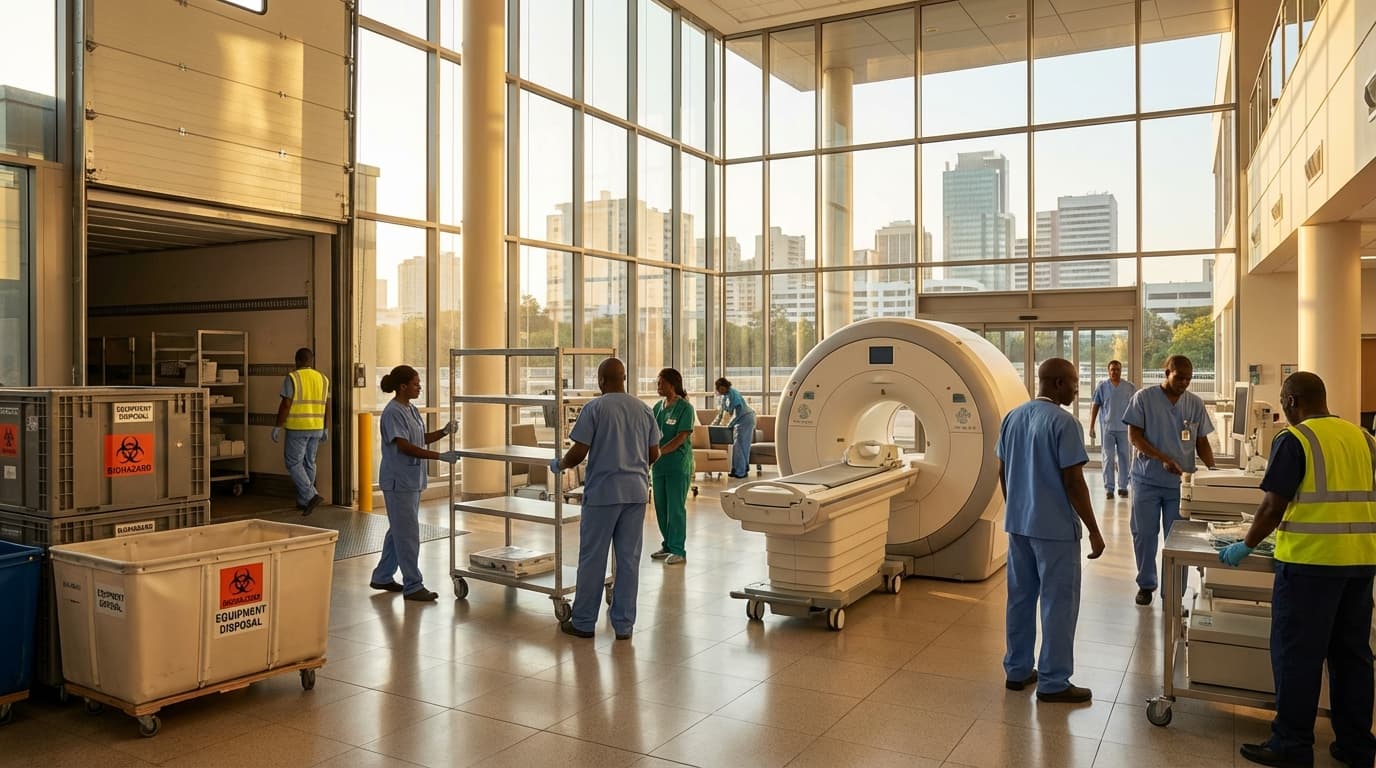
Decommissioning Service for Medical Devices in Eswatini
Engineering Excellence & Technical Support
Decommissioning Service for Medical Devices High-standard technical execution following OEM protocols and local regulatory frameworks.
End-to-End Compliance & Secure Data Erasure
Ensuring strict adherence to Eswatini's healthcare regulations and data privacy laws (e.g., patient confidentiality) throughout the entire decommissioning process. Our certified technicians employ industry-leading, multi-pass data erasure methods, guaranteeing the irretrievable destruction of all sensitive medical data from devices, preventing breaches and maintaining patient trust.
Environmentally Responsible Disposal & Asset Recovery
Prioritizing sustainable practices for Eswatini's environment. We meticulously segregate hazardous materials for specialized treatment and disposal in compliance with national environmental standards. Furthermore, we identify and facilitate the responsible resale or recycling of non-hazardous components, maximizing asset recovery and minimizing landfill impact.
Certified Technicians & Comprehensive Documentation
Deploying highly trained and certified technicians with extensive experience in medical device hardware and software. We provide transparent and detailed decommissioning reports, including asset manifests, data erasure certificates, and environmental disposal verifications, offering full accountability and auditable proof for regulatory bodies and stakeholders in Eswatini.
What Is Decommissioning Service For Medical Devices In Eswatini?
Decommissioning service for medical devices in Eswatini refers to the formal process of retiring a medical device from active clinical service. This service ensures that devices are removed safely, securely, and in compliance with regulatory and environmental standards. It encompasses a comprehensive set of procedures designed to prevent unauthorized use, protect patient data, and manage the disposal or repurposing of the device and its components. The primary objective is to mitigate risks associated with obsolete, faulty, or end-of-life medical equipment, ensuring patient safety and data privacy while adhering to national health regulations and environmental protection guidelines.
| Who Needs Medical Device Decommissioning Service in Eswatini? | Typical Use Cases | ||||||
|---|---|---|---|---|---|---|---|
| Hospitals and Clinics: Public and private healthcare facilities that operate medical equipment and need to retire devices due to obsolescence, damage, or upgrades. | Diagnostic Imaging Centers: Facilities utilizing X-ray machines, CT scanners, MRI units, and ultrasound equipment that have reached the end of their service life. | Laboratories: Facilities with analytical instruments, centrifuges, and other medical laboratory equipment requiring retirement. | Specialty Medical Practices: Clinics focusing on areas like cardiology, ophthalmology, or physiotherapy that have specialized equipment needing decommissioning. | Government Health Departments: Overseeing the management of medical equipment across public health infrastructure. | Medical Device Manufacturers and Distributors (indirectly): When devices are returned for end-of-life management or require decommissioning as part of a service contract. | Research Institutions: Utilizing medical devices for research purposes that are no longer needed or have expired. | End-of-Lease or Rental Agreements: When medical devices under contract are due for return and require proper decommissioning before handover. |
| Replacement of Obsolete Equipment: When a facility upgrades to newer technology, the older devices must be safely decommissioned. | Device Failure and Unrepairable Damage: Devices that are beyond repair due to malfunction or physical damage. | End-of-Life (EOL) of Manufacturer Support: When a device is no longer supported by the manufacturer for maintenance or spare parts. | Consolidation of Services: Merging departments or facilities, leading to redundant equipment that needs decommissioning. | Compliance with Safety Standards: Devices that no longer meet current safety regulations or have been flagged for safety concerns. | Data Breach Prevention: Ensuring that any sensitive patient data stored on the device is irrevocably removed before disposal. | Environmental Compliance: Disposing of medical devices, particularly those containing hazardous materials, in an environmentally sound manner. |
Key Components of Medical Device Decommissioning Service in Eswatini:
- Device Identification and Inventory: Cataloging the specific device, its location, and its current operational status.
- Data Sanitization/Destruction: Securely erasing or physically destroying any stored patient information (e.g., in PACS, EHR systems, or on device memory) to comply with data privacy regulations (e.g., Health Information Act, 2015).
- Functional Assessment: Evaluating the device for continued usability, potential for refurbishment, or necessity for complete destruction.
- Disassembly and Component Segregation: Carefully taking apart the device to separate reusable components, hazardous materials (e.g., mercury, batteries), and general waste.
- Environmental Disposal/Recycling: Managing the environmentally responsible disposal or recycling of device components, especially those containing hazardous substances, in accordance with Eswatini's environmental legislation (e.g., Environmental Management Act, 2002).
- Asset Management Update: Removing the device from active asset registers and updating inventory records to reflect its decommissioned status.
- Documentation and Certification: Providing comprehensive records of the decommissioning process, including a certificate of decommissioning, for audit and compliance purposes.
Who Needs Decommissioning Service For Medical Devices In Eswatini?
In Eswatini, the need for specialized decommissioning services for medical devices is critical for ensuring patient safety, environmental protection, and regulatory compliance. As medical technology evolves and facilities upgrade equipment, the proper disposal and retirement of old or faulty devices become paramount. This service caters to a range of entities that operate within the healthcare sector and manage medical equipment throughout its lifecycle.
| Customer Type | Key Departments / Roles Involved | Specific Needs & Responsibilities |
|---|---|---|
| Public Hospitals and Clinics | Biomedical Engineering Department, Facilities Management, Procurement Department, Infection Control Department, Clinical Departments (using the devices) | Managing the disposal of aging or non-functional equipment, ensuring data security from imaging and patient monitoring devices, complying with national environmental regulations for hazardous waste, budget allocation for decommissioning. |
| Private Hospitals and Clinics | Hospital Administrator, Operations Manager, Biomedical Technicians, IT Department (for data-sensitive devices) | Ensuring efficient and compliant disposal to minimize disruption, safeguarding patient data privacy, potentially seeking cost-effective solutions for multiple devices, maintaining brand reputation through responsible practices. |
| Non-Governmental Organizations (NGOs) with Healthcare Programs | Program Managers, Logistics Officers, Medical Coordinators | Decommissioning devices donated or used in remote healthcare settings, ensuring safe disposal in areas with limited infrastructure, adhering to donor-stipulated disposal protocols, environmental stewardship. |
| Diagnostic Laboratories | Laboratory Manager, Biomedical Technicians, Quality Assurance Department | Disposing of outdated or malfunctioning laboratory equipment (e.g., centrifuges, incubators, analyzers), managing chemical and biohazardous waste generated during decommissioning, ensuring accurate record-keeping. |
| Research Institutions | Principal Investigators, Laboratory Managers, Research Coordinators, IT Department | Retiring specialized research equipment, handling complex disposal requirements for devices with unique components, ensuring data integrity and security of research findings. |
| Government Health Ministries and Agencies | Directorate of Health Services, National Medical Stores, Environmental Health Units, Procurement and Planning Departments | Developing and enforcing national policies and standards for medical device decommissioning, overseeing large-scale decommissioning projects in public health facilities, managing national medical waste strategies. |
| Medical Equipment Suppliers and Distributors | Sales and Service Departments, Logistics and Warehousing Managers | Providing end-of-life management services to their clients as part of their product lifecycle support, managing trade-in programs, responsible disposal of returned or obsolete stock. |
Target Customers and Departments for Medical Device Decommissioning Services in Eswatini
- Public Hospitals and Clinics
- Private Hospitals and Clinics
- Non-Governmental Organizations (NGOs) with Healthcare Programs
- Diagnostic Laboratories
- Research Institutions
- Government Health Ministries and Agencies
- Medical Equipment Suppliers and Distributors (for end-of-life management)
Decommissioning Service For Medical Devices Process In Eswatini
This document outlines the standardized workflow for decommissioning medical devices in Eswatini, from the initial inquiry stage through the successful execution of the decommissioning service. The process ensures proper disposal, data security, and compliance with national regulations.
| Phase | Step | Description | Key Activities | Responsible Parties | Deliverables/Outcomes |
|---|---|---|---|---|---|
| Phase 1: Inquiry and Assessment | 1.1 Initial Inquiry | The client (healthcare facility) initiates contact to request medical device decommissioning services. | Contact initiation, preliminary discussion of needs. | Client, Service Provider | Confirmation of interest, initial understanding of scope. |
| 1.2 Site Visit & Device Audit | A site visit is conducted to physically inspect and inventory the devices slated for decommissioning. | Device identification, condition assessment, inventory listing, data security review, environmental impact assessment. | Service Provider, Client (to provide access and information) | Detailed device inventory, preliminary risk assessment report, identification of unique disposal requirements. | |
| Phase 2: Proposal and Agreement | 2.1 Proposal Generation | Based on the assessment, a comprehensive proposal is prepared outlining the scope of work, methodology, timeline, and cost. | Costing, scheduling, method selection (e.g., sterilization, shredding, data wiping), compliance considerations. | Service Provider | Formal decommissioning proposal. |
| 2.2 Proposal Review & Negotiation | The client reviews the proposal and may negotiate terms, scope, or pricing. | Clarification of details, adjustments to the proposal. | Client, Service Provider | Agreement on the final scope and terms. | |
| 2.3 Contract Signing | A formal service agreement is signed, legally binding the parties to the terms of the decommissioning project. | Contract finalization, legal review, signing. | Client, Service Provider | Signed Service Agreement. | |
| Phase 3: Planning and Preparation | 3.1 Detailed Project Plan | A granular project plan is developed, including specific timelines, resource allocation, and risk mitigation strategies. | Task breakdown, scheduling, personnel assignment, equipment mobilization. | Service Provider | Detailed Project Plan. |
| 3.2 Regulatory Approvals & Notifications | Any necessary permits, licenses, or notifications to regulatory bodies (e.g., Ministry of Health) are obtained. | Application for permits, communication with authorities. | Service Provider, with client support | Required regulatory approvals and notifications. | |
| 3.3 Site Preparation & Security | The decommissioning site is prepared, ensuring safety and security protocols are in place. | Establishment of secure work zones, access control, safety equipment deployment. | Service Provider | Safe and secure decommissioning environment. | |
| Phase 4: Execution of Decommissioning | 4.1 Data Sanitization/Destruction | Sensitive data on medical devices is securely erased or physically destroyed according to industry best practices and regulations. | Certified data wiping, physical shredding of storage media. | Service Provider | Data security confirmation. |
| 4.2 Physical Decommissioning | Devices are dismantled, sterilized (if required), and prepared for disposal or recycling. | Disassembly, cleaning, removal of hazardous materials, segregation of components. | Service Provider | Physically decommissioned devices and components. | |
| 4.3 Transportation & Disposal/Recycling | Decommissioned devices and materials are transported to approved disposal or recycling facilities. | Secure transportation, adherence to environmental regulations for waste disposal. | Service Provider | Proof of transportation to certified facilities. | |
| Phase 5: Documentation and Certification | 5.1 Final Report Generation | A comprehensive report is compiled, detailing all aspects of the decommissioning process. | Inventory of decommissioned devices, methods used, date of decommissioning, disposal/recycling certificates. | Service Provider | Decommissioning Service Report. |
| 5.2 Certificate of Decommissioning | A formal certificate is issued to the client, attesting to the successful and compliant decommissioning of the specified medical devices. | Issuance of certificate, confirmation of compliance. | Service Provider | Certificate of Decommissioning. | |
| Phase 6: Post-Decommissioning | 6.1 Record Keeping | All documentation, including the final report and certificates, is archived by both the service provider and the client for future reference. | Secure storage of records. | Service Provider, Client | Archived decommissioning records. |
| 6.2 Follow-up and Audits (Optional) | Occasional follow-up or audits may be conducted to ensure ongoing compliance and client satisfaction. | Client feedback, review of processes. | Service Provider, Client | Continuous improvement and client satisfaction. |
Decommissioning Service for Medical Devices Process in Eswatini: Workflow
- Phase 1: Inquiry and Assessment
- Phase 2: Proposal and Agreement
- Phase 3: Planning and Preparation
- Phase 4: Execution of Decommissioning
- Phase 5: Documentation and Certification
- Phase 6: Post-Decommissioning
Decommissioning Service For Medical Devices Cost In Eswatini
Decommissioning medical devices in Eswatini involves a series of steps to safely render equipment inoperable and dispose of it responsibly. The cost of these services is influenced by several factors, primarily the type and complexity of the device, the required level of data sanitization, transportation needs, and the chosen disposal method. These services are crucial for maintaining patient safety, protecting sensitive data, and adhering to environmental regulations. As there isn't a single standardized price list, costs are typically determined on a case-by-case basis.
| Device Category (Example) | Estimated Cost Range (Emalangeni - E) | Notes |
|---|---|---|
| Small Diagnostic Tools (e.g., Stethoscopes, Blood Pressure Monitors) | 50 - 200 E | Simple disposal, minimal data concerns. May be bundled with larger services. |
| Mid-Range Laboratory Equipment (e.g., Centrifuges, Basic Analyzers) | 500 - 2,500 E | May involve some disassembly and specific waste handling if consumables are involved. |
| Imaging Devices (e.g., X-ray Machines, Ultrasound Machines) | 5,000 - 25,000+ E | Significant disassembly, potential hazardous materials, and data sanitization are key cost drivers. |
| Large Hospital Equipment (e.g., Hospital Beds, Ward Furniture) | 200 - 1,000 E per unit | Primarily based on volume and transportation. Minimal data concerns unless integrated electronics are present. |
| Complex Diagnostic & Therapeutic Systems (e.g., CT Scanners, Dialysis Machines) | 15,000 - 50,000+ E | Highly complex, often involves hazardous materials, significant data security requirements, and specialized dismantling. |
| Data Sanitization/Destruction Service (Standalone) | 500 - 5,000+ E | Cost dependent on the number of devices and the chosen sanitization/destruction method (e.g., physical shredding of hard drives). |
Key Factors Influencing Decommissioning Service Costs for Medical Devices in Eswatini
- Device Type and Complexity: Larger, more sophisticated, or highly specialized medical equipment (e.g., MRI machines, CT scanners, complex laboratory analyzers) will generally incur higher decommissioning costs due to the intricate disassembly, specialized tools, and expertise required.
- Data Security and Sanitization: Devices containing patient data (e.g., electronic health records systems, imaging devices, patient monitors) require certified data sanitization or destruction to comply with privacy regulations. The method used (e.g., physical destruction, secure wiping) will impact the cost.
- Hazardous Materials: Some medical devices may contain hazardous materials (e.g., mercury, radioactive components, specific chemicals). The safe removal, handling, and disposal of these materials add to the overall cost, often requiring specialized licensed handlers.
- Transportation and Logistics: The distance to the disposal facility from the healthcare institution's location in Eswatini will influence transportation costs. This includes fuel, vehicle maintenance, and labor for moving the equipment.
- Disposal Method: The chosen method for disposal (e.g., recycling, landfill, incineration) affects costs. Environmentally friendly and compliant disposal methods, especially for hazardous waste, can be more expensive than standard landfilling.
- Certifications and Documentation: The requirement for detailed documentation of the decommissioning process, including certificates of destruction or sanitization, will be factored into the service cost.
- Service Provider: Different service providers in Eswatini may have varying pricing structures based on their overhead, expertise, and capacity.
- Urgency: Emergency decommissioning requests might incur additional charges.
Affordable Decommissioning Service For Medical Devices Options
Decommissioning medical devices is a critical but often overlooked process. It ensures data security, compliance with regulations, and proper disposal of sensitive equipment. Fortunately, there are affordable options available, especially when utilizing value bundles and strategic cost-saving measures. This guide outlines how to approach medical device decommissioning cost-effectively.
| Decommissioning Service | Description | Cost-Saving Strategy/Value Proposition |
|---|---|---|
| Data Wiping/Sanitization | Securely removing all sensitive data from device storage. Options range from software-based wiping to physical destruction. | Choose a method that meets regulatory requirements without overspending (e.g., NIST 800-88 guidelines). Bundled with disposal for discounts. |
| Physical Destruction | Shredding, crushing, or degaussing devices to ensure data is irrecoverable. | Often bundled with data wiping. Essential for highly sensitive data or non-functional devices. Negotiate bulk pricing. |
| Asset Tracking & Inventory | Maintaining a detailed record of decommissioned devices for audit and compliance purposes. | Crucial for compliance and can be integrated into broader asset management bundles. Reduces risk of lost assets. |
| Regulatory Compliance Certification | Providing documentation and certificates of data destruction or sanitization to meet legal and industry standards. | Essential for avoiding fines and penalties. Often a standard inclusion in value bundles. |
| Eco-Friendly Disposal/Recycling | Properly disposing of electronic waste in an environmentally responsible manner. | May offer potential rebates or tax credits. Look for providers with sustainability certifications. Bundled with other services. |
| Logistics & Transportation | Safe and secure transport of devices from your facility to the decommissioning center. | Can be a significant cost. Consolidate pickups for multiple devices or locations to reduce per-unit cost. Included in comprehensive bundles. |
| Full-Service Decommissioning Bundle | A comprehensive package covering all aspects from data wiping to disposal and certification. | Offers the most convenience and often the best overall pricing due to economies of scale. Simplifies vendor management. |
Understanding Value Bundles and Cost-Saving Strategies
- Value Bundles: Service providers often offer bundled packages that combine multiple decommissioning steps into a single, discounted price. These bundles can include data wiping, physical destruction, asset tracking, certification, and eco-friendly disposal.
- Economies of Scale: Negotiating with providers for larger batches of devices or longer-term contracts can lead to significant discounts.
- DIY vs. Outsourcing: While some basic steps might be manageable in-house, professional services offer expertise and ensure compliance, often proving more cost-effective in the long run.
- Data Sanitization Standards: Understand the different data sanitization methods (wiping vs. destruction) and choose the one that meets your security and regulatory needs without unnecessary expense.
- Phased Decommissioning: Breaking down the decommissioning process into manageable phases can spread costs over time and allow for better budgeting.
- Asset Recovery: Explore options for selling or donating functional devices to recoup some of the initial investment.
- Environmental Considerations: Choosing providers with eco-friendly disposal practices can sometimes come with rebates or tax incentives.
- Early Planning: Proactive planning for decommissioning as part of the device lifecycle can prevent last-minute, expensive rushes.
Verified Providers In Eswatini
In Eswatini, ensuring access to reliable and high-quality healthcare is paramount. Verified providers, particularly those with strong credentials like Franance Health, offer peace of mind and a higher standard of care. This document outlines what it means to be a verified provider in Eswatini and highlights why Franance Health stands out as a superior choice for your health needs.
| Feature | Franance Health Credentials | Why This Represents the Best Choice |
|---|---|---|
| Licensing & Accreditation | Fully licensed and accredited by the Eswatini Ministry of Health. | Ensures compliance with all national healthcare regulations and standards, guaranteeing a safe and legitimate healthcare environment. |
| Professional Team | Composed of highly qualified and experienced medical professionals, including specialists with international training. | Access to expert medical advice and treatment from a team dedicated to patient care and positive health outcomes. |
| Commitment to Quality | Implements rigorous quality assurance protocols and invests in modern medical technology. | Provides evidence-based treatments and utilizes advanced diagnostic tools for accurate and effective healthcare delivery. |
| Patient-Centered Approach | Prioritizes a compassionate and personalized approach to patient care, fostering trust and open communication. | Ensures patients feel heard, understood, and actively involved in their treatment journey, leading to greater satisfaction and better adherence. |
| Specialized Services | Offers a comprehensive range of specialized medical services tailored to the needs of the Eswatini population. | Provides accessible and expert care for a variety of health conditions, reducing the need for patients to seek treatment abroad. |
What Makes a Provider 'Verified' in Eswatini?
- Government Licensing and Accreditation: All legitimate healthcare providers in Eswatini must be registered and licensed by the Ministry of Health. This ensures they meet basic standards for operation and patient safety.
- Professional Qualifications: Medical professionals, including doctors and nurses, must possess recognized degrees and certifications from accredited institutions.
- Adherence to Ethical Guidelines: Verified providers are expected to uphold a strict code of ethics, prioritizing patient well-being, confidentiality, and informed consent.
- Facility Standards: Healthcare facilities are inspected to ensure they meet requirements for hygiene, equipment, and safety.
- Ongoing Professional Development: Reputable providers often engage in continuous learning and professional development to stay updated with medical advancements.
Scope Of Work For Decommissioning Service For Medical Devices
This document outlines the Scope of Work (SOW) for the decommissioning of medical devices. It details the technical deliverables and standard specifications required for a safe, compliant, and environmentally responsible decommissioning process. The service provider will be responsible for the entire lifecycle of decommissioning, from initial assessment to final disposition.
| Stage | Technical Deliverables | Standard Specifications | Associated Documentation |
|---|---|---|---|
| Initial Assessment and Planning | Detailed inventory of devices to be decommissioned, risk assessment report, proposed decommissioning plan, timeline, and resource allocation. | Compliance with relevant healthcare regulations (e.g., HIPAA, FDA guidelines), manufacturer's guidelines, and site-specific safety protocols. Identification of device criticality and potential hazards. | Device Inventory List, Risk Assessment Report, Decommissioning Plan Proposal, Site Survey Report. |
| Disconnection and Removal | Safe disconnection of devices from power, data, and other utilities. Secure removal of devices from their installed locations. | Adherence to electrical safety standards (e.g., NFPA 70E), lockout/tagout procedures, and proper handling techniques to prevent damage to the device and the facility. | Disconnection Log, Removal Checklist, Site Condition Report. |
| Data Sanitization and Destruction | Secure erasure or physical destruction of all Protected Health Information (PHI) and other sensitive data stored on devices. | Compliance with data privacy regulations (e.g., HIPAA Security Rule, NIST SP 800-88 Rev. 1), use of certified data sanitization software or hardware, and witnessed destruction processes where required. | Data Sanitization Report, Certificate of Data Destruction, Witness Statement (if applicable). |
| Physical Dismantling and Disposal | Safe dismantling of devices into component parts. Segregation of materials for recycling, reuse, or disposal. | Compliance with environmental regulations (e.g., EPA guidelines, local hazardous waste disposal laws), proper handling and disposal of hazardous materials (e.g., mercury, lead, batteries), and utilization of certified recycling partners. | Waste Manifests, Recycling Certificates, Certificate of Disposal, Hazardous Material Disposal Records. |
| Documentation and Certification | Comprehensive final report detailing all decommissioning activities, including proof of data destruction, disposal records, and certificates of completion. | Accuracy, completeness, and traceability of all records. Provision of audit-ready documentation. | Final Decommissioning Report, Certificates of Decommissioning, Asset Disposition Records, Environmental Compliance Certificates. |
Key Stages of Decommissioning Service
- Initial Assessment and Planning
- Disconnection and Removal
- Data Sanitization and Destruction
- Physical Dismantling and Disposal
- Documentation and Certification
Service Level Agreement For Decommissioning Service For Medical Devices
This Service Level Agreement (SLA) outlines the response times and uptime guarantees for the decommissioning of medical devices. It applies to all services provided by [Your Company Name] (hereinafter referred to as "Provider") to [Client Company Name] (hereinafter referred to as "Client") for the decommissioning of medical devices as defined in the Master Service Agreement (MSA).
| Service Component | Priority Level | Response Time Target | Resolution Time Target (Best Effort) | Uptime Guarantee |
|---|---|---|---|---|
| Incident Reporting & Acknowledgment | Critical Device | 15 minutes | N/A | N/A |
| High Priority Device | 30 minutes | N/A | N/A | |
| Standard Priority Device | 2 business hours | N/A | N/A | |
| Decommissioning Execution (Post-Initiation) | Critical Device (e.g., urgent system-wide retirement) | N/A (Initiation driven by Client request) | As per agreed project timeline in MSA/Statement of Work (SOW) | N/A |
| High Priority Device (e.g., end-of-life medical imaging equipment) | N/A (Initiation driven by Client request) | As per agreed project timeline in MSA/Statement of Work (SOW) | N/A | |
| Standard Priority Device (e.g., routine office medical equipment) | N/A (Initiation driven by Client request) | As per agreed project timeline in MSA/Statement of Work (SOW) | N/A | |
| Scheduled Maintenance | All Devices | N/A | N/A | N/A |
| Unscheduled Downtime / Service Outage | All Devices | N/A | N/A | 99.5% (Excluding scheduled maintenance) |
Key Definitions
- Decommissioning Service: The process of safely and compliantly retiring medical devices from service, including data sanitization, physical dismantling, and secure disposal or recycling.
- Critical Device: A medical device whose failure or unavailability would result in immediate harm to patient care or significant operational disruption.
- High Priority Device: A medical device whose failure or unavailability would cause moderate disruption to patient care or business operations.
- Standard Priority Device: A medical device whose failure or unavailability would cause minimal disruption to patient care or business operations.
- Response Time: The maximum time allowed for the Provider's support team to acknowledge a reported issue and begin initial diagnosis.
- Resolution Time: The maximum time allowed for the Provider to resolve a reported issue, bringing the service back to an agreed-upon operational state.
- Downtime: Any period during which the Decommissioning Service is unavailable or cannot be performed due to a failure or issue attributable to the Provider. Scheduled maintenance is excluded.
Frequently Asked Questions

Ready when you are
Let's scope your Decommissioning Service for Medical Devices in Eswatini project in Eswatini.

Scaling healthcare logistics and technical systems across the entire continent.