
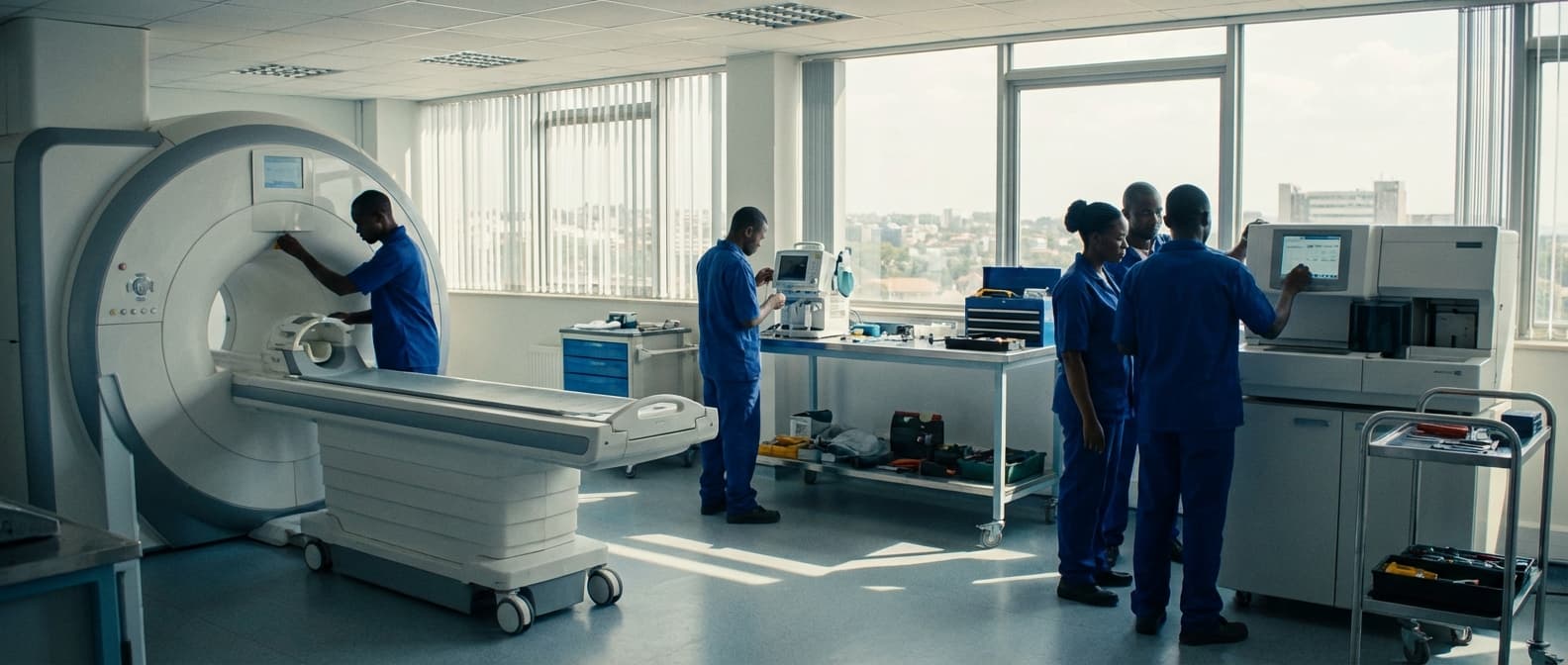
Planned Shutdown Coordination Service for Critical Equipment in Eswatini
Engineering Excellence & Technical Support
Planned Shutdown Coordination Service for Critical Equipment High-standard technical execution following OEM protocols and local regulatory frameworks.
Proactive Shutdown Scheduling
Leverage advanced predictive analytics and historical data to optimize planned shutdown windows, minimizing disruption to critical equipment operations in Eswatini's vital industries.
Integrated Resource Orchestration
Seamlessly coordinate specialized labor, parts procurement, and external vendor engagement, ensuring all necessary resources are meticulously aligned for efficient and timely critical equipment maintenance.
Risk-Based De-Energization Strategy
Implement a rigorous, risk-assessment-driven approach to de-energization and isolation procedures, prioritizing personnel safety and asset integrity during planned critical equipment shutdowns.
What Is Planned Shutdown Coordination Service For Critical Equipment In Eswatini?
Planned Shutdown Coordination Service for Critical Equipment in Eswatini refers to a structured and systematic approach to managing the temporary cessation of operations for essential industrial and infrastructural equipment. This service aims to minimize disruption, optimize resource allocation, and ensure the safe and efficient execution of maintenance, repair, upgrade, or replacement activities. It is integral to maintaining the reliability, availability, and lifespan of critical assets within Eswatini's industrial landscape, thereby supporting national economic stability and operational continuity.
| Who Needs This Service? | Typical Use Cases | ||||
|---|---|---|---|---|---|
| Major Industrial Facilities: Such as sugar mills, textile manufacturers, mining operations, and power generation plants that rely on continuous operation of heavy machinery and processing equipment. | Scheduled Maintenance: Routine preventative maintenance, major overhauls, and component replacements for turbines, generators, boilers, pumps, conveyors, and production lines. | Infrastructure Providers: Utilities managing water treatment plants, wastewater facilities, electricity transmission and distribution networks, and telecommunications infrastructure. | Upgrades and Modernization Projects: Implementing new technologies, expanding capacity, or retrofitting existing equipment to improve efficiency, safety, or environmental compliance. | Government and Public Sector Entities: Managing critical public assets like transportation infrastructure (e.g., bridge maintenance), public utilities, and essential service facilities. | Emergency Repairs and Decommissioning: While primarily for planned activities, the coordination principles are applicable to managing unforeseen but necessary shutdowns for critical repairs or the safe decommissioning of obsolete equipment. |
Key Components of the Service
- Planning and Scheduling: Developing detailed schedules, identifying dependencies, and sequencing activities to minimize downtime. This includes defining the scope of work, required resources (personnel, parts, specialized tools), and expected duration.
- Risk Assessment and Mitigation: Identifying potential hazards associated with the shutdown and implementing control measures to ensure personnel safety and environmental protection. This involves developing lockout/tagout procedures, emergency response plans, and safety protocols.
- Resource Management: Coordinating the procurement of necessary spare parts, materials, and consumables. This also includes the mobilization and scheduling of internal maintenance teams and external contractors, ensuring their availability and qualifications.
- Stakeholder Communication: Establishing clear communication channels with all relevant parties, including plant operators, maintenance teams, management, regulatory bodies, and external suppliers. This ensures transparency, alignment, and timely updates.
- Execution Oversight: Supervising the actual shutdown process, ensuring adherence to the planned schedule and safety procedures. This involves real-time monitoring, issue resolution, and progress reporting.
- Post-Shutdown Evaluation: Conducting a thorough review of the shutdown's effectiveness, identifying lessons learned, and documenting any deviations from the plan. This feeds into continuous improvement processes for future shutdowns.
- Permitting and Approvals: Facilitating the acquisition of any necessary permits or regulatory approvals required for the shutdown and associated work.
Who Needs Planned Shutdown Coordination Service For Critical Equipment In Eswatini?
A Planned Shutdown Coordination Service is vital for any organization in Eswatini that relies on critical equipment to maintain operations, safety, and compliance. These services ensure that scheduled maintenance, repairs, or upgrades of essential machinery are executed efficiently, minimizing downtime and associated risks. This proactive approach is crucial for businesses where equipment failure can lead to significant financial losses, safety hazards, or disruptions to essential services.
| Industry Sector | Key Departments Requiring Coordination | Specific Critical Equipment Examples |
|---|---|---|
| Manufacturing (e.g., Sugar, Textiles, Food Processing) | Production, Maintenance, Engineering, Quality Control, Operations | Production lines, boilers, packaging machinery, milling equipment, refrigeration units |
| Mining and Minerals Processing | Operations, Mechanical Engineering, Electrical Engineering, Health & Safety, Geology | Crushers, conveyor systems, ventilation fans, pumps, processing plants |
| Energy and Utilities (e.g., Power Generation, Water Treatment) | Operations, Electrical Engineering, Mechanical Engineering, Maintenance, Compliance | Turbines, generators, pumps, water purification systems, electrical substations, pipelines |
| Agriculture and Agribusiness (Large Scale) | Operations, Farm Management, Engineering, Maintenance | Irrigation systems, processing machinery (e.g., for sugar, juice), storage facilities, large-scale farm equipment |
| Healthcare (Hospitals and Clinics) | Facilities Management, Biomedical Engineering, IT Department, Clinical Operations | MRI scanners, CT scanners, X-ray machines, laboratory equipment, HVAC systems, backup generators |
| Telecommunications | Network Operations, Engineering, Maintenance, IT Infrastructure | Base stations, data centers, power backup systems, transmission equipment |
| Transportation and Logistics (Large Hubs) | Operations, Maintenance, Safety, Fleet Management | Automated sorting systems, large-scale refrigeration, cargo handling equipment |
Target Customers and Departments in Eswatini
- Industries with continuous operations and high reliance on machinery.
- Organizations subject to stringent safety and environmental regulations.
- Facilities requiring predictable and managed downtime to avoid critical service interruptions.
Planned Shutdown Coordination Service For Critical Equipment Process In Eswatini
This document outlines the workflow for the Planned Shutdown Coordination Service for Critical Equipment in Eswatini. This service aims to ensure minimal disruption to operations during scheduled maintenance by meticulously planning, executing, and monitoring equipment shutdowns.
| Phase | Key Activities | Responsible Parties | Deliverables | Timeline/Frequency |
|---|---|---|---|---|
| Receive shutdown request. Conduct preliminary site visit to understand equipment criticality and potential impact. Determine feasibility and initial requirements. | Client (Requesting Department), Service Provider (Coordination Team) | Initial assessment report, Preliminary scope outline | Upon request; within 2-3 business days |
| Detailed analysis of equipment to be shut down. Define specific maintenance tasks, safety protocols, and required permits. Develop a comprehensive shutdown plan, including critical path analysis. | Service Provider (Coordination Team), Client (Operations, Maintenance, Safety) | Detailed Shutdown Plan, Risk Assessment, Safety Plan, Permitting Checklist | Following initial assessment; typically 1-4 weeks prior to shutdown |
| Identify and secure necessary internal/external personnel, specialized tools, and materials. Develop a detailed timeline for each task, coordinating with all stakeholders. | Service Provider (Coordination Team), Client (Procurement, HR, Logistics) | Resource Schedule, Equipment & Material List, Personnel Roster | Concurrent with planning; finalized 1-2 weeks prior to shutdown |
| Conduct pre-shutdown briefings. Confirm availability of all resources. Implement safety measures and isolation procedures. Communicate shutdown schedule to all affected departments and personnel. | Service Provider (Coordination Team), Client (All Affected Departments) | Pre-shutdown Briefing Minutes, Confirmation of Resource Availability, Communication Logs | 1 week to 1 day prior to shutdown |
| Oversee the safe and efficient shutdown of equipment according to the plan. Monitor progress, manage deviations, and ensure adherence to safety procedures. Facilitate communication between teams. | Service Provider (Coordination Team), Client (Maintenance Technicians, Supervisors) | Real-time progress updates, Incident reports (if any) | During the scheduled shutdown period |
| Conduct thorough inspections and testing of equipment after maintenance. Verify that all tasks are completed as per the plan. Formally hand over the equipment back to operations. | Service Provider (Coordination Team), Client (Maintenance, Operations, Quality Assurance) | Post-maintenance inspection reports, Equipment handover certificate | Immediately after maintenance completion |
| Prepare a comprehensive post-shutdown report detailing activities, outcomes, lessons learned, and any deviations. Conduct a post-shutdown review meeting with stakeholders to identify areas for improvement. | Service Provider (Coordination Team), Client (Management, Operations, Maintenance) | Post-Shutdown Report, Lessons Learned Document, Action Items for future shutdowns | Within 1-2 weeks post-shutdown |
Planned Shutdown Coordination Service Workflow
- Inquiry and Initial Assessment
- Scope Definition and Planning
- Resource Allocation and Scheduling
- Pre-Shutdown Preparations
- Execution of Shutdown Activities
- Post-Shutdown Verification and Handover
- Reporting and Review
Planned Shutdown Coordination Service For Critical Equipment Cost In Eswatini
The cost of a planned shutdown coordination service for critical equipment in Eswatini is influenced by several key factors. These include the complexity and scale of the shutdown, the duration of the service, the specific types of critical equipment involved (e.g., power generation, industrial machinery, telecommunications), the required expertise and personnel, and any specialized tools or equipment needed. Additionally, the urgency of the shutdown, the level of risk mitigation required, and the provider's reputation and experience play a significant role. Local economic conditions, including inflation and currency exchange rates, also impact pricing.
Pricing for these services in Eswatini typically falls within a range, but exact figures are highly dependent on the aforementioned factors. Service providers will often offer tailored quotes after a thorough assessment of the client's specific needs. Estimates can vary widely, from a few thousand Emalangeni (E) for smaller, less complex operations to tens of thousands or even hundreds of thousands of Emalangeni for large-scale, multi-day shutdowns requiring extensive expertise and resources.
| Service Level/Complexity | Estimated Price Range (Emalangeni - E) | Typical Inclusions |
|---|---|---|
| Basic Coordination (Small-scale, short duration) | E 5,000 - E 20,000 | Initial planning, basic scheduling, limited on-site supervision |
| Standard Coordination (Medium-scale, moderate duration) | E 20,000 - E 75,000 | Detailed planning, comprehensive scheduling, dedicated project manager, on-site supervision, basic risk assessment |
| Advanced Coordination (Large-scale, long duration, high complexity) | E 75,000 - E 250,000+ | End-to-end project management, specialized technical expertise, extensive risk management, safety oversight, regulatory compliance, detailed reporting, contingency planning |
Key Pricing Factors for Planned Shutdown Coordination Services in Eswatini
- Complexity and Scale of the Shutdown
- Duration of the Coordination Service
- Type and Number of Critical Equipment
- Required Expertise and Personnel (e.g., engineers, project managers, safety officers)
- Specialized Tools, Equipment, or Technology
- Urgency and Timeline
- Risk Assessment and Mitigation Requirements
- Provider's Experience, Reputation, and Certifications
- Geographical Location within Eswatini
- Travel and Accommodation Costs for Personnel
- Reporting and Documentation Requirements
- Compliance with Eswatini Regulations and Standards
Affordable Planned Shutdown Coordination Service For Critical Equipment Options
Our Affordable Planned Shutdown Coordination Service offers comprehensive solutions to minimize downtime and maximize efficiency during scheduled maintenance of critical equipment. We understand the financial impact of unexpected outages and the importance of meticulous planning. Our service is designed to be cost-effective without compromising on quality or safety, ensuring your operations resume smoothly and on time. We provide flexible value bundles tailored to your specific needs, coupled with strategic cost-saving initiatives to deliver exceptional return on investment.
| Value Bundle | Description | Key Benefits | Cost-Saving Strategies Incorporated |
|---|---|---|---|
| Basic Shutdown Oversight | Core coordination and planning for standard shutdown procedures. | Ensures essential tasks are completed on schedule, reduces risk of minor delays. | Standardized checklists, optimized scheduling, proactive communication. |
| Comprehensive Shutdown Management | Includes risk assessment, detailed scheduling, vendor liaison, and safety supervision. | Minimizes the likelihood of significant disruptions, enhances safety compliance. | Bulk vendor negotiation, optimized resource pooling, early procurement of critical parts. |
| Advanced Shutdown Optimization | All features of Comprehensive Management plus advanced analytics, predictive maintenance integration, and post-shutdown performance review. | Maximizes equipment uptime, identifies long-term cost efficiencies, improves future shutdown performance. | Data-driven scheduling, integration with existing maintenance systems, root cause analysis for recurring issues. |
| Customized Shutdown Solutions | Tailored to specific industry needs, equipment complexity, and operational requirements. | Provides the most relevant and cost-effective service for unique challenges. | Flexible service scope, project-specific cost analysis, strategic partnerships for specialized services. |
Key Features and Value Propositions
- Proactive Planning & Scheduling: Develop detailed shutdown plans, timelines, and resource allocation.
- Risk Assessment & Mitigation: Identify potential hazards and develop strategies to prevent incidents.
- Vendor & Contractor Management: Streamline communication and coordination with third-party service providers.
- Safety Oversight: Ensure adherence to all safety regulations and best practices.
- Real-time Progress Tracking: Provide continuous updates on shutdown status and identify any bottlenecks.
- Post-Shutdown Analysis: Conduct a thorough review to identify lessons learned and areas for improvement.
- Cost-Effective Solutions: Leverage economies of scale and optimized resource utilization.
Verified Providers In Eswatini
In Eswatini, accessing reliable and reputable healthcare services is paramount. Franance Health has emerged as a leading provider, distinguished by its rigorous credentialing processes and commitment to patient well-being. This JSON outlines why Franance Health stands out and the verification steps that ensure their practitioners meet the highest standards.
| Credential Type | Verification Process | Significance for Patients |
|---|---|---|
| Medical License | Primary source verification with the Eswatini Ministry of Health. | Confirms legal authorization to practice medicine in Eswatini. |
| Specialty Certifications | Verification with relevant international or national certifying bodies. | Ensures expertise in a specific medical discipline. |
| Educational Degrees | Verification with the issuing academic institutions. | Confirms foundational medical education. |
| Continuing Medical Education (CME) | Review of completed CME credits and participation in accredited programs. | Demonstrates commitment to staying updated with medical knowledge. |
| Professional References | Confidential feedback from peers and supervisors. | Provides insight into clinical skills and professional behavior. |
| Background Checks | Comprehensive criminal and professional conduct checks. | Ensures patient safety and trust. |
Franance Health Credentials - Why They Are the Best Choice:
- Comprehensive Vetting: Franance Health implements a multi-layered verification system that goes beyond basic licensing. This includes in-depth background checks, primary source verification of educational qualifications and training, and a thorough review of past performance and professional conduct.
- Specialist Expertise: We ensure all our partnered healthcare professionals possess the necessary specialized training and certifications relevant to their field. This guarantees patients receive care from individuals with proven expertise in their specific medical needs.
- Commitment to Continuous Professional Development: Franance Health actively encourages and monitors its providers' engagement in ongoing education and skill enhancement. This commitment ensures practitioners remain at the forefront of medical advancements and best practices.
- Patient-Centric Approach: Beyond clinical skills, our credentialing process evaluates providers on their communication abilities, empathy, and dedication to a patient-centered approach. This ensures a positive and supportive healthcare experience.
- Adherence to Ethical Standards: All Franance Health providers are rigorously assessed for their adherence to ethical medical practices and professional codes of conduct, fostering trust and integrity in every interaction.
- Regulatory Compliance: We ensure all our providers are fully compliant with Eswatini's national healthcare regulations and any relevant international standards, providing an added layer of assurance for patients.
Scope Of Work For Planned Shutdown Coordination Service For Critical Equipment
This Scope of Work (SOW) outlines the services required for the coordination of planned shutdowns of critical equipment. The objective is to ensure minimal disruption to operations, maximize safety, and optimize resource allocation during scheduled maintenance and repair activities. This service will encompass planning, scheduling, execution oversight, and post-shutdown review for various critical assets across the facility.
| Deliverable | Description | Standard Specification/Format | Frequency/Trigger |
|---|---|---|---|
| Shutdown Plan | Comprehensive document detailing all activities, timelines, resources, and dependencies for a specific shutdown. | MS Project Schedule, Gantt Chart, PDF Report | Per planned shutdown event |
| Resource Allocation Matrix | Matrix identifying required personnel (internal/external), specialized tools, and equipment with their availability. | Excel Spreadsheet, PDF Report | Pre-shutdown planning phase |
| Risk Assessment Report | Identification of potential hazards, their likelihood and impact, and proposed mitigation measures. | Standard Risk Assessment Template (e.g., HAZOP, JSA), PDF Report | Pre-shutdown planning phase, updated as needed |
| Work Package Documentation | Detailed work instructions, safety permits, and checklists for each specific maintenance task. | Standardized Work Order Forms, Permit-to-Work System Entries, PDF | As tasks are defined within the shutdown plan |
| Daily Shutdown Progress Report | Summary of activities completed, ongoing tasks, issues encountered, and planned activities for the next shift/day. | Email or Digital Report Template, PDF | Daily during the shutdown execution phase |
| Shutdown Completion Report | Final report detailing all activities performed, deviations from the plan, lessons learned, and recommendations for future shutdowns. | Comprehensive PDF Report, including photographic evidence where applicable | Post-shutdown completion |
| As-Built Documentation Updates | Incorporation of any changes made to equipment or systems during the shutdown into existing plant documentation. | CAD Drawings, P&IDs, Equipment Manuals (digital and/or hard copy) | Post-shutdown, as required by changes |
| Safety and Environmental Compliance Audit Summary | Summary of checks performed to ensure adherence to safety and environmental regulations during the shutdown. | Checklist, PDF Report | Throughout the shutdown execution |
Key Areas of Service Delivery
- Detailed shutdown planning and scheduling
- Resource coordination (personnel, materials, equipment)
- Risk assessment and mitigation strategies
- Development of detailed work procedures and checklists
- On-site coordination and supervision during shutdown
- Communication management with stakeholders
- Post-shutdown analysis and reporting
- Compliance with all relevant safety and environmental regulations
Service Level Agreement For Planned Shutdown Coordination Service For Critical Equipment
This Service Level Agreement (SLA) outlines the terms and conditions for the Planned Shutdown Coordination Service provided for critical equipment. It defines the response times for coordination requests and the uptime guarantees associated with the service. This SLA is an addendum to the Master Service Agreement (MSA) between [Your Company Name] and [Client Company Name].
| Service Component | Response Time Target | Availability Guarantee | Service Level Objective (SLO) |
|---|---|---|---|
| Planned Shutdown Coordination Request Acknowledgment | 2 Business Hours | 99.5% during business hours | Within 2 business hours of submission. |
| Coordination Meeting Scheduling (Internal) | 4 Business Hours | 99.5% during business hours | Coordination meeting scheduled within 4 business hours of acknowledgment. |
| Coordination Meeting Scheduling (Client Notification) | 8 Business Hours | 99.5% during business hours | Client notified of proposed coordination meeting times within 8 business hours of acknowledgment. |
| Availability of Coordination Platform (e.g., Collaboration Tools, Document Repository) | N/A | 99.8% (24x7x365) | The platform used for coordination activities will be available at least 99.8% of the time. |
Key Definitions
- Critical Equipment: Any equipment identified by [Client Company Name] as essential for operational continuity, where unplanned downtime would result in significant financial loss, safety risks, or regulatory non-compliance.
- Planned Shutdown: A scheduled interruption of operations for maintenance, upgrades, or repairs of critical equipment, initiated and approved by [Client Company Name].
- Coordination Request: A formal request submitted by [Client Company Name] to [Your Company Name] to initiate the planned shutdown coordination process for specific critical equipment.
- Response Time: The maximum allowable time from the submission of a valid Coordination Request to [Your Company Name]'s acknowledgment and initiation of the coordination process.
- Uptime Guarantee: The commitment by [Your Company Name] to ensure the availability of the Planned Shutdown Coordination Service infrastructure, enabling timely and effective coordination.
Frequently Asked Questions

Ready when you are
Let's scope your Planned Shutdown Coordination Service for Critical Equipment in Eswatini project in Eswatini.

Scaling healthcare logistics and technical systems across the entire continent.