
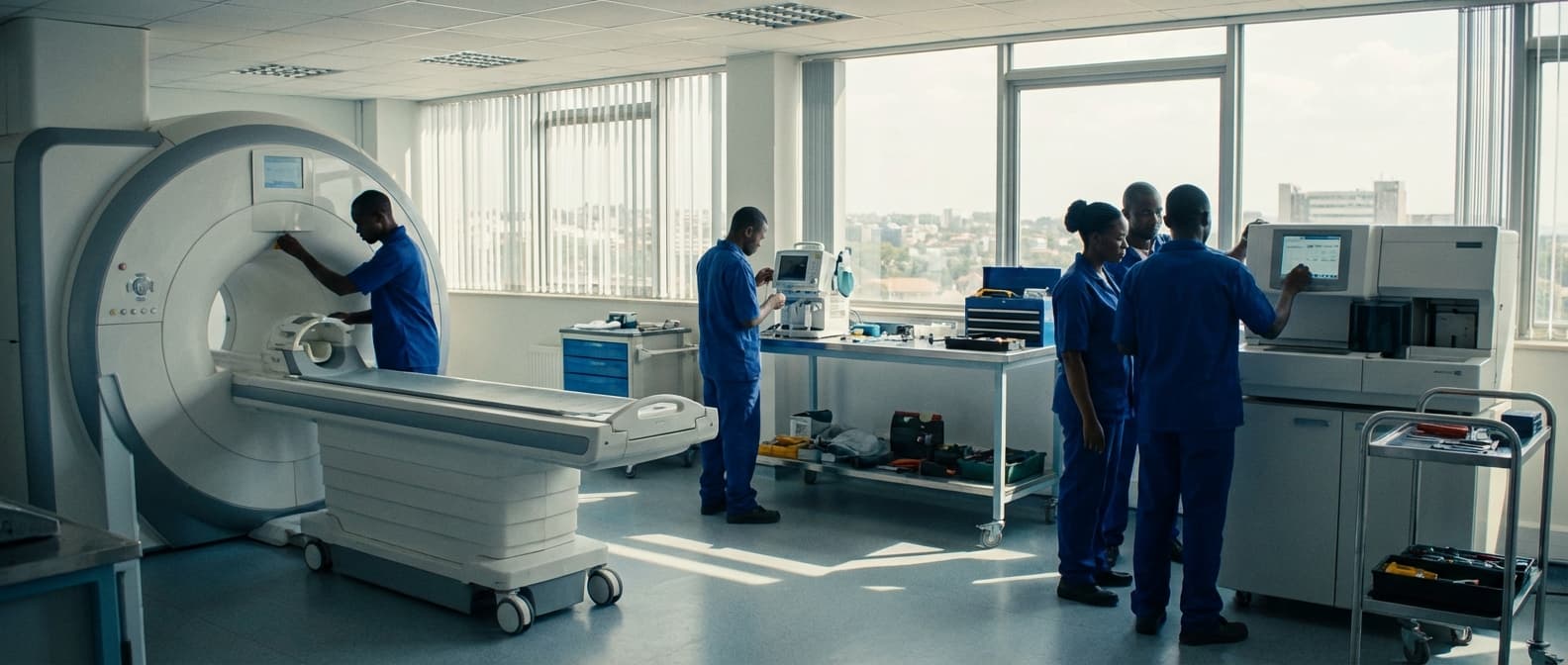
Comprehensive Maintenance Contract (CMC) Management Service (Parts & Labor) in Eswatini
Engineering Excellence & Technical Support
Comprehensive Maintenance Contract (CMC) Management Service (Parts & Labor) High-standard technical execution following OEM protocols and local regulatory frameworks.
Proactive Parts Management & Prioritized Labor
Leverage our predictive analytics to ensure critical spare parts are always in stock, minimizing downtime. Our CMC guarantees prioritized on-site labor response, ensuring your Eswatini operations remain at peak efficiency.
Integrated Labor & Parts Cost Optimization
Gain transparent visibility into all labor and parts expenditure with our centralized CMC platform. We provide data-driven insights to optimize maintenance budgets and negotiate favorable rates for parts and skilled technicians across Eswatini.
Rapid Deployment & Localized Expertise
Our CMC ensures swift deployment of certified technicians equipped with the right parts, directly to your Eswatini facility. Benefit from our network of local experts, familiar with the unique operational landscape and regulatory environment.
What Is Comprehensive Maintenance Contract (Cmc) Management Service (Parts & Labor) In Eswatini?
Comprehensive Maintenance Contract (CMC) Management Service (Parts & Labor) in Eswatini refers to a specialized service that oversees and administers all aspects of maintenance contracts for industrial, commercial, or medical equipment. This encompasses the procurement, stocking, and utilization of spare parts, as well as the scheduling and execution of labor for both preventive and corrective maintenance activities, all under a pre-defined contractual agreement. The service aims to ensure optimal equipment uptime, operational efficiency, and cost predictability by proactively managing all maintenance-related components and human resources. It typically involves a third-party service provider acting as an intermediary between the asset owner and the original equipment manufacturer (OEM) or independent service providers.
| Who Needs CMC Management Service (Parts & Labor)? | Typical Use Cases | ||||||
|---|---|---|---|---|---|---|---|
| Organizations with critical or high-value equipment: Businesses where equipment downtime can lead to significant financial losses, safety hazards, or operational disruptions. | Manufacturing Facilities: Managing maintenance for production lines, machinery, robotics, and assembly equipment. | Healthcare Institutions: Overseeing the maintenance of medical devices such as MRI scanners, CT scanners, diagnostic equipment, and patient monitoring systems. | Telecommunications Companies: Ensuring the operational readiness of network infrastructure, base stations, and data centers. | Commercial Real Estate and Facilities Management: Maintaining building systems like HVAC, elevators, electrical infrastructure, and security systems in large complexes. | Energy Sector: Managing maintenance for power generation equipment, turbines, and transmission infrastructure. | Mining and Heavy Industry: Ensuring the reliability of large-scale machinery, vehicles, and processing equipment. | Government and Public Sector: Maintaining critical infrastructure, defense equipment, and public service vehicles. |
| Organizations seeking cost predictability and budget control: When maintenance costs are variable and unpredictable, a CMC can offer a fixed or capped expenditure. | Businesses aiming to optimize equipment uptime and reduce operational disruptions: Proactive maintenance and efficient repair reduce unplanned downtime. | Companies lacking in-house specialized maintenance expertise or sufficient technical staff: Outsourcing CMC management provides access to skilled personnel and best practices. | Organizations with diverse equipment portfolios from multiple manufacturers: A single point of contact for managing all maintenance needs simplifies operations. | Businesses focused on core competencies and seeking to offload non-core functions: Delegating maintenance management allows for greater focus on primary business objectives. | Entities requiring strict adherence to regulatory compliance and safety standards: Professional CMC providers ensure maintenance meets all required specifications. |
Key Components of CMC Management Service (Parts & Labor):
- Contractual Framework: Establishing and managing the overarching service level agreements (SLAs) with OEMs or independent service providers, defining scope, response times, coverage, and exclusions.
- Parts Procurement and Inventory Management: Sourcing, procuring, warehousing, and managing the inventory of genuine and/or compatible spare parts. This includes forecasting demand, optimizing stock levels, and ensuring the availability of critical components.
- Labor Management: Scheduling, dispatching, and overseeing qualified technicians for planned preventive maintenance (PM) and unplanned corrective maintenance (CM). This also involves managing labor costs, certifications, and performance.
- Preventive Maintenance (PM) Planning & Execution: Developing and implementing robust PM schedules based on OEM recommendations, operational usage, and environmental factors to minimize the risk of equipment failure.
- Corrective Maintenance (CM) Response & Resolution: Providing rapid response to equipment breakdowns, diagnosing issues, and executing timely repairs utilizing the managed parts inventory and skilled labor.
- Reporting and Analytics: Generating comprehensive reports on maintenance activities, equipment performance, parts consumption, labor utilization, and overall cost of ownership. This data is crucial for continuous improvement and strategic decision-making.
- Asset Lifecycle Management: Integrating maintenance data with the broader asset lifecycle to inform decisions regarding upgrades, replacements, and end-of-life strategies.
- Quality Assurance and Compliance: Ensuring all maintenance activities adhere to industry standards, safety regulations, and OEM specifications.
- Budgeting and Financial Management: Tracking all maintenance-related expenditures, managing invoices, and ensuring adherence to allocated budgets.
Who Needs Comprehensive Maintenance Contract (Cmc) Management Service (Parts & Labor) In Eswatini?
Comprehensive Maintenance Contract (CMC) Management Services, encompassing both parts and labor, are crucial for organizations in Eswatini aiming to optimize the operational efficiency, longevity, and cost-effectiveness of their critical equipment and infrastructure. These services ensure that assets are regularly serviced, repaired promptly, and that spare parts are readily available, minimizing downtime and unexpected expenses. The need for such services spans across various sectors that rely heavily on specialized machinery, technology, or essential utilities.
| Target Customer Type | Target Departments/Functions |
|---|---|
| Manufacturing Plants | Production Management, Engineering, Facilities Management, Operations |
| Healthcare Facilities (Hospitals, Clinics) | Biomedical Engineering, Facilities Management, IT Department (for medical equipment), Procurement |
| Telecommunications Companies | Network Operations, Engineering, Field Operations, Infrastructure Management |
| Mining Operations | Mine Operations, Engineering, Maintenance Departments, Fleet Management |
| Energy & Utilities (Power Generation, Water Treatment) | Operations & Maintenance, Engineering, Plant Management, Asset Management |
| Large Agricultural Enterprises | Farm Management, Operations, Equipment Maintenance |
| Government & Public Sector (e.g., Water Authorities, Transport) | Infrastructure Management, Facilities Management, Asset Management, Procurement |
| Financial Institutions (with large IT infrastructure) | IT Operations, Infrastructure Management, Facilities Management |
| Hospitality Sector (Large Hotels & Resorts) | Engineering & Maintenance, Facilities Management, IT Department |
| Construction Companies | Fleet Management, Equipment Maintenance, Operations |
Who Needs Comprehensive Maintenance Contract (CMC) Management Service (Parts & Labor) in Eswatini?
- Organizations with significant capital investments in machinery and equipment.
- Businesses operating in sectors with strict regulatory compliance and safety standards.
- Entities aiming to extend the lifespan and maximize the return on investment (ROI) of their assets.
- Companies that experience significant financial losses due to equipment downtime.
- Organizations looking to standardize maintenance processes and improve asset visibility.
- Those seeking to offload the complexities of managing multiple maintenance contracts, vendor relationships, and parts procurement.
- Emerging businesses that may not have the internal expertise or resources to manage complex maintenance requirements.
Comprehensive Maintenance Contract (Cmc) Management Service (Parts & Labor) Process In Eswatini
This document outlines the Comprehensive Maintenance Contract (CMC) Management Service (Parts & Labor) process implemented in Eswatini, detailing the workflow from initial inquiry through to the successful execution of services. The process ensures efficient management of maintenance agreements, timely availability of parts, and skilled labor deployment to maintain critical equipment and infrastructure.
| Stage | Description | Key Activities | Responsible Parties | Deliverables | Timeline (Indicative) |
|---|---|---|---|---|---|
| Initial contact from a client seeking CMC services for their equipment or infrastructure. | Client contacts service provider, discusses requirements, identifies equipment/assets to be covered, and specifies desired service levels. | Prospective Client, Service Provider Sales Team | Initial understanding of client's needs, list of equipment/assets. | 1-3 business days |
| Development of a tailored proposal and quotation based on the assessed needs. | Service provider conducts site visits (if necessary), assesses equipment condition, determines labor and parts requirements, prepares detailed proposal outlining scope, SLAs, pricing, and terms. | Service Provider Technical Team, Sales Team, Procurement | Comprehensive Proposal, Detailed Quotation, Service Level Agreement (SLA) draft. | 3-7 business days |
| Discussion and finalization of contract terms, pricing, and SLAs. | Client reviews proposal, negotiates terms (pricing, payment schedules, response times, exclusions), finalizes contract, both parties sign the agreement. | Prospective Client, Service Provider Legal & Commercial Teams | Signed Comprehensive Maintenance Contract (CMC). | 7-14 business days |
| Formal commencement of the CMC and initiation of service planning. | Service provider creates client account, schedules initial site survey/assessment, develops a comprehensive maintenance plan (preventive schedules), assigns dedicated account manager and technical team. | Service Provider Operations Team, Account Management, Technical Team | Active CMC account, Detailed Maintenance Plan, Assigned Team. | 2-5 business days post-contract signing |
| Scheduled maintenance activities to prevent breakdowns and ensure optimal equipment performance. | Execution of routine checks, cleaning, lubrication, calibration, and minor part replacements as per the maintenance plan. Includes pre-scheduled site visits. | Service Provider Technical Team, Site Engineers | Completed Preventive Maintenance Checklists, Equipment Performance Reports. | As per agreed schedule (e.g., monthly, quarterly, annually) |
| Response to equipment failures or performance degradation. | Client reports breakdown, service provider acknowledges, dispatches technician, diagnoses issue, initiates repair/replacement, conducts post-repair testing. | Client, Service Provider Technical Support, Field Technicians | Breakdown Report, Repair Report, Functional Equipment. | As per SLA (e.g., 4-24 hours response time, determined by severity) |
| Ensuring availability of necessary spare parts for both preventive and corrective maintenance. | Tracking inventory levels, forecasting part needs, procuring parts from approved suppliers (local/international), managing stock, ensuring quality control of received parts. | Service Provider Procurement & Logistics Team, Warehouse Staff | Adequate Spare Parts Stock, Validated Parts Inventory. | Ongoing, with specific lead times for procurement |
| Efficient allocation and scheduling of skilled technicians. | Assigning technicians based on expertise, availability, and location; optimizing routes for site visits; managing technician schedules and workload. | Service Provider Operations Team, Dispatchers | Scheduled Technician Assignments, Optimized Travel Plans. | Ongoing, based on maintenance plans and breakdown calls |
| Ensuring all maintenance activities are performed to the highest standards. | Technicians follow standard operating procedures (SOPs), use calibrated tools, adhere to safety protocols, supervisor checks work, client provides feedback. | Service Provider Technical Team, Quality Assurance Department | High-Quality Maintenance Services, Client Satisfaction. | Throughout service execution |
| Documenting services rendered and issuing invoices. | Compiling maintenance reports (preventive and corrective), tracking work orders, generating invoices based on contract terms and actual services provided. | Service Provider Administration & Finance Team | Maintenance Reports, Accurate Invoices. | Monthly/Quarterly (as per contract) |
| Periodic evaluation of the CMC and decision on renewal. | Reviewing contract performance against SLAs, discussing client satisfaction, identifying areas for improvement, negotiating renewal terms if applicable. | Service Provider Account Management, Client Management | Performance Review Report, Renewed Contract (if applicable). | Prior to contract expiry (e.g., 60-90 days) |
Key Stages of the CMC Management Service Process
- Inquiry & Needs Assessment
- Proposal & Quotation
- Contract Negotiation & Agreement
- Service Activation & Planning
- Preventive Maintenance
- Corrective Maintenance (Breakdown)
- Parts Procurement & Inventory Management
- Labor Deployment & Scheduling
- Service Execution & Quality Assurance
- Reporting & Invoicing
- Contract Review & Renewal
Comprehensive Maintenance Contract (Cmc) Management Service (Parts & Labor) Cost In Eswatini
Managing Comprehensive Maintenance Contracts (CMCs) for equipment and assets in Eswatini involves significant cost considerations for both parties. A CMC typically covers routine preventive maintenance, emergency repairs, and the supply of spare parts, often including labor. The overall cost is influenced by a multitude of factors specific to the equipment, the service provider, and the contract's scope. Understanding these factors is crucial for accurate budgeting and negotiation within the Eswatini market.
| Equipment Category | Estimated Annual CMC Cost (Emalangeni - SZL) | Notes on Range |
|---|---|---|
| Basic Office Equipment (Printers, Copiers, PCs) | SZL 1,500 - SZL 7,500 | Covers routine checks, minor repairs, and sometimes consumables. Based on units. Imported parts can increase cost. |
| General IT Infrastructure (Servers, Network Gear) | SZL 5,000 - SZL 30,000+ | Depends on criticality, redundancy, and SLA response times. Includes hardware support and potentially remote monitoring. |
| Light Commercial Vehicles (Fleet Maintenance) | SZL 10,000 - SZL 40,000 per vehicle/year | Includes scheduled servicing, parts (filters, fluids), and labor. Heavy-duty vehicles will be significantly higher. |
| Industrial Machinery (Manufacturing, Agriculture) | SZL 50,000 - SZL 300,000+ per machine/year | Highly variable based on machine complexity, criticality, and global sourcing of parts. Labor for specialized technicians is a major component. |
| Medical Equipment (Diagnostic, Treatment) | SZL 75,000 - SZL 500,000+ per unit/year | Requires highly specialized technicians, calibration, and often imported, expensive spare parts. Strict SLAs are common. |
| Generators/Power Systems | SZL 20,000 - SZL 150,000+ (depending on size/capacity) | Includes routine checks, load testing, parts (filters, oils), and labor. Larger units and critical applications command higher prices. |
Key Pricing Factors for CMC Management Service (Parts & Labor) in Eswatini
- {"title":"Equipment Type and Complexity","description":"The nature of the equipment is a primary driver of cost. Highly specialized, complex, or industrial machinery (e.g., manufacturing equipment, medical diagnostic tools, heavy-duty vehicles) will inherently have higher maintenance costs due to the need for specialized technicians, advanced diagnostic tools, and potentially imported spare parts. Simpler equipment (e.g., office furniture, basic IT hardware) will be less expensive to maintain."}
- {"title":"Age and Condition of Equipment","description":"Older equipment or that in poorer condition is more prone to breakdowns and may require more frequent repairs and replacement of parts. Service providers will factor in a higher risk premium and potentially higher labor hours for such assets."}
- {"title":"Scope of Coverage (Preventive vs. Reactive)","description":"A CMC that includes extensive preventive maintenance schedules, regular inspections, and lubrication will generally cost more upfront than a contract that focuses primarily on reactive or breakdown maintenance. The former aims to reduce failures, while the latter addresses them as they occur. The inclusion of proactive performance tuning also adds to the cost."}
- {"title":"Spare Parts Inclusion and Availability","description":"Whether spare parts are included (and to what extent) is a significant cost component. The cost of parts varies greatly by type, origin (local vs. imported), and brand. Contracts that guarantee the immediate availability of critical spare parts will command higher prices, as providers need to maintain adequate inventory. Import duties and logistics costs for parts into Eswatini also play a role."}
- {"title":"Labor Costs and Technician Expertise","description":"The cost of skilled labor in Eswatini is a key factor. Highly specialized technicians command higher wages. The number of required service visits (both scheduled and unscheduled) will directly impact the total labor cost. Travel time and expenses for technicians, especially in more remote areas of Eswatini, will also be factored in."}
- {"title":"Service Level Agreements (SLAs)","description":"The agreed-upon response times for breakdowns, repair durations, and uptime guarantees heavily influence pricing. Shorter response times and higher uptime guarantees typically translate to higher contract costs, as providers must maintain sufficient staffing and parts inventory to meet these stringent requirements."}
- {"title":"Contract Duration and Payment Terms","description":"Longer-term contracts may sometimes offer a slight discount per period compared to short-term agreements. Flexible payment terms (e.g., quarterly, annual) can also be negotiated, with upfront annual payments sometimes attracting minor discounts."}
- {"title":"Provider Reputation and Overhead","description":"Established service providers with a strong track record, extensive resources, and established operational overheads may charge more than smaller or newer competitors. Their reputation for reliability and quality of service is a value proposition reflected in their pricing."}
- {"title":"Geographic Location within Eswatini","description":"The location of the equipment being serviced can affect costs. Servicing assets in more remote regions of Eswatini might incur higher travel and logistics costs for technicians and parts compared to those located in urban centers like Mbabane or Manzini."}
- {"title":"Exclusions and Limitations","description":"What is specifically excluded from the CMC (e.g., consumables, accidental damage, damage due to misuse) will influence the base price. The clarity of these exclusions is important for avoiding disputes."}
Affordable Comprehensive Maintenance Contract (Cmc) Management Service (Parts & Labor) Options
Managing maintenance contracts for your assets can be a complex and costly endeavor. Our Affordable Comprehensive Maintenance Contract (CMC) Management Service is designed to streamline this process, ensuring your equipment operates at peak performance while minimizing your expenditure. We offer flexible value bundles and implement strategic cost-saving measures to maximize your return on investment. Our service encompasses both parts and labor, providing a holistic solution for all your maintenance needs.
| Value Bundle | Description | Included Services | Target Audience | Potential Cost Savings |
|---|---|---|---|---|
| Essential Care | Basic preventative maintenance and on-demand repairs. | Scheduled inspections, lubrication, filter replacements, labor for minor repairs. | Small to medium-sized businesses with standard equipment needs. | 10-15% on routine maintenance, 5-10% on minor repairs. |
| Proactive Performance | Comprehensive preventative maintenance with extended coverage. | All Essential Care services plus diagnostic checks, software updates, major component inspections, priority labor dispatch. | Growing businesses requiring higher equipment uptime and reliability. | 15-20% on preventative maintenance, 10-15% on labor, reduced emergency call-out fees. |
| Total Asset Assurance | All-inclusive maintenance solution with parts and labor coverage. | All Proactive Performance services plus all necessary replacement parts (excluding consumables), remote monitoring, guaranteed response times, dedicated account manager. | Large enterprises with critical infrastructure and a need for maximum operational continuity. | 20-25% on parts and labor, significant reduction in unplanned downtime costs, extended asset lifespan. |
Key Benefits of Our CMC Management Service
- Proactive Maintenance Scheduling: Prevents unexpected breakdowns and costly emergency repairs.
- Optimized Parts Procurement: Leverages our network for competitive pricing and reduced inventory costs.
- Skilled Technician Deployment: Ensures timely and efficient repairs by certified professionals.
- Extended Equipment Lifespan: Regular maintenance safeguards your assets, delaying replacement needs.
- Reduced Downtime: Minimized operational disruptions, leading to increased productivity.
- Budget Predictability: Clear and transparent pricing with no hidden fees.
- Single Point of Contact: Simplifies communication and issue resolution.
- Performance Monitoring & Reporting: Provides insights into equipment health and maintenance effectiveness.
Verified Providers In Eswatini
In Eswatini, ensuring you receive quality healthcare is paramount. When seeking medical services, looking for 'Verified Providers' is a crucial step towards accessing reliable and safe care. This verification process signifies that healthcare facilities and practitioners meet stringent standards, ensuring they are equipped, qualified, and adhere to best practices. Franance Health plays a vital role in this ecosystem, acting as a trusted source for identifying and verifying these top-tier healthcare providers.
| Provider Type | Key Verification Aspects (Franance Health) | Why it Matters for Patients |
|---|---|---|
| Hospitals/Clinics | Facility infrastructure, equipment quality, staffing ratios, emergency preparedness, infection control measures, patient care protocols. | Ensures access to well-equipped facilities with adequate medical personnel, capable of handling various medical needs and emergencies safely. |
| Specialist Doctors | Medical board certifications, postgraduate qualifications, continuing medical education, specific procedural competencies, peer reviews. | Confirms that specialists have the highest level of expertise and training in their respective fields, leading to accurate diagnoses and effective treatments. |
| General Practitioners | Licensing, primary care training, diagnostic skills, patient management protocols, referral networks. | Guarantees that general practitioners are qualified to provide essential primary care services, manage common ailments, and know when to refer patients to specialists. |
| Diagnostic Laboratories | Accreditation, quality control measures, advanced testing equipment, qualified technicians, turnaround times for results. | Ensures the accuracy and reliability of diagnostic tests, which are crucial for correct medical decision-making. |
Why Franance Health Credentials Matter for Verified Providers in Eswatini:
- Rigorous Vetting Process: Franance Health employs a comprehensive evaluation methodology. This involves scrutinizing a provider's licensing, qualifications of their medical staff, the quality of their facilities and equipment, adherence to sanitation protocols, and their commitment to patient safety and ethical practices.
- Commitment to Excellence: Providers who achieve Franance Health credentials demonstrate a proactive commitment to exceeding minimum healthcare standards. This often translates to better patient outcomes, enhanced patient experience, and a higher level of trust.
- Access to Trusted Networks: By partnering with Franance Health, patients gain access to a curated network of verified healthcare providers across Eswatini. This simplifies the process of finding reputable doctors, clinics, and hospitals.
- Transparency and Accountability: Franance Health's verification acts as a mark of transparency. It assures patients that the providers they are considering have been thoroughly assessed and are held to a high degree of accountability for the services they offer.
- Promoting Quality Healthcare Ecosystem: The presence of Franance Health-verified providers encourages continuous improvement within Eswatini's healthcare sector, driving overall quality and accessibility of care for all citizens.
Scope Of Work For Comprehensive Maintenance Contract (Cmc) Management Service (Parts & Labor)
This Scope of Work (SOW) outlines the requirements for a Comprehensive Maintenance Contract (CMC) Management Service, encompassing both parts and labor. The service provider will be responsible for ensuring the optimal functioning and longevity of specified assets through proactive, reactive, and preventive maintenance activities. This document details the technical deliverables and standard specifications expected from the service provider.
| Category | Technical Deliverables | Standard Specifications / Requirements |
|---|---|---|
| Asset Inventory & Baseline Assessment | Detailed asset register including make, model, serial number, location, installation date, warranty status, and criticality. | Current state assessment of each asset, identifying existing issues, wear, and potential risks. Includes a baseline performance report. |
| Preventive Maintenance (PM) | Development and execution of a comprehensive PM schedule based on manufacturer recommendations, usage patterns, and asset criticality. | PM tasks to include inspection, cleaning, lubrication, calibration, minor adjustments, and replacement of consumable parts. Schedule to be agreed upon by both parties. All PMs must be documented with dates, technician, tasks performed, and findings. |
| Reactive Maintenance (RM) | 24/7 availability of qualified technicians for emergency repairs. | Guaranteed response times for critical, major, and minor equipment failures. (e.g., Critical: <1 hour, Major: <4 hours, Minor: <8 hours). Time to repair (TTR) targets to be defined per asset type. |
| Parts Management | Procurement and stocking of genuine or equivalent spare parts for all covered assets. | Maintenance of an adequate inventory of critical spare parts. Clear process for parts ordering, receiving, storage, and tracking. Vendor to provide warranty information for all parts supplied. Parts used must meet or exceed OEM specifications. All parts replaced must be accounted for and disposed of responsibly. |
| Labor Management | Provision of skilled and certified technicians with expertise relevant to the covered assets. | Technicians to be well-trained, adhere to safety protocols, and possess the necessary tools and equipment. Background checks and necessary certifications to be provided upon request. Technicians must follow standard operating procedures (SOPs) for all tasks. |
| Condition Monitoring & Predictive Maintenance (PdM) | Implementation of condition monitoring techniques (e.g., vibration analysis, thermal imaging, oil analysis) where applicable. | Proactive identification of potential failures before they occur. Analysis of data to predict maintenance needs and optimize PM schedules. Regular reports on asset condition trends. |
| Technical Support & Troubleshooting | On-demand technical support for operational issues and troubleshooting. | Remote and on-site support capabilities. Efficient diagnosis and resolution of technical problems. Documentation of all support interactions. |
| Reporting & Documentation | Regular (e.g., monthly, quarterly) comprehensive maintenance reports. | Reports to include: summary of PM and RM activities, asset uptime/downtime, parts consumed, labor hours, cost analysis, recommendations for improvements, and pending issues. All maintenance activities to be logged in a central system accessible to the client. |
| Asset Upgrades & Modifications | Consultation and implementation of minor upgrades or modifications to improve asset performance or efficiency. | Any proposed upgrades must be presented with a clear business case, cost-benefit analysis, and impact assessment. All modifications must be fully documented and incorporated into the asset's maintenance history. |
| Quality Assurance & Audits | Implementation of a robust quality assurance program. | Regular internal audits of maintenance processes and technician performance. Client to have the right to audit vendor's processes and documentation. Adherence to ISO 9001 or equivalent quality standards is preferred. |
| Safety & Compliance | Strict adherence to all relevant health, safety, and environmental (HSE) regulations. | Provision of safety data sheets (SDS) for all chemicals used. All work to be performed in a safe manner, minimizing risk to personnel and the environment. Compliance with all local and national safety standards. |
| Asset Lifecycle Management Support | Advisory services on asset lifecycle, including recommendations for repair vs. replacement. | Input on end-of-life planning and asset decommissioning/disposal. |
Key Objectives of the CMC Management Service
- Maximize asset uptime and availability.
- Minimize operational disruptions due to equipment failure.
- Ensure adherence to manufacturer specifications and industry best practices.
- Manage all aspects of maintenance, including scheduling, execution, and reporting.
- Optimize maintenance costs through efficient resource allocation and proactive interventions.
- Maintain detailed records of all maintenance activities and asset history.
Service Level Agreement For Comprehensive Maintenance Contract (Cmc) Management Service (Parts & Labor)
This Service Level Agreement (SLA) outlines the performance standards for the Comprehensive Maintenance Contract (CMC) Management Service, specifically covering Parts & Labor. It defines the agreed-upon response times for issue resolution and the uptime guarantees for the managed systems.
| Service Level | Response Time | Resolution Target | Uptime Guarantee |
|---|---|---|---|
| Critical (System Down/Major Outage) | 1 Hour (Initial Acknowledgment), 2 Hours (Technician Dispatch) | 8 Business Hours (for restoration of core functionality) | 99.5% (Monthly) |
| High (Significant Performance Degradation/Partial Outage) | 2 Business Hours (Initial Acknowledgment), 4 Business Hours (Technician Dispatch) | 24 Business Hours (for restoration of full functionality) | 99.7% (Monthly) |
| Medium (Minor Functionality Issues/Intermittent Problems) | 4 Business Hours (Initial Acknowledgment) | 48 Business Hours | 99.9% (Monthly) |
| Low (Cosmetic Issues/Non-critical Alerts) | 8 Business Hours (Initial Acknowledgment) | 5 Business Days | N/A (Does not impact core functionality or availability) |
Key Service Components
- Service Scope: This SLA applies to all maintenance activities related to hardware and software covered under the Comprehensive Maintenance Contract (CMC), including proactive maintenance, reactive repairs, and the provision of spare parts and skilled labor.
- Service Hours: Standard service hours are Monday to Friday, 9:00 AM to 5:00 PM (Local Time), excluding public holidays. Critical support outside these hours is available as per the escalation matrix.
- Reporting: Regular performance reports detailing incident resolution times, uptime statistics, and preventive maintenance activities will be provided monthly.
- Escalation: A clear escalation path is defined to ensure prompt attention to critical issues and to facilitate resolution when initial support tiers are unable to provide a timely solution.
Frequently Asked Questions

Ready when you are
Let's scope your Comprehensive Maintenance Contract (CMC) Management Service (Parts & Labor) in Eswatini project in Eswatini.

Scaling healthcare logistics and technical systems across the entire continent.