
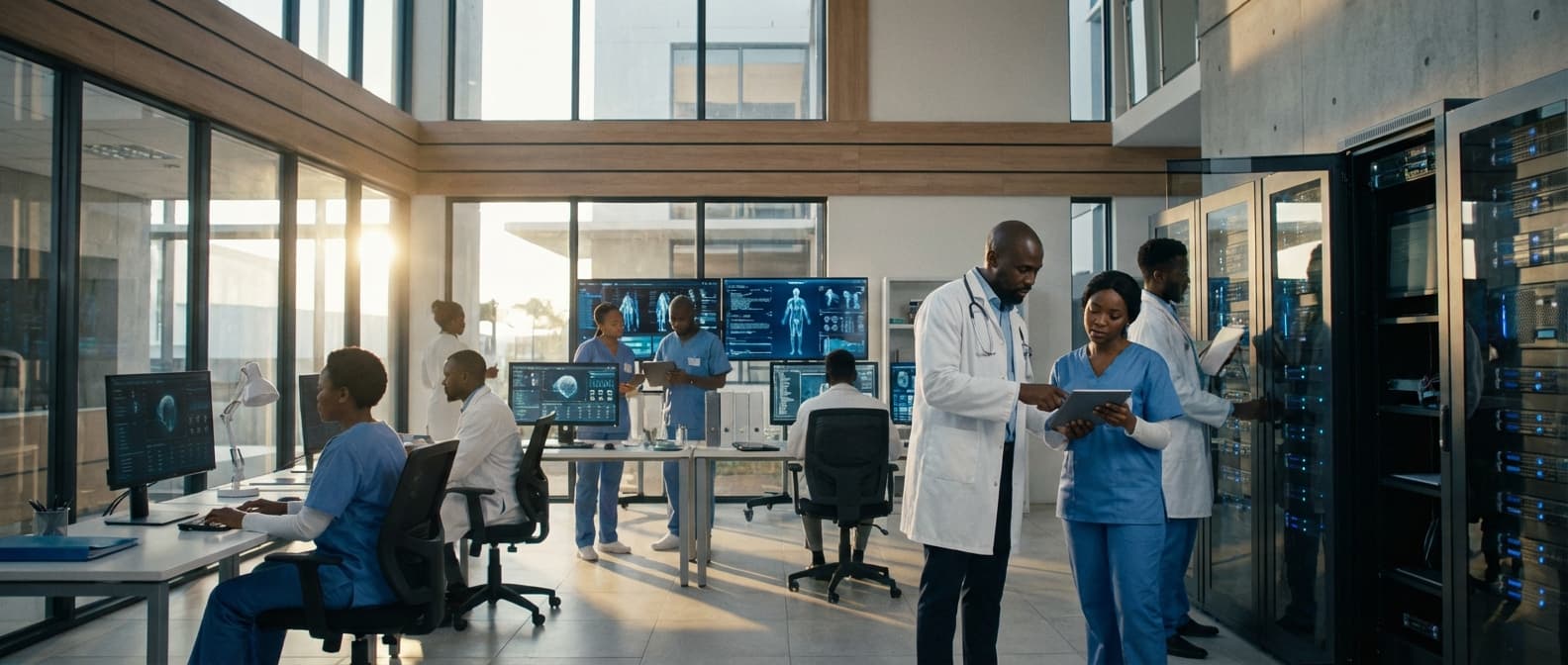
Tele-Radiology in Eswatini
Engineering Excellence & Technical Support
24/7 access to certified radiologists providing rapid, accurate remote interpretation of diagnostic imaging studies. High-standard technical execution following OEM protocols and local regulatory frameworks.
Expanded Access to Specialized Diagnostics
Tele-radiology services in Eswatini enable remote access to a wider range of radiological interpretations, including complex cases like MRI and CT scans. This overcomes the scarcity of subspecialist radiologists within the country, bringing expert diagnostic capabilities directly to local healthcare facilities and improving patient care pathways.
Rapid Turnaround Time for Critical Diagnoses
By leveraging tele-radiology platforms, diagnostic images taken in Eswatini can be instantly transmitted to radiologists in other locations for immediate review. This significantly reduces turnaround times for critical diagnoses, allowing for faster treatment decisions and improved patient outcomes, especially in time-sensitive medical emergencies.
Enhanced Training and Knowledge Transfer
Tele-radiology facilitates remote training and mentorship opportunities for local radiologists and radiographers in Eswatini. Experienced international radiologists can review cases with their Eswatini counterparts, providing valuable feedback, sharing best practices, and upskilling the local workforce, thereby building sustainable diagnostic capacity within the nation.
What Is Tele-radiology In Eswatini?
Tele-radiology in Eswatini refers to the transmission of radiological images (such as X-rays, CT scans, and MRIs) from one location to another for the purpose of interpretation and reporting by a radiologist. This service leverages telecommunications technology to overcome geographical barriers, enabling remote access to specialized radiological expertise. It is a critical component of modern healthcare delivery, particularly in resource-constrained environments like Eswatini, where access to diagnostic imaging specialists may be limited in certain regions. The core functionality involves the acquisition of medical images at a primary healthcare facility, followed by their secure transmission via a network (e.g., internet, dedicated VPN) to a radiologist situated at a secondary or tertiary care facility, or even a remote reading center. The radiologist then reviews the images, generates a diagnostic report, and transmits it back to the referring clinician, facilitating timely and accurate diagnosis and treatment planning.
| Who Needs Tele-radiology in Eswatini? | Typical Use Cases and Benefits | ||||
|---|---|---|---|---|---|
| Rural and Remote Healthcare Facilities: Facilities lacking on-site radiologists or advanced imaging equipment can access expert interpretations. | Emergency Situations: Rapid interpretation of critical scans (e.g., head CTs for stroke, chest X-rays for trauma) to expedite treatment. | Subspecialty Consultations: Access to subspecialist radiologists (e.g., neuroradiology, pediatric radiology) not available locally. | Workload Balancing: Distributing radiology workload from busy urban centers to less burdened facilities or remote radiologists. | Quality Assurance and Peer Review: Facilitating second opinions and quality control of radiological interpretations. | Training and Education: Enabling remote learning and case review for junior radiologists and radiographers. |
| Diagnosis of Fractures and Musculoskeletal Injuries: Especially in areas with limited access to orthopedic specialists. | Screening and Diagnosis of Tuberculosis (TB): Chest X-rays are a cornerstone of TB diagnosis and management, often requiring rapid interpretation. | Detection of Pneumonia and other Respiratory Illnesses: Crucial for timely treatment, particularly in pediatric and geriatric populations. | Identification of Intracranial Hemorrhage or Ischemic Stroke: Essential for time-sensitive neurological interventions. | Evaluation of Abdominal Pain and Pathology: Assisting in the diagnosis of conditions requiring surgical or medical intervention. | Post-operative Imaging Follow-up: Monitoring recovery and identifying complications remotely. |
Key Components and Stakeholders of Tele-radiology in Eswatini
- Image Acquisition Modalities (e.g., X-ray, CT, MRI, Ultrasound)
- Digital Imaging and Communications in Medicine (DICOM) Standard Compliance
- Picture Archiving and Communication System (PACS)
- Telecommunication Network Infrastructure (secure and reliable)
- Radiology Information System (RIS) integration
- Radiologists (interpreting physicians)
- Referring Clinicians (doctors, nurses, physician assistants)
- Radiographers/Technologists (performing image acquisition)
- IT Support Staff
- Patients (beneficiaries of improved diagnostic access)
Who Needs Tele-radiology In Eswatini?
Tele-radiology plays a crucial role in bridging the gap in radiology services, particularly in regions facing radiologist shortages or limited access to advanced imaging equipment. In Eswatini, a nation with a growing healthcare demand and geographical considerations, tele-radiology offers a vital solution for expanding diagnostic capabilities and improving patient care. This technology enables remote interpretation of medical images by qualified radiologists, overcoming geographical barriers and leveraging expertise where it's most needed.
| Department | Specific Needs Addressed by Tele-Radiology | Benefits |
|---|---|---|
| Radiology Department | Lack of trained radiologists, high workload, need for subspecialty interpretations (e.g., neuroradiology, musculoskeletal radiology). | Improved turnaround times, access to expert opinions, enhanced diagnostic accuracy, professional development for local technicians. |
| Emergency Department (ER) | Urgent need for rapid interpretation of critical imaging (e.g., head CT for stroke, chest X-ray for trauma), limited on-call radiologist availability. | Faster decision-making, reduced patient waiting times, improved outcomes in time-sensitive conditions, efficient resource utilization. |
| Surgery Department | Pre-operative and post-operative imaging assessments, need for timely review of scans to guide surgical interventions and monitor recovery. | Better surgical planning, reduced complications, optimized patient management, increased surgical efficiency. |
| Internal Medicine/General Medicine | Diagnosis of various conditions requiring imaging (e.g., pneumonia, abdominal pain, fractures), managing increased patient volumes. | Quicker diagnosis and treatment initiation, improved patient flow, better management of chronic conditions. |
| Pediatrics | Interpreting pediatric-specific imaging, requiring specialized knowledge and experience, potential for limited pediatric radiologists. | Accurate diagnosis for children, specialized care for pediatric patients, reduced need for costly travel for specialized consultations. |
| Oncology Department | Staging and monitoring of cancer through imaging (CT, MRI, PET), need for expert interpretation of complex tumor assessments. | Precise cancer staging, effective treatment monitoring, improved prognosis, access to advanced oncologic imaging interpretation. |
Target Customers and Departments for Tele-Radiology in Eswatini
- {"title":"Government Hospitals","description":"Public hospitals are often the primary providers of healthcare to the majority of the population. Tele-radiology can significantly augment their diagnostic capacity, especially in rural or underserved areas."}
- {"title":"Private Hospitals and Clinics","description":"While often better resourced, private facilities can also benefit from tele-radiology to offer specialized interpretations or manage fluctuating workloads, ensuring timely diagnoses for their patients."}
- {"title":"Rural Health Centers","description":"These centers may lack in-house radiology expertise or even imaging equipment. Tele-radiology can enable them to send images for interpretation, providing essential diagnostic services to remote communities."}
- {"title":"Specialized Medical Centers","description":"Centers focusing on areas like oncology, cardiology, or neurology can leverage tele-radiology for expert consultations and interpretations of complex imaging studies, leading to more precise treatment plans."}
- {"title":"Referral Hospitals","description":"As higher-level care facilities, referral hospitals can utilize tele-radiology for second opinions, subspecialty interpretations, and to manage the increased volume of complex cases they receive."}
Tele-radiology Process In Eswatini
Tele-radiology, the practice of interpreting medical images remotely, plays a crucial role in enhancing healthcare access and quality in Eswatini, a country facing a shortage of specialized radiologists. The tele-radiology process in Eswatini follows a defined workflow to ensure efficient and accurate diagnosis. This workflow typically begins with an inquiry from a referring healthcare facility, initiating a chain of events that culminates in the radiologist's report being delivered back to the originating site. The process emphasizes clear communication, secure data transfer, and timely interpretation to support clinical decision-making and patient care.
| Stage | Description | Key Actors | Technology/Tools | Outputs | Considerations in Eswatini |
|---|---|---|---|---|---|
| Inquiry & Patient Identification | A healthcare facility (clinic, hospital) identifies a patient requiring a radiological examination and initiates a request for interpretation. | Referring Physician/Clinician, Nurse, Radiology Technologist | Electronic Health Record (EHR) system (if available), Paper referral forms | Patient details, Clinical history, Examination requested | Limited EHR penetration may necessitate robust paper-based referral systems. Clear and concise clinical information is vital for accurate interpretation. |
| Image Acquisition & Preparation | Radiological images (X-rays, CT scans, ultrasounds, etc.) are acquired using medical imaging equipment and prepared for transmission. | Radiology Technologist, Radiographer | X-ray machines, CT scanners, Ultrasound machines, PACS (Picture Archiving and Communication System) or local storage solutions | Digital radiological images (DICOM format) | Availability and maintenance of imaging equipment. Standardized image acquisition protocols are essential for consistent quality. Local storage may be used if real-time transmission is challenging. |
| Image Transmission | Acquired images are securely transmitted from the originating facility to the tele-radiology service provider. | Radiology Technologist, IT Support | Secure VPN, Encrypted file transfer protocols (e.g., SFTP), Dedicated tele-radiology software, Satellite internet (in remote areas) | Digital images (DICOM files) sent to a central PACS or reading platform | Reliable and affordable internet connectivity is a significant challenge. Data security and privacy are paramount. Use of satellite or mobile data may be necessary. |
| Worklist Management & Assignment | The tele-radiology platform receives the images, organizes them into a worklist, and assigns them to available radiologists based on specialty and urgency. | Tele-radiology Platform Administrator, Radiologist (on-call) | Tele-radiology software, PACS viewer, Worklist management system | Prioritized worklist of pending studies | Efficient worklist management is crucial to minimize turnaround times. Clear prioritization mechanisms for critical cases are needed. |
| Image Interpretation | A remote radiologist reviews the images, analyzes them in conjunction with the clinical information, and forms a diagnosis. | Radiologist | High-resolution diagnostic monitors, PACS viewer, Tele-radiology software | Radiological interpretation, identification of abnormalities | Radiologists are scarce; therefore, efficient allocation and remote access are key. Continuous professional development for radiologists is important. |
| Report Generation & Authentication | The radiologist dictates or types a comprehensive report detailing their findings, diagnosis, and recommendations. The report is then reviewed and authenticated. | Radiologist, Medical Transcriptionist (if used), Reporting software | Speech recognition software, Reporting templates, Digital signature capabilities | Diagnostic radiology report | Timely report generation is critical. Clear and concise language is important for referring clinicians. Digital signatures enhance report authenticity. |
| Report Delivery & Integration | The authenticated report is securely transmitted back to the referring healthcare facility and integrated into the patient's medical record. | Tele-radiology Platform, IT Support, Referring Clinician | Secure portal, EHR integration, Email (for non-sensitive information) | Final radiology report | Seamless integration with existing (even basic) record-keeping systems. Ensuring the report reaches the correct clinician promptly. |
| Feedback & Quality Assurance | The referring clinician may provide feedback on the report, and the tele-radiology service undergoes regular quality assurance checks to maintain accuracy and improve processes. | Referring Clinician, Tele-radiology Service Manager, Radiologists | Feedback forms, Case review meetings, Performance metrics tracking | Improved diagnostic accuracy, Enhanced service delivery, Training needs identification | Establishing a feedback loop is vital for continuous improvement and building trust. Regular audits of image quality and report accuracy are essential. |
Tele-Radiology Workflow in Eswatini: From Inquiry to Execution
- Inquiry & Patient Identification
- Image Acquisition & Preparation
- Image Transmission
- Worklist Management & Assignment
- Image Interpretation
- Report Generation & Authentication
- Report Delivery & Integration
- Feedback & Quality Assurance
Tele-radiology Cost In Eswatini
Tele-radiology services in Eswatini offer a vital solution for improving access to diagnostic imaging expertise, particularly in remote or underserved areas. However, the cost of these services can vary significantly due to several key pricing factors. Understanding these factors is crucial for healthcare providers and institutions when budgeting for and procuring tele-radiology solutions. The cost is typically expressed in Eswatini Lilangeni (SZL).
Key Pricing Factors for Tele-Radiology in Eswatini:
- Volume of Scans: The most significant driver of cost is the number of radiological studies (X-rays, CT scans, MRIs, ultrasounds) that need to be interpreted. Providers often offer tiered pricing based on monthly or annual scan volumes, with higher volumes generally resulting in a lower per-scan cost.
- Type of Modality: Different imaging modalities have varying levels of complexity and require different levels of subspecialist expertise. For example, interpreting a routine X-ray is generally less expensive than interpreting a complex neuro-CT or cardiac MRI. The demand for specific subspecialties (e.g., neuroradiology, musculoskeletal radiology) also influences pricing.
- Turnaround Time (TAT) Requirements: The speed at which reports are delivered is a critical factor. Urgent or STAT reads (requiring interpretation within a few hours) command a premium compared to routine reads (typically within 24-48 hours). The definition of TAT can also be negotiated.
- Subspecialty Coverage: Access to subspecialists for niche areas of radiology (e.g., pediatric radiology, interventional radiology) will generally be more expensive than general radiology coverage due to the scarcity of these highly trained professionals.
- Technology and Platform Fees: Some tele-radiology providers may charge separate fees for their proprietary software platform, PACS (Picture Archiving and Communication System) integration, or data storage and management. This can be a recurring monthly or annual fee.
- Implementation and Training: Initial setup costs, including integration with existing hospital IT systems and training for local staff on using the tele-radiology platform, can be a one-time expense.
- Contract Length and Commitment: Longer-term contracts often come with discounted rates, offering stability for both the provider and the client. Short-term or ad-hoc services may be more costly per unit.
- Ancillary Services: Some tele-radiology providers may offer additional services such as quality assurance programs, protocol optimization, or direct consultation with referring physicians, which can add to the overall cost.
- Provider's Overhead and Location: The operational costs of the tele-radiology provider, including their own staffing, technology infrastructure, and administrative overhead, will influence their pricing. While often not directly visible to the client, this underlies the cost structure.
Pricing Ranges in Eswatini Lilangeni (SZL):
It is important to note that precise pricing is highly dependent on the specific needs of the healthcare facility and the provider's business model. The following ranges are indicative and can fluctuate. These are typically quoted on a per-scan basis, or as a monthly/annual retainer for a specific volume and service level.
- Routine X-ray Interpretation: SZL 150 - SZL 400 per study.
- CT Scan Interpretation: SZL 350 - SZL 800 per study, depending on the complexity and number of series.
- MRI Scan Interpretation: SZL 500 - SZL 1,200 per study, with higher costs for specialized scans (e.g., cardiac, functional MRI).
- Ultrasound Interpretation: SZL 200 - SZL 500 per study, with variations for specialized ultrasounds (e.g., obstetric Doppler).
- STAT/Urgent Reads: A surcharge of 25% - 75% on the standard per-scan rate may apply.
- Monthly/Annual Retainers: For higher volumes, providers might offer a bundled package. For example, a commitment to 500 X-rays per month could range from SZL 80,000 to SZL 150,000, effectively bringing down the per-scan cost. Comprehensive packages including multiple modalities and subspecialty coverage can range from tens of thousands to hundreds of thousands of Lilangeni per month, depending on the scope.
Negotiation is a key aspect of securing tele-radiology services in Eswatini. Healthcare institutions are encouraged to obtain detailed quotes from multiple providers, clearly outlining their specific requirements, scan volumes, and desired turnaround times to ensure the most cost-effective and suitable solution.
| Service Type | Indicative Price Range (SZL per study) | Notes |
|---|---|---|
| Routine X-ray Interpretation | 150 - 400 | Base rate for standard X-ray reads. |
| CT Scan Interpretation | 350 - 800 | Varies by complexity and number of sequences. |
| MRI Scan Interpretation | 500 - 1,200 | Higher for specialized scans like cardiac or neuro MRI. |
| Ultrasound Interpretation | 200 - 500 | Depends on the type of ultrasound examination. |
| STAT/Urgent Reads | +25% to +75% surcharge | Additional fee for expedited reporting. |
| Monthly/Annual Retainers (example) | 80,000 - 150,000 (for 500 X-rays/month) | Negotiated rates for bulk services, reducing per-scan cost. |
Factors Influencing Tele-Radiology Costs in Eswatini
- Scan Volume
- Imaging Modality Type
- Turnaround Time (TAT) Expectations
- Subspecialty Expertise Required
- Technology and Platform Fees
- Implementation and Training Costs
- Contract Duration
- Ancillary Services Offered
- Provider's Operational Overhead
Affordable Tele-radiology Options
Tele-radiology, the practice of interpreting medical images remotely, has become a critical component of modern healthcare. It offers numerous benefits, including improved access to expertise, faster turnaround times, and enhanced efficiency. For organizations looking to leverage these advantages without incurring prohibitive costs, exploring affordable tele-radiology options is paramount. This often involves understanding innovative service models like 'value bundles' and implementing strategic cost-saving measures.
| Value Bundle Example | Inclusions | Potential Cost Savings |
|---|---|---|
| Basic X-ray Bundle | Up to 100 chest X-rays per month, standard turnaround time (e.g., 24 hours) | Predictable monthly cost, avoids per-study fluctuations, lower cost than ad-hoc reads for consistent volume. |
| Comprehensive CT/MRI Bundle | Unlimited CT and MRI studies, expedited turnaround for critical cases (e.g., 1-4 hours) | Economies of scale, dedicated radiologist access, reduces need for in-house staffing for peak demands. |
| Subspecialty Night Coverage Bundle | All overnight CT/MRI studies requiring subspecialty interpretation (e.g., neuro, stroke) | Cost-effective access to highly specialized expertise without full-time hire, ensures 24/7 coverage. |
Key Components of Affordable Tele-Radiology
- Understanding Value Bundles: A value bundle in tele-radiology typically refers to a pre-defined package of services offered at a fixed price. This can include a set number of studies, specific modalities (e.g., X-ray, CT, MRI), or a combination of both, often with defined service level agreements (SLAs) for turnaround times and quality standards. These bundles offer predictability in budgeting and can be more cost-effective than per-study pricing for organizations with consistent imaging volumes.
- Cost-Saving Strategies:
- Negotiating volume-based discounts: Higher volumes of studies often allow for better negotiation power, leading to reduced per-study costs.
- Leveraging technology for efficiency: Investing in user-friendly and efficient PACS (Picture Archiving and Communication System) and RIS (Radiology Information System) integrations can reduce administrative overhead and streamline workflows.
- Standardizing protocols: Consistent interpretation protocols across different sites can improve efficiency and reduce errors, thereby saving costs.
- Exploring tiered service options: Many tele-radiology providers offer different tiers of service, allowing organizations to choose a level that meets their needs and budget.
- Outsourcing subspecialty reads: Instead of hiring full-time subspecialists, organizations can utilize tele-radiology services for niche areas like neuroradiology or musculoskeletal imaging on a per-case or bundled basis.
- Focusing on quality and accuracy: While cost is a factor, ensuring high-quality interpretations and reducing the need for repeat studies or misdiagnoses ultimately leads to significant long-term cost savings and improved patient outcomes.
Verified Providers In Eswatini
In Eswatini, ensuring access to quality healthcare hinges on identifying verified providers. Franance Health stands out as a premier choice, offering a robust network of accredited medical professionals and facilities. Their stringent credentialing process guarantees that all listed providers meet the highest standards of expertise, ethics, and patient care. This commitment to verification provides patients with the peace of mind that they are receiving safe and effective medical services.
| Provider Type | Key Credentials Verified | Benefits for Patients |
|---|---|---|
| Doctors (General & Specialists) | Medical Degrees (MBBS, MD, etc.), Specialist Certifications, Valid Medical License, Continued Professional Development Records | Diagnosis by experienced professionals, access to specialized treatments, trust in medical expertise |
| Hospitals & Clinics | Accreditation by relevant health authorities, Compliance with hygiene and safety standards, Availability of essential medical equipment, Qualified medical and nursing staff | Safe treatment environments, comprehensive medical services, access to emergency care |
| Pharmacists & Pharmacies | Registered Pharmacist License, Compliance with pharmaceutical regulations, Proper storage and dispensing of medications | Access to genuine and safe medications, professional advice on drug usage |
| Laboratories & Diagnostic Centers | Accreditation by recognized bodies (e.g., ISO standards), Qualified laboratory technicians, Adherence to quality control measures | Accurate and reliable diagnostic results, timely identification of health conditions |
Why Franance Health is the Top Choice for Verified Providers in Eswatini:
- Rigorous credentialing and verification of all healthcare professionals.
- Access to a diverse network of specialists and general practitioners.
- Commitment to ethical practices and patient well-being.
- Streamlined process for finding and accessing trusted medical care.
- Empowering patients with knowledge of reliable healthcare options.
Scope Of Work For Tele-radiology
This Scope of Work (SOW) outlines the requirements for the provision of Tele-Radiology services. It details the technical deliverables expected from the service provider and the standard specifications that must be adhered to, ensuring high-quality diagnostic imaging interpretation and reporting delivered remotely.
| Specification | Description | Requirement/Standard |
|---|---|---|
| Image Quality | Images must be displayed with fidelity to the original acquisition, allowing for accurate diagnosis. | DICOM conformance, 8-bit or higher grayscale resolution, appropriate windowing and leveling controls. |
| Turnaround Time (TAT) | Time from image acquisition to report availability. | Standard: Within 24 hours for routine studies. STAT/Critical: Within 1-2 hours for initial read, with follow-up as needed. |
| Report Format | Standardized format for all radiology reports. | Includes patient demographics, clinical indication, examination technique, findings, impression/conclusion, and referring physician details. Adherence to ACR standards where applicable. |
| Radiologist Qualifications | Credentials and expertise of the reporting radiologists. | Board-certified or board-eligible in relevant subspecialties, licensed in the jurisdiction of practice, and meeting hospital credentialing requirements. |
| Data Security and Privacy | Protection of patient health information. | HIPAA compliance, encryption of data in transit and at rest, access controls, regular security audits. |
| System Uptime | Availability of the tele-radiology service. | 99.5% or higher, with scheduled maintenance windows communicated in advance. |
| Consultation Response | Timeliness of responses to consultations from referring physicians. | Within 4 business hours for non-urgent requests, immediate availability for urgent/critical consultations. |
| Report Archiving | Long-term storage of radiology reports. | As per hospital policy and regulatory requirements (e.g., minimum 7 years). |
| IT Infrastructure Compatibility | Seamless integration with existing hospital IT systems. | HL7 integration for HIS/EHR, DICOM compatibility with existing PACS/Modalities. |
Technical Deliverables
- Secure, HIPAA-compliant Picture Archiving and Communication System (PACS) viewer accessible by authorized hospital personnel.
- Real-time image viewing and manipulation capabilities for all supported imaging modalities (X-ray, CT, MRI, Ultrasound, Nuclear Medicine).
- Integrated Voice Recognition (VR) or Speech-to-Text (STT) solution for efficient report generation.
- Web-based or dedicated client software for radiologists to access cases, dictate reports, and communicate with referring physicians.
- Secure communication channel for urgent consultations and critical findings.
- Audit trails and logging of all system access, image viewing, and report generation activities.
- Integration capabilities with the hospital's Electronic Health Record (EHR) or Hospital Information System (HIS) for seamless patient data flow and report dissemination.
- Robust data backup and disaster recovery plan.
- Reporting dashboard with key performance indicators (KPIs) for turnaround time, report accuracy, and radiologist workload.
- Regular software updates and maintenance for all provided systems.
- Training materials and sessions for hospital staff on using the tele-radiology platform.
- Emergency escalation procedures for critical findings and system failures.
- Secure data transmission protocols (e.g., TLS/SSL) for all image and data transfers.
Service Level Agreement For Tele-radiology
This Service Level Agreement (SLA) outlines the performance expectations and guarantees for the tele-radiology services provided by [Provider Name] to [Client Name]. It specifies response times for image interpretation requests and uptime guarantees for the tele-radiology platform.
| Service Component | Priority Level | Maximum Response Time | Uptime Guarantee | Measurement Period | Remedy for Breach |
|---|---|---|---|---|---|
| Image Interpretation & Reporting | STAT (Critical/Emergency) | 30 Minutes | N/A (Focus on response time) | From confirmation of receipt | 10% discount on the affected STAT study fee for each 15-minute delay beyond 30 minutes, capped at 50% of the study fee. |
| Image Interpretation & Reporting | Urgent (Within 2-4 hours) | 2 Hours | N/A (Focus on response time) | From confirmation of receipt | 5% discount on the affected Urgent study fee for each 30-minute delay beyond 2 hours, capped at 25% of the study fee. |
| Image Interpretation & Reporting | Routine (Within 24-48 hours) | 24 Hours | N/A (Focus on response time) | From confirmation of receipt | 1% credit towards next invoice for each 4-hour delay beyond 24 hours, capped at 10% of the study fee. |
| Tele-radiology Platform Access | All | N/A (Focus on uptime) | 99.5% | Monthly | 2% credit towards next invoice for every hour of unplanned downtime exceeding 0.5% of monthly availability. |
| Image Upload & Download | All | N/A (Focus on uptime) | 99.5% | Monthly | 2% credit towards next invoice for every hour of unplanned downtime exceeding 0.5% of monthly availability. |
Key Service Metrics
- Response Time: The maximum allowed time from when a study is uploaded and confirmed as received by the tele-radiology platform to when a preliminary report is available.
- Uptime Guarantee: The percentage of time the tele-radiology platform is accessible and operational for image uploads, viewing, and report generation.
- Report Quality: Standards and processes for ensuring the accuracy and completeness of radiology reports.
Frequently Asked Questions

Ready when you are
Let's scope your Tele-Radiology in Eswatini project in Eswatini.

Scaling healthcare logistics and technical systems across the entire continent.