
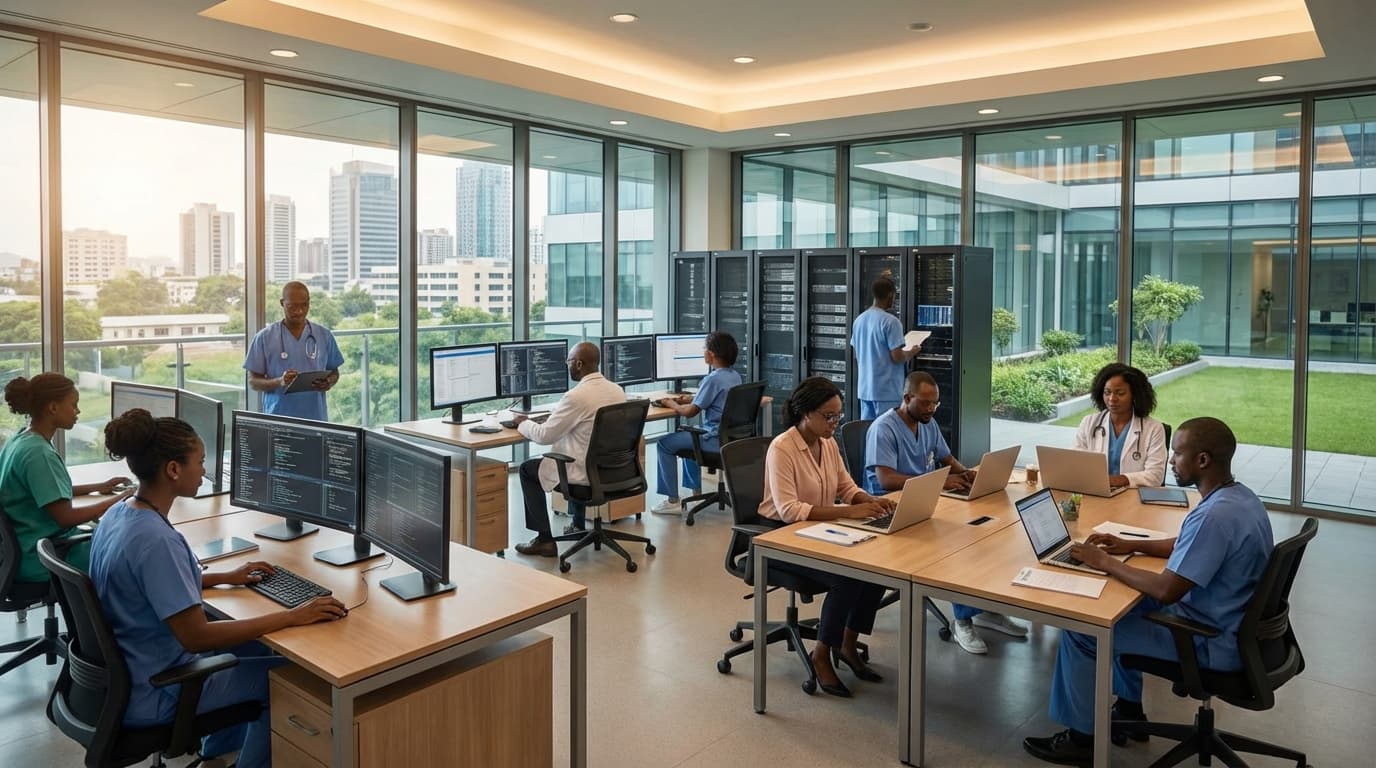
Radiology Reader & Reporting Support in Eswatini
Engineering Excellence & Technical Support
Remote radiology reading and reporting services High-standard technical execution following OEM protocols and local regulatory frameworks.
AI-Powered Diagnostic Assistance
Leveraging cutting-edge AI algorithms to flag potential abnormalities in X-rays, CT scans, and MRIs, reducing missed diagnoses and improving reporting accuracy for radiologists in Eswatini.
Streamlined Reporting Workflow
Implementing a user-friendly platform that automates report generation, integrates with existing PACS systems, and provides intelligent dictation support, significantly accelerating turnaround times for radiology reports.
Enhanced Collaboration & Remote Access
Facilitating secure, cloud-based access to imaging studies and reports for radiologists across Eswatini, enabling seamless collaboration with referring physicians and supporting remote consultations for improved patient care.
What Is Radiology Reader & Reporting Support In Eswatini?
Radiology Reader & Reporting Support in Eswatini refers to a specialized service designed to augment the diagnostic capabilities of healthcare facilities by providing remote access to expert radiologists for image interpretation and report generation. This service leverages Picture Archiving and Communication Systems (PACS) and Radiology Information Systems (RIS) to transmit medical images securely, allowing off-site radiologists to review findings and produce comprehensive diagnostic reports. The primary objective is to enhance the quality and timeliness of radiological diagnoses, particularly in regions where local radiologist availability is limited or specialized expertise is required. This support is crucial for ensuring accurate patient management and treatment planning, thereby improving healthcare outcomes.
| Who Needs It? | Typical Use Cases |
|---|---|
| Hospitals and Clinics in Eswatini with limited or no on-site radiologist presence. | Interpretation of routine diagnostic imaging studies (e.g., chest X-rays for pneumonia, bone X-rays for fractures). |
| Healthcare facilities requiring subspecialty radiological expertise not available locally (e.g., complex neuroimaging, pediatric radiology). | Emergency department imaging requiring urgent interpretation (e.g., head CT for trauma, abdominal CT for acute abdomen). |
| Facilities experiencing high patient volumes leading to radiologist backlogs. | Second opinion consultations on complex or equivocal imaging findings. |
| Rural or remote healthcare centers with intermittent access to radiological services. | Screening programs requiring consistent interpretation of large volumes of images (e.g., tuberculosis screening). |
| Tertiary care hospitals seeking to augment their existing radiology department's capacity or provide extended hours of coverage. | Follow-up imaging for patients with chronic conditions requiring regular monitoring. |
Key Components of Radiology Reader & Reporting Support:
- Remote Image Interpretation: Secure transmission and review of diagnostic images (X-ray, CT, MRI, Ultrasound, etc.) by qualified radiologists located remotely.
- Diagnostic Report Generation: Creation of detailed, standardized, and clinically relevant radiology reports based on image findings.
- Teleradiology Platform Integration: Utilization of secure, HIPAA/POPIA compliant (or equivalent local regulation) platforms for image viewing, communication, and report dissemination.
- Quality Assurance & Peer Review: Processes for ensuring the accuracy and consistency of interpretations and reports.
- Subspecialty Expertise: Access to radiologists with specialized training in areas such as neuroradiology, musculoskeletal radiology, or interventional radiology.
- 24/7 Availability (Optional): Provision of round-the-clock reading services for emergency cases.
- Workflow Integration: Seamless integration with existing hospital PACS/RIS to minimize disruption to local workflows.
Who Needs Radiology Reader & Reporting Support In Eswatini?
Radiology reader and reporting support is crucial for various healthcare entities in Eswatini to enhance diagnostic accuracy, improve patient outcomes, and optimize the utilization of limited radiology resources. This support can bridge gaps in specialist availability, offer second opinions, and ensure consistent, high-quality reporting.
| Target Customer/Department | Specific Needs & Benefits | Key Departments Involved |
|---|---|---|
| Public Hospitals and Clinics (e.g., Mbabane Government Hospital, Pigg's Peak Government Hospital, smaller rural clinics) | Addressing radiologist shortages, providing timely second opinions on complex cases, ensuring consistent reporting standards across multiple facilities, improving diagnostic turnaround times, supporting general practitioners in interpreting imaging findings. | Radiology Departments, General Surgery, Internal Medicine, Pediatrics, Emergency Medicine |
| Private Hospitals and Diagnostic Centers (e.g., health resorts, private clinics) | Enhancing diagnostic accuracy for a broader range of specialties, offering specialized interpretations (e.g., advanced neuroimaging, musculoskeletal imaging), providing overflow support during peak periods or staff leave, improving competitive advantage through advanced reporting services. | Radiology Departments, all clinical specialties served by the facility |
| Tertiary and Referral Centers (e.g., a national cancer center or specialized cardiac unit) | Providing expert subspecialty interpretations (e.g., oncologic imaging, interventional radiology), facilitating complex case reviews for multidisciplinary teams, supporting the development of specialized imaging protocols, ensuring highest diagnostic confidence for critical diagnoses. | Radiology Departments (subspecialty sections), Oncology, Cardiology, Neurology, Neurosurgery |
| Non-Governmental Organizations (NGOs) with Healthcare Programs (e.g., organizations focusing on HIV/AIDS, maternal health, or infectious diseases) | Supporting imaging needs for specific disease programs, providing remote interpretation for areas with limited access to radiologists, ensuring standardized reporting for research or public health initiatives, capacity building for local healthcare professionals. | Radiology Technologists, Public Health Departments, Program-specific clinical teams |
| Medical Training Institutions (e.g., University of Eswatini Medical School) | Providing teaching cases and expert interpretations for medical students and residents, offering exposure to advanced reporting techniques, supplementing the limited faculty expertise in radiology, contributing to the development of future radiologists. | Radiology Departments, Medical Education Units, Pathology Departments |
Target Customers and Departments in Eswatini for Radiology Reader & Reporting Support
- Public Hospitals and Clinics
- Private Hospitals and Diagnostic Centers
- Tertiary and Referral Centers
- Non-Governmental Organizations (NGOs) with Healthcare Programs
- Medical Training Institutions
Radiology Reader & Reporting Support Process In Eswatini
This document outlines the workflow for the Radiology Reader & Reporting Support Process in Eswatini, ensuring efficient and accurate interpretation and reporting of radiological imaging studies. The process begins with the generation of an inquiry and concludes with the final report being disseminated and archived.
| Stage | Description | Key Stakeholders | System/Tool Used | Deliverable |
|---|---|---|---|---|
| Inquiry Generation | Referral for radiological interpretation. | Referring Clinician | Clinical Encounter, EHR | Clinical Request |
| Request Submission | Formal request with clinical details and imaging type. | Referring Clinician, Radiology Department Admin | EHR, Radiology Information System (RIS) | Radiology Order/Requisition |
| Image Acquisition & Archiving | Performing imaging and storing digital files. | Radiographer, IT/PACS Administrator | Imaging Modality (X-ray, CT, MRI, US), PACS | Digital Images in PACS |
| Worklist Assignment | Assigning studies to radiologists for interpretation. | PACS Administrator, Radiology Supervisor, RIS | RIS, PACS | Radiologist Worklist |
| Radiological Interpretation | Reviewing images and clinical data for diagnosis. | Radiologist | PACS, RIS, EHR | Interim Findings/Notes |
| Reporting Dictation/Typing | Creating the written report of findings. | Radiologist, Medical Transcriptionist | Speech Recognition Software, RIS | Draft Radiology Report |
| Report Review & Verification | Ensuring accuracy and completeness of the report. | Reporting Radiologist, Peer Reviewer (if applicable), Transcriptionist (if applicable) | RIS, Word Processor | Revised Draft Report |
| Final Report Generation & Approval | Formal sign-off on the interpretation and report. | Reporting Radiologist | RIS, Electronic Signature Module | Final Approved Radiology Report |
| Report Dissemination | Sending the report to the referring clinician. | Radiology Department Admin, IT | EHR, RIS, Secure Messaging | Disseminated Radiology Report |
| Report Archiving | Permanent storage of report and images. | IT/PACS Administrator | PACS, EHR | Archived Patient Record |
Radiology Reader & Reporting Support Process in Eswatini Workflow
- Inquiry Generation: The process initiates when a referring clinician or healthcare professional requires a radiological interpretation for a patient's imaging study (e.g., X-ray, CT scan, MRI, Ultrasound). This can be triggered by a new patient encounter, follow-up, or for diagnostic confirmation.
- Request Submission: The referring clinician formally requests the radiology service. This request typically includes patient demographics, clinical history, the type of imaging modality used, and specific questions or areas of concern for the radiologist to focus on.
- Image Acquisition & Archiving: The imaging study is performed by a radiographer according to established protocols. The acquired images are then electronically transmitted and stored in the Picture Archiving and Communication System (PACS) or a similar digital imaging archive.
- Worklist Assignment: The PACS automatically (or through manual assignment by a PACS administrator/supervisor) adds the new imaging study to the relevant radiologist's worklist based on specialty, availability, and urgency. Advanced systems may use AI for preliminary triage and prioritization.
- Radiological Interpretation (Reading): The assigned radiologist accesses the patient's images and clinical information from the PACS. They meticulously review the images, identifying any abnormalities, assessing their significance, and correlating findings with the provided clinical context.
- Reporting Dictation/Typing: As the radiologist interprets the images, they dictate their findings, impressions, and recommendations. This dictation is either transcribed by a medical transcriptionist or, increasingly, typed directly by the radiologist using speech recognition software.
- Report Review & Verification: Once the initial report is drafted, it undergoes a review process. This may involve: * Self-review by the reporting radiologist: Ensuring accuracy and completeness. * Peer review: For complex cases, teaching cases, or as part of quality assurance measures, another radiologist may review the report. * Transcriptionist review (if applicable): Checking for accuracy in the transcribed report.
- Final Report Generation & Approval: After any necessary revisions and verification, the report is finalized and formally approved by the reporting radiologist. This approval signifies their sign-off on the interpretation and report content.
- Report Dissemination: The finalized radiology report is transmitted back to the referring clinician. This is typically done electronically through the hospital's Electronic Health Record (EHR) system or a secure messaging platform. In some cases, a printed report may be provided.
- Report Archiving: The final radiology report, along with the associated images, is permanently archived within the PACS and EHR system for future reference, legal purposes, and continuity of patient care.
- Billing & Coding (Ancillary): Following the completion of the report, the relevant billing and coding information is generated and processed by the administrative or billing department.
Radiology Reader & Reporting Support Cost In Eswatini
Radiology reader and reporting support in Eswatini is a crucial service for healthcare facilities, especially those with limited in-house radiology expertise. The cost of these services is influenced by several key factors, leading to a range of pricing in the local currency, the Eswatini Lilangeni (SZL).
| Service Type | Typical Range (SZL) | Notes |
|---|---|---|
| X-ray Interpretation (Per Study) | SZL 150 - SZL 400 | Standard X-rays. Price can vary based on complexity and number of views. |
| Ultrasound Interpretation (Per Study) | SZL 250 - SZL 600 | Includes general abdominal, pelvic, and obstetric ultrasounds. More specialized ultrasounds (e.g., Doppler) may be higher. |
| CT Scan Interpretation (Per Study) | SZL 500 - SZL 1,500 | Varies significantly with the number of slices, contrast administration, and anatomical region. |
| MRI Scan Interpretation (Per Study) | SZL 700 - SZL 2,000+ | Generally higher than CT due to scan duration and complexity. Contrast and specific sequences impact cost. |
| Subspecialty Consultations/Reporting | SZL 800 - SZL 2,500+ | For highly specialized interpretations (e.g., neuroimaging, cardiac MRI), often priced on a case-by-case basis or as an add-on. |
| Monthly/Annual Retainer (for guaranteed volume) | Negotiable, often a package deal | This can offer significant discounts per study. Depends heavily on the agreed-upon volume and service level. |
| STAT/Rush Interpretation Fee | Additional SZL 100 - SZL 300 per study | A surcharge applied for urgent reporting requests. |
Pricing Factors for Radiology Reader & Reporting Support in Eswatini
- Volume of Studies: The number of radiology images (X-rays, CT scans, MRIs, ultrasounds) requiring interpretation is a primary cost driver. Higher volumes generally lead to lower per-study costs due to economies of scale.
- Complexity of Modalities: Different imaging modalities require varying levels of expertise and time for interpretation. CT scans and MRIs, for instance, are more complex and thus command higher fees than standard X-rays. Ultrasound reporting can also vary in complexity.
- Turnaround Time (TAT) Requirements: Urgent or STAT interpretations, which require immediate attention and reporting, will invariably incur higher fees than routine reads with a standard turnaround time.
- Subspecialty Expertise: The need for subspecialist radiologists (e.g., neuroradiology, musculoskeletal radiology, pediatric radiology) for specific or complex cases will increase costs, as these experts are in higher demand and have specialized training.
- Technology and Platform: The reporting platform used, whether provided by the service provider or integrated with the client's PACS (Picture Archiving and Communication System), can influence costs. Advanced platforms with integrated AI tools for preliminary detection or workflow optimization might have higher associated fees.
- Contractual Agreements: Long-term contracts or service level agreements (SLAs) with guaranteed volumes can often lead to more favorable pricing compared to ad-hoc or infrequent service usage.
- Provider's Overhead and Location: The operational costs of the radiology reading service provider, including their base of operations, staff salaries, and administrative expenses, will be factored into their pricing. Providers based within Eswatini might have different cost structures than those operating remotely.
- Quality Assurance and Accreditation: Providers adhering to high-quality standards, potentially with international accreditations, may charge more to reflect their commitment to quality and compliance.
Affordable Radiology Reader & Reporting Support Options
Radiology practices, particularly smaller ones or those facing increased workloads, can benefit from affordable reader and reporting support. This support can range from outsourcing overflow reads to leveraging AI-powered tools for initial flagging and report generation. Exploring value bundles and implementing cost-saving strategies are crucial for maximizing efficiency and maintaining profitability.
| Strategy | Description | Cost-Saving Benefit | Key Considerations |
|---|---|---|---|
| Value Bundles (Teleradiology/AI) | Purchasing a package of reading services or AI tool subscriptions that includes a set volume of reads, a certain number of users, or a comprehensive feature set at a discounted rate compared to individual service purchases. | Lower per-read cost, predictable expenses, access to a wider range of expertise or advanced technology. | Volume commitment, service level agreements (SLAs), data security and integration, quality assurance processes. |
| Tiered AI Subscriptions | Opting for AI tools with different subscription tiers based on the level of functionality, the number of studies processed, or the specific AI algorithms included. Choose the tier that best matches current needs. | Pay only for the features and volume required, avoid overspending on advanced capabilities not currently utilized. | Scalability of AI features, integration with PACS/RIS, vendor support and updates, potential for future needs. |
| On-Demand vs. Retained Teleradiology | On-Demand: Pay per study for urgent or overflow reads. Retained: Contract for a set number of reads per month or year at a potentially lower per-read rate. | Flexibility and cost control for fluctuating workloads (on-demand); budget predictability and potential cost reduction for consistent overflow (retained). | Turnaround time expectations, radiologist availability, communication protocols, fee structures. |
| Automated Report Generation with Review | Utilizing AI to draft preliminary reports based on image findings. Radiologists then review and finalize, significantly reducing dictation and transcription time. | Reduced radiologist time spent on dictation and administrative tasks, faster report turnaround, lower transcription costs. | Accuracy of AI-generated drafts, ease of editing and customization, integration with reporting templates, radiologist acceptance. |
| Shared Subspecialty Radiologist Pool | Collaborating with other practices or a teleradiology group to share access to subspecialists, distributing costs and ensuring availability. | Access to expertise without the full cost of a dedicated subspecialist, improved utilization of scarce resources. | Referral networks, communication channels, quality control across multiple entities, data sharing agreements. |
| Optimized Workflow Integration | Ensuring seamless integration between PACS, RIS, reporting software, and AI tools to minimize manual data entry and clicks. | Increased radiologist efficiency, reduced errors, faster study processing times, ultimately leading to more reads per hour. | IT infrastructure capabilities, vendor interoperability, training for staff, ongoing IT support. |
Affordable Radiology Reader & Reporting Support Options
- Teleradiology Services: Outsourcing reads to remote radiologists can be a cost-effective solution for handling increased volume, specialized cases, or after-hours coverage without the overhead of full-time staff. Services can be on-demand or pre-scheduled.
- AI-Powered Diagnostic Assistants: Artificial intelligence tools can pre-screen images, identify potential abnormalities, and even draft preliminary reports, reducing radiologist fatigue and improving turnaround times. This allows radiologists to focus on complex cases and final report review.
- Hybrid Models: Combining in-house reading with outsourced support or AI assistance offers a flexible approach. This allows practices to scale their reading capacity as needed.
- Reporting Software with AI Integration: Modern reporting platforms often integrate with AI tools, streamlining the dictation and report generation process. Features like voice recognition, structured reporting templates, and auto-population of findings can significantly reduce reporting time.
- Subspecialty Outsourcing: For less common or highly specialized reads (e.g., neuroradiology, pediatric radiology), outsourcing to subspecialists can be more cost-effective than hiring full-time staff, especially if the volume is not consistently high.
- Flexible Staffing Solutions: Consider locum tenens radiologists for temporary coverage or project-based work, which can be more economical than permanent hires for fluctuating needs.
Verified Providers In Eswatini
Navigating the healthcare landscape in Eswatini can be challenging, and identifying reliable and trustworthy providers is paramount. Franance Health stands out as a beacon of excellence, offering a comprehensive suite of services backed by rigorous credentials. This document outlines why Franance Health represents the best choice for your healthcare needs in Eswatini.
| Credential/Attribute | Description | Benefit to Patients |
|---|---|---|
| Ministry of Health Accreditation | Official recognition of adherence to national healthcare standards. | Ensures compliance with safety regulations and quality of care. |
| Internationally Trained Clinicians | Medical professionals with expertise gained from global best practices. | Access to advanced medical knowledge and treatment strategies. |
| Ongoing Training Programs | Regular professional development for all staff. | Up-to-date medical knowledge and skills for optimal patient outcomes. |
| Advanced Diagnostic Equipment | Modern machinery for precise medical imaging and testing. | Accurate diagnosis leading to more effective treatment plans. |
| Patient Feedback Mechanisms | Systems for collecting and acting on patient input. | Continuous improvement of services based on patient experience. |
| Adherence to Ethical Guidelines | Commitment to medical ethics and patient rights. | Trustworthy and respectful healthcare delivery. |
Franance Health Credentials and Why They Represent the Best Choice:
- Accreditation and Compliance: Franance Health adheres to and often exceeds national healthcare standards set by the Ministry of Health in Eswatini. Their facilities and practices are regularly audited and accredited, ensuring a high level of quality and patient safety.
- Qualified and Experienced Medical Professionals: The core of Franance Health's strength lies in its team of highly skilled and experienced doctors, nurses, specialists, and allied health professionals. Many of their clinicians have received advanced training both locally and internationally, bringing a wealth of expertise to patient care.
- Commitment to Continuous Professional Development: Franance Health actively invests in the ongoing training and professional development of its staff. This ensures that their team remains at the forefront of medical advancements, diagnostic techniques, and treatment protocols.
- State-of-the-Art Facilities and Technology: Franance Health is committed to providing modern medical infrastructure. They invest in up-to-date diagnostic equipment, treatment technologies, and patient care facilities, contributing to more accurate diagnoses and effective treatments.
- Patient-Centric Approach: A hallmark of Franance Health is its unwavering focus on the patient. They emphasize compassionate care, clear communication, and active patient involvement in decision-making, fostering trust and ensuring personalized treatment plans.
- Robust Quality Assurance Programs: Comprehensive quality assurance measures are integrated into every aspect of Franance Health's operations. This includes meticulous record-keeping, adherence to best practices, and regular internal reviews to identify and address any areas for improvement.
- Ethical Practice and Integrity: Franance Health operates with the highest ethical standards. They are committed to transparency, patient confidentiality, and providing care without discrimination, building a reputation for integrity and trustworthiness within the Eswatini community.
- Community Engagement and Health Education: Beyond direct patient care, Franance Health actively engages with the community through health awareness campaigns and educational initiatives. This commitment to public health further underscores their dedication to the well-being of Eswatini.
Scope Of Work For Radiology Reader & Reporting Support
This Scope of Work (SOW) outlines the requirements for Radiology Reader & Reporting Support services. The objective is to provide qualified radiologists to read and interpret medical images and generate comprehensive, accurate reports. These services are crucial for patient diagnosis, treatment planning, and ongoing management. The technical deliverables and standard specifications are detailed below to ensure consistency, quality, and interoperability within the healthcare system.
| Technical Deliverable | Standard Specification | Description | Format/Protocol | Quality Metrics |
|---|---|---|---|---|
| Radiology Report | ACR Standards | Comprehensive interpretation of medical images, including findings, impression, and recommendations. Reports must be medically accurate, clinically relevant, and easy to understand. | DICOM Structured Reporting (SR) or HL7 CDA, PDF fallback. | Report Accuracy Rate (>99%), Completeness Rate (>98%), Clarity Score (>4/5). |
| Image Annotation | DICOM Conformance | Optional: Ability to annotate images with findings, measurements, or markers as requested by referring physicians. | DICOM Presentation State Object | Accuracy of annotations, consistency with report findings. |
| Data Security and Privacy | HIPAA Compliance | All patient data, including images and reports, must be handled in strict accordance with HIPAA regulations and other applicable data privacy laws. | Encrypted transmission (TLS 1.2+), secure storage. | Zero data breaches, successful completion of security audits. |
| Reporting Workflow Integration | PACS/RIS Compatibility | Seamless integration with existing Picture Archiving and Communication Systems (PACS) and Radiology Information Systems (RIS) for efficient image access and report delivery. | HL7 v2.x (ORU messages for reports), DICOM Modality Worklist (MWL), DICOM Storage. | Successful report submission rate to RIS (>99%), Minimal manual data entry required. |
| Electronic Signature | NIST Standards | Radiologist reports must be electronically signed with a secure, auditable digital signature. | X.509 digital certificates, secure key management. | Valid digital signatures on all final reports. |
| Audit Trail | HIPAA Security Rule | Comprehensive audit trail of all access, modifications, and actions performed on patient data and reports. | Secure, immutable logging system. | Complete and tamper-evident audit logs. |
| Ad-hoc Consultations | Clinical Context Alignment | Ability to provide brief consultations or clarifications to referring physicians regarding imaging findings when necessary. | Secure messaging or phone call. | Timely response, clear communication. |
Key Service Components
- Image Interpretation: Providing expert readings of various medical imaging modalities (e.g., X-ray, CT, MRI, Ultrasound, Nuclear Medicine).
- Report Generation: Creating clear, concise, and clinically relevant diagnostic reports based on image findings and available clinical information.
- Quality Assurance: Adhering to established protocols for image quality assessment and report accuracy.
- Turnaround Time (TAT) Compliance: Meeting agreed-upon TAT for report delivery based on urgency.
- Communication: Facilitating communication with referring physicians for critical findings or clarification needs.
Service Level Agreement For Radiology Reader & Reporting Support
This Service Level Agreement (SLA) outlines the performance expectations and guarantees for Radiology Reader & Reporting Support services. It defines the responsibilities of both the Service Provider and the Client, focusing on key performance indicators (KPIs) related to response times for critical inquiries and system uptime.
| Service Component | Severity Level | Response Time Target | Resolution Time Target | Uptime Guarantee |
|---|---|---|---|---|
| Radiology Reader Platform Access | Critical (System Down/Unusable) | 15 Minutes | 2 Hours | 99.9% |
| Radiology Reader Platform Access | High (Major Feature Malfunction) | 30 Minutes | 4 Hours | 99.9% |
| Radiology Reader Platform Access | Medium (Minor Feature Malfunction/Performance Degradation) | 1 Hour | 8 Business Hours | 99.9% |
| Radiology Reader Platform Access | Low (General Inquiries/How-to Questions) | 4 Business Hours | 2 Business Days | 99.9% |
| Reporting Tool Integration & Functionality | Critical (Unable to Generate/Submit Reports) | 30 Minutes | 3 Hours | 99.9% |
| Reporting Tool Integration & Functionality | High (Significant Reporting Errors/Data Loss) | 1 Hour | 6 Business Hours | 99.9% |
| Reporting Tool Integration & Functionality | Medium (Minor Reporting Errors/UI Issues) | 2 Hours | 1 Business Day | 99.9% |
| Reporting Tool Integration & Functionality | Low (Feature Enhancement Requests/Suggestions) | 2 Business Days | N/A (Evaluated for roadmap) | N/A |
| Reader Workflow Support (e.g., Annotation tools, Measurement tools) | Critical (Core workflow tools non-functional) | 30 Minutes | 2 Hours | 99.9% |
| Reader Workflow Support | High (Key workflow tool malfunction) | 1 Hour | 4 Business Hours | 99.9% |
| Reader Workflow Support | Medium (Minor workflow tool issues) | 2 Hours | 8 Business Hours | 99.9% |
| Reader Workflow Support | Low (Usability questions regarding workflow tools) | 1 Business Day | 2 Business Days | 99.9% |
Key Performance Indicators (KPIs)
- Response Time: The time taken by the Service Provider to acknowledge and begin addressing a reported issue or request.
- Resolution Time: The time taken by the Service Provider to fully resolve a reported issue, ensuring the service is restored to its agreed-upon state.
- Uptime Guarantee: The percentage of time the Radiology Reader & Reporting Support system is available and operational for use by the Client.
Frequently Asked Questions

Ready when you are
Let's scope your Radiology Reader & Reporting Support in Eswatini project in Eswatini.

Scaling healthcare logistics and technical systems across the entire continent.