
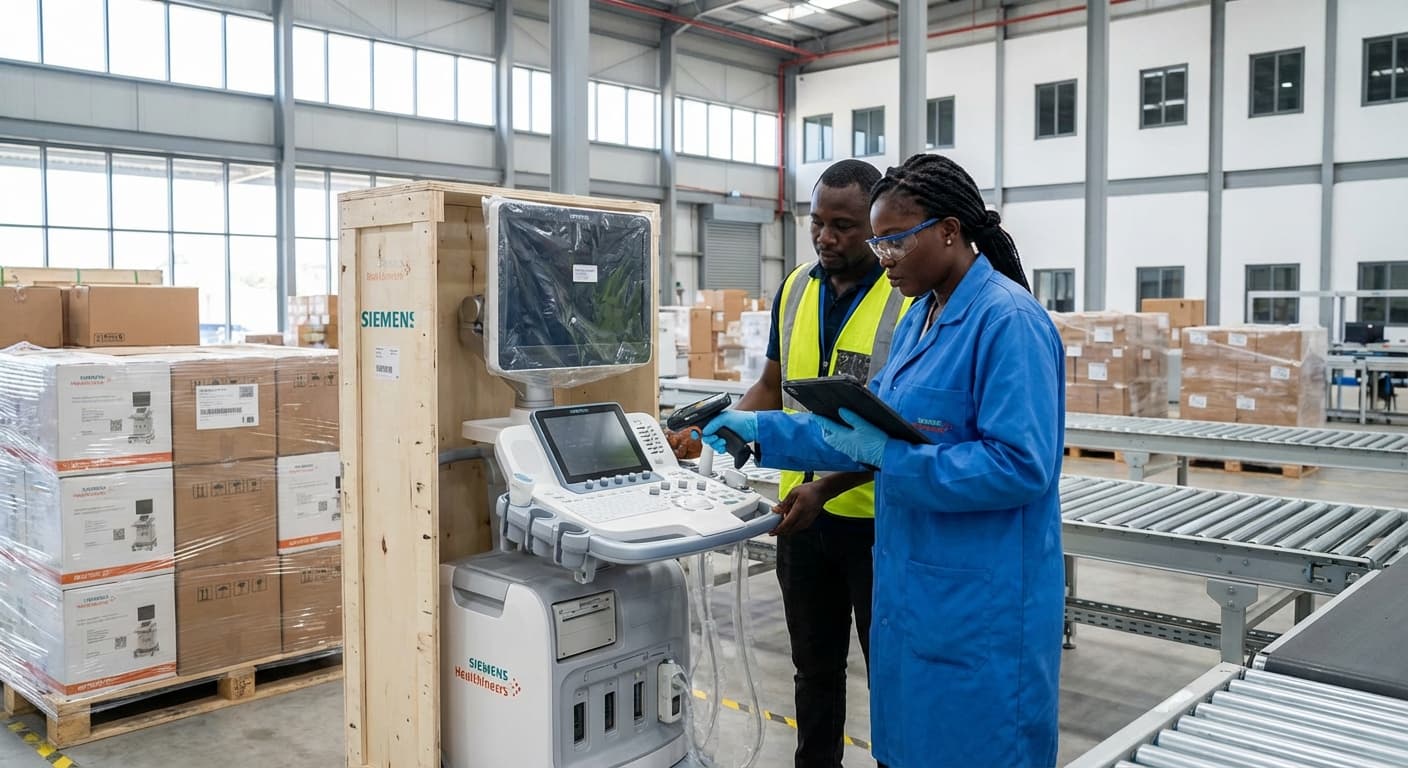
Warehouse Receiving Inspection Service (Medical Equipment) in Eswatini
Engineering Excellence & Technical Support
Warehouse Receiving Inspection Service (Medical Equipment) High-standard technical execution following OEM protocols and local regulatory frameworks.
Real-Time Digital Traceability
Leveraging advanced barcode and RFID scanning, we provide instant, end-to-end digital traceability for all medical equipment received. This ensures accurate inventory management and compliance with regulatory requirements from the moment of arrival in Eswatini.
GXP-Compliant Documentation & Auditing
Our certified inspectors meticulously document all receiving inspections according to Good Manufacturing Practices (GMP) and Good Distribution Practices (GDP) guidelines. Secure, auditable digital records are maintained, ensuring readiness for regulatory audits within Eswatini's healthcare ecosystem.
Specialized Equipment Calibration Verification
We conduct on-site verification of critical calibration certifications for specialized medical equipment upon receipt. Our technicians ensure that all instruments meet the stringent performance standards required for patient safety and effective healthcare delivery in Eswatini.
What Is Warehouse Receiving Inspection Service (Medical Equipment) In Eswatini?
Warehouse Receiving Inspection Service (Medical Equipment) in Eswatini refers to a systematic process of verifying the quality, quantity, specifications, and regulatory compliance of medical equipment upon its arrival at a designated warehouse or storage facility within the Kingdom of Eswatini. This service is crucial for ensuring that received medical devices meet predefined standards, are fit for purpose, and adhere to all relevant national and international regulations before being released for further distribution, deployment, or use.
| Who Needs This Service? | Typical Use Cases | ||||
|---|---|---|---|---|---|
| Medical Equipment Importers and Distributors: Companies that import medical devices into Eswatini for sale or distribution. | Hospitals and Healthcare Facilities: Public and private healthcare providers receiving new medical equipment for their operations. | Government Procurement Agencies: Ministries of Health or other government bodies responsible for acquiring medical equipment for national health programs or strategic reserves. | Non-Governmental Organizations (NGOs): Organizations involved in the provision of healthcare services and medical equipment donations. | Third-Party Logistics (3PL) Providers: Warehousing and logistics companies managing medical equipment on behalf of other entities. | Manufacturers (Establishing Local Presence): Overseas manufacturers establishing distribution channels or local storage in Eswatini. |
| New Medical Device Procurement: Ensuring the quality and specifications of newly purchased equipment align with purchase orders and regulatory requirements upon arrival. | Donated Medical Equipment: Verifying the condition, suitability, and compliance of donated medical devices before they are integrated into the healthcare system. | Inventory Management and Quality Assurance: Establishing a baseline for inventory accuracy and implementing a critical quality gate to prevent defective or non-compliant equipment from entering circulation. | Regulatory Compliance Audits: Facilitating compliance with Eswatini's medical device regulations by ensuring all received items meet legal and safety standards. | Cold Chain Management Verification: For temperature-sensitive medical equipment (e.g., vaccines, certain diagnostic reagents), confirming that the cold chain has been maintained throughout the supply chain. | Asset Tracking and Lifecycle Management: Contributing to accurate asset registration and facilitating the subsequent management of medical equipment's operational life. |
Key Components of the Service:
- Visual Inspection: Assessing the physical condition of the equipment, including packaging integrity, absence of visible damage (dents, scratches, punctures), and proper labeling. This includes checking for signs of tampering or mishandling during transit.
- Quantity Verification: Cross-referencing the delivered items against accompanying documentation (e.g., packing lists, purchase orders, invoices) to ensure the correct number of units has been received. Discrepancies are meticulously recorded.
- Specification Verification: Confirming that the received equipment matches the agreed-upon specifications, as detailed in purchase orders, technical datasheets, or contractual agreements. This may involve checking model numbers, serial numbers, configurations, and included accessories.
- Documentation Review: Examining all accompanying documentation, including certificates of origin, quality certificates, conformity assessments, user manuals, warranty information, and any required import permits or licenses. This ensures regulatory compliance and traceability.
- Functionality Testing (as applicable): For certain types of medical equipment, a preliminary functional test or a 'power-on' test might be conducted to verify basic operability and identify immediate defects. More comprehensive performance validation may occur at a later stage.
- Compliance Check: Verifying adherence to Eswatini's specific regulatory requirements for medical devices, which may include registration with the Ministry of Health, adherence to labeling standards, and confirmation of manufacturer's compliance with relevant international standards (e.g., ISO 13485).
- Temperature and Humidity Monitoring (for sensitive equipment): For medical equipment requiring controlled storage conditions, verifying that temperature and humidity logs from transit and initial storage meet specified requirements.
- Reporting and Documentation: Generating detailed inspection reports that document all findings, including any deviations, discrepancies, or defects. These reports are critical for inventory management, quality control, and potential claims processing.
Who Needs Warehouse Receiving Inspection Service (Medical Equipment) In Eswatini?
Warehouse Receiving Inspection Service for medical equipment is crucial in Eswatini for entities that procure, store, and distribute these vital supplies. This service ensures that incoming medical equipment meets quality standards, is undamaged, and aligns with purchase orders before it enters the supply chain. This minimizes the risk of using faulty or inappropriate equipment, which can have serious consequences for patient care, operational efficiency, and financial resources.
| Target Customer | Key Departments/Personnel Involved |
|---|---|
| Government Ministry of Health | Procurement Department, Logistics and Warehousing Department, Quality Assurance Department, Biomedical Engineering Department |
| Hospitals (Public and Private) | Stores/Procurement Department, Biomedical Engineering Department, Nursing Supervisors (for specific equipment), Quality Management Department |
| Clinics and Health Centers | Clinic Manager, Stores Officer (if applicable), Healthcare Professionals responsible for equipment use |
| Non-Governmental Organizations (NGOs) involved in healthcare | Program Managers, Logistics Officers, Finance Department, Project Coordinators |
| Medical Equipment Suppliers and Distributors | Warehouse Manager, Quality Control Team, Sales Department, Logistics Department |
| Research Institutions and Laboratories | Laboratory Manager, Procurement Officer, Research Coordinators, Technical Staff |
| International Aid Organizations | Logistics and Supply Chain Managers, Program Officers, Field Coordinators, Technical Specialists |
Who Needs Warehouse Receiving Inspection Service (Medical Equipment) in Eswatini?
- Government Ministry of Health
- Hospitals (Public and Private)
- Clinics and Health Centers
- Non-Governmental Organizations (NGOs) involved in healthcare
- Medical Equipment Suppliers and Distributors
- Research Institutions and Laboratories
- International Aid Organizations
Warehouse Receiving Inspection Service (Medical Equipment) Process In Eswatini
The Warehouse Receiving Inspection Service for Medical Equipment in Eswatini ensures that all incoming medical equipment meets specified quality and safety standards before it is accepted into the warehouse. This process is critical for maintaining the integrity and functionality of medical supplies, ultimately impacting patient care. The workflow is designed to be thorough and systematic, commencing with an initial inquiry and culminating in the final inspection execution.
| Phase | Step | Description | Key Activities | Responsible Party |
|---|---|---|---|---|
| Inquiry & Service Request |
| The client (e.g., Ministry of Health, healthcare facility, distributor) expresses interest in the receiving inspection service for medical equipment. | Contacting the inspection service provider, requesting information on services offered, pricing, and availability. | Client |
| Inquiry & Service Request |
| Upon confirmation of interest, a formal service request is submitted. The provider then generates a quotation. | Client submits detailed requirements (equipment type, quantity, origin, expected delivery date). Provider prepares and submits a formal quotation based on scope and pricing. | Client, Inspection Service Provider |
| Information Gathering & Planning |
| Once the quotation is accepted, a service agreement or contract is established. | Formalizing terms and conditions, scope of work, timelines, and payment terms. Signing of the contract. | Client, Inspection Service Provider |
| Information Gathering & Planning |
| Detailed planning of the inspection process, including understanding the specifics of the equipment and delivery schedule. | Provider receives detailed information about the incoming shipment (packing lists, invoices, certificates of origin, manufacturer specifications, relevant standards). Scheduling the inspection date and time based on estimated arrival. | Inspection Service Provider, Client |
| Pre-Inspection Preparation |
| Assigning qualified inspectors and ensuring they have the necessary tools and documentation. | Identifying and assigning inspectors with expertise in medical equipment. Ensuring inspectors have access to relevant standards (local and international), checklists, and calibrated inspection tools. | Inspection Service Provider |
| On-Site Receiving Inspection |
| Observing the initial stages of the equipment's arrival at the warehouse. | Monitoring the safe unloading of the equipment. Checking for any visible damage to packaging during transit. | Inspectors, Warehouse Personnel, Logistics Provider |
| On-Site Receiving Inspection |
| Conducting a thorough visual check of the equipment and verifying accompanying documentation. | Checking for physical damage, correct model numbers, serial numbers, and conformity with specifications. Cross-referencing physical equipment against shipping documents (packing lists, invoices, purchase orders). Verifying compliance certificates (e.g., CE, FDA, local regulatory approvals). | Inspectors |
| On-Site Receiving Inspection |
| Performing tests to ensure the equipment operates as intended. | Conducting basic operational checks, calibration checks, and performance tests according to manufacturer guidelines and regulatory requirements. This may include running diagnostic tests or simulated usage. | Inspectors |
| On-Site Receiving Inspection |
| Ensuring the equipment meets all relevant quality and safety standards. | Verifying compliance with Eswatini's medical device regulations, electrical safety standards, and any specific client requirements. Checking for proper labeling and user manuals. | Inspectors |
| Documentation & Reporting |
| Compiling all findings into a comprehensive inspection report. | Documenting all observations, tests performed, results, deviations, and any non-conformities. Including photographic evidence where necessary. Categorizing findings (e.g., accepted, conditionally accepted, rejected). | Inspectors |
| Documentation & Reporting |
| Reviewing the report internally before submitting it to the client. | Internal quality assurance of the report. Submitting the final inspection report to the client for their review and decision-making. | Inspection Service Provider, Client |
| Follow-up & Closure |
| Facilitating the resolution of any identified issues or non-conformities. | Working with the client and supplier to address rejected items or deviations. This may involve re-inspection after corrective actions or return of faulty equipment. | Client, Inspection Service Provider, Supplier/Logistics Provider |
| Follow-up & Closure |
| Upon successful inspection and resolution of issues, the service is considered complete. | Client formally accepts the inspected equipment. Inspection Service Provider issues the final invoice for services rendered. Closing the service request. | Client, Inspection Service Provider |
Warehouse Receiving Inspection Service (Medical Equipment) Workflow
- Inquiry & Service Request
- Information Gathering & Planning
- Pre-Inspection Preparation
- On-Site Receiving Inspection
- Documentation & Reporting
- Follow-up & Closure
Warehouse Receiving Inspection Service (Medical Equipment) Cost In Eswatini
The cost of warehouse receiving inspection services for medical equipment in Eswatini can vary significantly based on several factors. These inspections are crucial to ensure the integrity, functionality, and compliance of medical devices before they are stored or distributed. Factors influencing pricing include the complexity and volume of equipment, the level of inspection required (e.g., visual, functional, sterility checks), the need for specialized personnel or equipment, and the location of the warehouse within Eswatini. Smaller, less complex items like consumables might have a lower per-unit inspection cost compared to larger, intricate machinery like MRI scanners or surgical robots. The reputation and experience of the inspection service provider also play a role in pricing.
| Inspection Service Tier | Typical Scope | Estimated Cost Range (Emalangeni - E) | Notes |
|---|---|---|---|
| Basic Visual & Documentation Check | Visual inspection for damage, verification of serial numbers, checking for completeness of documentation (e.g., manuals, certificates). | 150 - 400 E | Suitable for low-risk consumables or initial screening. |
| Standard Functional Check | Includes basic visual check plus preliminary functional testing to ensure basic operation. Verification of accessories. | 300 - 800 E | Applicable to many general medical devices. |
| Comprehensive Functional & Performance Testing | In-depth functional testing, calibration checks, and performance verification against specifications. May include basic safety checks. | 700 - 2,500 E+ | Required for critical or complex medical equipment. Cost scales with complexity. |
| Specialized/Regulatory Compliance Inspection | Includes comprehensive testing, potentially requiring specialized equipment and highly qualified personnel. Verification against specific regulatory standards (e.g., IEC 60601). | 1,500 - 10,000 E+ | For high-risk devices, imaging equipment, or devices requiring strict regulatory adherence. Can be project-based. |
| Per Unit/Batch Pricing (for high volume, low complexity items) | Varies significantly based on volume and item type. Can be a reduced per-unit cost for large orders of identical items. | 20 - 150 E (per unit/small batch) | Negotiated based on volume commitments and item type. |
Key Pricing Factors for Warehouse Receiving Inspection Services (Medical Equipment) in Eswatini
- Volume and Type of Medical Equipment: A higher volume of equipment or the presence of complex, high-value items will generally increase costs.
- Scope and Depth of Inspection: Basic visual checks are less expensive than comprehensive functional testing, calibration, or sterility assessments.
- Specialized Personnel and Equipment: Inspections requiring highly trained technicians (e.g., biomedical engineers) or specialized testing apparatus will incur higher charges.
- Regulatory Compliance Requirements: Adherence to specific international or local medical device regulations (e.g., WHO guidelines, national health ministry standards) may necessitate more rigorous inspection protocols, impacting cost.
- Location of Warehouse: Accessibility and logistical challenges to the warehouse site can influence transportation and on-site service fees.
- Urgency of Service: Expedited inspection services may come with premium pricing.
- Provider's Experience and Reputation: Established providers with a strong track record and certifications may command higher fees.
- Documentation and Reporting: The level of detail required in inspection reports and associated documentation can affect the overall cost.
Affordable Warehouse Receiving Inspection Service (Medical Equipment) Options
Finding affordable warehouse receiving inspection services for medical equipment is crucial for ensuring compliance, patient safety, and efficient inventory management. This service involves verifying the condition, quantity, and specifications of incoming medical devices against purchase orders and manufacturer guidelines. Cost-effective solutions often revolve around understanding value bundles and implementing smart cost-saving strategies.
| Cost-Saving Strategy | Description | Potential Benefit |
|---|---|---|
| Pre-Inspection Standardization | Develop clear, standardized checklists and protocols for common medical equipment. This streamlines the inspection process and reduces time spent on unique assessments for every item. | Reduced inspection time per unit, lower labor costs. |
| Technology Integration | Utilize barcode scanning for rapid item identification and data entry. Implement mobile inspection apps for real-time reporting and digital record-keeping. | Increased accuracy, faster processing, reduced administrative overhead. |
| Risk-Based Inspection Approach | Prioritize in-depth inspections for high-risk, high-value, or newly introduced medical equipment. Less critical or frequently received items can undergo more streamlined checks. | Optimized resource allocation, reduced unnecessary inspection costs. |
| Outsourced vs. In-House Analysis | Evaluate the cost-effectiveness of outsourcing inspections versus training and equipping an in-house team. Specialized providers often have economies of scale and expertise. | Reduced capital expenditure, access to specialized skills, potential for lower operational costs. |
| Long-Term Contracts & Partnerships | Negotiate multi-year contracts with preferred inspection service providers. Building a strong relationship can lead to better pricing and dedicated resources. | Price stability, preferential service, potential for bulk discounts. |
| Consolidated Shipments | Work with suppliers to consolidate shipments where possible. Fewer, larger deliveries can reduce the frequency of receiving inspections, thus lowering overall costs. | Reduced labor for receiving and inspection, fewer logistical touchpoints. |
| Clear Communication with Suppliers | Ensure suppliers adhere to your specified packaging, labeling, and documentation requirements. Errors from suppliers can lead to extended inspection times and additional costs. | Minimized rejections, faster receiving cycles, reduced dispute resolution time. |
Understanding Value Bundles in Warehouse Receiving Inspection
- {"title":"Basic Inspection Package","description":"This foundational bundle typically includes visual inspection for damage, verification of quantity against the packing slip, and confirmation of product identification (model numbers, serial numbers). It's the most budget-friendly option for routine deliveries."}
- {"title":"Standard Inspection Package","description":"Builds upon the basic package by adding functional testing for essential features, checking for completeness of accessories and documentation, and basic environmental checks (e.g., temperature during transit). This offers a good balance of cost and assurance for most medical equipment."}
- {"title":"Comprehensive Inspection Package","description":"This premium bundle includes all aspects of the standard package plus in-depth functional testing, calibration verification, detailed documentation review (manuals, certificates of compliance), and potentially even preliminary usability assessments. This is recommended for high-value, critical, or complex medical devices."}
- {"title":"Customizable Bundles","description":"Many service providers offer the flexibility to tailor inspection scopes based on specific equipment types, regulatory requirements, or risk assessments. This allows you to pay only for the services you truly need, maximizing value."}
- {"title":"Volume-Based Discounts","description":"Providers often offer tiered pricing where the per-inspection cost decreases as the volume of inspections increases. Negotiating for larger, recurring service agreements can unlock significant savings."}
Verified Providers In Eswatini
In Eswatini, ensuring you are receiving care from verified healthcare providers is paramount for your health and well-being. Franance Health stands out as a premier choice due to its stringent credentialing process, commitment to quality, and dedication to patient safety. This document outlines why Franance Health providers are the best choice for your healthcare needs in Eswatini.
| Franance Health Credentialing Aspect | Benefit for Patients in Eswatini | Why it Represents the Best Choice |
|---|---|---|
| Medical License Verification | Ensures providers are legally qualified and licensed to practice in Eswatini. | Guarantees that you are receiving care from legitimate and regulated medical professionals. |
| Education and Training Validation | Confirms that healthcare professionals have met recognized educational standards and undergone appropriate training. | Assures you that your provider possesses the necessary knowledge and skills for effective treatment. |
| Professional Experience Assessment | Evaluates the practical experience and track record of healthcare providers. | Indicates that your provider has hands-on experience and a history of successful patient care. |
| Background Checks and Criminal Record Screening | Prioritizes patient safety by screening for any past misconduct or criminal activity. | Provides an extra layer of security and trust, ensuring you are in safe hands. |
| Peer Review and Performance Monitoring | Involves ongoing assessment of clinical performance and adherence to best practices. | Demonstrates a commitment to continuous improvement and maintaining high standards of care. |
| Specialty Certifications | Verifies that providers have specialized training and certification in their respective fields. | Ensures you are treated by an expert in the specific medical area you require. |
Why Franance Health Providers are the Best Choice in Eswatini
- Rigorous Credentialing and Verification Process
- Commitment to Excellence and Patient Outcomes
- Focus on Patient Safety and Ethical Practices
- Comprehensive Range of Services and Specialties
- Affordability and Accessibility of Care
Scope Of Work For Warehouse Receiving Inspection Service (Medical Equipment)
This Scope of Work (SOW) outlines the services to be provided by the selected vendor for Warehouse Receiving Inspection of Medical Equipment. The objective is to ensure that all received medical equipment meets specified quality standards, safety regulations, and contractual requirements before being accepted into inventory. This SOW details the technical deliverables, standard specifications, and processes involved in the inspection service.
| Inspection Area | Standard Specifications / Requirements | Methodology / Procedure | Deliverable / Output |
|---|---|---|---|
| Documentation Verification | Match received items with POs, packing lists, and invoices. Verify serial numbers, model numbers, quantities, and expiration dates (if applicable). Ensure all required regulatory certifications (e.g., FDA, CE) are present and valid. | Compare physical items and documentation to purchase orders and manifests. Review provided certificates and licenses. | Document discrepancies between physical count/details and order documents. Provide copies of verified or missing documentation. |
| Physical Condition Assessment | No visible signs of damage (e.g., dents, scratches, cracks, corrosion). Packaging intact and suitable for protecting the equipment during transit and storage. Equipment appears new and unused, unless otherwise specified (e.g., refurbished equipment). | Visual inspection of the exterior of the equipment and its packaging. Check for any signs of mishandling or damage during transport. | Photographic evidence of any damages. Detailed description of physical defects. |
| Conformity to Specifications | Equipment meets all technical specifications outlined in the purchase order and manufacturer's datasheet (e.g., dimensions, materials, performance parameters, electrical requirements). | Measure physical attributes. Compare technical specifications from documentation with product markings and manufacturer data. | Confirmation of compliance with stated specifications. Identification of any deviations. |
| Functional Testing (as specified) | Equipment powers on correctly. Basic functions operate as per manufacturer's specifications. Safety features are engaged and appear functional. No error codes displayed during initial startup. | Perform pre-defined functional tests (e.g., power-on self-test, basic operational checks, safety mechanism tests). Refer to manufacturer's guidelines for test procedures. | Test results report indicating pass/fail for each tested function. List of any observed anomalies during testing. |
| Accessories and Consumables Verification | All specified accessories, consumables, and spare parts are present and correct as per the purchase order. Serial numbers for critical components are recorded. | Compare received accessories and consumables against the packing list and purchase order. Visually inspect for damage or defects. | List of included accessories. Verification of quantities and types of consumables. |
| Labeling and Identification | Equipment is clearly labeled with manufacturer name, model number, serial number, any necessary regulatory markings (e.g., CE, UL), and Lot/Batch numbers where applicable. Labels are legible and securely affixed. | Inspect all labels on the equipment for clarity, accuracy, and completeness. Verify against product documentation. | Confirmation of proper labeling. List of any missing or illegible labels. |
| Reporting and Non-Conformance Management | All inspections are documented accurately and in a timely manner. Non-conformities are clearly identified, categorized, and reported according to established procedures. Root cause analysis (if required) is initiated for recurring issues. | Utilize standardized inspection report templates. Follow defined non-conformance reporting and escalation procedures. | Comprehensive Inspection Reports (see below). Non-conformance Reports (NCRs) with supporting evidence. Recommendations for disposition of non-conforming items. |
Reporting Requirements
- Pre-Receipt Notification: Vendor shall notify the client at least [Number] business days prior to the expected arrival of shipments, providing details of expected equipment.
- Daily/Weekly Inspection Summary: A summary of inspections performed, including quantities inspected, passes, and failures, to be submitted at regular intervals as agreed.
- Detailed Inspection Report: For each received shipment or batch of equipment, a comprehensive report shall be generated. This report must include:
- Shipment/Order details (PO number, vendor, date received)
- Equipment details (Manufacturer, Model, Serial Number, Quantity)
- Inspection date and inspector's name
- Condition of packaging
- Results of physical and visual inspection (including photos of any damage)
- Verification of documentation (list of provided documents, noting any missing)
- Results of functional testing (if applicable, with pass/fail status)
- Confirmation of conformity to specifications
- Any deviations or non-conformities identified
- Recommendations for disposition of non-conforming items.
- Non-Conformance Report (NCR): For any item that fails inspection, a dedicated NCR shall be generated, detailing the specific reason for rejection and providing supporting evidence (e.g., photos, test results).
- Final Acceptance Report: Upon successful inspection and acceptance of the entire shipment, a final report confirming acceptance shall be provided.
Service Level Agreement For Warehouse Receiving Inspection Service (Medical Equipment)
This Service Level Agreement (SLA) outlines the guaranteed response times and uptime for the Warehouse Receiving Inspection Service for Medical Equipment, provided by [Your Company Name] to [Client Company Name]. This SLA is an addendum to the Master Service Agreement dated [Date of Master Agreement].
| Service Component | Response Time Guarantee | Uptime Guarantee |
|---|---|---|
| Receiving Inspection for Critical Equipment | Within 4 business hours of notification of arrival and availability for inspection. | 99.5% during Scheduled Service Hours |
| Receiving Inspection for Standard Equipment | Within 8 business hours of notification of arrival and availability for inspection. | 99.0% during Scheduled Service Hours |
| Reporting of Inspection Findings | Within 2 business hours of completing the inspection of Critical Equipment; Within 4 business hours of completing the inspection of Standard Equipment. | N/A (Time-bound delivery) |
| Escalation for Damaged or Discrepant Items | Immediate notification (within 1 business hour of identification) via [Designated Communication Channel] to Client's designated contact. | N/A (Event-driven) |
Definitions
- Receiving Inspection Service: The process of visually inspecting and documenting the condition of medical equipment upon arrival at the designated warehouse, verifying against purchase orders, and identifying any visible damage or discrepancies.
- Critical Equipment: Medical equipment designated by the Client as essential for immediate operational needs, where delays in inspection could significantly impact patient care or business operations.
- Standard Equipment: All medical equipment not designated as Critical Equipment.
- Response Time: The maximum time allowed from the initiation of a service request (e.g., notification of incoming shipment) to the commencement of the inspection activity by [Your Company Name]'s personnel.
- Uptime Guarantee: The percentage of time the Receiving Inspection Service is available and operational during scheduled service hours.
- Scheduled Service Hours: [Specify daily hours, e.g., Monday - Friday, 8:00 AM - 5:00 PM Local Time, excluding public holidays].
Frequently Asked Questions

Ready when you are
Let's scope your Warehouse Receiving Inspection Service (Medical Equipment) in Eswatini project in Eswatini.

Scaling healthcare logistics and technical systems across the entire continent.