
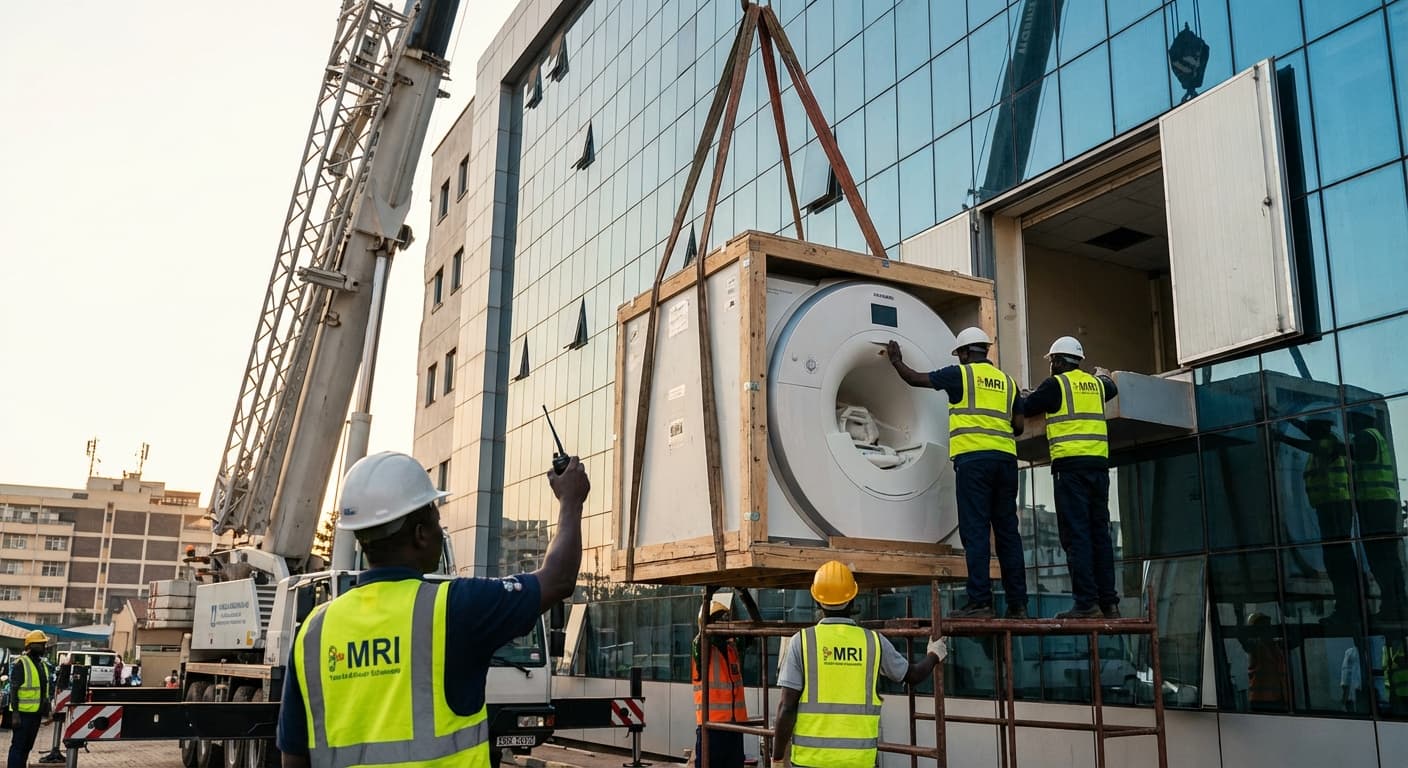
Cranage & Rigging Supervision Service in Eswatini
Engineering Excellence & Technical Support
Cranage & Rigging Supervision Service High-standard technical execution following OEM protocols and local regulatory frameworks.
Advanced Lift Planning & Execution
Our certified rigging supervisors utilize state-of-the-art load analysis software and advanced 3D modeling for precise lift planning. We ensure optimal crane selection, rigging configurations, and a meticulously detailed execution strategy, minimizing risk and maximizing efficiency for complex lifts in Eswatini's diverse industrial environments.
Uncompromising Safety & Compliance
We adhere to the highest international safety standards (e.g., LOLER, ASME) and Eswatini's specific regulations. Our supervisors are extensively trained in risk assessment, hazard identification, and the implementation of robust safety protocols, guaranteeing a secure working environment for all personnel and assets during all cranage and rigging operations.
Expert Load Securing & Transportation
Beyond lifting, our services encompass expert load securing and coordination of transportation for oversized and overweight cargo. We provide detailed lashing plans, oversee the entire loading and unloading process, and ensure compliance with transport regulations, facilitating seamless logistical solutions throughout Eswatini.
What Is Cranage & Rigging Supervision Service In Eswatini?
Cranage & Rigging Supervision Service in Eswatini refers to the specialized oversight and management of lifting operations involving cranes and associated rigging equipment. This service ensures that all lifting activities are conducted in strict accordance with established safety standards, regulatory requirements, and manufacturer specifications to prevent accidents, damage to equipment, and injury to personnel. The service encompasses planning, execution monitoring, and post-operation review, demanding a high degree of technical expertise in load calculations, equipment selection, rigging techniques, hazard identification, and emergency preparedness. Effective supervision is paramount for maintaining operational integrity and minimizing risks inherent in heavy lifting operations within industrial, construction, and logistical environments.
| Who Needs Cranage & Rigging Supervision? | Typical Use Cases | |||||
|---|---|---|---|---|---|---|
| Construction Companies: For lifting structural components, heavy machinery, and materials on-site. | Manufacturing & Industrial Plants: For moving heavy equipment, raw materials, and finished goods during production, maintenance, or shutdowns. | Oil & Gas Sector: For the installation and maintenance of offshore platforms, pipelines, and processing equipment. | Mining Operations: For the lifting and placement of large mining machinery and components. | Port & Logistics Companies: For the loading and unloading of heavy cargo from ships and other transport vehicles. | Infrastructure Development Projects: Including bridges, power plants, and large-scale civil engineering works. | Specialized Heavy Lift Contractors: Requiring external expertise for complex or high-risk operations. |
| Installation of large industrial machinery (e.g., turbines, generators, presses). | Erection of structural steel for buildings and bridges. | Placement of precast concrete elements. | Loading and unloading of transformers and heavy electrical equipment. | Maintenance and replacement of large components in operational plants. | Deployment of modular structures. | Handling of project cargo with significant weight and dimensions. |
Key Aspects of Cranage & Rigging Supervision Service
- Pre-lift Planning & Assessment: Includes detailed site surveys, load analysis, equipment suitability checks, and development of lift plans.
- Personnel Competency Verification: Ensuring operators, riggers, and signal persons are qualified and certified.
- Equipment Inspection & Certification: Verifying the integrity and certification of cranes, slings, shackles, and other rigging gear.
- Execution Monitoring: Real-time oversight of the lifting operation, including load positioning, swing control, and environmental condition monitoring.
- Communication Protocols: Establishing clear and effective communication channels between all parties involved.
- Hazard Identification & Risk Mitigation: Proactive identification of potential hazards and implementation of control measures.
- Emergency Response Planning: Development and practice of procedures for handling unexpected events.
- Documentation & Reporting: Maintaining comprehensive records of all lifting operations, including incident reports and post-lift evaluations.
Who Needs Cranage & Rigging Supervision Service In Eswatini?
Cranage and rigging supervision services are crucial for ensuring the safe, efficient, and compliant lifting and moving of heavy loads across various industries in Eswatini. These services are not just for emergencies but are an integral part of project planning and execution. Companies and individuals involved in complex lifting operations, requiring specialized expertise, or operating under stringent safety regulations are the primary beneficiaries. This includes projects demanding meticulous planning, precise execution, and mitigation of inherent risks associated with heavy lifting.
| Target Customer Segment | Key Departments/Roles Involved | Specific Needs |
|---|---|---|
| Construction Companies | Project Management, Site Management, Safety Officers, Engineering Department | Safe installation of heavy structural components, precise placement of pre-fabricated modules, lifting of materials to height, compliance with construction site safety regulations. |
| Mining Operations | Operations Management, Maintenance Department, Safety & Health Officers, Engineering | Installation and removal of heavy mining machinery, safe handling of large ore or waste material, equipment maintenance requiring critical lifts, ensuring operational continuity and safety. |
| Industrial Manufacturing | Plant Management, Production Management, Maintenance & Engineering, Safety Department | Relocation of heavy machinery, installation of new production lines, equipment upgrades, ensuring minimal disruption to production schedules and adherence to industrial safety standards. |
| Oil and Gas | Project Managers, Site Supervisors, HSE (Health, Safety, Environment) Managers, Engineering Teams | Installation of heavy modules, lifting of drilling equipment, maintenance of offshore or onshore facilities, adherence to extremely stringent safety protocols for hazardous environments. |
| Port and Logistics | Terminal Managers, Operations Supervisors, Safety Officers, Warehouse Managers | Efficient and safe loading/unloading of heavy cargo and containers, optimizing terminal operations, preventing damage to goods and infrastructure, ensuring timely cargo movement. |
| Energy Sector | Project Managers, Site Engineers, Operations & Maintenance Teams, HSE Department | Installation of turbines, generators, transformers, and other large power generation equipment, maintenance of existing infrastructure, safe handling of materials in power plants. |
Target Customers for Cranage & Rigging Supervision Service in Eswatini:
- Construction Companies (especially those undertaking large-scale infrastructure projects like dams, bridges, power plants, and commercial buildings)
- Mining Operations (for equipment installation, maintenance, and material handling)
- Industrial Manufacturing Facilities (for machinery relocation, installation, and production line setup)
- Oil and Gas Sector (for exploration, construction, and maintenance of facilities)
- Port and Logistics Companies (for cargo handling and container movement)
- Heavy Equipment Rental Companies (to ensure safe operation and compliance for their clients)
- Event Management Companies (for staging, sound systems, and large exhibit setup)
- Energy Sector (for installation and maintenance of power generation equipment, including renewables)
- Specialized Engineering Firms (undertaking complex assembly or installation projects)
- Government and Public Works Departments (for infrastructure development and maintenance)
- Agricultural Sector (for large-scale equipment installation or specialized harvesting operations)
- Any entity requiring the lifting and/or movement of exceptionally heavy or delicate loads.
Cranage & Rigging Supervision Service Process In Eswatini
The Cranage & Rigging Supervision Service Process in Eswatini outlines the structured workflow involved in providing expert oversight for lifting operations. This process ensures safety, efficiency, and compliance with industry standards and local regulations throughout the project lifecycle, from initial client contact to project completion.
| Phase | Key Activities | Output/Deliverable |
|---|---|---|
| Inquiry & Initial Consultation | Receive client request, understand scope, initial discussion. | Client inquiry details, preliminary understanding of needs. |
| Site Assessment & Risk Analysis | Site visit/review, hazard identification, constraint analysis, risk assessment. | Site assessment report, identified risks, preliminary safety considerations. |
| Service Proposal & Quotation | Develop service scope, methodology, safety plan, cost estimation. | Detailed service proposal, formal quotation. |
| Contract & Agreement | Negotiate terms, draft and sign contract. | Signed service contract, agreement on terms and conditions. |
| Pre-Lift Planning & Documentation | Review/approve lift plan, verify permits, confirm certifications. | Approved lift plan, verified permits, pre-operation checklists. |
| Personnel & Equipment Verification | Inspect equipment, verify personnel qualifications. | Equipment inspection reports, personnel competency verification. |
| On-Site Supervision & Execution | Direct and monitor lifting operation, ensure safety compliance, communication. | Safe and efficient lifting operation, real-time safety management. |
| Quality Control & Record Keeping | Monitor rigging, record operational data, document observations. | Quality control checks, operational logs, incident reports (if applicable). |
| Post-Lift Review & Handover | Discuss operation, confirm completion, site handover. | Post-lift review meeting, confirmed site handover. |
| Reporting & Invoicing | Compile final report, generate invoice. | Final service report, client invoice. |
Cranage & Rigging Supervision Service Workflow in Eswatini
- Inquiry & Initial Consultation: The process begins with a client submitting an inquiry detailing their lifting requirements. This includes the nature of the lift, equipment involved (cranes, rigging gear), location, timeline, and any specific safety concerns or regulatory requirements.
- Site Assessment & Risk Analysis: A preliminary site visit or thorough review of site-specific information is conducted. This involves identifying potential hazards, understanding site constraints (access, ground conditions, proximity to infrastructure), and assessing the complexity of the lifting operation. A formal risk assessment is initiated.
- Service Proposal & Quotation: Based on the inquiry and initial assessment, a detailed service proposal is prepared. This outlines the scope of supervision, the qualifications of the supervisors, the methodology, safety protocols, estimated duration, and a comprehensive quotation.
- Contract & Agreement: Upon acceptance of the proposal, a formal contract is established, clearly defining the responsibilities of both the service provider and the client, including payment terms, insurance, and liability.
- Pre-Lift Planning & Documentation: This is a critical phase. The supervisor reviews and approves the client's lift plan, ensuring it adheres to best practices and local regulations. This includes verifying crane capacity charts, rigging load capacities, communication protocols, and emergency procedures. All necessary permits and documentation are confirmed.
- Personnel & Equipment Verification: On the day of the operation, supervisors verify the competency and certifications of all personnel involved (crane operators, riggers, signalers). They also inspect all lifting equipment to ensure it is in good working order, properly certified, and suitable for the task.
- On-Site Supervision & Execution: The supervisor provides continuous on-site oversight throughout the lifting operation. This involves directing the lift, ensuring adherence to the approved lift plan, maintaining clear communication, monitoring environmental conditions, and intervening if any unsafe practices are observed. They act as the primary safety representative.
- Quality Control & Record Keeping: Throughout the operation, the supervisor monitors the quality of the lift, ensuring loads are rigged correctly and safely. Detailed records of the operation are maintained, including any deviations from the plan, safety observations, and incident reports (if any).
- Post-Lift Review & Handover: Once the lifting operation is successfully completed, a post-lift review is conducted with the client. This may include discussing any lessons learned and confirming the satisfactory completion of the service. The supervisor ensures all equipment is safely stowed and the site is left in an acceptable condition.
- Reporting & Invoicing: A final report summarizing the lifting operation, including safety performance and any significant events, is provided to the client. Invoicing is then processed according to the agreed-upon contract terms.
Cranage & Rigging Supervision Service Cost In Eswatini
The cost of Cranage & Rigging Supervision services in Eswatini is influenced by a variety of factors, making it essential to obtain detailed quotes for specific projects. These factors can significantly impact the final price, ranging from the complexity of the lift to the duration of the service. Understanding these elements will help clients budget effectively and ensure they receive competitive pricing.
Key Pricing Factors:
- Complexity of the Lift: This is perhaps the most significant factor. Simple lifts requiring minimal planning and standard equipment will be less expensive than complex, multi-stage lifts involving heavy or unusually shaped loads, high lifts, or confined spaces. The need for advanced rigging techniques and specialized equipment directly influences costs.
- Weight and Size of the Load: Heavier and larger loads necessitate more robust rigging gear, larger cranes, and a more experienced supervision team. The higher the weight and dimensions, the greater the risk and the more specialized expertise and equipment are required, leading to increased costs.
- Duration of the Project/Service: The length of time the supervision team and equipment are required on-site is a primary cost driver. This can be billed hourly, daily, or on a per-project basis. Longer projects generally incur higher overall costs, though daily or project rates might offer some economies of scale.
- Crane Size and Type: The specific type and capacity of the crane(s) needed for the job will affect pricing. Larger and more specialized cranes (e.g., mobile cranes, crawler cranes) come with higher rental and operational costs, which are often passed on in the supervision service fee.
- Site Conditions and Accessibility: Difficult site conditions, such as uneven terrain, limited access for heavy equipment, or proximity to existing structures, can increase setup time, require specialized maneuvering, and potentially necessitate additional safety precautions. This complexity translates to higher service costs.
- Number of Riggers and Supervisors: The required number of skilled riggers and supervisors is directly proportional to the complexity and scale of the operation. Larger or more critical lifts will demand a larger team, increasing labor costs.
- Specialized Equipment Requirements: Beyond the crane itself, if specialized rigging equipment like spreader bars, custom slings, or lifting frames is needed, these will add to the overall cost.
- Safety and Compliance Requirements: Adherence to strict safety regulations and potential requirements for additional certifications or inspections can influence the time and resources dedicated to supervision, thereby impacting cost.
- Geographical Location within Eswatini: While Eswatini is relatively small, transportation costs for equipment and personnel to more remote locations might slightly influence pricing. However, this is generally less of a factor than the technical aspects of the lift.
- Experience and Reputation of the Service Provider: Highly experienced and reputable cranage and rigging companies with a proven track record of safety and efficiency may command higher rates due to their expertise and reliability.
Pricing Ranges in Eswatini (Local Currency - Eswatini Lilangeni - SZL):
It's important to note that these are estimated ranges and can vary significantly. It is highly recommended to obtain at least three detailed quotes from different reputable providers for your specific project.
- Basic to Moderate Lifts (e.g., machinery relocation within a facility, smaller structural components): These might involve standard mobile cranes and a small, experienced team. Costs could range from SZL 3,000 to SZL 8,000 per day for supervision and basic rigging support, excluding crane rental. If the service is a complex lift or spans multiple days, a project-based fee could be negotiated, potentially starting from SZL 15,000 to SZL 40,000 for the entire project, depending on its duration and intricacy.
- Complex or Heavy Lifts (e.g., large industrial equipment installation, bridge sections, major construction components): These will require larger cranes, more extensive rigging plans, and a larger, highly skilled team. Daily rates for specialized supervision and rigging can range from SZL 7,000 to SZL 20,000+ per day, again, excluding the cost of the crane itself. Project-based fees for such operations can easily range from SZL 50,000 to SZL 200,000 or more, highly dependent on the overall project scope and duration.
- Hourly Rates (for very short or specialized tasks): Some providers may offer hourly rates for quick consultations or very specific rigging tasks. These could range from SZL 300 to SZL 800+ per hour per supervisor/rigger.
Exclusions: It's crucial to clarify what is included in the quote. Typically, the cost of crane rental, fuel, transportation of the crane, and any specialized rigging equipment rental are billed separately or as part of a package. Labor for the crane operator is also usually a separate line item. Always ask for a breakdown of costs.
Recommendation: For accurate pricing, consult directly with established cranage and rigging companies in Eswatini. Provide them with as much detail as possible about your project, including load specifications, lift plan (if available), site access information, and desired timeline.
| Service Type/Complexity | Estimated Daily Cost Range (SZL) | Estimated Project Cost Range (SZL) |
|---|---|---|
| Basic to Moderate Lifts (Supervision & Basic Rigging) | 3,000 - 8,000 | 15,000 - 40,000+ |
| Complex or Heavy Lifts (Specialized Supervision & Rigging) | 7,000 - 20,000+ | 50,000 - 200,000+ |
| Hourly Rate (Consultation/Specific Tasks) | N/A | 300 - 800+ per hour (per professional) |
Factors Influencing Cranage & Rigging Supervision Costs in Eswatini
- Complexity of the Lift
- Weight and Size of the Load
- Duration of the Project/Service
- Crane Size and Type
- Site Conditions and Accessibility
- Number of Riggers and Supervisors
- Specialized Equipment Requirements
- Safety and Compliance Requirements
- Geographical Location within Eswatini
- Experience and Reputation of the Service Provider
Affordable Cranage & Rigging Supervision Service Options
Our Affordable Cranage & Rigging Supervision Service offers a cost-effective solution for your lifting needs. We understand that budget is a key consideration, and we've developed flexible service packages designed to maximize value without compromising safety or quality. Our approach focuses on transparency, efficiency, and tailored solutions to ensure you get the best possible outcome for your investment.
| Cost-Saving Strategy | Description | Benefit |
|---|---|---|
| Off-Peak Scheduling | Scheduling your lifting operations during less busy periods (e.g., weekends, nights, or specific weekdays). | Reduces demand-driven pricing, potentially leading to lower equipment rental and labor costs. |
| Accurate Lift Planning & Scope Definition | Providing clear, detailed information about the lift's requirements, including weight, dimensions, location, and accessibility, before the service begins. | Prevents over-servicing, minimizes last-minute changes, and ensures the correct equipment and personnel are deployed efficiently, saving time and resources. |
| Client-Provided Equipment Option | Where feasible and safe, allowing clients to provide their own certified cranes or rigging gear under our supervision. | Significantly reduces overall project costs by leveraging existing client assets. |
| Bundle Discounting | Purchasing services in pre-defined or customized bundles often comes with a discounted rate compared to individual service bookings. | Provides a clear cost advantage for clients requiring multiple services or ongoing support. |
| Efficient On-Site Management | Our experienced supervisors ensure smooth operations, minimizing downtime and optimizing workflow. | Reduces project duration, leading to lower labor and equipment rental costs. |
| Early Bird Booking Incentives | Offering reduced rates for bookings made well in advance of the required date. | Helps with our own resource planning and allows us to pass on savings to clients. |
Understanding Our Value Bundles
- Basic Supervision Package: Ideal for straightforward lifts with well-defined scopes. Includes essential on-site supervision by a qualified rigger to oversee the operation, ensure adherence to safety protocols, and manage basic communication. This is our most economical option.
- Standard Cranage & Supervision Bundle: Combines basic supervision with the provision of a suitable crane and experienced operator. This package is designed for typical industrial or construction lifts where both equipment and expert oversight are required. It offers a good balance of cost and comprehensive service.
- Advanced Rigging Planning & Supervision: For more complex or high-risk lifts. This bundle includes pre-lift planning, detailed risk assessments, method statement development, and full-time supervision by a senior rigging supervisor. This proactive approach minimizes potential issues and often saves costs in the long run by preventing delays and accidents.
- Project-Based Tailored Solutions: We can customize a package specifically for your project's unique requirements. This allows for the inclusion of specific equipment, extended supervision hours, or specialized rigging techniques, ensuring you only pay for what you truly need. This is often the most cost-effective approach for larger or longer-duration projects.
Verified Providers In Eswatini
In Eswatini, ensuring you're accessing healthcare from verified providers is paramount for your well-being. Franance Health stands out as a leader in this regard, offering a robust credentialing process that guarantees the quality and legitimacy of their network of healthcare professionals. This meticulous verification process instills confidence and assures patients that they are receiving care from qualified and reputable individuals.
| Franance Health Verification Aspect | Benefit to Patients |
|---|---|
| License and Certification Validation | Confirms legal authorization to practice medicine. |
| Educational Background Verification | Ensures formal training and academic qualifications. |
| Professional Experience Assessment | Guarantees practical experience and proven track record. |
| Specialty Competency Review | Confirms expertise in specific medical fields. |
| Ethical Practice Evaluation | Ensures adherence to professional conduct and patient rights. |
| Continuous Quality Assurance | Maintains high standards of care over time. |
Why Franance Health Credentials Represent the Best Choice:
- Rigorous Qualification Checks: Franance Health conducts thorough background checks on all medical professionals, verifying their licenses, educational qualifications, and professional experience.
- Specialty and Competency Verification: Beyond basic credentials, Franance Health assesses the specific skills and competencies of providers within their chosen specialties, ensuring they are up-to-date with the latest medical advancements.
- Commitment to Ethical Practice: The credentialing process includes an evaluation of a provider's commitment to ethical medical practices and patient care standards.
- Ongoing Monitoring: Franance Health doesn't stop at initial verification. They have mechanisms in place for ongoing monitoring and re-credentialing to ensure continued adherence to their high standards.
- Patient Safety First: The primary goal of Franance Health's credentialing is to prioritize patient safety and provide access to the most reliable healthcare services available in Eswatini.
- Reduced Risk for Patients: By choosing a Franance Health-verified provider, patients significantly reduce the risk of encountering unqualified or fraudulent healthcare practitioners.
- Trust and Peace of Mind: The Franance Health seal of approval offers an invaluable sense of trust and peace of mind, allowing patients to focus on their health journey without undue concern about provider legitimacy.
Scope Of Work For Cranage & Rigging Supervision Service
This Scope of Work (SOW) outlines the requirements for Cranage and Rigging Supervision Services. The service provider will be responsible for providing experienced and qualified personnel to supervise all cranage and rigging operations to ensure safety, efficiency, and adherence to all relevant standards and project specifications. This document also details the expected technical deliverables and standard specifications to be followed.
| Category | Technical Deliverables | Standard Specifications |
|---|---|---|
| Personnel Qualifications | Resumes and certifications of all proposed supervisors. | Certified Lift Supervisor (e.g., Rigger Level III, Appointed Person), Crane Operator certifications (e.g., NCCCO, LOLER), Rigging certifications (e.g., Rigger Level I/II). Minimum of 5 years relevant experience. |
| Lift Plans | Review and approval of all project-specific lift plans. | Compliance with manufacturer's load charts, site-specific risk assessments, and relevant industry standards (e.g., ASME B30.5, BS 7121). |
| Equipment Inspection | Daily, weekly, and monthly inspection reports for all lifting equipment (cranes, slings, shackles, spreader beams, etc.). | Compliance with manufacturer's recommendations, LOLER (Lifting Operations and Lifting Equipment Regulations), PUWER (Provision and Use of Work Equipment Regulations), and other applicable regulations. Certificates of Thorough Examination. |
| Method Statements | Review and approval of rigging and cranage method statements. | Detailed description of the lifting procedure, personnel involved, equipment to be used, hazard identification, and control measures. |
| Pre-Lift Checks | Daily pre-lift checklist sign-offs for all lifting gear and equipment. | Visual inspection, functional tests, and verification of certifications. |
| Incident Reporting | Immediate reporting of all incidents, near misses, and deviations from the lift plan. | Detailed incident report including cause, impact, corrective actions, and recommendations for prevention. Root Cause Analysis (RCA) as required. |
| Daily Activity Reports | Daily reports summarizing all lifting activities, including equipment used, personnel involved, hours worked, and any noted issues. | Standardized report format agreed upon by both parties. |
| Weather Monitoring | Records of weather conditions and operational decisions based on wind speed, visibility, and other factors. | Adherence to wind speed limits specified in crane manufacturer's manuals and project safety procedures. |
| Communication Protocols | Established communication channels and procedures between supervisors, operators, and site management. | Clear, concise communication methods (e.g., radio, hand signals) as per industry standards. |
| Risk Assessments | Contribution to and review of site-specific risk assessments for lifting operations. | Identification of potential hazards (e.g., proximity to power lines, ground conditions, personnel movement) and implementation of control measures. |
Key Objectives and Responsibilities
- Ensure all cranage and rigging activities are performed safely and in accordance with approved lift plans and method statements.
- Verify that all lifting equipment and accessories are inspected, certified, and fit for purpose.
- Supervise the setup, operation, and dismantling of all cranes and rigging equipment.
- Monitor weather conditions and advise on operational shutdowns when unsafe.
- Liaise with site management, lifting teams, and other stakeholders to coordinate lifting activities.
- Identify and mitigate potential hazards associated with lifting operations.
- Ensure compliance with project-specific safety regulations and industry best practices.
- Maintain accurate records of all lifting operations, including pre-lift checks, incident reports, and daily logs.
- Provide guidance and training to site personnel on safe lifting practices where required.
- Conduct post-lift inspections to ensure the integrity of lifted items and surrounding infrastructure.
Service Level Agreement For Cranage & Rigging Supervision Service
This Service Level Agreement (SLA) outlines the performance standards and guarantees for the Cranage & Rigging Supervision Service provided by [Your Company Name] to [Client Company Name]. This SLA is an appendix to the main Service Agreement between the parties.
| Service Level | Description | Target (Business Hours) | Target (24/7 Operations) | Exclusions |
|---|---|---|---|---|
| Response Time - Critical Incident | Initial acknowledgment and commencement of troubleshooting for issues severely impacting operations (e.g., unsafe lifting conditions, equipment failure during critical lift). | 30 minutes | 15 minutes | Scheduled maintenance, Force Majeure events, client-induced issues. |
| Response Time - High Priority Incident | Initial acknowledgment and commencement of troubleshooting for issues significantly impacting productivity but not posing immediate safety risks (e.g., minor equipment malfunction, communication breakdown). | 1 hour | 30 minutes | Scheduled maintenance, Force Majeure events, client-induced issues. |
| Response Time - Medium Priority Incident | Initial acknowledgment and commencement of troubleshooting for issues causing inconvenience or minor delays (e.g., questions about procedures, minor non-critical equipment adjustments). | 4 business hours | N/A | Scheduled maintenance, Force Majeure events, client-induced issues. |
| Uptime Guarantee | Percentage of time the Cranage & Rigging Supervision Service is operational and accessible. 'Operational' means a qualified supervisor is available and ready to commence duties as per the Service Agreement's schedule. | 99.0% | 99.5% | Scheduled maintenance windows, Force Majeure events, planned downtime agreed upon by both parties. |
| Resolution Time - Critical Incident | Time to restore the service to a fully operational state. This may involve temporary workarounds if full resolution is not immediately possible. | 4 hours | 2 hours | Issues requiring parts not readily available, complex third-party dependencies. |
| Resolution Time - High Priority Incident | Time to restore the service to a fully operational state. | 8 business hours | 4 hours | Issues requiring significant parts or complex engineering. |
| Resolution Time - Medium Priority Incident | Time to provide a satisfactory resolution or workaround. | 2 business days | N/A | Issues requiring extensive investigation or third-party involvement. |
Key Service Metrics
- Response Time: The maximum time allowed for [Your Company Name] to acknowledge and begin addressing a reported service issue.
- Uptime Guarantee: The minimum percentage of time the Cranage & Rigging Supervision Service is expected to be available and functional during agreed-upon operating hours.
- Resolution Time: The maximum time allowed to resolve a reported service issue, categorized by severity.
Frequently Asked Questions

Ready when you are
Let's scope your Cranage & Rigging Supervision Service in Eswatini project in Eswatini.

Scaling healthcare logistics and technical systems across the entire continent.