
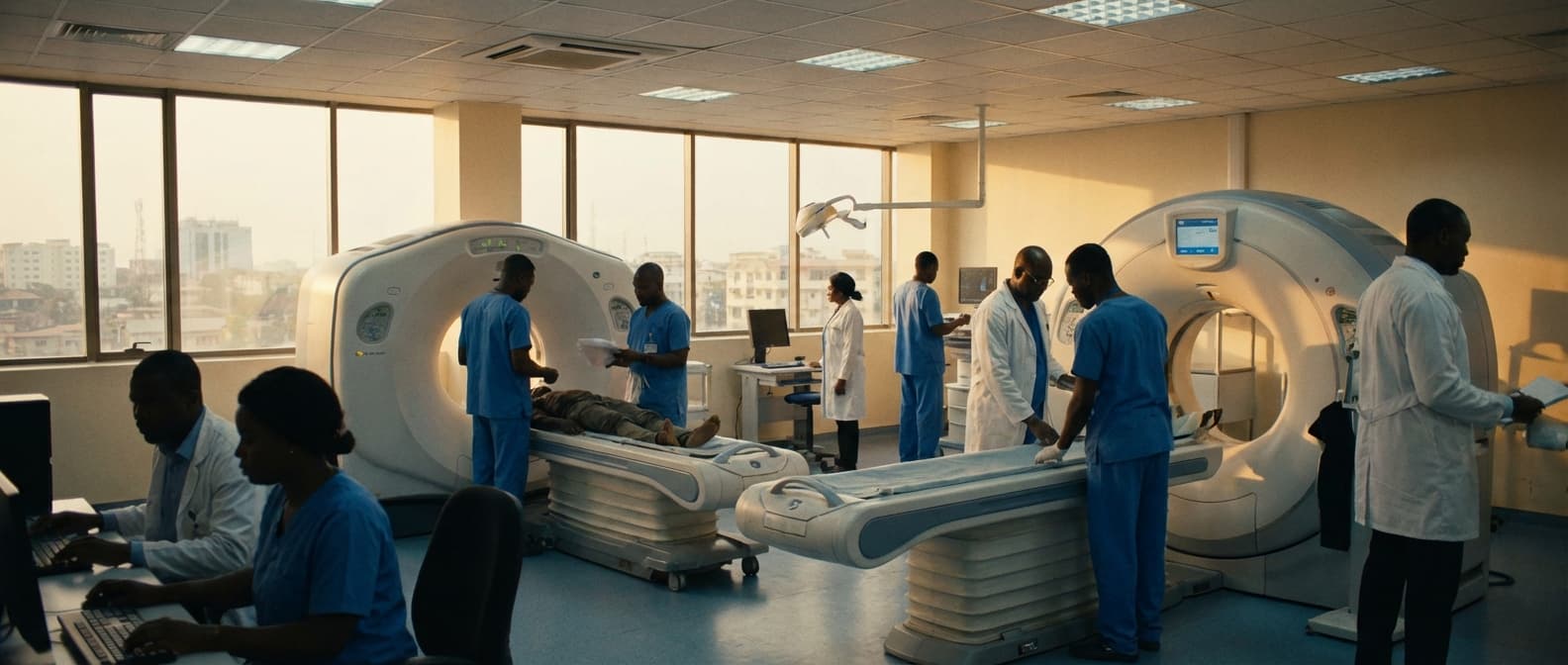
Radiology Room Design & Shielding Calculation in Eswatini
Engineering Excellence & Technical Support
Turnkey room planning, shielding drawings and approvals for imaging suites. High-standard technical execution following OEM protocols and local regulatory frameworks.
Advanced Radiation Shielding Design for Radiology Facilities
We specialize in calculating and implementing optimal radiation shielding solutions for radiology rooms in Eswatini, ensuring compliance with international safety standards while minimizing material costs and construction complexity. Our designs incorporate lead, concrete, and specialized materials tailored to specific X-ray, CT, and MRI equipment, guaranteeing protection for staff and patients.
Precision Room Layout and Workflow Optimization
Our design process focuses on creating ergonomically efficient radiology rooms in Eswatini. We meticulously plan equipment placement, patient pathways, control rooms, and ancillary spaces to enhance workflow, reduce examination times, and improve the overall patient and technologist experience, all while adhering to stringent radiation safety protocols.
Tailored Shielding Calculations for Diverse Modalities
We provide comprehensive shielding calculations for a wide range of imaging modalities utilized in Eswatini's healthcare sector, including general radiography, fluoroscopy, mammography, CT scanners, and MRI suites. Our expert analysis considers beam geometry, workload, occupancy factors, and desired dose limits to deliver precise and cost-effective shielding recommendations for each unique application.
What Is Radiology Room Design & Shielding Calculation In Eswatini?
Radiology room design and shielding calculation in Eswatini refers to the specialized engineering and architectural services required for the planning, construction, and retrofitting of medical imaging facilities to ensure the safe and effective operation of diagnostic and therapeutic radiological equipment. This encompasses the creation of environments that minimize radiation exposure to patients, medical personnel, and the general public, while optimizing workflow and diagnostic efficacy. The process involves a detailed understanding of radiation physics, relevant national and international safety standards, and the specific characteristics of the imaging modalities employed. It is a critical component of regulatory compliance and operational safety in any facility utilizing ionizing radiation for medical purposes.
| Who Needs This Service? | Typical Use Cases in Eswatini | |||||
|---|---|---|---|---|---|---|
| Healthcare Facilities: Hospitals, clinics, diagnostic imaging centers, and private practices planning to install or upgrade new radiology departments or individual imaging suites. | New Construction Projects: Designing radiology rooms from the ground up for newly built healthcare facilities. | Renovations & Retrofitting: Modifying existing spaces to accommodate new imaging equipment or to improve radiation safety in older installations. | Regulatory Bodies & Radiation Protection Authorities: To review and approve designs and ensure compliance with national safety standards. | Equipment Manufacturers & Installers: To ensure their equipment is installed in properly designed and shielded environments. | Architects & Engineers: Collaborating on overall building design to integrate specialized radiological requirements. | Medical Physicists: Essential for performing calculations, simulations, and verification surveys. |
| Installation of X-ray machines: For general radiography, mammography, and fluoroscopy. | Computed Tomography (CT) scanners: Requiring significant shielding due to higher radiation doses. | Magnetic Resonance Imaging (MRI) suites: While not using ionizing radiation, they have unique structural and shielding requirements (e.g., RF shielding, quench pipe considerations). | Nuclear Medicine departments: For SPECT and PET scanners, involving radioactive isotopes and requiring containment and ventilation strategies. | Radiotherapy centers: For linear accelerators and brachytherapy, which involve very high-energy radiation and demand extensive shielding. | Interventional Radiology Suites: Requiring leaded aprons, curtains, and specialized room layouts for procedures involving real-time imaging. | Mobile X-ray units: Designing temporary shielded areas or ensuring appropriate distances from operational mobile units. |
Key Components of Radiology Room Design & Shielding Calculation Service
- Radiation Physics & Dosimetry Assessment: Understanding the types, energies, and intensities of radiation emitted by specific imaging equipment (X-ray, CT, MRI, Nuclear Medicine, Linear Accelerators). Calculation of dose rates at various locations within and outside the room.
- Facility Layout & Ergonomics: Designing the room's physical dimensions, door placement, control booth location, and equipment positioning to optimize workflow, patient access, and staff safety.
- Shielding Material Selection & Calculation: Determining the type and thickness of shielding materials (e.g., lead, concrete, barytes concrete) required for walls, floors, ceilings, doors, and windows to attenuate radiation to acceptable levels, based on occupancy factors, workload, and distance.
- Ventilation & Environmental Control: Ensuring adequate ventilation for equipment cooling and patient comfort, and maintaining appropriate temperature and humidity.
- Electrical & Mechanical Services Integration: Planning for power supply, grounding, emergency power, and specialized HVAC requirements for sensitive imaging equipment.
- Acoustic Considerations: Minimizing noise pollution from equipment for patient comfort and staff communication.
- Compliance with Regulations: Adhering to Eswatini's national radiation protection regulations, as well as recommendations from international bodies like the International Atomic Energy Agency (IAEA).
- Quality Assurance & Verification: Post-construction or post-modification radiation surveys and dosimetry measurements to verify the efficacy of the shielding and compliance with regulatory limits.
- Documentation & Reporting: Providing comprehensive design plans, shielding calculations, and final safety reports.
Who Needs Radiology Room Design & Shielding Calculation In Eswatini?
Radiology room design and shielding calculation are critical for ensuring the safety of patients, staff, and the public from ionizing radiation. These specialized services are essential for any facility in Eswatini that utilizes X-ray, CT scanners, MRI machines, or other diagnostic imaging equipment producing radiation. Proper design minimizes radiation exposure by incorporating appropriate shielding materials in walls, floors, ceilings, and doors, while also optimizing workflow, patient comfort, and equipment functionality. Accurate calculations prevent over-shielding (wasting resources) and under-shielding (posing a radiation hazard).
| Department | Primary Radiology Modalities Used | Specific Needs for Design & Shielding |
|---|---|---|
| Radiology/Diagnostic Imaging | X-ray, CT, Fluoroscopy, Mammography, Ultrasound (non-ionizing but room layout is important) | Primary focus for shielding calculations and room layout optimization. Requires expertise in radiation physics. |
| Cardiology | Fluoroscopy (for angiography, interventional procedures), CT Angiography | Shielding for high-dose fluoroscopy procedures, dedicated angio suites with specialized shielding and workflow considerations. |
| Orthopedics | X-ray, Fluoroscopy (for surgical guidance) | Shielding for X-ray rooms and potentially specialized fluoroscopy rooms used during surgical procedures. |
| Oncology | CT, PET-CT, X-ray | Shielding for CT and PET-CT scanners used for staging and treatment planning. PET-CT has unique shielding requirements due to radioactive isotopes. |
| Emergency Department | X-ray, CT | Rapid access imaging areas requiring efficient workflow and robust shielding to accommodate high patient throughput and unpredictable cases. |
| Surgery | C-arm fluoroscopy (portable units) | While the units are portable, considerations for shielding in operating rooms where they are frequently used. Staff awareness of scattered radiation is crucial. |
| Pediatrics | X-ray, CT | Specialized room designs for child comfort, potentially lower radiation doses, and appropriate shielding to minimize exposure to developing bodies. |
| Veterinary Radiology | X-ray, CT | Similar shielding principles to human radiology, but adapted for animal positioning and species-specific requirements. |
Target Customers and Departments in Eswatini
- {"title":"Hospitals","description":"Both public and private hospitals require state-of-the-art radiology facilities to provide comprehensive diagnostic services."}
- {"title":"Specialty Clinics","description":"Clinics focusing on specific medical areas like orthopedics, cardiology, or neurology often have dedicated radiology departments."}
- {"title":"Diagnostic Imaging Centers","description":"Independent centers that offer a wide range of imaging modalities to patients referred by various healthcare providers."}
- {"title":"Government Health Facilities","description":"Public health centers and district hospitals that are being upgraded or established to provide essential diagnostic imaging."}
- {"title":"Tertiary Referral Centers","description":"Larger institutions that serve as referral hubs for complex cases and require advanced radiology capabilities."}
- {"title":"Veterinary Clinics/Hospitals (for advanced imaging)","description":"Larger veterinary practices that invest in advanced imaging equipment for diagnostic purposes."}
Radiology Room Design & Shielding Calculation Process In Eswatini
This document outlines the workflow for radiology room design and shielding calculation processes in Eswatini, from initial inquiry to final execution. The process ensures compliance with radiation safety regulations and optimal room functionality for diagnostic imaging procedures.
| Stage | Key Activities | Responsible Parties | Documentation Required |
|---|---|---|---|
| Define room requirements, modalities, throughput, site constraints | Healthcare Facility Management, Imaging Department, Radiologist | Needs assessment report, initial brief |
| Measure dimensions, assess construction, identify adjacent areas, note infrastructure | Medical Physicist/Radiation Safety Officer (RSO), Architect/Engineer | Site survey report, architectural drawings (if available), photographs |
| Identify Eswatini national regulations and international guidelines | RSO, Medical Physicist | List of applicable regulations and standards |
| Select calculation methods based on modality and workload | Medical Physicist | Chosen calculation formulas/software documentation |
| Specify materials (lead, concrete) and thicknesses for each barrier | Medical Physicist | Shielding calculation report with material specifications |
| Plan equipment placement, workflow, patient access, safety features | Architect/Designer, RSO, Medical Physicist | Floor plans, elevation drawings, 3D models (optional) |
| Stakeholder review of design and calculations, incorporate feedback | RSO, Medical Physicist, Architects, Engineers, Facility Management | Design review minutes, revised drawings/calculations, approval signatures |
| Source and install shielding materials, supervise construction | Contractors, Site Supervisors, Medical Physicist | Material procurement records, construction logs, installation verification reports |
| Measure radiation levels to verify installed shielding before equipment installation | Medical Physicist | Pre-operational survey report |
| Install and test imaging equipment performance | Equipment Manufacturer/Technicians, Medical Physicist | Equipment installation checklist, commissioning reports, QA test results |
| Measure radiation levels with operational equipment, confirm compliance, acceptance testing | Medical Physicist | Post-installation radiation survey report, acceptance testing report |
| Compile comprehensive report and submit to ERPA | Medical Physicist, RSO | Final design and shielding report, survey results, submission documentation |
| Regular QA checks and periodic radiation surveys | RSO, Medical Physicist | QA records, periodic survey reports, maintenance logs |
Radiology Room Design & Shielding Calculation Workflow
- {"title":"1. Inquiry & Needs Assessment","description":"The process begins with an inquiry from a healthcare facility or individual requesting the design and shielding for a new or existing radiology room. This stage involves understanding the specific imaging modalities to be housed (e.g., X-ray, CT, MRI, fluoroscopy), the intended patient throughput, and any specific architectural constraints or preferences."}
- {"title":"2. Site Survey & Data Collection","description":"A site survey is conducted to gather crucial information about the proposed room location. This includes measurements of room dimensions, wall construction materials and thicknesses, floor and ceiling composition, and proximity to occupied areas (e.g., other patient rooms, offices, public spaces). Existing infrastructure like power, ventilation, and potential access points are also assessed."}
- {"title":"3. Regulatory Review & Standards Identification","description":"The relevant radiation safety regulations and guidelines for Eswatini are identified and reviewed. This typically involves adherence to national standards set by the Eswatini Radiation Protection Authority (ERPA) or equivalent bodies, as well as international best practices (e.g., ICRP recommendations)."}
- {"title":"4. Shielding Calculation Methodology","description":"Based on the imaging modality, equipment specifications (e.g., kVp, mA, workload), and site survey data, the appropriate shielding calculation methodology is selected. This commonly involves using established formulas and factors derived from radiation physics principles or utilizing specialized shielding design software."}
- {"title":"5. Shielding Material Selection & Thickness Determination","description":"The type and thickness of shielding materials (e.g., lead, concrete, baryte plaster) are determined for each area of the room (walls, doors, windows, floors, ceilings) to ensure that radiation levels in adjacent occupied areas remain below regulatory limits. Factors such as attenuation coefficients of materials and desired dose reduction are considered."}
- {"title":"6. Room Layout & Design","description":"Simultaneously with shielding calculations, the room layout is designed to optimize workflow, patient comfort, and operator safety. This includes placement of the imaging equipment, control console, patient table, and necessary ancillary equipment. Consideration is given to patient access, emergency exits, and infection control measures."}
- {"title":"7. Design Review & Approval","description":"The proposed room design and shielding calculations are reviewed by relevant stakeholders, including the healthcare facility's radiation safety officer (RSO), medical physicists, architects, and engineers. Feedback is incorporated, and revisions are made as necessary. Formal approval is sought from the RSO and potentially the ERPA."}
- {"title":"8. Construction & Material Procurement","description":"Upon approval, the construction phase commences. This involves procuring the specified shielding materials and ensuring their correct installation according to the design specifications. Close supervision by a qualified physicist or engineer is crucial to verify correct material application and thickness."}
- {"title":"9. Pre-Operational Shielding Verification","description":"Before the imaging equipment is installed and the room is used for patient procedures, a pre-operational survey is conducted. This involves performing radiation measurements to verify that the installed shielding meets the calculated requirements and complies with regulatory limits. Any discrepancies are identified and rectified."}
- {"title":"10. Equipment Installation & Commissioning","description":"The radiology equipment is installed and commissioned by the manufacturer. This stage includes quality assurance testing of the imaging equipment itself to ensure its performance meets specifications."}
- {"title":"11. Post-Installation Radiation Survey & Acceptance Testing","description":"Following equipment installation and commissioning, a comprehensive post-installation radiation survey is performed. This is a critical step to confirm that the combined effect of the installed shielding and the operational equipment results in radiation levels that are within acceptable safety limits for all occupied areas. This survey also serves as acceptance testing of the room and equipment together."}
- {"title":"12. Final Report & Regulatory Submission","description":"A detailed report is compiled, documenting the entire design process, shielding calculations, site survey findings, construction verification, and the results of the pre-operational and post-installation radiation surveys. This report is submitted to the ERPA for final licensing and approval of the radiology room for operation."}
- {"title":"13. Ongoing Quality Assurance & Periodic Reviews","description":"Regular quality assurance checks and periodic radiation surveys are performed throughout the lifespan of the radiology room to ensure continued compliance with safety standards and to account for any potential changes in equipment workload or room usage. Any modifications to the room or equipment necessitate a re-evaluation of shielding."}
Radiology Room Design & Shielding Calculation Cost In Eswatini
Designing and implementing radiation shielding for radiology rooms in Eswatini involves several key cost drivers. These include the complexity of the room layout, the type and energy of the imaging equipment, the required lead shielding thickness, the availability of specialized materials and labor, and the regulatory compliance needs. The cost will vary significantly based on the specific project requirements. It's crucial to consult with local architects, radiation safety officers, and construction companies experienced in medical facility construction to obtain accurate quotes.
| Service/Material | Estimated Price Range (EWP) | Notes |
|---|---|---|
| Architectural & Engineering Design (per sq. meter) | E 500 - E 1,500 | Varies based on complexity and firm's reputation. |
| Lead Shielding Material (per mm thickness, per sq. meter) | E 2,000 - E 5,000 | Price is for lead sheets of sufficient purity and density. Thicker lead required for higher energy/output equipment. |
| Installation Labor (skilled, per day) | E 800 - E 1,500 | Specialized installers are essential for effective shielding. |
| Standard X-ray Room Shielding (e.g., 10-15mm lead equivalent) | E 80,000 - E 250,000+ | This is a broad estimate, heavily dependent on room size and lead thickness. Includes materials and basic installation. Excludes room construction itself. |
| CT Scanner Room Shielding (e.g., 20-30mm lead equivalent or alternative materials) | E 200,000 - E 700,000+ | CT scanners require significantly more shielding due to higher radiation output and scatter. May involve specialized concrete or other materials in addition to lead. |
| Radiation Safety Officer (RSO) Consultation | E 5,000 - E 15,000 (per consultation/project phase) | Crucial for determining shielding requirements and compliance. |
| Regulatory Approval & Inspection Fees | E 2,000 - E 10,000 | Varies by the specific regulatory body and number of inspections. |
Key Pricing Factors for Radiology Room Design & Shielding in Eswatini:
- Architectural Design & Engineering Fees: Costs associated with initial concept, detailed drawings, structural considerations, and compliance with local building codes and healthcare regulations.
- Radiation Shielding Material Costs: Primarily lead lining for walls, floors, and ceilings. The thickness of the lead is determined by the type of X-ray or CT equipment and its workload.
- Shielding Installation Labor: Skilled labor for precise installation of lead sheets, ensuring no gaps or compromises in the shielding. This can involve specialized welders or technicians.
- X-ray/CT Equipment Specification: Different imaging modalities (X-ray, CT, fluoroscopy, mammography) have varying radiation outputs and shielding requirements, directly impacting material and design costs.
- Room Size and Layout Complexity: Larger rooms or rooms with irregular shapes will naturally incur higher material and labor costs.
- Ventilation and HVAC Systems: Ensuring proper air flow and temperature control within the shielded room is essential, adding to the overall construction budget.
- Electrical and Plumbing Works: Integration of power, data, and potentially water supply within the shielded environment.
- Regulatory Compliance & Inspections: Fees for inspections by relevant authorities to ensure radiation safety standards are met.
- Project Management: Oversight and coordination of the entire design and construction process.
- Geographic Location within Eswatini: While less significant than other factors, localized transportation costs for materials might vary slightly.
Affordable Radiology Room Design & Shielding Calculation Options
Designing and equipping a radiology room involves significant investment, particularly concerning radiation shielding. This guide outlines affordable design principles and shielding calculation options, focusing on value bundles and cost-saving strategies to maximize efficiency and minimize expenditure without compromising safety. Understanding the interplay between room layout, equipment choice, and shielding requirements is crucial for budget-conscious projects.
| Value Bundle | Description | Cost-Saving Strategies | Estimated Cost Impact |
|---|---|---|---|
| Basic Imaging Suite Package | Includes core room construction, basic X-ray unit, and essential shielding for common diagnostic procedures. | Standardized shielding design, pre-fabricated wall panels, bulk material purchasing, simplified workflow integration. | 15-25% savings compared to custom design and separate material procurement. |
| Optimized Shielding Calculation Service | Specialized service offering precise shielding calculations based on actual equipment specifications and facility usage patterns. | Avoids over-shielding by accurately determining required lead thickness or alternative material density, reducing material waste. | 5-15% reduction in shielding material costs and potential for smaller room footprint. |
| Integrated Room & Equipment Design Consultation | A bundled service where design consultants work with equipment vendors to optimize room layout and shielding simultaneously. | Synergistic planning identifies opportunities for shared shielding, efficient equipment placement, and reduced construction complexity. | 10-20% savings on overall design and construction costs through early problem-solving. |
| Energy-Efficient Radiology Room Design | Focuses on integrating energy-saving features for lighting, HVAC, and equipment usage. | Utilizes LED lighting, smart HVAC controls, and strategies for minimizing equipment standby power. | 2-5% upfront cost increase for energy-efficient components, but 10-20% annual savings on utility bills. |
| Modular Radiology Room Shell | Pre-fabricated, shielded room modules that can be rapidly installed. | Reduces on-site construction time and labor costs, minimizes disruption, and offers consistent quality control. | 10-15% savings on construction labor and faster project completion. |
Key Considerations for Affordable Radiology Room Design & Shielding
- Prioritize Essential Functionality: Focus on the core imaging needs of the facility. Avoid over-designing or including features that are not immediately necessary.
- Standardize Equipment Choices: Opt for equipment with readily available and standardized shielding requirements. This can simplify calculations and potentially lead to bulk discounts on shielding materials.
- Phased Implementation: Consider a phased approach for room build-out and equipment acquisition. Start with essential components and expand as budget allows.
- Modular Construction: Explore modular or prefabricated room components. These can offer faster installation and potentially lower labor costs compared to traditional construction.
- Efficient Layout: Optimize the room layout to minimize the required shielding area. Strategic placement of equipment and operator consoles can reduce the overall shielding footprint.
- Revit/BIM Integration: Utilize Building Information Modeling (BIM) software like Revit for integrated design. This allows for early clash detection and accurate material quantity take-offs, preventing costly rework.
- Collaboration with Experts: Engage with experienced radiology consultants and shielding specialists early in the design process. Their expertise can identify cost-effective solutions and prevent expensive mistakes.
- Material Selection: Investigate alternative, cost-effective shielding materials where appropriate and compliant with regulations. Lead is standard, but in some cases, alternatives like concrete density or specialized wall composites might offer savings.
- Ventilation & HVAC Optimization: Design an energy-efficient HVAC system to reduce long-term operational costs.
- Lighting Design: Utilize energy-efficient LED lighting to minimize electricity consumption.
Verified Providers In Eswatini
In Eswatini, ensuring you are receiving healthcare from verified providers is paramount for your well-being. Franance Health stands out as a leading organization that rigorously vets its healthcare professionals. Their commitment to credential verification means that when you choose a Franance Health-affiliated provider, you are selecting from a pool of individuals who have met stringent standards of education, licensing, and experience. This thorough vetting process significantly minimizes risks and elevates the quality of care you can expect. Franance Health's dedication to transparency and patient safety makes them the benchmark for trust in the Eswatini healthcare landscape.
| Provider Type | Franance Health Verification Ensures: | Benefits for Patients |
|---|---|---|
| Doctors | Valid Medical License, Board Certification (if applicable), Verified Education and Training | Accurate Diagnosis, Effective Treatment Plans, Up-to-date Medical Knowledge |
| Nurses | Registered Nurse (RN) or Enrolled Nurse (EN) License, Verified Education | Safe Patient Care, Medication Administration Accuracy, Patient Education |
| Specialists | All general doctor qualifications plus specific specialization credentials and experience | Expertise in complex conditions, Advanced treatment options, Specialized diagnostic capabilities |
| Therapists (e.g., Physiotherapists, Psychologists) | Relevant professional licenses, Verified qualifications and training in their specific field | Targeted rehabilitation, Mental health support, Improved functional abilities |
Why Franance Health Providers are the Best Choice:
- Rigorous Credential Verification: Franance Health meticulously checks educational qualifications, licenses, and certifications of all affiliated providers.
- Commitment to Patient Safety: Their verification process directly contributes to a safer healthcare experience for patients.
- Experienced and Qualified Professionals: Only highly competent and experienced healthcare practitioners are included in their network.
- Enhanced Trust and Reliability: Choosing a Franance Health provider offers peace of mind, knowing you are in capable hands.
- Access to High-Quality Care: Their network connects you with some of the most reputable healthcare professionals in Eswatini.
Scope Of Work For Radiology Room Design & Shielding Calculation
This Scope of Work (SOW) outlines the requirements for the design and radiation shielding calculations for a new radiology room. The objective is to ensure the facility meets all relevant safety standards and regulations for radiation protection for patients, staff, and the public. This includes the design of the room layout, selection of materials, and precise calculation of the necessary shielding for walls, doors, windows, and other penetrations to mitigate radiation exposure.
| Item | Description | Applicable Standards/Specifications | Deliverable Format |
|---|---|---|---|
| Radiology Room Design | Architectural and engineering drawings detailing room layout, dimensions, equipment placement, ventilation, and electrical requirements. Consideration for workflow and patient/staff comfort. | National Council on Radiation Protection and Measurements (NCRP) Report No. 147, American College of Radiology (ACR) guidelines, Local building codes, Facility-specific design guidelines. | CAD drawings (e.g., DWG, PDF), 3D models (optional). |
| Radiation Shielding Calculations | Comprehensive analysis to determine the required shielding thickness for walls, floors, ceilings, doors, windows, and penetrations. Calculations to be based on projected X-ray/gamma ray output of installed equipment, occupancy factors, and workload. | NCRP Report No. 147, NCRP Report No. 151, Health Physics Society (HPS) recommendations, International Atomic Energy Agency (IAEA) Safety Standards Series. | Detailed technical report with assumptions, methodologies, results, and recommendations. Spreadsheets or specialized software output may be included. |
| Shielding Material Specifications | Detailed specifications for all shielding materials, including lead equivalent thickness, density, material type (e.g., lead sheeting, lead-lined gypsum board, concrete mixes), and fabrication methods. | ASTM standards for lead and other shielding materials, Manufacturer's product data sheets, Relevant building codes. | Written specifications in CSI (Construction Specifications Institute) format or similar, Product data sheets. |
| Door and Window Design | Specifications for radiation-shielded doors and windows, including lead lining requirements, frame construction, interlocks, and viewing panels. | NCRP Report No. 147, Manufacturer's specifications, Relevant building codes. | Detailed drawings and written specifications. |
| Penetration Shielding | Design and calculation for shielding of all penetrations through shielded walls (e.g., conduit, ductwork, pipes) to maintain shielding integrity. | NCRP Report No. 147, Best practices in radiation protection. | Detailed drawings and written specifications. |
| Quality Assurance/Quality Control (QA/QC) | Plan for inspecting and verifying the correct installation of all shielding components to ensure compliance with the design and calculations. | Project-specific QA/QC plan, Manufacturer's installation guidelines. | Written QA/QC plan, Inspection checklists, Test reports. |
Technical Deliverables
- Detailed architectural and engineering drawings of the radiology room, including layout, dimensions, and placement of equipment.
- Radiation shielding calculations report, detailing the thickness and type of shielding materials required for all relevant surfaces.
- Material specifications for all shielding components (e.g., lead-lined drywall, concrete, lead glass).
- Final approved construction documents incorporating shielding designs and specifications.
- Quality assurance plan for the installation of shielding components.
- As-built drawings reflecting the final installed shielding and room configuration.
Service Level Agreement For Radiology Room Design & Shielding Calculation
This Service Level Agreement (SLA) outlines the guaranteed response times and uptime for the Radiology Room Design & Shielding Calculation service. This service encompasses the provision of expert consultation, design schematics, and precise radiation shielding calculations for diagnostic imaging suites, ensuring compliance with regulatory standards and optimal patient and staff safety. The scope includes initial consultations, design iterations, shielding verification, and final documentation delivery. Response times are critical for project timelines and regulatory approvals, while uptime guarantees ensure consistent accessibility to design tools and expert consultation.
| Service Component | Guaranteed Response Time (Business Hours) | Uptime Guarantee |
|---|---|---|
| Initial Consultation Request | 4 Business Hours | N/A (Service Initiation) |
| Delivery of Preliminary Design Concepts | 2 Business Days | N/A (Project Milestone) |
| Delivery of Detailed Shielding Calculations | 3 Business Days | N/A (Project Milestone) |
| Response to Design Clarification Requests | 6 Business Hours | 99.5% |
| Response to Shielding Calculation Verification Requests | 8 Business Hours | 99.5% |
| Delivery of Final Design Documentation Package | 5 Business Days (after final approval) | N/A (Project Completion) |
| On-demand Expert Support (via scheduled call/webinar) | Scheduled within 1 Business Day of request | 99.5% |
Key Service Components & Guarantees
- Consultation & Initial Design: Provision of expert advice and preliminary design concepts for radiology rooms, including equipment placement and workflow considerations.
- Shielding Calculation & Verification: Detailed calculation of required shielding materials (e.g., lead, concrete) based on equipment specifications, occupancy factors, and workload. Includes verification of designs against established safety standards (e.g., NCRP, ICRP).
- Design Documentation: Delivery of comprehensive schematics, floor plans, and shielding reports suitable for architectural integration and regulatory submission.
- Regulatory Compliance Support: Assistance in understanding and meeting local, regional, and national regulatory requirements for radiation safety.
- On-Demand Expert Access: Availability of qualified radiology physics and design experts for clarification, troubleshooting, and design adjustments.
Frequently Asked Questions

Ready when you are
Let's scope your Radiology Room Design & Shielding Calculation in Eswatini project in Eswatini.

Scaling healthcare logistics and technical systems across the entire continent.