
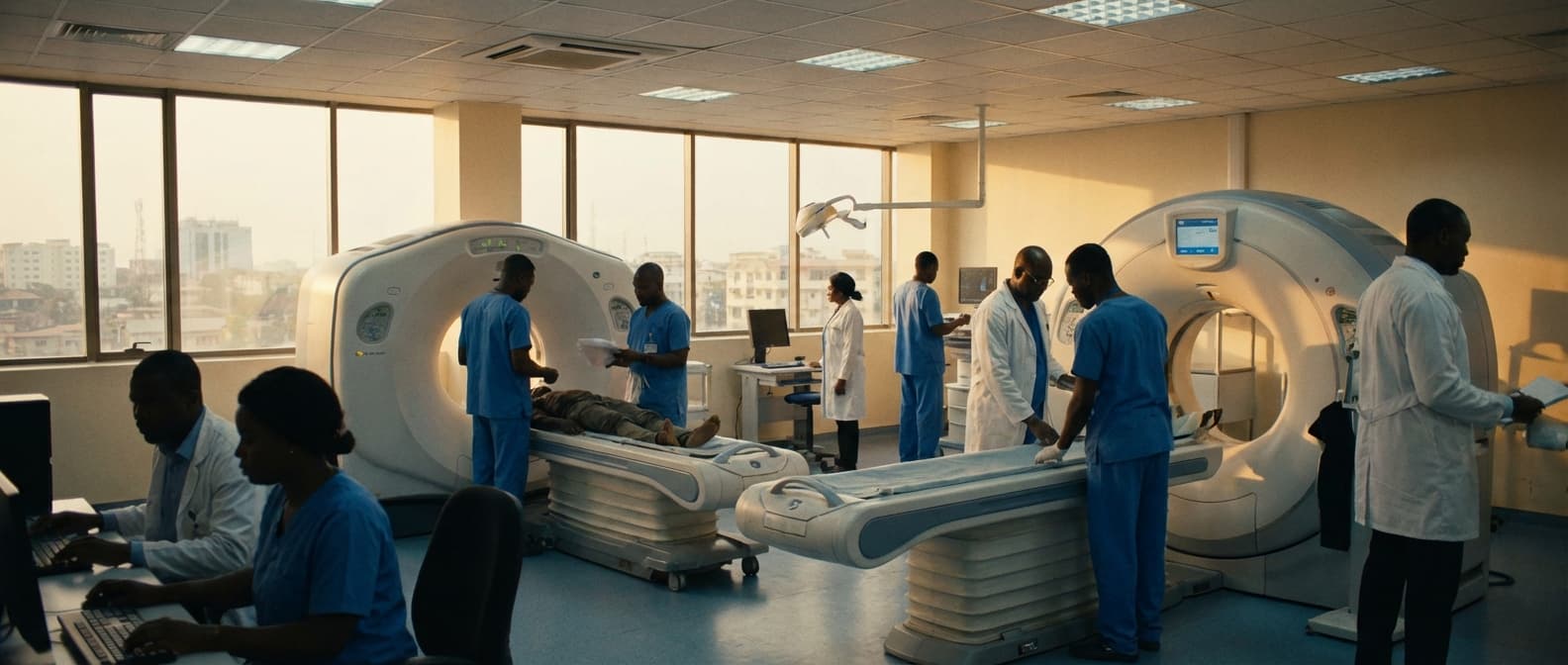
Imaging Acceptance Testing & QA in Eswatini
Engineering Excellence & Technical Support
Commissioning and periodic QA for CT/MRI/X‑ray/US/Mammo. High-standard technical execution following OEM protocols and local regulatory frameworks.
Comprehensive Imaging Test Suite Development
Engineered and implemented a robust suite of automated and manual test cases for various imaging modalities (X-ray, CT, MRI) adhering to international DICOM standards and local regulatory requirements in Eswatini, ensuring diagnostic accuracy and patient safety.
Image Quality Calibration & Validation
Developed and executed advanced calibration protocols for imaging equipment, utilizing phantoms and quantitative metrics to validate image quality parameters, reduce artifacts, and ensure consistent diagnostic performance across Eswatini healthcare facilities.
PACS Integration & Workflow Assurance
Successfully conducted rigorous acceptance testing for Picture Archiving and Communication Systems (PACS), verifying seamless integration with imaging modalities, efficient image retrieval, and reliable workflow for radiologists and clinicians throughout Eswatini's healthcare network.
What Is Imaging Acceptance Testing & Qa In Eswatini?
Imaging Acceptance Testing & Quality Assurance (QA) in Eswatini refers to the systematic verification and validation processes implemented to ensure that medical imaging equipment and systems function according to predefined specifications, meet regulatory requirements, and produce diagnostically acceptable image quality. This encompasses a broad spectrum of activities, from initial installation checks to ongoing performance monitoring and defect resolution. The objective is to guarantee the reliability, accuracy, and safety of diagnostic imaging services delivered to patients within the Eswatini healthcare landscape.
| Who Needs Imaging Acceptance Testing & QA in Eswatini? | Typical Use Cases | |||||||||
|---|---|---|---|---|---|---|---|---|---|---|
| Healthcare Facilities: Hospitals (public and private), clinics, diagnostic imaging centers, and specialized medical institutions in Eswatini requiring medical imaging services. | Procurement of New Equipment: Ensuring that newly acquired imaging modalities (e.g., X-ray machines, CT scanners, MRI scanners, ultrasound machines, mammography units) meet performance standards before clinical deployment. | Upgrades and Modifications: Verifying the successful integration and performance of hardware or software upgrades to existing imaging systems. | Routine Performance Verification: Periodic checks to confirm ongoing accuracy, reliability, and image quality as per regulatory and manufacturer recommendations. | Troubleshooting and Root Cause Analysis: Investigating and resolving performance issues or image quality degradation in existing equipment. | Compliance with Regulations: Meeting requirements set by the Ministry of Health and other relevant regulatory bodies in Eswatini for medical device safety and efficacy. | Patient Safety Assurance: Minimizing the risk of misdiagnosis due to poor image quality or equipment malfunction. | Radiologists and Radiographers: Ensuring they have reliable tools for accurate diagnosis and efficient workflow. | Biomedical Engineers and Technicians: Responsible for the installation, maintenance, and repair of imaging equipment. | Manufacturers and Vendors: Providing evidence of product performance and compliance to their clients. | IT Departments: Integrating imaging systems with hospital IT infrastructure (PACS/RIS). |
Key Components of Imaging Acceptance Testing & QA
- Installation Qualification (IQ): Verifies that the imaging equipment is installed correctly according to manufacturer's specifications and relevant standards (e.g., environmental controls, power supply, network connectivity).
- Operational Qualification (OQ): Tests the functional capabilities of the equipment to ensure it operates within specified parameters and performs all intended functions as designed.
- Performance Qualification (PQ): Evaluates the actual performance of the imaging system in a clinical context, assessing image quality, diagnostic accuracy, and workflow efficiency under realistic operating conditions.
- Image Quality Assessment: Utilizes phantoms, standardized protocols, and expert review to measure and document image parameters such as resolution, contrast, signal-to-noise ratio (SNR), and artifact levels.
- System Integration Testing: Ensures seamless interoperability between various components of the imaging system, including the imaging modality, Picture Archiving and Communication System (PACS), and Radiology Information System (RIS).
- Radiation Safety Testing: Confirms compliance with national radiation protection regulations and guidelines, including dose verification and shielding integrity.
- Documentation Review: Assesses the adequacy and accuracy of manufacturer's manuals, calibration certificates, and test reports.
- User Training Verification: Confirms that end-users (radiographers, radiologists) are adequately trained to operate the equipment and interpret images.
- Defect Management: Establishes a process for identifying, documenting, prioritizing, and resolving any defects or deviations found during testing.
- Preventive Maintenance (PM) Integration: Establishes a schedule and protocol for routine preventive maintenance to ensure continued optimal performance.
Who Needs Imaging Acceptance Testing & Qa In Eswatini?
Imaging Acceptance Testing & QA are crucial for ensuring the reliability, accuracy, and efficiency of medical imaging systems in Eswatini. These processes verify that new or upgraded imaging equipment and software function as intended, meet regulatory standards, and are integrated seamlessly into existing healthcare workflows. This ultimately leads to better patient care, reduced costs associated with system failures or errors, and improved operational efficiency within healthcare facilities.
| Customer Type | Key Departments Involved | Primary Need for QA |
|---|---|---|
| Public Hospitals | Radiology, Diagnostic Imaging, IT, Biomedical Engineering | Ensuring patient safety, diagnostic accuracy, operational efficiency, and compliance with national standards. |
| Private Hospitals & Clinics | Radiology, Imaging, IT, Administration | Validating investment in advanced technology, maintaining high service quality, and competitive advantage. |
| Diagnostic Imaging Centers | Imaging Operations, Technical Services, IT, Quality Management | Maximizing equipment uptime, ensuring diagnostic precision, and meeting client expectations. |
| Ministry of Health | Procurement, Health Infrastructure, Quality Assurance | Verifying compliance with tender specifications, ensuring national healthcare standards, and responsible public spending. |
| Equipment Suppliers/Distributors | Sales, Technical Support, Installation Teams | Confirming successful installation and functionality, client satisfaction, and minimizing post-installation issues. |
| Healthcare IT Providers | Implementation, Integration Specialists, Support Teams | Ensuring smooth data flow, system interoperability, and reliable performance of PACS/RIS. |
Target Customers and Departments in Eswatini Requiring Imaging Acceptance Testing & QA
- {"title":"Government Ministry of Health","description":"Responsible for national healthcare policy, procurement of major medical equipment, and ensuring quality standards across public healthcare facilities. They need to verify that purchased imaging systems meet the required specifications and will be safe and effective for public use."}
- {"title":"Public Hospitals (e.g., Mbabane Government Hospital, Matsapha Correctional Facility Hospital)","description":"These are the primary providers of imaging services to the majority of the population. They require acceptance testing for new X-ray machines, CT scanners, ultrasound units, MRI scanners, and PACS (Picture Archiving and Communication System) to ensure diagnostic quality and operational readiness. Departments like Radiology, Diagnostic Imaging, and IT are key stakeholders."}
- {"title":"Private Hospitals and Clinics (e.g., Raleigh Fitkin Memorial Hospital, St. Philip's Hospital)","description":"These facilities often invest in advanced imaging technology to offer specialized services. Acceptance testing is vital for validating the performance of their equipment and software, ensuring return on investment, and maintaining patient trust. Departments include Radiology, Imaging, and IT."}
- {"title":"Diagnostic Imaging Centers","description":"Dedicated centers focusing solely on providing imaging services. They rely heavily on the accuracy and speed of their imaging equipment and need rigorous testing to maintain a competitive edge and deliver high-quality diagnostics. Key departments are Imaging Operations, Technical Services, and IT."}
- {"title":"Medical Equipment Suppliers and Distributors","description":"Companies that import, sell, install, and maintain imaging equipment in Eswatini. They are responsible for ensuring that the equipment they deliver is functional and meets the manufacturer's specifications before handover to the client. Their service and technical departments are central."}
- {"title":"Healthcare IT Providers and Integrators","description":"Companies involved in the implementation and integration of PACS, RIS (Radiology Information System), and other healthcare IT solutions related to medical imaging. Acceptance testing is crucial to ensure seamless integration and data flow between different systems. Their technical and project management teams are involved."}
- {"title":"Research and Academic Institutions (if applicable)","description":"While Eswatini's research infrastructure may be developing, any institution utilizing medical imaging for research or training would require QA to ensure data integrity and reliable experimental outcomes."}
Imaging Acceptance Testing & Qa Process In Eswatini
This document outlines the Imaging Acceptance Testing and Quality Assurance (QA) process within Eswatini. It details the workflow from the initial inquiry stage through to the final execution of tests. The objective is to ensure that imaging systems and solutions meet predefined standards, functional requirements, and user expectations before deployment or integration.
| Stage | Description | Key Activities | Deliverables | Responsible Parties |
|---|---|---|---|---|
| Inquiry & Requirements Gathering | Initiation of the testing process, understanding the scope and objectives of the imaging solution. | Receive and review client/stakeholder inquiry, conduct meetings to define functional & non-functional requirements, identify use cases, understand technical specifications, clarify scope and constraints. | Requirements Document, Scope Statement, Stakeholder Register. | Client/Stakeholder, Project Manager, Business Analyst, QA Lead. |
| Test Planning | Developing a comprehensive strategy for how the testing will be conducted. | Define testing objectives, scope, approach, resources, schedule, and entry/exit criteria. Identify risks and mitigation strategies. Select testing tools. | Test Plan Document, Test Strategy. | QA Lead, Project Manager, Technical Lead. |
| Test Case Development | Creating detailed, step-by-step instructions for performing specific tests. | Design test cases based on requirements and use cases. Include expected results, pre-conditions, and post-conditions. Review and validate test cases. | Test Cases (including manual and automated scripts), Traceability Matrix. | QA Engineers, Business Analyst. |
| Environment Setup | Preparing the necessary hardware, software, and network infrastructure for testing. | Install and configure imaging software, hardware (scanners, printers, PACS), and any required middleware. Ensure data availability and integrity. Set up test accounts and permissions. | Configured Test Environment, Data Sets. | IT Operations, System Administrators, QA Engineers. |
| Test Execution | Running the developed test cases against the imaging system. | Execute manual and automated test cases. Record test results (pass/fail). Document actual results. Perform regression testing as needed. | Test Execution Logs, Actual Results Data. | QA Engineers. |
| Defect Management | Identifying, documenting, and tracking issues found during testing. | Log defects with detailed steps to reproduce, severity, and priority. Assign defects to developers/vendors. Verify defect fixes. Re-test resolved defects. | Defect Reports, Defect Tracking System. | QA Engineers, Developers, Project Manager. |
| Reporting & Sign-off | Communicating test progress and outcomes to stakeholders and obtaining formal approval. | Generate test summary reports, defect status reports, and QA metrics. Present findings to stakeholders. Obtain formal sign-off for acceptance. | Test Summary Report, Final QA Report, Acceptance Sign-off Document. | QA Lead, Project Manager, Client/Stakeholder. |
| Post-Implementation Review | Evaluating the effectiveness of the testing process and identifying areas for improvement. | Conduct lessons learned session. Document feedback on the testing process. Update testing procedures and templates for future projects. | Lessons Learned Document, Process Improvement Recommendations. | QA Team, Project Team. |
Workflow Stages
- Inquiry & Requirements Gathering
- Test Planning
- Test Case Development
- Environment Setup
- Test Execution
- Defect Management
- Reporting & Sign-off
- Post-Implementation Review
Imaging Acceptance Testing & Qa Cost In Eswatini
Imaging Acceptance Testing (IAT) and Quality Assurance (QA) are crucial for ensuring the reliability and accuracy of medical imaging systems in Eswatini. The cost of these services is influenced by several factors, making it challenging to provide exact figures without specific project details. However, we can outline the primary pricing drivers and offer estimated ranges in Eswatini Lilangeni (SZL). These costs are typically borne by healthcare facilities, equipment vendors, or regulatory bodies.
Key Pricing Factors:
- Complexity of Imaging Modalities: Testing requirements vary significantly based on the type of imaging equipment (e.g., X-ray, CT, MRI, Ultrasound, Mammography). More complex modalities with advanced features demand more specialized and time-consuming testing.
- Scope of Testing: The extent of the IAT/QA process is a major cost determinant. This includes the number of tests performed, the depth of each test (e.g., basic functionality vs. advanced image analysis), and whether it covers hardware, software, network integration, or cybersecurity aspects.
- Duration of Testing: The time required for thorough testing directly impacts labor costs. This is influenced by the number of personnel involved, their expertise, and the overall complexity and volume of tests.
- Personnel Expertise and Qualifications: Highly skilled and certified imaging technologists, medical physicists, or QA specialists command higher rates. Their experience in specific modalities and Eswatini's regulatory landscape is invaluable.
- Travel and Logistics: If testing requires travel to remote healthcare facilities, accommodation, and transportation costs will be added. This is particularly relevant in Eswatini's geography.
- Reporting and Documentation: The level of detail and customization required for IAT/QA reports can affect costs. Comprehensive reports with detailed findings, recommendations, and compliance documentation will be more expensive.
- Software and Tools: Specialized testing software, calibration equipment, and phantom objects may be required, contributing to the overall cost.
- Vendor-Specific Requirements: Manufacturers often have their own specific acceptance testing protocols and checklists that must be followed, which can add to the scope.
- Regulatory Compliance: Adherence to local Eswatini health regulations and international imaging standards (e.g., ACR, IEC) is mandatory and influences the testing protocols and their rigor.
- Re-testing and Remediation: If initial tests reveal issues, subsequent re-testing and verification of corrective actions will incur additional costs.
Estimated Cost Ranges (Eswatini Lilangeni - SZL):
It is important to note that these are broad estimates. Actual costs can fall outside these ranges based on the factors mentioned above. It is highly recommended to obtain detailed quotes from service providers.
- Basic Imaging System (e.g., single X-ray unit, basic ultrasound): SZL 5,000 - 15,000 per system.
- Intermediate Imaging System (e.g., digital radiography, mammography, advanced ultrasound): SZL 10,000 - 30,000 per system.
- Complex Imaging Systems (e.g., CT scanner, MRI scanner): SZL 20,000 - 75,000+ per system. This can escalate significantly for high-end multi-slice CT or advanced MRI sequences.
- PACS/RIS Integration Testing: SZL 8,000 - 25,000, depending on the complexity of integration and data migration.
- Annual QA/QC for a department: SZL 15,000 - 50,000+ per year, covering routine checks and calibration.
These figures represent the service cost. They do not typically include the capital cost of imaging equipment itself or the cost of internal staff time if the facility performs some QA internally.
| Imaging System Category | Estimated Cost Range (SZL) |
|---|---|
| Basic Imaging System (e.g., single X-ray, basic ultrasound) | 5,000 - 15,000 |
| Intermediate Imaging System (e.g., DR, mammography, advanced ultrasound) | 10,000 - 30,000 |
| Complex Imaging Systems (e.g., CT, MRI) | 20,000 - 75,000+ |
| PACS/RIS Integration Testing | 8,000 - 25,000 |
| Annual QA/QC for a Department | 15,000 - 50,000+ |
Factors Influencing Imaging Acceptance Testing & QA Costs in Eswatini
- Complexity of Imaging Modalities
- Scope of Testing (breadth and depth)
- Duration of Testing and Personnel Hours
- Expertise and Qualifications of Testing Personnel
- Travel and Logistics Expenses
- Reporting and Documentation Requirements
- Cost of Specialized Testing Software and Equipment
- Vendor-Specific Acceptance Criteria
- Regulatory Compliance Demands (Eswatini Health Regulations, International Standards)
- Need for Re-testing and Remediation
Affordable Imaging Acceptance Testing & Qa Options
Ensuring the quality and accuracy of medical imaging is paramount, but the cost of comprehensive Acceptance Testing (AT) and Quality Assurance (QA) can be a significant barrier, especially for smaller practices or facilities with budget constraints. This guide outlines affordable imaging AT & QA options, focusing on value bundles and cost-saving strategies. By understanding these approaches, organizations can achieve robust quality control without breaking the bank.
| Value Bundle Type | Description | Cost-Saving Mechanism | Ideal For |
|---|---|---|---|
| Basic Compliance Bundle | Covers essential AT/QA protocols required for regulatory compliance (e.g., ACR, TJC). | Focuses only on mandatory tests, reducing scope and therefore cost. | Organizations needing to meet minimum regulatory requirements on a tight budget. |
| Modality-Specific Bundle (e.g., Mammography) | Includes all necessary AT/QA for a particular imaging modality, often with specialized phantom testing. | Bundled services for a single modality can be more cost-effective than purchasing individual services. | Practices specializing in or heavily reliant on a specific imaging type. |
| Preventative Maintenance + Basic QA Bundle | Combines routine preventative maintenance with core QA checks, performed during the same service visit. | Reduces technician travel costs and scheduling inefficiencies. | Facilities looking to streamline maintenance and basic quality checks. |
| Remote Monitoring & Verification Bundle | Utilizes remote software for continuous monitoring of equipment performance and periodic verification of image quality parameters. | Significantly reduces on-site visits and allows for proactive issue detection. | Organizations with multiple sites or those prioritizing real-time performance insights. |
| 'Build-Your-Own' Bundle | Allows organizations to select specific AT/QA services from a menu of options to create a custom package. | Maximum flexibility and cost control, paying only for what is truly needed. | Organizations with unique needs or those who have performed their own risk assessment. |
Affordable Imaging AT & QA Strategies
- Tiered Service Packages: Instead of all-inclusive, high-cost contracts, inquire about tiered service bundles. These allow you to select the essential AT/QA components that are most critical for your specific imaging modalities and regulatory requirements. Basic tiers might cover essential checks, while higher tiers include more advanced protocols and reporting.
- Modular AT/QA Services: Break down your AT/QA needs into smaller, manageable modules. This could mean contracting for specific tests (e.g., display calibration only) or for certain modalities (e.g., mammography QA). This allows for more granular control over spending.
- Remote & Cloud-Based Solutions: Leverage remote diagnostic tools and cloud-based QA platforms. These often reduce the need for on-site technician visits, cutting down on travel expenses and allowing for more frequent, automated checks.
- In-House Training & Empowerment: Invest in training your existing biomedical engineering or IT staff to perform basic QA tasks. While advanced AT may still require external expertise, empowering internal teams for routine checks can significantly reduce ongoing costs.
- Consolidated Vendor Agreements: If you utilize multiple imaging devices from a single manufacturer, explore consolidated service agreements. This can sometimes lead to volume discounts and streamlined support.
- Focus on High-Risk/High-Volume Modalities: Prioritize rigorous AT/QA for modalities that are used most frequently or carry the highest diagnostic risk. This strategic allocation of resources ensures critical areas are covered without overspending on less impactful checks.
- Leverage Manufacturer's Basic Tools: Many imaging equipment manufacturers provide basic diagnostic and QA tools as part of their equipment. Understand and utilize these built-in functionalities before investing in third-party solutions.
- Collaborative Purchasing: For smaller organizations, consider pooling resources with nearby facilities to negotiate better rates with AT/QA service providers.
- Long-Term Contract Negotiations: While upfront costs can be a concern, negotiating longer-term service contracts (e.g., 3-5 years) can often secure lower annual rates and predictable budgeting.
- Risk-Based QA Approach: Implement a risk-based QA program where testing frequency and scope are determined by the potential impact of equipment failure on patient care and diagnostic accuracy.
Verified Providers In Eswatini
In Eswatini, accessing reliable healthcare is paramount. "Verified Providers" signifies a commitment to quality, safety, and ethical practices within the healthcare sector. Franance Health stands out as a leading example of such a verified provider, demonstrating a dedication to excellence that makes them the best choice for your health needs. Their credentials encompass stringent adherence to national healthcare regulations, a commitment to continuous professional development for their staff, and a patient-centric approach that prioritizes well-being and trust. Choosing a verified provider like Franance Health ensures you are receiving care from institutions and professionals who meet the highest standards.
| Credential/Attribute | Franance Health's Commitment | Benefit to Patients |
|---|---|---|
| Regulatory Compliance | Strict adherence to all Eswatini Ministry of Health guidelines and accreditations. | Ensures patient safety, ethical practice, and standardized quality of care. |
| Staff Qualifications | Employing licensed, experienced, and continuously trained medical professionals. | Access to competent and up-to-date medical expertise for accurate diagnoses and effective treatments. |
| Patient Safety Protocols | Implementation of robust infection control, medication management, and emergency response systems. | Minimizes risks and ensures a secure environment for all patients. |
| Quality Improvement | Regular internal reviews, patient feedback mechanisms, and adoption of best practices. | Continuous enhancement of services and patient experience. |
| Ethical Practice | Upholding the highest standards of integrity, confidentiality, and respect for patient rights. | Fosters trust and confidence in the healthcare provider. |
Why Franance Health is the Best Choice for Verified Healthcare in Eswatini
- Adherence to Eswatini's National Healthcare Standards and Regulations
- Commitment to Continuous Professional Development for All Healthcare Staff
- Patient-Centric Care Philosophy Focused on Well-being and Trust
- Investment in Modern Medical Equipment and Technology
- Transparent Pricing and Clear Communication
- Highly Qualified and Compassionate Medical Professionals
Scope Of Work For Imaging Acceptance Testing & Qa
This Scope of Work (SOW) outlines the requirements for Imaging Acceptance Testing and Quality Assurance (QA) for the [Project Name] project. It details the technical deliverables, standard specifications, and testing procedures to ensure the successful integration and performance of the imaging system. The objective is to verify that the imaging solution meets all functional, performance, and usability requirements as defined in the project specifications and industry best practices.
| Deliverable Type | Description | Format | Standard Specification/Reference |
|---|---|---|---|
| Test Plan Document | Comprehensive plan detailing testing objectives, scope, methodology, test cases, test environments, resources, and schedule. | PDF, Microsoft Word | IEEE 829 Standard for Software Test Documentation, Project-Specific Test Plan Template |
| Test Cases/Scenarios | Detailed steps for executing tests, including expected results and pass/fail criteria, covering functional, performance, integration, and usability aspects. | Microsoft Excel, Test Management Tool | Project-Specific Test Case Template, Requirements Traceability Matrix |
| Test Environment Configuration Report | Documentation of the hardware, software, and network configurations of the testing environment. | PDF, Microsoft Word | Project-Specific Configuration Checklist |
| Test Execution Reports | Summary of executed test cases, including pass/fail status, executed dates, and tester information. | PDF, Microsoft Excel, Test Management Tool | Project-Specific Report Template |
| Defect/Bug Reports | Detailed documentation of identified defects, including severity, priority, steps to reproduce, and impact. | Defect Tracking Tool (e.g., Jira, Azure DevOps) | Project-Specific Defect Tracking Workflow and Fields |
| Performance Test Results | Metrics on system response times, throughput, and resource utilization under simulated load. | PDF, Microsoft Excel | ISO/IEC 25010 (System and software quality requirements and evaluation), Project-Specific Performance Benchmarks |
| Integration Test Results | Verification of data exchange and workflow continuity between the imaging system and integrated applications. | PDF, Microsoft Excel | API Specifications, HL7 Standards (if applicable), Project-Specific Integration Flows |
| Usability Test Findings | Feedback and observations on the user interface and workflow from end-users or representative testers. | PDF, Microsoft Word | Nielsen Norman Group Usability Heuristics, Project-Specific User Experience Guidelines |
| Acceptance Test Report (ATR) | Final summary report documenting the overall testing outcomes, defect status, and recommendation for acceptance. | PDF, Microsoft Word | Project-Specific ATR Template |
| User Training Materials (if applicable) | Documentation and guides for end-users on operating the imaging system. | PDF, Online Help System | Project-Specific Training Material Guidelines |
Key Objectives of Imaging Acceptance Testing & QA
- Verify that the imaging system captures, processes, and stores images according to defined quality standards.
- Ensure seamless integration with existing systems (e.g., PACS, EMR, RIS).
- Validate system performance under various load conditions.
- Confirm adherence to all applicable regulatory and compliance standards.
- Assess user interface usability and workflow efficiency.
- Identify and document defects, and track their resolution.
Service Level Agreement For Imaging Acceptance Testing & Qa
This Service Level Agreement (SLA) outlines the performance standards for Imaging Acceptance Testing and Quality Assurance (QA) services. It defines response times for critical issues and guarantees a high level of service availability.
| Severity Level | Description | Initial Response Time (Max) | Uptime Guarantee (Per Month) | Target Resolution Time |
|---|---|---|---|---|
| Critical (P1) | System outage or major functionality failure affecting all users or blocking core testing processes. | 30 minutes | 99.9% | 4 hours |
| High (P2) | Significant degradation of service, affecting a substantial number of users or critical test cases. | 1 hour | 99.8% | 8 business hours |
| Medium (P3) | Minor functionality issue or performance degradation affecting a limited set of users or non-critical test cases. | 4 business hours | 99.5% | 3 business days |
| Low (P4) | Cosmetic issues, documentation errors, or minor enhancements requests. | 8 business hours | 99.0% | 5 business days |
Key Performance Indicators (KPIs)
- Response Times: Guaranteed maximum time for initial acknowledgement and commencement of work for issues based on severity.
- Uptime Guarantees: Minimum guaranteed availability of the testing and QA environment and associated tools.
- Resolution Targets: Aimed times for resolving identified issues, categorized by severity.
Frequently Asked Questions

Ready when you are
Let's scope your Imaging Acceptance Testing & QA in Eswatini project in Eswatini.

Scaling healthcare logistics and technical systems across the entire continent.