
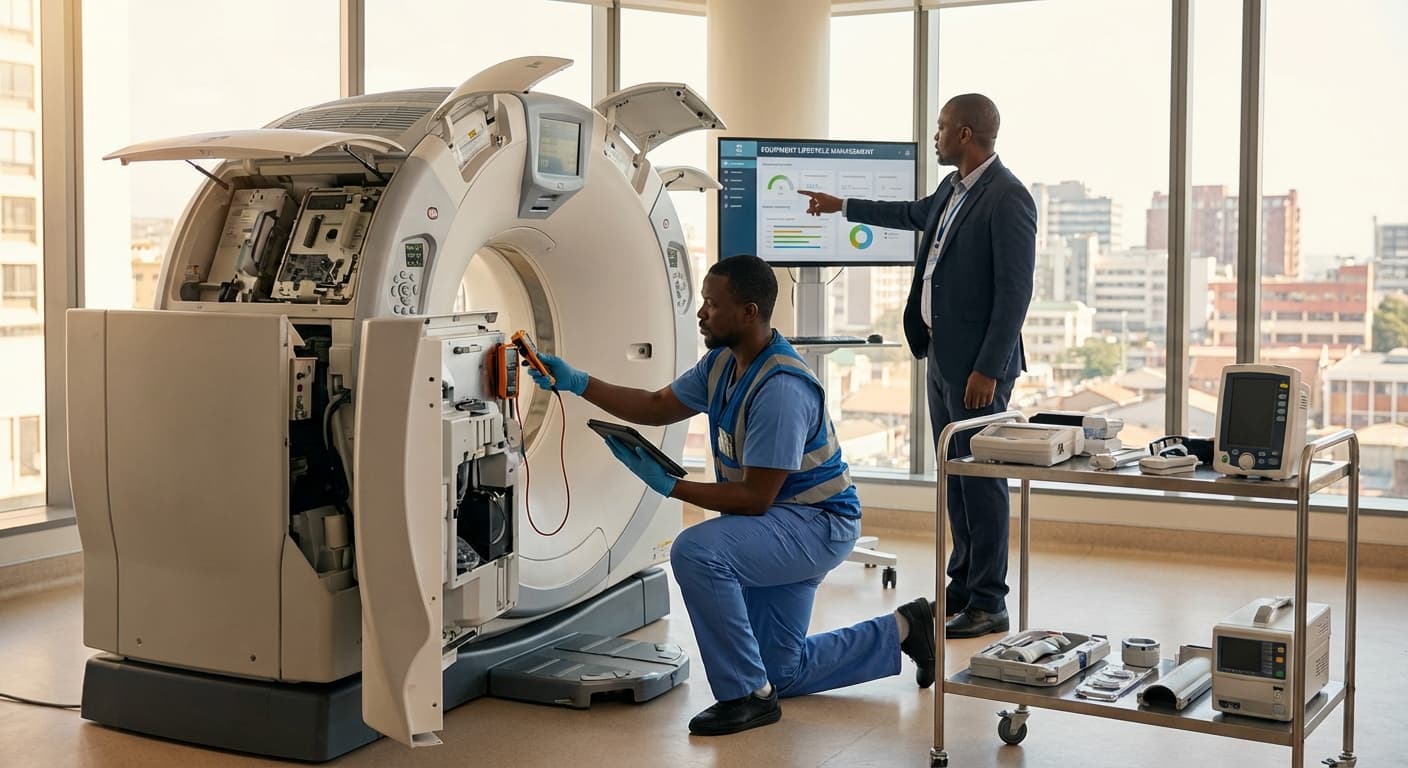
Equipment Replacement Planning & Obsolescence Strategy Service in Eswatini
Engineering Excellence & Technical Support
Equipment Replacement Planning & Obsolescence Strategy Service High-standard technical execution following OEM protocols and local regulatory frameworks.
Predictive Lifecycle Analysis
Leveraging advanced data analytics and industry benchmarks, our service provides Eswatini businesses with precise lifecycle projections for critical equipment, enabling proactive replacement decisions and minimizing unexpected downtime.
Strategic Obsolescence Mitigation
We develop customized obsolescence roadmaps for Eswatini industries, identifying at-risk assets and recommending phased replacement strategies, alternative technologies, and vendor management plans to ensure operational continuity and regulatory compliance.
Cost-Optimized Replacement Cadence
Our service focuses on optimizing capital expenditure by synchronizing equipment replacement cycles with performance degradation, market advancements, and total cost of ownership analyses, ensuring Eswatini businesses achieve the best return on investment.
What Is Equipment Replacement Planning & Obsolescence Strategy Service In Eswatini?
Equipment Replacement Planning & Obsolescence Strategy Service in Eswatini is a critical consulting offering designed to help organizations proactively manage the lifecycle of their critical assets. It involves a systematic approach to identifying, evaluating, and implementing strategies for replacing aging or obsolete equipment and mitigating the risks associated with technological obsolescence. This service aims to ensure operational continuity, optimize capital expenditure, and maintain competitive advantage by aligning asset management with strategic business objectives. It encompasses a comprehensive assessment of existing equipment, forecasting future needs, and developing actionable plans for acquisition, disposal, and technology adoption, all within the Eswatini regulatory and economic context.
| Who Needs This Service? | Typical Use Cases |
|---|---|
| Manufacturing & Industrial Sectors: Companies with significant investments in production machinery, automation systems, and process equipment. | Replacing outdated assembly lines to improve throughput and reduce downtime. Developing a strategy for upgrading legacy control systems to leverage IoT capabilities. Managing the obsolescence of specialized testing and calibration equipment. |
| Infrastructure & Utilities: Organizations responsible for critical infrastructure like power generation, water treatment, telecommunications, and transportation. | Planning the phased replacement of aging power transformers and distribution networks. Developing a long-term strategy for upgrading telecommunications infrastructure to meet increasing data demands. Assessing and replacing obsolete control systems in water treatment facilities. |
| Mining & Resources: Companies operating large-scale mining equipment, processing plants, and exploration technologies. | Strategizing the replacement of heavy-duty mining vehicles and excavators. Planning for the upgrade of mineral processing equipment to enhance recovery rates. Managing the obsolescence of geological survey and analytical instruments. |
| Healthcare: Hospitals and clinics with sophisticated medical imaging, diagnostic, and life-support equipment. | Developing a roadmap for replacing older MRI and CT scanners to improve diagnostic accuracy. Managing the lifecycle of critical laboratory analysis equipment. Planning for the upgrade of hospital-wide IT infrastructure supporting medical devices. |
| Government & Public Sector: Public utilities, administrative bodies, and defense organizations with extensive asset portfolios. | Planning the replacement of aging fleet vehicles for public services. Developing strategies for upgrading outdated IT hardware and software across government agencies. Managing the obsolescence of specialized equipment for national security. |
| Agribusiness: Large-scale farming operations with specialized machinery and processing equipment. | Developing plans for replacing aging agricultural machinery to improve efficiency and sustainability. Strategizing the upgrade of post-harvest processing equipment. Managing the lifecycle of irrigation and climate control systems. |
Key Components of Equipment Replacement Planning & Obsolescence Strategy Service
- Asset Condition Assessment: Evaluating the current state, performance, and remaining useful life of existing equipment through technical inspections, performance monitoring, and maintenance history analysis.
- Technology Trend Analysis: Monitoring advancements in relevant technologies and assessing their potential impact on operational efficiency, cost-effectiveness, and competitive positioning.
- Obsolescence Risk Identification: Identifying equipment that is nearing the end of its support lifecycle, lacks spare parts availability, or is surpassed by newer, more efficient technologies.
- Total Cost of Ownership (TCO) Analysis: Calculating the complete cost associated with owning and operating equipment over its lifecycle, including acquisition, maintenance, energy consumption, and disposal.
- Replacement/Upgrade Strategy Development: Formulating strategies for replacing or upgrading obsolete equipment, considering factors such as capital budget, operational impact, and technological maturity.
- Financial Planning & Justification: Developing business cases and financial models to support equipment replacement decisions, including ROI analysis and funding strategies.
- Implementation Roadmap: Creating a phased plan for the procurement, installation, and commissioning of new equipment, including decommissioning and disposal of old assets.
- Risk Management: Developing contingency plans to address potential disruptions during the replacement process and mitigating risks associated with technology adoption.
- Vendor Selection & Negotiation: Assisting in the selection of suitable equipment vendors and negotiating favorable terms and conditions.
- Performance Monitoring & Post-Implementation Review: Establishing metrics to evaluate the success of the replacement strategy and conducting post-implementation reviews to identify lessons learned.
Who Needs Equipment Replacement Planning & Obsolescence Strategy Service In Eswatini?
In Eswatini, a robust Equipment Replacement Planning and Obsolescence Strategy Service is crucial for a variety of organizations to ensure operational continuity, mitigate risks associated with aging assets, and optimize capital expenditure. This service helps businesses proactively manage the lifecycle of their equipment, from acquisition to disposal, by forecasting replacement needs, identifying potential obsolescence issues, and developing strategies to address them before they impact operations.
| Customer Type | Key Departments Involved | Primary Concerns |
|---|---|---|
| Government Ministries & Agencies (e.g., Public Works, Health, Infrastructure) | Asset Management, Procurement, Facilities Management, IT Departments | Ensuring public service continuity, infrastructure reliability, cost-effectiveness of public funds, compliance with standards. |
| Manufacturing & Industrial Companies | Operations Management, Maintenance & Engineering, Procurement, Finance | Minimizing production downtime, maintaining product quality, optimizing manufacturing efficiency, managing capital expenditure for new machinery. |
| Telecommunications Providers | Network Operations, Engineering, Procurement, IT Infrastructure | Ensuring network uptime and performance, managing technology obsolescence, meeting evolving customer demands, cost-effective upgrades. |
| Energy & Utilities Companies | Operations & Maintenance, Engineering, Asset Management, Procurement, Finance | Maintaining grid stability and service delivery, ensuring safety and compliance, managing aging infrastructure, long-term capital planning. |
| Mining & Extractive Industries | Mine Operations, Maintenance & Reliability, Engineering, Procurement | Maximizing operational uptime, ensuring safety in hazardous environments, managing wear and tear on heavy equipment, planning for large capital investments. |
| Healthcare Institutions | Biomedical Engineering, Procurement, IT Departments, Facilities Management | Ensuring patient safety, maintaining diagnostic and treatment capabilities, complying with medical regulations, managing lifecycle costs of medical devices. |
| Transportation & Logistics Companies | Fleet Management, Maintenance & Repair, Operations, Procurement | Ensuring reliability of transport assets, minimizing operational disruptions, managing fuel efficiency, planning for fleet renewal. |
| Agricultural Sector (Large Scale) | Farm Management, Operations, Maintenance, Procurement | Ensuring timely planting and harvesting, optimizing machinery utilization, managing maintenance costs, planning for technology upgrades. |
| Large Commercial & Retail | Facilities Management, IT Departments, Procurement, Operations | Maintaining a conducive environment for customers and employees, ensuring operational efficiency, managing technology investments, energy efficiency. |
Target Customers and Departments in Eswatini:
- {"title":"Government Ministries and Agencies","description":"Responsible for critical national infrastructure and public services."}
- {"title":"Manufacturing and Industrial Companies","description":"Operating machinery and production lines where equipment failure can lead to significant downtime."}
- {"title":"Telecommunications Providers","description":"Managing extensive networks of communication equipment that require regular upgrades and maintenance."}
- {"title":"Energy and Utilities Companies (Electricity, Water)","description":"Operating power generation, transmission, and distribution systems, as well as water treatment and supply infrastructure."}
- {"title":"Mining and Extractive Industries","description":"Utilizing heavy-duty machinery and specialized equipment in demanding operational environments."}
- {"title":"Healthcare Institutions (Hospitals, Clinics)","description":"Relying on medical equipment for diagnostics, treatment, and patient care, where obsolescence can compromise patient safety and treatment efficacy."}
- {"title":"Transportation and Logistics Companies","description":"Managing fleets of vehicles, aircraft, or rail equipment critical for movement of goods and people."}
- {"title":"Agricultural Cooperatives and Large-Scale Farms","description":"Employing machinery for planting, harvesting, and processing that requires strategic replacement."}
- {"title":"Large Commercial and Retail Businesses","description":"With significant investments in IT infrastructure, HVAC systems, and other building services."}
Equipment Replacement Planning & Obsolescence Strategy Service Process In Eswatini
This document outlines the service process for "Equipment Replacement Planning & Obsolescence Strategy" within Eswatini. It details the workflow from initial client inquiry through to the successful execution of the strategy, ensuring that organizations can proactively manage their asset lifecycle and mitigate the risks associated with aging or obsolete equipment.
| Phase | Key Activities | Deliverables | Responsible Parties |
|---|---|---|---|
| Inquiry & Initial Consultation | Initial contact, needs assessment, proposal development. | Service proposal, understanding of client requirements. | Client, Service Provider |
| Assessment & Data Gathering | Equipment inventory, risk analysis, performance evaluation. | Equipment inventory report, obsolescence risk assessment, cost analysis. | Service Provider, Client (data provision) |
| Strategy Development & Recommendation | Scenario planning, cost-benefit analysis, strategy formulation. | Replacement strategy report, obsolescence management plan, recommendations. | Service Provider |
| Implementation & Execution | Procurement, installation, strategy execution, training. | Installed equipment, implemented obsolescence measures, trained personnel. | Client, Service Provider, Vendors/Suppliers |
| Monitoring & Continuous Improvement | Performance tracking, risk reassessment, strategy refinement. | Performance reports, updated risk assessments, revised strategy. | Service Provider, Client |
Equipment Replacement Planning & Obsolescence Strategy Service Process in Eswatini
- {"steps":[{"details":"Inquiry may be driven by operational concerns, budget planning, or a proactive desire to optimize asset management.","stepNumber":1,"description":"Client expresses interest in the service via designated channels (e.g., email, phone, website)."},{"details":"Discussion covers existing asset inventory, operational challenges, business goals, and desired outcomes from the service.","stepNumber":2,"description":"Initial consultation to understand client needs, objectives, and scope."},{"details":"A tailored proposal is developed, outlining the service methodology, deliverables, timeline, and associated costs. This is presented and discussed with the client.","stepNumber":3,"description":"Proposal generation and presentation."}],"title":"Phase 1: Inquiry & Initial Consultation"}
- {"steps":[{"details":"Collaborative effort to identify, catalog, and document all relevant equipment, including age, condition, specifications, maintenance history, and current operational status.","stepNumber":4,"description":"Detailed inventory of existing equipment."},{"details":"Analysis of equipment based on manufacturer support, availability of spare parts, technological advancement, safety regulations, and operational efficiency.","stepNumber":5,"description":"Obsolescence risk assessment."},{"details":"Evaluation of current equipment performance metrics, operational costs (maintenance, energy consumption, downtime), and potential cost savings through replacement.","stepNumber":6,"description":"Performance and cost analysis."},{"details":"Forecasting of future operational needs and research into emerging technologies relevant to the client's industry in Eswatini.","stepNumber":7,"description":"Future demand and technology trend analysis."}],"title":"Phase 2: Assessment & Data Gathering"}
- {"steps":[{"details":"Creation of various replacement strategies, considering different timelines, budget constraints, and technological upgrade paths.","stepNumber":8,"description":"Development of replacement scenarios."},{"details":"Detailed financial modeling to compare the total cost of ownership for retaining existing equipment versus implementing replacement strategies, including ROI calculations.","stepNumber":9,"description":"Cost-benefit analysis of recommended replacements."},{"details":"Development of a proactive plan for monitoring, forecasting, and mitigating obsolescence risks, including strategies for parts procurement, upgrades, and end-of-life management.","stepNumber":10,"description":"Formulation of an obsolescence management strategy."},{"details":"A comprehensive report and presentation are delivered to the client, outlining the assessment, proposed strategies, and recommended course of action.","stepNumber":11,"description":"Presentation of findings and recommendations."}],"title":"Phase 3: Strategy Development & Recommendation"}
- {"steps":[{"details":"Formal acceptance and sign-off from the client on the chosen replacement and obsolescence management plan.","stepNumber":12,"description":"Client approval of the recommended strategy."},{"details":"Coordination of the procurement process for new equipment, including vendor selection, contract negotiation, and logistical planning for installation in Eswatini.","stepNumber":13,"description":"Procurement and installation planning."},{"details":"Execution of planned actions, such as ordering critical spare parts, scheduling upgrades, or initiating phase-out procedures for obsolete equipment.","stepNumber":14,"description":"Implementation of the obsolescence strategy."},{"details":"Overseeing the physical installation, testing, and commissioning of new assets to ensure they meet specifications and operational requirements.","stepNumber":15,"description":"Installation and commissioning of new equipment."},{"details":"Providing training to client personnel on the operation, maintenance, and management of new equipment, as well as the ongoing obsolescence strategy.","stepNumber":16,"description":"Training and knowledge transfer."}],"title":"Phase 4: Implementation & Execution"}
- {"steps":[{"details":"Tracking the performance of new equipment against established KPIs and assessing the effectiveness of the obsolescence strategy.","stepNumber":17,"description":"Post-implementation review and performance monitoring."},{"details":"Regularly updating equipment status, monitoring manufacturer announcements, and reassessing obsolescence risks.","stepNumber":18,"description":"Ongoing obsolescence tracking and risk assessment."},{"details":"Making necessary adjustments to the replacement and obsolescence strategy based on performance data, evolving business needs, and technological changes.","stepNumber":19,"description":"Refinement of the strategy."},{"details":"Providing regular updates and reports on the status of equipment, obsolescence risks, and the effectiveness of the implemented strategy.","stepNumber":20,"description":"Periodic reporting to the client."}],"title":"Phase 5: Monitoring & Continuous Improvement"}
Equipment Replacement Planning & Obsolescence Strategy Service Cost In Eswatini
Planning for equipment replacement and developing obsolescence strategies are crucial for businesses in Eswatini to ensure operational efficiency, mitigate risks, and optimize capital expenditure. The cost of these specialized services in Eswatini is influenced by several key factors, leading to a range of pricing. These factors include the complexity and scale of the organization's assets, the depth of analysis required, the specific technologies involved, the duration of the project, and the experience and reputation of the service provider. Consulting firms with extensive experience in asset management and industrial engineering will typically command higher fees, reflecting their expertise and proven track record. Smaller, independent consultants or specialized smaller firms might offer more competitive rates. The scope of work is a primary driver; a comprehensive lifecycle cost analysis for a large manufacturing plant will be significantly more expensive than a basic obsolescence assessment for a small office environment. The need for specialized software or tools for data analysis and modeling can also add to the cost. Emergency or rush projects may also incur premium charges. Given these variables, a precise, universally applicable price is difficult to state, but indicative ranges can be provided for budgeting purposes.
| Service Level/Scope | Indicative Price Range (SZL) | Typical Deliverables |
|---|---|---|
| Basic Obsolescence Assessment (Small Business/Limited Assets) | SZL 8,000 - SZL 25,000 | List of potentially obsolete equipment, basic risk identification, general recommendations. |
| Standard Equipment Replacement & Obsolescence Strategy (Medium Business/Moderate Assets) | SZL 25,000 - SZL 75,000 | Detailed obsolescence assessment, initial replacement recommendations, lifecycle cost considerations, prioritized action plan. |
| Comprehensive Lifecycle Cost Analysis & Strategic Planning (Large Enterprise/Complex Assets) | SZL 75,000 - SZL 250,000+ | In-depth analysis of entire asset lifecycle, detailed replacement scheduling, financial modeling, risk mitigation strategies, technology roadmaps, comprehensive strategic plan. |
| Specialized Technical Obsolescence Analysis (e.g., IT infrastructure, specialized machinery) | SZL 15,000 - SZL 100,000+ | Technically focused obsolescence reports, specific technology upgrade/replacement recommendations, vendor analysis. |
Key Pricing Factors for Equipment Replacement Planning & Obsolescence Strategy Services in Eswatini:
- Complexity and Scale of Assets: The number, type, and age of the equipment to be assessed. Larger inventories and more diverse asset classes increase complexity.
- Depth of Analysis: The level of detail in the assessment, including lifecycle cost analysis, risk assessment, maintenance history review, and technological obsolescence forecasting.
- Technological Sophistication: The need to analyze specialized or highly technical equipment requiring niche expertise.
- Project Duration and Scope: The timeframe allocated for the project and the specific deliverables expected (e.g., a full replacement plan, a prioritized obsolescence list, a risk mitigation strategy).
- Service Provider Expertise and Reputation: The experience, qualifications, and market standing of the consulting firm or individual.
- Data Availability and Quality: The ease of accessing and verifying relevant data on equipment performance, maintenance, and costs.
- Reporting and Documentation Requirements: The extent and format of reports, presentations, and strategic documentation required.
- Travel and On-site Requirements: If the service provider needs to conduct extensive on-site inspections and consultations within Eswatini or from outside.
- Use of Specialized Software/Tools: The necessity for advanced analytical software for modeling and forecasting.
- Urgency of the Project: Rush or expedited service requests can lead to higher fees.
Affordable Equipment Replacement Planning & Obsolescence Strategy Service Options
Our Affordable Equipment Replacement Planning & Obsolescence Strategy Service helps businesses proactively manage their asset lifecycle, minimize disruption, and reduce long-term costs. We offer flexible value bundles and cost-saving strategies tailored to your operational needs and budget. By anticipating equipment end-of-life and mitigating obsolescence risks, you can ensure continuous operation, avoid costly emergency replacements, and optimize capital expenditure.
| Cost-Saving Strategy | Description | Impact on Service Options |
|---|---|---|
| Early Procurement Discounts | Negotiating with vendors for lower prices by ordering replacement equipment well in advance of obsolescence. | Enhances ROI for all bundle levels, particularly beneficial in Proactive and Strategic Optimization bundles. |
| Bulk Purchasing Power | Consolidating replacement needs across departments or facilities to leverage volume discounts. | Increases cost-effectiveness across all bundles, especially when integrated into Strategic Optimization. |
| Phased Replacement Schedules | Spreading capital expenditure over time by strategically phasing in new equipment rather than undertaking large, sudden investments. | Supported by Essential and Proactive Planning, core to Strategic Optimization for budget management. |
| Extended Equipment Lifespan | Implementing robust maintenance and repair programs to maximize the operational life of existing assets. | Reduces the urgency and volume of replacements needed, impacting the scope and frequency of service in all bundles. |
| Standardization of Equipment | Reducing the variety of equipment models to simplify maintenance, training, and spare parts inventory. | Streamlines the planning process, making Essential and Proactive Planning more efficient and cost-effective. |
| Leasing vs. Buying Analysis | Evaluating the financial benefits and operational implications of leasing equipment versus outright purchase. | A key component of Strategic Optimization, can be added to Proactive Management for informed decision-making. |
| Refurbishment and Upgrades | Assessing the feasibility and cost-effectiveness of refurbishing or upgrading existing equipment as an alternative to full replacement. | Can be integrated into planning for any bundle, particularly effective when combined with Proactive Management. |
Service Value Bundles
- Essential Planning: Core services focused on identifying critical equipment, assessing current condition, and establishing basic replacement timelines. Ideal for businesses with limited budgets or those just starting with asset management.
- Proactive Management: Includes Essential Planning plus detailed obsolescence risk analysis, vendor engagement, and initial budget forecasting for replacements. Suitable for organizations aiming for greater control and foresight.
- Strategic Optimization: Comprehensive service encompassing Proactive Management, advanced lifecycle costing, scenario planning for technology shifts, and optimized procurement strategies. Designed for businesses seeking maximum efficiency and risk mitigation.
- Customized Solutions: Tailored packages built from our core services to address specific industry challenges, unique equipment portfolios, or urgent replacement needs.
Verified Providers In Eswatini
In Eswatini, ensuring access to reliable and high-quality healthcare is paramount. Choosing verified healthcare providers is crucial for individuals and families seeking safe and effective medical services. Franance Health stands out as a premier choice due to its rigorous credentialing process and unwavering commitment to patient well-being. This document outlines the verification standards and highlights why Franance Health's credentials represent the best option for healthcare in Eswatini.
| Provider Type | Verification Criteria | Why it Matters for Patients |
|---|---|---|
| Doctors (General Practitioners & Specialists) | Medical Council Registration, Specialist Board Certification (where applicable), Hospital Privileges, CPD Compliance | Ensures accurate diagnoses, effective treatment plans, and access to specialized care by qualified medical experts. |
| Nurses | Nursing Council Registration, Relevant Certifications (e.g., midwifery, critical care), Practical Skills Assessment | Guarantees competent bedside care, administration of medications, and support throughout the patient's healthcare journey. |
| Pharmacists | Pharmacy Board Registration, Verified Pharmaceutical Training, Knowledge of Eswatini Drug Regulations | Ensures safe dispensing of medications, accurate advice on usage and potential side effects, and adherence to legal requirements. |
| Therapists (e.g., Physiotherapists, Occupational Therapists) | Professional Body Accreditation, Verified Therapeutic Training, Practical Competency Evaluation | Confirms that rehabilitation and therapeutic interventions are delivered by trained professionals to aid recovery and improve function. |
| Diagnostic Laboratories | Health Professions Council Accreditation, Quality Control Standards (e.g., ISO 15189), Certified Technicians | Ensures reliable and accurate diagnostic test results essential for effective medical decision-making. |
Key Components of Franance Health's Verification Process
- Professional Licensing and Registration: All healthcare professionals affiliated with Franance Health undergo thorough checks to ensure they possess valid and current licenses from recognized regulatory bodies in Eswatini and their respective fields.
- Educational and Training Verification: Diplomas, certifications, and other educational qualifications are meticulously reviewed to confirm their authenticity and the provider's academic background.
- Experience and Competency Assessment: Franance Health evaluates the practical experience and demonstrable competency of its providers through a combination of peer reviews, case study analysis, and, where applicable, practical assessments.
- Background Checks and Ethical Standards: Comprehensive background checks are conducted to ensure providers have no history of malpractice or ethical violations. Adherence to a strict code of conduct is a mandatory requirement.
- Continuous Professional Development (CPD): Franance Health mandates and monitors ongoing training and education for its providers, ensuring they remain up-to-date with the latest medical advancements and best practices.
- Patient Feedback and Quality Assurance: An active system for collecting and analyzing patient feedback is in place. This data is used for continuous improvement and to maintain high standards of care.
Scope Of Work For Equipment Replacement Planning & Obsolescence Strategy Service
This Scope of Work (SOW) outlines the services to be provided for Equipment Replacement Planning and Obsolescence Strategy. The objective is to develop a comprehensive, data-driven strategy to proactively manage equipment lifecycle, mitigate risks associated with obsolescence, and optimize replacement investments. This service will encompass an assessment of current equipment, development of replacement criteria, forecasting of future needs, and the creation of a prioritized, cost-effective replacement plan. The technical deliverables will provide actionable insights and roadmaps for efficient asset management.
| Technical Deliverable | Description | Standard Specifications / Content |
|---|---|---|
| Equipment Inventory & Condition Assessment Report | Detailed documentation of the existing equipment base, including their current status and identified issues. | Asset Register (tagging, serial numbers, manufacturer, model, purchase date, installed location, criticality rating). Condition assessment data (visual inspection, performance metrics, maintenance records). Identification of immediate repair/replacement needs. |
| Obsolescence Risk Assessment Matrix | Quantification and categorization of obsolescence risks for identified equipment. | Matrix mapping equipment against risk factors (e.g., end-of-life notifications, component unavailability, high maintenance costs). Risk scoring and prioritization. |
| Equipment Replacement Criteria Framework | A defined set of rules and thresholds for triggering equipment replacement. | Defined parameters for performance degradation, Mean Time Between Failures (MTBF), Mean Time To Repair (MTTR), energy efficiency benchmarks, safety compliance gaps, and TCO thresholds. |
| Future Equipment Demand Forecast | Projections for future equipment needs based on various scenarios. | Scenario-based forecasts (e.g., business growth, technology adoption) for required equipment types and quantities. |
| Prioritized Equipment Replacement Roadmap (Multi-Year) | A phased plan outlining recommended equipment replacements over a specified period. | Year-over-year breakdown of recommended replacements. Estimated capital expenditure (CAPEX) for each phase. Justification for prioritization based on risk, criticality, and ROI. Contingency planning for unforeseen events. |
| Obsolescence Management Strategy Document | Guidelines and procedures for proactively managing equipment obsolescence. | Strategies for component sourcing, spare parts management, vendor engagement, and technology scouting. Procedures for early identification and mitigation of obsolescence risks. |
| Technology Upgrade & Standardization Recommendations | Suggestions for adopting newer technologies and standardizing equipment. | Analysis of available technologies and their suitability. Benefits of standardization (e.g., reduced training, simplified maintenance). Potential cost savings from standardization. |
| Implementation & Monitoring Plan | Outline for executing the replacement strategy and tracking its progress. | Actionable steps for procurement, installation, and decommissioning. Defined KPIs and reporting frequency for performance monitoring. Feedback mechanisms for continuous improvement. |
| Final Project Report & Presentation | Comprehensive summary of findings, recommendations, and the developed strategy. | Executive summary. Detailed analysis and justification for recommendations. Presentation of the roadmap and strategy to stakeholders. |
Key Service Areas and Objectives
- Assess current equipment inventory, including age, condition, performance, maintenance history, and operational criticality.
- Identify and analyze obsolescence risks for critical equipment, considering technological advancements, component availability, and vendor support.
- Develop robust equipment replacement criteria based on factors such as reliability, performance degradation, energy efficiency, safety, and total cost of ownership (TCO).
- Forecast future equipment needs based on production demands, technological shifts, and strategic business objectives.
- Develop a prioritized, multi-year equipment replacement roadmap, aligning with budgetary constraints and operational priorities.
- Define a proactive obsolescence management strategy to minimize disruptions and associated costs.
- Provide recommendations for technology upgrades, standardization, and alternative solutions.
- Establish key performance indicators (KPIs) for tracking the effectiveness of the replacement and obsolescence strategy.
Service Level Agreement For Equipment Replacement Planning & Obsolescence Strategy Service
This Service Level Agreement (SLA) outlines the commitments for the Equipment Replacement Planning & Obsolescence Strategy Service, specifically focusing on response times and uptime guarantees. This service aims to proactively manage the lifecycle of client equipment, ensuring optimal performance, minimizing disruption, and mitigating the risks associated with technological obsolescence.
| Service Area | Response Time Guarantee | Uptime Guarantee | Notes |
|---|---|---|---|
| Initial Consultation & Risk Assessment | 4 business hours for acknowledgement; 2 business days for initial assessment report. | N/A (Consultation service) | Applies to scheduled consultation requests or urgent inquiries flagged by client. |
| Obsolescence Alert Notification | 2 business hours for critical alerts (e.g., end-of-support announced by vendor); 8 business hours for non-critical alerts. | N/A (Notification service) | Alerts triggered by pre-defined monitoring mechanisms or vendor announcements. |
| Replacement Strategy Proposal Development | 5 business days for draft proposal submission following approved assessment. | N/A (Deliverable service) | Timeline may vary based on complexity and client feedback cycles. |
| Support Ticket Response (Technical Queries) | 2 business hours for critical issues; 4 business hours for high priority issues; 8 business hours for normal priority issues. | N/A (Support related to planning, not direct system uptime) | Issue severity defined by client and service provider agreement. |
| Reporting & Analytics Access | 99.5% availability of reporting dashboard and analytics platform. | 99.5% | Scheduled maintenance will be communicated 48 hours in advance. |
| Ad-hoc Advisory Services | 8 business hours for acknowledgement of request; 2 business days for initial guidance or proposed meeting schedule. | N/A (Advisory service) | For urgent requests, direct consultation may be prioritized. |
Key Service Components & Guarantees
- Proactive identification of equipment nearing end-of-life or end-of-support.
- Development and recommendation of replacement strategies aligned with business objectives.
- Assessment of obsolescence risks and potential impacts.
- Support in planning procurement and implementation of new equipment.
- Regular reporting on equipment lifecycle status and obsolescence threats.
- Contingency planning for critical equipment failures.
- Dedicated support for inquiries related to replacement plans and obsolescence.
Frequently Asked Questions

Ready when you are
Let's scope your Equipment Replacement Planning & Obsolescence Strategy Service in Eswatini project in Eswatini.

Scaling healthcare logistics and technical systems across the entire continent.