
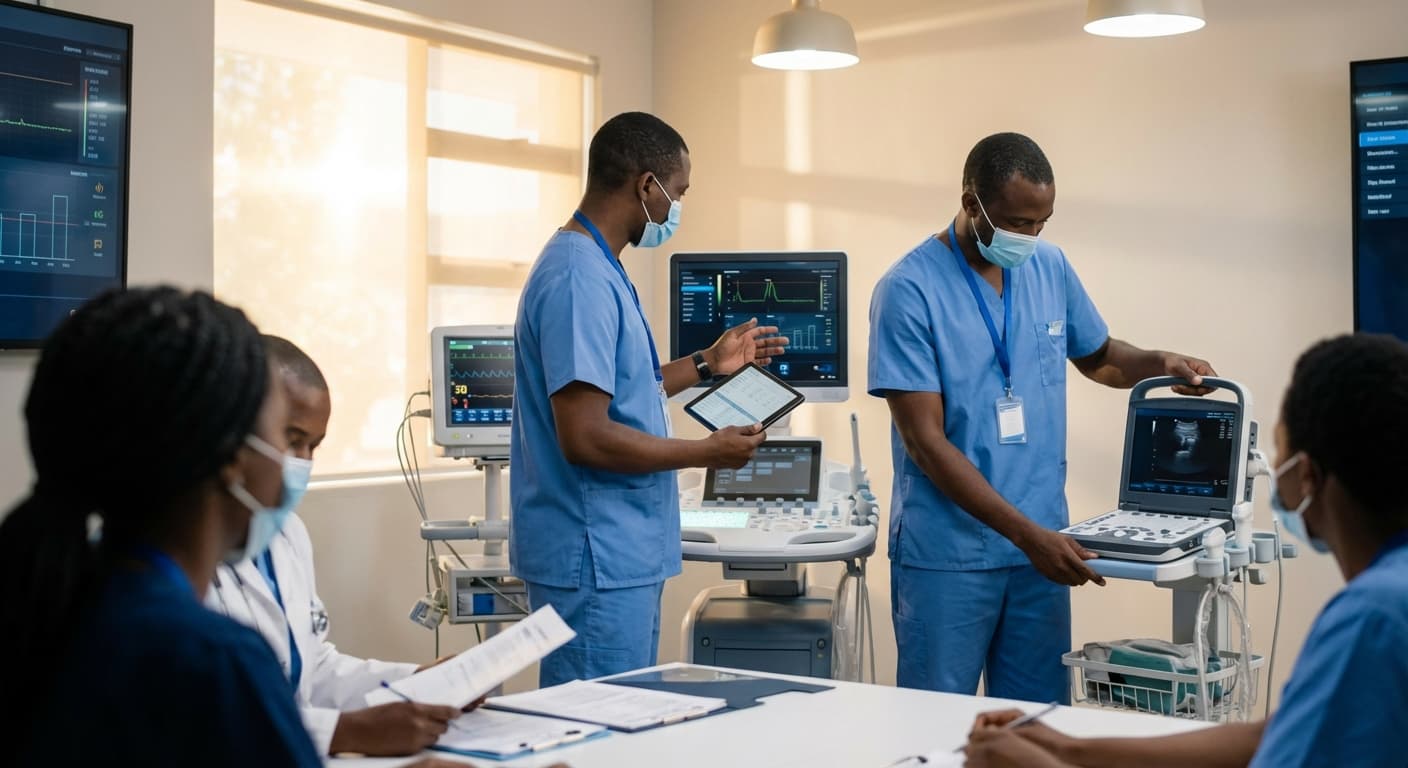
Clinical Needs Assessment for Medical Equipment in Eswatini
Engineering Excellence & Technical Support
Clinical Needs Assessment for Medical Equipment High-standard technical execution following OEM protocols and local regulatory frameworks.
Comprehensive Needs Identification Framework
Developed and implemented a standardized, multi-stakeholder framework for needs assessment, integrating data from healthcare facilities, patient demographics, disease prevalence, and existing equipment inventory. This ensures a data-driven approach to prioritize equipment acquisition and allocation across Eswatini's diverse healthcare landscape.
Robust Training & Capacity Building Strategy
Designed and delivered targeted training programs for healthcare professionals and biomedical engineers on the operation, maintenance, and repair of essential medical equipment. This empowers local capacity, reduces reliance on external support, and maximizes the lifespan and utility of acquired assets.
Sustainable Equipment Lifecycle Management
Established a comprehensive lifecycle management plan encompassing procurement, installation, maintenance scheduling, and end-of-life disposal of medical equipment. This strategic approach optimizes resource utilization, ensures regulatory compliance, and promotes the long-term sustainability of Eswatini's medical equipment infrastructure.
What Is Clinical Needs Assessment For Medical Equipment In Eswatini?
A Clinical Needs Assessment (CNA) for medical equipment in Eswatini is a systematic and evidence-based process designed to identify and prioritize the equipment required to effectively deliver essential healthcare services at various levels of the health system. This involves a comprehensive evaluation of existing resources, unmet needs, technological advancements, and the specific epidemiological profile of the population. The goal is to ensure that available and procured medical equipment aligns with the country's health objectives, enhances clinical capabilities, improves patient outcomes, and is sustainable within the local context regarding infrastructure, maintenance, and user training. It goes beyond simple inventory and focuses on the functional requirements for optimal patient care and service delivery.
| Who Needs a Clinical Needs Assessment? | Typical Use Cases in Eswatini | ||||||
|---|---|---|---|---|---|---|---|
| Ministry of Health (Eswatini): For national health sector strategic planning, budget allocation, and procurement policies for public health facilities at national, regional, and district levels. | Regional Health Management Teams: To identify and prioritize equipment needs for specific regions and their constituent health centers and hospitals. | Individual Public Hospitals and Health Centers: To assess their specific equipment deficits and inform requests for upgrades or new acquisitions. | Non-Governmental Organizations (NGOs) and Faith-Based Organizations (FBOs): When involved in providing healthcare services or implementing health projects that require medical equipment, ensuring alignment with national priorities. | International Development Partners and Donors: To inform their targeted funding and equipment donation programs, ensuring support addresses genuine and prioritized needs. | Healthcare Training Institutions: To identify equipment required for training healthcare professionals to meet current and future service demands. | New Healthcare Facility Development or Expansion Projects: To ensure appropriate equipment is planned and budgeted from the inception phase. | |
| Establishing new specialized clinical services: E.g., dialysis units, advanced imaging departments, or specialized surgical suites. | Upgrading existing facilities to meet evolving healthcare standards: E.g., equipping primary health clinics with basic diagnostic tools or upgrading district hospitals with essential surgical capabilities. | Responding to public health emergencies or disease outbreaks: Identifying and rapidly procuring critical care equipment (e.g., ventilators, oxygen concentrators, diagnostic kits). | Improving diagnostic capabilities: Assessing the need for new or replacement laboratory equipment, X-ray machines, ultrasound devices, or electrocardiogram (ECG) machines. | Enhancing surgical and emergency care: Evaluating requirements for operating theatre equipment, anesthesia machines, patient monitors, and trauma kits. | Strengthening maternal and child health services: Identifying needs for neonatal incubators, phototherapy units, and obstetric ultrasound equipment. | Optimizing the use of scarce resources: Prioritizing equipment that offers the greatest clinical impact and cost-effectiveness. | Developing a national medical equipment maintenance and repair strategy: Identifying common equipment types and their support needs. |
Key Components of a Clinical Needs Assessment for Medical Equipment
- Service Area Identification: Delineating the specific clinical services and specialties for which equipment is required (e.g., primary healthcare, emergency services, surgical units, diagnostic imaging, intensive care).
- Current Equipment Inventory and Condition Assessment: Documenting existing equipment, its functionality, age, maintenance history, and obsolescence.
- Gap Analysis: Identifying deficiencies in equipment availability, functionality, or suitability compared to established clinical standards, guidelines, and best practices.
- Epidemiological Data Review: Analyzing disease prevalence, incidence, and demographic data to inform the demand for specific diagnostic and therapeutic equipment.
- Clinical Workflow and Operational Analysis: Understanding how equipment is currently used or would be used in clinical workflows to optimize efficiency and effectiveness.
- Infrastructure and Support Services Evaluation: Assessing the availability of reliable power, water, ventilation, IT connectivity, and trained personnel for equipment operation and maintenance.
- User Consultation and Training Needs Assessment: Engaging with healthcare professionals (doctors, nurses, technicians) to understand their equipment needs, usability preferences, and identify training requirements.
- Cost-Benefit and Sustainability Analysis: Evaluating the capital costs, operational expenses, maintenance requirements, and long-term sustainability of proposed equipment.
- Prioritization and Phasing: Ranking identified equipment needs based on urgency, impact on patient care, and resource availability for phased procurement and implementation.
- Policy and Regulatory Alignment: Ensuring proposed equipment meets national health policies, standards, and regulatory requirements.
Who Needs Clinical Needs Assessment For Medical Equipment In Eswatini?
Clinical needs assessments for medical equipment are crucial for ensuring that healthcare facilities in Eswatini have the right tools to provide effective patient care. These assessments identify existing gaps, prioritize essential equipment purchases, and ensure that new acquisitions align with clinical demands and existing infrastructure. This process is vital for optimizing resource allocation, improving healthcare outcomes, and supporting the overall functioning of the healthcare system.
| Department/Area | Clinical Needs Addressed by Assessment | Examples of Equipment |
|---|---|---|
| Emergency Department/Accident & Emergency | Rapid assessment, resuscitation, stabilization, and trauma management. | Ventilators, defibrillators, cardiac monitors, suction machines, emergency drug trolleys, portable X-ray units. |
| Surgical Wards/Operating Theatres | Supporting surgical procedures, patient monitoring during and post-operation. | Anesthesia machines, surgical lights, operating tables, electrosurgical units, patient monitors, surgical instruments, sterilizers. |
| Intensive Care Unit (ICU) | Critical care for severely ill patients, advanced life support. | Mechanical ventilators, advanced cardiac monitors, infusion pumps, dialysis machines, ECMO (if available), blood gas analyzers. |
| Maternity and Neonatal Units | Antenatal care, labor and delivery, postnatal care, and neonatal critical care. | Maternal/fetal monitors, incubators, phototherapy units, neonatal ventilators, delivery beds, ultrasound machines. |
| Pediatric Wards | Diagnosis, treatment, and monitoring of illnesses in children. | Pediatric ventilators, infusion pumps (low dose), specialized monitoring equipment for children, phototherapy units. |
| Medical Wards (Internal Medicine) | Diagnosis and management of a wide range of medical conditions. | ECG machines, X-ray viewers, nebulizers, oxygen concentrators, patient trolleys, vital signs monitors. |
| Diagnostic Imaging (Radiology) | Providing imaging services for diagnosis and monitoring. | X-ray machines (fixed and portable), ultrasound machines, CT scanners (if available), MRI scanners (if available), PACS systems. |
| Laboratory Services | Diagnostic testing of biological samples. | Microscopes, centrifuges, hematology analyzers, chemistry analyzers, ELISA readers, refrigerators/freezers for sample storage. |
| Outpatient Departments (OPD)/Clinics | Primary diagnosis, treatment of common ailments, and follow-up care. | Stethoscopes, blood pressure monitors, weighing scales, basic examination equipment, nebulizers, ophthalmoscopes. |
| Rehabilitation Services (Physiotherapy/Occupational Therapy) | Restoring function and mobility. | Exercise equipment, treatment tables, electrotherapy units, gait training aids, assistive devices. |
| Pharmacy | Storage, dispensing, and preparation of medications. | Refrigerators, sterile compounding equipment (if applicable), drug dispensing systems. |
| Infection Prevention and Control | Ensuring sterile environments and preventing the spread of infections. | Autoclaves, sterilizers, personal protective equipment (PPE), waste management equipment. |
Target Customers and Departments for Clinical Needs Assessment of Medical Equipment in Eswatini
- Public Hospitals (Tertiary, Regional, and Referral)
- Health Centers and Clinics (Primary Healthcare Level)
- Private Hospitals and Clinics
- Specialized Medical Centers (e.g., for HIV/AIDS, TB, Maternal Health)
- Ministry of Health and National Health Institutions
- Non-Governmental Organizations (NGOs) involved in healthcare delivery
Clinical Needs Assessment For Medical Equipment Process In Eswatini
This document outlines the workflow for conducting a Clinical Needs Assessment for Medical Equipment in Eswatini, from the initial inquiry to the final execution of recommendations. The process is designed to ensure that medical equipment procured is appropriate, sustainable, and addresses the identified healthcare needs of the nation.
| Phase | Key Activities | Responsible Parties | Output/Deliverable | Timeline (Indicative) |
|---|---|---|---|---|
| Formal request/identification of need for a clinical needs assessment. Defining the scope and objectives of the assessment. | Ministry of Health (MoH), Hospital Management, NGOs, International Partners | Assessment Mandate, Terms of Reference (TOR) | 1-2 Weeks |
| Engaging with healthcare facilities and stakeholders to identify existing equipment gaps, unmet clinical needs, and priority areas for intervention. | MoH (Planning Unit, Clinical Services), Healthcare Facility Staff, District Health Teams | Prioritized List of Clinical Needs | 2-4 Weeks |
| Gathering data on current equipment inventory, utilization, maintenance status, patient demographics, disease burden, and service delivery models. Analyzing this data to understand current capabilities and limitations. | Assessment Team (including clinical specialists, biomedical engineers, data analysts), Healthcare Facility Staff | Needs Assessment Report (including data analysis and key findings) | 4-8 Weeks |
| Defining specific medical equipment requirements based on identified needs. Developing detailed technical specifications, justifications for procurement (including cost-benefit analysis, alignment with national guidelines), and consideration of sustainability (e.g., maintenance, consumables). | Assessment Team, Clinical Specialists, Biomedical Engineers, Procurement Unit (MoH) | Equipment Specifications, Justification Documents | 3-6 Weeks |
| Presenting the draft findings and recommendations to key stakeholders for review and validation. Incorporating feedback to refine the assessment. | MoH Leadership, Hospital Management Committees, Clinical Leads, Partner Organizations | Validated Needs Assessment Report | 2-3 Weeks |
| Formalizing the findings, conclusions, and detailed recommendations for medical equipment procurement, training, and infrastructure upgrades. Providing a comprehensive report to the Ministry of Health. | Assessment Team | Final Clinical Needs Assessment Report with Actionable Recommendations | 1-2 Weeks |
| Developing a detailed implementation plan for the recommended equipment, including timelines, budget allocation, procurement strategies, and resource mobilization. | MoH (Procurement Unit, Planning Unit), Finance Department, Implementing Partners | Implementation Plan, Budget Proposal | 2-4 Weeks |
| Executing the procurement process according to national regulations and best practices. Ensuring proper installation, testing, and commissioning of the acquired medical equipment. | MoH Procurement Unit, Suppliers, Biomedical Engineering Department | Procured & Installed Medical Equipment | Variable (depends on equipment lead times) |
| Providing comprehensive training to healthcare professionals and biomedical technicians on the operation, maintenance, and repair of the new medical equipment. | Training Providers, Biomedical Engineering Department, Equipment Suppliers | Trained Personnel, Training Materials | Ongoing (post-installation) |
| Establishing systems to monitor the utilization, performance, and maintenance of the new equipment. Evaluating the impact of the equipment on service delivery and patient outcomes. | MoH (M&E Unit), Hospital Management, Biomedical Engineering Department | Monitoring Reports, Evaluation Frameworks | Ongoing |
| Collecting feedback from users and stakeholders on the effectiveness of the equipment and the needs assessment process. Using this feedback to inform future assessments and interventions. | All Stakeholders | Lessons Learned, Recommendations for Process Improvement | Ongoing |
Clinical Needs Assessment Workflow for Medical Equipment in Eswatini
- Inquiry & Initiation
- Needs Identification & Prioritization
- Data Collection & Analysis
- Equipment Specification & Justification
- Review & Validation
- Reporting & Recommendation
- Implementation Planning
- Procurement & Installation
- Training & Capacity Building
- Monitoring & Evaluation
- Feedback & Continuous Improvement
Clinical Needs Assessment For Medical Equipment Cost In Eswatini
A clinical needs assessment for medical equipment in Eswatini reveals significant variations in pricing across different categories. Several factors influence these costs, including the type of equipment (diagnostic, therapeutic, surgical, etc.), its sophistication and technological advancements, brand reputation, import duties and taxes, shipping and logistics, vendor markups, and the availability of local maintenance and support services. The healthcare sector in Eswatini, like many developing nations, faces budgetary constraints, making cost-effectiveness a paramount consideration in procurement. Local currency, the Swazi Lilangeni (SZL), is pegged to the South African Rand (ZAR), meaning SZL prices generally follow ZAR fluctuations. However, direct import costs, currency conversion fees, and local distribution channels can introduce further price differentials. This assessment aims to provide a realistic understanding of equipment costs within Eswatini, enabling better budgeting and strategic planning for healthcare facilities.
| Equipment Category | Typical Price Range (SZL) | Notes |
|---|---|---|
| Basic Diagnostic Equipment (e.g., Stethoscope, Sphygmomanometer, Thermometer) | SZL 200 - SZL 2,500 | Highly variable based on brand and quality. Local availability common. |
| Mid-Range Diagnostic Equipment (e.g., Basic ECG Machine, Pulse Oximeter, Digital BP Monitor) | SZL 3,000 - SZL 30,000 | Imported units are common. Prices can vary significantly with features. |
| Advanced Diagnostic Imaging (e.g., Portable Ultrasound, X-ray Machine - basic) | SZL 100,000 - SZL 1,000,000+ | Significant import costs. Maintenance contracts are crucial and add to the total cost. |
| Basic Laboratory Equipment (e.g., Microscope, Centrifuge, Incubator) | SZL 10,000 - SZL 150,000 | Depends on complexity and automation. Reagent costs are an ongoing consideration. |
| Surgical Instruments (Basic Sets) | SZL 5,000 - SZL 50,000 per set | Prices vary by specialty and material quality. Bulk purchases are more economical. |
| Therapeutic Equipment (e.g., Nebulizer, Oxygen Concentrator - home use) | SZL 2,000 - SZL 20,000 | Availability of parts and servicing is a key factor. |
| Hospital Beds (Manual) | SZL 5,000 - SZL 25,000 | Electric beds are significantly more expensive. |
| Patient Monitors (Basic) | SZL 15,000 - SZL 75,000 | Features like invasive monitoring increase costs. |
| Anesthesia Machines (Basic) | SZL 150,000 - SZL 750,000+ | Requires specialized training and maintenance. Significant import and installation costs. |
Key Pricing Factors for Medical Equipment in Eswatini
- Type of Equipment (Diagnostic, Therapeutic, Surgical, etc.)
- Technological Sophistication and Features
- Brand Reputation and Manufacturer
- Import Duties and Taxes
- Shipping and Logistics Costs
- Vendor Markups and Distribution Margins
- Availability and Cost of Local Maintenance and Support
- Currency Exchange Rates (SZL/ZAR fluctuations)
- Bulk Purchasing Discounts
- Warranty and After-Sales Service Packages
Affordable Clinical Needs Assessment For Medical Equipment Options
Optimizing medical equipment procurement begins with a thorough and affordable clinical needs assessment. This process involves understanding the precise requirements of healthcare providers, patient populations, and existing infrastructure to identify the most suitable and cost-effective equipment. By focusing on essential functionalities and avoiding unnecessary features, organizations can significantly reduce capital expenditure and ongoing operational costs. Value bundles, which combine multiple related products or services at a discounted price, and strategic cost-saving measures are crucial for maximizing the return on investment in medical technology.
| Value Bundle Strategy | Description | Cost-Saving Impact |
|---|---|---|
| Integrated System Bundles | Combining diagnostic imaging equipment with its software, PACS integration, and initial training as a single package. | Reduced negotiation time, potential for volume discounts, streamlined implementation, lower integration costs. |
| Service & Maintenance Packages | Bundling preventative maintenance, on-site repairs, and spare parts with the initial equipment purchase. | Predictable maintenance costs, reduced downtime, extended equipment lifespan, avoidance of emergency repair markups. |
| Consumables & Accessories Bundles | Purchasing necessary disposables, calibration tools, and accessories alongside the primary equipment. | Bulk purchasing discounts, simplified inventory management, ensured availability of critical supplies. |
| Training & Education Bundles | Offering comprehensive training programs for clinical staff and IT support as part of the equipment acquisition. | Improved staff proficiency, optimized equipment utilization, reduced errors, faster adoption rates. |
Key Components of an Affordable Clinical Needs Assessment
- Define Clinical Workflow: Analyze current and desired patient care pathways to determine equipment placement and integration needs.
- Identify Patient Demographics & Volume: Understand the patient population served to ensure equipment is appropriate in terms of capacity and specialization.
- Assess Technical & Infrastructure Requirements: Evaluate existing power, IT, and space limitations to avoid costly modifications.
- Prioritize Essential Features: Differentiate between 'must-have' and 'nice-to-have' functionalities to prevent overspending.
- Evaluate Existing Equipment: Determine if current equipment can be upgraded or repurposed, reducing the need for new purchases.
- Consider Future Needs: Project anticipated growth and changes in service offerings to ensure long-term equipment relevance.
Verified Providers In Eswatini
In Eswatini, ensuring access to reliable and high-quality healthcare is paramount. This is where verified providers, particularly those with strong credentials like Franance Health, become indispensable. Their commitment to rigorous standards and patient-centric care positions them as a leading choice for health services within the nation. Understanding what constitutes a 'verified provider' and why Franance Health stands out can help individuals make informed decisions about their healthcare.
| Credential/Aspect | Franance Health's Commitment | Why it Matters for Patients |
|---|---|---|
| Ministry of Health Accreditation | Franance Health actively seeks and maintains accreditation, demonstrating compliance with all national health directives and safety standards. | Ensures legal and ethical operation, guaranteeing a baseline of quality and safety for all services received. |
| Qualified and Licensed Professionals | Employs a team of highly skilled and licensed doctors, nurses, and allied health professionals with specialized training. | Provides access to expert medical advice and treatment from individuals who have met stringent educational and professional requirements. |
| Patient-Centric Approach | Prioritizes patient comfort, dignity, and active participation in their healthcare journey, offering personalized care plans. | Leads to a more positive and effective healthcare experience, where patient needs and preferences are at the forefront. |
| Advanced Diagnostic Capabilities | Invests in modern diagnostic equipment and technologies to ensure accurate and timely identification of health conditions. | Facilitates quicker and more precise diagnoses, leading to prompt and appropriate treatment initiation. |
| Commitment to Continuous Improvement | Regularly reviews and updates its practices, incorporating feedback and advancements in medical science. | Guarantees that patients receive care based on the latest medical knowledge and best practices. |
| Accessibility and Affordability | Strives to make quality healthcare accessible to a broader segment of the Eswatini population through strategic location and flexible payment options. | Reduces barriers to essential medical services, allowing more individuals to receive the care they need without undue financial burden. |
What Makes a Provider 'Verified' in Eswatini?
- Accreditation by the Ministry of Health: Official recognition and adherence to national healthcare regulations and standards.
- Professional Licensing: Ensuring all healthcare professionals possess the necessary licenses to practice.
- Quality Assurance Protocols: Implementation of internal processes to monitor and improve service delivery and patient safety.
- Positive Patient Feedback and Testimonials: Demonstrable track record of satisfactory patient experiences.
- Adherence to Ethical Practices: Commitment to patient confidentiality, informed consent, and fair treatment.
- Investment in Modern Infrastructure and Technology: Utilizing up-to-date facilities and equipment for accurate diagnosis and effective treatment.
Scope Of Work For Clinical Needs Assessment For Medical Equipment
This Scope of Work (SOW) outlines the requirements for conducting a comprehensive clinical needs assessment for medical equipment. The assessment will inform procurement decisions, ensuring that acquired equipment aligns with the current and future clinical demands, patient care objectives, and technological advancements of the healthcare facility. The project includes the identification of essential medical equipment, evaluation of existing assets, determination of functional and technical specifications, and recommendations for optimal equipment selection and integration. The technical deliverables will focus on detailed equipment specifications and performance criteria, while standard specifications will ensure interoperability, safety, and compliance with regulatory requirements.
| Deliverable Title | Description | Format | Key Components |
|---|---|---|---|
| Clinical Needs Assessment Report | A comprehensive document summarizing the findings of the needs assessment, including identified gaps, prioritized equipment list, and justification. | PDF Document | Executive Summary, Methodology, Current State Analysis, Future State Needs, Prioritized Equipment List, Recommendations. |
| Technical Specification Documents (per equipment item) | Detailed specifications for each recommended medical equipment item, outlining functional requirements, performance metrics, and essential features. | Word Document / PDF | Equipment Category, Model (if applicable), Intended Use, Key Technical Specifications (e.g., resolution, accuracy, power, measurement range), Connectivity, Software Requirements, Integration Points. |
| Standard Specifications for Medical Equipment | Guidelines and requirements for all new medical equipment to ensure safety, compliance, interoperability, and maintainability. | Word Document / PDF | Safety Standards (e.g., IEC 60601), Regulatory Compliance (e.g., FDA clearance, CE marking), Interoperability Standards (e.g., HL7, DICOM, FHIR), Cybersecurity Requirements, Maintenance and Serviceability, Environmental Specifications. |
| Existing Equipment Inventory and Evaluation Summary | A consolidated overview of the existing medical equipment, including its condition, performance, and suitability for continued use. | Excel Spreadsheet / PDF | Equipment ID, Name, Manufacturer, Model, Acquisition Date, Current Condition, Maintenance History, Evaluation Outcome (Keep, Upgrade, Replace). |
| Infrastructure Requirements Assessment | An assessment of the necessary infrastructure upgrades or modifications required to support the proposed new medical equipment. | Word Document / PDF | Power Requirements, Network Connectivity, Space and Layout, Environmental Controls (Temperature, Humidity), Waste Management, Safety Features. |
Key Activities and Objectives
- Conduct a thorough review of current clinical services and patient demographics to identify immediate and projected equipment needs.
- Evaluate the performance, age, and condition of existing medical equipment to determine suitability for continued use, upgrade, or replacement.
- Consult with clinical departments, medical staff, and allied health professionals to gather input on functional requirements, usability, and desired features.
- Research and identify emerging medical technologies and equipment that can enhance patient care, improve efficiency, and support new clinical pathways.
- Develop detailed technical specifications for each identified medical equipment item, including performance criteria, interfaces, and integration requirements.
- Define standard specifications for all new medical equipment, encompassing safety features, regulatory compliance (e.g., FDA, CE), interoperability standards (e.g., HL7, DICOM), and maintenance requirements.
- Assess the infrastructure requirements (e.g., power, network, space, environmental controls) for proposed new equipment.
- Provide a prioritized list of recommended medical equipment with justification based on clinical impact, cost-effectiveness, and strategic alignment.
- Develop a comprehensive report detailing the findings, analysis, technical specifications, standard specifications, and recommendations.
Service Level Agreement For Clinical Needs Assessment For Medical Equipment
This Service Level Agreement (SLA) outlines the agreed-upon response times for clinical needs assessments and uptime guarantees for the associated platforms and systems used in the medical equipment procurement process. This SLA is designed to ensure timely and efficient evaluation of clinical requirements, contributing to the effective selection and deployment of medical equipment.
| Service Component | Service Level Objective (SLO) | Measurement Period | Remedy for Non-Compliance |
|---|---|---|---|
| Initiation of Clinical Needs Assessment | Within 2 business days of receiving a complete request. | Per request | Escalation to senior management; review of internal processes. |
| Preliminary Findings Communication | Within 5 business days of initial assessment commencement. | Per assessment | Formal report on delays and corrective actions. |
| Completion of Clinical Needs Assessment Report | Within 10 business days of assessment commencement (for standard assessments). | Per assessment | 10% discount on the next consultation fee for delays exceeding 2 business days. |
| Platform/System Uptime (for assessment tools and collaboration platforms) | 99.5% monthly uptime. | Monthly | 1% service credit for every hour of unplanned downtime exceeding the guaranteed uptime. Credits capped at 10% of monthly service fees. |
| Critical Issue Resolution (affecting assessment functionality) | 4 business hours for initial response; resolution within 24 business hours. | Per incident | Root cause analysis report and commitment to prevent recurrence. Consideration for expedited review processes. |
| Non-Critical Issue Resolution (affecting assessment functionality) | 8 business hours for initial response; resolution within 72 business hours. | Per incident | Status updates provided at regular intervals; performance improvement plan if recurring. |
Key Performance Indicators (KPIs)
- Timely initiation of clinical needs assessment after request.
- Prompt communication of preliminary findings.
- Accurate and comprehensive documentation of clinical requirements.
- High availability of the platform used for needs assessment.
- Efficient resolution of issues impacting the assessment process.
Frequently Asked Questions

Ready when you are
Let's scope your Clinical Needs Assessment for Medical Equipment in Eswatini project in Eswatini.

Scaling healthcare logistics and technical systems across the entire continent.