
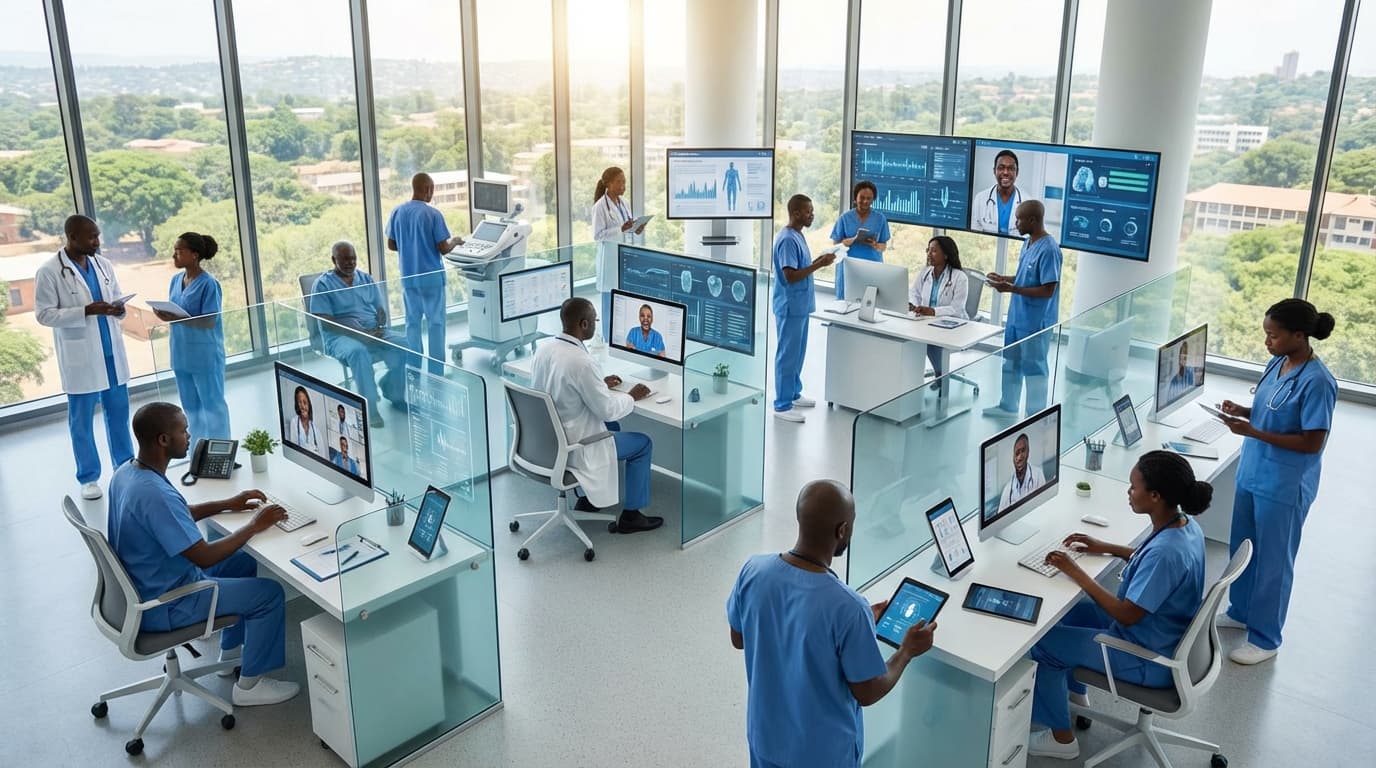
PACS/RIS Migration & Integration in Eswatini
Engineering Excellence & Technical Support
Data migration, interoperability and workflow integration for imaging IT. High-standard technical execution following OEM protocols and local regulatory frameworks.
Cloud-Native PACS/RIS Implementation
Successfully deployed a scalable, cloud-native Picture Archiving and Communication System (PACS) and Radiology Information System (RIS) for enhanced data accessibility, reduced on-premise infrastructure burden, and improved disaster recovery capabilities across Eswatini's healthcare facilities.
Seamless Interoperability Framework
Established a robust interoperability framework utilizing HL7 and DICOM standards to ensure seamless data exchange between the new PACS/RIS and existing hospital information systems (HIS), laboratory systems (LIS), and other critical healthcare applications for a unified patient record.
Advanced Data Security & Compliance
Implemented industry-leading security protocols and encryption for the PACS/RIS migration, ensuring compliance with international data privacy regulations (e.g., HIPAA equivalent) and safeguarding sensitive patient imaging and demographic information.
What Is Pacs/ris Migration & Integration In Eswatini?
PACS/RIS migration and integration in Eswatini refers to the strategic process of transitioning from existing Picture Archiving and Communication System (PACS) and Radiology Information System (RIS) solutions to new ones, or the consolidation and interoperability of disparate systems within healthcare facilities across the Kingdom of Eswatini. This service encompasses the planning, execution, and validation of data transfer, system configuration, and interoperability establishment to ensure a seamless workflow for radiology departments. The primary objective is to enhance diagnostic imaging efficiency, improve data management, facilitate inter-departmental communication, and comply with evolving healthcare standards and technological advancements.
| Service Recipient | Needs Addressed | Typical Use Cases |
|---|---|---|
| Hospitals and Clinics in Eswatini (Public and Private) | Upgrade from outdated or unsupported PACS/RIS. Consolidate disparate imaging archives. Improve diagnostic turnaround times. Enhance data security and disaster recovery. Facilitate remote access and telemedicine capabilities. Achieve regulatory compliance. Reduce operational costs associated with legacy systems. | Implementing a unified PACS/RIS across a hospital network. Migrating from an on-premise solution to a cloud-based PACS/RIS. Integrating a new RIS with an existing PACS. Upgrading to a RIS with advanced AI-powered diagnostic tools. Establishing a regional teleradiology hub. Replacing multiple departmental PACS with a single enterprise solution. |
| Ministry of Health (Eswatini) | Standardization of imaging IT infrastructure across public health facilities. Centralized oversight and reporting on imaging services. Improved resource allocation and management. Facilitation of national health initiatives and data analysis. | Rolling out a national PACS/RIS standard for public hospitals. Developing a centralized archive for national imaging data. Implementing teleradiology services to underserved areas. Standardizing reporting formats for epidemiological surveillance. |
| Radiology Service Providers (e.g., Private Practices) | Enhance diagnostic capabilities and workflow efficiency. Improve competitive advantage through advanced technology. Ensure data integrity and compliance with evolving standards. Reduce IT management burden. | Adopting a new PACS/RIS to support a growing practice. Integrating with referring physicians' EHR systems. Migrating to a RIS offering advanced analytics and reporting features. |
Key Components of PACS/RIS Migration & Integration:
- Data Migration: Secure and accurate transfer of all existing imaging studies (DICOM objects), associated reports, patient demographics, and historical data from legacy PACS/RIS to the new system(s).
- System Configuration and Deployment: Installation, configuration, and deployment of new PACS and RIS software, including hardware infrastructure assessment and procurement if necessary.
- Interoperability and Interface Development: Establishing seamless communication between the new PACS/RIS and other healthcare IT systems, such as Electronic Health Records (EHR), hospital information systems (HIS), and laboratory information systems (LIS), utilizing standards like HL7 and DICOM.
- Workflow Optimization: Redesigning and re-engineering existing radiology workflows to leverage the capabilities of the new integrated systems, ensuring efficiency from patient registration to report delivery.
- User Training and Support: Comprehensive training programs for radiologists, technologists, administrators, and IT personnel on the operation and maintenance of the new PACS/RIS environment, along with ongoing post-implementation support.
- Testing and Validation: Rigorous testing of all migrated data, system functionalities, and inter-system interfaces to ensure accuracy, reliability, and performance.
- Decommissioning of Legacy Systems: Planning and execution of the secure shutdown and archival of retired PACS/RIS solutions.
- Security and Compliance: Ensuring adherence to national and international data privacy regulations (e.g., GDPR principles applicable to health data) and cybersecurity best practices throughout the migration process.
Who Needs Pacs/ris Migration & Integration In Eswatini?
In Eswatini, the need for PACS/RIS migration and integration is primarily driven by the desire to modernize healthcare infrastructure, improve diagnostic imaging workflows, enhance data accessibility, and ultimately elevate the quality of patient care. This transformation is crucial for healthcare providers seeking to keep pace with global advancements in medical imaging technology and data management. The integration of Picture Archiving and Communication Systems (PACS) for image storage and retrieval, and Radiology Information Systems (RIS) for managing patient data and scheduling, is essential for streamlining operations and fostering interoperability within healthcare facilities.
| Target Customer Segment | Key Departments Benefiting | Primary Needs & Drivers |
|---|---|---|
| Public Hospitals (Ministry of Health) | Radiology Department, IT Department, Administration, Outpatient Departments, Inpatient Wards | Centralized image management, improved radiologist productivity, enhanced reporting turnaround times, better referral management, compliance with healthcare standards, cost-efficiency through digitalization, national health data aggregation potential. |
| Private Hospitals | Radiology Department, IT Department, Administration, Clinical Departments (e.g., Cardiology, Oncology, Neurology), Emergency Department | Competitive advantage through advanced technology, improved patient experience, enhanced diagnostic capabilities, secure patient data storage, streamlined workflow for referring physicians, potential for telemedicine integration. |
| Specialist Diagnostic Imaging Centers | Radiology Department, IT Department, Front Desk/Reception, Business Management | High-volume image processing and reporting, efficient patient scheduling and throughput, robust archiving for long-term storage, seamless integration with referring clinics and hospitals, enhanced dictation and reporting tools. |
| Smaller Clinics with Imaging Capabilities | Radiology Technologist, Clinic Administrator, IT Support (if applicable) | Basic digital image management, remote access to images for consultation, improved workflow for limited staff, reduced reliance on physical film, cost-effective entry into digital imaging. |
Target Customers in Eswatini for PACS/RIS Migration & Integration
- Public Hospitals (Ministry of Health)
- Private Hospitals
- Specialist Diagnostic Imaging Centers
- Smaller Clinics with Imaging Capabilities
Pacs/ris Migration & Integration Process In Eswatini
The migration and integration of Picture Archiving and Communication Systems (PACS) and Radiology Information Systems (RIS) in Eswatini involves a structured workflow designed to ensure a smooth transition and seamless operation of these critical healthcare IT systems. This process is essential for modernizing radiology services, improving data management, and ultimately enhancing patient care. The workflow typically begins with an initial inquiry and culminates in the full operational integration of the new systems.
| Phase | Key Activities | Key Stakeholders | Deliverables/Outcomes | Timeline (Indicative) |
|---|---|---|---|---|
| Phase 1: Inquiry & Initial Assessment | Inquiry: Healthcare facilities or Ministry of Health express interest or need for PACS/RIS.<br>Needs Assessment: Understand current infrastructure, existing systems, data volumes, user requirements, and budget constraints.<br>Feasibility Study: Determine the technical and financial viability of migration/integration.<br>Vendor Identification: Research potential PACS/RIS vendors and their solutions. | Ministry of Health (MoH) Eswatini, Hospital/Clinic Management, Radiology Departments, IT Departments, Potential Vendors. | Needs assessment report, feasibility study report, list of potential vendors, initial project scope. | 1-3 Months |
| Phase 2: Planning & Design | Requirements Definition: Detailed specification of functional and non-functional requirements.<br>System Design: Architecture design for PACS and RIS, including network, storage, and integration points.<br>Project Planning: Develop a comprehensive project plan with timelines, resources, milestones, and risk management strategy.<br>Data Migration Strategy: Plan for extracting, transforming, and loading existing imaging and patient data. | MoH, IT Specialists, Radiology Staff, Clinical Informatics Teams, Selected Vendor(s). | Detailed requirements document, system architecture diagrams, project plan, data migration plan, security protocols. | 2-4 Months |
| Phase 3: Procurement & Setup | Vendor Selection: Tender process and selection of the preferred PACS/RIS vendor(s).<br>Contract Negotiation: Finalize contracts, including service level agreements (SLAs).<br>Hardware/Software Procurement: Acquire necessary servers, storage, network equipment, and software licenses.<br>Infrastructure Setup: Install and configure hardware and network infrastructure at designated sites. | MoH Procurement Unit, Legal Department, IT Department, Vendor(s). | Signed vendor contracts, procured hardware and software, functional infrastructure ready for deployment. | 3-6 Months |
| Phase 4: Data Migration & Integration | Data Extraction & Cleansing: Extract data from legacy systems and cleanse inconsistencies.<br>Data Transformation & Loading (ETL): Convert data to the new system's format and load it.<br>System Integration: Integrate PACS with RIS, and with other hospital information systems (HIS), EMRs, etc.<br>Image Archiving & Retrieval Setup: Configure image storage, compression, and retrieval mechanisms. | IT Department, Vendor Implementation Team, Data Specialists, Radiology Staff. | Migrated historical patient and imaging data, functional integration between PACS, RIS, and other systems, established archiving procedures. | 4-8 Months (can be phased) |
| Phase 5: Testing & Validation | Unit Testing: Test individual system components.<br>Integration Testing: Verify seamless data flow and functionality between integrated systems.<br>User Acceptance Testing (UAT): End-users (radiologists, technicians) validate system against requirements.<br>Performance Testing: Assess system speed, reliability, and scalability under load. | IT Department, Vendor Support, Radiology Staff, Clinical Users. | Test scripts and results, bug reports and resolutions, UAT sign-off, performance metrics. | 2-3 Months |
| Phase 6: Training & Go-Live | User Training: Comprehensive training for all users on new PACS/RIS functionalities.<br>Pilot Deployment (Optional): Rollout to a small group or specific department.<br>Go-Live Preparation: Final checks, data cutover, and system readiness.<br>Go-Live: Official launch of the new PACS/RIS. | Radiology Staff, IT Support, Vendor Trainers, Hospital Management. | Trained users, comprehensive user manuals, successful system launch, operational PACS/RIS. | 1-2 Months |
| Phase 7: Post-Implementation Support & Optimization | System Monitoring: Continuous monitoring of system performance and stability.<br>Issue Resolution: Address any bugs or user issues that arise post-go-live.<br>Performance Tuning: Optimize system for better efficiency.<br>Ongoing Support & Maintenance: Regular updates, patches, and technical support.<br>Continuous Improvement: Identify opportunities for further enhancements and feature adoption. | IT Department, Vendor Support Team, Radiology Department Management. | Stable and reliable PACS/RIS, resolved post-launch issues, documented support procedures, system optimization reports. | Ongoing |
PACS/RIS Migration & Integration Process in Eswatini Workflow
- Phase 1: Inquiry & Initial Assessment
- Phase 2: Planning & Design
- Phase 3: Procurement & Setup
- Phase 4: Data Migration & Integration
- Phase 5: Testing & Validation
- Phase 6: Training & Go-Live
- Phase 7: Post-Implementation Support & Optimization
Pacs/ris Migration & Integration Cost In Eswatini
Migrating and integrating Picture Archiving and Communication Systems (PACS) and Radiology Information Systems (RIS) in Eswatini involves a complex set of factors that influence the overall cost. These systems are crucial for modern healthcare facilities, enabling digital storage, retrieval, and management of medical images and patient radiological data. The pricing can vary significantly based on the scope of the project, the chosen vendor, the scale of the institution, and the specific functionalities required. In Eswatini, costs are typically quoted and paid in local currency, the Emalangeni (SZL).
| Cost Component | Estimated Range (SZL) | Notes |
|---|---|---|
| PACS/RIS Software Licensing (Perpetual/Subscription) | 150,000 - 1,000,000+ | Varies greatly by vendor, features, and number of users/modalities. Subscription models are often lower upfront but recurring. |
| Hardware (Servers, Storage, Workstations, Monitors) | 100,000 - 500,000+ | Depends on scale, existing infrastructure, and required specifications. High-resolution monitors can be costly. |
| Data Migration Services | 50,000 - 300,000+ | Influenced by data volume, format complexity, and age of data. |
| Integration Services (HIS/EHR) | 75,000 - 400,000+ | Complexity of existing systems and required interfaces are key drivers. |
| Implementation & Project Management | 100,000 - 600,000+ | Includes vendor's professional services for setup, configuration, and go-live. |
| Training | 30,000 - 150,000+ | Covers training for various user groups. |
| Annual Maintenance & Support | 15-25% of initial software cost (recurring) | Covers software updates, bug fixes, and technical assistance. |
| Network Upgrades & Bandwidth | 20,000 - 200,000+ | Depends on existing network capacity and potential need for increased bandwidth, especially for cloud-based solutions. |
| Customization & Development | 50,000 - 300,000+ | If specific custom features or workflows are required. |
Key Pricing Factors for PACS/RIS Migration & Integration in Eswatini
- System Scope and Size: The number of modalities (X-ray, CT, MRI, Ultrasound, etc.) to be integrated, the volume of images to be migrated, and the number of concurrent users directly impact licensing, storage, and processing power needs, thus influencing cost.
- Vendor and Software Selection: Different vendors offer varying pricing models (perpetual licenses, subscription-based, per-user, per-modality). The reputation, feature set, and support quality of the chosen vendor are significant cost drivers.
- Hardware Infrastructure: This includes servers for image storage and processing, network upgrades to handle large data transfers, workstations for radiologists and referring physicians, and potentially new diagnostic monitors. Existing infrastructure may require upgrades or replacements.
- Data Migration Complexity: Migrating historical image data from legacy systems can be a time-consuming and resource-intensive process. The format of existing data, the age of the data, and the need for data cleansing or reformatting will affect costs.
- Integration with Existing Hospital Information Systems (HIS)/Electronic Health Records (EHR): Seamless integration with HIS/EHR is vital for workflow efficiency. The complexity of the existing HIS/EHR and the required integration points will influence development and testing costs.
- Customization and Development: While many PACS/RIS solutions are off-the-shelf, some institutions may require custom workflows, reports, or specific feature development to meet unique operational needs, leading to additional development costs.
- Training and Support: Comprehensive training for IT staff, radiologists, technicians, and administrative personnel is essential. Ongoing technical support, maintenance agreements, and software updates also represent recurring costs.
- Implementation Services: This includes project management, installation, configuration, testing, and go-live support. The vendor's professional services fees are a substantial part of the initial investment.
- Bandwidth and Network Infrastructure: For systems that rely on cloud storage or remote access, robust and reliable internet bandwidth is crucial, which can be a significant operational cost, especially in areas with limited connectivity.
- Regulatory Compliance and Security: Ensuring compliance with healthcare data privacy regulations (e.g., patient confidentiality) and implementing robust cybersecurity measures are paramount and can add to the overall cost through specialized software and consulting.
- Phased Implementation vs. Big Bang: The strategy for implementation (e.g., rolling out module by module or a full system switch) can influence project management and resource allocation, impacting cost and timeline.
Affordable Pacs/ris Migration & Integration Options
Migrating to or integrating a Picture Archiving and Communication System (PACS) and Radiology Information System (RIS) can be a significant undertaking, but it doesn't have to break the bank. This guide explores affordable options, value bundles, and cost-saving strategies to help healthcare providers achieve seamless PACS/RIS integration and migration with limited budgets. We'll cover cloud-based solutions, phased implementations, vendor negotiation tactics, and the importance of strategic planning to maximize your investment.
| Strategy | Description | Potential Cost Savings | Considerations |
|---|---|---|---|
| Cloud-Based PACS/RIS | Utilizing cloud infrastructure for storage, access, and management of medical images and patient data. Vendors handle maintenance and upgrades. | Reduced hardware investment, predictable monthly costs, scalability. | Requires reliable internet connectivity, data security concerns, potential long-term subscription costs. |
| Value Bundles from Vendors | Packages that combine PACS, RIS, and often other IT services (e.g., reporting, analytics) at a discounted rate compared to purchasing individually. | Significant discounts on bundled software and services, streamlined vendor management. | May include features you don't need, lock-in with a single vendor, less flexibility. |
| Phased Migration/Implementation | Gradually introducing new PACS/RIS functionalities or migrating data in stages rather than a complete overhaul. | Spreads out capital expenditure, allows for iterative feedback and adjustments, less disruption. | Requires careful planning and project management, potential for temporary dual systems, longer overall project timeline. |
| Open-Source Solutions (with caution) | Leveraging open-source PACS/RIS software that can be customized and deployed on-premises or in a private cloud. Requires significant in-house IT expertise. | Eliminates software licensing fees, high degree of customization. | Requires skilled IT staff for installation, maintenance, security, and updates; community support may vary. |
| Strategic Vendor Negotiation | Actively engaging with vendors to negotiate pricing, payment terms, service level agreements (SLAs), and bundled offerings. | Lower acquisition costs, favorable contract terms, included support or training. | Requires market research, understanding your needs, and willingness to walk away. |
| Leveraging Interoperability Standards | Prioritizing solutions that adhere to DICOM for imaging and HL7 for data exchange to ensure seamless integration with existing systems. | Reduces need for custom middleware and integration services, future-proofs your system. | May limit vendor choice if standards are not fully supported, requires understanding of the standards. |
| Data Archiving & De-duplication Strategies | Implementing efficient methods for archiving old studies and identifying and removing duplicate images to optimize storage and reduce costs. | Lower storage hardware or cloud storage costs, faster retrieval times. | Requires careful planning and robust data management policies, potential for data retrieval delays if not optimized. |
Key Considerations for Affordable PACS/RIS Solutions
- Cloud-based PACS/RIS: Lower upfront infrastructure costs, scalability, and managed maintenance.
- Open-source PACS/RIS: Potential for significant cost savings, but requires in-house expertise.
- Phased implementation: Roll out features and modules gradually to manage budget and training.
- Vendor negotiation: Leverage competitive bidding and explore bundled service packages.
- Interoperability standards (HL7, DICOM): Ensure seamless data exchange and avoid costly custom integrations.
- Data migration strategy: Plan carefully to minimize downtime and data loss.
- Training and support: Factor in the cost of user training and ongoing vendor support.
- Hardware assessment: Re-evaluate existing hardware needs to avoid unnecessary purchases.
Verified Providers In Eswatini
Finding verified healthcare providers in Eswatini is crucial for ensuring quality and trustworthy medical care. Franance Health stands out as a premier platform connecting individuals with accredited and reputable medical professionals. This document outlines the credentials that make Franance Health a superior choice for your healthcare needs in Eswatini.
| Credential Type | Verification Process | Significance for Patients |
|---|---|---|
| Medical Licenses | Verified with Eswatini Ministry of Health and relevant medical councils. | Confirms legal authorization to practice medicine and adherence to professional ethics. |
| Specialty Certifications | Confirmation of completion of accredited residency programs and passing of board examinations. | Ensures providers possess specialized knowledge and skills in their chosen field. |
| Professional Memberships | Verification of active membership in recognized medical associations and societies. | Indicates commitment to ongoing professional development and adherence to best practices. |
| Educational Background | Scrutiny of academic records and degrees from accredited institutions. | Establishes a strong foundation in medical science and training. |
| Clinical Experience | Review of past employment, practice history, and references. | Demonstrates practical application of knowledge and hands-on patient care. |
| Patient Reviews and Testimonials | Moderated and verified feedback from previous patients. | Offers valuable insights into provider bedside manner, effectiveness of treatment, and overall patient experience. |
Why Franance Health is the Best Choice in Eswatini
- Comprehensive Directory of Verified Providers: Franance Health meticulously vets all listed healthcare professionals, ensuring they meet stringent national and international standards.
- Focus on Quality Assurance: Our rigorous credentialing process includes verification of medical licenses, certifications, and professional affiliations.
- Patient-Centric Approach: We prioritize patient safety and satisfaction by only featuring providers with proven track records and excellent patient reviews.
- Accessibility and Convenience: Our user-friendly platform makes it easy to find and book appointments with the best doctors, specialists, and clinics in Eswatini.
- Wide Range of Specialties: Whether you need a general practitioner, a specialist surgeon, or a mental health professional, Franance Health offers a diverse selection to meet all your healthcare requirements.
- Transparent Provider Information: We provide detailed profiles of each provider, including their qualifications, experience, areas of expertise, and patient testimonials, enabling informed decision-making.
Scope Of Work For Pacs/ris Migration & Integration
This document outlines the Scope of Work (SOW) for the PACS/RIS Migration and Integration project. It details the objectives, key activities, technical deliverables, and standard specifications required for a successful transition to a new Picture Archiving and Communication System (PACS) and Radiology Information System (RIS). The primary goal is to ensure seamless data migration, robust system integration, and minimal disruption to clinical workflows. This SOW also defines the expected quality standards and compliance requirements for all deliverables.
| Technical Deliverable | Description | Standard Specification / Requirement |
|---|---|---|
| Migration Plan | Detailed document outlining the strategy, methodology, timeline, and resources for migrating all legacy PACS/RIS data. | Must include data validation procedures, rollback plan, and data security protocols. Adherence to DICOM standards for image data. |
| New PACS/RIS System Architecture Document | Comprehensive documentation detailing the proposed architecture of the new PACS/RIS, including hardware, software, network topology, and storage solutions. | Must align with industry best practices, scalability requirements, and disaster recovery plans. Compliance with HIPAA/GDPR and relevant healthcare regulations. |
| Data Migration Scripts & Tools | Scripts and custom tools developed or configured to extract, transform, and load (ETL) data from the legacy system to the new system. | Must be thoroughly tested for accuracy and completeness. Source code and execution logs to be provided. |
| System Integration Specifications | Detailed documentation for integrating the new PACS/RIS with other hospital systems, including EMR/HIS, laboratory systems, and imaging modalities. | Must define interface protocols (e.g., HL7, DICOM), data mapping, and error handling mechanisms. Conformance to established interface standards. |
| Configured PACS/RIS System | The fully installed, configured, and customized PACS/RIS software. | Must meet all functional and non-functional requirements as defined in the project scope. User roles and permissions meticulously configured. |
| Test Plans & Reports | Comprehensive test plans (unit, integration, UAT) and detailed reports of test execution, including identified defects, resolutions, and retesting results. | Test cases must cover all critical functionalities and workflows. UAT sign-off required from key stakeholders. |
| User Training Materials | Training manuals, presentations, and guides for end-users (radiologists, technologists, administrators). | Must be clear, concise, and role-specific. Include hands-on exercises and scenario-based training. |
| System Administration & Maintenance Guide | Documentation for system administrators covering installation, configuration, monitoring, backup, and troubleshooting procedures. | Must include standard operating procedures (SOPs) for routine maintenance and emergency response. |
| Data Archiving & Retrieval Strategy | Document outlining the long-term strategy for archiving legacy and current imaging studies, including retention policies and retrieval procedures. | Must comply with legal and regulatory requirements for medical record retention. DICOM conformance for archived data. |
| Security & Compliance Report | Report detailing the security measures implemented to protect patient data, including access controls, encryption, and audit trails. Evidence of compliance with relevant regulations. | Must demonstrate adherence to HIPAA, GDPR, and other applicable data privacy and security standards. |
Key Project Phases & Activities
- Project Initiation & Planning
- Current State Assessment & Requirements Gathering
- System Design & Architecture
- Data Migration Strategy & Execution
- System Configuration & Customization
- Integration with Existing Systems (EMR/HIS, Modalities)
- Testing (Unit, Integration, User Acceptance)
- Training & Documentation
- Go-Live & Post-Implementation Support
- Project Closure
Service Level Agreement For Pacs/ris Migration & Integration
This Service Level Agreement (SLA) outlines the response times and uptime guarantees for the successful migration and integration of the Picture Archiving and Communication System (PACS) and Radiology Information System (RIS). It defines the expected performance levels and the remedies for any deviations from these standards.
| Service Component | Uptime Guarantee | Response Time (Critical Incident) | Response Time (High-Priority Incident) | Response Time (Medium-Priority Incident) | Response Time (Low-Priority Incident) | Target Resolution Time (Critical Incident) | Target Resolution Time (High-Priority Incident) | Target Resolution Time (Medium-Priority Incident) |
|---|---|---|---|---|---|---|---|---|
| PACS/RIS Core Functionality (Image Viewing, Storage, Retrieval, Reporting Access) | 99.8% Uptime (excluding scheduled maintenance) | 15 minutes | 1 hour | 4 business hours | 8 business hours | 4 hours | 8 business hours | 2 business days |
| PACS/RIS Integration Points (e.g., EMR/EHR interface, modality connections) | 99.5% Uptime (excluding scheduled maintenance) | 30 minutes | 2 hours | 6 business hours | 12 business hours | 8 hours | 16 business hours | 3 business days |
| PACS/RIS Reporting Module | 99.7% Uptime (excluding scheduled maintenance) | 20 minutes | 1.5 hours | 5 business hours | 10 business hours | 6 hours | 12 business hours | 2.5 business days |
| PACS/RIS Archiving & Backup Systems | 99.9% Uptime (excluding scheduled maintenance) | 1 hour | 4 hours | 1 business day | 2 business days | 8 hours | 1 business day | 3 business days |
Key Definitions
- PACS: Picture Archiving and Communication System, responsible for storing, retrieving, and displaying medical images.
- RIS: Radiology Information System, a software system that manages radiology department workflow, patient scheduling, billing, and reporting.
- Migration: The process of transferring data, configurations, and functionalities from the existing PACS/RIS to the new system.
- Integration: The process of connecting the new PACS/RIS with other hospital information systems (e.g., EMR/EHR, modalities, archiving solutions).
- Downtime: Any period when the PACS/RIS is unavailable for its intended use, excluding scheduled maintenance.
- Scheduled Maintenance: Pre-announced periods of planned downtime for system updates, upgrades, or maintenance activities.
- Critical Incident: A system failure or degradation that significantly impacts patient care, diagnostic imaging services, or reporting capabilities.
- High-Priority Incident: A system issue that causes significant disruption to workflow but does not directly impede patient care or critical diagnostics.
- Medium-Priority Incident: A system issue that causes minor workflow disruptions or affects non-critical functionalities.
- Low-Priority Incident: A cosmetic issue, a minor bug, or a request for minor enhancement that does not affect system functionality.
- Response Time: The time taken by the service provider to acknowledge and begin working on a reported incident.
- Resolution Time: The time taken by the service provider to restore the service to its expected operational state.
Frequently Asked Questions

Ready when you are
Let's scope your PACS/RIS Migration & Integration in Eswatini project in Eswatini.

Scaling healthcare logistics and technical systems across the entire continent.