
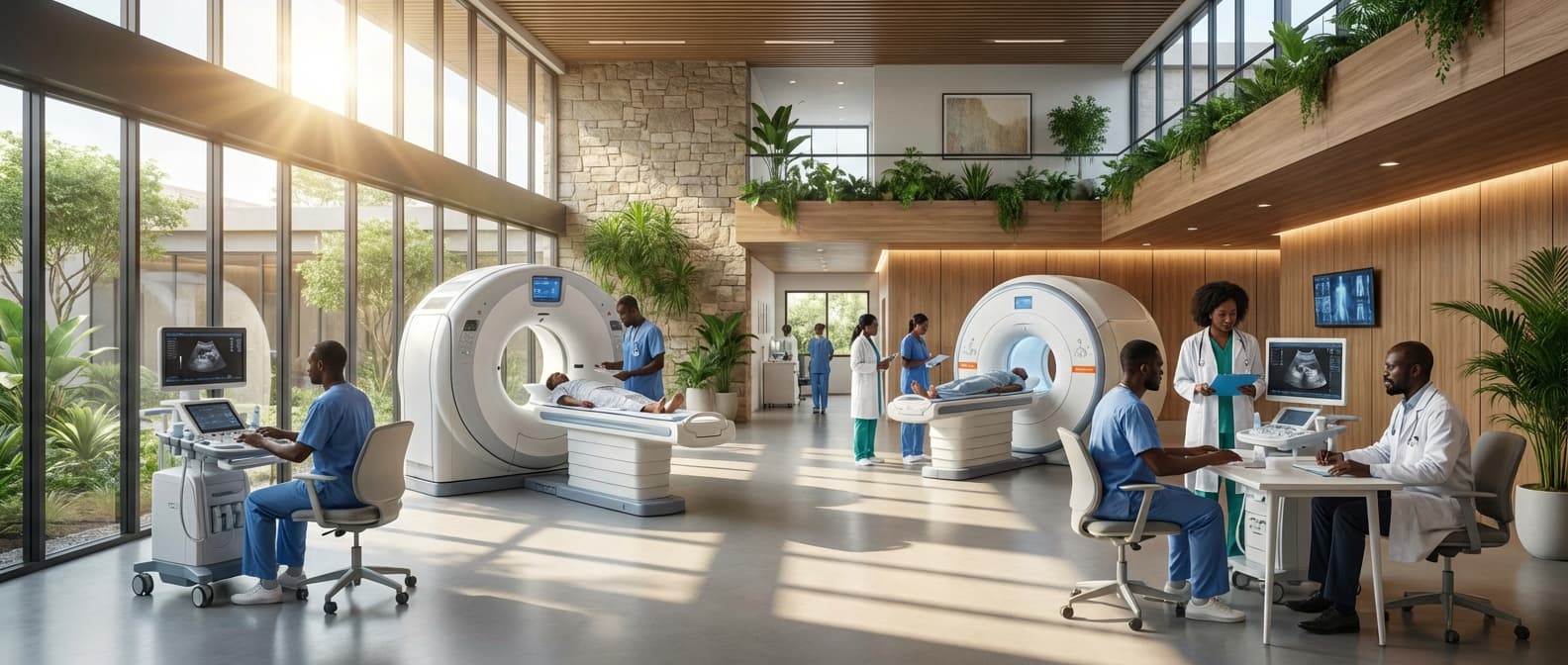
Endoscopy Solutions in Eswatini
Engineering Excellence & Technical Support
Advanced endoscopic equipment delivering superior visualization and diagnostic precision for minimally invasive procedures. High-standard technical execution following OEM protocols and local regulatory frameworks.
Advanced Endoscopic Training Programs
Providing Eswatini's healthcare professionals with cutting-edge, hands-on training in the latest endoscopic techniques and procedures. Our programs emphasize patient safety, diagnostic accuracy, and therapeutic interventions, empowering local clinicians with world-class skills.
State-of-the-Art Endoscopic Equipment
Equipping Eswatini's hospitals and clinics with the most advanced diagnostic and therapeutic endoscopic equipment. From high-definition visualization systems to innovative therapeutic tools, we ensure clinicians have the best technology to diagnose and treat a wide range of gastrointestinal, pulmonary, and urological conditions.
Comprehensive Integrated Support & Maintenance
Offering robust, localized technical support and maintenance services for all endoscopic solutions in Eswatini. Our commitment ensures minimal downtime, optimal equipment performance, and sustained operational efficiency, guaranteeing reliable patient care across the nation.
What Is Endoscopy Solutions In Eswatini?
Endoscopy Solutions in Eswatini refers to the provision of diagnostic and therapeutic procedures utilizing endoscopes. An endoscope is a flexible or rigid tube equipped with a light source and a camera, allowing medical professionals to visualize the internal structures of the body. This service encompasses a range of minimally invasive interventions aimed at examining, diagnosing, and treating various conditions within the gastrointestinal tract, respiratory system, and other internal cavities.
| Who Needs Endoscopy Solutions? | Typical Use Cases | ||||||
|---|---|---|---|---|---|---|---|
| Patients exhibiting symptoms of gastrointestinal distress: Persistent abdominal pain, nausea, vomiting, difficulty swallowing, unexplained weight loss, changes in bowel habits (diarrhea, constipation), blood in stool, or rectal bleeding. | Diagnosis and evaluation of: Gastritis, peptic ulcers, esophageal varices, celiac disease, inflammatory bowel disease (Crohn's disease, ulcerative colitis), and gastrointestinal bleeding. | Screening for: Colorectal cancer (colonoscopy) and precancerous polyps. | Patients with suspected or confirmed upper respiratory tract abnormalities: Chronic cough, hemoptysis, hoarseness, or suspected airway obstruction. | Patients with known or suspected internal bleeding requiring intervention: To locate the source of bleeding and perform hemostasis. | Patients requiring removal of foreign bodies from the digestive or respiratory tract. | Patients needing dilation of narrowed passages (strictures) in the esophagus, stomach, or intestines. | Therapeutic interventions for specific conditions: such as endoscopic retrograde cholangiopancreatography (ERCP) for bile duct stones or tumors, or endoscopic ultrasound (EUS) for staging of cancers. |
| Upper Endoscopy (Esophagogastroduodenoscopy - EGD): Examination of the esophagus, stomach, and duodenum. | Lower Endoscopy (Colonoscopy): Examination of the large intestine (colon) and the terminal part of the small intestine (ileum). | Sigmoidoscopy: Examination of the lower part of the colon (sigmoid colon) and rectum. | Bronchoscopy: Examination of the airways (trachea and bronchi) for diagnostic and therapeutic purposes. | Cystoscopy: Examination of the bladder and urethra. | Laparoscopy (though often considered minimally invasive surgery, it uses an endoscope): Examination of abdominal organs through small incisions. |
Key Aspects of Endoscopy Solutions
- Definition: Endoscopy Solutions involve the use of specialized instruments (endoscopes) to visualize and access internal organs and cavities for diagnostic and therapeutic purposes.
- Components: These solutions typically include the endoscope itself, associated imaging equipment (light sources, cameras, monitors), insufflation devices (air or CO2 for distention), suction systems, and a range of endoscopic accessories for biopsy, polyp removal, cauterization, and other interventions.
- Procedure: The process involves inserting the endoscope into a natural orifice (e.g., mouth, anus) or through a small surgical incision. Images are transmitted to a monitor, allowing the clinician to examine the target area. Biopsies can be taken, polyps removed, bleeding controlled, or strictures dilated, all without major surgery.
- Settings: Endoscopy procedures are typically performed in dedicated endoscopy suites within hospitals or specialized clinics, often requiring sedation or anesthesia for patient comfort and safety.
Who Needs Endoscopy Solutions In Eswatini?
In Eswatini, endoscopy solutions are vital for a range of medical facilities and healthcare professionals dedicated to diagnosing and treating conditions affecting the gastrointestinal, respiratory, and urinary tracts. The demand for these advanced diagnostic tools stems from the increasing recognition of the need for less invasive and more accurate methods for internal examination. The primary beneficiaries are institutions and individuals focused on patient care, research, and medical education within the country.
| Customer Segment | Key Departments Involved | Specific Needs/Applications |
|---|---|---|
| Hospitals (Government & Private) | Gastroenterology, Pulmonology, Urology, General Surgery, Internal Medicine, Ear, Nose & Throat (ENT) | Diagnosis and management of GI bleeding, ulcers, polyps, cancers, inflammatory bowel disease, lung nodules, respiratory infections, urinary tract stones, strictures, prostate issues, foreign body removal from airways and GI tract, diagnostic biopsies. |
| Specialty Clinics | Gastroenterology, Pulmonology, Urology, ENT | Outpatient diagnostic endoscopy for conditions like GERD, heartburn, persistent cough, unexplained bleeding, chronic pain, providing specialized diagnostic services not always available in smaller facilities. |
| Diagnostic Laboratories | Pathology, Endoscopy Services Unit | Performing biopsies and obtaining tissue samples for histological analysis, providing crucial diagnostic information to referring physicians. |
| Surgical Centers | Endoscopy Suite, General Surgery | Pre-operative diagnosis, intra-operative guidance for certain procedures, and post-operative monitoring. |
| Medical Training Institutions | Medical Schools, Nursing Colleges, Postgraduate Training Programs | Training future healthcare professionals in endoscopic techniques, simulation-based training, and providing hands-on experience with modern equipment. |
| Research Facilities | Clinical Research Departments, Academic Medical Centers | Conducting studies on new endoscopic technologies, therapeutic interventions, disease mechanisms, and epidemiological research involving endoscopic data. |
Target Customers and Departments in Eswatini Requiring Endoscopy Solutions:
- Hospitals (Government and Private)
- Specialty Clinics (Gastroenterology, Pulmonology, Urology, ENT)
- Diagnostic Laboratories with Endoscopy Services
- Surgical Centers
- Medical Training Institutions
- Research Facilities
Endoscopy Solutions Process In Eswatini
This document outlines the typical workflow for Endoscopy Solutions in Eswatini, from initial inquiry to the execution of a service. The process is designed to ensure efficient patient care, accurate diagnostics, and effective treatment.
| Stage | Description | Key Activities | Responsible Party | Expected Outcome |
|---|---|---|---|---|
| The process begins when a patient or healthcare provider reaches out to an endoscopy service provider. | Contacting the clinic/hospital via phone, email, or in-person. Inquiring about available endoscopy services, scheduling, costs, and requirements. | Patient, Referring Physician, Receptionist/Administrative Staff | Initial information gathering, potential booking of a consultation. |
| A thorough assessment of the patient's medical history and current condition to determine suitability for the procedure and to schedule it appropriately. | Medical history intake, review of existing medical records, assessment of contraindications, discussion of risks and benefits, scheduling of the endoscopy procedure. | Physician/Specialist, Nursing Staff, Patient | Patient deemed suitable for endoscopy, procedure date and time confirmed. |
| Instructions and actions taken by the patient and healthcare provider to ensure the patient is adequately prepared for the endoscopy. | Fasting instructions, dietary modifications, bowel preparation (if applicable, especially for colonoscopies), medication adjustments (e.g., blood thinners), providing consent forms, transportation arrangements. | Patient, Nursing Staff, Physician | Patient prepared according to protocol, minimizing risks and ensuring optimal visualization. |
| The actual performance of the endoscopic examination or intervention. | Patient check-in, vital signs monitoring, administration of sedation/anesthesia (if required), insertion of endoscope, examination of the targeted organ(s), biopsies or therapeutic interventions (e.g., polyp removal, dilation). | Gastroenterologist/Endoscopist, Anesthesiologist (if needed), Endoscopy Nurse | Diagnostic information obtained, therapeutic interventions performed, procedure completed safely. |
| Monitoring the patient immediately after the procedure and managing their recovery. | Transfer to recovery area, monitoring vital signs, assessing for immediate complications, recovery from sedation, administration of pain relief if needed, initial discharge instructions. | Nursing Staff, Physician | Patient stabilized, vital signs normal, immediate recovery from sedation achieved. |
| Documenting the findings, communicating results to the patient and referring physician, and planning subsequent care. | Endoscopy report generation detailing findings and any interventions. Discussion of results with the patient. Communication of findings to the referring physician. Scheduling of follow-up appointments or further investigations as needed. | Physician/Specialist, Referring Physician, Patient | Comprehensive understanding of findings, appropriate next steps for patient management and care. |
Endoscopy Solutions Process Workflow in Eswatini
- Inquiry & Initial Contact
- Patient Pre-assessment & Scheduling
- Pre-procedure Preparation
- Procedure Execution
- Post-procedure Care & Recovery
- Report & Follow-up
Endoscopy Solutions Cost In Eswatini
Endoscopy procedures are a vital diagnostic tool across various medical specialties in Eswatini, including gastroenterology, pulmonology, and urology. The cost of these procedures can vary significantly due to several factors. Understanding these elements is crucial for patients and healthcare providers in managing healthcare expenses within the local context. Factors influencing the price of endoscopy solutions in Eswatini include the type of procedure, the complexity of the examination, the location of the healthcare facility, the expertise of the medical professional, and the specific equipment and consumables used.
| Procedure Type (Estimated Range) | Estimated Cost (Eswatini Lilangeni - SZL) |
|---|---|
| Gastroscopy (Diagnostic) | SZL 1,500 - 3,500 |
| Gastroscopy with Biopsy | SZL 2,000 - 4,500 |
| Colonoscopy (Diagnostic) | SZL 2,500 - 5,000 |
| Colonoscopy with Polypectomy (Small) | SZL 3,500 - 7,000 |
| Bronchoscopy (Diagnostic) | SZL 3,000 - 6,000 |
| Cystoscopy (Diagnostic) | SZL 1,800 - 3,800 |
Key Pricing Factors for Endoscopy Solutions in Eswatini:
- Type of Endoscopy: Gastroscopy (esophagus, stomach, duodenum), colonoscopy (large intestine), bronchoscopy (airways), cystoscopy (bladder), and others have different inherent costs based on equipment and time required.
- Complexity and Duration: Simple diagnostic procedures are generally less expensive than those requiring biopsies, polyp removal (polypectomy), dilation, or the management of active bleeding.
- Facility Type and Location: Private hospitals and larger urban centers typically have higher charges compared to public clinics or facilities in more remote areas, reflecting overhead costs and service offerings.
- Physician's Fees: The experience and specialization of the gastroenterologist, pulmonologist, or urologist performing the procedure will influence their professional fees.
- Anesthesia and Sedation: The type and duration of sedation or anesthesia administered (local, conscious sedation, or general anesthesia) will add to the overall cost.
- Consumables and Disposables: Specific tools, biopsy forceps, snares, brushes, and sterile drapes used during the procedure contribute to the final bill.
- Pathology and Laboratory Fees: If biopsies are taken, the cost of sending them to a laboratory for analysis is an additional expense.
- Post-Procedure Care: This may include observation time, recovery room fees, and any necessary medications.
Affordable Endoscopy Solutions Options
Endoscopy, a vital diagnostic and therapeutic tool, can be a significant expense. Fortunately, various affordable endoscopy solutions and cost-saving strategies are available for both healthcare providers and patients. Understanding these options can lead to substantial financial benefits without compromising the quality of care. This section explores value bundles and effective cost-saving approaches for endoscopy.
| Cost-Saving Strategy | Description | Potential Impact |
|---|---|---|
| Utilize Outpatient Surgical Centers | Performing endoscopy in an accredited outpatient surgical center instead of a hospital can significantly reduce facility fees. | Up to 50% reduction in facility costs. |
| Negotiate Cash Prices / Self-Pay Discounts | For self-pay patients or those with high deductibles, inquire about discounted rates for paying in full at the time of service. | 10-30% discount on the total procedure cost. |
| Consider Generics and Reusable Instruments | Where appropriate and safe, the use of generic medications and expertly maintained reusable instruments can lower supply costs. | Marginal but consistent cost savings on disposables. |
| Explore Different Healthcare Facilities | Compare pricing and service packages from various hospitals, surgery centers, and specialized endoscopy clinics in your area. | Can reveal significant price variations. |
| Maximize Insurance Benefits | Understand your insurance plan's coverage for diagnostic and therapeutic endoscopy, including co-pays, deductibles, and in-network providers. | Ensures the lowest out-of-pocket expense within your plan. |
| Preventive Care and Early Detection | Regular screenings and prompt attention to symptoms can prevent more complex and costly procedures or complications down the line. | Avoids higher costs associated with advanced disease or emergent interventions. |
| Second Opinions and Pre-authorization | For elective procedures, seeking a second opinion or ensuring pre-authorization from your insurer can confirm necessity and potentially identify less expensive alternatives. | May prevent unnecessary procedures or facilitate better insurance coverage. |
Understanding Value Bundles in Endoscopy
- {"title":"What are Value Bundles?","description":"Value bundles in healthcare refer to a package of services, procedures, and associated supplies that are offered at a predetermined, often discounted, price. Instead of paying for each individual component, providers and patients benefit from a single, comprehensive cost. This encourages efficiency and can lead to better patient outcomes by ensuring all necessary elements of care are included."}
- {"title":"Components of an Endoscopy Value Bundle","description":"A typical endoscopy value bundle might include: physician's professional fee, facility fees (operating room, recovery), anesthesia services, pathology services (if biopsies are taken), necessary disposable supplies (biopsy forceps, brushes, cleaning solutions), and post-procedure follow-up care or reporting."}
- {"title":"Benefits of Value Bundles","description":"Benefits include predictable costs, reduced administrative burden for billing, potential for improved care coordination, and often a lower overall price compared to à la carte service payments. For patients, this means greater transparency and control over their healthcare spending."}
- {"title":"Finding and Negotiating Value Bundles","description":"Healthcare facilities may offer these bundles, especially for common procedures. Patients and referring physicians can inquire about them. Negotiating with hospitals or outpatient surgical centers for bundled pricing is also a viable strategy, particularly for self-pay patients or those with high deductibles."}
Verified Providers In Eswatini
In Eswatini, ensuring you receive healthcare from verified providers is paramount for your well-being. Franance Health stands out as a premier choice, offering a robust network of credentialed professionals and facilities. Their commitment to rigorous vetting processes guarantees that all listed providers meet stringent quality and ethical standards, providing peace of mind to patients seeking reliable medical services. This dedication to excellence makes Franance Health a trusted name in Eswatini's healthcare landscape.
| Provider Type | Credentialing Focus | Benefits for Patients |
|---|---|---|
| Doctors and Specialists | Medical licenses, board certifications, specialized training, ethical conduct records. | Access to qualified and experienced medical professionals for accurate diagnoses and effective treatments. |
| Hospitals and Clinics | Facility licenses, compliance with health regulations, infection control protocols, equipment maintenance, staff qualifications. | Safe and well-equipped healthcare environments for procedures and hospitalizations. |
| Diagnostic Laboratories | Accreditation for testing procedures, quality control measures, qualified technicians, adherence to safety standards. | Reliable and accurate diagnostic test results crucial for treatment planning. |
| Pharmacies | Pharmacy licenses, drug dispensing regulations, proper storage of medications, qualified pharmacists. | Safe and legitimate access to prescribed medications. |
Why Franance Health Credentials Represent the Best Choice:
- Rigorous Verification Process: Franance Health employs a comprehensive vetting system for all its affiliated healthcare professionals and institutions.
- Adherence to International Standards: Providers are assessed against recognized national and international benchmarks for quality of care and patient safety.
- Credentialing of Specialists: Ensuring that doctors and specialists possess the necessary qualifications, experience, and licenses for their respective fields.
- Facility Accreditation: Partnering with hospitals and clinics that meet or exceed required standards for infrastructure, equipment, and operational protocols.
- Continuous Monitoring and Evaluation: Ongoing assessments to maintain the highest levels of service and address any potential concerns.
- Patient-Centric Approach: A focus on ensuring accessible, ethical, and effective healthcare delivery for all patients.
Scope Of Work For Endoscopy Solutions
This Scope of Work (SOW) outlines the technical deliverables and standard specifications for the implementation of Endoscopy Solutions. The objective is to provide a comprehensive and integrated system that enhances diagnostic capabilities, improves procedural efficiency, and ensures patient safety within the endoscopy department.
| Category | Deliverable Description | Standard Specifications / Requirements | Acceptance Criteria |
|---|---|---|---|
| Endoscopy Imaging System | High-definition endoscopy imaging and video recording system. | Minimum 1080p HD resolution, 60 frames per second (fps) recording, digital zoom capabilities, advanced image enhancement features (e.g., contrast enhancement, color adjustment), compatible with various endoscope types (gastroscopes, colonoscopes, duodenoscopes). | System successfully captures and displays clear, artifact-free images and video. Image quality meets predefined visual acuity standards. All functionalities are operational. |
| Data Storage and Management | Secure and efficient storage and retrieval of endoscopic images and videos. | On-premise or cloud-based solution with ample storage capacity (e.g., minimum 10 TB, scalable). Robust data backup and recovery mechanisms. Compliant with HIPAA/GDPR and other relevant data privacy regulations. Audit trails for data access and modifications. | Data is stored securely, is easily accessible via patient record, and can be retrieved within specified timeframes (e.g., <5 seconds). Backup and recovery procedures are tested and successful. |
| PACS/EHR Integration | Seamless integration of the endoscopy system with PACS and EHR. | DICOM compliance for image transfer to PACS. HL7 compliance for data exchange with EHR (patient demographics, procedure details, findings). Single sign-on (SSO) capability where feasible. Vendor-provided integration middleware or API. | Images and reports are automatically pushed to PACS and linked to the correct patient record. Relevant data is exchanged with EHR accurately and in real-time or near real-time. Integration is validated through multiple test cases. |
| Endoscope Washer/Disinfector | Automated washer-disinfector for flexible endoscopes. | Meets ISO 15883 standards for endoscope reprocessing. Capable of high-level disinfection (HLD) or sterilization. Validated cleaning and disinfection cycles. Integrated traceability system for cycle parameters and scope identification. | Washer-disinfector successfully completes validated cleaning and disinfection cycles. Traceability logs are generated and are accurate. Equipment passes all performance and safety tests. |
| User Interface and Workflow | Intuitive and user-friendly interface for clinicians and technicians. | Configurable user profiles and permissions. Streamlined workflow for image capture, annotation, reporting, and retrieval. Multilingual support options. | Users can navigate the system easily and perform core tasks efficiently. Workflow efficiency is demonstrated through user feedback and time-motion studies. |
| Training | Comprehensive training program for end-users and IT support. | On-site training for clinical staff on system operation, image acquisition, and basic troubleshooting. Technical training for IT staff on system maintenance, integration, and advanced troubleshooting. User manuals and training materials provided. | All designated users demonstrate proficiency in operating the system. IT staff can perform routine maintenance and basic troubleshooting. Training completion records are maintained. |
| Documentation and Support | Provision of all necessary technical documentation and ongoing support. | Detailed system design documents, installation guides, user manuals, troubleshooting guides. Post-implementation technical support with defined Service Level Agreements (SLAs) for response and resolution times. | All required documentation is delivered and approved. Support SLAs are met during the warranty and post-warranty periods. |
Key Objectives
- To deploy a state-of-the-art endoscopy imaging and recording system.
- To integrate the endoscopy system with the hospital's existing Picture Archiving and Communication System (PACS) and Electronic Health Record (EHR).
- To ensure compliance with relevant medical device regulations and data security standards.
- To provide comprehensive training for all relevant clinical and technical staff.
Service Level Agreement For Endoscopy Solutions
This Service Level Agreement (SLA) outlines the agreed-upon service levels for Endoscopy Solutions, covering response times for critical issues and guaranteed uptime for our platform and associated services. This SLA is an integral part of the Master Service Agreement between [Your Company Name] (Provider) and [Client Company Name] (Client).
| Issue Severity | Description | Response Time Target | Resolution Time Target (within Business Hours) | Uptime Guarantee |
|---|---|---|---|---|
| Critical (Severity 1) | Complete system outage, preventing all access and use of Endoscopy Solutions. Loss of core functionality. | 15 minutes | 4 hours | 99.9% Monthly Uptime |
| High (Severity 2) | Significant degradation of service, affecting a major feature or a large number of users. Workarounds may exist but are inefficient. | 1 hour | 8 business hours | 99.9% Monthly Uptime |
| Medium (Severity 3) | Minor degradation of service or a feature is partially unavailable. Affects a limited number of users, with workarounds available. | 4 business hours | 2 business days | 99.9% Monthly Uptime |
| Low (Severity 4) | General performance issues, minor bugs, or feature requests that do not impede core functionality. Cosmetic issues. | 8 business hours | 5 business days | 99.9% Monthly Uptime |
Definitions
- Endoscopy Solutions: Refers to the cloud-based platform, software, and any associated hardware provided by the Provider for the management and analysis of endoscopy procedures.
- Downtime: Any period during which the Endoscopy Solutions are unavailable to the Client due to system failures, maintenance (scheduled or unscheduled), or other issues attributable to the Provider.
- Response Time: The maximum time allowed for the Provider to acknowledge and begin addressing a reported issue.
- Resolution Time: The maximum time allowed for the Provider to resolve a reported issue, bringing the Endoscopy Solutions back to their normal operational state.
- Business Hours: [Specify Business Hours, e.g., Monday to Friday, 9:00 AM to 5:00 PM Eastern Time, excluding public holidays].
Frequently Asked Questions

Ready when you are
Let's scope your Endoscopy Solutions in Eswatini project in Eswatini.

Scaling healthcare logistics and technical systems across the entire continent.