
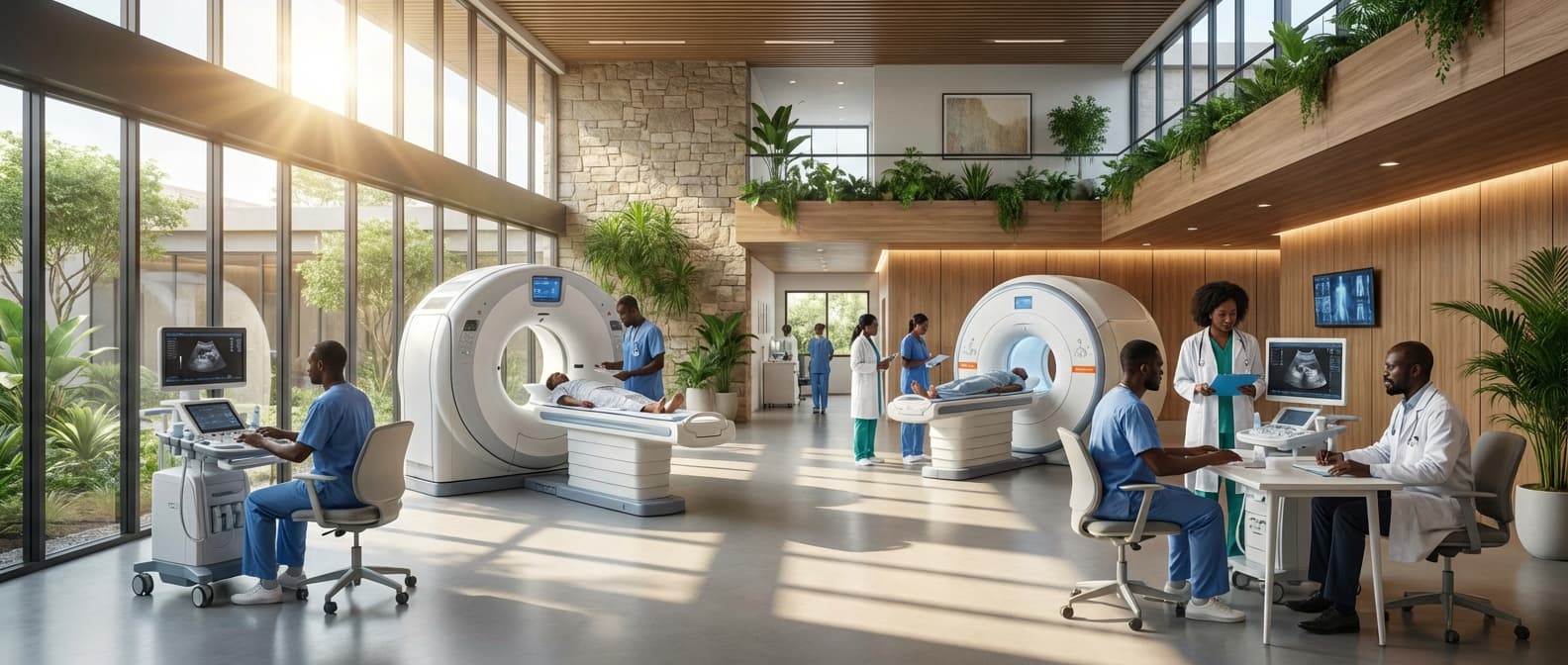
Diagnostic Imaging in Eswatini
Engineering Excellence & Technical Support
High-resolution imaging systems including CT scanners, MRI, X-ray, and ultrasound technology for accurate clinical diagnosis. High-standard technical execution following OEM protocols and local regulatory frameworks.
Enhanced X-ray Accessibility
Deployment of new, portable digital X-ray units across rural clinics has significantly improved diagnostic capabilities, enabling faster and more accurate identification of conditions like pneumonia and fractures where traditional access was limited.
Expanded Ultrasound Services
Introduction of modern ultrasound machines with enhanced imaging resolution has expanded the range of diagnostic services, particularly for obstetric care and abdominal assessments, leading to earlier detection of critical conditions and improved patient outcomes.
Digital Archiving and Tele-Radiology Pilot
Implementation of a digital PACS (Picture Archiving and Communication System) pilot project at Mbabane Government Hospital allows for secure storage and retrieval of imaging studies, paving the way for future tele-radiology initiatives to connect remote specialists with local diagnostic images for expert consultation.
What Is Diagnostic Imaging In Eswatini?
Diagnostic imaging in Eswatini encompasses a range of non-invasive medical tests that utilize various forms of energy (e.g., X-rays, ultrasound waves, magnetic fields, radioactive isotopes) to create visual representations of internal body structures. These images are crucial for the detection, diagnosis, staging, and monitoring of diseases and injuries. The service involves the operation of specialized equipment by trained radiographers or technologists, interpretation of the resultant images by qualified radiologists, and the subsequent communication of findings to referring clinicians to guide patient management. The availability and scope of diagnostic imaging services in Eswatini are subject to the nation's healthcare infrastructure, resource allocation, and technological adoption. While advanced modalities may have limited accessibility in some rural or under-resourced areas, essential imaging services are generally provided at district hospitals and the central referral hospital.
| Who Needs Diagnostic Imaging? | Typical Use Cases | |||||||
|---|---|---|---|---|---|---|---|---|
| Patients with suspected or confirmed injuries: Fractures, dislocations, internal trauma. | Patients presenting with pain: Abdominal pain (suspected appendicitis, gallstones), chest pain (suspected pneumonia, pleurisy), back pain (suspected disc herniation, spinal injury). | Patients with unexplained symptoms: Persistent cough, unexplained weight loss, fever of unknown origin, neurological deficits. | Patients undergoing pre-operative assessment: To evaluate anatomical structures and identify potential complications. | Patients requiring follow-up for chronic conditions: Monitoring tumor size in cancer patients, assessing healing of fractures, evaluating the progression of degenerative diseases. | Pregnant women: For monitoring fetal development and identifying potential complications (ultrasound). | Patients with suspected infections: Pneumonia, urinary tract infections, abscesses. | Patients with suspected cancer: For initial diagnosis, staging (determining the extent of the disease), and monitoring response to treatment. | Patients with vascular issues: Suspected blood clots, aneurysms. |
| Radiography (X-ray): Diagnosis of bone fractures, pneumonia, foreign bodies, certain gastrointestinal conditions. | Ultrasound: Pelvic and abdominal imaging (gallbladder, kidneys, uterus, ovaries), obstetric scans, thyroid scans, assessment of soft tissues and fluid collections. | Computed Tomography (CT Scan): Detailed imaging of bone and soft tissues, diagnosis of trauma, stroke, cancer, pulmonary embolism, and abdominal pathologies. (Availability may be limited to tertiary centers). | Magnetic Resonance Imaging (MRI): High-resolution imaging of soft tissues, including the brain, spinal cord, joints, and muscles. Excellent for diagnosing neurological conditions, musculoskeletal injuries, and certain tumors. (Availability is typically limited to tertiary referral centers). | Mammography: Screening and diagnosis of breast cancer. (Availability is typically limited to specialized centers or higher-level hospitals). | Fluoroscopy: Real-time X-ray imaging used for dynamic studies such as barium swallows, enemas, and guiding interventional procedures. (Availability may be limited). |
Diagnostic Imaging Services in Eswatini - Key Aspects
- Definition: Non-invasive medical tests producing visual representations of internal anatomy and physiology.
- Purpose: Diagnosis, staging, monitoring of diseases and injuries, guiding treatment decisions.
- Process: Acquisition of images using specialized equipment, interpretation by radiologists, reporting to referring physicians.
- Personnel: Radiographers/Technologists (image acquisition), Radiologists (image interpretation).
- Accessibility: Varies across the country, with core services at district and central hospitals.
Who Needs Diagnostic Imaging In Eswatini?
Diagnostic imaging plays a crucial role in healthcare delivery in Eswatini, supporting accurate diagnosis, treatment planning, and patient management across various medical disciplines. The demand for these services is driven by a range of conditions, from common infections to chronic diseases and traumatic injuries. Understanding the target customers and departments is key to optimizing the utilization and accessibility of these vital diagnostic tools within the nation's healthcare system.
| Department/Service | Key Imaging Modalities Utilized | Primary Patient Needs Addressed | Examples of Conditions |
|---|---|---|---|
| Primary Healthcare | X-ray | Initial diagnosis of common ailments, referral | Fractures, pneumonia, chest infections |
| District Hospitals | X-ray, Ultrasound | Intermediate diagnosis, management of common surgical and medical conditions | Abdominal pain, suspected organ masses, complex fractures |
| Tertiary Hospitals | X-ray, Ultrasound, CT Scan, MRI (limited) | Diagnosis of complex diseases, specialized treatment planning, advanced diagnostics | Tumors, stroke, spinal cord injuries, complex trauma |
| Maternal & Child Health | Ultrasound, X-ray | Antenatal monitoring, fetal assessment, pediatric diagnostics | Pregnancy complications, congenital abnormalities, pediatric fractures |
| Emergency/Trauma | X-ray, CT Scan, Ultrasound | Rapid diagnosis of life-threatening conditions | Internal bleeding, head trauma, severe fractures, organ rupture |
| Surgical Departments | X-ray, CT Scan, Ultrasound | Pre-operative planning, post-operative assessment | Appendicitis, cholecystitis, orthopedic injuries, tumor resection planning |
| Internal Medicine & Specialties | X-ray, CT Scan, Ultrasound, MRI | Diagnosis and management of chronic and complex diseases | Tuberculosis, lung cancer, liver disease, neurological disorders |
| Public Health Programs (TB/HIV) | X-ray | Screening and diagnosis of infectious diseases | Pulmonary tuberculosis |
Target Customers & Departments for Diagnostic Imaging in Eswatini
- {"title":"Primary Healthcare Centers & Clinics","description":"While advanced imaging is less common at this level, basic imaging like X-rays (for fractures, chest infections) are essential for initial assessments and referrals. Target customers include patients presenting with musculoskeletal pain, respiratory symptoms, and suspected infections."}
- {"title":"District Hospitals","description":"These facilities often house more comprehensive diagnostic imaging capabilities, including X-ray, and sometimes ultrasound. They serve a broader range of patients, including those with more complex conditions requiring further investigation than primary care can offer. This includes patients needing imaging for abdominal pain, suspected organ abnormalities, and more severe trauma."}
- {"title":"Tertiary Hospitals & Referral Centers","description":"The largest hospitals in Eswatini are the primary hubs for advanced diagnostic imaging, such as CT scans and MRI (where available). These departments cater to a wide array of complex cases, including neurological disorders, oncology, advanced trauma, and specialized surgical planning. Target customers are referred patients with suspected serious illnesses, chronic conditions requiring ongoing monitoring, and complex surgical needs."}
- {"title":"Maternal & Child Health Services","description":"Ultrasound is critical for antenatal care, monitoring fetal development, and detecting potential complications. Pediatric departments utilize X-ray and ultrasound for diagnosing congenital abnormalities, infections, and injuries in children. This directly targets pregnant women and infants/children with health concerns."}
- {"title":"Emergency Departments & Trauma Units","description":"Rapid and accurate imaging is paramount in emergency settings. X-rays, CT scans, and ultrasound are essential for diagnosing fractures, internal bleeding, head injuries, and other life-threatening conditions in patients presenting with acute trauma or medical emergencies."}
- {"title":"Surgical Departments (General, Orthopedic, Neurosurgery, etc.)","description":"Surgeons rely heavily on pre-operative imaging for diagnosis, surgical planning, and post-operative assessment. This includes imaging for appendicitis, gallstones, bone fractures, spinal injuries, brain tumors, and more."}
- {"title":"Internal Medicine & Specialties (Cardiology, Pulmonology, Gastroenterology, Neurology, Oncology)","description":"These departments use a variety of imaging modalities to diagnose and manage chronic diseases, infections, and cancers. Examples include chest X-rays for pneumonia and tuberculosis, CT scans for lung nodules, ultrasounds for liver and kidney disease, and MRIs for neurological conditions."}
- {"title":"Public Health Programs (e.g., TB, HIV/AIDS)","description":"Chest X-rays are a cornerstone of tuberculosis screening and diagnosis. Imaging may also be used to assess complications related to HIV/AIDS and other prevalent infectious diseases."}
Diagnostic Imaging Process In Eswatini
Diagnostic imaging plays a crucial role in healthcare by providing non-invasive visual insights into the human body, aiding in diagnosis, treatment planning, and monitoring. In Eswatini, the process of obtaining diagnostic imaging services follows a structured workflow, ensuring patient care is efficient and effective. This workflow typically begins with an inquiry or referral and culminates in the delivery of diagnostic reports to the referring physician.
| Stage | Key Activities | Responsible Party | Duration (Typical) |
|---|---|---|---|
| Inquiry & Referral | Clinical assessment, identification of imaging need, formal referral generation. | Referring Clinician | Minutes to Hours |
| Appointment Scheduling | Contacting facility, booking a suitable slot. | Patient/Representative, Imaging Facility Staff | Minutes to Days |
| Pre-Imaging Preparation | Following specific dietary, medication, or other instructions. | Patient | Hours to Days (depending on prep) |
| Registration & Consent | Patient identification, administrative processing, informed consent. | Patient, Imaging Facility Staff | 15-30 Minutes |
| Image Acquisition (Execution) | Positioning patient, operating imaging equipment, capturing images. | Radiographer/Technologist | 15 Minutes to 1.5 Hours (modality dependent) |
| Image Interpretation | Reviewing images, analyzing findings, forming diagnostic impressions. | Radiologist | 30 Minutes to Several Hours (complexity dependent) |
| Report Generation | Documenting findings, impressions, and recommendations. | Radiologist | 30 Minutes to 2 Hours |
| Report Communication | Transmitting the report to the referring clinician. | Imaging Facility Staff, IT Systems | Minutes to Hours |
| Follow-up & Treatment | Reviewing report, discussing with patient, planning next steps. | Referring Clinician, Patient | Days to Weeks |
Diagnostic Imaging Workflow in Eswatini
- Inquiry/Referral: The process initiates when a healthcare professional (doctor, nurse, specialist) identifies the need for diagnostic imaging for a patient.
- Patient Assessment & Information Gathering: The referring clinician assesses the patient's condition, symptoms, medical history, and determines the most appropriate imaging modality.
- Referral & Justification: A formal referral is generated, detailing the patient's information, clinical suspicion, and the specific imaging examination required. This justification ensures the procedure is medically necessary.
- Appointment Scheduling: The patient, or a representative, contacts the designated diagnostic imaging facility (public hospital, private clinic) to schedule an appointment. Factors like urgency, availability, and patient preference influence scheduling.
- Pre-Imaging Preparation: Depending on the imaging modality, patients may receive specific instructions for preparation. This can include fasting, avoiding certain foods or medications, wearing specific clothing, or undergoing blood tests.
- Patient Registration & Consent: Upon arrival at the facility, the patient is registered. They will likely be asked to provide identification and insurance details. Informed consent is obtained, where the procedure, its benefits, risks, and alternatives are explained.
- Image Acquisition (Execution): The patient is guided to the imaging room. A qualified radiographer or technologist operates the imaging equipment (X-ray, Ultrasound, CT, MRI) to capture the required images according to established protocols.
- Image Interpretation: The acquired images are reviewed and analyzed by a qualified radiologist. The radiologist interprets the findings in the context of the patient's clinical information.
- Report Generation: A detailed diagnostic report is prepared by the radiologist. This report includes a description of the findings, diagnostic impressions, and recommendations for further management.
- Report Communication: The diagnostic report is securely communicated back to the referring healthcare professional. This can be through electronic systems, fax, or a physical copy.
- Follow-up & Treatment Planning: The referring clinician reviews the report and discusses the findings with the patient. This information guides further diagnosis, treatment planning, and management of the patient's condition.
Diagnostic Imaging Cost In Eswatini
Diagnostic imaging plays a crucial role in modern healthcare, enabling accurate diagnosis and treatment planning. In Eswatini, the cost of these services is influenced by a variety of factors, leading to a range of prices for different imaging modalities. Understanding these pricing dynamics is important for patients, healthcare providers, and policymakers. The cost is primarily driven by the type of imaging technology used, the complexity of the examination, the expertise of the radiologist or technician, and the operational costs of the healthcare facility. Geographic location within Eswatini, availability of specialized equipment, and whether the service is offered in a public or private healthcare setting also contribute to price variations. Furthermore, the inclusion of contrast agents or specialized protocols can elevate the overall cost.
| Imaging Modality | Estimated Cost Range (Eswatini Lilangeni - SZL) |
|---|---|
| X-ray (Basic) | 200 - 500 SZL |
| X-ray (Complex/Multiple Views) | 400 - 900 SZL |
| Ultrasound (Abdomen/Pelvic) | 350 - 700 SZL |
| Ultrasound (Specialized, e.g., Doppler) | 500 - 1,000 SZL |
| CT Scan (Head/Chest/Abdomen) | 1,500 - 4,000 SZL |
| CT Scan (with Contrast) | 2,000 - 5,500 SZL |
| MRI (Brain/Spine/Joint) | 3,000 - 7,000 SZL |
| MRI (with Contrast) | 3,500 - 8,500 SZL |
Key Pricing Factors for Diagnostic Imaging in Eswatini
- Type of Imaging Modality (e.g., X-ray, Ultrasound, CT Scan, MRI)
- Complexity of the Examination (e.g., number of views, specific body part)
- Radiologist/Technician Expertise and Experience
- Operational Costs of Healthcare Facilities (e.g., equipment maintenance, electricity)
- Public vs. Private Healthcare Setting
- Use of Contrast Agents or Specialized Protocols
- Geographic Location within Eswatini
- Demand and Availability of Services
Affordable Diagnostic Imaging Options
Navigating diagnostic imaging can be daunting, especially when considering costs. Fortunately, there are several affordable options and strategies to help manage expenses. Understanding value bundles and implementing cost-saving tactics can significantly reduce out-of-pocket spending for essential imaging services.
| Concept | Explanation | Cost-Saving Benefit |
|---|---|---|
| Value Bundles | These are packages that combine multiple related services, often at a reduced overall price compared to paying for each service individually. In diagnostic imaging, this could include a scan, the radiologist's interpretation, and a follow-up consultation, all priced as a single unit. | Reduced Total Cost: By bundling services, providers can offer a more predictable and often lower overall cost, eliminating the need to price out each component separately. |
| Out-of-Pocket Maximums | This is the most you'll have to pay for covered healthcare services in a plan year. Once you reach your out-of-pocket maximum, your insurance plan pays 100% of the covered healthcare costs for the rest of the year. | Cost Predictability: Knowing your out-of-pocket maximum helps you budget for healthcare expenses, especially for individuals with chronic conditions or those anticipating multiple imaging procedures. |
| Cash Prices / Self-Pay Rates | These are discounted rates offered by healthcare providers to patients who are paying for services without insurance or are not using their insurance benefits. | Significant Savings: Often substantially lower than what insurance companies are billed, these rates can be a great option for uninsured individuals or those with high deductibles who plan to pay out-of-pocket. |
| Pre-Authorization Discounts | Some insurance plans or providers may offer a small discount if you obtain pre-authorization for a diagnostic imaging procedure, demonstrating proactive planning. | Potential for Minor Savings: While not always a large discount, it encourages efficient healthcare navigation and can lead to a slight reduction in cost. |
| Package Deals for Multiple Scans | Similar to value bundles, some facilities may offer a discounted price if you need to undergo a series of related scans within a specific timeframe. | Economies of Scale: Providers can achieve efficiencies when performing multiple related services, passing some of those savings on to the patient. |
Key Cost-Saving Strategies for Diagnostic Imaging
- Understand Your Insurance Benefits: Before scheduling any imaging, thoroughly review your health insurance policy. Know your deductible, co-pays, co-insurance, and out-of-network benefits. This knowledge empowers you to make informed decisions about where to get your imaging done.
- Shop Around for Prices: Imaging costs can vary dramatically between different facilities, even within the same geographic area. Websites and apps are emerging that allow you to compare prices for specific procedures. Don't hesitate to call different imaging centers and hospitals to inquire about self-pay or uninsured rates.
- Ask About Self-Pay Discounts: If you don't have insurance or your insurance has a high deductible, ask imaging centers about their self-pay or cash rates. Many facilities offer significant discounts for patients paying out-of-pocket.
- Consider Imaging Centers vs. Hospitals: Freestanding imaging centers are often more affordable than hospital-based departments for the same diagnostic procedures. While hospitals offer convenience, the overhead costs are typically higher, leading to increased prices.
- Explore Medical Tourism: For more complex or elective procedures, consider seeking care in other regions or countries where costs are substantially lower. Ensure the facility is accredited and offers comparable quality of care.
- Utilize Generic Imaging Preferences (When Applicable): In some cases, a doctor might offer a less expensive imaging modality that still provides adequate diagnostic information. Discuss these options with your physician to see if a 'good enough' scan can meet your needs.
- Negotiate Payment Plans: If you face a large bill, don't be afraid to negotiate a payment plan with the imaging provider. Many institutions are willing to work with patients to spread out payments over time.
- Check for Manufacturer or Provider Discounts: Some imaging equipment manufacturers or large healthcare systems may offer promotional discounts or programs for certain imaging services. Inquire about any available programs.
- Advocate for yourself: Be an active participant in your healthcare journey. Ask questions, understand the necessity of the imaging, and explore all available cost-saving avenues.
Verified Providers In Eswatini
Finding trusted and verified healthcare providers is paramount for ensuring quality and safe medical care. In Eswatini, Franance Health stands out as a leading platform for connecting individuals with credentialed and reliable healthcare professionals. This document outlines the rigorous credentialing process employed by Franance Health and explains why their network represents the best choice for your health needs.
| Benefit | Description | Why Franance Health Excels |
|---|---|---|
| Peace of Mind | Knowing you are receiving care from qualified and vetted professionals. | Franance Health's comprehensive verification process eliminates guesswork. |
| Access to Quality Care | Connecting with providers who meet stringent professional benchmarks. | Our network comprises some of Eswatini's most skilled and reputable doctors, nurses, and specialists. |
| Reduced Risk | Minimizing the likelihood of encountering substandard or unqualified practitioners. | Through meticulous background checks and ongoing evaluation, we prioritize patient safety. |
| Efficient Healthcare Navigation | Streamlined process for finding the right specialist for your specific needs. | Franance Health's platform simplifies the search, providing detailed provider profiles. |
| Trust and Transparency | Openness about the qualifications and credentials of each provider. | We are committed to building trust through clear and accessible information about our verified professionals. |
Franance Health Credentialing Process
- Thorough verification of medical licenses and certifications.
- Background checks for any disciplinary actions or malpractice claims.
- Confirmation of educational qualifications and professional experience.
- Assessment of practice standards and patient feedback.
- Ongoing monitoring to ensure continued adherence to high standards.
Scope Of Work For Diagnostic Imaging
This document outlines the Scope of Work for Diagnostic Imaging Services, detailing the technical deliverables expected and the standard specifications to be adhered to. It covers various imaging modalities and the associated quality and reporting requirements.
| Imaging Modality | Standard Specifications | Technical Deliverables |
|---|---|---|
| X-ray (Radiography) | Minimum resolution of 300 dpi; appropriate kVp and mAs selection for anatomical region; use of digital detectors; compliance with ALARA principles. | Digital X-ray images (DICOM format); interpreted reports (PDF format). |
| CT Scan | Slice thickness appropriate for anatomical region (e.g., <3mm for brain, <5mm for abdomen); use of contrast media as per protocol; iterative reconstruction where applicable; radiation dose monitoring. | Axial, sagittal, and coronal reformatted images; multiplanar reconstructions (MPRs); 3D reconstructions where indicated; interpreted reports (PDF format). |
| MRI Scan | Appropriate pulse sequences for anatomical region and suspected pathology; use of contrast media as per protocol; artifact reduction techniques. | T1, T2, FLAIR, DWI, and other relevant sequences; functional imaging (e.g., fMRI, perfusion imaging) where specified; interpreted reports (PDF format). |
| Ultrasound | High-frequency transducers appropriate for anatomical region; Doppler capabilities for vascular assessment; standardized scanning planes. | B-mode images; Doppler spectral and color flow images; cine clips where appropriate; interpreted reports (PDF format). |
| Nuclear Medicine (PET/CT, SPECT/CT) | Appropriate radiopharmaceutical administration and uptake time; standardized acquisition protocols; iterative reconstruction for improved image quality. | Coronal, sagittal, and axial fused PET/CT or SPECT/CT images; quantitative analysis where applicable; interpreted reports (PDF format). |
| Mammography | High-resolution digital detectors; specialized compression techniques; CAD (Computer-Aided Detection) software integration. | 2D digital mammograms (craniocaudal, mediolateral oblique views); tomosynthesis images if available; interpreted reports (PDF format). |
Key Technical Deliverables
- Acquisition of high-quality diagnostic imaging studies (e.g., X-ray, CT, MRI, Ultrasound, Nuclear Medicine) in accordance with established protocols.
- Provision of preliminary and final radiology reports, signed by board-certified radiologists, within defined turnaround times.
- Secure and timely transmission of imaging studies and reports in DICOM and PDF formats respectively.
- Maintenance of an audit trail for all image access and report modifications.
- Adherence to established radiation dose optimization principles for CT and X-ray procedures.
- Implementation of appropriate image reconstruction techniques and post-processing for optimal diagnostic yield.
- Ensuring image archival and retrieval capabilities for a specified retention period.
- Provision of technical support for PACS (Picture Archiving and Communication System) and RIS (Radiology Information System) integration.
- Regular quality assurance and quality control (QA/QC) assessments of imaging equipment and processes.
- Participation in peer review processes for radiologist performance evaluation.
Service Level Agreement For Diagnostic Imaging
This Service Level Agreement (SLA) outlines the performance standards for Diagnostic Imaging services provided by [Provider Name] to [Client Name]. It specifies response times for critical events and uptime guarantees for all diagnostic imaging systems.
| Service Component | Uptime Guarantee | Response Time (Critical Event) | Response Time (Routine Issue) |
|---|---|---|---|
| All Diagnostic Imaging Systems (e.g., MRI, CT, X-ray, Ultrasound) | 99.5% Uptime (measured monthly) | Within 1 hour | Within 4 business hours |
| PACS (Picture Archiving and Communication System) | 99.8% Uptime (measured monthly) | Within 30 minutes | Within 2 business hours |
| RIS (Radiology Information System) | 99.8% Uptime (measured monthly) | Within 30 minutes | Within 2 business hours |
| Image Archiving and Retrieval | 99.9% Uptime (measured monthly) | Within 15 minutes | Within 1 business hour |
Definitions
- Uptime: The percentage of time the diagnostic imaging systems are operational and accessible for use.
- Downtime: The percentage of time the diagnostic imaging systems are unavailable.
- Response Time: The time elapsed from the initiation of a support request (ticket or call) to the moment a qualified technician begins actively working on the issue.
- Critical Event: A failure of a core diagnostic imaging system that prevents or significantly impairs the ability to perform scheduled diagnostic imaging procedures for multiple patients.
- Routine Issue: A non-critical problem or inquiry that does not prevent or significantly impair the ability to perform scheduled diagnostic imaging procedures.
Frequently Asked Questions

Ready when you are
Let's scope your Diagnostic Imaging in Eswatini project in Eswatini.

Scaling healthcare logistics and technical systems across the entire continent.