
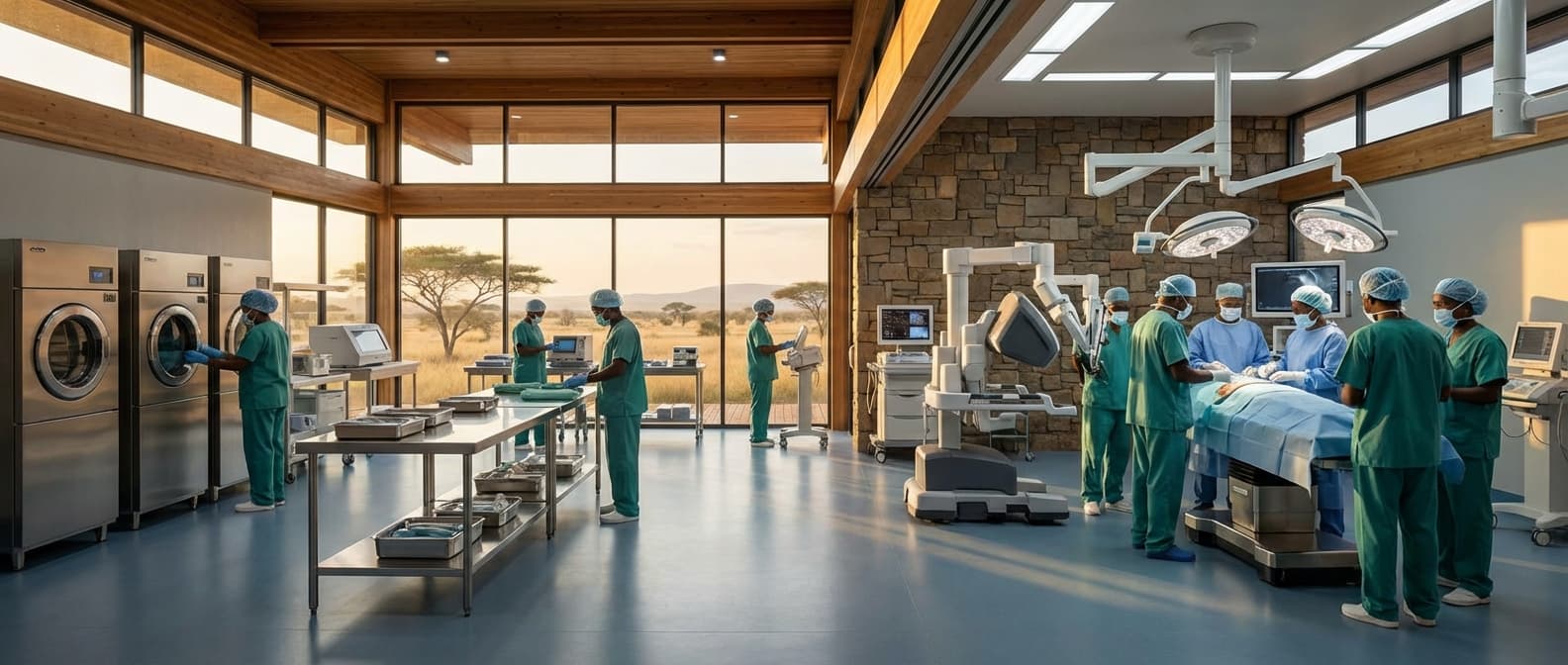
CSSD Design & Validation in Eswatini
Engineering Excellence & Technical Support
CSSD workflow design, validation and process development High-standard technical execution following OEM protocols and local regulatory frameworks.
Sterilization Efficacy Validation
Ensuring CSSD equipment achieves log reduction targets through rigorous performance qualification (PQ) testing, including biological indicator challenges, chemical indicator monitoring, and load control studies, adhering to ISO 17665 and local health regulations in Eswatini.
Workflow Optimization & Layout Design
Designing and validating efficient CSSD workflows and layouts in Eswatini healthcare facilities to minimize cross-contamination, enhance staff safety, and maximize throughput, from decontamination to sterile storage, aligning with global best practices.
Regulatory Compliance & Documentation
Developing and validating comprehensive documentation packages for CSSD design and operational procedures, ensuring full compliance with Eswatini Ministry of Health standards, WHO guidelines, and international sterilization standards, facilitating seamless accreditation and audits.
What Is Cssd Design & Validation In Eswatini?
CSSD (Central Sterile Supply Department) design and validation in Eswatini refers to the comprehensive process of planning, constructing, and verifying the optimal functionality and compliance of facilities dedicated to the sterilization and reprocessing of medical devices. This service ensures that CSSDs meet stringent international standards (such as ISO 13485, ISO 17665, and HTM 01-01) and national regulatory requirements for patient safety and infection prevention within the Eswatini healthcare ecosystem. It encompasses architectural layout, equipment selection and placement, workflow optimization, environmental controls, and rigorous testing protocols to confirm that all processes consistently deliver sterile and safe medical instruments and supplies. The validation phase confirms that the designed system performs as intended under all anticipated operating conditions and is capable of producing auditable records of its performance.
| Stakeholder/Entity | Need for CSSD Design & Validation | Typical Use Cases |
|---|---|---|
| Hospitals & Clinics (Public/Private) | Essential for providing safe surgical and procedural care by ensuring the sterility of reusable medical devices. Compliance with national health regulations and international best practices. | Establishing new CSSD facilities, upgrading existing ones, procuring new sterilization equipment, implementing standardized reprocessing protocols. |
| Surgical Centers & Day Hospitals | Critical for infection control and patient safety in specialized procedural environments. Optimizing throughput and ensuring timely availability of sterile instruments. | Designing efficient layouts for specialized surgical instrument sets, validating sterilization cycles for specific device types. |
| Government Health Ministries/Departments | Regulatory oversight, setting standards, ensuring nationwide compliance with infection control protocols, and promoting patient safety across the healthcare sector. | Developing national CSSD guidelines, auditing facilities, recommending best practices for public health facilities. |
| Medical Device Manufacturers/Suppliers | Ensuring their devices can be safely and effectively reprocessed in Eswatini's healthcare facilities. Providing guidance on sterilization parameters. | Collaborating with CSSD designers on recommendations for specific sterilization methods for their devices, providing technical support during validation. |
| International Aid Organizations & NGOs | Supporting the development and improvement of healthcare infrastructure in Eswatini, particularly in underserved areas. Enhancing infection control capacity. | Funding and implementing CSSD projects in rural clinics, providing training and capacity building for CSSD staff. |
Key Components of CSSD Design & Validation
- Needs Assessment & Feasibility Study: Evaluating existing infrastructure, current sterilization practices, and future demands to define project scope and requirements.
- Facility Design & Layout: Optimizing the physical space for workflow efficiency (decontamination, packing, sterilization, storage), segregation of clean and dirty areas, infection control measures, and adherence to regulatory guidelines (e.g., air pressure differentials, material flow).
- Equipment Specification & Selection: Identifying and specifying appropriate sterilization technologies (e.g., autoclaves, low-temperature sterilizers), washer-disinfectors, packaging equipment, and ancillary systems based on device types, throughput, and budget.
- Workflow Analysis & Process Engineering: Designing and documenting Standard Operating Procedures (SOPs) for all stages of the sterile processing lifecycle, from soiled item receipt to sterile supply dispatch.
- Environmental Control Systems: Specifying and verifying HVAC systems for appropriate temperature, humidity, and air filtration (HEPA filters) to maintain a controlled sterile environment.
- Installation Qualification (IQ): Verifying that equipment is installed correctly according to manufacturer specifications and regulatory requirements.
- Operational Qualification (OQ): Testing equipment to ensure it operates within specified parameters and can perform its intended functions.
- Performance Qualification (PQ): Validating that the entire CSSD system, including processes and equipment, consistently achieves the desired outcomes (e.g., effective sterilization, proper drying) under normal operating conditions.
- Documentation & Record Keeping: Establishing comprehensive documentation systems for design, validation, training, and routine operational monitoring, ensuring traceability and compliance.
Who Needs Cssd Design & Validation In Eswatini?
In Eswatini, the effective design and validation of Central Sterile Services Departments (CSSDs) are crucial for ensuring patient safety, preventing healthcare-associated infections (HAIs), and maintaining the operational efficiency of medical facilities. A well-designed and validated CSSD adheres to international standards and best practices, guaranteeing that surgical instruments and medical devices are properly cleaned, disinfected, and sterilized before reuse. This minimizes the risk of transmitting pathogens and complications, ultimately saving lives and reducing the burden on the healthcare system. Furthermore, compliance with regulatory requirements and accreditation standards often necessitates robust CSSD design and validation processes. This not only enhances patient trust but also facilitates access to funding and partnerships for healthcare institutions.
| Customer Type | Key Departments Involved | Primary Needs/Benefits |
|---|---|---|
| Public Hospitals | Infection Control, Surgery, Nursing Services, Administration, Engineering/Maintenance | Cost-effective solutions, compliance with national guidelines, improved patient safety, efficient resource utilization, training of local staff. |
| Private Hospitals | Infection Control, Surgery, Operating Room Management, Quality Assurance, Administration | High-end technology adoption, international accreditation standards, enhanced reputation, patient satisfaction, optimized workflow for high patient turnover. |
| Surgical Centers | Surgery, Operating Room Staff, Infection Control, Administration | Specialized design for specific surgical procedures, efficient turnaround of instruments, compliance with accreditation for day surgery. |
| Dental Clinics (with surgical procedures) | Dentistry, Nursing Staff, Infection Control | Compact and efficient design, appropriate sterilization for dental instruments, adherence to dental hygiene standards. |
| Specialty Clinics | Specialty Department (e.g., Ophthalmology, Gastroenterology), Infection Control, Administration | Tailored sterilization solutions for specific delicate instruments, compliance with manufacturer guidelines for specialized equipment, prevention of cross-contamination. |
| Healthcare Training Institutions | Medical/Nursing Education Departments, Simulation Centers, Facilities Management | State-of-the-art training facilities, hands-on experience for future healthcare professionals, curriculum development support, demonstration of best practices. |
Target Customers and Departments for CSSD Design & Validation in Eswatini
- Public Hospitals and Clinics
- Private Hospitals and Clinics
- Surgical Centers
- Dental Clinics (with surgical procedures)
- Specialty Clinics (e.g., ophthalmology, endoscopy)
- Healthcare Training Institutions (for practical training facilities)
Cssd Design & Validation Process In Eswatini
The design and validation process for a Central Sterile Services Department (CSSD) in Eswatini follows a structured workflow, ensuring compliance with national and international standards for infection prevention and control. This process is crucial for maintaining patient safety and operational efficiency in healthcare facilities. It encompasses several key stages, from initial consultation and planning to the final handover and ongoing monitoring.
| Stage | Description | Key Activities | Responsible Parties | Deliverables |
|---|---|---|---|---|
| The process begins with a healthcare facility expressing interest in establishing or upgrading a CSSD. | Contacting the relevant regulatory bodies (e.g., Ministry of Health), engaging with CSSD consultants/designers, initial site visit. | Healthcare Facility Management, CSSD Consultants, Ministry of Health representatives. | Expression of interest document, preliminary project scope. |
| Understanding the specific needs of the facility, including patient volume, types of procedures, and anticipated workload. | Data collection on surgical procedures, instrument inventory, current sterilization practices, financial assessment, regulatory compliance review. | CSSD Consultants, Healthcare Facility Management, Finance Department. | Needs assessment report, feasibility study report, preliminary budget. |
| Developing the overall layout and functional zoning of the CSSD based on workflow principles and infection control requirements. | Defining clean, semi-clean, and dirty areas; workflow analysis (e.g., sterile processing, packaging, sterilization, storage); space allocation for equipment. | Architects, CSSD Consultants, Biomedical Engineers. | Conceptual layout drawings, space program, preliminary equipment list. |
| Translating the conceptual design into detailed architectural, mechanical, electrical, and plumbing (MEP) plans. | Developing detailed drawings, specifications for building materials, HVAC systems (air pressure differentials, filtration), lighting, water supply, drainage, electrical points, IT infrastructure. | Architects, MEP Engineers, Structural Engineers, CSSD Consultants. | Detailed architectural drawings, MEP drawings and specifications, Bill of Quantities (BOQ). |
| Sourcing and acquiring all necessary CSSD equipment, consumables, and materials. | Developing tender documents, evaluating bids, selecting suppliers, placing orders for autoclaves, washer-disinfectors, ultrasonic cleaners, packaging materials, etc. | Procurement Department, Healthcare Facility Management, CSSD Consultants. | Procurement contracts, purchase orders, delivery schedules. |
| The physical construction of the CSSD facility and the installation of all equipment. | Site preparation, construction of walls, floors, ceilings; installation of MEP systems; installation and connection of CSSD equipment. | Contractors, Subcontractors, Equipment Suppliers, Project Manager. | Completed construction, installed equipment. |
| Ensuring that the CSSD design, equipment, and systems function as intended and meet all regulatory requirements. | Performance qualification (PQ) of equipment, operational qualification (OQ) of systems, installation qualification (IQ), testing of HVAC, water quality testing, decontamination cycle validation. | Validation Engineers, CSSD Consultants, Biomedical Engineers, Ministry of Health representatives. | Validation reports (IQ/OQ/PQ), commissioning certificates, test results. |
| Training CSSD staff on the proper operation of equipment, workflows, and infection control protocols. | On-the-job training, theoretical training sessions, competency assessments, formal handover of the facility and documentation. | Equipment Suppliers, CSSD Consultants, CSSD Manager, Staff Nurses. | Training records, competency assessments, operational manuals, handover documentation. |
| Monitoring the CSSD's performance after operational startup and implementing improvements. | Regular audits, infection control surveillance, review of sterilization records, user feedback, identification and implementation of process improvements. | CSSD Manager, Infection Prevention and Control Team, Biomedical Engineering Department. | Performance reports, audit findings, updated standard operating procedures (SOPs). |
CSSD Design & Validation Process Workflow in Eswatini
- Inquiry & Initial Consultation
- Needs Assessment & Feasibility Study
- Conceptual Design & Space Planning
- Detailed Design & Engineering
- Procurement of Equipment & Materials
- Construction & Installation
- Validation & Commissioning
- Training & Handover
- Post-Occupancy Evaluation & Optimization
Cssd Design & Validation Cost In Eswatini
Designing and validating a Central Sterile Services Department (CSSD) in Eswatini involves a multifaceted cost structure influenced by several key factors. These factors range from the size and complexity of the facility to the specific equipment chosen and the regulatory requirements. Understanding these elements is crucial for accurate budgeting and successful project implementation. The pricing can vary significantly, and it's important to consider both initial capital expenditure and ongoing operational costs. Local currency (Emalangeni, E) is used for all pricing discussions, with approximate conversions to USD provided for broader understanding.
| Cost Component | Estimated Range (Eswatini Lilangeni - E) | Approximate USD Equivalent (E1 = $0.07 USD) |
|---|---|---|
| Design & Consultancy Fees (for a medium-sized facility) | E 50,000 - E 250,000 | $3,500 - $17,500 |
| Small to Medium CSSD Equipment Package (e.g., 1 autoclave, 1 washer-disinfector, sterile wrapping station) | E 300,000 - E 1,500,000+ | $21,000 - $105,000+ |
| Large/High-Volume CSSD Equipment Package (multiple advanced units) | E 1,500,000 - E 5,000,000+ | $105,000 - $350,000+ |
| Construction/Renovation per square meter (depending on complexity) | E 4,000 - E 12,000 | $280 - $840 |
| Equipment Validation (per major unit) | E 10,000 - E 50,000 | $700 - $3,500 |
| Staff Training (initial) | E 15,000 - E 75,000 | $1,050 - $5,250 |
| Permitting & Regulatory Fees | E 5,000 - E 30,000 | $350 - $2,100 |
| Contingency (10-15% of total project cost) | Variable (based on total estimate) | Variable |
Key Pricing Factors for CSSD Design & Validation in Eswatini
- Facility Size and Scope: The square footage of the CSSD directly impacts design fees, construction, and the quantity of equipment required. Larger, more complex facilities with higher patient throughput will naturally incur higher costs.
- Equipment Selection: This is often the most significant cost driver. Factors include the type (e.g., autoclaves, washer-disinfectors, sterile packaging machines), capacity, brand reputation, and technological sophistication of the chosen equipment. New, high-end equipment will be considerably more expensive than refurbished or lower-tier options.
- Design and Consultancy Fees: Hiring experienced architects, engineers, and CSSD consultants is essential. Their fees are typically based on the project's total value or a per-project basis, and their expertise ensures compliance with standards and optimal workflow.
- Construction and Renovation Costs: This includes the cost of building new structures or renovating existing spaces to meet CSSD requirements (e.g., specific ventilation, water supply, drainage, flooring, wall finishes, lighting). Local labor and material costs in Eswatini will influence this.
- Validation and Verification Services: After installation, all equipment and the entire CSSD process must be validated. This involves specialized technicians and processes to ensure efficacy, safety, and compliance with national and international standards. These services are typically charged per equipment type or per validation cycle.
- Regulatory Compliance and Permitting: Obtaining necessary permits and ensuring adherence to local health regulations and potentially international standards (like ISO 13485 for medical devices) can incur fees and require specific documentation and consultations.
- Training: Comprehensive training for CSSD staff on equipment operation, maintenance, and infection control protocols is a vital, often overlooked, cost. This can involve manufacturer-led training or hiring specialized trainers.
- Technology Integration: The integration of tracking systems (e.g., barcode systems), data management software, and other technological solutions can add to the initial investment.
- Contingency: It is prudent to include a contingency fund to account for unforeseen challenges, design changes, or price fluctuations during the project lifecycle.
Affordable Cssd Design & Validation Options
Designing and validating a Central Sterile Supply Department (CSSD) is crucial for infection control and patient safety. However, traditional approaches can be prohibitively expensive, especially for smaller facilities or those with budget constraints. This document outlines affordable CSSD design and validation options, focusing on value bundles and cost-saving strategies. We aim to demonstrate that achieving high standards in CSSD operations is attainable without breaking the bank, by leveraging smart planning, modular solutions, and phased implementation.
| Value Bundle | Description | Key Cost-Saving Strategies |
|---|---|---|
| 'Essentials' Package (Basic Functionality) | Focuses on core sterilization and disinfection needs for low to medium complexity surgical instruments. Ideal for smaller clinics or satellite facilities. | Modular layout, essential disinfection/sterilization equipment (e.g., washer-disinfector, autoclave), basic tracking system (manual or entry-level software), standardized workflows, risk-based validation focusing on critical parameters. |
| 'Efficiency' Package (Streamlined Operations) | Builds on the 'Essentials' package with enhanced workflow optimization and a greater emphasis on automation for moderate-complexity instrument sets. | Includes improved workflow design for better throughput, semi-automated washing/disinfection stations, integrated tracking with barcode scanning, basic competency-based training for staff, focus on preventive maintenance schedules. |
| 'Advanced' Package (Optimized Performance) | Designed for facilities with higher instrument turnover and complex surgical procedures, offering advanced tracking and a focus on validation efficiency. | Includes advanced tracking and data management software, automated loading/unloading for key equipment, enhanced validation protocols for high-risk items, specialized training modules, strategic use of outsourced validation services for specific validation types. |
| 'Modular Upgrade' Path (Phased Investment) | Allows facilities to start with a basic setup and gradually add modules or upgrade equipment as their budget and needs expand. This is not a standalone bundle but a strategy applied across all packages. | Purchasing equipment with upgradeable components, investing in software that allows for incremental feature additions, phased validation efforts aligned with equipment acquisition, focusing initial investment on high-impact areas. |
| 'Validation-Lite' Program (Targeted Validation) | A service focused on providing cost-effective validation for facilities that may not require full-scale validation for every piece of equipment or process on a continuous basis. Relies heavily on robust internal monitoring. | Periodic validation of critical equipment, validation of specific high-risk processes, training for internal staff on routine monitoring, reliance on manufacturer's validation data for certain equipment, risk-based re-validation schedules. |
Key Considerations for Affordable CSSD Design & Validation
- Phased Implementation: Instead of a complete overhaul, consider a phased approach to upgrade or establish CSSD services, tackling critical areas first and expanding as budget allows.
- Modular & Scalable Designs: Opt for modular CSSD layouts that can be easily reconfigured and expanded as your needs and budget evolve. This avoids costly future modifications.
- Lean Workflow Principles: Apply lean manufacturing principles to minimize waste (time, movement, materials) in your CSSD processes, leading to increased efficiency and reduced operational costs.
- Technology Integration (Smart Choices): Invest in technology that provides significant ROI through automation and improved tracking, but prioritize essential functionalities over expensive, unneeded features.
- Risk-Based Validation: Focus validation efforts on critical processes and high-risk instrumentation. Not every single sterilization cycle needs a full validation, but rather a robust monitoring and re-validation strategy.
- Standardization & Off-the-Shelf Solutions: Where possible, utilize standardized equipment and readily available components rather than custom-built solutions, which are typically more expensive.
- Staff Training & Competency: Investing in comprehensive staff training can prevent errors, reduce instrument damage, and ensure efficient operation, thereby saving costs in the long run.
- Strategic Outsourcing: Consider outsourcing non-core or highly specialized tasks like complex instrument repair or certain validation services if it proves more cost-effective than in-house capabilities.
- Energy Efficiency: Incorporate energy-efficient equipment and lighting to reduce ongoing operational expenses.
- Preventive Maintenance Programs: A robust preventive maintenance program for equipment can significantly reduce costly breakdowns and extend the lifespan of your assets.
Verified Providers In Eswatini
In Eswatini's evolving healthcare landscape, access to verified and credible medical providers is paramount for patient well-being and trust. Franance Health stands out as a beacon of reliability, offering a curated network of healthcare professionals and facilities that have undergone rigorous credentialing processes. This commitment to verification ensures that patients are connected with providers who meet the highest standards of medical expertise, ethical practice, and patient care. Choosing Franance Health translates to peace of mind, knowing that your health journey is guided by trusted and qualified professionals.
| Provider Type | Key Verification Criteria | Franance Health Advantage |
|---|---|---|
| Doctors (General Practitioners & Specialists) | Medical Degree Verification, Professional License, Board Certification, Clean Disciplinary Record, Experience | Access to highly qualified and ethical medical practitioners, reducing the risk of misdiagnosis or inadequate treatment. |
| Hospitals & Clinics | Accreditation, Compliance with Health Regulations, Quality of Facilities and Equipment, Patient Safety Protocols, Staff Qualifications | Ensures access to safe, well-equipped, and well-staffed healthcare facilities committed to patient well-being. |
| Pharmacists & Pharmacies | Pharmacy License, Drug Dispensing Authority, Inventory Management Standards, Pharmacist Qualifications | Guarantees access to genuine medications dispensed by qualified professionals, ensuring drug safety and efficacy. |
| Allied Health Professionals (e.g., Physiotherapists, Dentists) | Relevant Professional Certifications, Licenses, Proven Expertise, Ethical Practice | Connects patients with specialized care providers who meet stringent professional benchmarks. |
Why Franance Health is the Best Choice in Eswatini:
- Rigorous Credentialing: Franance Health meticulously vets all its providers, ensuring they possess legitimate qualifications, licenses, and a proven track record in their respective medical fields.
- Commitment to Quality: Our network comprises healthcare professionals and facilities dedicated to delivering exceptional patient care, adhering to best practices and ethical standards.
- Patient-Centric Approach: We prioritize the patient experience, connecting individuals with providers who are not only skilled but also compassionate and communicative.
- Accessibility and Convenience: Franance Health streamlines the process of finding and accessing reliable healthcare services across Eswatini, saving you time and reducing stress.
- Trust and Transparency: Our transparent credentialing process builds trust, empowering patients to make informed decisions about their healthcare.
Scope Of Work For Cssd Design & Validation
This Scope of Work (SOW) outlines the detailed requirements for the design, validation, and documentation of a Central Sterile Supply Department (CSSD). The objective is to ensure a safe, efficient, and compliant CSSD that meets all relevant international and local standards for sterilization, disinfection, and sterile processing. This SOW covers the technical deliverables and standard specifications required for each phase of the project.
| Standard/Specification | Description | Applicability |
|---|---|---|
| ISO 13485: Medical devices – Quality management systems | Specifies requirements for a quality management system for organizations involved in the medical device lifecycle, including design and manufacturing. | Overall quality management and process control. |
| ISO 17665: Sterilization of health care products – Moist heat | Covers the development, validation and routine control of a sterilization process for medical devices using moist heat. | Autoclave selection, validation, and operational parameters. |
| ISO 11135: Sterilization of health care products – Ethylene oxide | Covers the development, validation and routine control of a sterilization process for medical devices using ethylene oxide. | EO sterilizer selection, validation, and operational parameters. |
| ISO 14937: Sterilization of health care products – General requirements for characterization of a sterilizing agent and for the development, validation and routine control of a sterilization process for medical devices | Provides general requirements for the development and validation of sterilization processes for medical devices. | General framework for sterilization validation. |
| HTM 01-01: Decontamination and sterilization of medical devices | UK Department of Health guidance on the decontamination and sterilization of medical devices in CSSDs. | General design, equipment, and operational requirements (can be adapted globally). |
| AAMI ST Series (e.g., ST46, ST79, ST8): Standards for sterilization and reprocessing of reusable medical devices | Association for the Advancement of Medical Instrumentation (AAMI) standards covering various aspects of sterilization, cleaning, and disinfection. | Specific guidance on cleaning, disinfection, packaging, and sterilization processes. |
| ASHRAE Standards (e.g., 170 for Ventilation of Healthcare Facilities) | American Society of Heating, Refrigerating and Air-Conditioning Engineers standards for building systems, particularly ventilation. | HVAC design, air change rates, pressure differentials. |
| Local Building Codes and Regulations | Applicable building codes, fire safety regulations, and health department guidelines. | Compliance with regional requirements. |
| Manufacturer's Recommendations and IFUs (Instructions For Use) | Specific guidance provided by equipment manufacturers and for individual medical devices. | Equipment operation, maintenance, and device reprocessing. |
Key Phases and Deliverables
- {"title":"Phase 1: Conceptual Design & Requirements Gathering","description":"Defining the functional needs, operational flow, and preliminary layout of the CSSD.","deliverables":["Functional Program Document","Preliminary Layout Drawings","Equipment List (preliminary)","Stakeholder Consultation Reports"]}
- {"title":"Phase 2: Detailed Design & Engineering","description":"Developing comprehensive architectural, mechanical, electrical, and plumbing (MEP) designs.","deliverables":["Detailed Architectural Drawings (including floor plans, elevations, sections)","MEP Design Drawings (HVAC, plumbing, electrical, medical gases)","Equipment Specifications and Data Sheets","Material and Finishes Schedules","Lighting Design","Acoustic Design Considerations"]}
- {"title":"Phase 3: Procurement & Construction Support","description":"Assisting in the procurement of equipment and providing technical support during the construction phase.","deliverables":["Bill of Quantities (BOQ)","Technical Specifications for Equipment Procurement","Response to RFI's (Requests for Information)","Site Visit Reports","Review of Shop Drawings"]}
- {"title":"Phase 4: Commissioning & Validation","description":"Verifying that the installed systems and equipment meet the design intent and operational requirements.","deliverables":["Commissioning Plan","Installation Qualification (IQ) Protocols and Reports","Operational Qualification (OQ) Protocols and Reports","Performance Qualification (PQ) Protocols and Reports","Validation Master Plan (VMP)","Sterilization Cycle Validation Reports","Cleaning Efficacy Studies","Training Manuals for Staff","Handover Documentation"]}
- {"title":"Phase 5: Post-Occupancy & Optimization","description":"Evaluating the CSSD's performance after occupancy and identifying areas for improvement.","deliverables":["Post-Occupancy Evaluation Report","Recommendations for Operational Improvements"]}
Service Level Agreement For Cssd Design & Validation
This Service Level Agreement (SLA) outlines the performance expectations and guarantees for the design and validation services provided for Central Sterile Supply Departments (CSSD). It defines the response times for critical issues and the expected uptime for critical system components managed or influenced by these services.
| Service Component | Response Time (Business Hours) | Resolution Target (Business Hours) | Uptime Guarantee | Notes |
|---|---|---|---|---|
| Design Consultation & Clarifications | 4 Business Hours | 1 Business Day | N/A | Applies to initial design meetings and subsequent clarification requests. |
| Validation Protocol Review & Approval | 1 Business Day | 3 Business Days | N/A | For review and feedback on draft validation protocols. |
| Critical Validation Execution Support (e.g., equipment failure during PQ) | 2 Business Hours | 4 Business Hours | N/A | Urgent support required during live validation testing. |
| Design Change Request (Post-Design Approval) | 1 Business Day | 3 Business Days | N/A | For requested changes to approved design documentation. |
| CSSD Operational Uptime (influenced by design and validated processes) | N/A | N/A | 99.5% (excluding scheduled maintenance) | This guarantee is dependent on the client's adherence to validated processes and proper equipment maintenance. Service provider is responsible for identifying design-related root causes for downtime. |
Scope of Services
- CSSD Design Consultation
- Process Workflow Analysis and Optimization
- Equipment Specification and Selection
- Layout and Space Planning
- Validation Protocol Development (IQ/OQ/PQ)
- Validation Execution and Reporting
- Post-Implementation Support for Design Elements
Frequently Asked Questions

Ready when you are
Let's scope your CSSD Design & Validation in Eswatini project in Eswatini.

Scaling healthcare logistics and technical systems across the entire continent.