
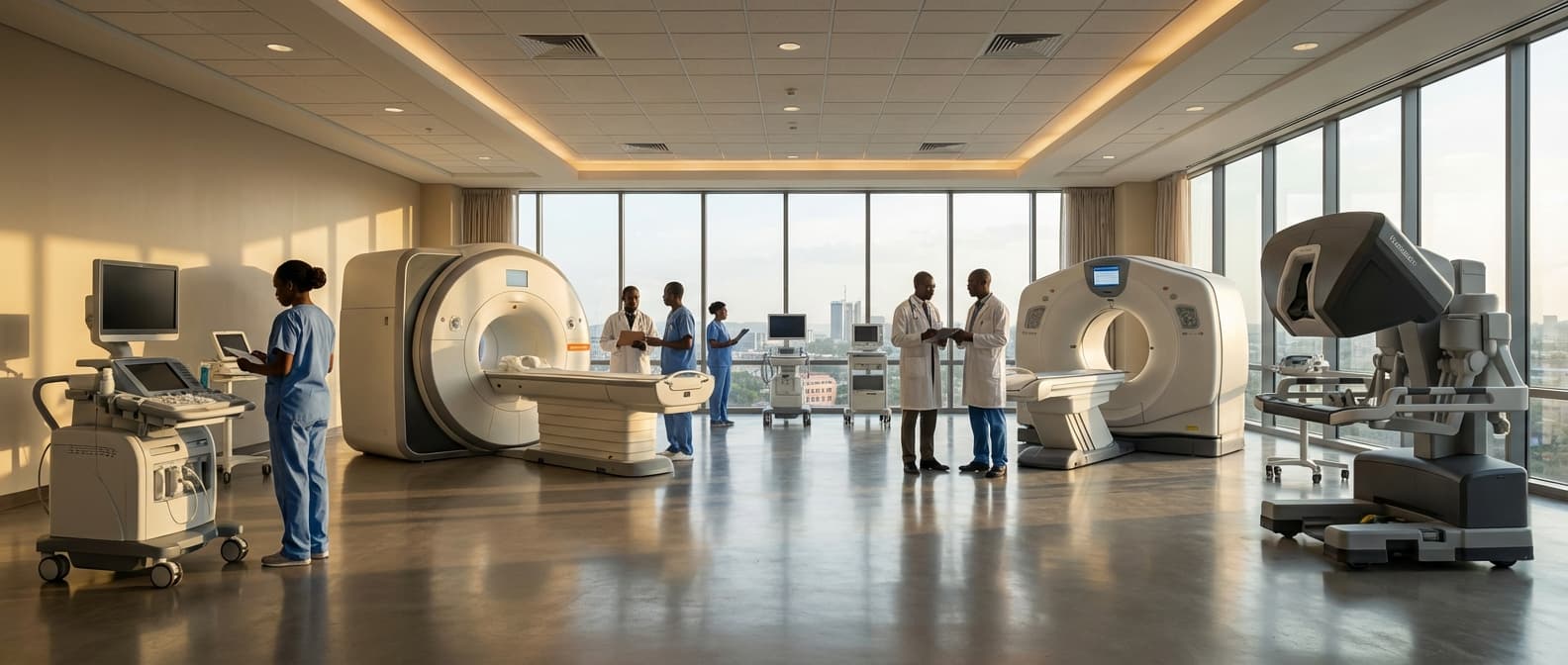
Life Support & Consumables in Eswatini
Engineering Excellence & Technical Support
Reliable supply of essential medical consumables and life support equipment ensuring uninterrupted, quality patient care delivery. High-standard technical execution following OEM protocols and local regulatory frameworks.
Emergency Oxygen Supply & Distribution
Ensured uninterrupted delivery of life-saving medical oxygen to remote clinics and hospitals across Eswatini during critical supply chain disruptions, utilizing a robust network of backup generators and strategically placed oxygen concentrators.
Water Purification & Safe Storage
Implemented and maintained solar-powered water purification systems in drought-stricken communities, guaranteeing access to safe drinking water and significantly reducing waterborne diseases, with secure, elevated storage solutions to prevent contamination.
Stockpile Management & Cold Chain Integrity
Optimized the management of essential medicines and vaccines through a sophisticated inventory system, maintaining critical cold chain temperatures with advanced monitoring technology and redundant power sources, ensuring efficacy and availability for vital health programs.
What Is Life Support & Consumables In Eswatini?
Life Support & Consumables in Eswatini refers to a critical healthcare service that provides the necessary medical equipment and supplies to sustain bodily functions for individuals experiencing severe illness, injury, or chronic conditions that compromise their ability to breathe, circulate blood, or otherwise maintain vital organ function. This service encompasses a range of technologies and materials designed to augment or replace failing physiological processes, thereby preserving life and facilitating recovery or palliative care. The demand for such services in Eswatini is driven by factors including the prevalence of non-communicable diseases (NCDs) like cardiovascular disease and respiratory illnesses, the ongoing burden of communicable diseases such as HIV/AIDS and tuberculosis, and the occurrence of acute medical emergencies. This service is essential for patients requiring mechanical ventilation, advanced cardiac support, renal replacement therapy, and specialized nutritional support.
| Service Element | Description | Typical Beneficiaries | Common Use Cases |
|---|---|---|---|
| Mechanical Ventilation | Assisted or controlled breathing through artificial airway and breathing machine. | Patients with acute respiratory failure (e.g., severe pneumonia, ARDS), severe exacerbations of COPD, post-operative respiratory depression. | Management of respiratory compromise in Intensive Care Units (ICUs) and critical care settings. |
| Continuous Renal Replacement Therapy (CRRT) / Hemodialysis | Removal of waste products and excess fluid from the blood for patients with kidney failure. | Patients with acute kidney injury (AKI) due to sepsis, trauma, or nephrotoxicity; end-stage renal disease (ESRD). | Critical care management of fluid and electrolyte imbalances, uremia, and toxin removal. |
| Invasive Hemodynamic Monitoring & Support | Continuous measurement of blood pressure, cardiac output, and other circulatory parameters, with potential for pharmacologic or mechanical support. | Patients in septic shock, cardiogenic shock, severe trauma, or post-cardiac arrest. | Real-time assessment and management of circulatory dysfunction in critically ill patients. |
| Enteral & Parenteral Nutrition | Provision of nutrients via feeding tubes (enteral) or intravenous lines (parenteral) when oral intake is impossible or insufficient. | Patients with severe malnutrition, gastrointestinal dysfunction, prolonged critical illness, or those recovering from major surgery. | Support for metabolic stability and healing in patients unable to consume adequate nutrition orally. |
Key Components of Life Support & Consumables Services
- Mechanical Ventilation: Devices (e.g., ventilators) and associated consumables (e.g., endotracheal tubes, circuits, filters) to assist or control respiration.
- Cardiovascular Support: Equipment such as defibrillators, pacemakers, and intra-aortic balloon pumps, along with related supplies.
- Renal Replacement Therapy: Dialysis machines and associated consumables (e.g., dialyzers, tubing, solutions) for patients with acute or chronic kidney failure.
- Nutritional Support: Enteral feeding pumps and supplies, as well as parenteral nutrition solutions and administration sets for patients unable to meet nutritional needs orally.
- Monitoring Equipment: Devices for continuous physiological monitoring (e.g., ECG, SpO2, BP monitors) and their disposable sensors.
- Medication Infusion Devices: Infusion pumps and related consumables for precise administration of life-sustaining medications.
Who Needs Life Support & Consumables In Eswatini?
In Eswatini, access to life support equipment and consumables is crucial for a range of individuals and healthcare facilities. This vital resource ensures critical patient care, management of chronic conditions, and the provision of essential medical services. Identifying the primary recipients and the departments responsible for their distribution and utilization is key to understanding the demand and supply chain for these items.
| Customer/Department | Primary Need | Examples of Life Support/Consumables |
|---|---|---|
| Ministry of Health (MoH) | National supply chain management, policy implementation, bulk procurement. | Bulk oxygen, ventilators, anesthesia machines, dialysis machines, essential drug kits. |
| National Referral Hospital (e.g., Mbabane Government Hospital) | Tertiary care, complex surgeries, critical care management. | Ventilators (invasive and non-invasive), oxygen concentrators, CPAP/BiPAP machines, defibrillators, cardiac monitors, anesthesia consumables, dialysis disposables. |
| Regional Hospitals | Secondary care, management of common critical illnesses, surgeries. | Oxygen cylinders/generators, basic ventilators, nebulizers, suction machines, wound care consumables, IV fluids. |
| Health Centers/Clinics | Primary healthcare, basic emergency care, chronic disease management. | Oxygen cylinders (smaller), nebulizers, basic wound dressing, sharps containers, basic first aid supplies. |
| Intensive Care Units (ICUs) | Continuous monitoring and advanced life support for critically ill patients. | Mechanical ventilators, advanced monitoring systems, infusion pumps, specialized catheters, sterile tubing. |
| Emergency Departments | Rapid assessment and stabilization of acutely ill or injured patients. | Portable oxygen, resuscitation bags, intubation kits, defibrillators, trauma dressings. |
| Surgical Wards/Operating Theatres | Anesthesia, surgical procedures, post-operative recovery. | Anesthesia machines, ventilators, vaporizers, surgical disposables, sterile drapes, suction tubing. |
| Neonatal Units | Care for premature and critically ill newborns. | Neonatal ventilators, incubators, phototherapy units, specialized feeding tubes, respiratory support interfaces. |
| Ambulance Services (EMS) | Pre-hospital emergency care and transport. | Portable oxygen tanks, resuscitation bags, AEDs, splints, intravenous access kits, basic airway management devices. |
| Patients with Chronic Respiratory Conditions (Home Use) | Long-term management of breathing difficulties. | Oxygen concentrators, CPAP/BiPAP machines, nebulizer kits, oxygen tubing. |
| Patients requiring Dialysis | Kidney failure management. | Dialysis machines, dialyzers, bloodlines, saline, dialysate concentrate. |
Target Customers & Departments for Life Support & Consumables in Eswatini
- {"items":["Patients requiring immediate life-saving interventions (e.g., respiratory distress, cardiac arrest).","Individuals with chronic respiratory illnesses (e.g., COPD, asthma) requiring long-term oxygen therapy or ventilation support.","Patients undergoing surgical procedures requiring anesthesia and post-operative monitoring.","Neonates and infants requiring specialized respiratory support or intensive care.","Patients with severe trauma requiring immediate medical stabilization.","Individuals with chronic conditions requiring regular dialysis or similar life-sustaining treatments."],"title":"Target Customers"}
- {"items":["Ministry of Health (MoH): Responsible for overall health policy, procurement, and distribution of medical supplies.","Hospitals (Public and Private): Including national referral hospitals, regional hospitals, and smaller clinics, which are the primary sites for patient care.","Intensive Care Units (ICUs): Where the most critical patients requiring advanced life support are managed.","Emergency Departments/Casualty Units: Dealing with acute and life-threatening conditions.","Operating Theatres/Surgical Wards: Requiring anesthesia machines, ventilators, and related consumables.","Neonatal Intensive Care Units (NICUs) / Special Care Baby Units (SCBUs): For premature and sick newborns.","Outpatient Departments (OPDs): For management of chronic conditions requiring some level of ongoing support (e.g., oxygen concentrators for home use, nebulizers).","Rehabilitation Centers: May require supportive equipment for patients with long-term respiratory or neurological conditions.","Non-Governmental Organizations (NGOs) and Faith-Based Organizations (FBOs): Often involved in healthcare delivery, especially in rural areas, and may require supplies.","Emergency Medical Services (EMS)/Ambulance Services: Require portable life support equipment and consumables for pre-hospital care."],"title":"Key Departments & Institutions"}
Life Support & Consumables Process In Eswatini
This document outlines the typical workflow for Life Support & Consumables processes in Eswatini, encompassing the journey from initial inquiry to final execution. This includes procurement, delivery, and management of essential items required for operational continuity and well-being. The process is designed to be efficient, transparent, and responsive to the needs of various stakeholders, including government agencies, NGOs, and potentially private sector entities requiring such support.
| Stage | Description | Key Activities | Responsible Parties | Documentation |
|---|---|---|---|---|
| Inquiry & Needs Assessment | The initial step where a requirement for life support or consumables is identified and formally communicated. | Identifying specific needs (e.g., food, medicine, shelter materials, fuel), quantifying quantities, defining specifications, establishing timelines. | Requesting Department/Organization, End-users, Project Managers. | Needs Assessment Report, Requisition Forms, Scope of Work (if applicable). |
| Supplier Identification & Vetting | Locating and verifying potential suppliers who can fulfill the identified needs. | Market research, checking existing supplier databases, vendor registration, background checks, financial stability assessment, past performance review. | Procurement Department, Government Tender Boards, Approved Vendor Lists. | Supplier Registration Forms, Company Profiles, Financial Statements, References. |
| Quotation & Proposal Submission | Inviting qualified suppliers to submit offers for the provision of the required items. | Issuing Request for Quotation (RFQ) or Request for Proposal (RFP), setting submission deadlines, clarifying queries from potential suppliers. | Procurement Department, Requesting Department. | RFQ/RFP Documents, Supplier Queries and Responses, Clarification Notes. |
| Evaluation & Selection | Assessing submitted quotations/proposals against predefined criteria to select the most suitable supplier. | Technical evaluation (compliance with specifications), commercial evaluation (pricing, payment terms), financial evaluation, scoring, and ranking of proposals. | Evaluation Committee, Procurement Department, Technical Experts. | Evaluation Criteria Matrix, Evaluation Reports, Bid Analysis Sheets. |
| Contracting & Purchase Order Issuance | Formalizing the agreement with the selected supplier. | Negotiating terms and conditions, drafting and signing contracts, issuing Purchase Orders (POs). | Procurement Department, Legal Department, Selected Supplier. | Contracts, Service Level Agreements (SLAs), Purchase Orders. |
| Procurement & Manufacturing/Sourcing | The supplier's process of acquiring or producing the goods and services. | Placing orders with manufacturers, sourcing raw materials, production, batch testing (if applicable). | Selected Supplier, Manufacturers, Sub-contractors. | Production Schedules, Material Requisitions, Manufacturing Records. |
| Quality Assurance & Inspection | Ensuring the delivered items meet the required quality standards and specifications. | Pre-shipment inspections, factory audits, laboratory testing, visual inspection upon arrival. | Quality Control Department, Independent Inspectors, Requesting Department. | Inspection Reports, Quality Certificates, Test Results. |
| Logistics & Transportation | Moving the goods from the supplier's location to the designated delivery point. | Arranging transportation (road, air, sea), customs clearance, insurance, tracking shipments. | Logistics Department, Freight Forwarders, Selected Supplier. | Shipping Manifests, Bills of Lading, Customs Declarations, Insurance Certificates. |
| Delivery & Receipt | The physical handover of goods and confirmation of receipt. | Receiving goods at the designated location, verifying quantities against PO/delivery notes, documenting any discrepancies. | Warehouse Staff, Receiving Officers, Requesting Department. | Delivery Notes, Goods Received Notes (GRNs), Dispatch Vouchers. |
| Distribution & Allocation | Distributing the received items to the intended beneficiaries or operational units. | Segregating items, recording distribution, ensuring equitable allocation, managing distribution points. | Logistics Department, Program Staff, Local Authorities. | Distribution Lists, Stock Release Forms, Beneficiary Records. |
| Inventory Management & Stocktaking | Maintaining accurate records of stock levels and conducting regular physical checks. | Updating inventory databases, conducting cycle counts, periodic stocktaking, identifying stock discrepancies, managing expiry dates. | Warehouse Management, Inventory Clerks, Finance Department. | Inventory Records, Stocktaking Reports, Stock Adjustment Forms. |
| Payment & Financial Reconciliation | Processing payments to the supplier and reconciling financial records. | Verifying invoices against POs and GRNs, processing payments, reconciling bank statements, auditing financial records. | Finance Department, Accounts Payable, Requesting Department. | Invoices, Payment Vouchers, Bank Reconciliation Statements, Audit Reports. |
| Reporting & Feedback | Providing information on the process and gathering feedback for improvement. | Generating reports on procurement status, expenditure, inventory levels, supplier performance, collecting feedback from stakeholders. | Procurement Department, Program Managers, End-users. | Procurement Reports, Performance Reports, Feedback Forms, Lessons Learned Documents. |
Key Stages in the Life Support & Consumables Process
- Inquiry & Needs Assessment
- Supplier Identification & Vetting
- Quotation & Proposal Submission
- Evaluation & Selection
- Contracting & Purchase Order Issuance
- Procurement & Manufacturing/Sourcing
- Quality Assurance & Inspection
- Logistics & Transportation
- Delivery & Receipt
- Distribution & Allocation
- Inventory Management & Stocktaking
- Payment & Financial Reconciliation
- Reporting & Feedback
Life Support & Consumables Cost In Eswatini
Life support and consumables in Eswatini represent a critical and often variable cost for individuals, healthcare facilities, and humanitarian organizations. The pricing landscape is influenced by a multitude of factors, including import dependency, exchange rates, global supply chain dynamics, local taxation, and the specific type of consumable. Essential medical supplies, from basic bandages to advanced respiratory equipment, are subject to these pressures. The local currency, the Swazi Lilangeni (SZL), experiences fluctuations against major international currencies (particularly the South African Rand, to which it is pegged), directly impacting the landed cost of imported goods. Government regulations, distribution channels (whether through government tenders, private pharmacies, or NGOs), and bulk purchasing power also play significant roles in determining the final price for consumers and institutions. The range of costs can be substantial, from a few Lilangeni for basic disposable items to thousands or tens of thousands of Lilangeni for complex machinery or specialized medications.
| Consumable/Life Support Item Category | Estimated Price Range (SZL) | Typical Units |
|---|---|---|
| Basic First Aid Supplies (bandages, gauze, antiseptic wipes) | 10 - 150 | Per item/small pack |
| Disposable Syringes and Needles | 2 - 20 | Per unit |
| Gloves (latex/nitrile) | 50 - 300 | Per box of 100 |
| Masks (surgical/N95) | 10 - 100 | Per item/pack |
| Medications (common painkillers, antibiotics - over-the-counter/prescription) | 20 - 500+ | Per strip/bottle/vial |
| Oxygen Cylinders (rental/refill) | 300 - 1000+ | Per cylinder/refill |
| Nebulizer Machines | 800 - 3000 | Per unit |
| Blood Glucose Monitors (with strips) | 500 - 1500 (monitor) + 200 - 600 (strips) | Per unit/pack of strips |
| Ventilator (basic hospital-grade) | 50,000 - 200,000+ | Per unit |
| IV Fluids (saline, Ringer's lactate) | 20 - 100 | Per bag |
| Catheters | 50 - 500 | Per unit |
| Dialysis Consumables (tubing, filters) | 500 - 2000+ | Per set/unit |
Key Pricing Factors for Life Support & Consumables in Eswatini
- Import Dependency: A significant portion of medical consumables and life support equipment is imported, making prices susceptible to international market fluctuations and shipping costs.
- Exchange Rate Fluctuations: The Swazi Lilangeni's peg to the South African Rand means its value is indirectly influenced by the Rand's performance against other major currencies, affecting the cost of imported goods.
- Global Supply Chain Disruptions: Events like pandemics or geopolitical instability can lead to shortages and price increases for raw materials and finished medical products.
- Local Taxation and Duties: Import duties, value-added tax (VAT), and other local taxes are added to the cost of imported goods.
- Distribution Channels: Prices can vary significantly depending on whether items are purchased through government tenders, private pharmacies, specialized medical suppliers, or directly from manufacturers.
- Bulk Purchasing Power: Larger institutions and government bodies often negotiate lower prices due to the volume of their orders.
- Specific Product Type: The complexity, rarity, and technological sophistication of a life support device or consumable directly influence its price.
- Manufacturer Pricing: The original manufacturer's pricing strategy is a foundational element in determining the cost.
- Logistics and Transportation Costs: The cost of transporting goods within Eswatini from ports of entry to their final destination adds to the overall price.
- Regulatory Compliance: Meeting Eswatini's health and safety regulations can involve additional costs for manufacturers and suppliers.
Affordable Life Support & Consumables Options
Navigating the costs of life support and medical consumables can be a significant challenge. This guide explores strategies and options to make these essential items more affordable, focusing on value bundles and smart purchasing decisions. Our aim is to empower individuals and healthcare providers to access necessary supplies without undue financial strain.
| Value Bundle Type | Description | Potential Savings |
|---|---|---|
| Starter Kits | Bundles containing essential items for new patients (e.g., CPAP machine, mask, tubing, filter). | Typically 10-20% off individual item prices. |
| Monthly/Quarterly Supply Packs | Pre-packaged sets of consumables needed over a specific period (e.g., insulin pen needles, syringe filters, wound dressings). | Can offer 5-15% savings compared to buying items individually each month. |
| Condition-Specific Bundles | Groups of supplies tailored to managing a particular condition (e.g., diabetes management kits with glucose meter, test strips, lancets; ostomy care kits with bags, barrier rings, adhesives). | Often provide convenience and a discount for comprehensive care needs. |
| Equipment + Consumable Bundles | Purchasing a primary piece of equipment along with a starter set of its associated consumables at a reduced package price. | Can be a significant one-time saving, especially for pricier equipment. |
| Loyalty Programs/Bundles | Retailers or manufacturers may offer bundled discounts for repeat customers or as part of a loyalty program. | Variable, but can accumulate to substantial savings over time. |
Key Cost-Saving Strategies
- Bulk Purchasing: Buying in larger quantities often reduces the per-unit cost. However, ensure proper storage and manage expiration dates effectively.
- Generic vs. Brand Name: Explore high-quality generic alternatives to brand-name products. Many generics offer the same efficacy at a lower price point.
- Subscription Services: For recurring needs, subscription boxes can offer discounts and automatic delivery, saving both money and time.
- Insurance and Assistance Programs: Investigate coverage through insurance plans, government programs (e.g., Medicare, Medicaid), and non-profit organizations offering financial aid for medical supplies.
- Direct-to-Consumer (DTC) Brands: Some companies offer medical supplies directly to consumers online, often cutting out middlemen and providing competitive pricing.
- Local vs. Online Retailers: Compare prices between brick-and-mortar pharmacies, durable medical equipment (DME) suppliers, and online marketplaces.
- Negotiate with Suppliers: For bulk purchases or ongoing needs, don't hesitate to negotiate prices with your suppliers.
- Reusability and Refurbishment: Where applicable and safe, consider reusable or refurbished equipment (e.g., certain types of CPAP machines, nebulizers). Ensure proper sterilization and maintenance.
Verified Providers In Eswatini
In Eswatini's healthcare landscape, identifying verified providers is paramount for ensuring quality care and peace of mind. Franance Health stands out as a leading name, distinguished by its rigorous credentialing process and unwavering commitment to patient well-being. This document outlines why Franance Health's credentials represent the best choice for your healthcare needs in Eswatini.
| Credential Type | Verification Source | Significance for Patients | Franance Health's Commitment |
|---|---|---|---|
| Ministry of Health Accreditation | Eswatini Ministry of Health | Legally sanctioned to operate, meets national safety and quality standards. | Fully compliant and regularly audited by the Ministry. |
| Board Certification | Recognized Medical Councils/Boards | Confirms specialized expertise and proven competence in a medical field. | Employs practitioners with verified and up-to-date board certifications. |
| CPD Compliance | Internal Policy & External Training Providers | Ensures providers are knowledgeable about the latest medical innovations and treatments. | Provides resources and mandates participation in continuous learning programs. |
| Quality Management Systems | Internal Audits & Patient Feedback | Guarantees a focus on patient experience and effective treatment delivery. | Implements robust systems for feedback collection and service improvement. |
| Infection Control Standards | WHO Guidelines & National Protocols | Minimizes risk of healthcare-associated infections, ensuring a safe healing environment. | Maintains state-of-the-art infection control procedures and regular training. |
Key Franance Health Credentials & Why They Matter
- {"title":"Accreditation by the Eswatini Ministry of Health","description":"All Franance Health facilities and practitioners undergo stringent inspection and approval by the Eswatini Ministry of Health. This ensures adherence to national health standards, safety protocols, and ethical practices. It signifies a baseline of quality and regulatory compliance."}
- {"title":"Board Certification of Medical Professionals","description":"Franance Health prioritizes medical professionals who hold valid and recognized board certifications in their respective specialities. This demonstrates a high level of expertise, specialized knowledge, and proven competence in their fields, ensuring you are treated by qualified experts."}
- {"title":"Continuous Professional Development (CPD) Programs","description":"We mandate and support ongoing professional development for all our staff. This commitment ensures that our healthcare providers remain at the forefront of medical advancements, new techniques, and best practices, providing you with the most current and effective treatments available."}
- {"title":"Patient Satisfaction & Outcome Tracking","description":"Franance Health actively monitors patient feedback and tracks treatment outcomes. This data-driven approach allows for continuous improvement of services and ensures that patient satisfaction and successful recovery are central to our operations."}
- {"title":"Adherence to International Quality Standards","description":"Beyond national requirements, Franance Health strives to align its operations with internationally recognized quality benchmarks for healthcare delivery. This commitment to global standards ensures a high level of service and care that is comparable to leading healthcare systems worldwide."}
- {"title":"Robust Safety and Infection Control Protocols","description":"Our facilities are equipped with and strictly adhere to comprehensive safety and infection control measures. This dedication to a secure environment minimizes risks and ensures the well-being of every patient."}
Scope Of Work For Life Support & Consumables
This document outlines the Scope of Work (SOW) for Life Support & Consumables. It details the technical deliverables and standard specifications required to ensure the health, safety, and operational efficiency of personnel and equipment. The SOW encompasses the procurement, management, and maintenance of all essential life support systems and consumable items. This includes, but is not limited to, air quality management, water purification, waste management, food and nutrition, personal protective equipment (PPE), and general operational supplies. Adherence to stringent quality control and safety standards is paramount throughout the lifecycle of these provisions.
| Category | Technical Deliverables | Standard Specifications | Key Performance Indicators (KPIs) |
|---|---|---|---|
| Atmospheric Control Systems (ACS) | Air revitalization units, CO2 scrubbers, oxygen generators, atmospheric pressure and composition sensors, environmental control units. | ISO 14644 (Cleanrooms and associated controlled environments), ASHRAE 52.2 (Method of Testing General Ventilation Air-Cleaning Devices for Removal Efficiency by Particle Size), applicable aerospace or habitat standards (e.g., NASA standards). | Oxygen partial pressure maintained within 16-26 kPa; CO2 concentration below 0.5%; particulate matter (PM2.5) below 15 µg/m³; humidity between 40-60%. |
| Potable Water Systems (PWS) | Water purification units, storage tanks, distribution lines, water quality monitoring sensors, wastewater treatment systems. | NSF/ANSI Standard 42 (Aesthetic Effects), NSF/ANSI Standard 53 (Health Effects), EPA Maximum Contaminant Levels (MCLs), WHO Guidelines for Drinking-water Quality. | TDS below 500 mg/L; microbial contamination below detectable limits; absence of harmful chemicals. |
| Waste Management Systems (WMS) | Solid waste compactors, incinerators, biological waste treatment systems, hazardous waste containment, recycling facilities. | EPA hazardous waste regulations, local sanitation codes, applicable environmental impact assessments. | Waste reduction rate of X%; successful hazardous waste disposal rate of 100%; odor control efficacy of Y%. |
| Nutrition and Food Services | Procurement of food supplies, food storage (refrigerated, frozen, dry), preparation equipment, meal planning and distribution. | FDA Food Code, HACCP (Hazard Analysis and Critical Control Points), local food safety regulations, nutritional guidelines based on activity levels. | Food spoilage rate below 1%; adherence to dietary requirements (e.g., calorie intake, macronutrient balance); food safety incident rate below 0.01%. |
| Medical and First Aid Supplies | First aid kits, diagnostic tools, medications, emergency medical equipment, trained medical personnel (if applicable). | ANSI/ISEA Z308.1 (Minimum Requirements for Workplace First Aid Kits and Supplies), FDA approved medications, relevant professional medical standards. | Availability of critical medical supplies within T minutes; accuracy of diagnostic tools; compliance with medication expiry dates. |
| Personal Protective Equipment (PPE) | Respirators, gloves, eye protection, protective clothing, safety footwear, fall protection equipment. | NIOSH approved respirators, ANSI Z87.1 (Eye and Face Protection), ANSI/ISEA 107 (High-Visibility Safety Apparel), ASTM standards for specific materials (e.g., chemical resistance). | Proper fit and functionality of all PPE; 100% compliance with PPE usage policies in designated areas; zero PPE-related incidents. |
| Hygiene and Sanitation Supplies | Soaps, disinfectants, cleaning agents, toilet paper, towels, waste receptacles. | EPA Safer Choice standards, CDC guidelines for infection control, local health department regulations. | Surface cleanliness compliance rate of 95%; availability of essential hygiene products at all times; absence of pest infestations. |
| General Operational Consumables | Batteries, filters, lubricants, spare parts, cleaning materials, office supplies, tools. | Manufacturer specifications, industry best practices, relevant ISO standards for quality management. | Stock-out rate below 5%; adherence to recommended maintenance schedules for equipment utilizing consumables; cost-effectiveness of procurement. |
Key Life Support & Consumables Categories
- Atmospheric Control Systems (ACS)
- Potable Water Systems (PWS)
- Waste Management Systems (WMS)
- Nutrition and Food Services
- Medical and First Aid Supplies
- Personal Protective Equipment (PPE)
- Hygiene and Sanitation Supplies
- General Operational Consumables
Service Level Agreement For Life Support & Consumables
This Service Level Agreement (SLA) outlines the commitment for the provision of Life Support & Consumables, specifying response times for critical issues and uptime guarantees for essential services. This SLA is designed to ensure the continuous and reliable operation of life-sustaining equipment and the consistent availability of necessary consumables, minimizing disruption and risk to the user.
| Service Component | Issue Severity | Guaranteed Response Time | Uptime Guarantee |
|---|---|---|---|
| Life Support Equipment (e.g., Ventilators, Dialysis Machines) | Critical Issue | 30 minutes | 99.99% |
| Life Support Equipment (e.g., Ventilators, Dialysis Machines) | Urgent Issue | 2 hours | 99.99% |
| Life Support Equipment (e.g., Ventilators, Dialysis Machines) | Routine Issue | 8 business hours | N/A (Managed via scheduling) |
| Critical Consumables (e.g., IV Fluids, Medications, Dialysis Cartridges) | Critical (Stock Out/Immediate Need) | 1 hour | 99.99% (Availability of scheduled deliveries) |
| Critical Consumables (e.g., IV Fluids, Medications, Dialysis Cartridges) | Urgent (Low Stock/Impending Need) | 4 business hours | 99.99% (Availability of scheduled deliveries) |
| Non-Critical Consumables (e.g., General Medical Supplies) | Routine (Stock Up) | 2 business days | N/A (Managed via inventory and scheduled deliveries) |
Key Definitions
- Critical Issue: An event that directly impacts the functionality of life support equipment or renders essential consumables unavailable, posing an immediate risk to user safety or well-being.
- Urgent Issue: An event that significantly impairs the functionality of life support equipment or restricts the availability of essential consumables, but does not pose an immediate threat to user safety.
- Routine Issue: A non-critical request related to life support equipment or consumables, such as preventative maintenance, scheduled deliveries, or general inquiries.
- Response Time: The maximum allowable time from the initiation of a support request (via designated channels) to the commencement of active troubleshooting or engagement by the service provider.
- Uptime Guarantee: The percentage of time that a specific life support system or consumable delivery service is guaranteed to be operational and available.
- Downtime: Any period during which a life support system or consumable delivery service is not operational or available.
Frequently Asked Questions

Ready when you are
Let's scope your Life Support & Consumables in Eswatini project in Eswatini.

Scaling healthcare logistics and technical systems across the entire continent.