
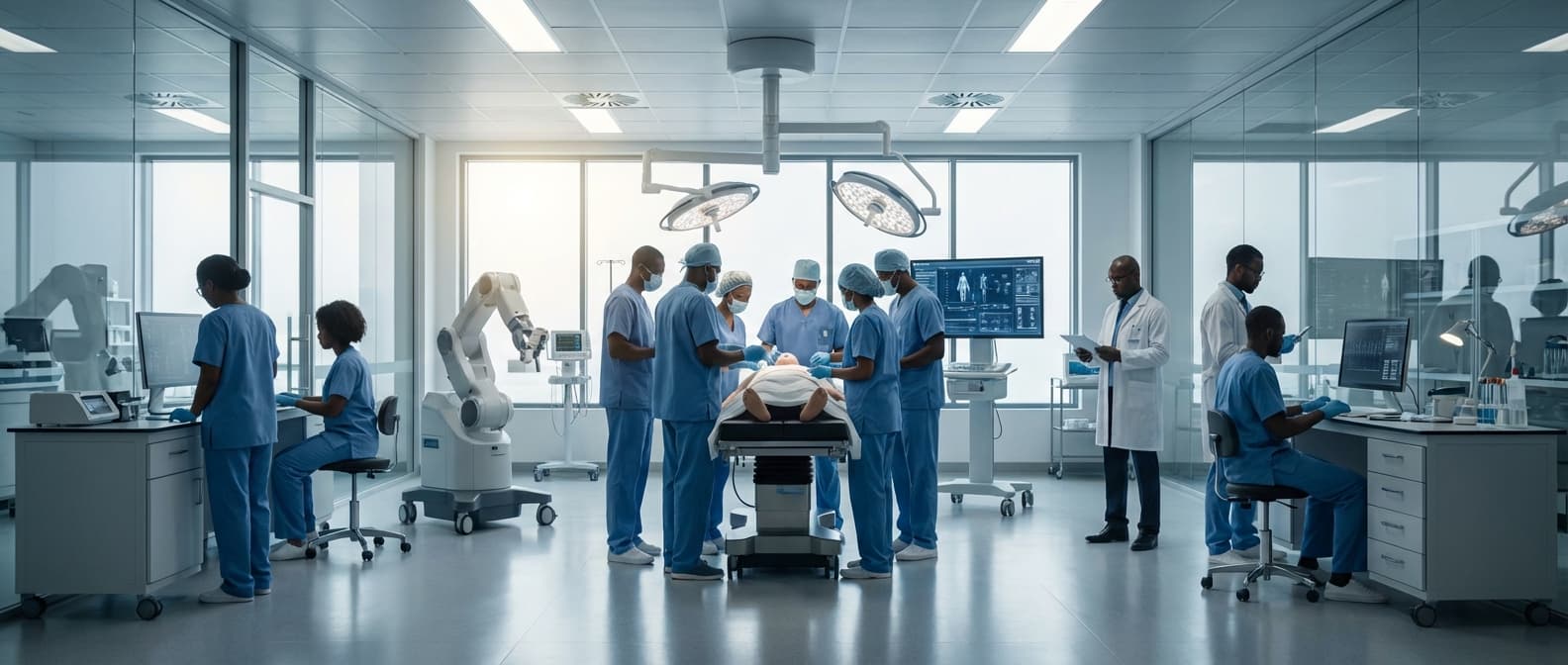
Calibration & Electrical Safety Testing in Eswatini
Engineering Excellence & Technical Support
Equipment calibration and IEC safety testing High-standard technical execution following OEM protocols and local regulatory frameworks.
Ensuring Accurate Measurements for Critical Infrastructure
We provide accredited calibration services for a wide range of electrical test equipment, guaranteeing the precision and reliability of measurements essential for Eswatini's power grids, industrial facilities, and public safety systems.
Proactive Electrical Safety Compliance
Our expert team conducts comprehensive electrical safety testing and inspections, identifying potential hazards and ensuring compliance with national and international standards, thereby protecting lives and property across Eswatini.
Enhancing Performance Through Certified Calibration
By offering traceable and accredited calibration for your electrical measurement instruments, we empower Eswatini businesses and utilities to optimize operational efficiency, reduce downtime, and maintain the highest levels of product quality and service.
What Is Calibration & Electrical Safety Testing In Eswatini?
Calibration and electrical safety testing are critical metrological and regulatory services essential for ensuring the accuracy, reliability, and safe operation of electrical equipment and measurement instruments within Eswatini. Calibration involves the comparison of a measuring instrument's output against a known, traceable standard to identify and quantify any deviations, thereby establishing its accuracy. Electrical safety testing, conversely, assesses equipment for compliance with established electrical safety standards to prevent hazards such as electric shock, fire, and equipment damage. These services are indispensable for maintaining quality control, regulatory compliance, and operational integrity across various sectors.
| Service | Involves | Who Needs It | Typical Use Cases |
|---|---|---|---|
| Calibration | Comparing an instrument's readings against a traceable reference standard to determine and correct any inaccuracies. This includes documenting the deviation and providing a calibration certificate with uncertainty values. | Manufacturers, quality control departments, research and development facilities, calibration laboratories, any organization using measuring instruments for critical processes or compliance. | Ensuring accuracy of weighing scales in manufacturing, calibrating pressure gauges in industrial plants, verifying thermocouples in temperature-controlled environments, calibrating electrical test equipment (e.g., multimeters, oscilloscopes), medical device calibration for diagnostic accuracy. |
| Electrical Safety Testing | Performing a series of tests to assess the integrity of electrical insulation, earthing systems, and the risk of electric shock. This involves applying test voltages, measuring resistances, and evaluating leakage currents. | Manufacturers of electrical and electronic equipment, importers and distributors, service and repair workshops, users of electrical equipment in industrial, commercial, healthcare, and public sectors. | Pre-shipment inspection of manufactured goods, periodic testing of portable electrical appliances (e.g., in offices, schools, hospitals), testing of medical electrical equipment for patient safety, ensuring safety of industrial machinery, compliance testing for product certification and market access. |
Key Aspects of Calibration & Electrical Safety Testing in Eswatini
- Calibration: The process of verifying the accuracy of measuring instruments. This involves comparing the instrument under test against a reference standard whose accuracy is known and traceable to national or international metrology institutes. Calibration establishes a relationship between the indication of a measuring instrument and the corresponding true value of the quantity being measured.
- Electrical Safety Testing: A systematic evaluation of electrical equipment to identify potential hazards. This typically includes tests for insulation resistance, dielectric strength (high voltage withstand), earth continuity, protective earthing, and touch current, ensuring the equipment meets relevant safety standards (e.g., IEC, SANS, or specific local regulations).
- Traceability: A fundamental principle where the measurement result of a calibration can be related to a stated reference through an unbroken chain of comparisons, each having an associated uncertainty. In Eswatini, traceability is often established through accredited calibration laboratories that use primary or secondary standards.
- Accreditation: Calibration laboratories in Eswatini may seek accreditation from national or international bodies (e.g., SANAS in South Africa, which is often recognized) to demonstrate their technical competence and impartiality, ensuring the reliability and international acceptance of their calibration certificates.
- Regulatory Compliance: Adherence to national and international standards and regulations governing the use and safety of electrical equipment is paramount. This includes standards set by regulatory bodies within Eswatini or by adopting recognized international standards.
- Preventive Maintenance: Both calibration and safety testing are integral components of a robust preventive maintenance program, identifying potential issues before they lead to equipment failure, safety incidents, or production downtime.
Who Needs Calibration & Electrical Safety Testing In Eswatini?
Ensuring the accuracy and safety of electrical and medical equipment is paramount for a functioning society. In Eswatini, various entities rely on regular calibration and electrical safety testing to maintain operational integrity, patient well-being, and regulatory compliance. This service is not a luxury but a necessity for a wide range of organizations.
| Customer Type | Relevant Departments | Why Calibration/Testing is Crucial |
|---|---|---|
| Healthcare Facilities | Medical Equipment Maintenance, Biomedical Engineering, Radiology, Laboratory Services, Operating Theatres, General Wards | Ensures accurate medical diagnoses, safe patient treatment, and compliance with health regulations. Critical for life-support and diagnostic equipment. |
| Industrial Manufacturers | Quality Control, Production, Maintenance, Engineering | Maintains product quality and consistency, ensures efficient production processes, prevents equipment failure, and upholds workplace safety standards. |
| Telecommunications | Network Operations, Maintenance, Field Services | Guarantees the reliability and performance of communication equipment, essential for uninterrupted service delivery. |
| Research & Education | Laboratories, Workshops, Technical Departments | Ensures the accuracy of experimental results in research and provides a safe learning environment in educational settings. |
| Food & Beverage | Quality Assurance, Production, Processing, Packaging | Ensures product safety, consistent quality, and compliance with food safety regulations. Prevents spoilage and contamination. |
| Government Agencies | Public Health Laboratories, Public Works, Standards Bureaus, Emergency Services | Ensures public safety, regulatory compliance, and the reliable functioning of essential public services. |
| Mining & Agriculture | Operations, Maintenance, Quality Control | Ensures the efficiency and safety of heavy machinery and processing equipment, critical for resource extraction and food production. |
Target Customers and Departments for Calibration & Electrical Safety Testing in Eswatini:
- Hospitals and Clinics (Government and Private)
- Diagnostic Laboratories
- Research Institutions
- Industrial Manufacturing Plants
- Telecommunications Companies
- Food and Beverage Processing Facilities
- Educational Institutions (particularly those with science and engineering departments)
- Government Agencies (e.g., Ministry of Health, Ministry of Works, regulatory bodies)
- Non-Governmental Organizations (NGOs) with operational equipment
- Mining Operations
- Agricultural Cooperatives and Large Farms
- Electrical Contractors and Installers
- Fire and Rescue Services
- Waste Management Facilities
- Water Treatment Plants
Calibration & Electrical Safety Testing Process In Eswatini
This document outlines the standard workflow for calibration and electrical safety testing services in Eswatini, from initial customer inquiry to the final execution of the service. The process is designed to ensure clear communication, efficient service delivery, and adherence to relevant standards.
| Stage | Key Activities | Responsible Party | Outcome |
|---|---|---|---|
| Inquiry | Client requests calibration/safety testing for specific equipment. | Client | Understanding of client needs. |
| Quotation | Provider assesses needs and provides a detailed quote. | Service Provider | Formal offer for services. |
| Confirmation & Scheduling | Client accepts quote; provider schedules the service. | Client & Service Provider | Agreed service date and time. |
| Preparation | Client ensures equipment is ready and accessible. | Client | Equipment ready for testing. |
| Execution | Technicians perform calibration and safety tests. | Service Provider | Test results and data. |
| Reporting | Provider generates a detailed report of findings. | Service Provider | Comprehensive test report. |
| Certification | Issuance of calibration certificates/safety compliance labels. | Service Provider | Proof of compliance. |
| Review & Handover | Provider discusses report with client; recommendations are made. | Service Provider & Client | Client understanding of results and next steps. |
| Invoicing | Provider issues final invoice for services rendered. | Service Provider | Financial transaction. |
| Record Keeping | Service provider maintains organized records. | Service Provider | Traceability and future reference. |
Calibration & Electrical Safety Testing Workflow in Eswatini
- Inquiry & Initial Consultation: The process begins when a customer contacts the service provider with a request for calibration and/or electrical safety testing. This involves understanding the type of equipment, the required tests, quantity, location, and desired turnaround time.
- Quotation & Proposal: Based on the inquiry, the service provider prepares a detailed quotation and/or proposal. This document outlines the scope of work, specific tests to be performed (e.g., IEC 60601 for medical equipment, AS/NZS 3551, etc.), estimated costs, timeline, and any specific client requirements.
- Order Confirmation & Scheduling: Upon acceptance of the quotation, the customer formally confirms the order. The service provider then schedules the testing, coordinating with the client for the most convenient date and time. This may involve booking laboratory time or field technician availability.
- Pre-Testing Preparations (Client): The client is responsible for ensuring the equipment is accessible and ready for testing. This may include ensuring it is powered off (if required), unobstructed, and that any necessary documentation (e.g., previous calibration certificates) is available.
- On-Site or In-Lab Testing Execution: The qualified technicians arrive at the designated location (client premises or service provider's laboratory) to perform the calibration and/or electrical safety tests. This involves using calibrated test equipment and following established testing protocols.
- Data Collection & Analysis: During the testing phase, all relevant data is meticulously recorded. This includes measurements, test results, and any observations made regarding the equipment's performance and safety.
- Report Generation: Following the completion of tests, a comprehensive report is generated. This report details the equipment tested, the tests performed, the results obtained (including pass/fail status), any deviations from standards, and recommendations for any necessary adjustments or repairs.
- Calibration Sticker/Certification: For equipment that passes calibration, a calibration sticker or certificate is affixed, indicating the date of calibration and the next due date. For successful electrical safety tests, a certification of compliance is issued.
- Post-Testing Review & Recommendations: The report is reviewed with the client. Any identified issues or recommendations for maintenance, repair, or further action are discussed. If adjustments or repairs are needed, these may be performed at this stage if within the scope of the service agreement.
- Invoicing & Payment: Once the service is completed and the reports are delivered, the final invoice is issued to the client. Payment terms are as per the agreed-upon contract.
- Record Keeping: The service provider maintains detailed records of all testing activities, including reports, calibration certificates, and client communication, for future reference and traceability.
Calibration & Electrical Safety Testing Cost In Eswatini
Calibration and electrical safety testing are crucial for ensuring the accuracy, reliability, and safe operation of various electrical and electronic equipment in Eswatini. These services are vital across industries like healthcare, manufacturing, laboratories, and even for domestic appliances. The cost of these services can vary significantly based on several factors, including the type of equipment, its complexity, the required accuracy of calibration, the urgency of the service, and the reputation/specialization of the service provider. Local service providers often operate within a competitive landscape, which can influence pricing. It's important to obtain quotes from multiple accredited service providers to ensure fair pricing.
| Service Type | Equipment Category (Examples) | Estimated Price Range (SZL - Swazi Lilangeni) | Notes |
|---|---|---|---|
| Basic Calibration | Multimeters, Power Supplies, Basic Oscilloscopes | 800 - 2,500 | Covers standard calibration points for common test equipment. |
| Intermediate Calibration | Function Generators, Bench Power Supplies, Advanced Oscilloscopes | 2,000 - 5,000 | Involves more complex equipment and a wider range of calibration parameters. |
| Advanced/Specialized Calibration | Medical Devices (e.g., ECG machines, ventilators), Industrial Measurement Instruments, RF Equipment | 4,000 - 15,000+ | Requires specialized knowledge, equipment, and often accredited laboratories. Costs can escalate significantly for highly specialized or safety-critical equipment. |
| Electrical Safety Testing (PAT Testing) | General office equipment, appliances, tools, IT equipment | 30 - 100 per item | Price often dependent on the number of items and location. Bulk discounts may apply. This is a per-item cost. |
| Comprehensive Electrical Safety Testing | Medical equipment, industrial machinery, laboratory equipment | 500 - 3,000+ per system/unit | More in-depth testing including insulation resistance, earth continuity, leakage current. Cost varies with complexity and criticality. |
| On-site Service Fee | Applicable to any service | 300 - 1,000+ | A call-out fee to cover travel and basic on-site setup. May vary based on distance. |
| Certification/Documentation Fee | Per calibration certificate | 100 - 300 | Often included, but sometimes a separate charge for detailed reports or specific accreditations. |
Factors Influencing Calibration & Electrical Safety Testing Costs in Eswatini
- Equipment Type and Complexity: Simple devices like multimeters will generally cost less to calibrate than complex medical equipment or industrial machinery.
- Number of Test Points/Parameters: The more points or parameters that need to be calibrated or tested, the higher the cost.
- Required Accuracy and Standards: Calibration to specific international or national standards (e.g., ISO, IEC) often incurs higher costs due to the rigor involved.
- Urgency of Service: Expedited services or emergency call-outs typically come with a premium fee.
- On-site vs. Laboratory Testing: If testing needs to be performed at your premises, there might be additional charges for travel and logistics.
- Accreditation and Certification of the Service Provider: Reputable and accredited laboratories may charge more but offer greater assurance of quality.
- Warranty and Maintenance Contracts: Some equipment suppliers offer calibration and safety testing as part of a broader service or maintenance package.
- Location within Eswatini: While less significant, geographical location might slightly impact travel costs for on-site services, particularly for remote areas.
Affordable Calibration & Electrical Safety Testing Options
Maintaining the accuracy of your measurement and test equipment through regular calibration is crucial for ensuring reliable results, complying with industry standards, and guaranteeing the safety of your electrical systems. However, calibration and electrical safety testing can represent a significant operational expense. This guide explores affordable calibration and electrical safety testing options, focusing on the value delivered through bundled services and effective cost-saving strategies.
| Strategy/Option | Description | Benefits | Considerations |
|---|---|---|---|
| Value Bundles / Packaged Services | Combining multiple calibration services or integrating calibration with electrical safety testing into a single service agreement. Often includes a set number of calibrations per year or for a defined scope of equipment. | • Reduced Per-Unit Cost: Significant discounts compared to individual service pricing. • Streamlined Logistics: One vendor, one invoice, simplified scheduling. • Predictable Budgeting: Fixed costs for a defined period. • Comprehensive Coverage: Ensures all critical equipment is maintained. | • Contract Commitment: May require a minimum contract term. • Flexibility: Ensure the bundle can accommodate changes in equipment or needs. |
| Preventive Maintenance Contracts | Agreements that include regular calibration checks alongside routine maintenance and minor repair services for electrical equipment. | • Holistic Approach: Addresses both accuracy and operational integrity. • Early Issue Detection: Catches potential problems before they lead to failure or inaccuracy. • Reduced Downtime: Proactive maintenance minimizes unexpected breakdowns. | • Higher Initial Investment: May seem more expensive upfront but offers long-term savings. • Scope Definition: Clearly define what maintenance tasks are included. |
| On-Site Calibration Services | Having technicians come to your facility to perform calibrations and safety tests. | • Minimized Downtime: No need to ship equipment, significantly reducing disruption. • Convenience: Saves on shipping costs and transit risks. • Direct Technician Interaction: Opportunity for immediate feedback and troubleshooting. | • Technician Availability: May depend on the vendor's schedule. • Facility Requirements: Requires adequate space and access for technicians. |
| Mail-In / Mail-Out Programs | Sending your equipment to a specialized calibration laboratory for testing and certification. | • Potentially Lower Cost: Often more cost-effective for smaller or standardized equipment. • Specialized Expertise: Access to highly specialized labs and equipment. • Efficient Throughput: Labs are optimized for high-volume calibration. | • Shipping Costs & Time: Factor in transit time and expenses. • Risk of Damage: Potential for damage during transit. |
| Tiered Service Levels | Service providers offering different levels of calibration and testing (e.g., standard, express, premium) with corresponding price points. | • Tailored Solutions: Choose the level that best fits your budget and urgency. • Cost Control: Pay for the service level you need. • Flexibility: Mix and match service levels for different equipment types. | • Understanding Differences: Clearly understand what each tier includes to avoid unexpected costs. |
| Off-Peak Scheduling | Scheduling calibration and testing during slower periods, which may sometimes be offered at a discount. | • Potential Cost Savings: Some vendors offer reduced rates for non-peak hours. • Improved Availability: Easier to schedule appointments. | • Availability Dependent: Not always an option offered by vendors. |
| Consolidated Vendor Relationships | Working with a single, trusted vendor for all your calibration and electrical safety testing needs. | • Leverage Volume Discounts: Increased volume with one vendor often leads to better pricing. • Simplified Management: One point of contact, streamlined communication. • Stronger Partnerships: Develop a better understanding of your needs, leading to more tailored solutions. | • Vendor Lock-in: Ensure the vendor's pricing remains competitive over time. |
| In-House Training & Basic Checks | Training your internal staff to perform basic checks or routine verifications, reserving external calibration for critical equipment. | • Significant Cost Savings: Reduces the need for external services for everyday tasks. • Increased Equipment Uptime: Faster internal checks can identify issues quickly. | • Investment in Training: Requires time and resources for staff training. • Limited Scope: Cannot replace accredited calibration for critical accuracy. • Equipment Investment: May require some basic testing equipment for internal use. |
Why Calibration and Electrical Safety Testing Matter
- Accuracy & Reliability: Ensures your measurements and tests are precise, leading to better decision-making and product quality.
- Compliance: Meets regulatory requirements and industry standards (e.g., ISO, OSHA, IEC), avoiding penalties and ensuring market access.
- Safety: Verifies that electrical equipment is safe to operate, preventing accidents, injuries, and potential fires.
- Equipment Longevity: Identifies and addresses minor issues before they escalate, extending the lifespan of your valuable assets.
- Cost Reduction: Prevents costly rework, scrap, and warranty claims caused by inaccurate measurements or faulty equipment.
Verified Providers In Eswatini
In the rapidly evolving landscape of healthcare in Eswatini, identifying trusted and verified healthcare providers is paramount for individuals seeking quality medical services. Franance Health stands out as a leading entity, meticulously vetting and credentialing healthcare professionals and facilities across the nation. This commitment to verification ensures that patients receive care from practitioners who meet stringent standards of competence, ethics, and professionalism. Choosing a Franance Health-verified provider offers a multitude of benefits, including enhanced patient safety, access to qualified medical expertise, and greater peace of mind. Their rigorous selection process significantly reduces the risk of encountering substandard care, making them the most reliable choice for healthcare needs in Eswatini.
| Benefit | Description | Impact on Patients |
|---|---|---|
| Assurance of Quality | Franance Health verifies that providers meet established benchmarks for medical expertise and practice. | Patients receive care from competent and skilled professionals. |
| Risk Mitigation | The vetting process identifies and screens out unqualified or unethical practitioners. | Reduced risk of medical errors, misdiagnosis, or unethical treatment. |
| Informed Decision-Making | Franance Health's verified list empowers patients with confidence in their choice of provider. | Greater peace of mind and ability to select the right care. |
| Improved Health Outcomes | Access to well-qualified and ethical providers leads to more effective treatment and better health results. | Higher likelihood of successful treatment and recovery. |
| Ethical Care Guarantee | Credentials signify adherence to professional codes of conduct and patient rights. | Patients can expect respectful, transparent, and patient-focused care. |
Why Franance Health Credentials Represent the Best Choice:
- Rigorous Vetting Process: Franance Health employs a comprehensive evaluation of healthcare providers, encompassing their educational background, professional experience, licensure, and adherence to ethical guidelines.
- Enhanced Patient Safety: By ensuring providers meet high standards, Franance Health credentials directly contribute to a safer healthcare environment for all patients.
- Access to Qualified Experts: Patients can be confident that a Franance Health-verified provider possesses the necessary skills and knowledge to address their medical concerns effectively.
- Commitment to Ethical Practice: The credentialing process includes a review of a provider's commitment to ethical conduct and patient-centered care.
- Increased Trust and Transparency: Franance Health provides a transparent system that empowers patients to make informed decisions about their healthcare providers.
- Continuous Monitoring: Beyond initial credentialing, Franance Health often engages in ongoing monitoring to ensure providers maintain their high standards.
- Streamlined Healthcare Navigation: For individuals unfamiliar with the Eswatini healthcare system, Franance Health offers a reliable starting point for finding trusted professionals.
Scope Of Work For Calibration & Electrical Safety Testing
This Scope of Work (SOW) outlines the requirements for calibration and electrical safety testing of [Specify equipment/device type, e.g., medical devices, industrial control systems, laboratory instruments] provided by [Client Name] at [Client Location]. The services will be performed by [Vendor Name] in accordance with established industry standards and best practices. This SOW details the technical deliverables, standard specifications, testing procedures, and reporting requirements.
| Section | Description | Key Considerations |
|---|---|---|
| 1.0 Scope of Services | Detailed description of the calibration and electrical safety testing to be performed on specific equipment. Includes identification of individual units and their critical parameters. | Asset inventory, equipment serial numbers, manufacturer, model, current calibration status, intended use environment. |
| 2.0 Calibration | Procedures for verifying and adjusting measurement instruments to ensure accuracy within specified tolerances. Includes pre-calibration checks, calibration process, and post-calibration verification. | Traceability to national/international standards (e.g., NIST, ISO), calibration intervals, acceptable tolerance limits, use of certified reference standards, environmental controls (temperature, humidity). |
| 3.0 Electrical Safety Testing | Procedures for assessing the electrical safety of equipment to prevent hazards to users and patients. Includes tests for ground continuity, insulation resistance, leakage current, and dielectric strength. | Relevant safety standards (e.g., IEC 60601 series for medical devices, IEC 61010 for laboratory equipment), test limits, test voltages and currents, waveform characteristics. |
| 4.0 Technical Deliverables | The specific documented outputs to be provided by the vendor upon completion of the services. | Calibration certificates, test reports, as-found/as-left data, updated equipment tags, corrective action reports (if applicable). |
| 5.0 Standard Specifications and Applicable Standards | Listing of all industry standards, regulatory requirements, and client-specific specifications that will govern the testing and calibration processes. | ISO 17025 (for calibration laboratories), specific device/equipment standards (e.g., FDA requirements, CE marking directives), manufacturer's service manuals. |
| 6.0 Testing Environment | Specifications for the environmental conditions under which testing and calibration will be performed to ensure accuracy and reproducibility. | Temperature range, humidity levels, power stability, vibration considerations, avoidance of electromagnetic interference. |
| 7.0 Reporting and Documentation | Requirements for the content, format, and submission of all reports and documentation generated during the project. | Clear identification of equipment, test results (pass/fail), deviations, uncertainties, signatures of authorized personnel, retention periods for records. |
| 8.0 Schedule and Milestones | Project timeline, key milestones, and expected completion dates for calibration and electrical safety testing. | Phased approach (if applicable), notification procedures for scheduling, estimated duration per device/group. |
| 9.0 Quality Assurance | Procedures to ensure the quality and integrity of the calibration and testing services. | Vendor's quality management system, internal audits, client review and acceptance process, corrective and preventive actions (CAPA). |
Key Areas Covered by this SOW
- Calibration Procedures and Requirements
- Electrical Safety Testing Procedures and Requirements
- Technical Deliverables
- Standard Specifications and Applicable Standards
- Testing Environment and Conditions
- Reporting and Documentation
- Timeline and Schedule
- Quality Assurance and Acceptance Criteria
Service Level Agreement For Calibration & Electrical Safety Testing
This Service Level Agreement (SLA) outlines the terms and conditions for the provision of Calibration and Electrical Safety Testing services. It defines the expected response times and uptime guarantees to ensure the reliability and effectiveness of these critical services.
| Service Component | Response Time (Business Hours) | Uptime Guarantee |
|---|---|---|
| Routine Calibration Request (Non-critical equipment) | 4 Business Hours (Acknowledgement), 2 Business Days (Initiation) | 98% |
| Urgent Calibration Request (Critical equipment) | 2 Business Hours (Acknowledgement), 1 Business Day (Initiation) | 99% |
| Routine Electrical Safety Test Request (Non-critical equipment) | 4 Business Hours (Acknowledgement), 2 Business Days (Initiation) | 98% |
| Urgent Electrical Safety Test Request (Critical equipment) | 2 Business Hours (Acknowledgement), 1 Business Day (Initiation) | 99% |
| System Availability (for scheduling/reporting portal) | N/A | 99.5% |
| Emergency Support (Critical failures impacting safety) | 1 Business Hour (Acknowledgement), On-site within 4 Business Hours (if applicable) | N/A (focus on immediate resolution) |
Key Service Components
- Calibration Services: Ensuring instruments and equipment are accurate and within specified tolerances.
- Electrical Safety Testing: Verifying the safety of electrical equipment to prevent hazards.
- Response Times: Defining the maximum allowable time to acknowledge and begin addressing service requests.
- Uptime Guarantees: Specifying the expected availability of the testing services and any associated infrastructure.
Frequently Asked Questions

Ready when you are
Let's scope your Calibration & Electrical Safety Testing in Eswatini project in Eswatini.

Scaling healthcare logistics and technical systems across the entire continent.