
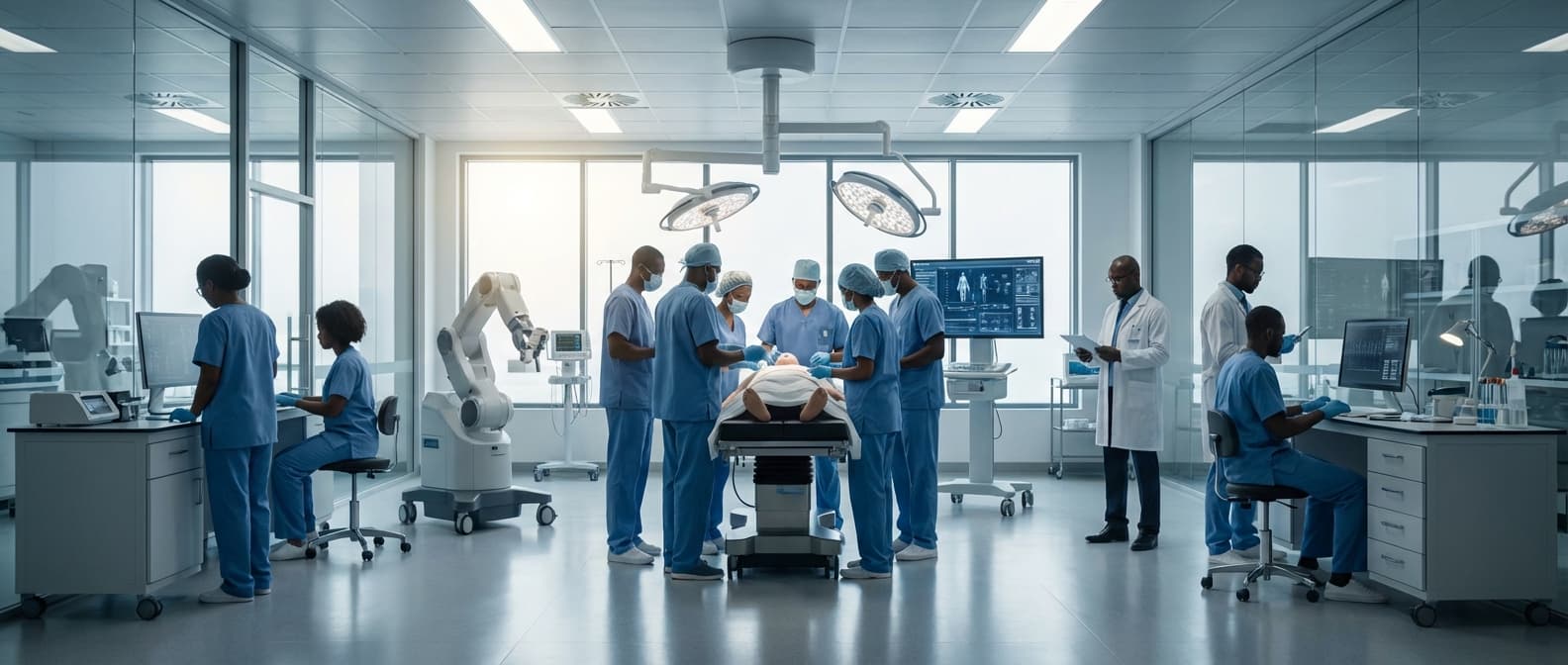
Biomedical Staffing Augmentation in Eswatini
Engineering Excellence & Technical Support
Onsite biomedical engineers and PACS administrators High-standard technical execution following OEM protocols and local regulatory frameworks.
Rapid Deployment of Specialist Clinicians
Leveraging our extensive network, we can quickly source and deploy specialized medical professionals (e.g., surgeons, anesthetists, critical care nurses) to address urgent staffing gaps in Eswatini's healthcare facilities, ensuring continuity of care and immediate patient support.
On-Demand Healthcare Workforce Solutions
Providing flexible and scalable augmentation of existing biomedical teams with skilled technicians, nurses, and allied health professionals. This allows Eswatini's Ministry of Health and private institutions to respond effectively to fluctuating patient loads and specific project needs.
Bridging Expertise Gaps with Remote & On-Site Support
Offering a dual approach to expertise augmentation: deploying highly skilled biomedical engineers and IT specialists on-site for critical equipment maintenance and training, while also providing remote support for complex diagnostics and troubleshooting, thereby enhancing operational efficiency and technical capacity.
What Is Biomedical Staffing Augmentation In Eswatini?
Biomedical Staffing Augmentation in Eswatini refers to the strategic provision of supplementary, qualified biomedical personnel to healthcare institutions. This service aims to address temporary or persistent gaps in the availability of skilled professionals, thereby enhancing the operational capacity and efficiency of biomedical departments. It involves the deployment of specialists in areas such as biomedical engineering, medical laboratory technology, radiology, and other allied health professions on a contractual or project basis. The objective is to ensure the continuous and effective functioning of medical equipment, diagnostic services, and patient care support systems, particularly in resource-constrained settings.
| Who Needs Biomedical Staffing Augmentation? | Typical Use Cases |
|---|---|
| Public and private hospitals experiencing a shortage of specialized biomedical engineers or technicians. | Managing planned or unplanned leave (e.g., maternity, sick leave) of essential biomedical personnel. |
| Healthcare facilities implementing new medical technologies or equipment requiring specialized operational knowledge. | Overcoming backlogs in equipment maintenance and repair, especially for critical life-support systems. |
| Clinics and laboratories needing to expand diagnostic capabilities or throughput. | Supporting specialized medical programs or initiatives (e.g., national vaccination campaigns, disease screening programs) that require additional technical support. |
| Government health ministries seeking to improve the technical capacity of the national healthcare infrastructure. | Assisting in the installation, commissioning, and validation of newly acquired medical devices. |
| Research institutions requiring temporary expertise for specific projects involving medical instrumentation. | Providing interim coverage during recruitment processes for permanent biomedical staff. |
| Rural or remote healthcare facilities with limited access to skilled biomedical professionals. | Ensuring continuous operation of essential medical equipment in emergency situations or during natural disasters. |
Key Aspects of Biomedical Staffing Augmentation
- Sourcing and vetting of qualified biomedical professionals with specialized skills.
- Temporary or long-term deployment of personnel to healthcare facilities.
- Onboarding and integration of augmented staff into existing workflows.
- Ensuring compliance with local regulations and healthcare standards.
- Providing expertise in areas such as equipment maintenance, calibration, and repair.
- Facilitating access to advanced diagnostic and therapeutic technologies.
- Supporting research and development initiatives requiring specialized biomedical input.
- Offering training and knowledge transfer to permanent staff.
Who Needs Biomedical Staffing Augmentation In Eswatini?
Biomedical staffing augmentation in Eswatini is crucial for healthcare facilities facing challenges in maintaining a consistent and adequately skilled workforce to support their medical equipment. This can be due to various factors, including high staff turnover, rapid technological advancements requiring specialized training, or unexpected surges in demand for services. Augmentation solutions provide flexible, on-demand access to qualified biomedical engineers, technicians, and support staff, ensuring that essential equipment remains operational and patient care is not compromised.
| Customer Type | Key Departments Benefiting | Specific Needs Addressed |
|---|---|---|
| Government Hospitals | Clinical Engineering Department, Biomedical Engineering Department, Operating Theatres, Intensive Care Units (ICUs), Radiology, Laboratory Services | Addressing staff shortages for routine maintenance, repairs, and calibration of a diverse range of medical equipment, especially in under-resourced facilities. Ensuring compliance with safety standards and regulations. |
| Private Hospitals | Biomedical Services Department, Imaging Departments, Surgical Departments, Critical Care Units | Supplementing existing teams during peak workloads, specialized equipment installations, or when specific technical expertise is required. Minimizing equipment downtime to maintain high patient service levels and revenue generation. |
| Clinics and Health Centers | General Maintenance, Basic Diagnostic Equipment Support | Providing essential support for the maintenance and repair of foundational medical equipment, often with limited in-house technical capacity. Ensuring the reliability of diagnostic tools for primary healthcare. |
| Specialty Medical Centers | Department-specific technical support (e.g., oncology equipment specialists, cardiology device technicians), Research & Development Support | Ensuring highly specialized and complex medical equipment used in niche areas is expertly maintained and calibrated. Supporting the integration and upkeep of cutting-edge technologies. |
| Diagnostic Laboratories | Laboratory Equipment Maintenance & Calibration | Maintaining the precision and reliability of analytical instruments, centrifuges, incubators, and other essential laboratory equipment, critical for accurate diagnoses. |
| Medical Equipment Manufacturers & Distributors | Field Service Engineering, Installation & Commissioning Teams, Technical Support | Providing on-demand field service engineers for installation, preventative maintenance, and emergency repairs of their equipment across Eswatini. Offering specialized technical training to local teams. |
| NGOs with Healthcare Programs | Equipment Maintenance and Support for Remote or Underserved Areas | Ensuring medical equipment deployed in community health programs and remote locations is functional and maintained, extending the reach of healthcare services. Overcoming logistical challenges for specialized repairs. |
Target Customers and Departments for Biomedical Staffing Augmentation in Eswatini
- Government Hospitals
- Private Hospitals
- Clinics and Health Centers
- Specialty Medical Centers (e.g., oncology, cardiology)
- Diagnostic Laboratories
- Medical Equipment Manufacturers & Distributors (for installation, maintenance, and repair services)
- Non-Governmental Organizations (NGOs) with healthcare programs
Biomedical Staffing Augmentation Process In Eswatini
The Biomedical Staffing Augmentation Process in Eswatini is designed to address critical gaps in healthcare expertise by bringing in specialized biomedical personnel to support existing healthcare facilities and initiatives. This process involves a structured workflow, ensuring that the right talent is identified, vetted, and deployed efficiently to meet the specific needs of the Ministry of Health and its partners.
| Stage | Description | Key Activities | Responsible Parties | Deliverables |
|---|---|---|---|---|
| Inquiry and Needs Assessment | The process begins with identifying a need for specialized biomedical staff, often driven by new projects, equipment procurement, or existing staff shortages. This stage focuses on clearly defining the requirements. | Identify staffing gaps, define roles and responsibilities, specify required qualifications and experience, determine duration of need, budget allocation. | Ministry of Health (MoH), Project Management Unit (PMU), Implementing Partners, Facility Managers. | Needs Assessment Report, Job Descriptions, Budget Approval. |
| Sourcing and Identification | Once the needs are defined, the search for suitable candidates commences. This involves leveraging various channels to identify potential biomedical professionals. | Develop recruitment strategy, advertise vacancies (local and international), network with professional bodies and academic institutions, review existing databases. | MoH Recruitment Unit, PMU, HR Department, Recruitment Agencies (if applicable). | Longlist of Potential Candidates, CVs/Resumes. |
| Vetting and Selection | This critical stage involves a thorough evaluation of candidates to ensure they possess the necessary skills, experience, and ethical standards. | Screen CVs, conduct interviews (technical and behavioral), verify credentials and references, administer practical assessments (if applicable), conduct background checks. | MoH Technical Review Committee, PMU, Subject Matter Experts (SMEs), HR Department. | Shortlist of Qualified Candidates, Interview Reports, Candidate Assessment Summaries. |
| Contracting and Onboarding | Upon selection, formal agreements are established, and the selected candidates are prepared for their roles. | Offer employment, negotiate contract terms, facilitate visa and work permit processes (if international), conduct pre-departure briefings, initiate onboarding procedures, administrative setup. | MoH HR Department, PMU, Legal Department, Finance Department, Selected Candidate. | Signed Employment Contracts, Visa/Work Permits, Onboarding Plan. |
| Deployment and Integration | The augmented staff are officially placed within the designated healthcare facilities or project sites and begin their work. | Travel arrangements, arrival and orientation at the facility, introduction to local team and stakeholders, integration into ongoing projects and workflows, provision of necessary equipment and resources. | PMU, Facility Management, Local Biomedical Staff, Augmented Staff. | Staff on site, Initial integration report. |
| Monitoring and Evaluation | Ongoing oversight ensures that the augmented staff are performing effectively and meeting project objectives. Feedback mechanisms are crucial. | Regular performance reviews, project progress tracking, collection of feedback from supervisors and colleagues, addressing any challenges or issues, impact assessment of augmented staff. | PMU, MoH Supervisors, Facility Managers, Implementing Partners. | Performance Reports, Progress Updates, Feedback Summaries, Mid-term Evaluation (if applicable). |
| Decommissioning and Exit | As the need for augmentation concludes or the contract ends, the process for staff departure is managed systematically. | Facilitate contract conclusion, finalize outstanding administrative and financial matters, conduct exit interviews, knowledge transfer, debriefing, repatriation (if applicable), post-assignment evaluation. | MoH HR Department, PMU, Finance Department, Augmented Staff. | Final Payment, Exit Interview Reports, Knowledge Transfer Documentation, Post-assignment Evaluation Report. |
Biomedical Staffing Augmentation Workflow in Eswatini
- Inquiry and Needs Assessment
- Sourcing and Identification
- Vetting and Selection
- Contracting and Onboarding
- Deployment and Integration
- Monitoring and Evaluation
- Decommissioning and Exit
Biomedical Staffing Augmentation Cost In Eswatini
Biomedical staffing augmentation in Eswatini involves engaging temporary or contract biomedical professionals to supplement existing hospital or clinic teams. This can be crucial for covering staff shortages, managing specialized projects, or responding to urgent needs. The cost of such augmentation is influenced by several key factors, leading to a range of pricing in the local currency, the Swazi Lilangeni (SZL).
| Professional Role (Examples) | Estimated Daily Rate (SZL) | Estimated Monthly Rate (SZL) | Notes |
|---|---|---|---|
| Biomedical Officer (General) | 1,000 - 2,500 | 20,000 - 50,000 | Covers routine maintenance, minor repairs, basic training. |
| Senior Biomedical Technician (Specialized Equipment) | 1,800 - 3,500 | 36,000 - 70,000 | Focus on complex diagnostic imaging, critical care equipment, or laboratory instruments. May include travel allowances. |
| Biomedical Engineering Manager/Consultant (Project-Based) | 2,500 - 5,000+ | 50,000 - 100,000+ | For strategic planning, large-scale equipment procurement, or facility development projects. Often on a consultancy fee basis. |
| Entry-Level Biomedical Assistant/Technician | 700 - 1,500 | 14,000 - 30,000 | Assists senior staff, handles basic tasks, administrative support related to biomedical services. |
Key Pricing Factors for Biomedical Staffing Augmentation in Eswatini
- {"title":"Professional Specialization and Skill Level","description":"Highly specialized roles (e.g., senior biomedical engineers, specialized technicians for advanced imaging equipment) command higher rates than general biomedical officers or entry-level technicians. Experience and proven track records also contribute to increased costs."}
- {"title":"Duration and Intensity of Engagement","description":"Short-term, high-intensity assignments or those requiring 24/7 availability will generally have higher hourly or daily rates compared to longer-term, less demanding placements. Volume discounts might apply for extended contracts."}
- {"title":"Geographic Location within Eswatini","description":"Staffing costs can vary slightly between urban centers like Mbabane and Manzini, where demand and cost of living might be higher, versus more remote or rural areas. However, for specialized biomedical roles, the impact of location is often less pronounced than for general labor."}
- {"title":"Agency Fees and Overhead","description":"When engaging through a staffing agency, their operational costs, recruitment expenses, and profit margins are factored into the final price. Agencies often handle payroll, benefits, and compliance, justifying their fees."}
- {"title":"Demand and Availability","description":"Periods of high demand for specific biomedical skills or a general shortage of qualified professionals in Eswatini can drive up rates. Conversely, a larger pool of available talent for a particular specialization may lead to more competitive pricing."}
- {"title":"Qualifications and Certifications","description":"Professionals holding advanced degrees, specialized certifications, or licenses relevant to their field will typically command higher compensation."}
- {"title":"Scope of Work and Responsibilities","description":"The complexity and responsibility of the tasks assigned to the augmented staff will influence their pay. This includes duties related to equipment maintenance, calibration, repair, training, and inventory management."}
Affordable Biomedical Staffing Augmentation Options
Hospitals and healthcare facilities often face challenges in maintaining adequate staffing levels for their biomedical departments. This can be due to budget constraints, unexpected staff departures, increased patient loads, or the need for specialized expertise. Affordable biomedical staffing augmentation offers a flexible and cost-effective solution to bridge these gaps without compromising the quality of care or equipment maintenance. Value bundles and strategic cost-saving measures are key to maximizing the benefits of such services.
| Value Bundle Type | Description | Key Cost-Saving Features | Ideal For |
|---|---|---|---|
| On-Demand Technical Support Bundle | Provides access to certified biomedical technicians for immediate troubleshooting, repair, and preventive maintenance needs on an as-needed basis. | Pay-per-use model, reduced overhead for full-time staff, faster response times preventing downtime. | Facilities with fluctuating workload, those needing specialized repair skills intermittently, or to cover short-term absences. |
| Project-Based Staffing Bundle | Supplies experienced biomedical engineers or technicians for specific projects, such as new equipment installations, upgrades, or system integrations. | Avoids long-term commitment, access to specialized expertise for project duration, fixed project costs. | Hospitals undertaking large capital expenditures, implementing new medical technologies, or conducting compliance audits. |
| Preventive Maintenance & Calibration Bundle | Ensures regular scheduled maintenance and calibration of medical equipment to enhance longevity and reduce unexpected failures, often bundled with reporting. | Reduced frequency of costly emergency repairs, extended equipment lifespan, compliance assurance, predictable budgeting. | Organizations prioritizing proactive equipment care, seeking to minimize unplanned downtime, and meeting regulatory requirements. |
| Training & Knowledge Transfer Bundle | Augments existing staff with trainers or subject matter experts to impart new skills, familiarize teams with new technologies, or improve troubleshooting capabilities. | Upgrades internal skill sets, reduces reliance on external support for common issues, empowers existing staff. | Facilities looking to upskill their internal biomedical teams, adapt to new equipment, or improve overall departmental efficiency. |
| Flexible Staffing Tier (Hybrid Model) | Offers a combination of a baseline of retained services (e.g., limited on-call support) with additional on-demand hours or project capacity, scaled to organizational needs. | Balances predictable costs with flexibility, optimized resource allocation, avoids overstaffing during low periods. | Mid-sized to large facilities needing a consistent but adaptable staffing solution. |
Affordable Biomedical Staffing Augmentation: Value Bundles & Cost-Saving Strategies
- Value Bundles: These are pre-packaged service offerings that combine multiple benefits at a discounted rate. They are designed to provide comprehensive support for common staffing needs.
- Cost-Saving Strategies: These are tactical approaches to reduce expenditure while still achieving staffing goals. They focus on efficiency, flexibility, and smart resource allocation.
Verified Providers In Eswatini
Finding trustworthy healthcare providers is paramount, especially when seeking specialized care or navigating a new healthcare system. In Eswatini, identifying verified providers ensures you receive quality medical attention from qualified professionals. This document outlines the significance of verified providers and highlights why Franance Health credentials stand out as the best choice.
| Credential Type | Significance | Franance Health's Commitment |
|---|---|---|
| Medical Licenses | Mandatory for all practicing physicians and healthcare professionals, ensuring they have met the minimum educational and competency requirements set by the Eswatini Ministry of Health. | Franance Health rigorously checks and verifies all medical licenses of its affiliated practitioners, ensuring they are current and valid. |
| Specialty Board Certifications | Indicates advanced training and expertise in a specific medical field, often requiring rigorous examinations and peer review. This is crucial for specialized treatments. | Franance Health prioritizes and showcases providers with recognized board certifications, ensuring patients have access to highly specialized care. |
| Professional Memberships | Membership in reputable professional organizations demonstrates a commitment to ongoing learning, ethical practice, and staying updated with the latest advancements in their field. | Franance Health encourages and verifies active participation in relevant professional bodies, reflecting a dedication to excellence and continuous professional development. |
| Continuing Medical Education (CME) | Ensures healthcare professionals remain current with evolving medical knowledge, techniques, and best practices. It's a commitment to lifelong learning. | Franance Health mandates and tracks CME participation for its providers, ensuring they are at the forefront of medical innovation and patient care. |
| Peer Review and Reputation | Positive feedback and recommendations from peers and previous patients are strong indicators of a provider's skill, bedside manner, and overall quality of care. | Franance Health incorporates a robust system for gathering and evaluating peer reviews and patient feedback, ensuring a high standard of service delivery. |
| Accreditation (where applicable) | For facilities and specific programs, accreditation by national or international bodies signifies adherence to stringent quality and safety standards. | Franance Health partners with and promotes facilities and services that have achieved recognized accreditations, underscoring a commitment to quality infrastructure. |
Why Verified Providers Matter in Eswatini
- Quality Assurance: Verification processes typically involve scrutinizing educational background, professional licenses, and adherence to ethical standards, guaranteeing a baseline of competency.
- Patient Safety: Verified providers have demonstrated a commitment to patient well-being and follow established medical protocols, reducing the risk of errors or substandard care.
- Trust and Confidence: Knowing your healthcare provider has been vetted offers peace of mind and builds confidence in the treatment plan and overall healthcare experience.
- Access to Specialized Care: Verification can help identify specialists who possess the necessary expertise and qualifications for complex medical needs.
- Regulatory Compliance: Verified providers operate within the legal and regulatory framework of Eswatini's healthcare sector, ensuring accountability.
Scope Of Work For Biomedical Staffing Augmentation
This Scope of Work (SOW) outlines the requirements for providing temporary biomedical staffing augmentation services to [Client Organization Name]. The objective is to enhance the client's internal capabilities by engaging qualified and experienced biomedical professionals for specific projects and operational needs. This SOW details the technical deliverables, standard specifications, and reporting requirements to ensure successful project execution and adherence to industry best practices.
| Category | Description | Standard Specifications/Deliverables | Key Performance Indicators (KPIs) | ||||
|---|---|---|---|---|---|---|---|
| Biomedical Personnel Augmentation | Provision of temporary, qualified biomedical technicians, engineers, or specialists as per defined roles and responsibilities. | CVs of proposed candidates, background checks, onboarding documentation, adherence to client's HR policies. | Timeliness of candidate submission (e.g., within 5 business days of request). | Candidate qualification match rate (e.g., >90% of required skills met). | Successful onboarding and integration into team (measured by supervisor feedback). | ||
| Technical Support & Maintenance | Performing routine preventive maintenance (PM), corrective maintenance (CM), and calibration of medical devices. | Completion of all PMs and CMs within defined SLAs (Service Level Agreements). | Accurate and timely documentation of all service activities in the client's CMMS (Computerized Maintenance Management System). | Adherence to manufacturer specifications and industry standards (e.g., AAMI, ISO). | Device uptime percentage for serviced equipment (e.g., >95%). | PM completion rate (e.g., >98% of scheduled PMs completed on time). | CM response time (e.g., critical equipment within 2 hours, non-critical within 24 hours). |
| Medical Equipment Project Support | Assisting with installation, configuration, testing, and commissioning of new medical equipment or upgrades. | Detailed project plans, testing protocols, and final acceptance reports. | Successful integration and operational readiness of new equipment. | Compliance with project timelines and budget. | Project completion within agreed timelines. | Successful completion of all required testing and validation. | Zero critical defects identified post-commissioning. |
| Inventory Management & Asset Tracking | Assisting in the verification, tagging, and documentation of medical equipment inventory. | Updated equipment inventory database with accurate asset information. | Compliance with hospital asset management policies. | Inventory accuracy rate (e.g., >99%). | Timeliness of inventory updates. | ||
| Training & Knowledge Transfer | Providing on-the-job training to client's biomedical staff on new technologies or specific procedures. | Training materials, documented training sessions, and competency assessments (if applicable). | Improved skills and understanding within the client's biomedical team. | Positive feedback from trainees. | Completion of training modules as scheduled. | ||
| Reporting & Documentation | Regular progress reports, incident reports, and final project summaries. | Clear, concise, and accurate reporting as per agreed frequency (e.g., weekly, monthly). | Adherence to client's reporting formats and timelines. | Quality of reports (clarity, completeness, accuracy). | Timeliness of report submission. |
Key Objectives
- To provide skilled biomedical personnel to support [Client Organization Name]'s operational demands.
- To augment existing biomedical teams with specialized expertise for defined projects.
- To ensure seamless integration of augmented staff into existing workflows and protocols.
- To maintain high standards of patient safety and equipment reliability.
- To facilitate knowledge transfer and skill development within the client's biomedical department.
Service Level Agreement For Biomedical Staffing Augmentation
This Service Level Agreement (SLA) outlines the guaranteed response times and uptime for biomedical staffing augmentation services provided by [Your Company Name] to [Client Company Name]. This SLA is an integral part of the Master Service Agreement (MSA) between the parties.
| Service Metric | Guaranteed Level | Measurement | Remedy for Failure |
|---|---|---|---|
| Initial Candidate Response Time (On-Demand) | Within 4 business hours of receiving a staffing request. | Timestamp of request receipt vs. timestamp of first candidate profile submission or notification of unavailability. | For each instance exceeding 4 business hours, a 5% discount on the hourly rate for the first 8 hours of the resulting engagement will be applied. |
| On-Site Staffing Availability (Scheduled) | 99.5% uptime for scheduled shifts. | Percentage of scheduled hours where a qualified replacement is available and deployed. | For each hour of unplanned absence not covered by a replacement, a credit equivalent to 1.5 times the hourly rate for that hour will be issued. |
| Technical Issue Escalation Response | Within 1 business hour. | Timestamp of escalation notification vs. timestamp of acknowledgement from [Your Company Name]'s support team. | For each instance exceeding 1 business hour, a 10% discount on the hourly rate for the next billed period will be applied. |
| Resolution of Staffing Gaps | A qualified replacement will be identified and assigned within 24 business hours for identified critical staffing gaps. | Time from notification of a critical gap to the confirmation of a replacement being assigned. | If a replacement is not assigned within 24 business hours, a daily credit of 50% of the agreed-upon daily rate will be applied until a replacement is confirmed. |
Scope of Service
- Temporary placement of qualified biomedical professionals (e.g., biomedical engineers, technicians, specialists) to supplement the client's existing staff.
- Services are provided on a scheduled or on-demand basis, as defined in individual SOWs (Statements of Work) or purchase orders.
- Focus is on ensuring adequate staffing levels to meet operational demands and maintain critical biomedical equipment functionality.
Frequently Asked Questions

Ready when you are
Let's scope your Biomedical Staffing Augmentation in Eswatini project in Eswatini.

Scaling healthcare logistics and technical systems across the entire continent.