
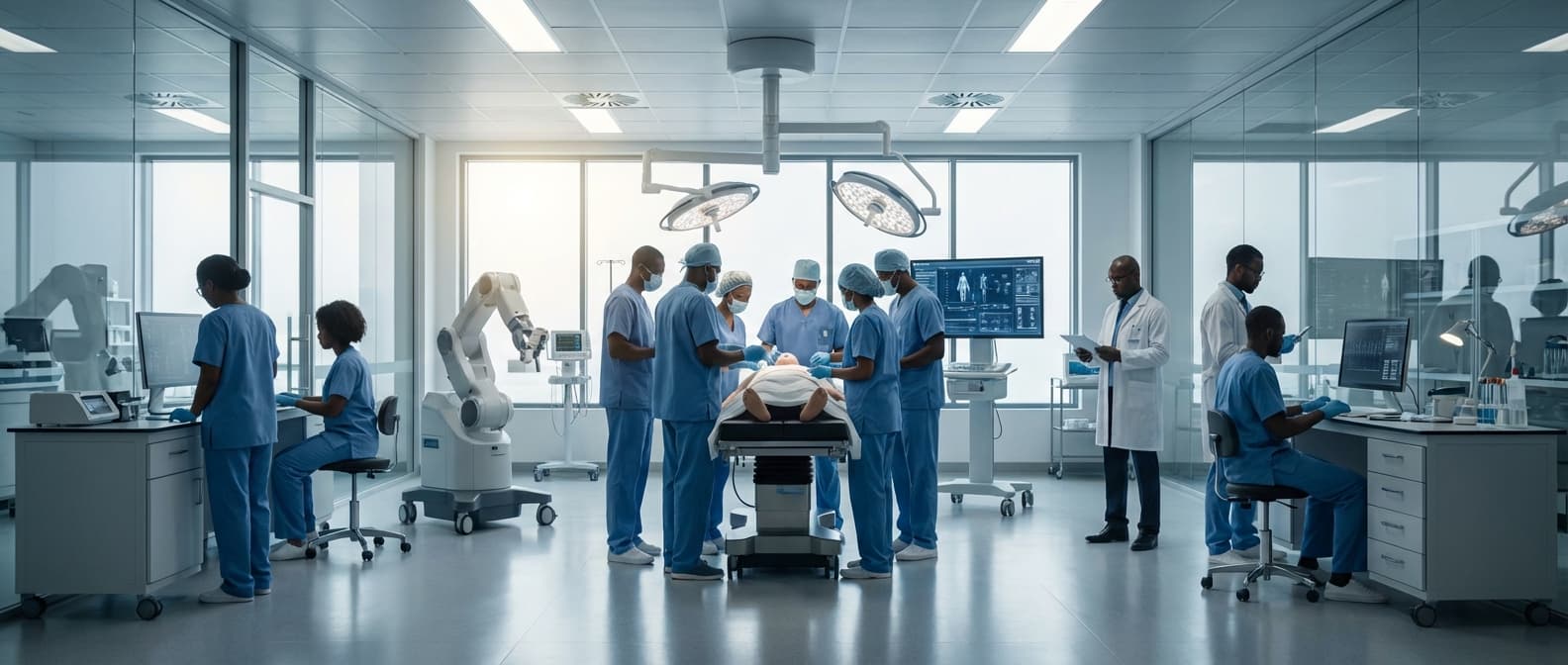
Biomedical Engineering Consulting in Eswatini
Engineering Excellence & Technical Support
Equipment selection, procurement and implementation consulting High-standard technical execution following OEM protocols and local regulatory frameworks.
Advanced Medical Device Integration & Validation
We specialize in the seamless integration and rigorous validation of advanced medical devices within Eswatini's healthcare infrastructure, ensuring compliance with local regulations and international standards for improved patient care and operational efficiency.
Biocompatibility & Materials Science Expertise
Leveraging deep expertise in biocompatibility and materials science, we provide consulting on the selection and application of appropriate materials for medical devices, implants, and tissue engineering solutions, crucial for patient safety and product longevity in Eswatini.
Healthcare Technology & Digital Health Solutions
Our team designs and implements cutting-edge healthcare technology and digital health solutions, including telemedicine platforms and data analytics strategies, to enhance accessibility, efficiency, and data-driven decision-making within Eswatini's healthcare system.
What Is Biomedical Engineering Consulting In Eswatini?
Biomedical Engineering Consulting in Eswatini refers to the provision of specialized technical expertise and strategic guidance related to medical devices, healthcare technologies, and clinical engineering within the Kingdom of Eswatini. This service is crucial for ensuring the optimal selection, procurement, implementation, maintenance, and effective utilization of medical equipment and infrastructure to improve healthcare delivery and patient outcomes.
| Who Needs Biomedical Engineering Consulting? | Typical Use Cases |
|---|---|
| Public Healthcare Institutions (Ministry of Health, Hospitals, Clinics): Need support in standardizing equipment, optimizing maintenance, and ensuring compliance across a network of facilities. | Developing a national medical equipment maintenance strategy, conducting needs assessments for primary healthcare centers, establishing procurement frameworks for essential medical devices. |
| Private Healthcare Providers (Hospitals, Specialty Clinics, Diagnostic Centers): Require assistance in selecting advanced technologies, managing capital expenditures, and ensuring return on investment for medical equipment. | Selecting and implementing advanced diagnostic imaging equipment, developing a robust service contract management system, advising on the adoption of telemedicine solutions. |
| Medical Device Manufacturers and Distributors: Need guidance on navigating Eswatini's regulatory landscape, understanding local market needs, and establishing effective distribution and service networks. | Assisting with medical device registration and approval processes, conducting market feasibility studies, developing post-market surveillance plans. |
| Non-Governmental Organizations (NGOs) and International Aid Organizations: Require support in ensuring that donated or procured medical equipment is appropriate for the local context, sustainable, and effectively utilized. | Overseeing the installation and commissioning of donated medical equipment, developing training programs for local technicians on specific device types, conducting impact assessments of technology interventions. |
| Healthcare Project Developers and Investors: Need expertise in the technical aspects of healthcare infrastructure development, including equipment planning and budgeting. | Providing technical due diligence for proposed healthcare projects, developing equipment master plans for new hospital developments, estimating life-cycle costs of medical equipment. |
Key Aspects of Biomedical Engineering Consulting in Eswatini:
- Technical Assessment and Planning: Evaluating existing medical infrastructure, identifying technology gaps, and developing strategic plans for equipment acquisition and upgrades.
- Procurement Support: Assisting healthcare facilities in defining technical specifications, evaluating vendor proposals, and negotiating contracts for medical devices and equipment, ensuring compliance with local regulations and international standards.
- Installation and Commissioning Oversight: Supervising the installation and operational verification of new medical equipment to ensure it meets manufacturer specifications and safety requirements.
- Maintenance and Repair Strategy Development: Establishing proactive and reactive maintenance programs to maximize equipment uptime and longevity, including developing in-house technical capacity or managing third-party service providers.
- Regulatory Compliance and Standards Adherence: Advising on and ensuring compliance with Eswatini's healthcare regulations, medical device standards, and relevant international quality and safety guidelines.
- Training and Capacity Building: Developing and delivering training programs for healthcare professionals and technical staff on the operation, basic maintenance, and safe use of medical equipment.
- Technology Integration and Workflow Optimization: Advising on the integration of new technologies into existing clinical workflows to enhance efficiency and patient care.
- Risk Management and Safety Audits: Conducting assessments to identify and mitigate risks associated with medical equipment, including patient safety, cybersecurity, and environmental impact.
- Asset Management and Lifecycle Planning: Developing comprehensive strategies for managing the entire lifecycle of medical equipment, from acquisition to disposal.
- Healthcare Facility Design and Planning: Providing input on the design of new or renovated healthcare facilities to ensure optimal placement and integration of medical equipment and utilities.
Who Needs Biomedical Engineering Consulting In Eswatini?
Biomedical Engineering (BME) consulting plays a vital role in enhancing healthcare infrastructure and services in Eswatini. This expertise is crucial for ensuring the effective, safe, and sustainable use of medical technologies. The demand for BME consulting is driven by the need to navigate complex equipment lifecycles, comply with evolving regulations, and optimize healthcare delivery. Several key stakeholders and departments within Eswatini's healthcare sector stand to benefit significantly from specialized BME consulting services.
| Target Customer/Department | Specific Needs & Benefits of BME Consulting |
|---|---|
| Hospitals (Government, Mission, Private) | Equipment procurement planning and evaluation, installation and commissioning, preventive maintenance program development, calibration services, equipment lifecycle management, technology assessment, asset management, staff training on safe equipment use, infection control related to medical devices, and troubleshooting of complex medical equipment. |
| Ministry of Health | Development and implementation of national medical device policies and strategies, regulatory framework development, health technology assessment (HTA) for national adoption, national medical equipment inventory and needs assessment, procurement guidelines, capacity building for the biomedical engineering workforce, and disaster preparedness planning for medical equipment. |
| District Health Management Teams | Needs assessment for district-level facilities, optimizing the use of existing medical equipment, training for local biomedical technicians, ensuring availability of spare parts and consumables, and establishing local maintenance and repair capabilities. |
| Medical Device Manufacturers & Distributors | Regulatory compliance support for importing and distributing devices, market access strategies, post-market surveillance assistance, technical support for their products, and training for their local technical staff. |
| Healthcare Training Institutions | Curriculum development for biomedical engineering and technology programs, provision of training equipment, faculty development, and ensuring alignment with industry standards. |
| Non-Governmental Organizations (NGOs) focused on Health | Needs assessment for equipment in supported health facilities, procurement advice, ensuring donated equipment is appropriate and functional, training for staff on equipment use and basic maintenance, and establishing sustainable maintenance plans. |
| Research Institutions | Selection and acquisition of specialized research equipment, validation of research instruments, and technical support for experimental setups involving medical devices. |
| Private Clinics & Diagnostic Centers | Equipment selection and procurement, compliance with health facility regulations, calibration and maintenance of diagnostic equipment, and staff training on operating specialized diagnostic tools. |
Target Customers & Departments for Biomedical Engineering Consulting in Eswatini
- Hospitals (Government, Mission, Private)
- Ministry of Health
- District Health Management Teams
- Medical Device Manufacturers & Distributors (Local & International)
- Healthcare Training Institutions
- Non-Governmental Organizations (NGOs) focused on Health
- Research Institutions
- Private Clinics & Diagnostic Centers
Biomedical Engineering Consulting Process In Eswatini
The process of engaging biomedical engineering consulting services in Eswatini follows a structured workflow designed to ensure efficient project delivery and client satisfaction. This workflow typically begins with an initial inquiry and culminates in the execution and finalization of the project. Each stage is critical for understanding client needs, defining project scope, developing solutions, and implementing them effectively within the Eswatini healthcare landscape.
| Stage | Description | Key Activities | Deliverables/Outcomes |
|---|---|---|---|
| The client expresses interest in biomedical engineering consulting services. | Initial discussion of client's needs, challenges, and objectives; understanding the context of healthcare facilities in Eswatini. | Confirmation of potential engagement, preliminary understanding of project requirements. |
| A detailed understanding of the client's specific requirements and the existing healthcare infrastructure. | Site visits to healthcare facilities; interviews with stakeholders (medical staff, administrators, technicians); review of existing equipment inventories and maintenance records; identification of gaps and areas for improvement. | Detailed needs assessment report; defined project scope and objectives; identification of key stakeholders. |
| The consulting firm develops a comprehensive proposal outlining the proposed solution and services. | Developing technical solutions; defining project methodology and timelines; estimating resource requirements (personnel, equipment, budget); outlining deliverables and success metrics. | Formal project proposal document including scope of work, methodology, timeline, budget, and team profiles. |
| Formalizing the engagement with a legally binding contract. | Review and negotiation of proposal terms, conditions, payment schedules, and intellectual property rights; signing of the consulting agreement. | Signed contract, clearly defining roles, responsibilities, and project terms. |
| Detailed planning and conceptualization of the proposed solutions. | Developing detailed technical designs and specifications for equipment, infrastructure, or systems; creating implementation plans; risk assessment and mitigation strategies; obtaining necessary local approvals or permits. | Detailed design documents, implementation blueprints, project management plans, risk registers. |
| Assisting the client in acquiring and setting up the necessary biomedical equipment and infrastructure. | Developing procurement specifications; vendor evaluation and selection; overseeing equipment delivery and customs clearance; supervising installation and initial setup by vendors. | Procurement documentation, installation supervision reports, initial setup verification. |
| Equipping local staff with the knowledge and skills to operate and maintain the new systems or equipment. | Developing training materials; conducting hands-on training sessions for medical personnel, technicians, and maintenance staff; knowledge transfer initiatives. | Training manuals, training attendance records, competency assessments. |
| Ensuring that all installed systems and equipment function correctly and meet required standards. | Performing functional testing, performance verification, safety checks, and calibration; commissioning of systems to ensure they are ready for clinical use; generating validation reports. | Test reports, validation certificates, commissioning documentation, final operational sign-off. |
| Formal completion of the project and an evaluation of its success and impact. | Final project reporting; handover of all documentation; conducting a post-implementation review to assess project outcomes against objectives; gathering client feedback; providing recommendations for future improvements. | Final project report, project handover documents, post-implementation review report, client satisfaction survey. |
Biomedical Engineering Consulting Workflow in Eswatini
- Inquiry and Initial Consultation
- Needs Assessment and Scoping
- Proposal Development
- Contract Negotiation and Agreement
- Project Planning and Design
- Procurement and Installation Support
- Training and Capacity Building
- Testing, Validation, and Commissioning
- Project Closure and Post-Implementation Review
Biomedical Engineering Consulting Cost In Eswatini
Biomedical engineering consulting in Eswatini can vary significantly in cost due to several factors. These include the complexity of the project, the experience and reputation of the consultant, the duration of the engagement, and the specific services required. Demand for specialized biomedical engineering expertise within Eswatini, as well as the overhead costs for local consulting firms, also play a role. For instance, a simple equipment assessment might be considerably less expensive than a full hospital infrastructure design or a regulatory compliance strategy. Consultants often offer project-based pricing or hourly rates. Hourly rates can range from E150 to E500 per hour, while project-based fees are negotiated based on the scope and anticipated workload. Travel and accommodation expenses, if the consultant is based outside the immediate project area, will also be added to the total cost.
| Service Type (Example) | Estimated Cost Range (Eswatini Lilangeni - E) | Notes |
|---|---|---|
| Equipment Assessment & Recommendations | E5,000 - E15,000 | Basic assessment of existing medical equipment, identification of needs. |
| Medical Equipment Procurement Advisory | E7,500 - E20,000 | Assistance in selecting, sourcing, and negotiating purchase of medical devices. |
| Basic Biomedical Training (e.g., for technicians) | E10,000 - E25,000 | On-site or remote training for specific equipment or processes. Cost per session/day. |
| Hospital Infrastructure Planning (Phase 1 - Needs Assessment) | E15,000 - E40,000 | Feasibility studies, initial space planning, and needs analysis for medical facilities. |
| Regulatory Compliance Consultation (e.g., for medical devices) | E12,000 - E35,000 | Guidance on local and international medical device regulations and submission processes. |
| Full Project Management (e.g., equipment installation) | E25,000 - E70,000+ | Comprehensive management of a project from planning to completion. Often a percentage of project value or daily rate. |
| Specialized Design & Engineering Services (e.g., O.R. setup) | E30,000 - E100,000+ | Complex design work, system integration, and detailed engineering plans. |
Key Factors Influencing Biomedical Engineering Consulting Costs in Eswatini
- Project Complexity and Scope: The more intricate and extensive the project, the higher the cost.
- Consultant Experience and Expertise: Highly experienced and specialized consultants command higher fees.
- Duration of Engagement: Longer projects generally incur higher total costs.
- Specific Services Required: Services like regulatory affairs, training, or system design will have different pricing structures.
- Consultant's Overhead and Operational Costs: Local operational expenses impact pricing.
- Demand for Specialized Services: Higher demand can lead to increased rates.
- Travel and Accommodation: Expenses for out-of-town consultants are additional.
Affordable Biomedical Engineering Consulting Options
Biomedical engineering consulting can be crucial for companies developing medical devices and technologies. However, the cost can be a significant barrier, especially for startups and smaller businesses. Fortunately, there are several affordable options and strategies to access expert biomedical engineering knowledge without breaking the bank. This guide outlines how to leverage value bundles and implement cost-saving measures to get the most out of consulting services.
| Cost-Saving Strategy | Description | Implementation Example |
|---|---|---|
| Phased Engagement | Break down larger projects into smaller, manageable phases. This allows for staggered payments and reassessment of needs after each phase. | Instead of hiring a consultant for the entire product development lifecycle, engage them for an initial feasibility study, then for design validation, and finally for pre-submission preparation. |
| Retainer Agreements | Establish an ongoing relationship with a consultant for a fixed monthly fee. This provides access to expertise on demand and often comes with a reduced hourly rate. | A startup with an evolving product might pay a monthly retainer for 10 hours of consulting, ensuring prompt answers to design or regulatory questions. |
| Leveraging Junior Consultants or Specialists | Depending on the complexity, a team of junior consultants or specialized individuals might be more cost-effective than a senior generalist. | For a specific software validation task, a dedicated software engineer consultant might be more affordable than a broad-spectrum biomedical engineer. |
| Remote Consulting | Utilize video conferencing and cloud-based collaboration tools to reduce the need for on-site visits and associated travel expenses. | Conducting design review meetings and technical discussions entirely online. |
| Partnerships and Collaborations | Explore partnerships with universities, research institutions, or other companies that may offer shared consulting resources or access to specialized equipment. | A medical device company might collaborate with a university research lab for early-stage R&D testing, sharing the consultant costs. |
| Focus on Essential Services | Prioritize consulting needs that are critical for regulatory compliance or market entry, and consider handling less critical tasks in-house if feasible. | Focus on ISO 13485 compliance consulting and outsource less critical marketing material development. |
| Negotiate Scope and Deliverables | Clearly define the scope of work, specific deliverables, and timelines upfront to avoid scope creep and unexpected costs. | Before engaging, agree on exactly what documents will be produced, what reviews will be conducted, and the number of revision cycles included. |
Understanding Value Bundles in Biomedical Engineering Consulting
- Definition: Value bundles are pre-packaged sets of consulting services offered at a discounted rate compared to purchasing each service individually. They are designed to address common project phases or specific needs within the biomedical engineering landscape.
- Common Bundle Components: These can include services like initial feasibility studies, regulatory pathway assessment, prototype design review, risk management planning, testing strategy development, and documentation support.
- Benefits: Bundles offer predictability in cost, streamline project planning, and ensure comprehensive coverage of critical areas, leading to greater efficiency and reduced risk.
- Tailoring Bundles: Many consultants are willing to customize bundles to fit a client's specific project stage and unique requirements. This allows for flexibility and ensures you're paying only for what you need.
- Types of Bundles: Look for bundles focused on specific stages (e.g., 'Concept to Prototype,' 'Design Controls Initiation') or functional areas (e.g., 'Regulatory Compliance Package,' 'Usability Engineering Bundle').
Verified Providers In Eswatini
In Eswatini's evolving healthcare landscape, identifying verified providers is crucial for ensuring quality and trustworthy medical services. Franance Health stands out as a leading organization, distinguished by its rigorous credentialing processes and unwavering commitment to patient well-being. This dedication translates into a network of healthcare professionals and facilities that not only meet but exceed national and international standards. Choosing Franance Health-certified providers means opting for competence, ethical practice, and a patient-centered approach, making them the superior choice for your health needs in Eswatini.
| Credentialing Aspect | Franance Health Standard | Benefit to Patients |
|---|---|---|
| Professional Licensing | Verified with the Eswatini Ministry of Health and relevant professional bodies. | Ensures providers are legally qualified and authorized to practice. |
| Educational Background | Thorough review of degrees, diplomas, and certifications from accredited institutions. | Confirms foundational medical knowledge and training. |
| Clinical Experience | Assessment of years of practical experience in relevant medical fields. | Guarantees hands-on expertise and practical application of skills. |
| Ethical Conduct | Background checks and adherence to a strict code of medical ethics. | Protects patients from malpractice and unethical practices. |
| Facility Standards (if applicable) | Evaluation of infrastructure, equipment, hygiene, and safety protocols. | Ensures a safe and well-equipped environment for treatment. |
| Continuing Medical Education (CME) | Mandatory participation in approved CME programs. | Keeps providers informed about the latest medical innovations and treatments. |
Why Franance Health Credentials Represent the Best Choice:
- Rigorous Vetting and Verification: Franance Health employs a multi-faceted vetting process that scrutinizes academic qualifications, professional licenses, practical experience, and adherence to ethical guidelines of all its affiliated providers.
- Commitment to Continuous Professional Development: Certified providers are often required to engage in ongoing training and education, ensuring they remain up-to-date with the latest medical advancements, technologies, and best practices.
- Adherence to Stringent Quality Standards: Franance Health establishes and enforces high-quality benchmarks for patient care, facility management, and operational efficiency, ensuring a consistently excellent patient experience.
- Enhanced Patient Safety and Trust: The verification process directly contributes to patient safety by minimizing risks associated with unqualified or unethical practitioners. This builds trust and confidence in the healthcare services received.
- Access to Specialized Expertise: Franance Health's network often includes highly specialized practitioners, providing access to a wider range of medical expertise and treatment options.
- Patient-Centric Care Philosophy: Providers associated with Franance Health are expected to uphold a patient-centric approach, prioritizing individual needs, clear communication, and respectful treatment.
- Facilitated Access to Quality Healthcare: By streamlining the identification of reliable providers, Franance Health makes it easier for individuals and families to access the high-quality healthcare they deserve in Eswatini.
Scope Of Work For Biomedical Engineering Consulting
This document outlines the Scope of Work (SOW) for Biomedical Engineering Consulting services. It details the objectives, tasks, responsibilities, and technical deliverables expected from the consulting engagement. The focus is on providing expert guidance and practical solutions within the biomedical engineering domain, adhering to industry best practices and relevant standard specifications.
| Standard/Regulation | Description | Applicability/Focus Area | Key Requirements/Considerations |
|---|---|---|---|
| ISO 13485:2016 | Medical devices – Quality management systems – Requirements for regulatory purposes | Quality Management Systems (QMS) for medical device manufacturers | Process control, risk management, design controls, supplier management, documentation control. |
| ISO 14971:2019 | Medical devices – Application of risk management to medical devices | Risk management throughout the lifecycle of a medical device | Hazard identification, risk estimation, risk evaluation, risk control, and monitoring of residual risk. |
| IEC 60601 Series | Medical electrical equipment | Electrical safety, essential performance, and electromagnetic compatibility (EMC) of medical electrical equipment | General requirements, specific requirements for different classes of equipment, testing procedures. |
| IEC 62304:2006+A1:2015 | Medical device software – Software life cycle processes | Software development and maintenance for medical devices | Software development planning, risk management for software, verification and validation of software. |
| IEC 62366-1:2015 | Medical devices – Part 1: Application of usability engineering to medical devices | Ensuring the safe and effective use of medical devices through usability engineering | Usability engineering process, user interface design, validation of usability. |
| FDA 21 CFR Part 820 | Quality System Regulation | Quality system requirements for manufacturers of medical devices in the United States | Design controls, production and process controls, corrective and preventive actions (CAPA). |
| FDA 21 CFR Part 11 | Electronic Records; Electronic Signatures | Requirements for electronic records and electronic signatures used in regulated industries | Validation of electronic systems, audit trails, security. |
| MDR (EU) 2017/745 | Regulation (EU) 2017/745 on medical devices | Regulatory framework for medical devices in the European Union | Conformity assessment, post-market surveillance, UDI system. |
Key Technical Deliverables and Standard Specifications
- Design and development documentation (e.g., schematics, CAD models, bills of materials).
- Prototype fabrication and testing reports.
- Verification and validation (V&V) protocols and reports.
- Risk management documentation (e.g., FMEA, hazard analysis).
- Usability engineering studies and reports.
- Regulatory submission documentation (e.g., pre-submission packages, technical files).
- Manufacturing process documentation (e.g., SOPs, work instructions).
- Intellectual Property (IP) assessments and reports.
- Feasibility studies and market analysis reports.
- Technical training materials and sessions.
Service Level Agreement For Biomedical Engineering Consulting
This Service Level Agreement (SLA) outlines the response times and uptime guarantees for Biomedical Engineering Consulting services provided by [Your Company Name] to [Client Name]. This agreement is designed to ensure timely support and consistent service availability for critical biomedical engineering needs.
| Service Priority | Response Time Target (during Service Hours) | Uptime Guarantee (Monthly) |
|---|---|---|
Key Definitions
- {"title":"Service Hours","description":"The hours during which support and consulting services are available. For this SLA, Service Hours are defined as Monday to Friday, 9:00 AM to 5:00 PM [Client's Time Zone], excluding national holidays."}
- {"title":"Uptime","description":"The percentage of time the agreed-upon consulting services are accessible and functional for the client. Uptime is calculated on a monthly basis."}
- {"title":"Response Time","description":"The maximum time taken by [Your Company Name] to acknowledge a client's request or report of an issue and initiate investigation or action."}
- {"title":"Resolution Time","description":"The time taken to fully resolve a reported issue or complete a requested service. This is dependent on the complexity of the issue/request and may be a target rather than a guarantee for all cases."}
- {"title":"Critical Issue","description":"A problem that significantly impacts patient safety, regulatory compliance, or core operational functions of the client's biomedical equipment or systems."}
- {"title":"High-Priority Issue","description":"A problem that causes significant disruption to non-critical operations or leads to a noticeable degradation of service."}
- {"title":"Medium-Priority Issue","description":"A problem that causes minor disruption to operations or affects a limited number of users/equipment."}
- {"title":"Low-Priority Issue","description":"A general inquiry, feature request, or a minor issue with minimal impact on operations."}
Frequently Asked Questions

Ready when you are
Let's scope your Biomedical Engineering Consulting in Eswatini project in Eswatini.

Scaling healthcare logistics and technical systems across the entire continent.