
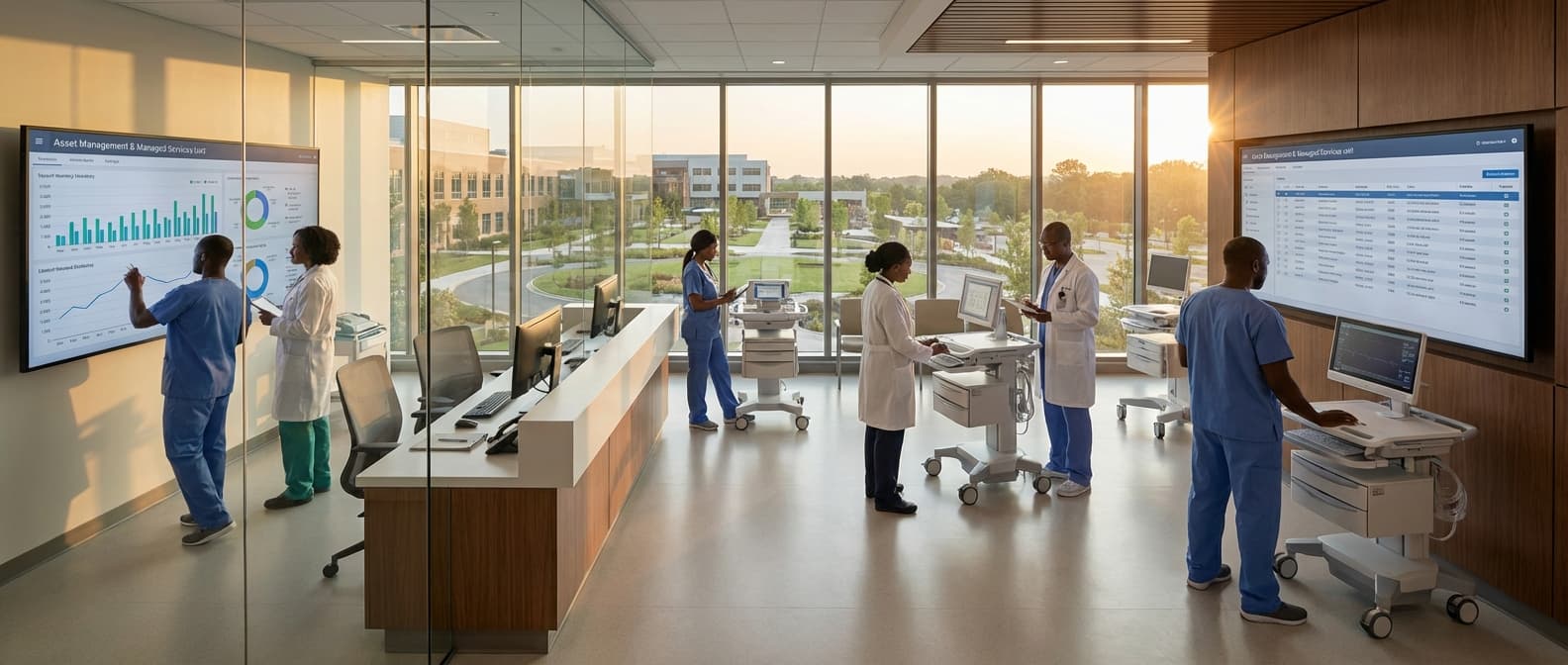
Maintenance KPI Reporting Service (Uptime/MTBF/MTTR) in Eswatini
Engineering Excellence & Technical Support
Maintenance KPI Reporting Service (Uptime/MTBF/MTTR) High-standard technical execution following OEM protocols and local regulatory frameworks.
Enhanced Asset Reliability in Eswatini
Our Maintenance KPI Reporting Service empowers Eswatini's industries to proactively track and improve Mean Time Between Failures (MTBF). Gain deep insights into asset health, predict potential breakdowns, and optimize maintenance schedules to minimize unplanned downtime and maximize operational efficiency across your Eswatini facilities.
Accelerated Incident Resolution in Eswatini
Reduce costly downtime with our service's focus on Mean Time To Repair (MTTR). We provide clear visibility into repair times, identifying bottlenecks and enabling faster, more effective resolution of equipment issues within Eswatini. Streamline your response and recovery processes to keep your operations running smoothly.
Maximizing Operational Uptime in Eswatini
Achieve unparalleled operational uptime in Eswatini by leveraging our comprehensive KPI reporting. We deliver real-time insights into asset availability and performance, enabling informed decision-making to prevent failures and optimize maintenance interventions. Ensure your business consistently meets production targets and customer demands.
What Is Maintenance Kpi Reporting Service (Uptime/mtbf/mttr) In Eswatini?
Maintenance KPI Reporting Service (Uptime/MTBF/MTTR) in Eswatini refers to a specialized offering that collects, analyzes, and presents key performance indicators related to the reliability and availability of assets and systems. This service is crucial for organizations in Eswatini aiming to optimize their maintenance strategies, minimize operational disruptions, and maximize asset lifespan. The core objective is to provide actionable insights derived from critical metrics such as Uptime, Mean Time Between Failures (MTBF), and Mean Time To Repair (MTTR) to enable data-driven decision-making in maintenance operations.
| Aspect | Description | Relevance in Eswatini |
|---|---|---|
| Service Involves | Data collection from CMMS/EAM systems, SCADA, IoT sensors, and manual logs. Data aggregation, normalization, and validation. Calculation of Uptime, MTBF, MTTR, and other relevant maintenance metrics. Generation of standardized and customizable reports (dashboards, trend analyses, anomaly detection). Identification of root causes for failures and inefficiencies. Recommendations for predictive and preventative maintenance strategies. | Essential for optimizing resource allocation in industries with limited skilled technical personnel. Enables proactive identification of equipment vulnerabilities in sectors reliant on consistent output, such as agriculture, manufacturing, and utilities. Supports cost reduction by minimizing unplanned downtime and maximizing asset utilization. |
| Who Needs It | Organizations with significant operational assets, including manufacturing plants, utilities (power, water), mining operations, telecommunications providers, large-scale agricultural enterprises, transportation companies, and facility management providers. | Crucial for businesses in Eswatini that experience financial or operational penalties due to equipment downtime. Sectors like tourism and hospitality also benefit from reliable infrastructure. Government entities managing public infrastructure (roads, water treatment) can leverage this for service delivery optimization. |
| Typical Use Cases | Predictive Maintenance: Analyzing MTBF trends to predict future failures and schedule maintenance proactively, preventing catastrophic breakdowns. Optimizing Spare Parts Inventory: Using MTBF data to forecast demand for replacement parts and reduce holding costs. Improving Technician Efficiency: Tracking MTTR to identify bottlenecks in the repair process and implement training or procedural improvements. Benchmarking Performance: Comparing KPI trends over time to evaluate the effectiveness of maintenance strategies and identify areas for improvement. Asset Lifecycle Management: Understanding failure patterns to inform decisions on asset replacement or upgrades. Compliance and Safety: Ensuring that critical systems meet uptime requirements for regulatory or safety compliance. | Ensuring uninterrupted power supply in electricity generation and distribution. Maintaining consistent production output in manufacturing facilities. Guaranteeing reliable telecommunications services across the country. Optimizing the operational efficiency of agricultural machinery and irrigation systems. Managing the availability of essential services in remote areas. Reducing maintenance costs for fleets of vehicles in logistics and transport sectors. |
Key Performance Indicators (KPIs) in Maintenance Reporting:
- Uptime: The percentage of time an asset or system is operational and available for its intended use. It's a direct measure of system availability and a primary indicator of operational efficiency.
- Mean Time Between Failures (MTBF): The average time elapsed between a repairable component or system's previous failure and its next failure. A higher MTBF indicates greater reliability and a more robust system.
- Mean Time To Repair (MTTR): The average time it takes to repair a failed component or system and return it to operational status. A lower MTTR signifies efficient repair processes and minimal downtime.
Who Needs Maintenance Kpi Reporting Service (Uptime/mtbf/mttr) In Eswatini?
In Eswatini, businesses across various sectors that rely on the consistent and optimal performance of their equipment and machinery can significantly benefit from a Maintenance KPI Reporting Service. This service, focusing on key metrics like Uptime, Mean Time Between Failures (MTBF), and Mean Time To Repair (MTTR), provides crucial insights for proactive maintenance strategies, cost reduction, and enhanced operational efficiency.
| Target Customer Sector | Typical Departments Benefiting | Key Benefits of KPI Reporting |
|---|---|---|
| Manufacturing & Industrial Production | Operations, Plant Management, Maintenance Department, Production Planning, Engineering | Maximizing production uptime, reducing scrap due to equipment failure, improving OEE (Overall Equipment Effectiveness), optimizing spare parts inventory, predicting potential breakdowns. |
| Mining & Extractive Industries | Mine Operations, Maintenance Managers, Reliability Engineers, Fleet Management, Safety Officers | Ensuring continuous extraction, minimizing costly downtime of heavy machinery, improving safety by identifying potential failures, optimizing maintenance schedules for remote operations. |
| Agriculture & Agribusiness | Farm Management, Operations Managers, Equipment Maintenance Supervisors, Logistics | Ensuring timely planting and harvesting, reducing losses due to equipment failure, optimizing the use of agricultural machinery, planning for seasonal maintenance. |
| Utilities (Water, Electricity, Telecommunications) | Operations Control, Network Maintenance, Asset Management, Engineering Departments | Ensuring uninterrupted service delivery, minimizing customer impact from outages, optimizing repair times for critical infrastructure, planning for preventive maintenance on network assets. |
| Transportation & Logistics | Fleet Management, Operations, Maintenance Supervisors, Dispatch | Maximizing vehicle/fleet availability, reducing operational disruptions, optimizing maintenance schedules to minimize service delays, improving fuel efficiency through well-maintained vehicles. |
| Hospitality & Tourism (Large Resorts/Hotels) | Facilities Management, Operations Management, Engineering Department | Ensuring guest comfort and satisfaction by maintaining essential services (HVAC, elevators, plumbing), minimizing disruptions to guest experience, optimizing maintenance of recreational facilities. |
| Public Sector & Government Agencies (e.g., infrastructure maintenance) | Public Works, Infrastructure Management, Maintenance Divisions | Ensuring the reliability of public assets (roads, bridges, municipal buildings), optimizing maintenance budgets for public services, improving service delivery to citizens. |
Target Customers and Departments in Eswatini for Maintenance KPI Reporting Service
- Industries with critical operational assets
- Companies focused on maximizing asset lifespan and reliability
- Organizations aiming to reduce unscheduled downtime and associated costs
- Businesses seeking to optimize maintenance budgets and resource allocation
- Entities prioritizing safety and compliance through well-maintained equipment
Maintenance Kpi Reporting Service (Uptime/mtbf/mttr) Process In Eswatini
This document outlines the workflow for the Maintenance KPI Reporting Service in Eswatini, focusing on Uptime, Mean Time Between Failures (MTBF), and Mean Time To Repair (MTTR). The process begins with an inquiry from a client and concludes with the delivery of a comprehensive KPI report.
| Stage | Activities | Responsible Party | Deliverables | Key Considerations |
|---|---|---|---|---|
| Inquiry & Scoping | Client expresses interest, service provider clarifies service scope, discusses specific KPI requirements (Uptime, MTBF, MTTR), and defines reporting frequency. Initial consultation and needs assessment. | Client, Service Provider (Sales/Consultant) | Service Brief, Initial Scope Document | Understanding client's assets, existing data sources, and reporting objectives. |
| Data Collection Planning | Develop a detailed plan for data extraction, including data sources (CMMS, SCADA, manual logs), data fields required (failure times, repair times, operational status), and data format. Define data validation procedures. | Service Provider (Analyst/Engineer) | Data Collection Plan, Data Dictionary | Ensuring data availability and accessibility, defining data quality checks. |
| Data Collection & Validation | Extract raw data from agreed-upon sources. Cleanse and validate the data for accuracy, completeness, and consistency. Address any discrepancies or missing information through client liaison. | Service Provider (Data Technician/Analyst), Client (for data access/clarification) | Validated Raw Data Set | Timely data access, robust validation rules, clear communication on data issues. |
| Data Analysis & KPI Calculation | Analyze the validated data to calculate Uptime percentage, MTBF (total operational time / number of failures), and MTTR (total repair time / number of failures). Apply agreed-upon formulas and methodologies. | Service Provider (Analyst/Engineer) | Calculated KPI Values | Accurate application of KPI formulas, consideration of downtime categories. |
| Report Generation | Compile the calculated KPIs into a clear and concise report. Include trend analysis, graphical representations, executive summaries, and actionable insights. | Service Provider (Analyst/Technical Writer) | Draft KPI Report | Visual clarity, data-driven insights, adherence to reporting templates. |
| Report Review & Delivery | Service provider presents the draft report to the client for review. Incorporate client feedback and finalize the report. Deliver the final report in the agreed-upon format. | Service Provider (Analyst/Project Manager), Client | Final KPI Report | Client satisfaction, timely delivery, clear communication on revisions. |
| Follow-up & Feedback | Conduct a post-delivery follow-up to ensure client understanding of the report and KPIs. Gather feedback on the service for continuous improvement. | Service Provider (Account Manager/Project Manager) | Service Feedback, Improvement Recommendations | Building client relationships, identifying areas for service enhancement. |
Workflow Stages
- Inquiry & Scoping
- Data Collection Planning
- Data Collection & Validation
- Data Analysis & KPI Calculation
- Report Generation
- Report Review & Delivery
- Follow-up & Feedback
Maintenance Kpi Reporting Service (Uptime/mtbf/mttr) Cost In Eswatini
Establishing a Maintenance KPI Reporting Service in Eswatini, focusing on Uptime, Mean Time Between Failures (MTBF), and Mean Time To Repair (MTTR), involves a nuanced cost structure. The pricing is not standardized and depends heavily on several factors that influence the service provider's operational expenses and value proposition. These factors collectively determine the final cost for businesses seeking to implement and maintain such a reporting service.
| Service Component | Estimated Cost Range (SZL) - Monthly | Notes |
|---|---|---|
| Basic Automated Reporting (e.g., standard dashboard) | 1,500 - 4,000 | Suitable for small businesses with limited data sources. |
| Intermediate Reporting (e.g., weekly/monthly detailed reports, basic trend analysis) | 4,000 - 10,000 | Includes integration with one or two primary systems. |
| Advanced Reporting & Analytics (e.g., real-time dashboards, predictive analytics, custom alerts) | 10,000 - 30,000+ | Requires complex integrations, dedicated analytics personnel, and potentially specialized software. |
| Initial Setup & Implementation Fee | 5,000 - 25,000 (one-time) | Varies based on the complexity of data integration and system configuration. |
| Custom Report Development (per report/module) | 2,000 - 8,000 | For specific, tailored analytical needs beyond standard offerings. |
| Data Integration & API Development (per integration) | 3,000 - 15,000 | Depends on the complexity of existing systems and data formats. |
| Training & Onboarding (per session/user) | 500 - 2,000 | Ensuring users can effectively utilize the reporting system. |
Key Pricing Factors for Maintenance KPI Reporting Services in Eswatini:
- Scope and Complexity of Reporting: The depth and breadth of the reporting significantly impact cost. Simple, automated dashboard reports will be less expensive than complex, multi-system analyses with custom metrics and in-depth root cause analysis.
- Data Sources and Integration: The number and type of data sources (e.g., SCADA systems, CMMS, manual logs, sensor data) that need to be integrated will affect implementation time and cost. Complex integrations requiring custom API development or middleware solutions will be more expensive.
- Frequency and Granularity of Reporting: How often reports are generated (daily, weekly, monthly, real-time) and the level of detail required will influence processing power and data storage needs, thus affecting cost.
- Software and Technology Used: The cost of the reporting software itself (whether licensed, SaaS, or custom-built), database infrastructure, and any specialized analytical tools employed by the service provider will be a significant component.
- Level of Service and Support: The availability and responsiveness of support, including technical assistance, training, and proactive issue resolution, are priced into the service. Higher levels of support and dedicated account management will command higher fees.
- Customization and Bespoke Development: If clients require highly customized reports, dashboards, or specific analytical models tailored to their unique operational needs, this will involve additional development costs.
- Data Volume and Storage: The sheer volume of data being collected and the duration for which it needs to be stored will influence infrastructure costs, particularly for cloud-based solutions.
- Provider Expertise and Reputation: Established providers with a proven track record and specialized expertise in industrial maintenance analytics may charge a premium for their knowledge and reliability.
- Implementation and Onboarding: The initial setup, system configuration, data migration, and user training are often separate costs that need to be factored in. The complexity of this process will vary greatly.
- Ongoing Maintenance and Updates: The service provider's internal costs for maintaining the reporting infrastructure, software updates, security patches, and continuous improvement will be reflected in recurring fees.
Affordable Maintenance Kpi Reporting Service (Uptime/mtbf/mttr) Options
This service focuses on delivering clear and actionable Key Performance Indicator (KPI) reporting for maintenance operations, specifically highlighting Uptime, Mean Time Between Failures (MTBF), and Mean Time To Repair (MTTR). We understand that businesses of all sizes need to optimize their maintenance strategies to reduce costs and improve operational efficiency. Our service provides flexible options to suit various budgets and needs, ensuring you gain valuable insights without breaking the bank. By tracking these critical metrics, you can identify recurring issues, predict potential failures, and streamline repair processes, ultimately leading to significant cost savings and increased asset reliability.
| Service Package | Key Features | Target User | Potential Cost Savings Focus |
|---|---|---|---|
| Core Metrics Package | Uptime, MTBF, MTTR tracking; Standard reports | Small to Medium Businesses, New KPI Implementers | Reduced unplanned downtime, optimized spare parts inventory |
| Performance Optimization Bundle | Core metrics + Trend analysis, Root Cause Analysis support, Proactive recommendations | Growing Businesses, Maintenance Teams focused on improvement | Increased asset lifespan, reduced repeat failures, improved technician efficiency |
| Predictive Maintenance Accelerator | Performance Optimization + Predictive analytics, Anomaly detection, Failure alerts | Large Enterprises, Asset-Intensive Industries | Maximized asset availability, minimized catastrophic failures, optimized maintenance scheduling |
| On-Demand Analysis & Consulting | Ad-hoc reporting, Expert guidance on specific issues | All Business Sizes, Specific Project Needs | Rapid problem resolution, strategic maintenance planning, informed decision-making |
Value Bundles & Cost-Saving Strategies
- Core Metrics Package: Focuses on the essential three KPIs (Uptime, MTBF, MTTR) with standard reporting frequency. Ideal for smaller teams or those new to KPI tracking.
- Performance Optimization Bundle: Includes core metrics plus historical trend analysis, root cause analysis support, and proactive maintenance recommendations. Suitable for organizations looking to actively improve their maintenance processes.
- Predictive Maintenance Accelerator: Builds upon the Performance Optimization Bundle by integrating data from sensors and other sources for advanced predictive analytics, anomaly detection, and predictive failure alerts. Aimed at maximizing uptime and minimizing unexpected breakdowns.
- On-Demand Analysis & Consulting: Offers ad-hoc reporting and expert advice for specific maintenance challenges or strategic planning sessions.
- Tiered Subscription Models: We offer monthly, quarterly, and annual subscription plans. Longer commitments often come with discounted rates.
- Data Integration Assistance: While we can work with provided data, offering basic data import tools or structured data templates can reduce manual effort and potential errors, saving you time and resources.
- Self-Service Dashboard Option: For clients who want direct access to real-time data and customizable reports, a self-service dashboard can be more cost-effective than fully managed reporting.
- Scalable Reporting: Our service scales with your needs. Start with a smaller scope and expand your reporting capabilities as your business and data volume grow, avoiding upfront over-investment.
- Training & Empowerment: We provide training on how to interpret and utilize the KPI reports effectively. Empowering your team to leverage the data themselves can reduce reliance on external consulting.
- Customizable Reporting Frequency: Adjust the frequency of your reports (daily, weekly, monthly) to match your operational pace and budget, avoiding unnecessary reporting costs.
Verified Providers In Eswatini
In Eswatini, accessing quality healthcare is paramount, and choosing a verified provider ensures you receive the best possible care. Franance Health stands out as a leading healthcare provider, distinguished by its commitment to excellence, patient-centered approach, and rigorous credentialing processes. Understanding what makes Franance Health a superior choice involves examining their accreditations, the qualifications of their medical professionals, and their dedication to ethical practices. This verification assures patients of safety, efficacy, and a high standard of medical treatment.
| Credential | Significance for Patients | Franance Health's Assurance |
|---|---|---|
| National Health Ministry License | Legally permitted to operate and provide medical services. | Fully licensed and compliant with all Eswatini healthcare regulations. |
| International Quality Standards (e.g., ISO certifications) | Indicates adherence to globally recognized benchmarks for quality management and patient care. | Actively pursues and maintains international quality certifications where applicable. |
| Medical Professional Board Certifications | Confirms that doctors and specialists have met rigorous standards of expertise in their fields. | All medical staff hold current and relevant board certifications. |
| Accreditations from Professional Medical Associations | Demonstrates commitment to professional development and adherence to industry best practices. | Participates actively in and is recognized by leading medical associations. |
| Patient Safety Protocols | Ensures measures are in place to prevent medical errors and hospital-acquired infections. | Implements robust, evidence-based patient safety protocols across all departments. |
Why Franance Health is the Best Choice in Eswatini:
- Rigorous Accreditation and Certification: Franance Health undergoes stringent evaluations by national and international health bodies. These accreditations confirm adherence to best practices in patient safety, infection control, and quality of care.
- Highly Qualified Medical Professionals: All healthcare practitioners at Franance Health are not only licensed but also possess advanced degrees, specialized training, and ongoing professional development. This ensures patients are treated by experts in their respective fields.
- State-of-the-Art Facilities and Technology: The commitment to quality extends to their infrastructure. Franance Health invests in modern medical equipment and diagnostic tools, enabling accurate diagnoses and effective treatments.
- Patient-Centric Care Philosophy: Beyond clinical expertise, Franance Health prioritizes patient well-being and satisfaction. They foster an environment of trust, respect, and open communication, empowering patients in their healthcare journey.
- Commitment to Ethical Practices and Transparency: Franance Health operates with the highest ethical standards. They are transparent about their services, costs, and treatment plans, building enduring trust with the community.
- Comprehensive Range of Services: From primary care to specialized treatments, Franance Health offers a broad spectrum of medical services, making them a convenient and reliable destination for diverse healthcare needs.
Scope Of Work For Maintenance Kpi Reporting Service (Uptime/mtbf/mttr)
This Scope of Work (SOW) outlines the requirements for a Maintenance KPI Reporting Service focused on Uptime, Mean Time Between Failures (MTBF), and Mean Time To Repair (MTTR). The service will provide regular, standardized reports to track and analyze the performance of maintenance operations, enabling data-driven decision-making and continuous improvement. The technical deliverables will include data ingestion capabilities, automated report generation, and a secure reporting portal.
| Deliverable | Description | Technical Specifications | Format/Standard | Frequency |
|---|---|---|---|---|
| Data Ingestion Module | Mechanism to receive and process raw maintenance data (e.g., failure logs, repair records, operational status). | API integration (RESTful), SFTP/FTP with specified data formats (CSV, JSON), direct database connection (read-only). Data validation and cleaning protocols. | JSON, CSV, XML (configurable per source) | Real-time or near real-time (configurable) |
| KPI Calculation Engine | Automated calculation of Uptime, MTBF, and MTTR based on ingested data. | Configurable calculation periods (daily, weekly, monthly, quarterly, annually). Support for different equipment tiers and types. Handling of excluded downtime (e.g., planned maintenance). | Internal processing logic | As per reporting frequency |
| Standardized Reports | Pre-defined reports displaying calculated KPIs with trend analysis and visualizations. | Dashboards with drill-down capabilities. Comparison against historical data and benchmarks. Identification of top failure modes and repair bottlenecks. | PDF, Excel, Interactive Web Dashboard | Weekly, Monthly, Quarterly, Annually |
| Alerting and Notification System | Automated alerts for significant deviations in KPIs or critical failure events. | Configurable alert thresholds. Email and/or SMS notifications. Integration with existing incident management systems. | Email, SMS, API webhook | Event-driven |
| Secure Reporting Portal | Web-based platform for accessing and interacting with reports and dashboards. | Role-based access control. Secure login. Data encryption in transit and at rest. Audit trails for data access. | Secure HTTPS web interface | 24/7 availability |
| Data Retention Policy | Defined period for storing raw and processed maintenance data. | Configurable retention periods (e.g., 1 year, 3 years, 5 years). Data archival procedures. | Database storage, archival storage | As per policy |
| API for Data Access | Optional API for programmatic access to calculated KPI data. | RESTful API with documented endpoints for data retrieval. Authentication and authorization mechanisms. | JSON | On-demand |
Key Performance Indicators (KPIs)
- Uptime: The percentage of time a piece of equipment or system is operational and available for use. Calculated as (Total Available Time - Downtime) / Total Available Time * 100%.
- Mean Time Between Failures (MTBF): The average time a repairable system or component operates between failures. Calculated as Total Uptime / Number of Failures.
- Mean Time To Repair (MTTR): The average time it takes to repair a failed system or component and return it to operational status. Calculated as Total Downtime / Number of Repairs.
Service Level Agreement For Maintenance Kpi Reporting Service (Uptime/mtbf/mttr)
This Service Level Agreement (SLA) outlines the performance standards and responsibilities for the Maintenance KPI Reporting Service, specifically focusing on Uptime, Mean Time Between Failures (MTBF), and Mean Time To Repair (MTTR). This document defines response times and uptime guarantees to ensure the consistent availability and reliability of the reporting service.
| Service Component | Uptime Guarantee | MTBF Target | MTTR Target | Response Time for Critical Issues | Response Time for Non-Critical Issues |
|---|---|---|---|---|---|
| Maintenance KPI Reporting Service (Core Functionality) | 99.9% | 720 hours | 2 hours | 15 minutes (Initial Acknowledgment), 2 hours (Resolution Target) | 1 hour (Initial Acknowledgment), 8 business hours (Resolution Target) |
| Data Ingestion & Processing | 99.5% | 480 hours | 4 hours | 30 minutes (Initial Acknowledgment), 4 hours (Resolution Target) | 2 hours (Initial Acknowledgment), 16 business hours (Resolution Target) |
| Reporting Dashboard & API Access | 99.8% | 600 hours | 3 hours | 20 minutes (Initial Acknowledgment), 3 hours (Resolution Target) | 1.5 hours (Initial Acknowledgment), 12 business hours (Resolution Target) |
Key Performance Indicators (KPIs)
- Uptime: The percentage of time the Maintenance KPI Reporting Service is operational and accessible to users.
- Mean Time Between Failures (MTBF): The average time the system operates without a failure. A higher MTBF indicates greater reliability.
- Mean Time To Repair (MTTR): The average time it takes to repair a failure and restore the system to full functionality. A lower MTTR indicates faster recovery.
Frequently Asked Questions

Ready when you are
Let's scope your Maintenance KPI Reporting Service (Uptime/MTBF/MTTR) in Eswatini project in Eswatini.

Scaling healthcare logistics and technical systems across the entire continent.