
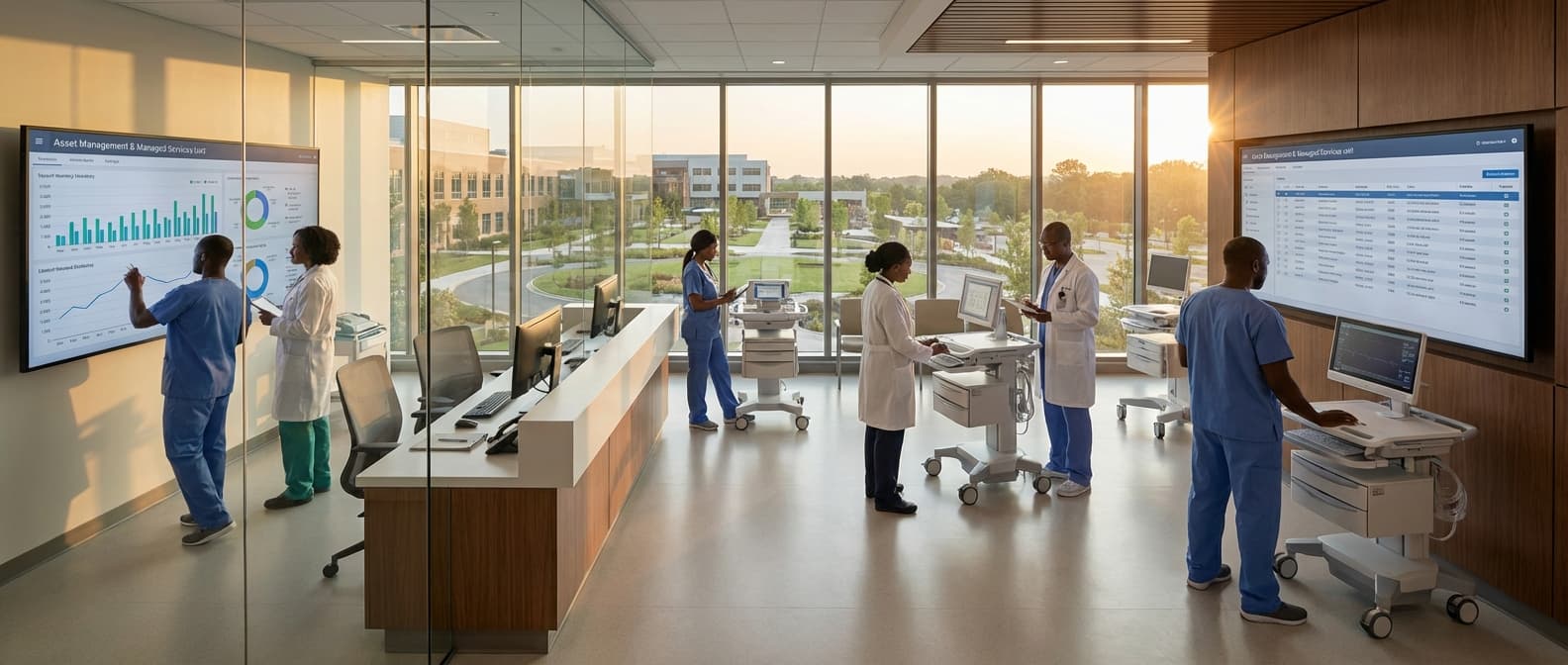
Equipment Fleet Standardization Consulting Service in Eswatini
Engineering Excellence & Technical Support
Equipment Fleet Standardization Consulting Service High-standard technical execution following OEM protocols and local regulatory frameworks.
Optimized Fleet Utilization
Leverage our expertise to analyze your current equipment fleet in Eswatini, identify underutilized assets, and implement standardized procurement and deployment strategies to maximize operational efficiency and reduce idle time.
Reduced Maintenance Costs & Downtime
Standardizing your equipment fleet simplifies maintenance protocols, enables bulk purchasing of spare parts, and facilitates specialized technician training, ultimately leading to significant cost savings and minimizing costly operational downtime.
Enhanced Operational Performance & ROI
By implementing a standardized fleet strategy tailored for Eswatini's unique operating environment, we empower your business to achieve predictable performance, improve fuel efficiency, and demonstrably increase the return on investment of your capital equipment.
What Is Equipment Fleet Standardization Consulting Service In Eswatini?
Equipment Fleet Standardization Consulting Service in Eswatini refers to specialized advisory and implementation support aimed at optimizing the composition, acquisition, maintenance, and utilization of an organization's fleet of heavy machinery, vehicles, and related operational equipment. This service focuses on achieving uniformity and consistency across various equipment categories and brands to enhance operational efficiency, reduce total cost of ownership (TCO), and improve asset management within the Eswatini context, which may include specific logistical, regulatory, and economic considerations unique to the Kingdom. The service involves a comprehensive assessment of existing fleet assets, operational requirements, maintenance practices, procurement strategies, and overall business objectives. It then develops and implements a standardized fleet strategy, which can encompass defining preferred equipment specifications, selecting a limited number of approved manufacturers or models, optimizing fleet size and configuration, and establishing best practices for acquisition, disposal, maintenance, and operator training. The overarching goal is to leverage standardization to create predictable operational performance, streamline spare parts inventory, simplify maintenance procedures, facilitate operator training and proficiency, and ultimately improve the return on investment for fleet assets.
| Who Needs Equipment Fleet Standardization Consulting Service in Eswatini? | Typical Use Cases |
|---|---|
| Organizations with large and diverse equipment fleets, including mining companies, construction firms, agricultural enterprises, logistics and transportation providers, and government agencies (e.g., public works, disaster management) operating in Eswatini. | Companies seeking to reduce operational costs and improve asset lifecycle management. Businesses aiming to enhance fleet reliability and reduce downtime. Organizations looking to simplify maintenance operations and spare parts inventory. Entities undergoing fleet expansion or modernization. Companies focused on improving safety and operational efficiency through standardized equipment and training. Organizations mandated to adhere to specific industry standards or government procurement regulations within Eswatini. Businesses experiencing challenges with equipment interoperability or availability of specialized parts. |
Key Components of Equipment Fleet Standardization Consulting Service:
- Fleet Audit and Assessment: Detailed analysis of existing equipment inventory, performance data, maintenance records, and operational deployment.
- Requirement Definition: Identification and documentation of current and future operational needs, including capacity, performance, and environmental considerations.
- Standardization Strategy Development: Formulation of guidelines for equipment selection, including preferred manufacturers, models, specifications, and technology integration.
- Procurement and Acquisition Optimization: Development of strategies for cost-effective and efficient acquisition of standardized equipment, including tender process management and contract negotiation.
- Maintenance and Repair Optimization: Implementation of standardized maintenance schedules, procedures, and spare parts management systems.
- Training and Skills Development: Design and delivery of training programs for operators and maintenance personnel on standardized equipment.
- Technology Integration: Assessment and recommendation of telematics, fleet management software, and other technologies to support standardization.
- Risk Management and Compliance: Ensuring adherence to local Eswatini regulations, safety standards, and environmental requirements.
- Performance Monitoring and Continuous Improvement: Establishing key performance indicators (KPIs) and feedback loops for ongoing fleet optimization.
Who Needs Equipment Fleet Standardization Consulting Service In Eswatini?
Equipment fleet standardization consulting services in Eswatini are crucial for organizations aiming to optimize their operations, reduce costs, and enhance efficiency in managing their vehicle and machinery fleets. Standardization involves establishing uniform makes, models, and specifications for equipment across an organization. This strategic approach offers numerous benefits, including simplified maintenance and repair processes, reduced spare parts inventory, improved driver/operator training, and better negotiation power with suppliers. In Eswatini, various sectors and departments can significantly benefit from such expertise.
| Customer Type | Specific Departments/Units | Key Benefits of Standardization |
|---|---|---|
| Government Ministries and Agencies | Public Works and Transport, Agriculture, Health, Disaster Management, Regional Administration | Cost savings on procurement and maintenance, improved service delivery, unified fleet management for national projects, streamlined emergency response. |
| Agribusiness and Agricultural Cooperatives | Farm Operations, Procurement, Logistics, Maintenance Workshops | Reduced downtime of essential farming machinery, lower spare parts costs, easier operator training, bulk purchase discounts on identical equipment. |
| Construction and Infrastructure Companies | Site Operations, Plant & Equipment Management, Procurement, Maintenance | Simplified logistics and maintenance of heavy machinery, reduced training time for operators, predictable operational costs, increased fleet utilization. |
| Mining and Extractive Industries | Fleet Management, Maintenance & Reliability, Procurement, Operations | Enhanced safety through consistent equipment operation, reduced risk of equipment failure, optimized inventory of specialized parts, improved operational efficiency in remote locations. |
| Logistics and Transportation Companies | Fleet Operations, Maintenance, Procurement, Dispatch | Lower fuel consumption through standardized models, easier and faster repairs, reduced training costs for drivers, improved resale value of uniform fleets. |
| Public Utilities (Water, Electricity, Telecoms) | Field Operations, Maintenance, Fleet Management, Procurement | Reliable service delivery through consistent vehicle/equipment performance, reduced operational interruptions, optimized response times for repairs and maintenance, predictable fleet replacement cycles. |
| Manufacturing and Industrial Enterprises | Production, Logistics, Maintenance, Procurement | Streamlined internal transport and material handling, efficient maintenance schedules, reduced costs of spare parts for internal fleets, improved operational flexibility. |
| Emergency Services (Fire, Ambulance, Police) | Operations, Fleet Management, Maintenance, Procurement | Critical for rapid deployment and response, ensuring all personnel can operate any vehicle/equipment, reduced maintenance lead times, interoperability during multi-agency responses. |
| Large-Scale Retail and Distribution Networks | Logistics, Delivery Fleet Management, Procurement, Maintenance | Efficient last-mile delivery, reduced operational costs for delivery vehicles, predictable maintenance schedules, improved driver efficiency and safety. |
| Non-Governmental Organizations (NGOs) with operational fleets | Program Operations, Logistics, Fleet Management, Procurement | Cost-effective management of vehicles used for project delivery and staff transport, ensuring operational continuity, reliable equipment in challenging field conditions, optimized resource allocation. |
Target Customers and Departments Benefiting from Equipment Fleet Standardization Consulting in Eswatini
- Government Ministries and Agencies
- Agribusiness and Agricultural Cooperatives
- Construction and Infrastructure Companies
- Mining and Extractive Industries
- Logistics and Transportation Companies
- Public Utilities (Water, Electricity, Telecoms)
- Manufacturing and Industrial Enterprises
- Emergency Services (Fire, Ambulance, Police)
- Large-Scale Retail and Distribution Networks
- Non-Governmental Organizations (NGOs) with operational fleets
Equipment Fleet Standardization Consulting Service Process In Eswatini
This document outlines the standard workflow for our Equipment Fleet Standardization Consulting Service in Eswatini, from initial client inquiry through project execution and completion. Our process is designed to be transparent, efficient, and tailored to the specific needs of each client operating within Eswatini's unique business environment.
| Phase | Key Activities | Deliverables | Eswatini Contextual Considerations |
|---|---|---|---|
| Inquiry & Initial Consultation | Client contact, discussion of challenges and objectives, initial scope definition. | Understanding of client needs, preliminary scope document. | Understanding of Eswatini business culture, client's specific industry within the kingdom. |
| Needs Assessment & Data Collection | Site visits, data gathering (logs, records), operational observation. | Fleet data inventory, operational assessment report. | Assessment of Eswatini's infrastructure (roads, terrain), weather impact on equipment, local operating conditions. |
| Analysis & Strategy Development | Data analysis, TCO calculation, strategy formulation, benchmarking. | Standardization strategy report, recommendation document. | Availability of specific equipment brands/parts in Eswatini, local supplier capabilities, relevant Eswatini regulations. |
| Proposal & Agreement | Proposal presentation, negotiation, contract finalization. | Formal proposal, signed consulting agreement. | Understanding of local contract law and business practices in Eswatini. |
| Implementation Planning | Detailed project plan, resource allocation, timeline development. | Implementation project plan, Gantt chart. | Logistical considerations for procurement and delivery within Eswatini, potential for customs and import duties. |
| Execution & Procurement/Disposal Management | Equipment sourcing, vendor negotiation, asset disposal. | Procurement documentation, disposal certificates, asset register updates. | Sourcing from regional suppliers if local options are limited, managing import/export processes for Eswatini. |
| Training & Change Management | Development and delivery of training modules, stakeholder communication. | Training materials, trained personnel, change management plan. | Language considerations, cultural nuances in training delivery, engagement with local workforce. |
| Monitoring & Performance Evaluation | KPI tracking, data analysis, performance reporting. | Performance reports, KPI dashboards. | Assessment of fleet performance under Eswatini's specific operating conditions and maintenance support availability. |
| Post-Implementation Support & Optimization | Problem-solving, ongoing advisory, continuous improvement recommendations. | Support logs, optimization recommendations. | Adapting strategies to evolving economic conditions and infrastructure development in Eswatini. |
| Project Closure & Reporting | Final report compilation, project debrief, knowledge transfer. | Final project report, project closure document. | Ensuring the sustainability of the standardization benefits for the client's long-term operations in Eswatini. |
Equipment Fleet Standardization Consulting Service Workflow in Eswatini
- {"title":"1. Inquiry & Initial Consultation","description":"The process begins when a potential client in Eswatini contacts us with a need for equipment fleet standardization. This may be through our website, email, phone call, or a referral. We schedule an initial consultation, either in-person or virtual, to understand their current fleet challenges, objectives, and the scope of their operations within Eswatini. This includes discussing their industry, fleet size, types of equipment used, maintenance practices, and any specific pain points."}
- {"title":"2. Needs Assessment & Data Collection","description":"Following the initial consultation, we conduct a more in-depth needs assessment. This involves gathering detailed data on the client's existing equipment fleet. This data collection may include site visits to observe operations, review of maintenance logs, fuel consumption records, downtime reports, purchase history, and operational usage patterns specific to Eswatini's conditions (e.g., terrain, climate, road infrastructure). We also assess their current procurement and disposal processes."}
- {"title":"3. Analysis & Strategy Development","description":"Our team of experts analyzes the collected data to identify inefficiencies, redundancies, and opportunities for standardization. We consider factors such as total cost of ownership (TCO), operational effectiveness, safety compliance, environmental impact, and availability of parts and service in Eswatini. Based on this analysis, we develop a customized fleet standardization strategy, outlining recommended equipment types, brands, configurations, and operational policies. This strategy takes into account local market availability, supplier relationships, and regulatory requirements within Eswatini."}
- {"title":"4. Proposal & Agreement","description":"We present a detailed proposal to the client outlining the proposed standardization strategy, expected benefits (e.g., cost savings, improved efficiency, reduced downtime), project timeline, deliverables, and associated consulting fees. The proposal is discussed and refined based on client feedback. Upon agreement, a formal consulting contract is signed, defining the scope of work, payment terms, and responsibilities of both parties."}
- {"title":"5. Implementation Planning","description":"Once the agreement is in place, we develop a comprehensive implementation plan. This plan details the step-by-step process for achieving fleet standardization, including timelines for procurement, disposal, training, and policy changes. We work closely with the client's management and operational teams to ensure buy-in and smooth execution, considering Eswatini's specific logistical and operational challenges."}
- {"title":"6. Execution & Procurement/Disposal Management","description":"This phase involves the active implementation of the standardization strategy. We assist in the selection and procurement of new standardized equipment, leveraging our knowledge of the Eswatini market for competitive pricing and reliable suppliers. We also guide the efficient and compliant disposal of non-standardized or obsolete equipment. This may involve managing tenders, negotiating contracts with local vendors, and overseeing asset retirement processes."}
- {"title":"7. Training & Change Management","description":"To ensure the long-term success of the standardization initiative, we provide training for operators, maintenance personnel, and management on the new equipment and standardized procedures. This includes safety protocols, maintenance best practices, and the utilization of new technologies. We also facilitate change management processes to help the organization adapt to the new fleet structure and operational policies."}
- {"title":"8. Monitoring & Performance Evaluation","description":"After implementation, we establish systems for ongoing monitoring and performance evaluation. This involves tracking key performance indicators (KPIs) related to fuel efficiency, maintenance costs, uptime, productivity, and safety. We provide regular reports to the client, assessing the effectiveness of the standardization strategy and identifying any areas requiring further optimization. This includes assessing the performance of the fleet within the Eswatini context."}
- {"title":"9. Post-Implementation Support & Optimization","description":"Our engagement typically includes a period of post-implementation support to address any immediate issues and ensure a smooth transition. We offer ongoing advice and consulting services for continuous improvement, helping clients to further optimize their fleet operations and adapt to evolving business needs and Eswatini's economic landscape. This may involve refining maintenance schedules, updating operational policies, or exploring new technologies."}
- {"title":"10. Project Closure & Reporting","description":"The project is formally closed upon completion of all deliverables and client satisfaction. A final report is provided, summarizing the project objectives, activities undertaken, outcomes achieved, and any recommendations for future fleet management. This report serves as a valuable record of the standardization effort and its impact on the client's operations in Eswatini."}
Equipment Fleet Standardization Consulting Service Cost In Eswatini
Consulting services for equipment fleet standardization in Eswatini are priced based on a combination of factors that reflect the complexity of the project, the expertise of the consultants, and the specific needs of the client. These services aim to optimize a company's fleet by ensuring uniformity in equipment types, models, and brands. This can lead to significant benefits like reduced maintenance costs, improved operational efficiency, streamlined training, and easier parts procurement. The cost will vary widely depending on the scale of the fleet, the diversity of existing equipment, the depth of analysis required, and the duration of the engagement.
| Service Component/Complexity Level | Estimated Cost Range (Emaswati Lilangeni - SZL) |
|---|---|
Initial Fleet Assessment (Basic Data Review & High-Level Recommendations)
| SZL 30,000 - SZL 75,000 |
Comprehensive Fleet Standardization Study (Detailed Analysis, Strategy Development)
| SZL 75,000 - SZL 180,000 |
Full-Scale Fleet Standardization Project (In-depth Analysis, Implementation Planning, Vendor Strategy)
| SZL 180,000 - SZL 450,000+ |
Add-on Services (e.g., Training Module Development, Vendor Negotiation Support)
| SZL 3,000 - SZL 8,000 per day/module |
Key Pricing Factors for Equipment Fleet Standardization Consulting in Eswatini
- Fleet Size and Complexity: The number of vehicles, machinery, and specialized equipment in the fleet is a primary driver of cost. Larger and more diverse fleets require more extensive data collection, analysis, and strategy development.
- Scope of Work: This includes the level of detail in the assessment. Will it cover only acquisition, or will it also include maintenance, disposal strategies, and technology integration (e.g., telematics)? A more comprehensive scope will naturally increase costs.
- Consultant's Expertise and Reputation: Highly experienced consultants or specialized firms with a proven track record in fleet management and standardization will command higher rates.
- Duration of Engagement: The length of time the consultants are engaged to conduct the analysis, develop recommendations, and potentially assist with implementation. Shorter, more focused projects will be less expensive than long-term strategic partnerships.
- Data Availability and Quality: The ease with which consultants can access accurate and complete data on the current fleet (acquisition costs, maintenance records, operational data, fuel consumption, etc.) will impact the time and effort required.
- Reporting and Deliverables: The complexity and format of the final reports and presentations. Detailed operational models, financial projections, and implementation roadmaps will add to the cost.
- Geographic Reach within Eswatini: While Eswatini is relatively small, extensive travel across different regions for site visits and stakeholder meetings can contribute to overall costs.
- Project Management Overhead: The administrative and project management resources allocated by the consulting firm.
- Additional Services: This could include training development, vendor negotiation support, or pilot program implementation, which would be priced separately or as part of a premium package.
Affordable Equipment Fleet Standardization Consulting Service Options
Our Affordable Equipment Fleet Standardization Consulting Service helps businesses optimize their equipment acquisition and management by establishing standardized fleets. This approach reduces costs, improves operational efficiency, and simplifies maintenance and training. We offer flexible service options designed to meet diverse business needs and budgets, focusing on delivering tangible value and significant cost savings.
| Value Bundle | Description | Cost-Saving Strategies Included | Typical Deliverables | Ideal For |
|---|---|---|---|---|
| Foundation Fleet Assessment | A focused analysis of your current equipment fleet to identify opportunities for standardization. | Initial parts inventory review, basic equipment utilization analysis, preliminary cost benchmarking. | Report detailing current fleet composition, initial cost savings potential, and recommended standardization areas. | Small to medium-sized businesses with a growing fleet or those experiencing rising equipment costs. |
| Core Standardization Package | Builds upon the assessment to develop a comprehensive standardization strategy and implementation roadmap. | Detailed cost-benefit analysis, vendor negotiation strategy, preliminary training plan outline, parts stocking recommendations. | Standardization roadmap, recommended equipment models, parts list, basic vendor negotiation points, phased implementation plan. | Businesses seeking a structured approach to fleet standardization with clear implementation steps. |
| Integrated Optimization Solution | A complete service including strategy development, vendor negotiations, implementation support, and ongoing monitoring. | Full vendor negotiation support, detailed training program development, parts inventory optimization, lifecycle cost analysis, performance tracking framework. | Finalized standardization strategy, negotiated vendor agreements, comprehensive training materials, optimized parts list, implementation support, performance dashboard template. | Medium to large enterprises requiring end-to-end support for maximum cost savings and efficiency gains. |
| Customizable Module | Add specific modules to any package, such as advanced telematics integration, specialized training development, or sustainable equipment sourcing. | Tailored cost-saving strategies based on selected module (e.g., fuel efficiency optimization, predictive maintenance integration). | Specific deliverables related to the chosen module. | Businesses with unique operational needs or specific areas they wish to focus on for cost savings. |
Key Benefits of Fleet Standardization:
- Reduced acquisition costs through bulk purchasing and negotiation.
- Lower maintenance expenses due to simplified parts inventory and specialized technician training.
- Enhanced operational efficiency with consistent equipment performance and operator familiarity.
- Streamlined training programs and reduced learning curves for operators and technicians.
- Improved resale value of standardized equipment.
- Better inventory management and reduced downtime.
- Simplified budgeting and forecasting for equipment-related expenses.
Verified Providers In Eswatini
In Eswatini, navigating the healthcare landscape to find reliable and accredited medical professionals can be challenging. Verified providers offer a crucial layer of assurance, ensuring patients receive quality care from legitimate and qualified practitioners. Franance Health stands out as a premier platform dedicated to connecting individuals with such verified healthcare professionals across various specialties in Eswatini. Their rigorous credentialing process and commitment to patient well-being make them the optimal choice for accessing trustworthy medical services.
| Provider Type | Franance Health Verification Focus | Benefit to Patients |
|---|---|---|
| Doctors (General & Specialists) | Medical Council registration, postgraduate qualifications, hospital affiliations, clean disciplinary record. | Access to board-certified and experienced physicians ensuring accurate diagnoses and effective treatment plans. |
| Dentists | Dental Council registration, specialized training in dentistry, ongoing professional development. | Confidence in receiving safe and high-quality dental care from licensed and skilled practitioners. |
| Pharmacists | Pharmacy Board registration, understanding of drug regulations and safe dispensing practices. | Assurance of receiving genuine medications and professional advice on drug usage from accredited pharmacists. |
| Nurses | Nursing Council registration, specific certifications and specializations, adherence to nursing standards. | Reliable and compassionate care from qualified nursing professionals in various healthcare settings. |
| Allied Health Professionals (e.g., Physiotherapists, Lab Technicians) | Professional body accreditation, relevant qualifications, adherence to ethical guidelines. | Access to essential support services for rehabilitation, diagnosis, and treatment from competent professionals. |
Why Franance Health is the Best Choice for Verified Providers in Eswatini:
- Rigorous Vetting Process: Franance Health employs a stringent verification system that goes beyond basic licensing. They meticulously examine credentials, qualifications, and professional history to ensure all listed providers meet the highest standards of medical excellence and ethical practice.
- Comprehensive Provider Directory: The platform offers an extensive and searchable directory of verified healthcare professionals, ranging from general practitioners and specialists to dentists, pharmacists, and allied health professionals, all operating within Eswatini.
- Patient-Centric Approach: Franance Health prioritizes patient safety and satisfaction. By presenting only verified providers, they empower individuals to make informed decisions about their healthcare, reducing the risk of encountering unqualified practitioners.
- Enhanced Accessibility: The platform simplifies the process of finding and booking appointments with trusted medical experts. This streamlined approach saves valuable time and effort for patients seeking timely medical attention.
- Commitment to Quality and Trust: Franance Health's unwavering dedication to verifying provider credentials fosters an environment of trust and reliability. Patients can have peace of mind knowing they are engaging with legitimate and competent healthcare providers.
Scope Of Work For Equipment Fleet Standardization Consulting Service
This Scope of Work (SOW) outlines the consulting services to be provided by [Consulting Firm Name] (the 'Consultant') to [Client Name] (the 'Client') for the standardization of their equipment fleet. The objective is to improve operational efficiency, reduce maintenance costs, enhance safety, and streamline procurement processes through the development and implementation of standardized equipment specifications and policies. The Consultant will deliver technical specifications, operational guidelines, and recommendations for fleet management strategies.
| Phase | Key Activities | Deliverables | Timeline (Weeks) |
|---|---|---|---|
| Kick-off meeting, Stakeholder interviews, Current fleet audit, Data collection & analysis | Project charter, Initial fleet assessment report, Data analysis framework | 2 |
| Identify key equipment categories for standardization, Define standardization criteria (performance, cost, safety, availability), Develop draft standardized specifications | Prioritized list of equipment categories, Draft standardized technical specifications, Standardization criteria document | 4 |
| Review and refine draft specifications with stakeholders, Conduct vendor consultations, Finalize technical specifications, Develop procurement guidelines | Finalized standardized technical specifications (per category), Vendor engagement summary, Procurement guideline document | 3 |
| Develop fleet transition plan, Outline maintenance strategy for standardized fleet, Define operational best practices, Develop training plan | Fleet transition roadmap, Standardized maintenance protocols, Operational best practices manual, Training program outline | 2 |
| Develop training materials, Conduct training sessions for relevant personnel (operations, maintenance, procurement) | Training modules (e.g., specification utilization, procurement process, new equipment operation), Training attendance records, Knowledge transfer report | 3 |
| Final project report, Post-implementation review recommendations, Lessons learned documentation | Final project report with implementation status and ROI analysis, Future fleet management recommendations, Lessons learned document | 1 |
Key Objectives
- Develop comprehensive standardized technical specifications for key equipment categories.
- Establish operational guidelines and best practices for fleet utilization and maintenance.
- Analyze current fleet data to identify standardization opportunities and cost savings.
- Provide recommendations for procurement processes that align with standardization goals.
- Develop training materials and facilitate knowledge transfer for internal teams.
Service Level Agreement For Equipment Fleet Standardization Consulting Service
This Service Level Agreement (SLA) outlines the commitment of [Consulting Firm Name] (hereinafter referred to as 'Consultant') to provide Equipment Fleet Standardization Consulting Services to [Client Name] (hereinafter referred to as 'Client'). This SLA specifically addresses response times for service requests and uptime guarantees related to any provided consulting tools or platforms.
| Service Component | Response Time (Business Hours) | Uptime Guarantee (Consultant-Provided Tools/Platforms) |
|---|---|---|
| Initial Acknowledgment of Service Request | Within 2 Business Hours | N/A |
| Resolution of Standard Inquiry (e.g., clarification, data request) | Within 8 Business Hours | N/A |
| Escalated Issue Requiring Deeper Analysis | Within 24 Business Hours | N/A |
| Consultant-Provided Project Management Software/Platform | N/A | 99.5% Monthly Availability |
| Consultant-Provided Data Analysis Tools/Platform | N/A | 99.5% Monthly Availability |
Key Service Components
- Scope of Services: Equipment fleet analysis, standardization strategy development, vendor selection support, implementation roadmap creation, and post-implementation review.
- Service Hours: Monday to Friday, 9:00 AM to 5:00 PM [Client Time Zone], excluding public holidays.
- Definitions: 'Service Request' refers to any documented request for support or information submitted through the agreed-upon channels. 'Downtime' refers to the unavailability of any Consultant-provided tools or platforms necessary for the provision of services.
Frequently Asked Questions

Ready when you are
Let's scope your Equipment Fleet Standardization Consulting Service in Eswatini project in Eswatini.

Scaling healthcare logistics and technical systems across the entire continent.