
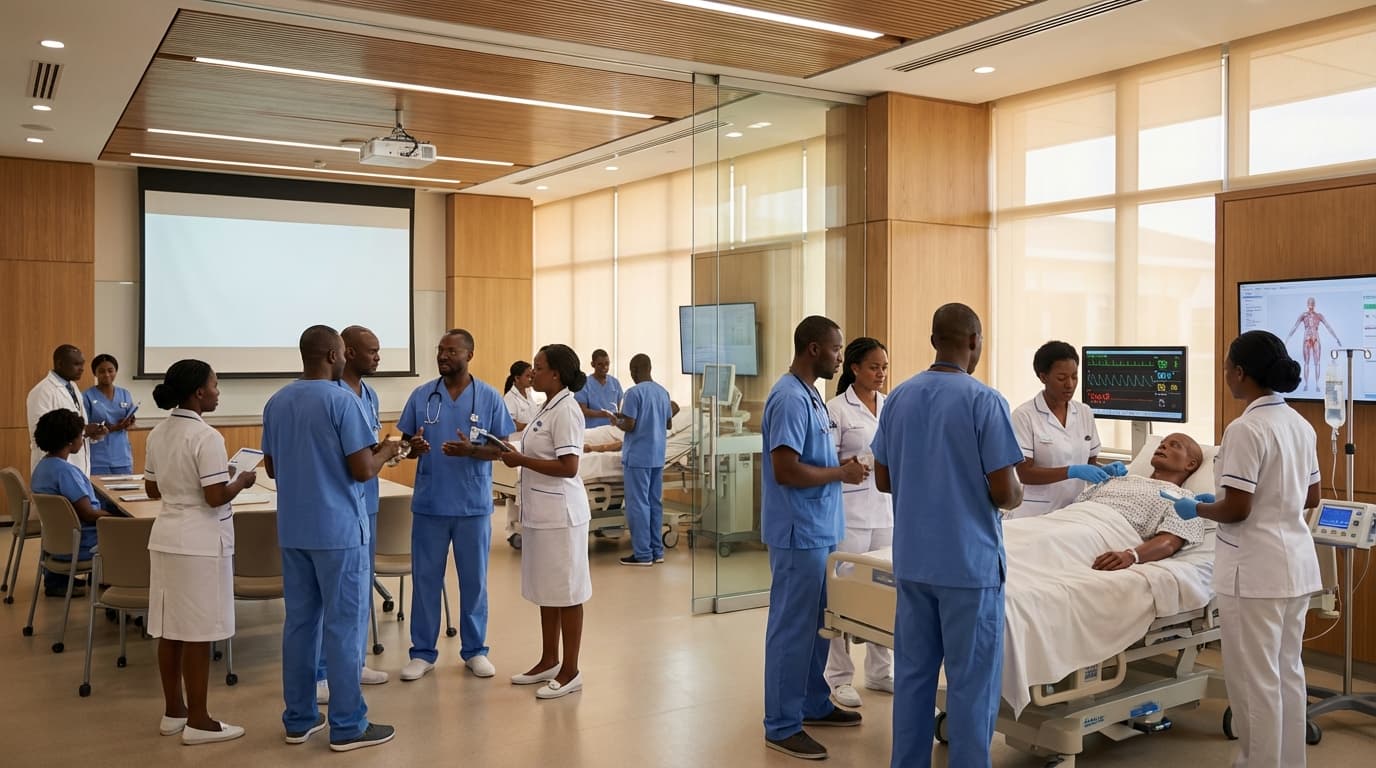
Equipment Training & Education in Eritrea
Engineering Excellence & Technical Support
Comprehensive equipment training and certification programs High-standard technical execution following OEM protocols and local regulatory frameworks.
Advanced Equipment Diagnostics & Repair Workshop
Hands-on training modules covering the latest diagnostic tools and repair techniques for heavy machinery (e.g., excavators, bulldozers) and agricultural equipment, emphasizing predictive maintenance and troubleshooting to minimize downtime.
Operator Proficiency & Safety Certification Program
Comprehensive curriculum focused on safe and efficient operation of key industrial and construction equipment. Includes simulator-based training and practical assessments to achieve internationally recognized operator certifications.
Renewable Energy Equipment Installation & Maintenance Training
Specialized courses on the installation, operation, and preventative maintenance of solar power systems and other emerging renewable energy technologies relevant to Eritrea's development goals.
What Is Equipment Training & Education In Eritrea?
Equipment training and education in Eritrea refers to the systematic process of imparting knowledge, skills, and proficiency required for the safe, efficient, and effective operation, maintenance, and troubleshooting of specific machinery, tools, and technological systems. This service is critical for maximizing asset lifespan, ensuring operational continuity, preventing accidents, and optimizing productivity across various sectors of the Eritrean economy. It encompasses both theoretical instruction and practical, hands-on application, tailored to the specific equipment and the learning needs of the trainees. The objective is to develop competent personnel capable of performing assigned tasks with minimal supervision and adhering to established safety and quality standards.
| Who Needs Equipment Training & Education in Eritrea? | Typical Use Cases |
|---|---|
| Industrial Operators & Technicians: Personnel operating and maintaining machinery in manufacturing plants, processing facilities, and heavy industries. | Operation of CNC machines, assembly line equipment, industrial pumps, and power generation units. |
| Agricultural Workers & Supervisors: Individuals involved in the operation of farm machinery and equipment. | Tractor operation, combine harvester utilization, irrigation system management, and maintenance of agricultural tools. |
| Construction Personnel: Site managers, operators of heavy equipment, and maintenance staff in the construction sector. | Operation of excavators, bulldozers, cranes, concrete mixers, and surveying equipment. |
| Mining & Extractive Industry Workers: Operators and maintenance crews for specialized mining machinery. | Operation of drilling rigs, haul trucks, conveyor systems, and mineral processing equipment. |
| Healthcare Professionals & Technicians: Staff responsible for the operation and maintenance of medical equipment. | Use of diagnostic imaging devices (X-ray, MRI), laboratory analyzers, and patient monitoring systems. |
| Transportation & Logistics Personnel: Drivers, mechanics, and logistics staff dealing with specialized vehicles and equipment. | Operation of specialized transport vehicles, material handling equipment (forklifts), and warehouse automation systems. |
| Energy Sector Professionals: Engineers and technicians involved in power generation, transmission, and distribution. | Operation and maintenance of turbines, transformers, solar panels, and wind energy systems. |
| IT & Telecommunications Staff: Technicians responsible for installing, operating, and maintaining technological infrastructure. | Setup and management of servers, networking equipment, and communication devices. |
| Small & Medium Enterprise (SME) Owners/Operators: Business owners who utilize specialized equipment for their services or production. | Operation of commercial kitchen equipment, specialized tools for crafts, or service industry machinery. |
Key Components of Equipment Training & Education
- Theoretical Instruction: Covering equipment principles, technical specifications, operational parameters, safety regulations, and diagnostic methodologies.
- Practical Hands-on Training: Direct engagement with the equipment for operation, calibration, basic repairs, and routine maintenance under expert guidance.
- Safety Protocols & Procedures: Emphasis on hazard identification, risk assessment, personal protective equipment (PPE) usage, emergency response, and lockout/tagout procedures.
- Troubleshooting & Diagnostics: Training on identifying and resolving common equipment malfunctions, utilizing diagnostic tools, and interpreting error codes.
- Preventive & Predictive Maintenance: Educating on scheduled maintenance tasks, lubrication, inspection routines, and the use of monitoring technologies to anticipate failures.
- Documentation & Record Keeping: Training on operating manuals, maintenance logs, service reports, and compliance documentation.
- Refresher Courses & Advanced Training: Periodic sessions to reinforce knowledge, introduce new features, or develop specialized skills for complex equipment or advanced operational techniques.
Who Needs Equipment Training & Education In Eritrea?
In Eritrea, comprehensive equipment training and education are crucial for a wide range of individuals and organizations to ensure operational efficiency, safety, and the effective utilization of technology across various sectors. This training is not a luxury but a necessity for fostering economic development, enhancing productivity, and maintaining high standards of work.
| Customer Type | Example Equipment | Benefits of Training |
|---|---|---|
| Construction Companies | Excavators, Cranes, Concrete Mixers, Survey Equipment | Improved safety on construction sites, reduced equipment downtime, enhanced project completion efficiency. |
| Mining Operations | Drilling Rigs, Haul Trucks, Crushers, Conveyor Systems | Increased operational output, adherence to safety regulations, efficient resource extraction. |
| Healthcare Facilities | MRI Machines, X-ray Units, Ventilators, Laboratory Analyzers | Accurate diagnoses, effective patient care, safe operation of life-saving equipment, reduced risk of malfunction. |
| Agricultural Cooperatives | Tractors, Harvesters, Irrigation Pumps, Grain Dryers | Increased crop yields, optimized resource use, reduced post-harvest losses, efficient farm management. |
| Manufacturing Plants | CNC Machines, Assembly Line Equipment, Welding Machines, Packaging Machinery | Higher product quality, increased production speed, minimized defects, improved worker productivity. |
Target Customers and Departments for Equipment Training & Education in Eritrea
- {"title":"Industrial Sector","departments":["Production/Operations","Maintenance and Repair","Quality Control","Health and Safety"],"description":"For industries relying on heavy machinery, manufacturing equipment, and specialized tools. This includes sectors like mining, construction, manufacturing, and energy production."}
- {"title":"Agricultural Sector","departments":["Farm Management","Agronomy","Mechanization Units","Cooperative Leadership"],"description":"For farmers and agricultural cooperatives utilizing modern farming equipment, tractors, irrigation systems, and processing machinery."}
- {"title":"Healthcare Sector","departments":["Radiology","Laboratory Services","Surgical Departments","Biomedical Engineering","Nursing Staff"],"description":"For medical professionals and technicians operating sophisticated diagnostic, surgical, and laboratory equipment."}
- {"title":"Transportation and Logistics Sector","departments":["Fleet Management","Vehicle Maintenance","Logistics and Supply Chain","Port Operations"],"description":"For individuals operating and maintaining vehicles, heavy-duty transport, and port equipment."}
- {"title":"Telecommunications and IT Sector","departments":["Network Operations","Technical Support","IT Infrastructure Management","Field Technicians"],"description":"For technicians and engineers involved in the installation, maintenance, and operation of telecommunications infrastructure and IT hardware."}
- {"title":"Government and Public Services","departments":["Public Works Departments","Emergency Services (Fire, Rescue)","Municipal Services","Infrastructure Management"],"description":"For personnel in public works, disaster management, and other government agencies that use specialized equipment."}
- {"title":"Educational Institutions","departments":["Vocational Training Centers","Technical Colleges","University Engineering Departments"],"description":"For vocational training centers and technical colleges to equip instructors and students with practical skills."}
- {"title":"Small and Medium-sized Enterprises (SMEs)","departments":["Workshop Managers","Technical Staff","Operational Supervisors"],"description":"For businesses that invest in equipment to improve their services or products."}
Equipment Training & Education Process In Eritrea
This document outlines the typical workflow for equipment training and education processes in Eritrea, from initial inquiry to the successful execution of training programs. The process is designed to ensure that individuals and organizations acquire the necessary knowledge and skills to operate and maintain equipment safely and effectively. While specific details may vary based on the type of equipment, the training provider, and the client's requirements, the general stages remain consistent.
| Stage | Description | Key Activities | Responsible Parties | Deliverables/Outcomes |
|---|---|---|---|---|
| The initial stage where potential clients express interest in training and their specific needs are identified. | Client contacts training provider to inquire about equipment training. Discussion of equipment type, required skills, number of trainees, target audience, desired learning outcomes. Site visit (if necessary) to assess training environment and existing knowledge. | Potential Client (Individual/Organization), Training Provider (Sales/Business Development) | Clear understanding of training requirements, identification of specific equipment, initial scope definition. |
| Based on the needs assessment, a formal proposal outlining the training program and associated costs is prepared. | Training provider designs a tailored training program. Development of curriculum outline, training methodology, duration, venue. Preparation of a detailed quotation including fees, materials, travel, accommodation (if applicable). | Training Provider (Technical/Training Department, Sales/Business Development) | Formal training proposal, detailed quotation. |
| Formalization of the training agreement between the client and the training provider. | Review and negotiation of the proposal and quotation. Signing of a formal contract or Memorandum of Understanding (MOU) specifying terms, conditions, scope of work, payment schedule, and responsibilities. | Potential Client (Management/Procurement), Training Provider (Legal/Management) | Signed training agreement/contract. |
| Creation or adaptation of training materials to suit the specific equipment and the client's context. | Development of training manuals, presentations, practical exercises, assessments. Customization of materials based on client-specific operational procedures, safety regulations, and language requirements. | Training Provider (Curriculum Developers, Subject Matter Experts) | Training curriculum, participant manuals, trainer guides, presentation slides, assessment tools. |
| Planning and coordinating all logistical aspects of the training. | Setting training dates and times. Booking training venues (on-site or off-site). Arranging for necessary equipment for training, audiovisual aids, stationery. Coordinating travel and accommodation for trainers and trainees (if required). | Training Provider (Operations/Logistics Department), Client (for site access/availability) | Confirmed training schedule, booked venue, arranged logistics. |
| Selection and allocation of qualified trainers for the program. | Identifying trainers with relevant expertise and experience for the specific equipment. Assigning trainers based on availability and skill set. Briefing trainers on the training objectives, materials, and client context. | Training Provider (Training Manager/Coordinator) | Assigned and briefed trainers. |
| Ensuring all necessary preparations are in place before the training commences. | Confirmation of trainee list and pre-requisites. Finalizing training materials. Setting up the training venue with all required equipment and resources. Communication with trainees regarding pre-reading material or requirements. | Training Provider (Trainers, Logistics Staff), Client (Trainee preparation) | Prepared training environment, confirmed trainees, finalized materials. |
| The actual delivery of the training program. | Conducting theoretical sessions, practical demonstrations, hands-on exercises, and interactive discussions. Ensuring active participation and addressing trainee queries. Adhering to the training schedule and objectives. | Training Provider (Trainers) | Delivered training sessions. |
| Measuring the learning outcomes and effectiveness of the training. | Administering written tests, practical assessments, or skill demonstrations. Gathering feedback from trainees on the training content, delivery, and trainers. Evaluating trainer performance. | Training Provider (Trainers, Quality Assurance) | Assessment results, trainee feedback forms, trainer evaluation reports. |
| Providing formal recognition of successful completion of the training. | Issuing certificates of completion or competency to trainees who meet the required standards. Compiling training reports and documentation for both the client and the training provider's records. | Training Provider (Administration, Training Management) | Training certificates, final training report. |
| Offering continued support and evaluation after the training. | Providing technical support or clarification as needed. Conducting follow-up evaluations to assess the application of learned skills in the workplace. Offering refresher courses or advanced training if required. | Training Provider (Technical Support, Training Department), Client | Resolved queries, follow-up evaluation data, potential for future training engagements. |
Workflow Stages for Equipment Training & Education in Eritrea
- Inquiry & Needs Assessment
- Proposal Development & Quotation
- Agreement & Contract Finalization
- Training Material Development & Customization
- Scheduling & Logistics Arrangement
- Trainer Assignment
- Pre-Training Preparations
- Training Execution
- Assessment & Evaluation
- Certification & Documentation
- Post-Training Support & Follow-up
Equipment Training & Education Cost In Eritrea
The cost of equipment training and education in Eritrea is influenced by a variety of factors, leading to a broad range of pricing. These factors include the type and complexity of the equipment, the duration and intensity of the training, the reputation and accreditation of the training provider, and the inclusion of specialized certifications or materials. Generally, training is offered by government institutions, private vocational schools, and sometimes directly by equipment manufacturers or their local representatives. The pricing is typically denominated in Eritrean Nakfa (ERN).
| Type of Training/Equipment Category | Estimated Cost Range (ERN) | Notes |
|---|---|---|
| Basic Machinery Operation (e.g., agricultural tools, small construction equipment) | 1,500 - 4,000 | Typically shorter courses, often offered by vocational schools. |
| Heavy Machinery Operation (e.g., excavators, bulldozers, cranes) | 3,000 - 7,000 | Requires more extensive hands-on training and safety protocols; may include certification. |
| Industrial Equipment (e.g., factory machinery, welding equipment) | 4,000 - 10,000+ | Can vary significantly based on specialization; often includes safety and maintenance aspects. |
| Automotive Mechanics & Repair | 2,000 - 6,000 | Covers diagnostics, repair, and maintenance of various vehicle types. |
| IT & Software Training (e.g., specific software, basic computer skills) | 1,000 - 5,000 | Depends on the software's complexity and the depth of the training provided. |
| Specialized Technical Training (e.g., medical equipment, advanced electronics) | 8,000 - 20,000+ | High-level training, often requiring specialized instructors and equipment; may involve international accreditation. |
| On-the-Job Training/Apprenticeships | Variable (often subsidized or paid by employer) | Costs are typically borne by the employer and are integrated into the employee's salary and operational expenses. |
Key Pricing Factors for Equipment Training in Eritrea
- Equipment Type & Complexity: Training on basic machinery will be less expensive than specialized industrial equipment, heavy machinery, or advanced technological systems.
- Training Duration & Intensity: Shorter, introductory courses are more affordable than comprehensive, multi-day or multi-week programs that may include hands-on practice.
- Provider Reputation & Accreditation: Established institutions with a strong track record and recognized accreditation may command higher fees than newer or less formal training centers.
- Certification & Accreditation: Courses leading to recognized industry certifications or formal qualifications will generally have higher costs due to the rigor and external validation involved.
- Inclusion of Materials & Resources: Training packages that include textbooks, digital resources, safety equipment, or on-site usage fees for specialized equipment will be priced accordingly.
- Location: While less of a primary driver in Eritrea compared to other regions, the location of the training (e.g., proximity to urban centers with more training providers) might slightly influence costs.
- Customization & On-Site Training: Bespoke training tailored to a specific company's needs or delivered at their premises can incur additional logistical and customization charges.
Affordable Equipment Training & Education Options
Investing in proper equipment training and education is crucial for maximizing productivity, ensuring safety, and extending the lifespan of your machinery. Fortunately, there are several affordable options available, along with smart strategies to reduce costs. This guide explores value bundles and cost-saving techniques for acquiring the knowledge your team needs.
| Strategy | Description | Potential Savings | Considerations |
|---|---|---|---|
| Value Bundles | Purchasing training as part of a larger package. This can include bundled training with equipment purchase, software licenses with training modules, or comprehensive service contracts that include education. | Significant discounts on individual training components. Streamlined procurement and integration. | Ensure the bundled training directly addresses your specific needs. Avoid paying for unnecessary modules. |
| Bulk Discounts | Negotiating lower per-person rates when enrolling multiple employees in a single course or program. Many training providers offer tiered pricing for larger groups. | Reduced cost per trainee. Can be applied to both online and in-person training. | Requires upfront commitment for a larger group. Coordinate schedules for maximum benefit. |
| Early Bird Registration | Registering for courses or workshops well in advance of the deadline. Providers often offer incentives to encourage early sign-ups. | Percentage discounts on course fees. | Requires planning and knowledge of future training needs. Risk of course cancellation if enrollment targets aren't met. |
| On-Demand vs. Live Training | Choosing pre-recorded online courses that can be accessed at any time versus live instructor-led sessions (online or in-person). | On-demand is typically less expensive and offers greater scheduling flexibility. | Live training offers direct interaction with instructors and peers for Q&A and immediate feedback. |
| Cross-Training and Skill Sharing | Developing internal programs where experienced employees train colleagues on different equipment or aspects of operations. | Minimizes external training costs. Enhances team versatility and knowledge retention. | Requires time investment from experienced staff. Ensure trainers are effective communicators. |
| Leveraging Free Resources | Utilizing free online tutorials, manufacturer-provided documentation, and public domain educational materials. | Eliminates direct training costs. | Quality and comprehensiveness can vary. May require significant effort to curate and structure into effective learning. |
Affordable Equipment Training & Education Options
- Online Courses and Webinars: Offer flexibility and significant cost savings compared to in-person sessions. Many providers offer on-demand content that can be accessed anytime.
- Manufacturer Training Programs: While sometimes perceived as expensive, manufacturers often provide bundled training with equipment purchases or offer tiered pricing. Inquire about their offerings.
- Community Colleges and Technical Schools: These institutions often have vocational programs for specific equipment types, providing hands-on experience at a fraction of the cost of private training.
- Industry Associations and Trade Groups: Many offer workshops, seminars, and certification programs at discounted rates for members. They often focus on best practices and new technologies.
- Train-the-Trainer Programs: Empower your in-house personnel to become trainers. This is a highly cost-effective long-term solution for ongoing training needs.
- Apprenticeship Programs: For certain trades, formal apprenticeships combine on-the-job training with structured education, often subsidized.
- User-Generated Content and Forums: While not formal education, leveraging experienced employees and online communities can provide valuable informal learning opportunities.
Verified Providers In Eritrea
In Eritrea's evolving healthcare landscape, identifying trusted and qualified providers is paramount for individuals seeking reliable medical services. This document outlines the significance of verified providers, focusing on Franance Health and its exceptional credentials. Understanding what makes a provider 'verified' and how Franance Health exemplifies these standards offers crucial insights for making informed healthcare decisions.
| Credential/Attribute | Description | Franance Health's Standing |
|---|---|---|
| Professional Licensing | Mandatory registration with the Eritrean Ministry of Health or relevant professional bodies, confirming legal authorization to practice. | All Franance Health practitioners hold current and valid professional licenses issued by the Eritrean Ministry of Health, subject to regular renewal and oversight. |
| Educational Qualifications | Completion of accredited medical or healthcare programs from recognized institutions. | Franance Health physicians and specialists have obtained degrees from reputable medical universities, with continuous professional development mandated. |
| Specialization and Expertise | Advanced training and certification in specific medical fields. | Franance Health boasts a team of highly specialized doctors in critical areas such as cardiology, pediatrics, surgery, and more, bringing extensive experience to patient care. |
| Adherence to Ethical Standards | Commitment to patient confidentiality, informed consent, and professional conduct. | Franance Health operates under a strict code of ethics, prioritizing patient well-being, privacy, and transparent communication in all its services. |
| Infrastructure and Equipment | Availability of modern, well-maintained medical facilities and equipment necessary for diagnosis and treatment. | Franance Health's facilities are equipped with state-of-the-art medical technology, ensuring accurate diagnostics and effective treatment delivery. |
| Patient Feedback and Reviews | Positive testimonials and a track record of patient satisfaction. | While formal public review systems may be nascent, Franance Health consistently receives positive feedback for its compassionate care, professionalism, and positive patient outcomes. |
Why Verified Providers Matter in Eritrea
- {"title":"Ensuring Quality of Care","description":"Verified providers adhere to stringent professional standards and licensing requirements, guaranteeing a baseline of competence and ethical practice."}
- {"title":"Patient Safety","description":"Certification and verification processes often include background checks and ongoing quality assessments, minimizing risks to patient well-being."}
- {"title":"Trust and Reliability","description":"Choosing a verified provider instills confidence, knowing that their qualifications have been independently assessed and validated."}
- {"title":"Access to Appropriate Treatments","description":"Verified professionals are more likely to possess up-to-date knowledge and employ evidence-based medical practices."}
Scope Of Work For Equipment Training & Education
This Scope of Work (SOW) outlines the requirements for providing comprehensive training and educational services for the specified equipment. The objective is to ensure that authorized personnel possess the necessary knowledge and skills to operate, maintain, and troubleshoot the equipment effectively and safely. This includes theoretical understanding, practical application, and adherence to standard operating procedures and safety protocols. The training will be delivered through a combination of instructor-led sessions, hands-on practical exercises, and supplementary educational materials.
| Deliverable | Description | Standard Specification/Format | Quantity | Timeline |
|---|---|---|---|---|
| Instructor-Led Training Sessions | On-site or remote training sessions covering theoretical concepts and practical demonstrations. | Minimum 8 hours per module. Sessions to be led by certified instructors with subject matter expertise. | As per training plan | To be defined in the project schedule |
| Hands-on Practical Exercises | Supervised practical sessions where trainees operate and interact with the actual equipment. | Ratio of 1 instructor to a maximum of 6 trainees for effective supervision. Exercises to simulate real-world scenarios. | As per training plan | Integrated within training sessions |
| Training Manuals & Documentation | Comprehensive written materials for trainees to reference before, during, and after training. | Printed or digital format (PDF). Content to be aligned with training modules. Includes diagrams, schematics, and step-by-step guides. | 1 copy per trainee, plus digital master | Prior to training commencement |
| Assessment & Certification | Evaluation of trainee competency through written tests and practical assessments. | Pass/fail criteria defined for each assessment. Upon successful completion, a certificate of completion will be issued. | 1 certificate per successful trainee | End of training period |
| Post-Training Support | Limited technical support for trainees to address follow-up questions. | Via email or dedicated phone line for a defined period (e.g., 30 days) after training completion. | As agreed upon | Post-training period |
Key Training Areas
- Equipment Overview and Principles of Operation
- Safe Operation Procedures and Emergency Protocols
- Routine Inspection and Preventative Maintenance
- Basic Troubleshooting and Fault Diagnosis
- Component Identification and Functionality
- Calibration and Performance Verification
- Data Logging and Reporting (if applicable)
- Disassembly and Reassembly Procedures (if applicable)
- Regulatory Compliance and Documentation
Service Level Agreement For Equipment Training & Education
This Service Level Agreement (SLA) outlines the standards for training and educational services provided for the Client's use of specific equipment. It details response times for support requests and uptime guarantees for online learning platforms and resources.
| Service Component | Response Time | Uptime Guarantee |
|---|---|---|
| In-person Training Session Support Request (Technical Issues) | Within 4 business hours | N/A |
| Online Learning Platform Availability | N/A | 99.5% (scheduled maintenance excluded) |
| Technical Support for Online Learning Platform Access | Within 8 business hours | N/A |
| Request for Clarification on Training Materials | Within 2 business days | N/A |
| Emergency Technical Support for Critical Training Downtime | Within 2 business hours | N/A |
Scope of Services
- Delivery of training modules (in-person and/or online)
- Development and provision of educational materials (manuals, guides, videos)
- Technical support for training platforms
- On-demand access to learning resources
Frequently Asked Questions

Ready when you are
Let's scope your Equipment Training & Education in Eritrea project in Eritrea.

Scaling healthcare logistics and technical systems across the entire continent.