
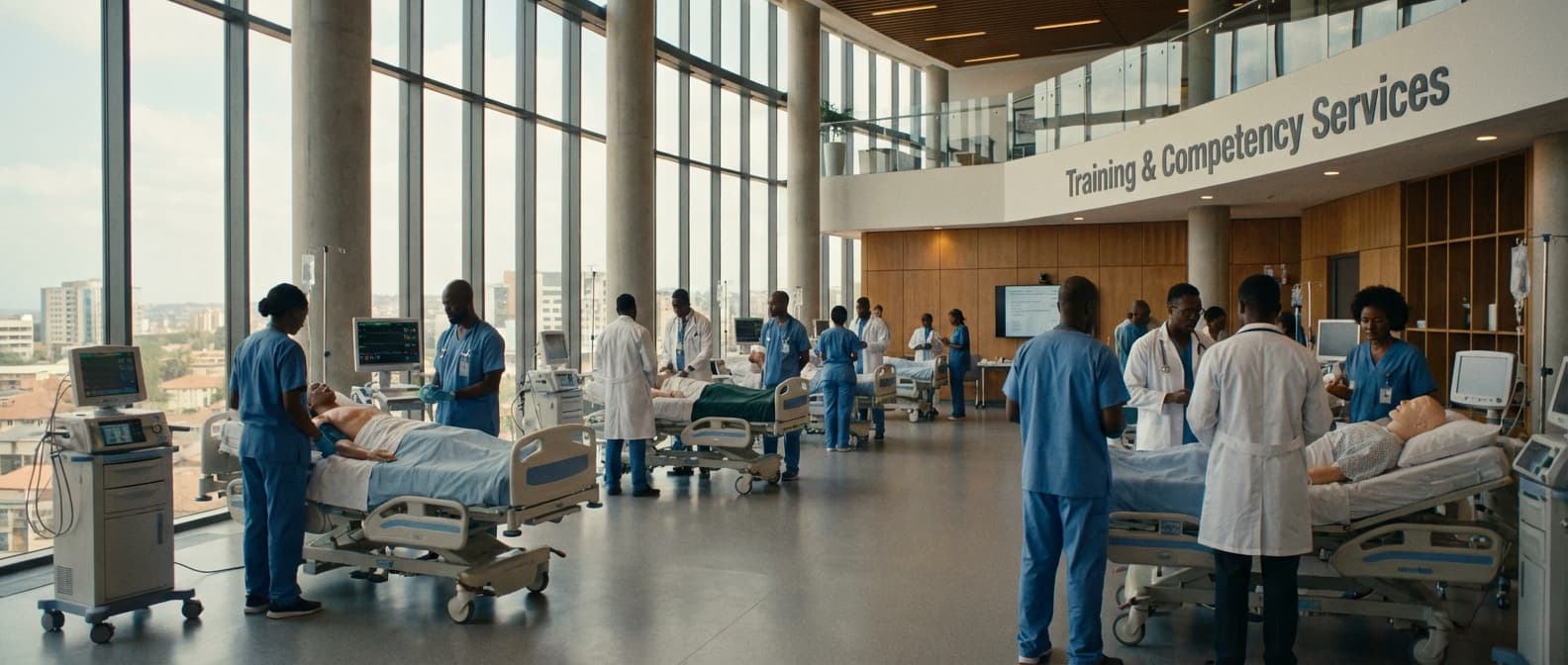
Ultrasound Application Training Service (Protocol-Based) in Eritrea
Engineering Excellence & Technical Support
Ultrasound Application Training Service (Protocol-Based) High-standard technical execution following OEM protocols and local regulatory frameworks.
Standardized Ultrasound Protocols
Our training emphasizes adherence to universally recognized, protocol-based ultrasound examinations, ensuring consistent and reproducible diagnostic quality tailored to the specific needs and common pathologies encountered in Eritrea.
Hands-on Skill Development
Comprehensive practical sessions focus on optimizing image acquisition and interpretation for key ultrasound applications relevant to Eritrean healthcare settings, empowering practitioners with confidence in their diagnostic abilities.
Performance & Quality Assurance
Training includes methodologies for assessing and improving ultrasound performance, incorporating quality assurance measures to ensure efficient workflow and accurate diagnostic outcomes within limited resource environments.
What Is Ultrasound Application Training Service (Protocol-based) In Eritrea?
Ultrasound Application Training Service (Protocol-Based) in Eritrea refers to a structured and standardized educational program designed to impart specialized knowledge and practical skills in the utilization of ultrasound technology for diagnostic purposes. This service is underpinned by established imaging protocols, ensuring consistent and reproducible examination techniques across different practitioners and institutions. The training focuses on adhering to internationally recognized or national guidelines for specific ultrasound examinations, thereby enhancing diagnostic accuracy, patient safety, and the quality of healthcare delivery within the Eritrean context. The protocol-based approach standardizes the acquisition, interpretation, and reporting of ultrasound images.
| Target Audience | Typical Use Cases | Benefits in Eritrea | ||||||||||||
|---|---|---|---|---|---|---|---|---|---|---|---|---|---|---|
| Radiologists and Imaging Specialists: To enhance their expertise in specific ultrasound applications and ensure adherence to standardized protocols for improved diagnostic outcomes. | Obstetrics and Gynecology (OB/GYN) Physicians: For routine antenatal screening, fetal anomaly detection, gynecological assessments, and fertility investigations. | General Practitioners and Family Physicians: To equip them with basic ultrasound skills for point-of-care diagnostics in primary healthcare settings (e.g., abdominal pain assessment, fluid detection). | Surgeons: For pre-operative assessment, intra-operative guidance, and post-operative monitoring. | Medical Sonographers: To provide them with specialized training in protocol-driven ultrasound examinations and advanced imaging techniques. | Internal Medicine Specialists: For evaluating various organ systems, diagnosing conditions like pleural effusions, ascites, and gallstones. | Pediatricians: For examining pediatric patients with specific indications. | Emergency Department Physicians: For rapid bedside assessment of trauma, cardiac function, and fluid status (e.g., FAST scan). | Public Health Professionals: For epidemiological studies, mass screening programs, and monitoring of specific health conditions where ultrasound plays a role. | Expansion of Diagnostic Capabilities: Enabling the local healthcare system to perform a wider range of ultrasound examinations reliably. | Standardization of Care: Ensuring consistency in diagnostic quality across different facilities and practitioners, reducing inter-observer variability. | Improved Patient Management: Facilitating timely and accurate diagnoses, leading to more effective treatment plans and better patient outcomes. | Reduced Need for Referrals: Empowering local healthcare providers to manage more cases internally, reducing reliance on external diagnostic services. | Cost-Effectiveness: Promoting efficient use of ultrasound equipment and resources through standardized protocols and skilled personnel. | Contribution to Medical Research: Providing a foundation for reliable data collection in ultrasound-related clinical research within Eritrea. |
Key Components of Ultrasound Application Training Service (Protocol-Based)
- Theoretical Instruction: Comprehensive lectures covering ultrasound physics, instrumentation, image optimization, anatomical correlation, pathological manifestations, and specific examination protocols for various organ systems.
- Practical Skill Development: Hands-on training sessions utilizing ultrasound phantoms and, where ethically permissible and clinically indicated, supervised patient examinations.
- Protocol Adherence Training: Emphasis on understanding and meticulously following standardized imaging protocols for diverse applications (e.g., abdominal, obstetric, gynecological, vascular, superficial structures).
- Image Interpretation and Reporting: Instruction on recognizing normal and abnormal findings, documenting them accurately, and generating comprehensive diagnostic reports.
- Quality Assurance and Safety: Training on ultrasound safety principles (e.g., ALARA principle), artifact identification and mitigation, and quality control measures.
- Case-Based Learning: Review and discussion of real-world clinical cases to reinforce theoretical knowledge and practical application.
- Competency Assessment: Evaluation of acquired skills and knowledge through written examinations, practical assessments, and case reviews.
Who Needs Ultrasound Application Training Service (Protocol-based) In Eritrea?
The Ultrasound Application Training Service (Protocol-Based) in Eritrea is designed to empower healthcare professionals with standardized, evidence-based ultrasound scanning protocols. This specialized training is crucial for improving diagnostic accuracy, ensuring patient safety, and promoting consistent quality of care across various medical disciplines. By adhering to established protocols, clinicians can perform ultrasound examinations more efficiently and reliably, leading to better patient outcomes and optimized resource utilization within the Eritrean healthcare system.
| Department/Specialty | Specific Needs for Protocol-Based Ultrasound Training | Examples of Ultrasound Applications |
|---|---|---|
| Obstetrics and Gynecology | Standardized protocols for prenatal scans, fetal well-being assessment, gynecological evaluations, and early pregnancy complications. | Antenatal scans, fetal biometry, amniotic fluid index, pelvic ultrasound, transvaginal ultrasound, early pregnancy assessment. |
| Radiology/Diagnostic Imaging | Consistent protocol implementation for a broad range of examinations, reducing inter-operator variability and enhancing diagnostic interpretation. | Abdominal ultrasound (liver, gallbladder, kidneys), thyroid ultrasound, breast ultrasound, scrotal ultrasound, musculoskeletal ultrasound. |
| Emergency Medicine | Rapid and standardized bedside ultrasound protocols for trauma assessment and critical care management (e.g., FAST exam). | FAST (Focused Assessment with Sonography for Trauma), E-FAST, cardiac ultrasound (echocardiography), lung ultrasound. |
| Internal Medicine/General Practice | Application of ultrasound for routine diagnostic work-ups and targeted assessments. | Abdominal screening, bladder scans, deep vein thrombosis (DVT) screening, basic cardiac assessment. |
| Anesthesiology | Guided procedures and regional anesthesia techniques. | Nerve blocks, vascular access guidance, pleural effusion assessment. |
| Pediatrics | Specialized protocols for pediatric patient anatomy and common pediatric conditions. | Cranial ultrasound (neonates), abdominal ultrasound (children), hip ultrasound (infants), urogenital tract ultrasound (children). |
| Surgical Departments | Pre-operative and post-operative assessment, guiding interventional procedures. | Gallbladder assessment, appendicitis evaluation, post-operative fluid collection assessment, abscess localization. |
| Medical Training Institutions | To equip future healthcare professionals with standardized ultrasound skills from the outset. | Integration of protocol-based training into radiology, obstetrics, internal medicine, and emergency medicine curricula. |
Target Customers and Departments in Eritrea
- Hospitals (Public and Private)
- Maternal and Child Health Centers
- Diagnostic Imaging Centers
- Tertiary Care Facilities
- Primary Healthcare Clinics (with ultrasound capabilities)
- Medical Training Institutions
Ultrasound Application Training Service (Protocol-based) Process In Eritrea
This document outlines the workflow for the Ultrasound Application Training Service (Protocol-Based) in Eritrea. The process begins with an initial inquiry and culminates in the successful execution of the training program. This protocol-based approach ensures standardized and effective training for ultrasound practitioners in Eritrea.
| Phase | Key Activities | Deliverables/Outcomes |
|---|---|---|
| Inquiry & Needs Assessment | Client contact, discussion of training needs, skill assessment | Identified training requirements, potential scope |
| Proposal Development | Tailored proposal creation (objectives, curriculum, duration, cost) | Training Proposal |
| Agreement & Scheduling | Contract signing, payment terms, schedule finalization | Signed Agreement, Confirmed Training Schedule |
| Pre-Training Preparation | Curriculum finalization, trainer assignment, logistics (venue, equipment), registration | Prepared Training Materials, Assigned Trainers, Arranged Logistics |
| Training Execution | Theoretical sessions, practical demonstrations, hands-on practice, case study analysis, Q&A | Trained Participants, Improved Skillset |
| Post-Training Assessment & Evaluation | Competency assessment, participant feedback, trainer evaluation | Performance Assessment Results, Feedback Reports |
| Certification & Reporting | Issuance of certificates, creation of training report | Certificates of Completion, Training Summary Report |
| Follow-up & Support | Optional remote support, case review, consultation | Continued Professional Development Support |
Ultrasound Application Training Service (Protocol-Based) Workflow in Eritrea
- Inquiry & Needs Assessment: Potential clients (hospitals, clinics, individual practitioners) express interest in ultrasound training. A preliminary discussion assesses their specific needs, current skill levels, desired application areas (e.g., obstetrics, general radiology, vascular), and available resources.
- Proposal Development: Based on the needs assessment, a customized training proposal is developed. This proposal details the training objectives, curriculum outline (aligned with established protocols), duration, location, required equipment, trainer qualifications, and cost estimation.
- Agreement & Scheduling: Upon client acceptance of the proposal, a formal agreement is signed. This includes the scope of work, payment terms, and a mutually agreed-upon training schedule.
- Pre-Training Preparation: This phase involves several key activities: Curriculum Finalization: The detailed training curriculum, including specific protocols, case studies, and practical exercises, is finalized. Trainer Assignment: Experienced and qualified ultrasound trainers are assigned to the program. Logistics Arrangement: Venue booking (if applicable), equipment procurement or arrangement, and participant registration are managed. Pre-Assessment (Optional but Recommended): A brief pre-assessment of participants can help tailor the training further.
- Training Execution: The core of the service involves the delivery of the training program. This typically includes: Theoretical Sessions: Lectures, presentations, and discussions covering ultrasound physics, instrumentation, anatomy, physiology, and specific application protocols. Practical Demonstrations: Trainers demonstrate scanning techniques using phantoms and/or real patients (with informed consent). Hands-on Practice: Participants gain hands-on experience under the direct supervision of trainers, practicing scanning techniques and interpreting images according to established protocols. Case Study Analysis: Review and discussion of various clinical cases to reinforce learning and develop diagnostic skills. Q&A and Feedback Sessions: Regular opportunities for participants to ask questions and receive feedback.
- Post-Training Assessment & Evaluation: Competency Assessment: Participants undergo assessments to evaluate their understanding of theoretical concepts and their practical scanning skills. This may involve image review, written exams, or practical skill demonstrations. Participant Feedback: Participants provide feedback on the training program, trainers, and content. Trainer Evaluation: Trainers assess the progress and learning of each participant.
- Certification & Reporting: Upon successful completion of the training and assessment, participants receive a certificate of completion. A comprehensive report summarizing the training activities, participant performance, and any recommendations is provided to the client.
- Follow-up & Support (Optional): Depending on the agreement, ongoing support may be offered, such as remote case review, consultation with trainers, or refresher courses.
Ultrasound Application Training Service (Protocol-based) Cost In Eritrea
Providing accurate and specific cost information for Ultrasound Application Training Services (Protocol-Based) in Eritrea is challenging due to several influencing factors. The Eritrean economy and market dynamics mean that official, publicly available pricing is scarce. However, we can outline the key factors that would dictate the cost and provide estimated ranges based on general principles and comparable service costs in similar regional markets, acknowledging that these are approximations. Training costs are typically determined by the duration of the program, the level of specialization, the number of participants, the qualifications of the instructors, and the logistical arrangements. For protocol-based training, the complexity and comprehensiveness of the specific ultrasound protocols being taught will also play a significant role. The economic context of Eritrea, including inflation, currency exchange rates, and the availability of specialized trainers, will ultimately shape the final pricing. Therefore, obtaining direct quotes from training providers is essential for precise figures.
| Service Component | Estimated Cost Range (ERITREAN NAKFA - ERN) | Notes |
|---|---|---|
| Basic Protocol Training (e.g., 3-5 days, general abdomen) | 30,000 - 75,000 ERN | Assumes a local instructor, group of 5-10 participants, standard materials. |
| Specialized Protocol Training (e.g., 7-10 days, obstetrics/gynecology or cardiology) | 70,000 - 150,000 ERN | Higher cost due to specialized knowledge, potentially longer duration. May involve more advanced simulations. |
| Advanced/Fellowship Level Training (e.g., multiple weeks, complex protocols) | 150,000+ ERN | Significant investment, likely involving international faculty or extensive on-site support. |
| Instructor Travel & Accommodation (if applicable, per instructor, per week) | 20,000 - 50,000 ERN | Highly variable based on origin and accommodation standards. |
| Equipment Rental/Usage Fees (per day, if not included) | 5,000 - 15,000 ERN | Dependent on the type and number of ultrasound machines. |
Key Pricing Factors for Ultrasound Application Training in Eritrea
- Duration of the Training Program (e.g., number of days, weeks)
- Level of Specialization (e.g., general ultrasound, specific organ systems like cardiology, obstetrics, abdominal)
- Number of Participants (group discounts may apply)
- Qualifications and Experience of Instructors (e.g., local vs. international experts)
- Training Location and Logistics (e.g., on-site at a facility, dedicated training center, travel/accommodation for trainers)
- Equipment and Materials Provided (e.g., access to ultrasound machines, phantoms, study materials)
- Certification and Assessment Costs (if applicable)
- Currency Exchange Rates and Local Economic Conditions
- Demand for the Training Service
Affordable Ultrasound Application Training Service (Protocol-based) Options
Our Affordable Ultrasound Application Training Service offers a cost-effective and structured approach to mastering ultrasound protocols. We understand the importance of both financial prudence and comprehensive skill development for healthcare professionals. Our service is designed to be accessible, ensuring high-quality training without prohibitive costs. We achieve this through flexible value bundles and intelligent cost-saving strategies.
| Strategy | Description | Benefit |
|---|---|---|
| Bundled Discounts | Purchasing multiple application modules or a comprehensive bundle offers a significant price reduction compared to individual module purchases. | Lower overall training cost per application. |
| Subscription Models | Monthly or annual subscriptions provide ongoing access to our full training library, including updates and new content, at a predictable and affordable rate. | Continuous learning and cost predictability. |
| Group Rates & Organizational Licenses | Special pricing for teams or entire departments, encouraging collaborative learning and ensuring consistent protocol adherence across an institution. | Significant savings for multiple learners and standardized training. |
| Digital-First Approach | Eliminating the need for physical materials and in-person instructors reduces overhead, allowing us to offer lower prices. | Reduced operational costs passed on as savings. |
| Self-Paced Learning | Learners can progress at their own speed, avoiding the cost of instructor-led sessions and optimizing study time. | Flexibility and efficiency for the learner. |
| Tiered Access Levels | Offering different levels of access within bundles (e.g., basic videos vs. interactive simulations) allows for customization to budget and need. | Cost control based on desired features. |
Our Value Bundles Explained
- {"title":"Foundation Bundle","description":"Ideal for beginners or those looking to solidify core protocol knowledge. Covers essential ultrasound physics, common artifact identification, and fundamental scanning techniques for basic applications. Includes access to a curated library of protocol videos and interactive quizzes."}
- {"title":"Specialty Bundle","description":"Targets specific clinical areas such as Abdominal, Cardiac, OB/GYN, or Vascular. Offers in-depth protocol training for that specialty, including advanced techniques, image optimization, and common pathology recognition. Features case-based learning modules and expert-led Q&A sessions."}
- {"title":"Comprehensive Bundle","description":"Our most complete offering, combining Foundation and multiple Specialty Bundles. Provides a holistic ultrasound education, enabling professionals to gain proficiency across a broad range of applications. Includes personalized feedback on submitted scans and priority access to new content."}
- {"title":"Custom Bundle","description":"For organizations or individuals with unique training needs. We can tailor a bundle to focus on specific protocols or skill gaps, ensuring maximum relevance and return on investment."}
Verified Providers In Eritrea
In Eritrea's evolving healthcare landscape, identifying trustworthy and credentialed providers is paramount for individuals seeking quality medical services. Franance Health has emerged as a leading entity, distinguished by its rigorous vetting process and commitment to excellence. This document outlines why Franance Health credentials signify the best choice for healthcare in Eritrea, detailing their verification standards and the advantages they offer to patients.
| Credential Type | Verification Method | Significance for Patients |
|---|---|---|
| Medical Degrees & Diplomas | Cross-referencing with official academic institutions and medical councils. | Confirms foundational medical education and theoretical knowledge. |
| Professional Licenses | Verification with the Eritrean Ministry of Health or equivalent licensing bodies. | Ensures legal authorization to practice medicine in Eritrea. |
| Specialty Certifications | Validation of board certifications from recognized medical societies (local and international). | Confirms advanced training and expertise in a specific medical field. |
| Work Experience | Reference checks and verification of past employment at reputable healthcare facilities. | Indicates practical application of skills and experience in real-world settings. |
| Continuing Medical Education (CME) | Review of participation in accredited training programs and workshops. | Demonstrates commitment to staying current with medical advancements and best practices. |
| Ethical Conduct & Patient Reviews | Background checks, disciplinary record review, and monitored patient feedback. | Assesses professionalism, patient rapport, and commitment to ethical healthcare. |
Why Franance Health Credentials Represent the Best Choice in Eritrea:
- Rigorous Verification Process: Franance Health employs a multi-faceted approach to verify the credentials of every healthcare provider on its platform. This includes cross-referencing educational qualifications with relevant Eritrean and international medical boards, confirming professional licenses, and scrutinizing work experience. This meticulous process ensures that only qualified and legitimate practitioners are listed.
- Commitment to Ethical Standards: Beyond formal qualifications, Franance Health assesses providers for their adherence to ethical medical practices and patient care standards. This often involves reviewing past performance, patient feedback mechanisms, and ensuring compliance with local healthcare regulations and international best practices.
- Focus on Specialization and Expertise: The platform highlights specialists across various medical disciplines. Franance Health verifies the specific certifications and ongoing training that confirm a provider's expertise in their chosen field, allowing patients to easily find the right doctor for their specific needs.
- Enhanced Patient Trust and Safety: By presenting verified providers, Franance Health significantly reduces the risk of patients encountering unqualified or fraudulent practitioners. This builds essential trust, empowering individuals to make informed decisions about their health with confidence.
- Streamlined Access to Quality Care: The verification process not only ensures quality but also makes it easier for patients to navigate the healthcare system. Franance Health acts as a reliable gateway, connecting individuals with credible doctors and facilities, saving them time and potential stress.
- Continuous Monitoring and Updates: Franance Health's commitment extends beyond initial verification. They engage in ongoing monitoring of their listed providers to ensure continued adherence to standards and to update information as new qualifications or changes occur. This dynamic approach maintains the integrity of the platform.
- Adherence to International Benchmarks: Where applicable, Franance Health aligns its verification criteria with international healthcare accreditation standards, further reinforcing the caliber of providers it endorses. This provides an additional layer of assurance for those seeking globally recognized quality.
Scope Of Work For Ultrasound Application Training Service (Protocol-based)
This Scope of Work (SOW) outlines the requirements for a protocol-based Ultrasound Application Training Service. The service will focus on enhancing the proficiency of healthcare professionals in utilizing ultrasound technology according to established clinical protocols. This document details the technical deliverables and standard specifications to ensure high-quality and consistent training outcomes.
| Deliverable | Description | Standard Specifications | Timeline (Est.) |
|---|---|---|---|
| Training Curriculum Development | Development of a comprehensive, protocol-driven training curriculum tailored to specific ultrasound applications (e.g., abdominal, obstetric, vascular, cardiac). | Curriculum must align with recognized professional body guidelines (e.g., AIUM, ASE, SVU). Includes theoretical modules, practical scanning guides, case studies, and assessment tools. | 2-4 Weeks (Pre-training) |
| Training Material Production | Creation of high-quality training materials, including presentations, handbooks, visual aids, and simulated scanning environments (if applicable). | Materials must be clear, concise, and visually engaging. Digital and/or print formats as agreed. Content must be accurate and up-to-date. | 2-4 Weeks (Pre-training) |
| On-site/Remote Training Sessions | Delivery of structured training sessions conducted by certified and experienced sonographers/instructors. | Session duration and frequency to be agreed. Must include lectures, demonstrations, hands-on practice with ultrasound equipment and phantoms/simulators, and supervised scanning. | Duration: 1-5 Days per module (as agreed) |
| Protocol-Specific Scanning Guides | Provision of detailed, step-by-step guides for performing ultrasound examinations according to specified protocols. | Guides must include optimal probe selection, patient positioning, transducer manipulation, key anatomical landmarks, and image acquisition parameters for each protocol. | Provided as part of Training Materials |
| Image Quality Assessment Tools | Development or provision of checklists and rubrics for evaluating image quality and protocol adherence. | Tools should objectively assess parameters such as image resolution, artifact minimization, appropriate caliper placement, and completeness of scan planes. | Provided as part of Training Materials |
| Competency Assessments | Design and administration of assessments to evaluate trainee competency in applying ultrasound protocols and optimizing image acquisition. | Includes written tests, practical scanning evaluations (live or recorded), and case study analysis. Minimum pass criteria to be defined. | Integrated throughout training and at conclusion |
| Post-Training Support | Provision of limited post-training support to address emergent questions and reinforce learning. | Includes email/phone support or designated Q&A sessions for a defined period post-training. | 1-2 Weeks (Post-training) |
| Training Report | A comprehensive report detailing the training conducted, participant performance, and recommendations. | Report should include attendance records, assessment scores, identified areas for improvement, and overall training effectiveness. | 1 Week (Post-training) |
Key Training Areas and Objectives
- Understanding Ultrasound Physics and Instrumentation: Trainees will gain a foundational knowledge of ultrasound principles, transducer technology, image generation, and artifact identification.
- Protocol Adherence and Application: The core of the training will focus on applying specific, pre-defined ultrasound protocols for various anatomical regions and clinical scenarios.
- Image Optimization and Quality Assurance: Trainees will learn techniques for optimizing image acquisition parameters to achieve diagnostic quality and ensure adherence to quality standards.
- Standardized Reporting and Documentation: Training will cover proper documentation and reporting of ultrasound findings in accordance with established guidelines.
- Troubleshooting and Problem Solving: Participants will develop skills to identify and address common technical issues and image acquisition challenges.
- Ergonomics and Patient Safety: Emphasis will be placed on proper scanning techniques to ensure patient comfort and safety, as well as the physical well-being of the sonographer.
- Introduction to Advanced Techniques (Optional/Advanced Module): Depending on the service tier, training may include introductions to advanced ultrasound modalities or specific applications.
Service Level Agreement For Ultrasound Application Training Service (Protocol-based)
This Service Level Agreement (SLA) outlines the performance and availability commitments for the Ultrasound Application Training Service, specifically for protocol-based training modules. It defines the expected response times for support requests and the guaranteed uptime for accessing training materials and interactive modules.
| Service Component | Response Time Target (Business Hours) | Resolution Time Target (Business Hours) | Uptime Guarantee |
|---|---|---|---|
| Access to Protocol-Based Training Modules (Web Portal/Platform) | 1 Hour for acknowledgment of Critical Issue; 4 Business Hours for acknowledgment of Major Issue | 4 Business Hours for Critical Issue; 1 Business Day for Major Issue | 99.5% |
| Support for Technical Issues with Module Functionality (e.g., broken links, video playback) | 2 Business Hours for acknowledgment | 8 Business Hours for resolution | N/A (covered by module access) |
| Inquiries regarding Training Content or Protocol Application | 4 Business Hours for acknowledgment | 1 Business Day for response (may require consultation with subject matter expert) | N/A (covered by module access) |
| System Updates and Scheduled Maintenance | Advance notification of 48 hours via email | N/A | Scheduled maintenance periods will not exceed 4 hours per month and will be communicated in advance, typically occurring outside of core business hours. |
Key Definitions
- Business Hours: Monday through Friday, 9:00 AM to 5:00 PM in the Customer's primary time zone, excluding public holidays.
- Support Request: A communication from the Customer to the Service Provider regarding a technical issue, question, or request for assistance related to the Ultrasound Application Training Service.
- Uptime: The percentage of time the Ultrasound Application Training Service is accessible and operational for the Customer.
- Downtime: The percentage of time the Ultrasound Application Training Service is inaccessible or not operational.
- Protocol-Based Training: Training modules specifically designed around established ultrasound protocols and procedures.
- Critical Issue: A service interruption that prevents the Customer from accessing any training modules or significantly impacts the ability to complete training objectives.
- Major Issue: A service degradation that significantly slows down or impairs access to specific training modules, but does not prevent overall access.
Frequently Asked Questions

Ready when you are
Let's scope your Ultrasound Application Training Service (Protocol-Based) in Eritrea project in Eritrea.

Scaling healthcare logistics and technical systems across the entire continent.