
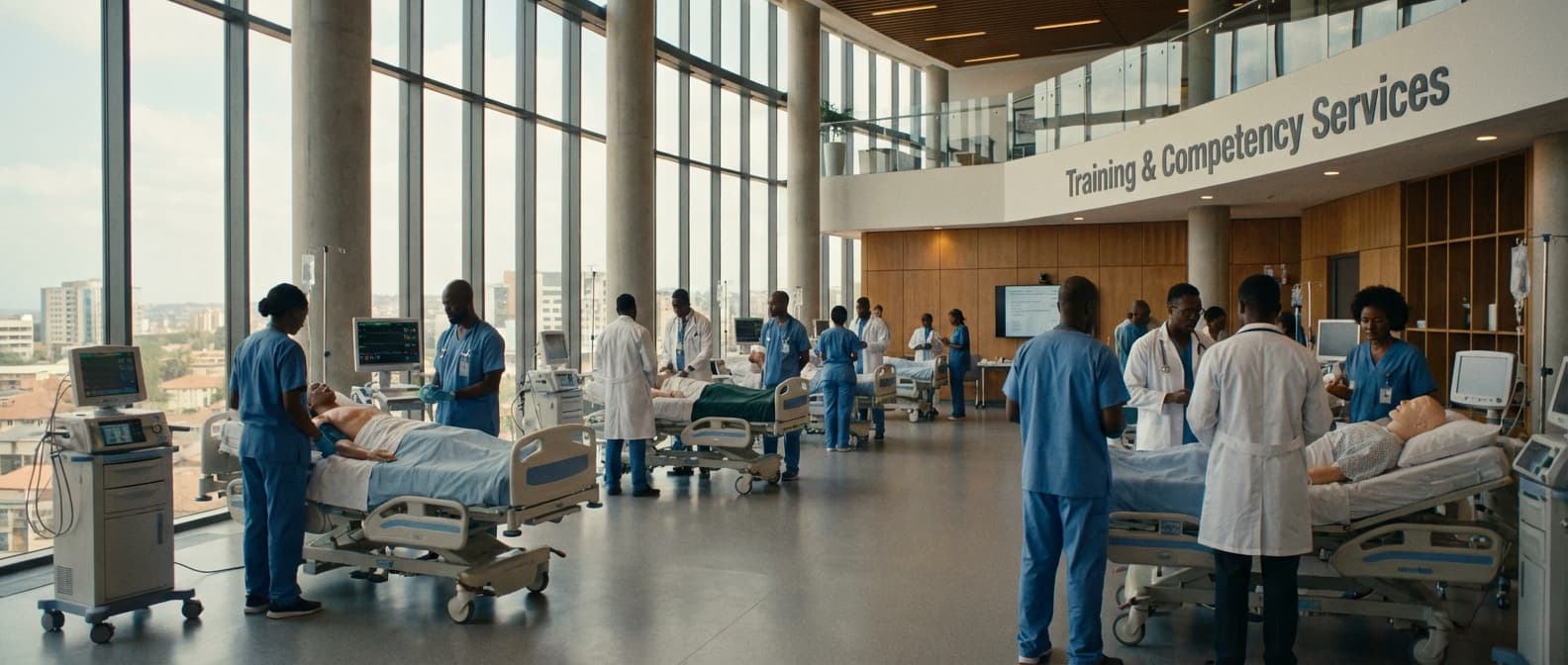
MRI Operator Training Service (Radiographers) in Eritrea
Engineering Excellence & Technical Support
MRI Operator Training Service (Radiographers) High-standard technical execution following OEM protocols and local regulatory frameworks.
Advanced Neuro-Imaging Protocols
Mastering specialized MRI sequences for detailed brain and spinal cord visualization, crucial for diagnosing neurological conditions prevalent in Eritrea. Focus on optimizing contrast, reducing artifacts, and understanding advanced applications like fMRI and DTI.
Cardiovascular MRI Excellence
Training in acquiring high-quality cardiac MRI scans to assess heart structure, function, and blood flow. Learn techniques for ECG-gating, stress imaging, and identifying congenital heart defects and acquired cardiovascular diseases relevant to Eritrean demographics.
Cross-Disciplinary MRI Integration
Understanding how MRI integrates with other diagnostic modalities (e.g., ultrasound, X-ray) and clinical specialties in Eritrea. Develop skills in interpreting MRI findings within the broader patient context and collaborating effectively with referring physicians for improved patient care.
What Is Mri Operator Training Service (Radiographers) In Eritrea?
MRI Operator Training Service (Radiographers) in Eritrea refers to a specialized educational program designed to equip qualified radiographers with the knowledge and practical skills necessary to safely and effectively operate Magnetic Resonance Imaging (MRI) equipment. This service aims to ensure the competent use of MRI technology for diagnostic imaging within Eritrean healthcare facilities. The training encompasses theoretical understanding of MRI physics, safety protocols, patient positioning, image acquisition techniques, artifact reduction, and basic troubleshooting. It typically involves a blend of classroom instruction, hands-on simulation, and supervised clinical practice on operational MRI scanners.
| Target Audience | Purpose/Need | Typical Use Cases |
|---|---|---|
| Certified Radiographers in Eritrea | To develop the expertise required for independent operation of MRI scanners, enhancing diagnostic capabilities within the country. | Acquiring diagnostic images for neurological conditions (e.g., stroke, tumors, multiple sclerosis), musculoskeletal injuries, abdominal and pelvic pathologies, and cardiovascular assessments. |
| Healthcare Institutions in Eritrea (Public and Private) | To establish and maintain a skilled workforce capable of utilizing advanced diagnostic imaging modalities, thereby improving patient care and reducing the need for overseas referrals for MRI examinations. | Establishing new MRI service departments, upgrading existing radiology services with MRI capabilities, and ensuring compliance with international standards for medical imaging. |
| Radiology Departments aiming for advanced imaging services | To gain proficiency in operating MRI scanners and contributing to the diagnostic accuracy and efficiency of the department. | Performing specialized MRI examinations such as functional MRI (fMRI), diffusion-weighted imaging (DWI), and MR angiography (MRA). |
Key Components of MRI Operator Training Service (Radiographers)
- MRI Physics and Principles: Understanding signal generation, image formation, pulse sequences, and contrast mechanisms.
- MRI Safety Protocols: Comprehensive training on magnetic field safety, radiofrequency (RF) exposure, acoustic noise, and contrast agent administration safety.
- Patient Care and Management: Techniques for patient preparation, screening for contraindications (e.g., metallic implants, pacemakers), anesthesia/sedation coordination, and managing patient anxiety.
- Image Acquisition Techniques: Learning to select appropriate pulse sequences and parameters for various anatomical regions and clinical indications, including advanced imaging techniques.
- Image Processing and Interpretation Fundamentals: Basic understanding of image manipulation, artifact identification, and correlation with clinical information for quality assurance.
- Quality Assurance and Quality Control (QA/QC): Procedures for maintaining optimal scanner performance and ensuring diagnostic image quality.
- Equipment Operation and Maintenance: Familiarization with specific MRI scanner models, basic operational procedures, and reporting of equipment malfunctions.
Who Needs Mri Operator Training Service (Radiographers) In Eritrea?
This service is crucial for ensuring qualified and proficient radiographers are available to operate MRI machines effectively and safely in Eritrea. The need arises from the introduction of new MRI technology, the retirement of experienced operators, or a general increase in demand for advanced imaging services. The training ensures adherence to best practices, patient safety protocols, and optimal image acquisition for accurate diagnosis.
| Target Customer/Department | Rationale for Training | Key Personnel to be Trained |
|---|---|---|
| Government Hospitals | To ensure the efficient operation of existing and newly acquired MRI machines, improve diagnostic accuracy, and provide essential imaging services to the public. | Radiographers, Radiology Technologists, MRI Supervisors |
| Private Hospitals and Clinics | To meet the growing demand for advanced imaging, offer competitive services, and maintain high standards of patient care and safety. | Radiographers, Imaging Technicians, Clinic Managers overseeing imaging departments |
| Diagnostic Imaging Centers | To specialize in MRI services, attract referrals, and provide expert interpretation and operation of MRI equipment. | Specialized MRI Technologists, Lead Radiographers |
| Ministry of Health | To facilitate the rollout of MRI services in underserved areas, train a national pool of skilled operators, and ensure standardized quality of care. | Radiology Department Heads, Training Coordinators, Health Sector Administrators |
| Educational Institutions (Medical Schools, Technical Colleges) | To equip future generations of radiographers with the latest MRI knowledge and practical skills, ensuring a sustainable workforce. | Radiology Lecturers, Clinical Instructors, Final-year Radiology Students |
Target Customers and Departments for MRI Operator Training Service in Eritrea
- Government Hospitals
- Private Hospitals and Clinics
- Diagnostic Imaging Centers
- Ministry of Health (for public health initiatives and capacity building)
- Educational Institutions (for future radiographers and medical professionals)
Mri Operator Training Service (Radiographers) Process In Eritrea
This document outlines the typical workflow for an MRI Operator Training Service for Radiographers in Eritrea, from initial inquiry to the successful execution of the training program. The process is designed to ensure that the training meets the specific needs of the Eritrean healthcare system and adheres to relevant standards.
| Phase | Stage/Step | Key Activities | Responsible Parties | Deliverables/Outcomes |
|---|---|---|---|---|
| Phase 1: Inquiry and Needs Assessment | Initial Inquiry | Healthcare institution (hospital, ministry of health) expresses interest in MRI operator training. | Prospective Client (Eritrean Healthcare Institution) | Formal or informal expression of training need. |
| Information Gathering | Training provider seeks detailed information about the client's current MRI facilities, existing radiographer skill levels, specific imaging modalities requiring training, number of trainees, and desired learning outcomes. | Training Provider, Prospective Client | Understanding of training requirements, target audience, and existing infrastructure. | |
| Needs Assessment Visit (Optional but Recommended) | On-site visit to assess equipment, observe current practices, and conduct interviews with potential trainees and supervisors. | Training Provider | Detailed understanding of the practical training environment and specific challenges. | |
| Phase 2: Proposal Development and Negotiation | Proposal Formulation | Development of a comprehensive training proposal outlining curriculum, duration, methodology, trainers, equipment requirements, assessment methods, and cost. | Training Provider | Formal Training Proposal. |
| Proposal Presentation and Discussion | Presentation of the proposal to the client, with open discussion and feedback. | Training Provider, Prospective Client | Clarified proposal, addressing client's concerns. | |
| Negotiation and Refinement | Negotiation of terms, including cost, schedule, and any specific customizations. | Training Provider, Prospective Client | Agreed-upon terms and conditions. | |
| Phase 3: Agreement and Pre-Training Preparations | Contract/Agreement Signing | Formalization of the training agreement. | Training Provider, Prospective Client | Signed Contract/Memorandum of Understanding (MOU). |
| Logistics and Scheduling | Confirmation of training dates, venue, and logistical arrangements (travel, accommodation for trainers if applicable). | Training Provider, Prospective Client | Finalized training schedule and logistical plan. | |
| Participant Selection and Pre-Assessment | Client identifies and nominates trainees. Pre-assessment to gauge existing knowledge might be conducted. | Prospective Client, Training Provider (if pre-assessment is part of the plan) | List of selected trainees, baseline skill assessment (if performed). | |
| Material Preparation | Development or tailoring of training materials, including presentations, manuals, case studies, and simulation exercises. | Training Provider | Ready-to-use training curriculum and materials. | |
| Phase 4: Training Execution | Theoretical Training | Classroom-based lectures, presentations, and discussions covering MRI physics, safety, anatomy, pathology, image acquisition protocols, and quality control. | Training Provider (Trainers) | Enhanced theoretical knowledge of trainees. |
| Practical/Hands-on Training | Supervised training on actual MRI scanners, covering patient positioning, protocol selection, image acquisition, artifact identification, and troubleshooting. | Training Provider (Trainers), Trainees | Proficiency in operating MRI equipment and acquiring diagnostic images. | |
| Simulation and Case Studies | Use of simulators (if available) and real-patient case studies to reinforce learning and problem-solving skills. | Training Provider (Trainers), Trainees | Improved diagnostic interpretation and application of knowledge. | |
| Continuous Assessment | Ongoing monitoring of trainee progress through quizzes, practical demonstrations, and feedback sessions. | Training Provider (Trainers) | Identification of areas requiring further attention. | |
| Phase 5: Post-Training Evaluation and Support | Final Assessment | Formal evaluation of trainees' knowledge and practical skills through written exams, practical tests, and case reviews. | Training Provider | Assessment of training effectiveness and individual trainee competence. |
| Certification | Issuance of certificates of completion to successful trainees. | Training Provider | Formal recognition of training achievement. | |
| Post-Training Report | Submission of a comprehensive report detailing training activities, trainee performance, and recommendations. | Training Provider | Documentation of training outcomes and insights. | |
| Follow-up and Support | Providing ongoing technical support, refresher courses, or advanced training as needed. Periodic follow-up to monitor application of learned skills. | Training Provider, Client | Sustained skill proficiency and system improvement. |
MRI Operator Training Service Workflow for Radiographers in Eritrea
- Phase 1: Inquiry and Needs Assessment
- Phase 2: Proposal Development and Negotiation
- Phase 3: Agreement and Pre-Training Preparations
- Phase 4: Training Execution
- Phase 5: Post-Training Evaluation and Support
Mri Operator Training Service (Radiographers) Cost In Eritrea
Providing an exact cost for MRI Operator Training (Radiographers) in Eritrea is challenging due to several factors. Eritrea's economy, limited access to advanced training facilities, and the specific nature of specialized medical training mean that costs can vary significantly. However, we can outline the primary pricing factors and provide estimated ranges based on typical international and regional training models, converted to Eritrean Nakfa (ERN).
| Training Type/Level | Estimated Range (ERN) | Notes |
|---|---|---|
| Basic MRI Principles Workshop (2-3 days) | 2,500 - 7,500 ERN | Focus on fundamental concepts, safety, and basic operation. May be conducted locally if trainers are available. |
| Comprehensive MRI Operator Certification (Several weeks to months) | 15,000 - 60,000+ ERN | Covers theory, practical scanning, image interpretation basics, and safety protocols. Could involve regional or international collaboration. Costs can escalate significantly for international programs. |
| Advanced MRI Techniques Training (e.g., specific sequences, applications) | 8,000 - 30,000+ ERN (per module) | Specialized training for experienced operators. Costs depend on the complexity of the technique and the duration. |
| On-site Training at Healthcare Facility (if feasible) | Variable (Negotiated) | Costs depend on the facility's willingness to host, trainer fees, and duration. Might be more affordable than external institutions. |
| International Training Programs (including travel, accommodation) | 50,000 - 150,000+ ERN | Significantly higher due to international travel, visas, accommodation, and higher training fees in developed countries. This is a less common and more expensive option for Eritrean professionals. |
Key Pricing Factors for MRI Operator Training in Eritrea:
- Training Provider: Whether the training is conducted by a local Eritrean institution (if available and accredited), a regional institution in a neighboring country, or an international organization. International training will generally be more expensive.
- Training Duration and Intensity: The length of the course, from short workshops to comprehensive certification programs, will directly impact the cost. More intensive and longer programs require more resources.
- Curriculum and Content: The depth and breadth of the MRI operator curriculum, including theoretical knowledge, practical application, safety protocols, and advanced imaging techniques, will influence pricing.
- Location of Training: On-site training within Eritrea might be more cost-effective if facilities and qualified trainers are available locally. Off-site training, especially abroad, will incur additional costs for travel, accommodation, and per diem.
- Accreditation and Certification: Training programs leading to internationally recognized certifications will likely command higher prices due to the rigor of the accreditation process and the value of the certification.
- Technology and Equipment Access: The cost of using and maintaining MRI equipment for hands-on training is a significant factor. Access to modern MRI machines will influence the training fees.
- Trainer Expertise and Qualifications: Highly experienced and qualified MRI radiographers and physicists as trainers will command higher fees.
- Administrative and Overhead Costs: The operational expenses of the training institution, including facility maintenance, administrative staff, and marketing, are factored into the overall cost.
- Number of Participants: Group training often offers a per-participant discount compared to individual training.
- Materials and Resources: The provision of textbooks, online resources, simulation software, and other learning materials will add to the cost.
Affordable Mri Operator Training Service (Radiographers) Options
This service offers comprehensive and affordable Magnetic Resonance Imaging (MRI) operator training specifically designed for radiographers. We understand the financial constraints faced by healthcare facilities and individual professionals, hence our focus on providing cost-effective solutions without compromising on the quality of education. Our training equips radiographers with the necessary theoretical knowledge and practical skills to safely and effectively operate MRI scanners, interpret images, and adhere to strict safety protocols. We offer flexible learning formats and value-driven packages to ensure accessibility and a strong return on investment.
| Value Bundle | Included Components | Target Audience | Estimated Cost Savings (vs. individual modules) | Key Features | |
|---|---|---|---|---|---|
| Core Operator Essentials | Basic MRI Physics, Scanner Operation Fundamentals, Patient Preparation & Safety Protocols, Image Acquisition Basics. | Radiographers new to MRI, or those needing a foundational refresher. | 15-20% | Hands-on simulation, interactive modules, essential safety certification. | Ideal for entry-level MRI technologists. |
| Advanced Imaging Techniques | Advanced Pulse Sequences, Contrast Agent Administration & Safety, Artifact Reduction, Introduction to specific MRI applications (e.g., Neuro, Musculoskeletal). | Radiographers with core operator skills seeking specialization. | 10-15% | Case studies, advanced protocol discussions, specialized equipment familiarization. | Enhances specialized skill sets. |
| Comprehensive Certification Package | Includes all components of Core Operator Essentials and Advanced Imaging Techniques, plus mock certification exam and personalized feedback. | Radiographers aiming for professional certification. | 20-25% | Full-spectrum learning, exam preparation support, dedicated instructor guidance. | Maximizes certification success. |
| Facility-Wide Training Solution | Customizable training programs for groups, on-site training options, administrative reporting on trainee progress. | Hospitals, imaging centers, and healthcare networks. | Customizable based on group size and modules. | Scalable, cost-effective for multiple staff, consistent training delivery. | Streamlines workforce development and ensures standardization. |
Key Benefits of Our Affordable MRI Operator Training:
- Cost-Effective Curriculum: Developed to be budget-friendly while covering all essential MRI operator competencies.
- Industry-Experienced Instructors: Learn from seasoned professionals with extensive practical MRI experience.
- Flexible Learning Options: Accommodating various schedules with in-person, hybrid, and online modules.
- Comprehensive Skill Development: Focus on technical operation, patient care, safety, and basic image interpretation.
- Career Advancement: Enhance your qualifications and open doors to specialized roles in medical imaging.
- Compliance Ready: Training aligned with current industry standards and regulatory requirements.
Verified Providers In Eritrea
In Eritrea's evolving healthcare landscape, identifying truly verified and credentialed providers is paramount for ensuring quality patient care. Franance Health stands out as a premier organization, meticulously vetting its network to offer a level of trust and expertise that is unparalleled. Their rigorous credentialing process goes beyond basic qualifications, delving into a provider's experience, ethical standing, and commitment to continuous professional development. This dedication to thorough verification means that when you choose a provider through Franance Health, you are selecting from a pool of highly competent and reliable healthcare professionals.
| Credentialing Aspect | Franance Health's Standard | Benefit to Patients |
|---|---|---|
| Educational Background | Verification of degrees from accredited institutions. | Ensures foundational medical knowledge. |
| Licensure and Certifications | Confirmation of valid and up-to-date medical licenses and relevant certifications. | Guarantees legal and professional authorization to practice. |
| Professional Experience | Thorough review of practice history, including areas of specialization and duration. | Identifies providers with practical, hands-on expertise. |
| Peer Reviews and References | Collection of feedback from respected colleagues and professional references. | Provides an objective assessment of a provider's capabilities and reputation. |
| Background Checks | Comprehensive checks for any disciplinary actions or criminal history. | Ensures patient safety and integrity of the healthcare provider. |
| Continuous Professional Development (CPD) | Encouragement and verification of ongoing training and education. | Confirms providers stay current with medical advancements and best practices. |
Why Franance Health Credentials Represent the Best Choice:
- Rigorous Verification Process: Franance Health employs a multi-layered approach to credentialing, ensuring all listed providers meet the highest standards of education, licensure, and practical experience.
- Commitment to Quality: Beyond initial checks, their process includes ongoing monitoring of provider performance and patient feedback, guaranteeing sustained excellence.
- Ethical Standards: Franance Health prioritizes providers who demonstrate a strong ethical compass and a patient-centered approach to care.
- Specialized Expertise: The network is curated to include a diverse range of specialists, allowing patients to find the most appropriate care for their specific needs.
- Enhanced Patient Trust: By providing a transparent and verifiable list of qualified professionals, Franance Health builds essential trust between patients and the healthcare system.
- Reduced Risk: Opting for a Franance Health-verified provider significantly minimizes the risk of encountering unqualified or underperforming practitioners.
Scope Of Work For Mri Operator Training Service (Radiographers)
This Scope of Work (SOW) outlines the services to be provided for MRI Operator Training for Radiographers. The training program aims to equip radiographers with the necessary knowledge and practical skills to safely and effectively operate MRI scanners, ensuring high-quality diagnostic imaging while adhering to all relevant safety protocols and imaging standards.
| Phase | Activity | Duration | Key Deliverables | Standard Specifications |
|---|---|---|---|---|
| Phase 1: Theoretical Training | Classroom Instruction on MRI Principles | 1-2 Weeks | Training Manuals, Lecture Notes, Quizzes | Content to cover: Magnetism, RF pulses, Gradient coils, Signal generation, Relaxation mechanisms (T1, T2, T2*), Contrast mechanisms, Artifacts (motion, susceptibility, aliasing), Safety protocols (MRSO), contraindications, screening forms. |
| Phase 1: Theoretical Training | Introduction to MRI Hardware and Software | 3-5 Days | System Overview Presentation, User Manual Review | Understanding of magnet types (superconducting, permanent), gradient systems, RF coils, patient table, console operation, image acquisition parameters, post-processing tools. |
| Phase 1: Theoretical Training | MRI Safety and Protocol Development | 2-3 Days | Safety Guidelines, Sample Protocols | Detailed review of MR safety zones, ferromagnetic detection, quench procedures, cryogen safety, contrast agent administration guidelines, principles of protocol selection and customization. |
| Phase 2: Practical Training | Hands-on Scanner Operation and Patient Positioning | 2-3 Weeks | Demonstrations, Supervised Practice Sessions | Trainees will gain practical experience positioning patients for various body parts, operating the scanner console, managing patient comfort and communication, performing routine checks. |
| Phase 2: Practical Training | Pulse Sequence Selection and Parameter Optimization | 2-3 Weeks | Acquired Images, Protocol Logs | Trainees will learn to select appropriate pulse sequences (e.g., Spin Echo, Gradient Echo, EPI, FLAIR, STIR) and adjust parameters (TR, TE, flip angle, bandwidth, FOV, matrix size) for optimal image quality based on clinical indication. |
| Phase 2: Practical Training | Image Quality Assessment and Artifact Reduction | 1-2 Weeks | Critique of Acquired Images, Case Studies | Learning to identify common artifacts and implement strategies for their reduction through parameter adjustment, patient preparation, or coil selection. |
| Phase 3: Assessment and Certification | Knowledge Assessment (Written/Online Exam) | 1 Day | Examination Score | Assessment of theoretical understanding of MRI physics, safety, and principles. |
| Phase 3: Assessment and Certification | Practical Skills Assessment (On-Scanner) | 1-2 Days | Competency Checklist, Evaluated Scans | Demonstration of ability to operate the scanner, select protocols, acquire images, and manage patients according to established standards. |
| Phase 3: Assessment and Certification | Issuance of Training Certificate | Upon successful completion | Training Certificate | Certificate awarded upon achieving satisfactory scores in both theoretical and practical assessments. |
Training Objectives
- To provide a comprehensive understanding of MRI physics and principles.
- To train radiographers in the safe operation of MRI scanners, including patient preparation and safety screening.
- To develop proficiency in acquiring standard and advanced MRI pulse sequences.
- To ensure understanding of image optimization techniques and artifact reduction.
- To familiarize trainees with quality assurance and quality control (QA/QC) procedures for MRI.
- To educate on radiation safety and electromagnetic interference considerations in the MRI environment.
- To introduce common MRI protocols for various anatomical regions.
Service Level Agreement For Mri Operator Training Service (Radiographers)
This Service Level Agreement (SLA) outlines the guaranteed response times and uptime for the MRI Operator Training Service provided to certified radiographers. This SLA is designed to ensure minimal disruption to training schedules and timely resolution of any technical or access issues. The service is defined as the availability of the online training platform, access to course materials, simulation environments (if applicable), and support for technical queries related to the platform itself.
| Service Component | Uptime Guarantee | Response Time for Critical Issues | Response Time for Non-Critical Issues |
|---|---|---|---|
| Online MRI Operator Training Platform Access | 99.5% (calculated monthly) | 1 Business Hour | 4 Business Hours |
| Digital Course Content Availability | 99.5% (calculated monthly) | 2 Business Hours | 8 Business Hours |
| MRI Simulation Environment Uptime (if applicable) | 98.0% (calculated monthly) | 2 Business Hours | 6 Business Hours |
| Technical Support for Platform-Related Issues | N/A (Support is provided during business hours) | 1 Business Hour | 4 Business Hours |
Key Service Components Covered by this SLA
- Online MRI Operator Training Platform Access
- Digital Course Content Availability (videos, PDFs, interactive modules)
- MRI Simulation Environment Uptime (if applicable)
- Technical Support for Platform-Related Issues
Frequently Asked Questions

Ready when you are
Let's scope your MRI Operator Training Service (Radiographers) in Eritrea project in Eritrea.

Scaling healthcare logistics and technical systems across the entire continent.