
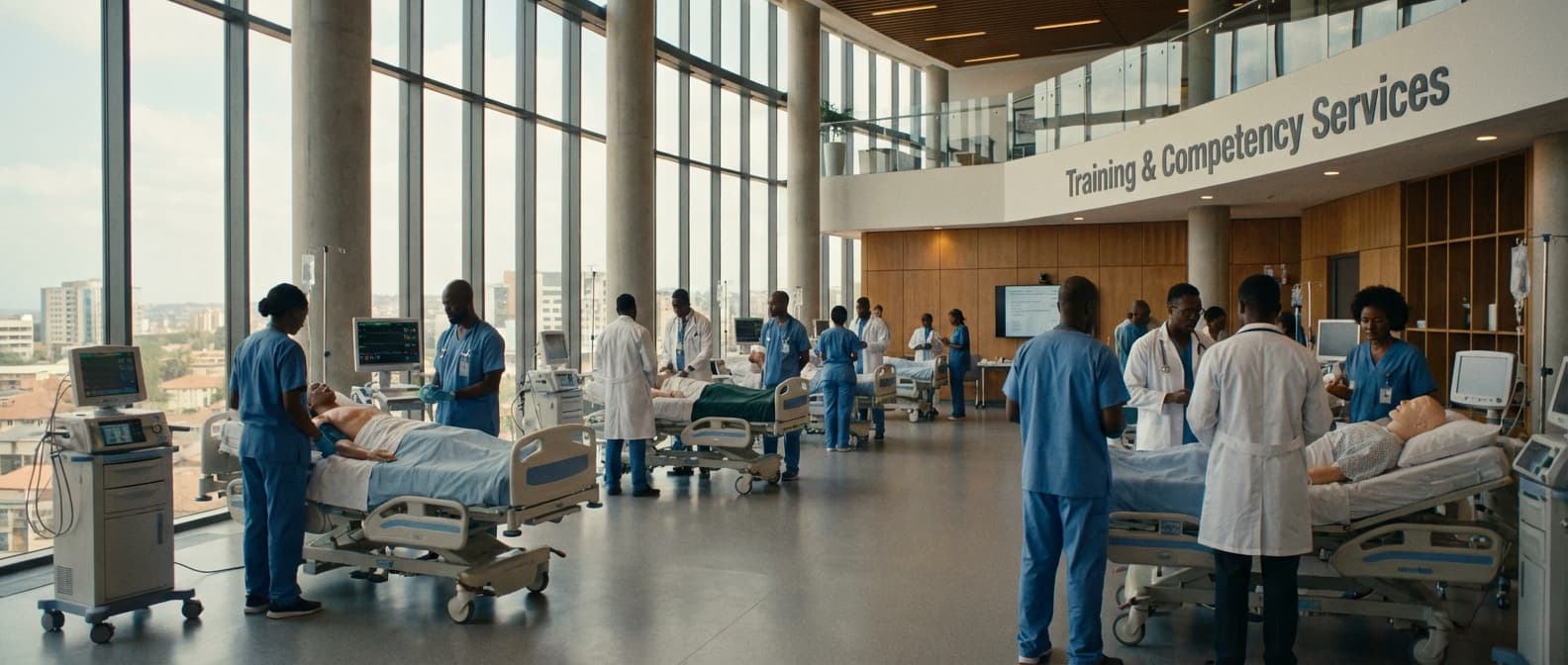
CT Operator Training Service (Radiographers) in Eritrea
Engineering Excellence & Technical Support
CT Operator Training Service (Radiographers) High-standard technical execution following OEM protocols and local regulatory frameworks.
Advanced Imaging Protocols & Techniques
Comprehensive training modules focusing on cutting-edge CT imaging protocols and advanced techniques, including multi-detector CT (MDCT) principles, contrast administration optimization, and specialized scanning protocols for various anatomical regions and pathologies. Emphasis on radiation dose optimization and patient safety.
Patient Care & Safety in CT Examinations
In-depth training on patient management, preparation, and monitoring during CT procedures. Covers essential aspects of patient communication, comfort, risk assessment for contrast media, managing claustrophobia, and ensuring radiation protection for pediatric and pregnant patients.
Image Quality Optimization & Artifact Reduction
Hands-on training and theoretical knowledge on achieving optimal image quality in CT scans. Includes identification and mitigation strategies for common artifacts (e.g., motion, beam hardening, metal artifacts), image reconstruction parameters, and post-processing techniques to enhance diagnostic accuracy.
What Is Ct Operator Training Service (Radiographers) In Eritrea?
CT Operator Training Service (Radiographers) in Eritrea refers to the specialized educational programs and practical instruction designed to equip qualified radiographers with the necessary competencies to operate Computed Tomography (CT) scanners. This service ensures that these healthcare professionals can safely, effectively, and efficiently perform CT examinations, producing high-quality diagnostic imaging while adhering to established protocols and radiation safety standards. The training is crucial for the deployment and optimal utilization of CT imaging technology within the Eritrean healthcare system, enabling accurate diagnosis and patient management for a range of medical conditions.
| Target Audience | Rationale for Need | Typical Use Cases |
|---|---|---|
| Newly graduated radiographers in Eritrea. | To acquire foundational knowledge and practical skills for CT operation, meeting the demand for trained personnel in healthcare facilities. | Introduction to basic CT imaging of the head, chest, and abdomen for diagnostic purposes. |
| Existing radiographers seeking to specialize in CT imaging. | To gain proficiency in advanced CT techniques and expand their diagnostic capabilities, particularly with the introduction of new CT technology. | Performing CT angiography of the aorta and pulmonary arteries, CT colonography, and CT-guided biopsies. |
| Radiographers in facilities newly acquiring CT scanner technology. | To ensure safe and effective implementation of the new equipment and to maintain compliance with international standards of practice. | Acquiring skills to operate specific models of CT scanners, including their unique software and hardware features. |
| Radiographers involved in interventional radiology procedures requiring CT guidance. | To enhance precision and safety in image-guided interventions. | CT-guided drainage procedures, abscess aspirations, and tumor ablations. |
Key Components of CT Operator Training Service:
- Theoretical instruction on CT physics, image acquisition principles, and scanner operation.
- Hands-on practical training utilizing CT scanner simulators and/or live patient scans under supervision.
- Protocol development and optimization for various anatomical regions and clinical indications.
- Image quality assessment and artifact recognition/mitigation techniques.
- Radiation safety principles, dose optimization, and patient shielding protocols.
- Patient preparation, positioning, and communication strategies.
- Quality assurance (QA) and quality control (QC) procedures for CT equipment.
- Basic troubleshooting and maintenance of CT scanners.
- Introduction to CT angiography, contrast media administration, and related safety measures.
- Ethical considerations and patient confidentiality in diagnostic imaging.
Who Needs Ct Operator Training Service (Radiographers) In Eritrea?
CT Operator Training Service (Radiographers) in Eritrea is crucial for enhancing the diagnostic capabilities and patient care within the nation's healthcare system. This specialized training aims to equip radiographers with the advanced knowledge and practical skills necessary to operate CT scanners effectively and safely. The target customers are primarily public and private healthcare institutions that operate or intend to operate CT imaging facilities. Key departments within these institutions that would benefit include Radiology/Medical Imaging, Emergency Medicine, Oncology, Neurology, and Surgery. The service is also vital for institutions looking to expand their imaging services, improve diagnostic accuracy, and adhere to international standards of radiologic practice.
| Department | Rationale for CT Operator Training | Specific Needs |
|---|---|---|
| Radiology/Medical Imaging | Core department responsible for CT imaging acquisition, processing, and interpretation support. Ensures optimal image quality and efficient workflow. | Advanced CT protocols, artifact reduction, dose optimization, quality assurance, PACS integration, patient positioning for specific scans. |
| Emergency Medicine | Rapid diagnosis of acute conditions (trauma, stroke, etc.) is vital. Trained operators enable quick and accurate CT scans for time-sensitive interventions. | Emergency CT protocols (e.g., head CT for stroke, CT angiography for trauma), rapid scan acquisition, understanding of emergent findings, patient preparation in urgent situations. |
| Oncology | CT is essential for staging, treatment planning, and monitoring response to therapy in cancer patients. | CT for radiation therapy planning, contrast-enhanced CT for tumor characterization, follow-up CT scans for treatment response assessment, understanding of imaging artifacts related to treatment. |
| Neurology | Crucial for diagnosing neurological conditions like stroke, brain tumors, and traumatic brain injuries. | CT for acute stroke protocols (e.g., CT perfusion), detailed brain imaging techniques, neuro-oncology CT, post-operative imaging of the brain. |
| Surgery | CT imaging is vital for pre-operative planning, intra-operative guidance (in some cases), and post-operative assessment of surgical outcomes. | CT for surgical planning (e.g., abdominal surgery, orthopedic surgery), identification of anatomical variations, assessment of complications post-surgery, CT angiography for vascular surgery. |
Target Customers for CT Operator Training Service (Radiographers) in Eritrea
- Public Hospitals (National, Regional, and District)
- Private Hospitals and Clinics
- Specialty Medical Centers (e.g., Cancer Centers, Neurological Clinics)
- Government Health Ministries and Departments
- Medical Training Institutions and Universities with Radiology Programs
Ct Operator Training Service (Radiographers) Process In Eritrea
This document outlines the standard workflow for the CT Operator Training Service for Radiographers in Eritrea, covering the entire process from initial inquiry to the successful completion of the training program. This service aims to enhance the skills and knowledge of radiographers in operating CT scanners effectively and safely, adhering to international best practices and local regulations.
| Stage | Key Activities | Responsible Parties | Outcome |
|---|---|---|---|
| Inquiry | Expression of interest in CT training; initial contact. | Radiographer, Institution, Ministry of Health; Training Provider. | Acknowledgement of interest; initiation of the process. |
| Needs Assessment | Consultation on skill gaps, equipment, and learning objectives. | Training Provider, Inquirer. | Defined training requirements. |
| Program Design | Development of curriculum, methodology, and assessment plan. | Training Provider. | Tailored training proposal. |
| Agreement & Pre-registration | Formal agreement, submission of participant details. | Training Provider, Inquirer/Participants. | Confirmed participation; necessary data collected. |
| Pre-training Preparation | Distribution of pre-reading materials or online modules. | Training Provider, Participants. | Enhanced participant readiness. |
| Training Execution | Delivery of theoretical and practical sessions; case studies. | Training Provider (Instructors), Participants. | Acquisition of knowledge and practical skills. |
| Assessment | Written exams, practical demonstrations, oral tests. | Training Provider (Assessors), Participants. | Evaluation of participant competency. |
| Certification | Issuance of certificates upon successful completion. | Training Provider. | Certified CT Operators. |
| Post-training Support | Access to resources, follow-up, feedback collection. | Training Provider, Participants. | Sustained skill development; program improvement. |
| Reporting | Documentation of training activities and outcomes. | Training Provider. | Record of training and performance. |
CT Operator Training Service (Radiographers) Process in Eritrea
- Inquiry and Initial Contact: The process begins when a radiographer, their employing institution (e.g., hospital, clinic), or the Ministry of Health in Eritrea expresses interest in the CT operator training program.
- Needs Assessment and Consultation: A preliminary consultation is conducted to understand the specific training needs of the inquirer, including existing skill levels, types of CT equipment used, and desired learning outcomes. This may involve a review of current practices and identification of knowledge gaps.
- Program Design and Proposal: Based on the needs assessment, a tailored training program is designed. This includes defining the curriculum, duration, learning objectives, training methodology (e.g., theoretical lectures, practical hands-on sessions, simulation), and assessment methods. A formal proposal outlining these details, along with costs and schedule, is then submitted.
- Agreement and Pre-registration: Upon acceptance of the proposal, a formal training agreement is established. Participants then complete a pre-registration process, providing necessary personal and professional details, and any required supporting documentation.
- Pre-training Preparation: Participants may be provided with pre-reading materials or online modules to review before the commencement of the formal training. This helps ensure a baseline understanding and optimizes the learning experience.
- Training Execution (Theory and Practice): The core training program is delivered. This typically involves:
- Theoretical Sessions: Covering CT physics, principles of image acquisition, radiation safety, image interpretation basics, and quality assurance protocols.
- Practical Sessions: Hands-on training on actual CT scanners (or advanced simulators), focusing on patient positioning, protocol selection, image acquisition techniques, artifact identification and reduction, and emergency procedures.
- Case Studies and Discussions: Reviewing real-world CT scans to reinforce learning and develop critical thinking skills.
- Assessment and Evaluation: Throughout and at the end of the training, participants are assessed to gauge their understanding and practical proficiency. Assessments may include written examinations, practical skills demonstrations, and oral examinations.
- Certification: Upon successful completion of all training modules and assessments, participants are awarded a certificate of completion, signifying their competency as CT operators.
- Post-training Support and Follow-up: This may include access to online resources, periodic refresher courses, or technical support for troubleshooting common operational issues. Feedback is also collected to continuously improve the training program.
- Reporting and Documentation: Comprehensive reports are generated detailing the training conducted, participant performance, and outcomes. These records are maintained for future reference and quality assurance.
Ct Operator Training Service (Radiographers) Cost In Eritrea
Estimating the precise cost of CT Operator Training (Radiographers) in Eritrea is challenging due to the limited publicly available data for specialized medical training services. However, we can outline the key pricing factors that would influence such costs and provide estimated ranges in Eritrean Nakfa (ERN). These estimates are based on general principles of training costs in developing economies and factors specific to Eritrea.
| Training Type/Level | Estimated Cost Range (ERN per Trainee) | Notes |
|---|---|---|
| Basic CT Operator Awareness/Introduction (Short Course) | 1,500 - 4,000 ERN | Focus on fundamental principles, safety protocols. May be offered by larger hospitals or vocational centers. |
| Comprehensive CT Operator Training (Certificate/Diploma Level) | 5,000 - 15,000 ERN | Includes theoretical and practical aspects, various imaging techniques. Likely offered by specialized training institutes or affiliated with larger medical facilities. |
| Advanced/Specialized CT Training (e.g., CT Angiography, Cardiac CT) | 10,000 - 25,000+ ERN | Requires specialized instructors and potentially advanced simulation. Could involve international collaboration or workshops. |
| International Workshop/Seminar (Guest Lecturers) | 20,000 - 50,000+ ERN | If conducted by international experts, costs can be significantly higher, potentially excluding travel and accommodation for the trainers. |
Key Pricing Factors for CT Operator Training in Eritrea:
- Training Provider: Whether the training is conducted by a government-affiliated institution, a private entity (if any exist), or an international organization will significantly impact pricing. Government-sponsored training might be subsidized, while private training will reflect market demands and operational costs.
- Duration and Intensity of Training: The length of the training program (e.g., short courses, comprehensive diplomas) and the number of hours of theoretical and practical instruction will directly affect the overall cost.
- Curriculum and Specialization: Basic CT operation training will differ in cost from specialized training in areas like CT angiography, cardiac CT, or interventional CT procedures. Advanced curricula require more specialized instructors and potentially more sophisticated simulation equipment.
- Instructor Expertise and Qualifications: The experience, qualifications, and reputation of the instructors play a crucial role. Highly experienced and internationally recognized experts will command higher fees.
- Training Materials and Resources: The cost of textbooks, online resources, simulation software, and any hands-on equipment or phantoms used for practical training will be factored into the price.
- Location and Facilities: The cost of renting training facilities, utilities, and associated overheads will influence the pricing. Training conducted in major cities might be more expensive than in rural areas (though specialized training is less likely to be available in rural areas).
- Accreditation and Certification: If the training leads to recognized national or international certifications, this can add to the cost, as accreditation processes often involve fees and adherence to specific standards.
- Logistics and Support Services: This can include accommodation and meals for trainees (especially if they are from different regions), transportation to training sites, and administrative support.
- Participant Numbers: Group training rates might be lower per participant than individual enrollment.
- Government Regulations and Subsidies: Government policies on healthcare education and potential subsidies for training specific medical professionals can influence affordability.
- Exchange Rates and Economic Conditions: Fluctuations in the Eritrean Nakfa (ERN) against major international currencies can affect the cost of imported training materials or external instructor fees.
Affordable Ct Operator Training Service (Radiographers) Options
This document outlines affordable CT operator training service options specifically for radiographers, focusing on value bundles and cost-saving strategies to enhance skills and career development without breaking the bank. Investing in continuous education is crucial for radiographers to stay competitive and proficient in the evolving field of medical imaging.
| Training Option | Description | Value Bundle Components | Estimated Cost Range (USD) | Cost-Saving Strategies | |
|---|---|---|---|---|---|
| Online Self-Paced Courses | Flexible learning modules accessible anytime, anywhere. Ideal for individuals with demanding schedules. | Pre-recorded lectures, downloadable study materials, online quizzes, access to a forum for questions. | $300 - $800 per course | Bulk purchase discounts for multiple courses, early bird registration offers, institutional licenses for departments, utilizing free introductory modules. | Offers a foundational understanding and practical skills without the commitment of in-person training. |
| Blended Learning Programs | Combines online self-study with live virtual or in-person workshops for interactive learning and practical application. | Online modules, live Q&A sessions with instructors, practical simulation exercises, case study discussions. | $800 - $1,500 per program | Opting for virtual workshops over in-person saves on travel and accommodation, package deals that include multiple specialized modules, seeking programs with employer sponsorship options. | Provides a good balance of theoretical knowledge and practical engagement, fostering a deeper understanding. |
| On-Site Departmental Training | Tailored training delivered directly at a healthcare facility for a group of radiographers. Can be customized to specific equipment and needs. | On-site lectures, hands-on scanning practice on institutional equipment, protocol customization, team-based learning exercises. | $2,000 - $5,000+ per session (depending on duration and number of participants) | Negotiating multi-year training contracts for ongoing education, bundling training with equipment upgrades or service agreements, internal trainers if qualified staff are available to train colleagues. | Highly effective for team development and ensuring consistent protocols across a department. Maximizes hands-on experience with familiar equipment. |
| Continuing Education Units (CEU) Focused Workshops | Shorter, focused sessions designed to meet specific CEU requirements, often on niche CT applications or updates. | Live webinars, in-person seminars, access to recordings for a limited time, digital certificates of completion. | $50 - $200 per workshop | Attending virtual workshops to avoid travel costs, subscribing to newsletters for early notification of free or discounted CEU events, forming study groups to share learning resources. | Cost-effective way to maintain certification and stay updated on specific areas of CT. |
Key Components of Affordable CT Operator Training
- Core CT Principles & Physics: Foundational knowledge of CT scanner operation, radiation safety, image acquisition parameters, and artifact reduction.
- Anatomy & Pathology in CT: Comprehensive understanding of cross-sectional anatomy and common pathologies visualized by CT across various body regions.
- CT Protocols & Optimization: Learning to select and optimize appropriate scanning protocols for different examinations, ensuring diagnostic quality and dose reduction.
- Image Reconstruction & Post-Processing: Hands-on experience with image manipulation, multi-planar reconstruction (MPR), and visualization techniques.
- Quality Assurance & Safety: Understanding quality control measures and adhering to safety standards for both patients and operators.
- Emerging CT Technologies: Introduction to advanced CT applications like dual-energy CT, spectral CT, and iterative reconstruction techniques.
Verified Providers In Eritrea
In the evolving healthcare landscape of Eritrea, ensuring access to verified and competent medical professionals is paramount for individuals seeking reliable health services. Franance Health stands out as a leading platform committed to connecting patients with accredited and experienced healthcare providers. Our rigorous vetting process and dedication to quality assurance make Franance Health the optimal choice for all your medical needs in Eritrea.
| Provider Feature | Franance Health Advantage | Benefit to Patients |
|---|---|---|
| Credentialing Process | Rigorous and multi-stage verification of licenses, diplomas, and experience. | Guarantees access to legitimate and qualified healthcare professionals. |
| Specialty Coverage | Wide range of medical specialties including general practice, pediatrics, surgery, cardiology, and more. | Ensures that patients can find the right specialist for their specific health concerns. |
| Patient Reviews and Ratings | Integrated system for collecting and displaying anonymized patient feedback. | Provides real-world insights into provider performance and patient experiences. |
| Accessibility and Convenience | User-friendly online platform for searching providers, viewing profiles, and booking appointments. | Simplifies the process of accessing healthcare services and reduces waiting times. |
| Ongoing Quality Assurance | Regular audits and feedback mechanisms to ensure sustained high standards. | Maintains a consistently high level of care and trustworthiness across all listed providers. |
Why Franance Health is the Best Choice for Verified Providers in Eritrea:
- Uncompromising Credential Verification: We meticulously verify the licenses, certifications, and educational backgrounds of all providers on our platform, ensuring they meet stringent professional standards.
- Extensive Provider Network: Franance Health boasts a diverse network of specialists and general practitioners across various medical disciplines, catering to a wide range of healthcare requirements.
- Patient-Centric Approach: Our platform prioritizes patient well-being and satisfaction, offering easy access to information, appointment booking, and communication with healthcare professionals.
- Commitment to Quality Care: We continuously monitor provider performance and patient feedback to maintain the highest standards of medical care and ethical practice.
- Transparency and Trust: Franance Health fosters an environment of transparency, providing patients with comprehensive profiles of our verified providers, empowering them to make informed decisions.
Scope Of Work For Ct Operator Training Service (Radiographers)
This Scope of Work (SOW) outlines the requirements for providing comprehensive CT Operator Training Services specifically for Radiographers. The objective is to equip radiographers with the necessary theoretical knowledge and practical skills to effectively and safely operate CT scanners, ensuring high-quality imaging, patient care, and adherence to radiation safety protocols. This SOW details the technical deliverables and standard specifications for the training program.
| Deliverable ID | Technical Deliverable | Description | Standard Specifications / Key Features | Format | Acceptance Criteria |
|---|---|---|---|---|---|
| TD-001 | Training Curriculum Document | Comprehensive outline of all training modules, learning objectives, content, and duration. | Includes detailed breakdown of theoretical and practical sessions. Aligned with national/international radiographer competencies and CT imaging standards. Clearly defines prerequisite knowledge. | Curriculum covers all listed key areas. Learning objectives are measurable and achievable. Duration is adequate for effective knowledge transfer. | |
| TD-002 | Training Materials (Theory) | Presentation slides, lecture notes, case studies, and supplementary reading materials. | Content is accurate, up-to-date, and easy to understand. Includes visual aids, diagrams, and relevant examples. Covers fundamental CT physics, scanner operation, protocol selection, and safety principles. | PDF, PPTX | Materials are factually correct and presented clearly. Supplementary materials enhance understanding. Content is relevant to modern CT technology. |
| TD-003 | Training Materials (Practical) | Step-by-step guides for scanner operation, protocol execution, patient positioning, and basic troubleshooting. | Includes simulated scenarios and checklists for practical exercises. Focuses on hands-on proficiency in using the specific CT scanner model (if applicable) or a representative simulator. | Guides are clear and actionable. Practical exercises are realistic and allow for skill development. Checklists facilitate assessment of practical skills. | |
| TD-004 | Assessment Tools | Quizzes, practical skill assessments, and final examinations to evaluate learner comprehension and competency. | Includes both theoretical and practical assessments. Questions are well-formulated and cover all learning objectives. Practical assessments evaluate the ability to perform specific tasks safely and effectively. | Assessment tools accurately measure learning outcomes. Assessments are fair and standardized. Passing score is clearly defined. | |
| TD-005 | Training Session Records | Documentation of attendance, session summaries, and feedback from participants. | Records to be maintained for each training session delivered. Includes date, time, trainer, topic covered, and number of participants. Participant feedback provides insights for program improvement. | Excel, PDF | Records are complete and accurate. Feedback mechanisms are in place and utilized. |
| TD-006 | Certificate of Completion | Formal certificate issued to participants who successfully complete the training program. | Includes participant's name, training title, date of completion, and issuing organization's details. May include details of CME credits earned, if applicable. | PDF (Digital/Printable) | Certificates are issued promptly upon successful completion. Information on certificates is accurate and verifiable. |
| TD-007 | Post-Training Support Documentation | Resource guide for ongoing reference, FAQs, and contact information for technical support or further inquiries. | Provides continued learning support and addresses common issues. This can include access to online resources or a knowledge base. | PDF, Online Portal Access | Resources are accessible and relevant. Support channels are clearly defined and responsive. |
Key Areas of CT Operator Training
- CT Physics and Principles
- CT Scanner Anatomy and Functionality
- Image Acquisition Protocols and Techniques
- Image Reconstruction and Post-processing
- Radiation Safety and Dosimetry
- Patient Care and Management during CT Scans
- Quality Assurance and Quality Control (QA/QC)
- Troubleshooting and Maintenance Basics
- Ethical and Legal Considerations
Service Level Agreement For Ct Operator Training Service (Radiographers)
This Service Level Agreement (SLA) outlines the response times and uptime guarantees for the CT Operator Training Service provided to Radiographers. This SLA aims to ensure the availability and prompt support of the training platform and associated resources, facilitating efficient and effective learning for our radiographer users.
| Service Component | Response Time Target (Business Hours) | Uptime Guarantee (Monthly) |
|---|---|---|
| Training Platform Access & Availability | 1 Hour | 99.5% |
| Technical Support (Login Issues, Platform Errors) | 2 Business Hours | N/A (Covered by Platform Availability) |
| Content Access & Functionality (Course Material, Quizzes) | 4 Business Hours | N/A (Covered by Platform Availability) |
| Reporting & Progress Tracking | 8 Business Hours | N/A (Covered by Platform Availability) |
Key Performance Indicators (KPIs)
- {"title":"Response Times","description":"This section defines the maximum time within which the service provider will acknowledge and begin addressing reported issues or requests."}
- {"title":"Uptime Guarantees","description":"This section defines the minimum percentage of time the CT Operator Training Service will be available and operational."}
Frequently Asked Questions

Ready when you are
Let's scope your CT Operator Training Service (Radiographers) in Eritrea project in Eritrea.

Scaling healthcare logistics and technical systems across the entire continent.