
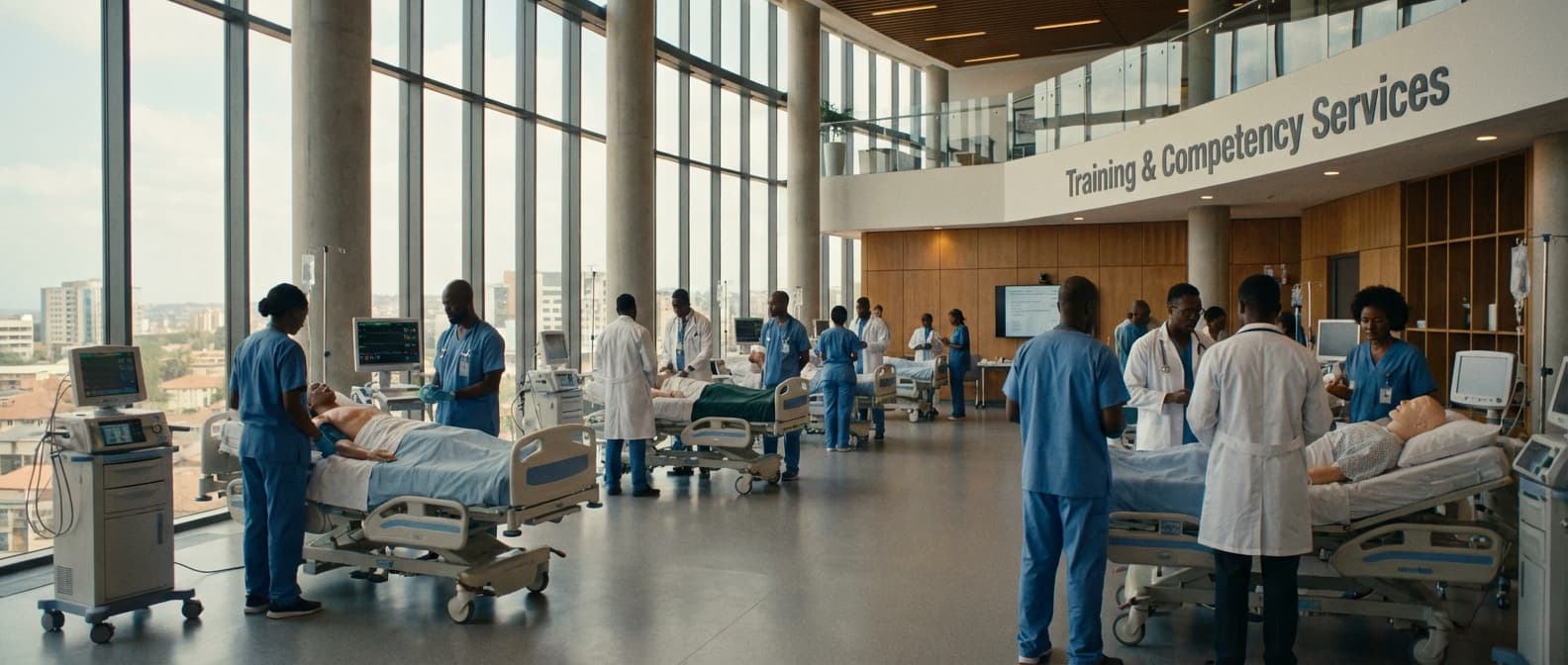
Biomedical Engineering First-Line Support Training Service in Eritrea
Engineering Excellence & Technical Support
Biomedical Engineering First-Line Support Training Service High-standard technical execution following OEM protocols and local regulatory frameworks.
Hands-On Biomedical Equipment Repair Training
Empower Eritrean technicians with practical, hands-on training in troubleshooting and repairing common biomedical equipment, focusing on essential tools and techniques for immediate field application.
Safety & Compliance Standards Mastery
Ensure adherence to international and local safety regulations and compliance standards for biomedical devices, equipping first-line support with the knowledge to maintain safe and effective equipment operation.
Context-Specific Clinical Application Support
Provide training tailored to the specific medical needs and equipment prevalent in Eritrean healthcare facilities, enabling first-line support to effectively assist medical professionals in diverse clinical settings.
What Is Biomedical Engineering First-line Support Training Service In Eritrea?
Biomedical Engineering First-Line Support Training Service in Eritrea refers to the provision of essential, foundational training for individuals tasked with initial troubleshooting, maintenance, and basic repair of medical equipment within healthcare facilities in Eritrea. This service aims to equip personnel with the requisite knowledge and practical skills to address common equipment malfunctions, perform routine preventive maintenance, and ensure the safe and effective operation of biomedical devices, thereby minimizing downtime and optimizing resource utilization in the Eritrean healthcare system.
| Target Audience | Necessity for Training | Typical Use Cases |
|---|---|---|
| Biomedical Technicians and Technologists (entry-level or newly appointed) | To establish a baseline of competence for independent equipment management, reduce reliance on external support for minor issues, and ensure adherence to safety standards. | Diagnosing and resolving power supply issues in patient monitors. Performing routine battery checks and replacements on defibrillators. Conducting basic cleaning and visual inspections of anesthesia machines. Troubleshooting minor connectivity problems with diagnostic imaging peripherals. Identifying and reporting obvious mechanical failures in hospital beds. |
| Clinical Staff (Nurses, Doctors, Lab Technicians) with direct equipment responsibility | To empower clinical personnel to perform immediate, non-invasive checks and basic troubleshooting to maintain immediate operational readiness of critical equipment, thus preventing delays in patient care. | Performing pre-use checks on infusion pumps. Identifying and reporting abnormal noises or vibrations from centrifuges. Understanding basic error codes displayed on laboratory analyzers. Ensuring proper connection and grounding of vital sign monitors. Performing simple resets on malfunctioning diagnostic equipment. |
| Healthcare Facility Administrators and Managers | To understand the capabilities and limitations of their in-house support, optimize training budgets, and ensure compliance with regulatory requirements for equipment maintenance. | Assessing the need for advanced training based on reported issues. Allocating resources for preventive maintenance programs. Ensuring staff competency for specific equipment types. Overseeing the implementation of equipment maintenance protocols. |
| Personnel involved in procurement and logistics of medical equipment | To gain an understanding of the maintenance requirements and common failure points of equipment being procured, facilitating informed purchasing decisions and ensuring adequate post-installation support. | Evaluating the availability of spare parts and local support for new equipment. Understanding the technical specifications related to maintainability. Planning for initial training needs of support staff. |
Scope of Biomedical Engineering First-Line Support Training Service in Eritrea
- Fundamental principles of biomedical equipment operation and physics.
- Basic electrical and mechanical safety protocols for medical devices.
- Identification and diagnosis of common equipment faults and errors.
- Routine preventive maintenance procedures (e.g., cleaning, calibration checks, battery replacement).
- Basic troubleshooting methodologies and diagnostic techniques.
- Proper use of common test equipment and tools.
- Documentation of maintenance activities and incident reporting.
- Understanding of basic medical device classifications and their respective maintenance requirements.
- Principles of sterilization and infection control as it pertains to equipment maintenance.
- Safe handling and disposal of biomedical waste and consumables.
Who Needs Biomedical Engineering First-line Support Training Service In Eritrea?
Biomedical Engineering First-Line Support Training Service in Eritrea is crucial for ensuring the effective and safe operation of medical equipment across the nation. This training empowers local technicians and biomedical engineers with the foundational knowledge and practical skills to perform initial troubleshooting, basic maintenance, and preventative care for a wide range of medical devices. By equipping healthcare facilities with in-house expertise, the service aims to reduce reliance on external support, minimize equipment downtime, and ultimately improve the quality and accessibility of healthcare services for the Eritrean population.
| Customer Type | Primary Departments/Roles to Target | Rationale for Training |
|---|---|---|
| Hospitals (Central, Regional, Tertiary) | Biomedical Engineering Department, Clinical Engineering Department, Biomedical Technicians, Maintenance Staff, IT Support (for networked equipment) | Critical for immediate response to equipment failures, routine checks, and basic repairs, ensuring continuous patient care and reducing costly downtime. |
| Hospitals (Secondary, District) | Biomedical Technicians, General Maintenance Staff, Clinical Officers (with technical aptitude) | Builds local capacity in areas with fewer specialized biomedical engineers, enabling them to handle common issues and escalate complex problems efficiently. |
| Clinics and Health Centers (Primary Healthcare Level) | Clinical Officers, Nurses-in-charge, Health Technicians, Community Health Workers (for basic equipment) | Empowers staff to manage and maintain essential medical devices used in primary care, improving service delivery in remote and underserved areas. |
| Ministry of Health (National and Zonal Levels) | Directorate of Health Services, Biomedical Engineering Unit, Procurement and Logistics Department, Training and Capacity Building Unit | Ensures a standardized approach to equipment maintenance across the country, facilitates effective resource allocation, and supports national health policies related to medical technology. |
| Medical Equipment Suppliers and Distributors (Local Branches/Representatives) | Field Service Technicians, Installation Engineers, Technical Support Staff | Enhances their ability to provide prompt and effective first-line support to their clients, improving customer satisfaction and potentially reducing the need for manufacturer-level interventions. |
Target Customers and Departments for Biomedical Engineering First-Line Support Training Service in Eritrea
- Healthcare Facilities (Hospitals, Clinics, Health Centers)
- Ministry of Health
- Medical Equipment Suppliers and Distributors
Biomedical Engineering First-line Support Training Service Process In Eritrea
This document outlines the workflow for providing First-Line Support Training Services for Biomedical Engineering in Eritrea, from the initial inquiry to the successful execution of the training. The process is designed to be clear, efficient, and responsive to the needs of healthcare institutions and professionals requiring this specialized training.
| Stage | Description | Key Activities | Responsible Parties | Expected Outcome |
|---|---|---|---|---|
| The initial contact from a client (e.g., hospital, Ministry of Health) seeking first-line support training for biomedical equipment. |
| Client, Service Provider (Training Department) | Clear understanding of training requirements, scope, and client's current capabilities. |
| Based on the needs assessment, a comprehensive training proposal is prepared and submitted to the client. |
| Service Provider (Training Department, Business Development) | A formal proposal that accurately reflects the client's needs and the service provider's capabilities. |
| Negotiation and formal agreement on the training services to be provided. |
| Client, Service Provider (Management, Legal Department) | A legally binding contract or agreement that outlines the mutual understanding and commitment. |
| Tailoring the standard curriculum to the specific needs identified and agreed upon. |
| Service Provider (Training Department, Subject Matter Experts) | A finalized, customized training plan and materials ready for delivery. |
| Ensuring all necessary resources and arrangements are in place for the training. |
| Service Provider (Logistics Department, Training Department) | All logistical aspects of the training are confirmed and ready for execution. |
| The actual execution of the training program. |
| Service Provider (Certified Trainers) | Participants acquire the necessary knowledge and skills for first-line biomedical equipment support. |
| Ensuring continued learning and assessing the effectiveness of the training. |
| Service Provider (Training Department, Technical Support), Client | Feedback collected, training effectiveness assessed, and areas for improvement identified. |
| Formalizing the completion of the training and providing relevant documentation. |
| Service Provider (Training Department, Administration) | Participants receive formal recognition of their training, and the client receives a record of the completed service. |
Biomedical Engineering First-Line Support Training Service Process in Eritrea: Workflow
- Inquiry & Needs Assessment
- Proposal Development & Submission
- Agreement & Contract Finalization
- Training Plan Customization
- Logistics & Resource Allocation
- Training Delivery
- Post-Training Support & Evaluation
- Certification & Documentation
Biomedical Engineering First-line Support Training Service Cost In Eritrea
In Eritrea, the cost of first-line support training for biomedical engineering personnel is influenced by several key factors. These include the duration and depth of the training program, the qualifications and experience of the instructors, the specific equipment and technologies covered, and the logistical expenses associated with delivering the training. Government initiatives and partnerships with international organizations can also play a role in subsidizing or influencing pricing. Given the limited publicly available data on specialized technical training services in Eritrea, precise price ranges are difficult to establish definitively. However, based on general industry trends and regional economic conditions, an estimated cost can be projected.
| Training Scope | Estimated Cost Range (Eritrean Nakfa - ERN) | Notes |
|---|---|---|
| Basic Equipment Familiarization (1-2 days) | 3,000 - 7,000 ERN | Covers fundamental operation and basic troubleshooting of common medical devices (e.g., vital signs monitors, basic defibrillators). |
| Intermediate Troubleshooting & Maintenance (3-5 days) | 7,000 - 15,000 ERN | Includes in-depth troubleshooting, preventative maintenance, and basic repair procedures for a wider range of equipment. |
| Advanced Specialized Equipment Training (5+ days) | 15,000 - 30,000+ ERN | Focuses on complex imaging equipment, laboratory analyzers, or surgical devices, often requiring specialized instructors and potentially vendor-specific training. |
| Customized On-Site Training (Per day/group) | 5,000 - 10,000 ERN | Price can vary significantly based on the number of trainees, complexity of the curriculum, and logistical arrangements for a specific facility. |
Factors Influencing Biomedical Engineering First-Line Support Training Costs in Eritrea
- Training Duration and Depth: Shorter, introductory courses will be less expensive than comprehensive, multi-day programs covering a broad range of equipment and troubleshooting techniques.
- Instructor Expertise: Highly experienced biomedical engineers with specialized knowledge and teaching credentials will command higher fees.
- Equipment and Technology Covered: Training focused on advanced or specialized medical equipment will likely be more costly due to the need for specialized instructors and potentially simulation tools or access to specific devices.
- Training Location and Logistics: Whether the training is conducted on-site at a healthcare facility, at a dedicated training center, or online, and the associated travel, accommodation, and material costs, will impact the overall price.
- Curriculum Development: The cost of developing or customizing a training curriculum to meet specific Eritrean healthcare needs can be factored in.
- Certification: If the training leads to a recognized certification, this may add to the overall cost.
- Provider Type: Training offered by government bodies, local private companies, or international NGOs might have different pricing structures due to their funding models and objectives.
Affordable Biomedical Engineering First-line Support Training Service Options
Access to affordable first-line biomedical engineering support training is crucial for healthcare facilities to ensure the safe and efficient operation of medical equipment. This training equips technicians with the fundamental skills to perform basic maintenance, troubleshooting, and initial diagnostics, thereby reducing downtime and improving patient care. This document outlines various options for cost-effective training, focusing on value bundles and strategic cost-saving measures.
| Training Service Option | Description | Value Bundle Components | Cost-Saving Strategies |
|---|---|---|---|
| Online Self-Paced Courses | Flexible, on-demand training modules accessible via the internet. | Access to a library of pre-recorded lectures, interactive simulations, quizzes, and downloadable resources. Potential for certification upon completion. | Lower overhead costs for providers, translating to lower tuition. No travel or accommodation expenses for trainees. Scalable for large teams. Can be integrated with existing internal knowledge bases. |
| Webinar Series and Live Online Workshops | Interactive live sessions with instructors, allowing for real-time Q&A. | Live instructor-led sessions, interactive polls, group exercises, downloadable slides, and recorded sessions for later review. May include practical demonstrations via video. | Reduced travel costs compared to in-person training. Can accommodate a larger audience than a single instructor-led workshop. Group discounts often available. Shorter, focused sessions can minimize disruption to workflow. |
| Blended Learning Programs | A combination of online modules and short, intensive in-person practical sessions. | Online theoretical modules, followed by hands-on workshops at a training center or at the client's facility. Includes instructor-led demonstrations and supervised practice. | Optimizes learning by combining flexibility with practical application. Reduces the overall time trainees need to be away from their duties compared to fully in-person training. Can be tailored to specific equipment prevalent at the facility. |
| Manufacturer-Specific Training (Group/On-Site) | Training delivered by the original equipment manufacturer, often focusing on their product lines. | In-depth knowledge of specific equipment, access to OEM-approved procedures and parts information, hands-on training with the latest models, and direct access to manufacturer experts. Often includes certification. | Negotiate group discounts for multiple employees. Schedule training during off-peak seasons. Consolidate training for several facilities in a region to share costs. Leverage existing service contracts for potential training credits or discounts. |
| Third-Party Training Providers (Customizable) | Specialized companies offering tailored training solutions. | Curriculum designed to meet specific organizational needs and existing equipment inventory. Can include a mix of theoretical and practical components, on-site delivery, and competency assessments. | Partner with providers offering flexible scheduling and pricing models. Develop a long-term training partnership for ongoing cost benefits. Focus on training for the most critical and frequently encountered equipment first. Consider train-the-trainer models to build internal capacity. |
Key Components of First-Line Biomedical Engineering Support Training
- Basic Electrical Safety and Measurement Techniques
- Fundamental Mechanical Troubleshooting
- Common Equipment Diagnostics (e.g., patient monitors, infusion pumps)
- Preventive Maintenance Procedures
- Record Keeping and Documentation
- Introduction to Biomedical Equipment Management Systems
Verified Providers In Eritrea
In Eritrea, access to reliable and qualified healthcare providers is paramount. Franance Health stands out as a beacon of trust and excellence, offering a curated network of verified professionals. This commitment to rigorous credentialing ensures that patients receive the highest standard of care, making Franance Health the optimal choice for your healthcare needs in Eritrea.
| Provider Type | Franance Health Verification Standard | Benefits for Patients |
|---|---|---|
| General Practitioners | Verified MD/DO, active license, clean disciplinary record | Reliable primary care, early diagnosis and treatment |
| Specialist Physicians (e.g., Cardiologists, Dermatologists) | Verified specialist certification, extensive experience in their field | Access to expert care for complex medical conditions |
| Surgeons | Board certification in surgical specialty, proven surgical outcomes | Safe and effective surgical interventions |
| Nurses | Registered Nurse (RN) or equivalent, valid nursing license, relevant training | Compassionate and skilled nursing care |
| Pharmacists | Licensed Pharmacist, adherence to pharmaceutical best practices | Accurate and safe medication management |
Why Franance Health Credentials Matter
- Rigorous vetting process for all affiliated healthcare professionals.
- Verification of medical licenses and certifications.
- Assessment of professional experience and specialized training.
- Commitment to ongoing professional development and adherence to ethical standards.
- Ensured patient safety and quality of care through stringent verification.
Scope Of Work For Biomedical Engineering First-line Support Training Service
This Scope of Work (SOW) outlines the requirements for a comprehensive First-Line Support Training Service for Biomedical Engineering personnel. The objective is to equip support staff with the necessary technical knowledge, troubleshooting skills, and communication protocols to effectively handle initial inquiries and resolve common issues related to biomedical equipment. This training will enhance response times, improve first-call resolution rates, and ensure patient safety by maintaining equipment functionality. The training will be delivered through a combination of theoretical instruction, practical exercises, and simulated scenarios. Standard specifications for the training content, delivery methods, and assessment will be adhered to.
| Standard Specification | Description | Measurement/Criteria | Compliance Requirement |
|---|---|---|---|
| Curriculum Coverage | Ensures that the training program covers a minimum of [X]% of the most frequently encountered first-line support issues for the specified equipment categories. | Pre-defined list of common issues and equipment types. | Achieve [Y]% coverage of the defined list. |
| Practical Session Duration | Allocates a minimum of [Z] hours of hands-on practical training per [N] participants to ensure sufficient skill development. | Hours of practical training per participant. | Minimum [Z] hours per [N] participants. |
| Troubleshooting Simulation Success Rate | Participants are expected to achieve a minimum success rate of [A]% in resolving simulated first-line support scenarios. | Percentage of successfully resolved simulated issues. | Minimum [A]% success rate. |
| Assessment Score | Participants must achieve a minimum score of [B]% on the post-training assessment to be considered competent. | Percentage score on written and practical assessments. | Minimum [B]% score. |
| Trainer-to-Participant Ratio | Maintains a trainer-to-participant ratio of no more than [C]:1 to ensure adequate individual attention and guidance. | Number of participants per trainer. | Maximum [C]:1 ratio. |
| Training Material Clarity | Training materials are evaluated for clarity, accuracy, and ease of understanding by a sample group of target end-users. | Qualitative assessment and feedback scores. | Average clarity score of [D] out of 5. |
| Knowledge Retention | Demonstrates a minimum of [E]% knowledge retention through post-training follow-up assessments conducted [F] weeks after the training. | Percentage increase in correct answers from immediate post-training to follow-up assessment. | Minimum [E]% retention. |
Technical Deliverables
- Customized Training Curriculum Development: Tailored content covering essential biomedical equipment types, common failure modes, basic troubleshooting procedures, safety protocols, and escalation pathways.
- Training Materials Production: Development of comprehensive training manuals, presentations, quick reference guides, and video tutorials in accessible formats.
- Hands-on Training Sessions: Practical, equipment-specific workshops utilizing functional biomedical devices and simulated fault conditions.
- Troubleshooting Simulation Exercises: Realistic scenarios designed to test participants' ability to diagnose and resolve common first-line issues under pressure.
- Assessment Tools and Methodologies: Creation of pre-training assessments to gauge existing knowledge and post-training evaluations (quizzes, practical tests, scenario-based assessments) to measure learning outcomes.
- Trainer Qualifications and Experience: Provision of certified and experienced biomedical engineering trainers with a strong understanding of support environments.
- Training Environment Setup: Ensuring appropriate training space, access to necessary tools, test equipment, and functional biomedical devices for hands-on practice.
- Post-Training Support Documentation: Development of ongoing reference materials and access to a knowledge base for continued learning and problem-solving.
- Training Progress Reports: Regular updates on participant progress, assessment results, and overall training effectiveness.
- Certificate of Completion: Issuance of formal certificates to participants who successfully complete the training program.
- Training Feedback Mechanism: Implementation of a structured feedback system to gather participant input for continuous improvement of the training program.
Service Level Agreement For Biomedical Engineering First-line Support Training Service
This Service Level Agreement (SLA) outlines the response times and uptime guarantees for the Biomedical Engineering First-Line Support Training Service. This SLA is designed to ensure timely and effective support for trainees and instructors, facilitating a seamless learning experience.
| Severity Level | Description | Response Time Target | Resolution Time Target | Uptime Guarantee |
|---|---|---|---|---|
| Critical (Severity 1) | Complete system outage or critical functionality failure impacting all users. | 15 Minutes | 4 Hours | 99.9% |
| High (Severity 2) | Significant functionality impairment affecting a large group of users or critical training modules. | 1 Hour | 8 Business Hours | 99.5% |
| Medium (Severity 3) | Minor functionality issues or performance degradations affecting individual users or non-critical features. | 4 Business Hours | 2 Business Days | 99.0% |
| Low (Severity 4) | Cosmetic issues, minor bugs, or general inquiries not impacting core functionality. | 1 Business Day | 5 Business Days | 98.0% |
Key Service Metrics
- Response Time: The maximum allowable time for a support representative to acknowledge a reported issue.
- Resolution Time: The maximum allowable time to resolve a reported issue, depending on its severity.
- Uptime Guarantee: The percentage of time the training platform and associated support services are available and operational.
Frequently Asked Questions

Ready when you are
Let's scope your Biomedical Engineering First-Line Support Training Service in Eritrea project in Eritrea.

Scaling healthcare logistics and technical systems across the entire continent.