
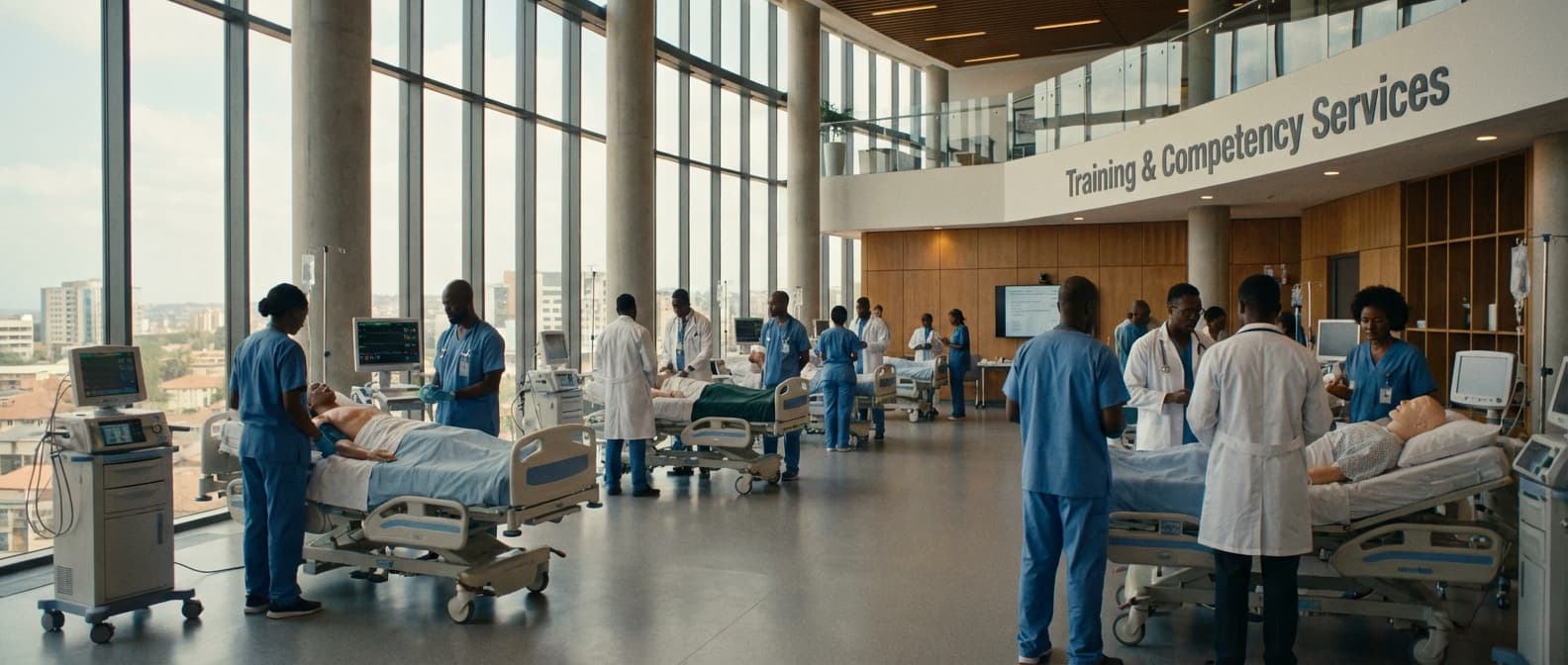
Anesthesia Workstation User Training Service in Eritrea
Engineering Excellence & Technical Support
Anesthesia Workstation User Training Service High-standard technical execution following OEM protocols and local regulatory frameworks.
Expert-Led Anesthesia Workstation Training
Gain hands-on proficiency with the latest anesthesia workstations through training led by experienced anesthesiologists. Our curriculum covers essential functionalities, safety protocols, and advanced features tailored for Eritrean healthcare settings, ensuring optimal patient care and provider confidence.
Remote & On-Site Training Options
Access flexible training solutions designed to meet your specific needs. We offer both remote learning modules for theoretical knowledge and on-site practical sessions at your facility in Eritrea, providing personalized guidance and addressing unique operational challenges of your anesthesia department.
Simulation-Based Skill Enhancement
Master critical scenarios and enhance your decision-making abilities with our advanced simulation training. Practice complex procedures and emergency response protocols in a safe, controlled environment, preparing you to confidently manage any clinical situation with the anesthesia workstation.
What Is Anesthesia Workstation User Training Service In Eritrea?
Anesthesia Workstation User Training Service in Eritrea refers to a specialized educational program designed to equip healthcare professionals with the requisite knowledge and practical skills to effectively and safely operate anesthesia workstations. These workstations are complex medical devices that integrate a range of functions, including mechanical ventilation, anesthetic gas delivery and monitoring, and patient monitoring. The service aims to ensure users are proficient in the setup, calibration, operation, troubleshooting, and maintenance of these critical pieces of equipment, thereby enhancing patient safety and optimizing anesthetic delivery within healthcare facilities in Eritrea.
| Target Audience | Rationale for Training Need | Typical Use Cases |
|---|---|---|
| Anesthesiologists | Essential for administering safe and effective anesthesia; requires proficiency in advanced ventilation modes and drug delivery systems. | General surgery, obstetric anesthesia, pediatric anesthesia, cardiac anesthesia, emergency procedures, intensive care unit support. |
| Anesthesia Assistants/Technicians | Responsible for device setup, calibration, basic troubleshooting, and assisting the anesthesiologist; requires a strong understanding of device functionality and safety checks. | Pre-operative preparation, intra-operative support, post-operative recovery, equipment maintenance and inventory management. |
| Critical Care Physicians/Nurses | May utilize anesthesia workstations for advanced respiratory support in intensive care settings; requires specific training on ventilatory strategies and patient monitoring. | Mechanical ventilation in severe respiratory failure, weaning protocols, prolonged sedation and ventilation. |
| Biomedical Engineers/Technicians | Requires in-depth technical knowledge for installation, repair, calibration, and advanced maintenance of anesthesia workstations. | Preventive maintenance, corrective maintenance, equipment validation, technical support for clinical staff. |
Key Components of Anesthesia Workstation User Training in Eritrea:
- Device Familiarization: Comprehensive understanding of the physical components, interfaces, and control panels of the specific anesthesia workstation models in use.
- Functional Operation: Detailed instruction on setting up the ventilator, administering anesthetic agents, managing gas flow, and integrating patient monitoring parameters.
- Physiological Principles: Review of the underlying physiological principles relevant to mechanical ventilation and anesthetic gas management.
- Safety Protocols: Emphasis on critical safety features, alarm management, pre-use checks, and emergency procedures.
- Troubleshooting and Maintenance: Training on identifying common operational issues, basic troubleshooting steps, and routine maintenance procedures to ensure optimal device performance and longevity.
- Practical Simulation: Hands-on experience using the workstation in simulated clinical scenarios to reinforce learning and build confidence.
- Regulatory Compliance: Awareness of any local or international guidelines pertaining to anesthesia workstation operation and patient safety.
- Documentation and Record Keeping: Understanding requirements for documenting device usage and patient parameters.
Who Needs Anesthesia Workstation User Training Service In Eritrea?
Anesthesia Workstation User Training Service is crucial for ensuring the safe, effective, and efficient operation of modern anesthesia machines. This specialized training addresses the complex functionalities, maintenance, and troubleshooting of these critical medical devices. In Eritrea, the primary beneficiaries of such a service would be healthcare facilities that utilize or plan to utilize advanced anesthesia workstations. The training aims to equip anesthesia providers, biomedical engineers, and relevant technical staff with the necessary knowledge and skills to operate and maintain these machines to international standards, ultimately improving patient care and safety.
| Target Customer/Department | Primary Users/Beneficiaries | Specific Training Needs |
|---|---|---|
| Hospitals (Public and Private) | Anesthesiologists, Nurse Anesthetists, Anesthesia Technicians, Biomedical Engineers | Operation of anesthesia workstations, ventilation modes, patient monitoring integration, alarm management, routine maintenance, basic troubleshooting. |
| Surgical Centers | Anesthesiologists, Nurse Anesthetists, Anesthesia Technicians | Core functionalities, emergency procedures, infection control related to the workstation, calibration. |
| Tertiary Care Facilities | Anesthesiologists, Nurse Anesthetists, Anesthesia Technicians, Biomedical Engineers | Advanced functionalities, integration with other critical care equipment, complex ventilation strategies, software updates and management, advanced troubleshooting. |
| Teaching Hospitals (if applicable) | Medical Students (Anesthesiology Residents), Faculty Anesthesiologists, Biomedical Engineering Students/Staff | Foundational understanding of anesthesia workstations, practical application, training on training others, advanced diagnostics and repairs. |
| Ministry of Health | Procurement officers, Technical advisors, Public health managers | Understanding equipment capabilities and maintenance requirements for informed purchasing decisions, developing national guidelines for equipment use and training, capacity building strategies. |
| International Aid Organizations | Local healthcare staff, Project managers, Biomedical technicians | Training local staff on new equipment donated, ensuring long-term sustainability of equipment function through proper user training, establishing local training capacity. |
Target Customers & Departments in Eritrea
- Hospitals (Public and Private)
- Surgical Centers
- Tertiary Care Facilities
- Teaching Hospitals (if applicable)
- Ministry of Health (for policy and capacity building initiatives)
- International Aid Organizations operating in Eritrea with medical equipment programs
Anesthesia Workstation User Training Service Process In Eritrea
This document outlines the Anesthesia Workstation User Training Service Process in Eritrea. It details the workflow from an initial inquiry to the successful execution of the training program. The process is designed to ensure that users are proficient in operating anesthesia workstations safely and effectively, meeting the specific needs and regulatory requirements within Eritrea.
| Phase | Step | Description | Key Activities | Responsible Party | Expected Outcome |
|---|---|---|---|---|---|
| Phase 1: Inquiry & Needs Assessment |
| The process begins when a healthcare facility or individual in Eritrea expresses interest in anesthesia workstation user training. | Contacting the training provider, submitting an inquiry form, initial phone/email discussion. | Client (Healthcare Facility/User) | Acknowledgement of inquiry, initial understanding of training needs. |
| Phase 1: Inquiry & Needs Assessment |
| A thorough assessment to understand the specific anesthesia workstations in use, the skill level of the intended trainees, and any specific clinical scenarios or requirements in Eritrea. | Site visit (if feasible), detailed questionnaire, interviews with key personnel (anesthesiologists, biomedical engineers). | Training Provider, Client | Comprehensive understanding of training scope, target audience, existing infrastructure, and specific learning objectives. |
| Phase 2: Proposal Development |
| Based on the needs assessment, a tailored training proposal is developed and submitted to the client. | Developing curriculum content, identifying trainers, estimating resources and costs, defining training schedule and duration, outlining evaluation methods. | Training Provider | Formal proposal document outlining training program details, duration, cost, and deliverables. |
| Phase 2: Proposal Development |
| The client reviews the proposal, and any necessary negotiations or clarifications are conducted. | Client internal review, discussion with training provider, requesting amendments. | Client, Training Provider | Agreement on the training proposal and associated terms. |
| Phase 3: Service Agreement & Scheduling |
| A formal contract is established between the training provider and the client. | Drafting and signing of the service agreement, outlining payment terms, liabilities, and responsibilities. | Training Provider, Client | Legally binding agreement for the provision of training services. |
| Phase 3: Service Agreement & Scheduling |
| The training dates, times, and location are confirmed. | Coordination with client's operational schedule, finalization of training dates and venue. | Client, Training Provider | Confirmed training schedule and logistics. |
| Phase 4: Pre-Training Preparation |
| The training curriculum, presentation materials, and hands-on simulation resources are finalized. | Developing or adapting training modules, preparing presentations, user manuals, case studies, and ensuring availability of training anesthesia workstations or simulators. | Training Provider | Ready-to-use training materials and equipment. |
| Phase 4: Pre-Training Preparation |
| Participants are registered, and pre-training information is communicated. | Collecting trainee details, sending welcome packs, outlining prerequisites (if any), providing venue details and agenda. | Training Provider, Client | Informed and prepared trainees. |
| Phase 5: Training Execution |
| Delivery of the theoretical aspects of anesthesia workstation operation, safety protocols, and relevant physiology. | Lectures, presentations, interactive discussions, Q&A sessions. | Trainer | Enhanced understanding of anesthesia workstation principles and safety guidelines. |
| Phase 5: Training Execution |
| Application of theoretical knowledge through practical exercises and simulation. | Demonstrations, supervised practice on training workstations/simulators, troubleshooting exercises, scenario-based training. | Trainer | Developed practical skills in operating the anesthesia workstation. |
| Phase 5: Training Execution |
| Evaluation of trainee competency and provision of feedback. | Quizzes, practical assessments, skill demonstrations, trainer observation, immediate feedback. | Trainer | Identification of areas of strength and areas for improvement. |
| Phase 6: Post-Training Evaluation & Support |
| Formal evaluation of the training program's effectiveness and participant satisfaction. | Distributing feedback forms, analyzing assessment results, collecting feedback on curriculum and delivery. | Client, Training Provider | Data on training effectiveness and areas for future improvement. |
| Phase 6: Post-Training Evaluation & Support |
| Issuance of certificates of completion to successful trainees. | Verifying attendance and satisfactory performance, preparing and issuing certificates. | Training Provider | Official recognition of training completion. |
| Phase 6: Post-Training Evaluation & Support |
| Providing ongoing support and resources to trainees and the facility. | Follow-up consultations, access to online resources or FAQs, troubleshooting assistance, refresher training options. | Training Provider | Sustained proficiency and confidence in using the anesthesia workstation. |
Anesthesia Workstation User Training Service Process: Eritrea
- Inquiry & Needs Assessment
- Proposal Development
- Service Agreement & Scheduling
- Pre-Training Preparation
- Training Execution
- Post-Training Evaluation & Support
Anesthesia Workstation User Training Service Cost In Eritrea
Providing anesthesia workstation user training services in Eritrea involves a range of costs influenced by several key factors. These factors determine the overall investment required for medical facilities to ensure their staff are proficient in operating and maintaining critical anesthesia equipment. The pricing structure aims to reflect the expertise, resources, and logistical considerations involved in delivering high-quality training within the Eritrean context.
| Service Component | Estimated Cost Range (ERN) |
|---|---|
| Basic User Training (1-2 Days) | 15,000 - 30,000 ERN |
| Comprehensive User Training (3-5 Days) | 30,000 - 60,000 ERN |
| Advanced Features & Troubleshooting Training | 40,000 - 80,000 ERN |
| On-site Training Fee (per day, excluding trainer travel/accommodation) | 5,000 - 15,000 ERN |
| Trainer Travel & Accommodation (estimate per trip, depending on distance) | 10,000 - 25,000 ERN |
| Training Material Development/Licensing | 5,000 - 15,000 ERN |
| Group Discount (per participant for groups > 10) | 10-20% reduction on base training cost |
Factors Influencing Anesthesia Workstation User Training Costs in Eritrea:
- Trainer Expertise and Experience: The qualifications, certifications, and years of experience of the anesthesia workstation trainers significantly impact costs. Highly specialized trainers with extensive knowledge of various workstation models and complex anesthesia techniques will command higher fees.
- Scope and Duration of Training: The breadth of topics covered (e.g., basic operation, advanced features, troubleshooting, maintenance) and the total hours of training required will directly affect the price. Longer, more comprehensive programs are more expensive.
- Number of Trainees: While individual training might have a higher per-person cost, training larger groups can lead to a reduced per-person rate due to economies of scale in terms of trainer time and resource allocation.
- Training Location and Logistics: If the training is conducted at a facility in Eritrea, costs may include trainer travel and accommodation expenses to reach the specific location. If the training is conducted off-site (e.g., in a neighboring country or a dedicated training center), participants' travel, accommodation, and per diem expenses would be additional.
- Training Materials and Resources: The cost of developing or acquiring training manuals, presentation slides, simulation equipment, and any consumables used during practical sessions will be factored into the overall price.
- Workstation Model Complexity: Training on more advanced and complex anesthesia workstations with a wider array of features and integrated technologies will generally be more expensive than training on simpler models.
- Post-Training Support and Certification: The inclusion of post-training support (e.g., helpline access, refresher courses) or formal certification upon completion can add to the cost.
- Provider Reputation and Overhead: Established training providers with a strong reputation and robust infrastructure may have higher pricing due to their operational overhead and perceived value.
- Currency Exchange Rates and Local Economic Conditions: While pricing is often presented in local currency (Eritrean Nakfa - ERN), underlying costs may be influenced by international currency exchange rates if specialized equipment or trainers are sourced externally. Local economic conditions can also affect labor and logistical costs.
Affordable Anesthesia Workstation User Training Service Options
This document outlines affordable anesthesia workstation user training service options, focusing on value bundles and cost-saving strategies to maximize your investment in skilled personnel and safe patient care. We understand that budget constraints are a significant factor for many healthcare facilities, and our training solutions are designed to be flexible and cost-effective.
| Cost-Saving Strategy | Description | Benefit |
|---|---|---|
Value-Driven Training Bundles
- {"title":"Core Competency Bundle","description":"Essential training for all new anesthesia providers and users. Covers fundamental workstation operation, basic troubleshooting, and safety protocols. Ideal for onboarding new staff."}
- {"title":"Advanced Features & Troubleshooting Bundle","description":"For experienced users seeking to master advanced functionalities, complex ventilation modes, and in-depth troubleshooting. Enhances efficiency and problem-solving capabilities."}
- {"title":"Refresher & Compliance Bundle","description":"Regular training to reinforce existing knowledge, update on new features, and ensure ongoing compliance with regulatory standards. Perfect for periodic skill maintenance."}
- {"title":"Customizable Departmental Bundle","description":"Tailored training programs designed to meet the specific needs and workflows of your anesthesia department. Allows for focus on particular equipment models or specialized procedures."}
Verified Providers In Eritrea
In Eritrea's healthcare landscape, identifying reliable and credentialed providers is paramount for ensuring quality care. Franance Health stands out as a leading organization committed to this principle. Their rigorous credentialing process for healthcare professionals and facilities ensures that all listed providers meet stringent standards of competence, ethics, and patient safety. This dedication to verification offers Eritrean citizens and visitors alike a crucial layer of trust and confidence when seeking medical services. Choosing a provider affiliated with Franance Health signifies a commitment to receiving care from professionals who have been thoroughly vetted and adhere to best practices in healthcare.
| Credentialing Aspect | Franance Health Approach | Benefit to Patients |
|---|---|---|
| Professional Qualifications | Verification of educational background, medical licenses, and specialized training. | Ensures providers possess the necessary knowledge and skills to deliver effective care. |
| Experience and Competency | Assessment of clinical experience, peer reviews, and performance metrics. | Confirms that providers have a proven track record of successful patient outcomes. |
| Ethical Conduct | Background checks and review of disciplinary records. | Guarantees that providers operate with integrity and uphold patient rights. |
| Facility Standards (for clinics/hospitals) | Inspection and certification of equipment, hygiene, and operational procedures. | Ensures a safe and well-equipped environment for treatment and recovery. |
| Continuous Improvement | Encourages ongoing professional development and adherence to updated medical guidelines. | Ensures patients receive care based on the latest advancements and best practices. |
Why Franance Health Credentials Matter:
- Ensures Providers Meet High Standards of Competence and Expertise
- Guarantees Adherence to Ethical Medical Practices
- Prioritizes Patient Safety and Well-being
- Builds Trust and Confidence in the Healthcare System
- Promotes Access to Quality and Reliable Medical Services
Scope Of Work For Anesthesia Workstation User Training Service
This Scope of Work (SOW) outlines the requirements for a comprehensive Anesthesia Workstation User Training service. The objective is to ensure that healthcare professionals are proficient in the safe, effective, and efficient operation of the Anesthesia Workstation, thereby enhancing patient safety and optimizing clinical workflows. This document details the technical deliverables and standard specifications expected from the training provider.
| Specification | Description | Standard/Requirement |
|---|---|---|
| Instructor Qualifications | The training personnel must possess demonstrable expertise in anesthesia practice and comprehensive knowledge of the specific Anesthesia Workstation model(s). | Certified Anesthesiologists, Nurse Anesthetists, or highly experienced clinical application specialists with relevant certifications and a minimum of 5 years of experience. |
| Training Methodology | The training should employ a blended learning approach, combining didactic instruction with interactive exercises and hands-on practice. | Adult learning principles applied, with a focus on active participation, problem-solving, and real-world application. |
| Training Environment | The training shall be conducted in a suitable environment that replicates clinical settings as closely as possible. | Access to fully functional Anesthesia Workstations, adequate space for instruction and practice, audio-visual equipment, and a safe, controlled learning environment. |
| Patient Safety Focus | All training content and activities must prioritize patient safety and the adherence to best clinical practices. | Emphasis on alarm management, error prevention, and safe use of all features and functionalities. |
| Customization | The training program should be adaptable to the specific needs and existing skill levels of the target audience. | Ability to tailor content and pace based on initial assessment of participant knowledge and institutional protocols. |
| Language | Training materials and delivery must be in a language understood by the participants. | Specify required language (e.g., English, Spanish, etc.). |
| Data Security and Confidentiality | All patient data or proprietary information encountered during training must be handled with the utmost discretion and security. | Adherence to HIPAA or equivalent privacy regulations. No actual patient data to be used during training sessions. |
Technical Deliverables
- Training Materials: Development and provision of comprehensive training manuals, user guides, quick reference cards, and visual aids (e.g., presentations, diagrams, videos) tailored to the specific Anesthesia Workstation model(s).
- Training Modules: Design and delivery of structured training modules covering theoretical knowledge and practical skills, including but not limited to: system overview, patient monitoring, ventilation modes, drug delivery, alarm management, troubleshooting, and emergency procedures.
- Hands-on Training Sessions: Conduct of practical, hands-on training sessions utilizing actual Anesthesia Workstations or high-fidelity simulators, allowing participants to gain direct experience with all functionalities.
- Competency Assessment: Development and administration of competency assessments (e.g., written tests, practical evaluations, case-based scenarios) to verify participants' understanding and proficiency.
- Training Completion Certificates: Issuance of accredited training completion certificates to participants who successfully meet the competency requirements.
- Post-Training Support: Provision of a defined period of post-training support, including access to a dedicated technical support hotline or email for answering user queries and addressing any operational challenges.
- Training Report: Submission of a detailed training report upon completion, summarizing training activities, participant attendance, assessment results, and any recommendations for further training or system optimization.
Service Level Agreement For Anesthesia Workstation User Training Service
This Service Level Agreement (SLA) outlines the terms and conditions for the Anesthesia Workstation User Training Service provided by [Your Company Name]. It defines the expected response times and uptime guarantees to ensure a high-quality and reliable training experience for users of our Anesthesia Workstations.
| Service Component | Uptime Guarantee | Response Time (during Service Hours) | Escalation Level |
|---|---|---|---|
| Anesthesia Workstation Online Training Platform Availability | 99.5% of Service Hours | Initial Acknowledgment: 1 Business Hour; Resolution Goal: 4 Business Hours (for critical issues) | Tier 1 Support -> Tier 2 Support (if unresolved within 2 Business Hours) |
| Access to Training Materials (e.g., Videos, Manuals) | 99.8% of Service Hours | Initial Acknowledgment: 2 Business Hours; Resolution Goal: 8 Business Hours | Tier 1 Support -> Technical Team |
| Live Q&A/Support Session Availability (if applicable) | Scheduled sessions will commence on time. | Response to pre-submitted queries: 1 Business Day; In-session: Immediate | N/A (during session); Support Team for pre-submitted |
| Technical Support for Platform Issues | N/A (as platform is covered above) | Initial Acknowledgment: 1 Business Hour; Resolution Goal: 4 Business Hours (for critical issues) | Tier 1 Support -> Tier 2 Support (if unresolved within 2 Business Hours) |
Key Definitions
- Anesthesia Workstation User Training Service: Refers to the online and/or in-person training modules, resources, and support provided to users to effectively operate and maintain the Anesthesia Workstation.
- Customer: The organization or individual purchasing and utilizing the Anesthesia Workstation User Training Service.
- Service Hours: The hours during which the training service and support are available. This will be defined as [Specify Service Hours, e.g., Monday to Friday, 8:00 AM to 6:00 PM Local Time, excluding public holidays].
- Downtime: Any period during Service Hours when the online training platform is unavailable to the Customer due to issues with [Your Company Name]'s infrastructure or the training platform itself, excluding scheduled maintenance or events outside of our reasonable control.
- Resolution Time: The time taken to resolve a reported issue, measured from the time of successful reporting and validation of the issue to the point where the service is restored to a functional state.
Frequently Asked Questions

Ready when you are
Let's scope your Anesthesia Workstation User Training Service in Eritrea project in Eritrea.

Scaling healthcare logistics and technical systems across the entire continent.