
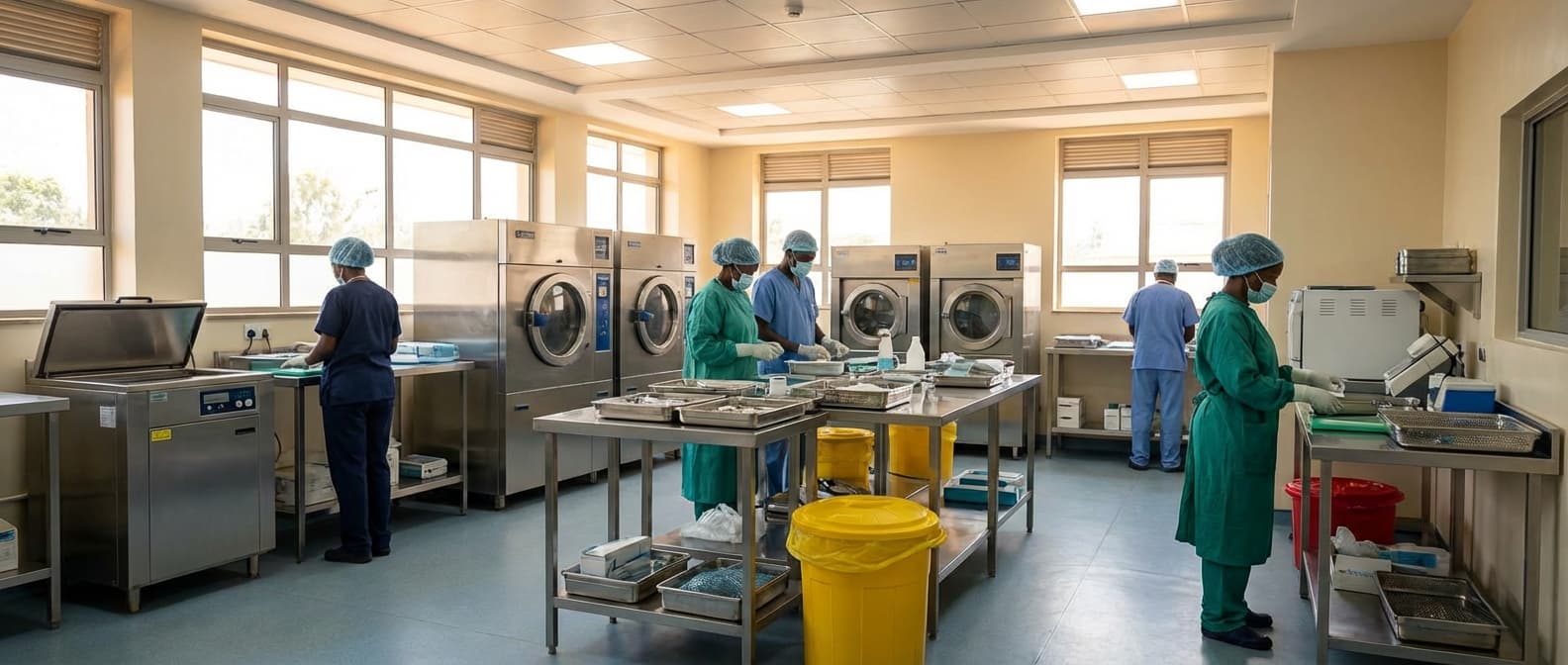
Medical Equipment Decontamination Service (Pre-Repair/Pre-Relocation) in Eritrea
Engineering Excellence & Technical Support
Medical Equipment Decontamination Service (Pre-Repair/Pre-Relocation) High-standard technical execution following OEM protocols and local regulatory frameworks.
Advanced Sterilization Protocols
We employ state-of-the-art sterilization techniques, including high-level disinfection and autoclaving, tailored to the specific materials and components of your medical equipment. This ensures maximum microbial inactivation, safeguarding both your team and future patients.
Comprehensive Biohazard Containment & Disposal
Our service includes meticulous identification, containment, and compliant disposal of biohazardous materials. We adhere to stringent international safety standards, minimizing environmental impact and ensuring all waste is handled ethically and securely.
Detailed Decontamination Traceability
Each decontamination process is meticulously documented, providing a comprehensive audit trail. This includes equipment logs, chemical used, validation test results, and staff certifications, offering full transparency and assurance for regulatory compliance and risk management.
What Is Medical Equipment Decontamination Service (Pre-repair/pre-relocation) In Eritrea?
Medical Equipment Decontamination Service (Pre-Repair/Pre-Relocation) in Eritrea refers to the specialized process of cleaning, disinfecting, and in some cases sterilizing medical devices before they are transported for repair or relocation. This service is critical for ensuring the safety of both healthcare personnel and the repair/transportation technicians, as well as preventing the potential cross-contamination of pathogens between facilities or during the repair process. The service typically involves a multi-stage approach, starting with gross debris removal, followed by thorough cleaning with appropriate detergents, and then disinfection or sterilization using validated chemical or physical methods, depending on the equipment's nature and the required level of microbial inactivation. Validation of decontamination efficacy is often a key component.
| Typical Use Cases | Description of Process Step | Rationale |
|---|---|---|
| Defibrillator Decontamination for Repair | Manual cleaning to remove visible soil, followed by high-level disinfection of external surfaces using an EPA-approved disinfectant (e.g., quaternary ammonium compounds or accelerated hydrogen peroxide) and ensuring all detachable components are also treated. | To prevent potential transmission of bloodborne pathogens or other infectious agents to repair technicians and during transit. Protects the integrity of the repair process. |
| Ultrasound Probe Decontamination for Servicing | Following manufacturer's guidelines for cleaning and disinfection. This often involves immersion in a high-level disinfectant solution (e.g., glutaraldehyde or ortho-phthalaldehyde) for a specified contact time, followed by rinsing and drying. | Ultrasound probes can be in direct contact with bodily fluids. Proper decontamination is essential to prevent patient-to-patient transmission of infections during subsequent use, and to protect service personnel. |
| Surgical Instrument Relocation | Thorough cleaning to remove all organic matter, followed by steam sterilization (autoclaving) if the instruments are designed to withstand it. If not, low-temperature sterilization or high-level disinfection may be employed depending on the relocation context and subsequent use. | Ensures that instruments are sterile or at a minimum, free from infectious agents, before being moved to a new location, preventing potential outbreaks and ensuring immediate usability upon arrival. |
| Ventilator Decontamination for Transport | Disassembly of removable parts (e.g., circuits, humidifiers) for cleaning and disinfection/sterilization. The main unit's exterior is cleaned and disinfected. Special attention is paid to internal pathways if accessible and recommended by the manufacturer. | Ventilators are complex life-support devices with internal and external components that can harbor pathogens. Decontamination is crucial for patient safety and for protecting service technicians working on the equipment. |
| Laboratory Analyzer Relocation | Cleaning of external surfaces to remove dust and potential biohazards. Internal components may require specific cleaning protocols depending on the type of analysis performed and the risk of residual biological material. | Prevents the spread of infectious agents or hazardous materials during the physical move and ensures the analyzer's performance is not compromised by contaminants upon reinstallation. |
Who Needs Medical Equipment Decontamination Service (Pre-Repair/Pre-Relocation) in Eritrea?
- Healthcare facilities (hospitals, clinics, diagnostic centers) in Eritrea that are sending medical equipment for external repair services.
- Healthcare facilities in Eritrea that are relocating medical equipment internally or to a new facility.
- Medical equipment manufacturers or their authorized service providers operating within or servicing Eritrea.
- Logistics and transportation companies specializing in the handling of medical equipment, who require assurance of a decontaminated load.
- Government health ministries or regulatory bodies in Eritrea overseeing the safe transfer and maintenance of medical assets.
Who Needs Medical Equipment Decontamination Service (Pre-repair/pre-relocation) In Eritrea?
In Eritrea, specialized medical equipment decontamination services are crucial for facilities preparing equipment for repair, relocation, or disposal. This proactive measure ensures the safety of technicians, the integrity of the equipment, and compliance with health and safety regulations. It mitigates risks associated with biohazardous materials, chemical residues, and infectious agents that may be present on medical devices. This service is particularly vital for maintaining operational continuity and preventing cross-contamination within healthcare settings.
| Target Customer/Entity | Key Departments Requiring Decontamination | Specific Scenarios for Decontamination |
|---|---|---|
| Hospitals and Clinics | Operating Rooms, Intensive Care Units (ICUs), Emergency Departments, Radiology, Pathology, Central Sterile Supply Department (CSSD), Biomedical Engineering Department | Equipment requiring repair (e.g., ventilators, anesthesia machines, patient monitors). Equipment being relocated between wards or to a new facility. Equipment undergoing routine maintenance. Equipment being retired from service. |
| Diagnostic Laboratories | Microbiology, Hematology, Chemistry, Molecular Diagnostics, Immunology | Analyzers, microscopes, centrifuges, incubators, PCR machines requiring repair or relocation. Equipment used with highly infectious agents. |
| Specialized Medical Centers | Surgical Suites, Endoscopy Units, Cardiology Departments, Oncology Centers | Surgical instruments, endoscopes, imaging equipment (CT scanners, MRI machines), chemotherapy infusion pumps scheduled for repair or transfer. |
| Government Health Ministries/Agencies | Procurement Departments, Public Health Laboratories, Regional Health Offices | Bulk equipment procurement for distribution that may require pre-installation decontamination. Equipment being returned for assessment or disposal. Equipment used in public health campaigns. |
| NGOs with Healthcare Operations | Field Hospitals, Mobile Clinics, Vaccination Centers | Any medical equipment used in remote or challenging environments that needs to be returned for repair, refurbishment, or redeployment. Essential for maintaining hygiene standards in resource-limited settings. |
| Medical Equipment Repair/Maintenance Companies | Service Engineers, Workshop Technicians | Receiving equipment from client sites for diagnosis and repair. Ensuring their own facility and personnel are protected from potential biohazards before touching equipment. |
| Medical Equipment Manufacturers/Distributors | Returns Department, Service Centers | Handling returned equipment for repair under warranty, refurbishment, or for quality control checks. Managing recalled equipment. |
| Research Institutions | Biomedical Research Labs, Clinical Trial Facilities | Specialized research equipment, bioreactors, cell culture systems, analytical instruments that may have been exposed to hazardous biological or chemical agents and require decontamination before servicing or relocation. |
Target Customers and Departments Requiring Medical Equipment Decontamination in Eritrea:
- Hospitals and Clinics
- Diagnostic Laboratories
- Specialized Medical Centers (e.g., surgical centers, imaging centers)
- Government Health Ministries and Agencies
- Non-Governmental Organizations (NGOs) with healthcare operations
- Medical Equipment Repair and Maintenance Companies (Erithrean and international servicing equipment in Eritrea)
- Medical Equipment Manufacturers and Distributors (for returned or recalled equipment)
- Research Institutions
Medical Equipment Decontamination Service (Pre-repair/pre-relocation) Process In Eritrea
This document outlines the Medical Equipment Decontamination Service (Pre-Repair/Pre-Relocation) process in Eritrea. This service is crucial for ensuring the safety of personnel and the integrity of medical equipment during repair or relocation by eliminating biohazardous materials.
| Stage | Description | Key Activities | Responsible Party | Deliverables/Outcomes |
|---|---|---|---|---|
| Inquiry and Initial Assessment | The process begins when a healthcare facility or entity requires decontamination for medical equipment prior to repair or relocation. | Receive and log inquiry, gather preliminary information (equipment type, quantity, reason for decontamination, urgency, location), conduct initial risk assessment. | Client (Healthcare Facility), Decontamination Service Provider | Understanding of client's needs, initial risk assessment report. |
| Service Agreement and Quotation | Based on the initial assessment, a formal agreement and quotation are prepared and presented to the client. | Develop a detailed service proposal, including scope of work, methodology, required resources, timeline, and cost. Obtain necessary approvals from the client. Finalize and sign the service agreement. | Decontamination Service Provider, Client (Healthcare Facility) | Signed Service Agreement, Approved Quotation. |
| Scheduling and Preparation | Once the agreement is in place, the decontamination process is scheduled, and necessary preparations are made. | Coordinate logistics (transportation of personnel and equipment), procure necessary decontamination agents and personal protective equipment (PPE), ensure compliance with local regulations and safety protocols, brief the decontamination team. | Decontamination Service Provider | Confirmed schedule, prepared decontamination team and materials, adherence to safety protocols. |
| On-Site Decontamination Execution | The trained decontamination team performs the cleaning and disinfection of the medical equipment at the client's premises or a designated location. | Perform thorough visual inspection, apply appropriate decontamination agents (e.g., disinfectants, sterilants) based on equipment type and biohazard risk, utilize specialized equipment (e.g., foggers, autoclaves if applicable), ensure all surfaces are treated, follow strict containment and waste disposal procedures. | Decontamination Service Provider (Trained Technicians) | Decontaminated medical equipment, safely contained biohazardous waste. |
| Documentation and Handover | Upon completion of the decontamination process, all relevant documentation is generated and handed over to the client. | Complete decontamination logs, record used agents and procedures, generate a Certificate of Decontamination, provide a detailed report of services rendered, ensure proper handover of equipment and waste to authorized disposal services. | Decontamination Service Provider | Certificate of Decontamination, Decontamination Report, confirmation of waste disposal. |
| Follow-up and Quality Assurance | A post-service follow-up ensures client satisfaction and continuous improvement of the decontamination process. | Conduct client feedback survey, review decontamination records for compliance and effectiveness, identify areas for improvement, update protocols and training as needed. | Decontamination Service Provider | Client satisfaction, improved service delivery, updated quality standards. |
Workflow Stages
- Inquiry and Initial Assessment
- Service Agreement and Quotation
- Scheduling and Preparation
- On-Site Decontamination Execution
- Documentation and Handover
- Follow-up and Quality Assurance
Medical Equipment Decontamination Service (Pre-repair/pre-relocation) Cost In Eritrea
The cost of medical equipment decontamination services in Eritrea, particularly for pre-repair or pre-relocation purposes, is not standardized and can vary significantly based on several key factors. These services are crucial for ensuring the safety of technicians and preventing the spread of biohazards or infectious agents. While specific official price lists are rare, we can outline the typical pricing considerations and provide estimated ranges in Eritrean Nakfa (ERN).
| Equipment Category | Estimated Cost Range (ERN) |
|---|---|
| Small, Non-invasive Devices (e.g., BP monitors, stethoscopes) | 150 - 400 ERN |
| Medium-sized Diagnostic/Therapeutic Equipment (e.g., portable ultrasound, ECG machines) | 400 - 1,200 ERN |
| Large Surgical/Imaging Equipment (e.g., operating tables, X-ray units, basic anesthesia machines) | 1,000 - 3,500 ERN |
| Complex Imaging/Life Support Systems (e.g., CT scanners, MRI machines, advanced ventilators) | 3,000 - 8,000+ ERN (highly variable) |
Key Pricing Factors for Medical Equipment Decontamination in Eritrea:
- Type and Size of Equipment: Larger and more complex medical devices (e.g., MRI machines, CT scanners, large surgical tables) will naturally incur higher decontamination costs than smaller items (e.g., stethoscopes, blood pressure monitors, portable diagnostic tools). The number of components and intricate parts also plays a role.
- Level of Contamination: The suspected or known level of biological or chemical contamination is a primary driver of cost. If the equipment is known to have been exposed to highly infectious agents (e.g., during an epidemic), the decontamination process will be more rigorous, requiring specialized disinfectants, longer contact times, and potentially more protective gear for personnel, thus increasing the price.
- Decontamination Method Employed: Different methods exist, ranging from basic disinfection with approved cleaning agents to more advanced techniques like sterilization using autoclaves (if applicable and accessible), UV irradiation, or vaporized hydrogen peroxide. The complexity and cost of the required technology and chemicals will influence the overall price.
- Urgency of Service: Emergency or same-day decontamination services will typically command a premium over scheduled appointments.
- Service Provider's Reputation and Expertise: Established and reputable decontamination service providers with experienced technicians and proper certification may charge more due to their reliability and the quality of their service.
- Location of Service: While most decontamination will occur at the site of the medical facility, if the equipment needs to be transported to a specialized decontamination facility, transportation costs will be added.
- Specific Disinfectant/Sterilant Costs: The cost of the specialized chemicals or gases used in the decontamination process can vary.
- Post-Decontamination Verification: Some services may include verification of decontamination efficacy through testing, which adds to the overall cost.
Affordable Medical Equipment Decontamination Service (Pre-repair/pre-relocation) Options
Ensuring medical equipment is properly decontaminated before repair or relocation is crucial for preventing the spread of infections, protecting technicians, and maintaining the integrity of the equipment. Our Affordable Medical Equipment Decontamination Service offers flexible options designed to meet your budgetary needs. We understand that cost-effectiveness is paramount, and we've developed value bundles and cost-saving strategies to make essential decontamination services accessible without compromising on quality or safety.
| Value Bundle Name | Description | Included Services | Cost-Saving Strategy | Ideal For |
|---|---|---|---|---|
| Basic Decon Package | Our most budget-friendly option for routine cleaning. | Surface cleaning with EPA-approved disinfectants, visual inspection for gross contamination. | Streamlined process, bulk purchasing of disinfectants. | Low-risk equipment, routine maintenance, pre-shipment cleaning. |
| Standard Decon Plus | Enhanced decontamination for moderate risk scenarios. | Includes Basic Decon plus targeted cleaning of high-touch areas, spore-killing disinfectant application. | Tiered service offerings, optimized technician time. | Equipment with moderate bioburden, pre-move cleaning of non-critical items. |
| Advanced Bio-Hazard Decon | Comprehensive decontamination for high-risk equipment. | Includes Standard Decon Plus plus specialized cleaning agents for specific biohazards, fogging/vaporization where applicable, documentation of decontamination process. | Customizable protocols, specialized equipment utilization. | Equipment used in infectious disease wards, post-patient use before repair, high-risk imaging equipment. |
| Relocation Prep Bundle | Focused on preparing equipment for safe transport and installation. | Disassembly cleaning, protective wrapping, secure packaging of critical components. | Bundled services for logistical efficiency, reduced risk of damage during transit. | Complete facility moves, individual equipment relocation. |
| Recurring Service Agreement | Proactive decontamination for ongoing equipment management. | Scheduled decontamination based on usage or time intervals, priority service, dedicated account management. | Volume discounts, predictable budgeting, reduced emergency service needs. | Hospitals, clinics, diagnostic centers with high equipment turnover. |
Key Benefits of Pre-Repair/Pre-Relocation Decontamination
- Infection Control: Prevents cross-contamination and protects patients and healthcare staff.
- Technician Safety: Minimizes exposure to biohazardous materials for repair and handling personnel.
- Equipment Longevity: Reduces the risk of corrosion or damage from residual contaminants.
- Regulatory Compliance: Helps meet industry standards and avoid potential fines.
- Peace of Mind: Ensures a clean and safe transition for your valuable medical assets.
Verified Providers In Eritrea
In Eritrea's healthcare landscape, identifying reliable and qualified medical providers is paramount. Franance Health stands out as a leading entity, offering a robust network of verified healthcare professionals and facilities. Their rigorous credentialing process ensures that every provider associated with them meets the highest standards of expertise, ethical practice, and patient care. This commitment to quality makes Franance Health the optimal choice for individuals seeking dependable healthcare services in Eritrea.
| Provider Type | Franance Health Verification Criteria | Benefits for Patients |
|---|---|---|
| Doctors (General Practitioners & Specialists) | Valid Medical License, Board Certification, Minimum years of experience, Peer reviews, Criminal background check | Access to qualified and experienced physicians, assurance of up-to-date knowledge, reduced risk of misdiagnosis or ineffective treatment. |
| Nurses | Registered Nurse (RN) or equivalent license, relevant certifications (e.g., in critical care, pediatrics), proof of training and experience | Skilled and compassionate nursing care, adherence to best practices in patient support and monitoring. |
| Hospitals & Clinics | Accreditation by national or international bodies (where applicable), adherence to health and safety regulations, availability of essential medical equipment, qualified staff | Access to well-equipped facilities, safe and hygienic environments, comprehensive medical services. |
| Laboratories & Diagnostic Centers | Licensure, qualified technicians and pathologists, adherence to quality control standards, use of calibrated equipment | Accurate and reliable diagnostic test results, crucial for effective treatment planning. |
Why Franance Health is the Best Choice for Verified Providers in Eritrea:
- Rigorous Vetting and Credentialing: Franance Health employs a multi-stage verification process, scrutinizing academic qualifications, professional licenses, experience, and ethical conduct of all its affiliated providers.
- Commitment to Patient Safety and Quality: The focus is on ensuring that all healthcare services delivered through their network are of the highest quality and adhere to strict patient safety protocols.
- Access to Specialized Care: Franance Health connects patients with a diverse range of specialists, ensuring access to the specific expertise required for various medical needs.
- Transparency and Trust: By providing a verified list of providers, Franance Health fosters trust and empowers patients to make informed decisions about their healthcare.
- Continuous Professional Development: Franance Health often encourages or facilitates ongoing training and education for its network, keeping providers abreast of the latest medical advancements.
Scope Of Work For Medical Equipment Decontamination Service (Pre-repair/pre-relocation)
This Scope of Work (SOW) outlines the requirements for medical equipment decontamination services to be performed prior to repair or relocation. The objective is to ensure the equipment is rendered safe for handling by technicians, transport personnel, and to prevent cross-contamination. This SOW details the technical deliverables and standard specifications for these decontamination services.
| Service Requirement | Description | Standard Specifications / Deliverables |
|---|---|---|
| Pre-Service Assessment | Initial evaluation of the medical equipment to identify potential contaminants and associated risks. | On-site visual inspection of the equipment. Identification of visible soiling, fluid leaks, or signs of bioburden. Review of equipment type and intended use to anticipate potential contaminants (e.g., bloodborne pathogens, airborne pathogens, chemical residues). Documentation of assessment findings. |
| Decontamination Procedure Selection | Selection of appropriate decontamination agents and methods based on equipment type, material compatibility, and identified contaminants. | Use of EPA-registered, hospital-grade disinfectants or sterilants. Selection based on manufacturer's recommendations for equipment materials. Consideration of compatibility to avoid damage (e.g., corrosion, discoloration, degradation of seals). Procedures to address specific contaminants (e.g., high-level disinfection for endoscopes, sterilization for surgical instruments). |
| Surface Decontamination | Cleaning and disinfection of all external surfaces of the medical equipment. | Wiping down all accessible external surfaces with appropriate disinfectant. Use of lint-free wipes and pre-saturated wipes where applicable. Ensuring adequate contact time as per disinfectant manufacturer's instructions. Cleaning of control panels, housings, cables, and accessories. Verification of visible cleanliness. |
| Internal/Crevice Decontamination | Decontamination of accessible internal components, ports, and crevices where contaminants may accumulate. | Use of specialized cleaning brushes, swabs, or low-pressure air/water jets for accessible internal areas. Flushing of lumens and channels with appropriate cleaning solutions. Careful attention to joints, seams, and ventilation ports. Drying of internal components to prevent microbial growth. |
| Biohazard Containment | Safe handling and containment of potentially infectious materials removed during decontamination. | Use of appropriate personal protective equipment (PPE) by decontamination personnel (gloves, masks, eye protection, gowns). Collection of contaminated wipes, swabs, and disposable materials in designated biohazard waste bags. Proper sealing and labeling of biohazard waste. |
| Chemical Contaminant Neutralization/Removal | Removal or neutralization of residual chemical agents where applicable. | Application of specific neutralizing agents for known chemical contaminants. Rinsing with appropriate solutions to remove chemical residues. Ensuring no adverse reaction with equipment materials. |
| Drying | Ensuring all equipment surfaces and internal components are adequately dried after cleaning and disinfection. | Allowing for air drying in a clean environment. Use of clean, lint-free cloths for manual drying where necessary. Verification of complete dryness, especially in crevices and internal pathways. |
| Post-Decontamination Verification | Confirmation that the decontamination process has been completed successfully. | Visual inspection of equipment for cleanliness. Confirmation of drying. No residual odors or visible moisture. Equipment ready for safe handling. |
| Waste Disposal | Proper disposal of all contaminated waste generated during the decontamination process. | Segregation of biohazard waste according to local, state, and federal regulations. Use of approved medical waste disposal services. Documentation of waste manifest and disposal certificates. |
| Documentation and Labeling | Provision of a decontamination certificate and labeling of the equipment to indicate it has been decontaminated. | Issuance of a 'Decontamination Certificate' detailing the date, time, procedures performed, decontamination agent used, and technician's name/signature. Labeling the equipment with a clear 'Decontaminated' sticker or tag. Recording of all activities in a service log. |
| Compliance and Safety | Adherence to all relevant safety standards and regulations. | Compliance with OSHA (Occupational Safety and Health Administration) standards for bloodborne pathogens and hazard communication. Adherence to EPA (Environmental Protection Agency) guidelines for disinfectants. Compliance with local health department regulations. Implementation of a robust infection control program for the decontamination team. |
Key Objectives of Decontamination Service
- Ensure the safety of personnel involved in repair, maintenance, and relocation of medical equipment.
- Prevent the spread of infectious agents, biohazards, and chemical contaminants.
- Comply with all relevant health, safety, and environmental regulations.
- Minimize the risk of equipment damage due to residual contaminants.
- Provide clear documentation of decontamination activities performed.
Service Level Agreement For Medical Equipment Decontamination Service (Pre-repair/pre-relocation)
This Service Level Agreement (SLA) outlines the response times and uptime guarantees for the decontamination of medical equipment prior to repair or relocation services. This ensures the safety of personnel and the integrity of the equipment. This SLA is an addendum to the Master Service Agreement (MSA) between [Your Company Name] and [Client Name].
| Service Type | Response Time (Business Hours) | Uptime Guarantee (Post-Decontamination) | Exclusions |
|---|---|---|---|
| Pre-Repair Decontamination | 24 hours from notification | N/A (Service is performed before a functional state is re-established for repair) | Equipment accessibility, client-provided space for decontamination, inherent equipment malfunction not related to contamination. |
| Pre-Relocation Decontamination | 48 hours from notification (unless otherwise scheduled) | N/A (Service is performed before equipment is in active use at a new location) | Equipment accessibility, client-provided space for decontamination, damage incurred during relocation. |
Key Service Components
- Pre-Repair Decontamination: Thorough cleaning and disinfection of medical equipment before it is handed over for repair.
- Pre-Relocation Decontamination: Comprehensive cleaning and disinfection of medical equipment before it is moved to a new location.
- Documentation: Provision of detailed decontamination reports including methods used, chemicals applied, and date of service.
Frequently Asked Questions

Ready when you are
Let's scope your Medical Equipment Decontamination Service (Pre-Repair/Pre-Relocation) in Eritrea project in Eritrea.

Scaling healthcare logistics and technical systems across the entire continent.