
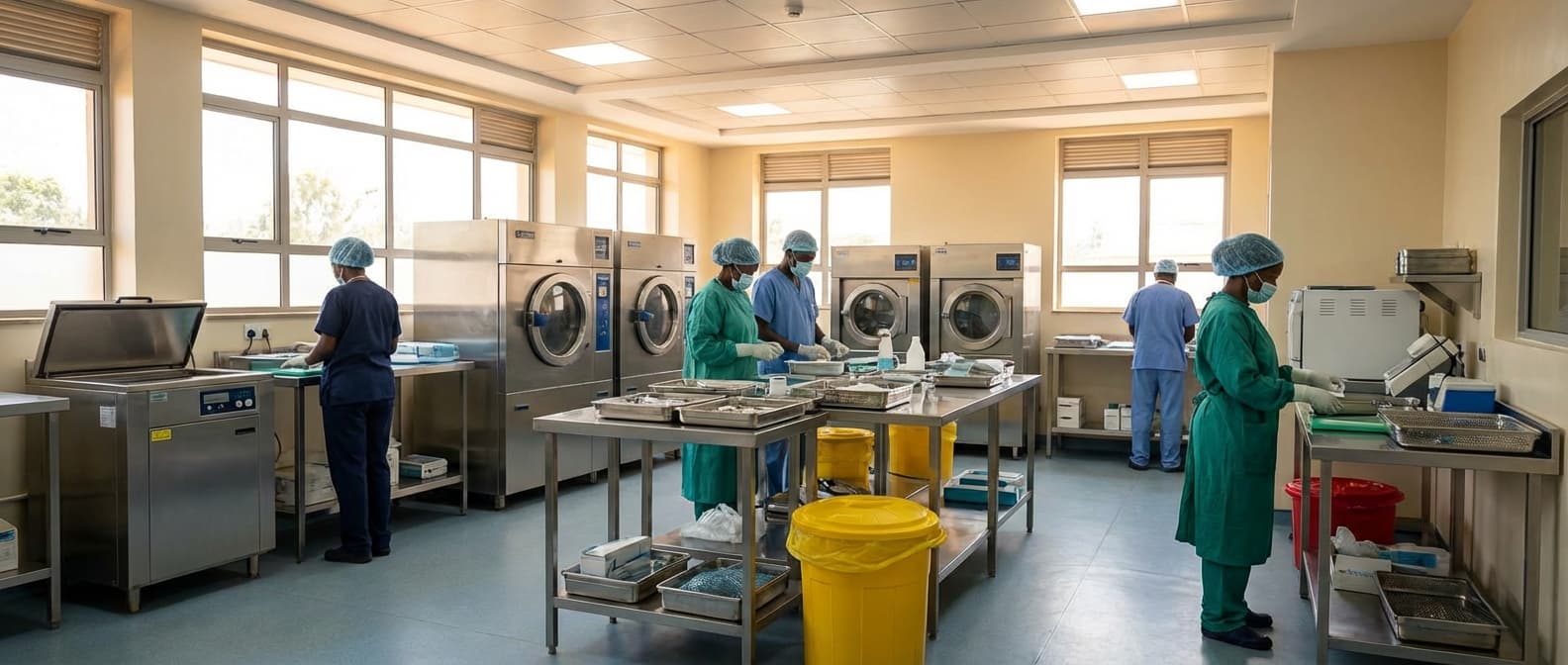
Endoscope Reprocessing Equipment Support Service in Eritrea
Engineering Excellence & Technical Support
Endoscope Reprocessing Equipment Support Service High-standard technical execution following OEM protocols and local regulatory frameworks.
Rapid On-Site Technical Support
Providing immediate, expert technical assistance for your endoscope reprocessing equipment across Eritrea. Our certified technicians are equipped to diagnose and resolve issues efficiently, minimizing downtime and ensuring operational readiness for critical medical procedures.
Proactive Preventative Maintenance Programs
Implementing tailored preventative maintenance schedules to maximize the lifespan and performance of your endoscope reprocessing machinery. Our service ensures adherence to manufacturer specifications and regulatory standards, safeguarding against unexpected failures.
Specialized Endoscope Equipment Calibration & Validation
Offering precise calibration and validation services for all makes and models of endoscope reprocessing equipment. We guarantee that your systems meet stringent international and local health standards, ensuring the highest level of patient safety and infection control.
What Is Endoscope Reprocessing Equipment Support Service In Eritrea?
Endoscope reprocessing equipment support services in Eritrea refer to the comprehensive range of technical assistance, maintenance, repair, calibration, and validation activities required to ensure the optimal functionality and safety of automated and semi-automated endoscope reprocessing equipment. This service is critical for healthcare facilities in Eritrea that utilize flexible endoscopes for diagnostic and therapeutic procedures. The primary objective is to maintain the integrity of the reprocessing workflow, prevent cross-contamination, and ensure patient safety by adhering to stringent infection control standards. These services are vital for extending the lifespan of expensive reprocessing equipment, minimizing downtime, and guaranteeing compliance with national and international reprocessing guidelines.
| Stakeholder Group | Need for Endoscope Reprocessing Equipment Support Service | Typical Use Cases |
|---|---|---|
| Hospitals and Large Clinics | High volume of endoscopic procedures necessitates reliable and efficient reprocessing. Compliance with infection control standards is paramount. Maintaining a high level of patient safety. | Routine maintenance of automated endoscope reprocessors (AERs), validation of disinfection cycles, repair of pump failures or sensor malfunctions, calibration of chemical dispensing systems, troubleshooting communication errors between AERs and traceability systems. |
| Specialized Endoscopy Centers | Focused on specific endoscopic procedures requiring dedicated and specialized reprocessing equipment. Ensuring consistent quality of disinfection for critical procedures. | Calibration of high-level disinfectant concentration monitoring devices, validation of multi-channel reprocessors, repair of drying and air-flushing systems, performance verification of leak testing mechanisms. |
| Government Health Ministries and Regulatory Bodies | Ensuring public health and safety through standardized infection control practices. Monitoring adherence to reprocessing guidelines and equipment performance standards. | Reviewing validation reports, establishing service contracts with qualified providers, setting standards for equipment maintenance and calibration, potentially conducting audits of reprocessing facilities. |
| Biomedical Engineering Departments | Responsible for the overall maintenance and functionality of medical equipment. Requiring technical expertise and support for complex reprocessing systems. | Performing routine preventive maintenance, diagnosing and repairing complex electrical or software issues, managing spare parts inventory, participating in equipment validation processes, training new technicians. |
Key Components of Endoscope Reprocessing Equipment Support Service:
- Preventive Maintenance: Scheduled inspections, cleaning, lubrication, and replacement of wear-and-tear components (e.g., filters, seals, pumps) to avert equipment failure.
- Corrective Maintenance and Repair: Troubleshooting and fixing malfunctions, including mechanical, electrical, and software issues, to restore equipment functionality.
- Calibration: Ensuring the accuracy of critical parameters such as water temperature, flow rates, chemical concentrations, and cycle times, which are essential for effective disinfection and sterilization.
- Validation: Performing initial and periodic validation to confirm that the reprocessing equipment consistently achieves the required level of decontamination, often involving biological and chemical indicator testing.
- Performance Monitoring and Optimization: Analyzing equipment performance data to identify trends, suggest improvements, and optimize reprocessing cycles for efficiency and efficacy.
- Technical Training and Support: Providing training to in-house biomedical technicians and endoscope reprocessing staff on equipment operation, basic maintenance, and troubleshooting.
- Spare Parts Management: Ensuring the availability of genuine and compatible spare parts for timely repairs and minimizing lead times.
- Documentation and Compliance: Maintaining detailed records of all maintenance, repair, calibration, and validation activities to meet regulatory and accreditation requirements.
Who Needs Endoscope Reprocessing Equipment Support Service In Eritrea?
Endoscope reprocessing equipment support services are crucial for ensuring the safety and efficacy of endoscopic procedures. In Eritrea, where healthcare infrastructure is developing, these services are particularly vital for facilities that utilize or plan to utilize flexible endoscopes for diagnostic and therapeutic purposes. Proper reprocessing of endoscopes is essential to prevent the transmission of healthcare-associated infections (HAIs), a significant concern in any healthcare setting. Therefore, the demand for such support services stems from a need for reliable, well-maintained equipment and the expertise to operate and troubleshoot it effectively.
| Target Customer | Key Departments Requiring Support |
|---|---|
| Public Hospitals | Gastroenterology, Pulmonology, Urology, Gynecology, Surgery, Endoscopy Units, Central Sterile Supply Department (CSSD) |
| Private Hospitals | Gastroenterology, Pulmonology, Urology, Gynecology, Surgery, Endoscopy Units, Central Sterile Supply Department (CSSD) |
| Specialized Clinics | Gastroenterology Department, Pulmonology Department, Urology Department, Gynecology Department, Endoscopy Suite |
| Diagnostic Centers | Endoscopy Unit, Laboratory Services (for related testing) |
| Government Health Institutions and Ministries | Central Sterile Supply Department (CSSD) Management, Infection Control Units, Procurement Departments |
Target Customers for Endoscope Reprocessing Equipment Support Service in Eritrea
- Hospitals (Public and Private)
- Specialized Clinics (e.g., Gastroenterology, Pulmonology, Urology, Gynecology)
- Diagnostic Centers
- Government Health Institutions and Ministries
Endoscope Reprocessing Equipment Support Service Process In Eritrea
This document outlines the Endoscope Reprocessing Equipment Support Service Process in Eritrea, detailing the workflow from initial customer inquiry to the successful execution of the service. The process is designed to be efficient, transparent, and customer-centric, ensuring the optimal functioning and longevity of critical medical equipment.
| Stage | Description | Key Activities | Responsible Party | Deliverables/Outcomes |
|---|---|---|---|---|
| The customer (healthcare facility in Eritrea) identifies a need for support services for their endoscope reprocessing equipment (e.g., malfunction, scheduled maintenance, installation). | Customer contacts the service provider (via phone, email, or website). Service provider gathers basic information about the equipment, nature of the issue, and customer location. | Customer, Service Provider Representative | Initial understanding of the service need, basic equipment details, and customer contact information. |
| Based on the initial assessment, a formal service request is created, and a detailed quotation is provided to the customer. | Service provider diagnoses the potential issue (if applicable) or identifies required service. Technical team prepares a comprehensive quotation outlining scope of work, parts, labor, travel, and estimated costs. Quotation is submitted to the customer for approval. | Service Provider (Technical Team, Sales/Support) | Formal Service Request document, Approved Quotation, Agreed service terms and conditions. |
| Once the quotation is approved, the service appointment is scheduled, and all necessary logistics are arranged. | Customer and service provider agree on a mutually convenient date and time for the service. Service provider arranges for technician travel, accommodation (if necessary), and any required spare parts to be transported to Eritrea. | Service Provider (Operations/Logistics), Customer | Confirmed service schedule, Arranged travel and accommodation for technician, Prepared spare parts shipment (if required). |
| The certified service technician arrives at the customer's facility and performs the agreed-upon service. | Technician performs diagnosis, repair, preventive maintenance, installation, or calibration as per the service request. This includes inspecting components, replacing faulty parts, cleaning, and ensuring proper operation. | Service Provider (Field Service Technician) | Repaired or maintained equipment, Performed installation/calibration, On-site troubleshooting. |
| After the service execution, the equipment is thoroughly tested to ensure it is functioning optimally and meets all relevant standards. | Technician conducts functional tests, performance checks, and, if applicable, validation tests to confirm the equipment's efficacy and safety in reprocessing endoscopes. This might involve simulating reprocessing cycles. | Service Provider (Field Service Technician) | Successful test results, Validated equipment performance, Assurance of compliance with reprocessing standards. |
| All service activities are documented, and the service is formally closed out. | Technician completes a detailed service report, including diagnosis, actions taken, parts used, test results, and any recommendations. This report is signed by the customer. Invoices are generated and sent to the customer for payment. | Service Provider (Field Service Technician, Administration) | Completed Service Report, Customer Sign-off, Final Invoice, Service closure confirmation. |
| A follow-up is conducted to ensure customer satisfaction and gather feedback for continuous improvement. | Service provider contacts the customer after a specified period to inquire about the equipment's performance and overall satisfaction with the service. Feedback is collected to identify areas for improvement in the service process. | Service Provider (Customer Service) | Customer satisfaction confirmation, Valuable feedback for service improvement, Potential for future service engagement. |
Endoscope Reprocessing Equipment Support Service Workflow
- Inquiry and Initial Assessment
- Service Request and Quotation
- Scheduling and Logistics
- On-site Service Execution
- Testing and Validation
- Documentation and Closure
- Follow-up and Feedback
Endoscope Reprocessing Equipment Support Service Cost In Eritrea
Providing reliable support services for endoscope reprocessing equipment in Eritrea is crucial for maintaining infection control standards in healthcare facilities. The cost of these services is influenced by a combination of factors, leading to a range of pricing within the local currency. These factors include the type and complexity of the endoscope reprocessing equipment, the specific service required (e.g., routine maintenance, emergency repair, calibration, installation), the availability of qualified technicians and spare parts, and the geographic location within Eritrea. Importation costs for specialized parts and the logistical challenges of reaching remote areas can also significantly impact the overall expense.
| Service Type | Estimated Price Range (Eritrean Nakfa - ERN) | Notes |
|---|---|---|
| Routine Preventative Maintenance (Annual/Bi-annual) | 15,000 - 45,000 ERN | Covers inspection, cleaning, lubrication, and minor adjustments. May vary based on equipment size and complexity. |
| Emergency On-Demand Repair (Per Call-out) | 20,000 - 60,000 ERN | Includes technician's travel, diagnosis, and labor. Excludes cost of spare parts. Higher rates apply outside business hours or on holidays. |
| Spare Parts Replacement (Individual Component) | 5,000 - 25,000+ ERN | Highly variable depending on the specific part (e.g., pump, filter, control board) and its import cost. Complex electronic boards can be significantly more expensive. |
| Equipment Calibration | 10,000 - 30,000 ERN | Ensures accuracy of cycles and temperatures. May be bundled with maintenance. |
| New Equipment Installation & Initial Setup | 25,000 - 75,000 ERN | Includes delivery, installation, initial testing, and basic user training. Dependent on equipment size and infrastructure requirements. |
| Extended Service Contract / SLA (Annual) | 40,000 - 150,000+ ERN | Offers comprehensive coverage, prioritizing response times, and may include preventative maintenance. Price depends on the level of service and equipment coverage. |
Key Pricing Factors for Endoscope Reprocessing Equipment Support Service in Eritrea
- Equipment Type and Complexity: Different models and brands of endoscope washers, dryers, and sterilizers have varying support needs. Advanced, automated systems generally incur higher service costs than simpler manual units.
- Service Scope: Routine preventative maintenance is typically less expensive than on-demand emergency repairs. Calibration, software updates, and extensive component replacements will also affect pricing.
- Technician Expertise and Availability: The availability of certified and experienced technicians for specific brands of equipment is a major determinant. If specialized knowledge is scarce locally, it may necessitate bringing in external expertise, increasing costs.
- Spare Parts Availability and Cost: The accessibility and price of genuine spare parts are critical. If parts need to be imported, customs duties, shipping fees, and currency exchange rates will all contribute to the final cost.
- Geographic Location: Service calls to remote or less accessible regions within Eritrea will incur higher travel and logistical costs for technicians and equipment.
- Service Provider Reputation and Warranty: Established service providers with a proven track record may command higher prices, reflecting their reliability and the quality of their service. Warranty periods on previous repairs or new installations can also influence ongoing service contracts.
- Urgency of Service: Emergency or expedited service requests will generally be priced at a premium compared to scheduled appointments.
- Service Level Agreements (SLAs): Long-term maintenance contracts or SLAs can offer more predictable pricing and potentially cost savings over time, often with different tiers of service included.
Affordable Endoscope Reprocessing Equipment Support Service Options
Investing in reliable and efficient endoscope reprocessing equipment is crucial for patient safety and operational efficiency. However, the cost of initial purchase and ongoing maintenance can be significant. This guide explores affordable endoscope reprocessing equipment support service options, focusing on value bundles and cost-saving strategies to help healthcare facilities optimize their budgets without compromising quality.
| Cost-Saving Strategy | Description | Potential Benefit |
|---|---|---|
| Negotiate Multi-Year Contracts | Commit to longer-term service agreements with your chosen provider. This often unlocks discounted rates and locks in pricing. | Lower overall service costs, budget predictability, protection against inflation. |
| Leverage Preventative Maintenance | Prioritize regular PM as included in value bundles. Proactive maintenance prevents costly emergency repairs and extends equipment life. | Reduced downtime, lower repair expenses, extended equipment lifespan. |
| Consider Refurbished Equipment with Warranties | Purchasing certified refurbished reprocessing equipment from reputable vendors can significantly reduce upfront costs, especially when bundled with a service contract. | Significant capital expenditure savings, reliable equipment with a warranty. |
| Evaluate Equipment Usage and Needs | Don't over-spec or over-buy. Understand your facility's actual reprocessing volume and choose equipment and service plans that match your needs. | Avoid unnecessary costs for underutilized equipment or excessive service. |
| Explore Third-Party Service Providers | While OEM (Original Equipment Manufacturer) support is often preferred, independent third-party service providers can sometimes offer more competitive pricing for maintenance and repairs, especially after the initial warranty period. | Potentially lower service rates, increased flexibility in choosing providers. |
| Bundle Equipment Purchases with Service Plans | When purchasing new endoscope reprocessing equipment, inquire about bundled deals that include initial setup, training, and a period of comprehensive service. | Integrated solution, potential discounts for combined purchases. |
| Invest in Staff Training | Well-trained staff can perform basic troubleshooting and maintenance, reducing the need for costly service calls and preventing equipment damage due to improper use. | Reduced reliance on external technicians, fewer equipment failures. |
Understanding Value Bundles in Endoscope Reprocessing Support
- {"title":"What are Value Bundles?","description":"Value bundles are pre-packaged service offerings that combine multiple support components at a more attractive price than purchasing each service individually. They are designed to provide comprehensive coverage and predictable costs, offering greater value for your investment."}
- {"title":"Common Components of Value Bundles","description":"These bundles typically include a combination of the following services:"}
- {"title":"Preventative Maintenance (PM)","description":"Scheduled inspections and servicing to identify and address potential issues before they lead to breakdowns. This is vital for extending equipment lifespan and ensuring optimal performance."}
- {"title":"On-Demand Repairs","description":"Access to qualified technicians for troubleshooting and fixing equipment malfunctions when they occur. This often includes guaranteed response times."}
- {"title":"Software Updates & Calibration","description":"Ensuring your reprocessing equipment is running the latest software versions for improved functionality and compliance, along with regular calibration to maintain accuracy."}
- {"title":"Parts & Labor Coverage","description":"Inclusion of necessary replacement parts and the labor costs associated with repairs. This can significantly reduce unexpected expenses."}
- {"title":"Training & Education","description":"Providing training for your staff on equipment operation, maintenance, and best practices for reprocessing, enhancing their efficiency and reducing the likelihood of user error."}
- {"title":"Performance Monitoring & Reporting","description":"Services that track equipment performance, uptime, and repair history, providing valuable data for operational analysis and future planning."}
Verified Providers In Eritrea
In Eritrea's evolving healthcare landscape, identifying verified providers is paramount for ensuring quality and trustworthy medical services. Franance Health stands out as a beacon of excellence, offering a robust network of credentialed professionals and facilities. Their commitment to stringent vetting processes and adherence to international standards makes them the premier choice for individuals seeking reliable healthcare solutions.
| Provider Type | Key Verification Criteria | Franance Health Advantage |
|---|---|---|
| Physicians & Specialists | Valid medical license, board certification, extensive clinical experience, clean disciplinary record | Franance Health rigorously checks all licenses and certifications, conducts background checks, and interviews practitioners to ensure expertise and ethical practice. |
| Hospitals & Clinics | Accreditation from relevant health authorities, adherence to safety protocols, availability of essential medical equipment, qualified staff | Franance Health evaluates facilities based on their infrastructure, equipment, operational standards, and compliance with national and international health regulations. |
| Diagnostic Centers | Certified technicians, calibrated equipment, adherence to quality control in testing | Verification includes ensuring the accuracy and reliability of diagnostic services through equipment calibration checks and technician qualifications. |
| Emergency Services | Prompt response times, trained emergency medical personnel, well-equipped ambulances | Franance Health partners with providers demonstrating rapid response capabilities and a commitment to efficient emergency care. |
Why Franance Health is the Best Choice for Verified Providers in Eritrea:
- Rigorous Credentialing Process: Franance Health employs a multi-layered approach to verify the qualifications, licenses, and experience of every healthcare professional and facility within their network. This ensures that only competent and ethical practitioners are associated with them.
- Commitment to Quality Standards: Adherence to both national and internationally recognized healthcare quality standards is a cornerstone of Franance Health's operations. This commitment translates to superior patient care and outcomes.
- Comprehensive Network: Franance Health has cultivated an extensive network of doctors, specialists, hospitals, and clinics across Eritrea, providing a wide range of medical services and accessibility.
- Patient-Centric Approach: The organization prioritizes patient well-being and satisfaction, ensuring that verified providers are not only skilled but also compassionate and responsive to individual needs.
- Transparency and Trust: By clearly presenting verified provider credentials, Franance Health fosters transparency and builds trust with the community, empowering individuals to make informed healthcare decisions.
Scope Of Work For Endoscope Reprocessing Equipment Support Service
This Scope of Work outlines the requirements for Endoscope Reprocessing Equipment Support Services. The services are intended to ensure the optimal performance, reliability, and compliance of endoscope reprocessing equipment used in healthcare facilities. This document details the technical deliverables, standard specifications, and associated responsibilities for the service provider.
| Service Category | Description | Frequency/Trigger | Standard Specifications | Technical Deliverables |
|---|---|---|---|---|
| Preventive Maintenance (PM) | Scheduled inspections, cleaning, lubrication, and replacement of wear-and-tear parts to prevent failures. | As per manufacturer's recommendations (e.g., quarterly, semi-annually, annually), or based on usage hours. | Adherence to manufacturer's PM checklist; documented inspection results; use of OEM-approved parts; calibration checks. | Completed PM reports; updated equipment logs; certification of maintenance performed. |
| Corrective Maintenance (CM) / Repair | On-demand service to address equipment malfunctions, breakdowns, or performance issues. | Upon equipment failure or reported malfunction. | Diagnosis of issue; repair using OEM-approved parts; functional testing post-repair; adherence to manufacturer's repair procedures. | Detailed repair reports including problem description, resolution, parts used, and labor hours; equipment operational sign-off. |
| Calibration | Adjustment of equipment to meet specified performance standards and accuracy requirements. | As per manufacturer's recommendations; after major repairs; annually or as required by accreditation. | Use of traceable calibration standards; documented calibration procedures; adherence to tolerance limits specified by manufacturer or regulatory bodies. | Calibration certificates with 'As Found' and 'As Left' data; updated calibration stickers on equipment. |
| Performance Verification / Validation | Testing to confirm that the equipment performs according to its intended design and specifications. | Post-PM, post-CM, or as part of a scheduled validation program. | Testing of all critical functions (e.g., wash cycles, disinfection levels, drying effectiveness) against defined performance metrics. | Performance verification reports; documentation of successful completion of all tests. |
| Technical Support & Consultation | On-site or remote assistance for troubleshooting, operational guidance, and advice on equipment best practices. | As needed, or during scheduled visits. | Prompt response times; clear and concise communication; provision of expert advice. | Meeting minutes (if applicable); documented advice provided; answers to technical queries. |
| Training | Instruction for facility staff on proper operation, basic troubleshooting, and routine maintenance of the equipment. | Upon installation of new equipment; periodically as needed; or as part of service agreements. | Tailored training modules; hands-on demonstrations; competency assessment. | Training materials (manuals, presentations); attendance records; assessment results. |
| Parts Management | Ensuring availability of critical spare parts for timely repairs and maintenance. | Ongoing, with proactive inventory management. | Maintenance of adequate stock levels for common failure items; prompt sourcing of specialized parts. | Inventory reports; lead time tracking for parts procurement. |
Key Objectives
- Maintain the operational readiness and effectiveness of endoscope reprocessing equipment.
- Ensure compliance with relevant regulatory standards and guidelines (e.g., AAMI, CDC, local health authorities).
- Minimize equipment downtime and associated operational disruptions.
- Provide timely and efficient repair, maintenance, and calibration services.
- Offer technical expertise and training to facility staff.
Service Level Agreement For Endoscope Reprocessing Equipment Support Service
This Service Level Agreement (SLA) outlines the terms and conditions for support services related to endoscope reprocessing equipment. It specifies the expected response times for technical issues and defines the uptime guarantees for critical equipment functionalities.
| Service Category | Uptime Guarantee | Response Time (Business Hours) | Target Resolution Time (Business Hours) |
|---|---|---|---|
| Critical Equipment Functionality (e.g., Sterilization Cycle Completion) | 99.5% | 1 Hour | 4 Business Hours |
| Essential Equipment Functionality (e.g., Wash Cycle Performance) | 98.0% | 2 Hours | 8 Business Hours |
| Non-Essential Equipment Functionality (e.g., Reporting Features) | 95.0% | 4 Hours | 24 Business Hours |
| Routine Preventative Maintenance | N/A | N/A | As per scheduled maintenance contract |
Key Performance Indicators (KPIs)
- Response Time: The maximum time allowed for the support provider to acknowledge and begin addressing a reported issue.
- Resolution Time: The target time for resolving reported issues. This may vary based on the severity of the issue.
- Uptime Guarantee: The percentage of time the specified endoscope reprocessing equipment is expected to be operational and available for use.
- Downtime Exclusion: Specific periods or events that are not counted towards the downtime for uptime calculations.
Frequently Asked Questions

Ready when you are
Let's scope your Endoscope Reprocessing Equipment Support Service in Eritrea project in Eritrea.

Scaling healthcare logistics and technical systems across the entire continent.