
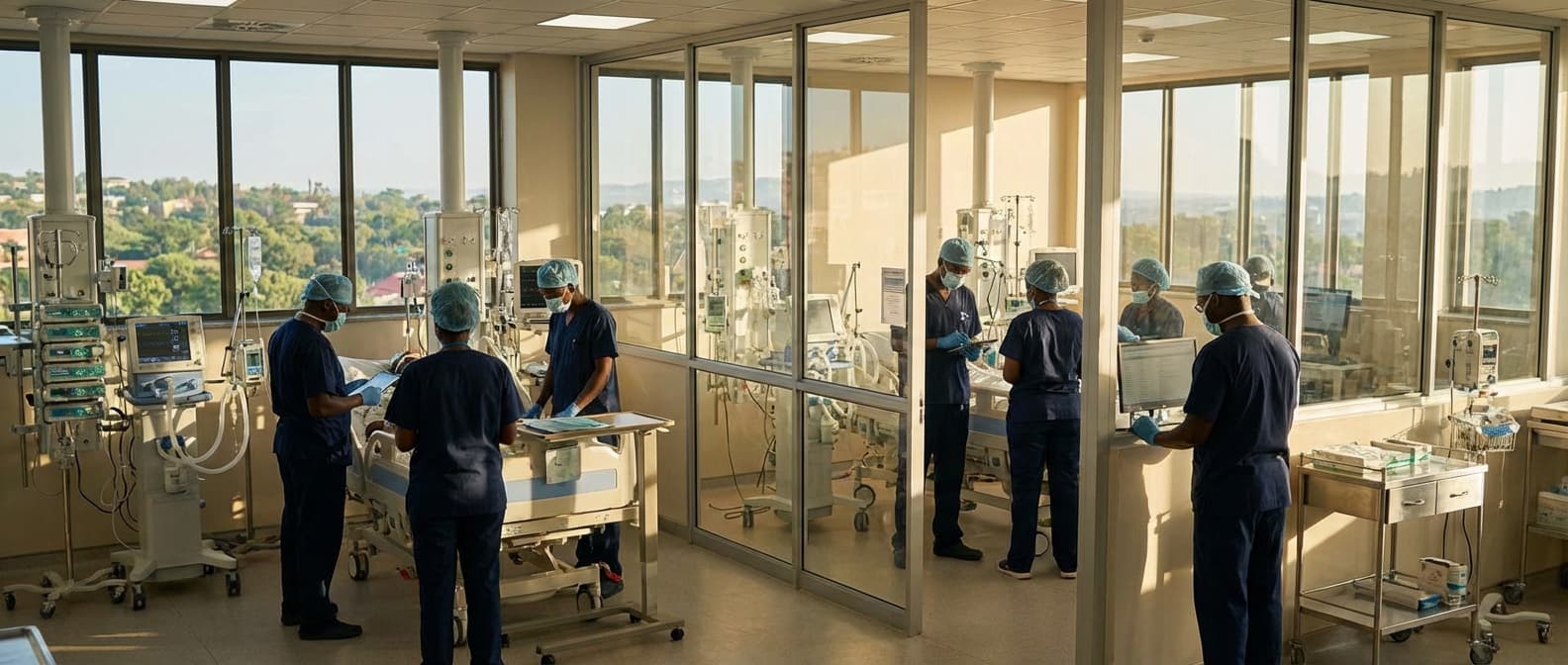
Ventilator Fleet Management & PM in Eritrea
Engineering Excellence & Technical Support
Preventive maintenance and fleet management for ICU ventilators High-standard technical execution following OEM protocols and local regulatory frameworks.
Centralized Ventilator Fleet Tracking
Implementing a real-time, cloud-based system to monitor the location, status, and usage of every ventilator in Eritrea, ensuring immediate availability and efficient resource allocation during critical demand.
Predictive Maintenance for Extended Lifespan
Leveraging AI-driven analytics to predict potential equipment failures based on usage patterns and sensor data, enabling proactive maintenance scheduling and minimizing downtime for Eritrea's vital ventilator fleet.
Automated Compliance & Calibration Reminders
Establishing an automated system to track maintenance schedules, calibration due dates, and regulatory compliance for all ventilators across Eritrea, guaranteeing optimal performance and patient safety.
What Is Ventilator Fleet Management & Pm In Eritrea?
Ventilator Fleet Management & Preventive Maintenance (PM) in Eritrea refers to the comprehensive operational and technical services required to ensure the continuous, safe, and effective functioning of mechanical ventilators within healthcare facilities and potentially other critical care settings across the nation. This service encompasses the entire lifecycle of ventilator assets, from procurement and deployment to routine servicing, calibration, repair, and eventual decommissioning. The primary objective is to maximize equipment uptime, minimize failure rates, prolong asset lifespan, and ensure patient safety by adhering to stringent medical device regulations and best practices. This involves meticulous record-keeping, proactive identification of potential issues, and timely intervention to prevent critical failures, particularly in resource-constrained environments where access to spare parts and specialized technical expertise may be limited.
| Stakeholder/Entity | Need for Ventilator Fleet Management & PM | Typical Use Cases | ||||
|---|---|---|---|---|---|---|
| Ministry of Health (Eritrea): | Ensuring the availability and reliability of critical life-support equipment for the national healthcare system. Optimizing resource allocation, managing capital expenditure on medical devices, and ensuring compliance with national health standards. Addressing potential supply chain vulnerabilities and ensuring equitable access to functional ventilators across the country. | National Public Health Programs: Maintaining operational readiness of ventilators for routine patient care in public hospitals and health centers. Managing ventilator deployment during public health emergencies (e.g., pandemics, natural disasters). Developing national guidelines and protocols for ventilator maintenance. | ||||
| Hospitals and Healthcare Facilities (Public and Private): | Guaranteeing continuous patient care by minimizing ventilator downtime. Ensuring patient safety by maintaining equipment accuracy and functionality. Reducing the financial burden of frequent, unscheduled repairs and premature equipment replacement. Supporting clinical decision-making with reliable equipment data. | Intensive Care Units (ICUs): Continuous monitoring and ventilation of critically ill patients requiring advanced respiratory support. | Operating Rooms (ORs): Providing anesthesia support and intraoperative ventilation during surgical procedures. | Emergency Departments (EDs): Stabilizing patients with acute respiratory distress. | Neonatal Intensive Care Units (NICUs): Ventilating premature infants and neonates with respiratory challenges. | COVID-19 Treatment Centers: Managing increased demand and ensuring high availability of ventilators for severe COVID-19 cases. |
| Biomedical Engineering Departments/Technicians: | Performing scheduled maintenance, diagnostics, and repairs. Ensuring adherence to technical specifications and manufacturer guidelines. Maintaining accurate service records and managing spare parts inventory. | Routine PM Checks: Performing scheduled inspections and calibration of ventilators. | Troubleshooting and Repair: Diagnosing and rectifying hardware and software faults. | Installation and Commissioning: Setting up new ventilator equipment. | ||
| Clinical Staff (Physicians, Nurses, Respiratory Therapists): | Ensuring safe and effective operation of ventilators for patient care. Providing feedback on equipment performance and potential issues. Understanding basic operational protocols and immediate troubleshooting steps. | Patient Management: Operating ventilators according to prescribed settings for individual patients. | Alarm Response: Identifying and responding to ventilator alarms. | Basic Functionality Checks: Performing pre-use checks and reporting any abnormalities. | ||
| Medical Device Manufacturers and Suppliers: | Providing technical support, training, and access to genuine spare parts. Offering service contracts and extended warranty agreements. Ensuring the availability of updated service manuals and technical documentation. | Technical Support: Assisting local technicians with complex repairs. | Training Programs: Educating Eritrean technicians on specific ventilator models. | Spare Parts Supply: Ensuring a reliable supply chain for critical components. | ||
| International Aid Organizations and NGOs: | Supporting the establishment and sustainability of ventilator fleet management programs through funding, equipment donations, and technical expertise. Facilitating training initiatives and capacity building. | Project Implementation: Supporting the rollout of PM programs in underserved areas. | Capacity Building: Funding training programs for biomedical engineers and technicians. | Equipment Procurement: Facilitating the acquisition of new ventilators and essential maintenance tools. |
Key Components of Ventilator Fleet Management & PM in Eritrea
- Asset Inventory and Tracking: Establishing and maintaining a centralized, detailed inventory of all ventilators, including make, model, serial number, acquisition date, location, and service history.
- Preventive Maintenance (PM) Scheduling and Execution: Developing and implementing a structured PM program based on manufacturer recommendations, usage data, and local environmental factors. This includes regular inspections, cleaning, lubrication, functional testing, and calibration of critical parameters (e.g., tidal volume, pressure, flow, oxygen concentration).
- Corrective Maintenance and Repair: Responding to equipment malfunctions and failures in a timely and efficient manner. This involves diagnosing faults, procuring necessary spare parts (often a critical challenge in Eritrea), and performing repairs by qualified technicians.
- Calibration and Performance Verification: Ensuring that ventilators are calibrated to meet specified performance standards and accurately deliver prescribed ventilation parameters. This often requires specialized calibration equipment and trained personnel.
- Training and Competency Assessment: Providing training to biomedical engineers, technicians, and clinical end-users on the proper operation, basic troubleshooting, and routine maintenance of ventilators.
- Quality Assurance and Compliance: Implementing quality control measures to ensure all maintenance activities are performed to a high standard and comply with relevant national and international medical device regulations and guidelines.
- Risk Management and Safety Audits: Proactively identifying and mitigating potential risks associated with ventilator malfunction or misuse, including regular safety audits and incident investigations.
- Logistics and Supply Chain Management: Establishing robust processes for the procurement, storage, and distribution of spare parts, consumables, and specialized tools, especially considering import challenges.
- Data Management and Reporting: Collecting and analyzing data related to equipment performance, maintenance history, repair costs, and failure trends to inform decision-making and optimize the fleet's overall efficiency.
- Decommissioning and Disposal: Managing the end-of-life process for ventilators, ensuring proper documentation and environmentally responsible disposal.
Who Needs Ventilator Fleet Management & Pm In Eritrea?
Ventilator fleet management and preventive maintenance (PM) are crucial for ensuring the reliable operation of life-saving medical equipment in any healthcare system. In Eritrea, where healthcare resources may be particularly strained, robust management of medical devices like ventilators becomes paramount. This ensures that these critical machines are available, functional, and safe for patient care, minimizing downtime and preventing failures that could have severe consequences. Effective fleet management also contributes to cost-effectiveness by optimizing equipment lifespan, reducing repair costs, and ensuring efficient resource allocation.
| Customer Type | Primary Department(s) Involved | Key Needs for Ventilator Management & PM |
|---|---|---|
| Hospitals (Government & Private) | Biomedical Engineering, ICU, Anesthesiology, Respiratory Therapy, Hospital Administration | Ensuring immediate availability, reducing downtime, maximizing equipment lifespan, compliance with safety standards, efficient repair and maintenance scheduling. |
| Ministry of Health | Planning & Policy, Procurement, National Health Infrastructure | National oversight of medical equipment, strategic resource allocation, standardization of maintenance protocols, national inventory management, public health preparedness. |
| Healthcare Training Institutions | Biomedical Engineering, Clinical Training Departments | Providing functional equipment for practical training, ensuring student safety during simulations, equipment longevity for educational use. |
| NGOs & International Aid Organizations | Logistics, Program Management, Technical Support Teams | Ensuring sustainability of donated equipment, effective deployment of resources, remote or on-site technical support, capacity building for local staff. |
Target Customers and Departments for Ventilator Fleet Management & PM in Eritrea
- Hospitals (Government and Private): All hospitals operating in Eritrea, from large central hospitals to smaller regional facilities, are primary beneficiaries.
- Ministry of Health: As the governing body for healthcare, the Ministry of Health is a key stakeholder, responsible for national healthcare policy and resource allocation.
- Healthcare Training Institutions: Medical schools and nursing colleges that utilize ventilators for training purposes.
- Non-Governmental Organizations (NGOs) with Healthcare Programs: International and local NGOs operating healthcare facilities or providing medical equipment support in Eritrea.
- International Aid Organizations: Bodies providing medical aid and equipment to Eritrea.
- Biomedical Engineering Departments/Units: The technical teams responsible for the installation, maintenance, and repair of medical equipment.
- Intensive Care Units (ICUs) / Critical Care Units: Departments with the highest concentration of ventilator usage.
- Anesthesiology Departments: Units where ventilators are frequently used during surgical procedures.
- Respiratory Therapy Departments: Specialized departments focused on respiratory care and ventilator management.
- Procurement and Logistics Departments: Responsible for acquiring and managing medical equipment inventory.
- Hospital Administration/Management: Overseeing the overall operational efficiency and resource management of healthcare facilities.
Ventilator Fleet Management & Pm Process In Eritrea
This document outlines the workflow for Ventilator Fleet Management and Preventive Maintenance (PM) processes in Eritrea, from initial inquiry to full execution. Effective fleet management ensures that critical medical equipment like ventilators is readily available, properly maintained, and utilized efficiently to meet healthcare demands. The PM process is crucial for extending the lifespan of these devices, preventing unexpected failures, and ensuring patient safety. The workflow is designed to be systematic and transparent, involving multiple stakeholders to guarantee optimal performance of the ventilator fleet.
| Stage | Description | Key Activities | Responsible Parties | Output/Deliverable |
|---|---|---|---|---|
| The process begins when a need for a new ventilator, a replacement, or a PM service is identified. | Formal request submission, needs identification (e.g., new facility, increased patient load, scheduled PM). | Healthcare Facilities (Hospitals, Clinics), Ministry of Health (MoH) Department of Medical Equipment, Regional Health Offices. | Official Request Form, Needs Assessment Report. |
| Evaluating the urgency and importance of the request against existing resources and strategic health objectives. | Reviewing request justification, assessing critical need, prioritizing based on patient impact and resource availability. | MoH Planning Department, Biomedical Engineering Department, Clinical Leads. | Prioritized List of Ventilator Needs, Budgetary Allocation Proposal. |
| The process of acquiring new ventilators or spare parts based on approved requests and budgets. | Tendering process, vendor selection, purchase order generation, contract negotiation, payment processing. | MoH Procurement Department, Finance Department, Biomedical Engineering Department. | Procurement Contracts, Purchase Orders, Invoices, Acquired Ventilators/Parts. |
| Registering new ventilators into the central inventory and assigning unique identifiers for tracking. | Receiving new equipment, creating inventory records, assigning unique asset tags (barcodes/RFID), initial functional checks. | Biomedical Engineering Department, Central Medical Stores. | Updated Inventory Database, Asset Tagged Ventilators, Initial Performance Report. |
| Proactively planning and scheduling regular maintenance for all ventilators in the fleet. | Reviewing manufacturer recommendations, establishing PM schedules (e.g., quarterly, semi-annually), assigning PM tasks, creating work orders. | Biomedical Engineering Department, PM Planning Unit. | PM Schedule, Scheduled Work Orders. |
| Assigning qualified technicians and ensuring the necessary resources are available at the facility for PM. | Allocating technicians based on expertise and location, informing facility of scheduled PM, ensuring access to the ventilator and relevant space. | Biomedical Engineering Department, Facility Management. | Technician Assignment, Facility Notification, Site Access Confirmation. |
| Carrying out the scheduled maintenance procedures on the ventilators at the healthcare facility. | Performing visual inspections, cleaning, lubrication, testing of all components as per PM checklist, replacing worn-out parts. | Certified Biomedical Technicians. | Completed PM Checklist, Replaced Parts Log. |
| Ensuring the ventilator performs within specified parameters after maintenance. | Conducting functional tests, performance verification, calibration against standards, ensuring accuracy of readings. | Certified Biomedical Technicians. | Calibration Certificates, Post-PM Performance Test Results. |
| Recording all maintenance activities and performance data for record-keeping and analysis. | Updating the asset management system, generating PM reports, documenting any issues found and actions taken, reporting critical findings. | Certified Biomedical Technicians, Biomedical Engineering Department. | Updated Asset Register, PM Service Reports, Maintenance Logs, Performance Trend Analysis. |
| Gathering feedback on the process and using data to improve future fleet management and PM strategies. | Collecting feedback from facilities and technicians, analyzing PM data for recurring issues, identifying training needs, updating PM protocols. | Biomedical Engineering Department, MoH Quality Assurance. | Process Improvement Recommendations, Updated PM Protocols, Training Plans. |
Ventilator Fleet Management & PM Process Workflow
- Inquiry & Request Initiation
- Needs Assessment & Prioritization
- Procurement & Acquisition
- Inventory Management & Asset Tagging
- Preventive Maintenance Scheduling
- Technician Dispatch & Site Preparation
- On-site PM Execution
- Calibration & Testing
- Documentation & Reporting
- Feedback & Continuous Improvement
Ventilator Fleet Management & Pm Cost In Eritrea
Managing a ventilator fleet in Eritrea involves several critical factors that influence overall costs. These include the initial purchase price of ventilators, ongoing maintenance and repair, spare parts procurement, training for biomedical technicians, and potential rental or leasing options. The local currency for these transactions is the Eritrean Nakfa (ERN). Pricing can vary significantly based on ventilator type (e.g., invasive vs. non-invasive, critical care vs. transport), brand reputation, technological sophistication, and supplier. Furthermore, import duties, taxes, and transportation costs within Eritrea will add to the final expense. Regular preventive maintenance (PM) is crucial to ensure ventilator reliability and longevity, and the cost of PM contracts or in-house technician time is a significant operational expenditure.
| Cost Component | Pricing Factors | Estimated Range (ERN) |
|---|---|---|
| Ventilator Purchase (New, Mid-Range Critical Care) | Brand, Features, Supplier, Import costs | 150,000 - 600,000+ |
| Ventilator Purchase (Used/Refurbished) | Condition, Age, Supplier, Availability | 75,000 - 250,000 |
| Annual Preventive Maintenance (per unit) | Manufacturer contract, In-house technician time, PM frequency | 10,000 - 30,000 |
| Common Spare Parts (e.g., filters, batteries, sensors) | Part type, Availability, Supplier markup | 500 - 5,000 (per part) |
| Biomedical Technician Training (per technician) | Training provider, Duration, Specialization | 20,000 - 70,000 |
| Calibration and Service Kit | Manufacturer-specific, Includes specialized tools | 25,000 - 100,000 |
| Transportation/Logistics (per unit, within Eritrea) | Distance, Mode of transport, Handling requirements | 1,000 - 10,000 |
| Import Duties/Taxes (percentage of CIF value) | Government regulations, Specific HS codes | Varies (e.g., 15% - 30%) |
Key Cost Components for Ventilator Fleet Management in Eritrea
- Initial Purchase Price of Ventilators
- Preventive Maintenance (PM) Contracts or In-house Services
- Spare Parts and Consumables
- Biomedical Technician Training and Certification
- Calibration and Service Equipment
- Transportation and Logistics
- Import Duties, Taxes, and Customs Fees
- Warranty and Extended Service Plans
- Potential for Rental or Leasing Agreements
Affordable Ventilator Fleet Management & Pm Options
Managing a ventilator fleet efficiently and ensuring timely preventative maintenance (PM) are crucial for healthcare facilities. This not only guarantees patient safety and equipment readiness but also contributes significantly to cost containment. Affordable fleet management and PM options are now more accessible through innovative service models, focusing on value bundles and strategic cost-saving measures. Understanding these strategies can lead to substantial operational and financial benefits.
| Service Component | Benefit | Cost-Saving Aspect |
|---|---|---|
| Preventative Maintenance Contracts | Ensures equipment reliability and compliance | Reduces unexpected repair costs, minimizes downtime, extends equipment life |
| Remote Monitoring & Diagnostics | Proactive identification of issues, faster troubleshooting | Minimizes on-site technician visits, reduces travel costs, quicker resolution |
| Loaner/Swap Programs | Minimizes patient care disruption during repairs | Avoids costs associated with cancelled procedures or patient transfers |
| Predictive Maintenance | Identifies potential failures before they occur | Prevents costly emergency repairs, optimizes resource allocation |
| Consolidated Service Contracts | Streamlined vendor management | Potential for volume discounts, reduced administrative burden |
Key Components of Affordable Ventilator Fleet Management & PM
- {"title":"Value Bundles Explained","sublist":["Preventative Maintenance Contracts (scheduled servicing, calibration, and part replacement)","Remote Monitoring & Diagnostics","Loaner/Swap Programs for downtime mitigation","Software Updates & Upgrades","Access to Certified Technicians","Inventory Management for Spare Parts","Training for Biomedical Staff"],"description":"Value bundles are comprehensive service packages designed to offer a holistic solution for ventilator management and PM. Instead of purchasing individual services, facilities opt for a pre-defined bundle that often includes a combination of the following:"}
- {"title":"Cost-Saving Strategies","sublist":["Predictive Maintenance: Utilizing data analytics and sensor technology to anticipate equipment failures before they occur, reducing emergency repairs and downtime.","Optimized PM Scheduling: Aligning PM schedules with actual equipment usage and facility needs to avoid unnecessary servicing.","Consolidated Service Contracts: Negotiating with a single provider for multiple services to leverage volume discounts and reduce administrative overhead.","Extended Equipment Lifecycles: Implementing robust maintenance programs that prolong the useful life of ventilators, deferring capital expenditure.","Standardization of Equipment: Simplifying training, maintenance, and spare parts inventory by standardizing on a limited number of ventilator models.","In-House vs. Outsourced Expertise: Evaluating cost-effectiveness of in-house biomedical teams versus specialized third-party service providers for specific tasks.","Telehealth and Remote Support: Utilizing remote diagnostic tools to reduce the need for on-site technician visits.","Efficient Spare Parts Management: Implementing just-in-time inventory or consignment stock agreements to minimize capital tied up in spare parts."],"description":"Implementing a strategic approach to fleet management and PM can unlock significant cost savings. These strategies often leverage technology, proactive planning, and optimized resource allocation:"}
Verified Providers In Eritrea
In Eritrea, finding reliable and verified healthcare providers is paramount. Franance Health stands out as a leading platform, meticulously vetting its network of healthcare professionals. This rigorous credentialing process ensures that patients have access to high-quality care from qualified and trustworthy practitioners. Franance Health's commitment to verification translates into peace of mind for individuals seeking medical services, offering a transparent and dependable pathway to better health.
| Credential Type | Verification Method | Significance for Patients |
|---|---|---|
| Medical Licenses | Cross-referenced with national and international licensing bodies. | Confirms legal authorization to practice medicine. |
| Educational Background | Verification of degrees and certifications from accredited institutions. | Ensures foundational knowledge and specialized training. |
| Professional Experience | Review of work history, references, and peer evaluations. | Indicates practical application of skills and professional reputation. |
| Specializations & Certifications | Validation of advanced training and board certifications. | Guarantees expertise in specific medical fields. |
| Ethical Conduct & Compliance | Background checks for disciplinary actions and adherence to medical ethics. | Assures a commitment to patient well-being and professional integrity. |
Why Franance Health Credentials Matter:
- Rigorous Verification Process: Franance Health employs a multi-stage vetting system that includes license verification, professional background checks, and continuous performance monitoring.
- Qualified Medical Professionals: Only providers meeting stringent educational, training, and ethical standards are included in the Franance Health network.
- Enhanced Patient Safety: The emphasis on verified credentials directly contributes to a safer healthcare experience for all patients.
- Trust and Transparency: Franance Health promotes openness by clearly indicating the verified status of its listed providers.
- Access to Excellence: By choosing a Franance Health verified provider, individuals are assured of receiving care from some of the most competent and dedicated healthcare professionals in Eritrea.
Scope Of Work For Ventilator Fleet Management & Pm
This Scope of Work (SOW) outlines the requirements for a comprehensive Ventilator Fleet Management and Preventive Maintenance (PM) program. The objective is to ensure the optimal performance, reliability, and compliance of the organization's entire ventilator fleet. This includes all aspects from inventory management and tracking to scheduled maintenance, repairs, calibration, and end-of-life decommissioning. The SOW details the technical deliverables and standard specifications expected from the service provider.
| Category | Deliverable | Standard Specification / Requirement | Performance Metric / KPI | |
|---|---|---|---|---|
| Fleet Inventory and Asset Management | Comprehensive Asset Register | Detailed record of all ventilators including make, model, serial number, purchase date, location, service history, and current status. Must be accessible via a secure online portal. | 99.9% accuracy of asset data. | |
| Fleet Inventory and Asset Management | Real-time Fleet Status Tracking | System to provide immediate visibility into the operational status (in-use, in-storage, under-maintenance, retired) of each ventilator. | Real-time data availability for 100% of the fleet. | |
| Preventive Maintenance (PM) Program | Scheduled PM Services | Execution of manufacturer-recommended PM schedules for all ventilator models. Includes cleaning, inspection, functional testing, and replacement of wear-and-tear parts. | 100% completion of scheduled PMs within +/- 1 week of the due date. | |
| Preventive Maintenance (PM) Program | PM Kit Management | Procurement, inventory, and timely availability of all necessary PM kits and consumables. | Zero instances of PM delays due to unavailability of parts. | |
| Corrective Maintenance and Repair Services | On-demand Repair Services | 24/7 availability for emergency repairs. Response time for critical failures not exceeding 4 hours from notification. Resolution of critical failures within 24 hours. | Mean Time To Repair (MTTR) for critical failures not exceeding 24 hours. | First-time fix rate of 85% or higher. |
| Corrective Maintenance and Repair Services | Parts and Consumables Management | Maintenance of a readily available inventory of critical spare parts. Use of genuine or certified equivalent parts for all repairs. | Availability of 95% of critical spare parts in stock. | |
| Calibration Services | Scheduled Calibration | Regular calibration of all ventilators according to manufacturer specifications and regulatory requirements (e.g., ISO 17025, FDA guidelines where applicable). | 100% of ventilators calibrated within the specified interval. | |
| Calibration Services | Calibration Certificates | Provision of traceable calibration certificates for each serviced unit. | All calibration certificates provided within 48 hours of completion. | |
| Technical Support and Training | Remote and On-site Support | Availability of qualified technical support personnel for troubleshooting and issue resolution. | Provision of training for internal biomedical staff on basic maintenance and operation as required. | Average response time for technical support queries not exceeding 2 hours. |
| Reporting and Documentation | Service Reports | Detailed reports for each PM, repair, and calibration, including work performed, parts used, test results, and technician signature. Reports to be accessible via the online portal. | 98% of service reports submitted within 48 hours of service completion. | |
| Reporting and Documentation | Fleet Performance Reports | Monthly and quarterly reports on fleet availability, utilization, PM compliance, repair trends, and cost analysis. | Comprehensive reports delivered by the 10th business day of the month. | |
| Decommissioning and Disposal | End-of-Life Management | Safe and environmentally compliant decommissioning and disposal of retired ventilators, including data sanitization where applicable. Provision of disposal certificates. | 100% of decommissioned units disposed of according to regulatory standards. | Zero environmental violations. |
Key Service Areas
- Fleet Inventory and Asset Management
- Preventive Maintenance (PM) Program
- Corrective Maintenance and Repair Services
- Calibration Services
- Technical Support and Training
- Reporting and Documentation
- Decommissioning and Disposal
Service Level Agreement For Ventilator Fleet Management & Pm
This Service Level Agreement (SLA) outlines the terms and conditions for the comprehensive management and preventative maintenance (PM) of the client's ventilator fleet. It defines specific response times for critical incidents and guarantees a minimum uptime for the equipment to ensure operational readiness and patient safety.
| Service Type | Response Time Objective | Uptime Guarantee | Escalation Procedure |
|---|---|---|---|
| Critical Incident Response (On-Site) | Within 2 hours of notification | N/A (Focus on rapid resolution) | Level 1 Support -> Level 2 Technical Specialist -> Management within 1 hour intervals if unresolved. |
| Critical Incident Response (Remote Troubleshooting) | Within 1 hour of notification | N/A (Focus on rapid resolution) | Level 1 Support -> Level 2 Technical Specialist. |
| Routine Technical Support / Inquiries | Within 4 business hours | N/A | Standard ticketing system with defined priority levels. |
| Preventative Maintenance (PM) Scheduling | Notification of scheduled PM at least 7 days in advance | N/A (Focus on proactive maintenance) | Automated scheduling system with client confirmation portal. |
| Fleet-Wide Uptime | N/A | 98% Uptime per calendar month (averaged across the entire fleet) | Monthly uptime reports with analysis and action plans for underperforming units. |
Key Definitions
- Ventilator Fleet: Refers to all ventilators owned or leased by the client and managed under this SLA.
- Preventative Maintenance (PM): Scheduled servicing and inspection of ventilators according to manufacturer recommendations and industry best practices to prevent failures.
- Critical Incident: An event where a ventilator is non-operational and directly impacts patient care.
- Response Time: The time elapsed from the client's official notification of an incident to the commencement of on-site or remote troubleshooting by the service provider.
- Uptime Guarantee: The percentage of time the ventilator fleet is expected to be fully operational and available for patient use.
- Service Provider: The entity responsible for managing and maintaining the ventilator fleet.
- Client: The entity owning or leasing the ventilator fleet and receiving the service.
Frequently Asked Questions

Ready when you are
Let's scope your Ventilator Fleet Management & PM in Eritrea project in Eritrea.

Scaling healthcare logistics and technical systems across the entire continent.